
Wound Closure Market Overview
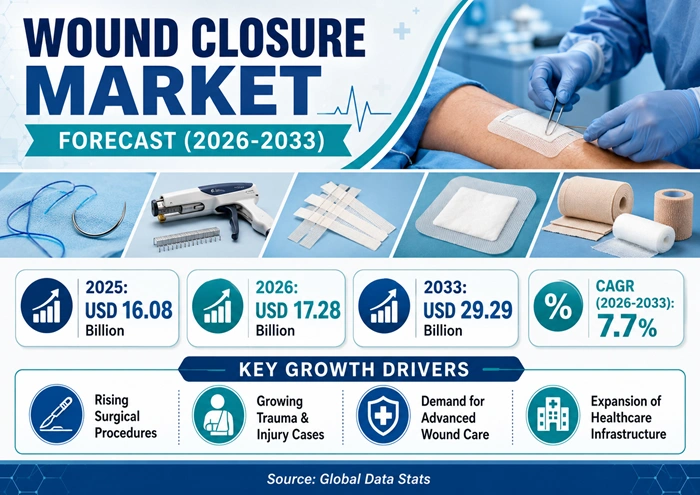
The global wound closure market size is valued at USD 16.08 billion in 2025 and is predicted to increase from USD 17.28 billion in 2026 to approximately USD 29.29 billion by 2033, growing at a CAGR of 7.7% from 2026 to 2033.
The rising burden of surgical procedures, chronic wounds, and traumatic injuries worldwide continues to push demand for advanced wound closure solutions. From traditional sutures and staples to sophisticated tissue adhesives and wound closure strips, the market covers a broad spectrum of products designed to support faster healing and better patient outcomes.
AI Impact on the Wound Closure Industry
Artificial Intelligence Is Quietly Transforming How Wounds Are Managed, Monitored, and Closed Across Global Healthcare Systems
Artificial intelligence is beginning to reshape the wound closure industry in meaningful ways. AI-powered imaging systems can now assess wound size, depth, and healing progress with a level of precision that significantly reduces human error. These tools are helping surgeons and wound care specialists choose the right closure technique far more quickly and with better accuracy, which directly reduces post-operative complications.
At the same time, machine learning algorithms are being integrated into smart wound dressings and monitoring platforms that can detect early signs of infection. This real-time feedback loop allows for more proactive clinical decision-making, which is especially valuable in cases involving diabetic ulcers and pressure wounds. As AI adoption deepens across hospitals and outpatient surgical centers, it is expected to improve patient throughput and reduce the overall cost of wound management.
Growth Factors
A Combination of Aging Populations, Rising Surgical Volumes, and Chronic Disease Burden Is Fueling Steady Expansion in the Wound Closure Space
The primary drivers pushing the wound closure market forward are deeply tied to global health trends. The growing elderly population is more susceptible to chronic wounds, including pressure ulcers, venous leg ulcers, and diabetic foot wounds. Add to that the increasing number of elective and emergency surgeries being performed annually worldwide, and the demand for effective wound closure products becomes very clear.
Additionally, greater awareness among healthcare providers about the risks of surgical site infections has prompted a shift toward advanced wound closure techniques. Products like tissue adhesives and absorbable sutures are gaining traction because they reduce infection risk and improve cosmetic outcomes. Investment in healthcare infrastructure, particularly across emerging economies in Asia Pacific and Latin America, is also opening new demand channels for wound closure solutions.
Market Outlook
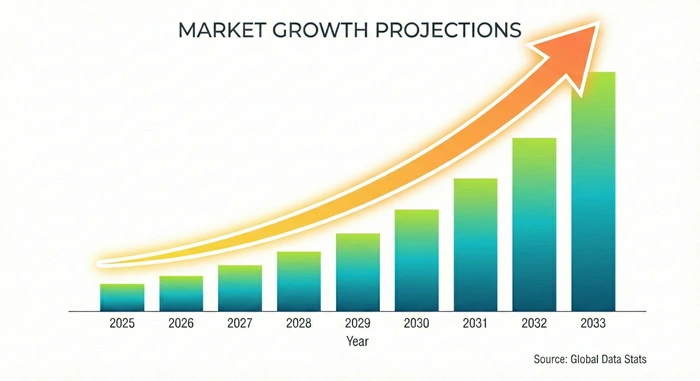
The Wound Closure Market Is Entering a High-Growth Phase Backed by Innovation, Stronger Healthcare Spending, and Geographic Expansion
Looking ahead, the wound closure market is positioned for consistent growth across both developed and emerging regions. North America currently dominates with the largest market share, supported by high surgical volumes, established reimbursement frameworks, and a robust base of leading manufacturers. However, Asia Pacific is emerging as a key growth region, driven by expanding hospital infrastructure and a large patient population requiring both acute and chronic wound care.
Technological innovation continues to be a major growth lever. Biodegradable sutures, antimicrobial wound closure strips, and next-generation tissue sealants are attracting substantial R&D investment from major players. As regulatory bodies in both the US and Europe continue to streamline approvals for novel wound care devices, the pace of product launches is expected to accelerate, further propelling overall market expansion through 2033.
Expert Speaks
-
"The shift from reactive wound care to proactive, technology-enabled closure solutions is one of the most important transitions in surgical medicine today. We are doubling down on biomaterial innovation to meet that demand." — CEO, Johnson & Johnson MedTech
-
"Our focus remains on delivering wound closure solutions that not only reduce healing time but significantly cut the risk of post-surgical infection. Digital wound monitoring is a frontier we are actively investing in." — CEO, Smith+Nephew
-
"As global surgical volumes recover and expand, particularly across Asia and Latin America, the demand for premium wound closure products is moving from aspirational to essential for healthcare systems at every level." — CEO, 3M Health Care
Key Report Takeaways
-
North America leads the wound closure market with approximately 42% market share in 2025, driven by high surgical procedure volumes, advanced hospital infrastructure, and strong reimbursement coverage for wound care products
-
Asia Pacific is the fastest-growing region, expanding at a CAGR of approximately 9.2% from 2026 to 2033, fueled by rising healthcare spending, a growing diabetic population, and expanding hospital networks across China, India, and South Korea
-
Hospitals represent the largest end-user segment, accounting for over 55% of total market revenue, as high surgical volumes and the availability of trained professionals make hospitals the primary site of wound closure procedures
-
Sutures contribute the most among product types, holding the largest application share owing to their versatility, cost-effectiveness, and compatibility with both internal and external wound closure needs across all surgical specialties
-
Absorbable sutures remain the most widely adopted wound closure product due to their ability to dissolve naturally and eliminate the need for follow-up removal procedures, making them especially popular in internal surgical applications
-
Tissue adhesives and sealants represent the fastest-growing future segment, projected to expand at a CAGR of approximately 9.5% through 2033 and expected to capture close to 18% market share by the end of the forecast period, driven by growing preference for minimally invasive and scar-minimizing closure techniques
Market Scope
| Report Coverage | Details |
|---|---|
| Market Size by 2033 | USD 29.29 Billion |
| Market Size by 2025 | USD 16.08 Billion |
| Market Size by 2026 | USD 17.28 Billion |
| Market Growth Rate (2026–2033) | CAGR of 7.7% |
| Dominating Region | North America |
| Fastest Growing Region | Asia Pacific |
| Base Year | 2025 |
| Forecast Period | 2026 – 2033 |
| Segments Covered | Product Type, Application, End User, Distribution Channel |
| Regions Covered | North America, Europe, Asia Pacific, Latin America, Middle East & Africa |
Market Dynamics
Drivers Impact Analysis
Rising Surgical Volumes, Chronic Wound Incidence, and Healthcare Infrastructure Growth Are the Three Pillars Propelling the Wound Closure Market Forward
| Driver | ≈ % Impact on CAGR Forecast | Geographic Relevance | Impact Timeline |
|---|---|---|---|
| Increasing number of surgical procedures globally | ~35% | North America, Europe, Asia Pacific | Short to Medium Term |
| Rising prevalence of chronic wounds (diabetic ulcers, pressure wounds) | ~30% | North America, Asia Pacific, MEA | Medium to Long Term |
| Expanding hospital and outpatient surgical infrastructure | ~20% | Asia Pacific, Latin America, MEA | Medium to Long Term |
| Growing adoption of advanced biomaterials in wound closure | ~15% | North America, Europe | Long Term |
The wound closure market is seeing some of its strongest growth impulses from the global rise in surgical activity. As populations age and chronic diseases like diabetes and obesity become more prevalent, the frequency of surgeries requiring effective wound management has increased sharply. Hospitals are now performing more elective procedures post-pandemic, which is directly translating to higher demand for sutures, staples, adhesives, and other closure products across every region.
Beyond surgical volume, the growing incidence of chronic wounds is creating a parallel demand stream that is difficult to ignore. Diabetic foot ulcers alone affect millions of patients globally each year and require repeated wound closure interventions. The combination of these factors — aging demographics, chronic disease burden, and expanding healthcare access in developing nations — makes the driver base for this market both broad and durable through the forecast period ending 2033.
Restraints Impact Analysis
High Product Costs, Regulatory Complexity, and Limited Access in Low-Income Markets Are Creating Friction in the Wound Closure Market's Growth Path
| Restraint | ≈ % Impact on CAGR Forecast | Geographic Relevance | Impact Timeline |
|---|---|---|---|
| High cost of advanced wound closure products | ~40% | Latin America, MEA, parts of Asia Pacific | Short to Medium Term |
| Stringent regulatory approval requirements | ~30% | North America, Europe | Medium Term |
| Limited reimbursement in emerging economies | ~20% | Africa, South Asia, Latin America | Long Term |
| Risk of post-surgical complications impacting brand trust | ~10% | Global | Short Term |
One of the most persistent challenges facing the wound closure market is the high cost associated with next-generation products such as tissue sealants, antimicrobial sutures, and smart wound closure strips. In low- and middle-income countries, public healthcare systems often cannot afford these premium options, pushing clinicians toward older, less effective methods. This cost barrier slows down the adoption curve even in markets where clinical need is high.
Regulatory requirements also add layers of complexity, particularly for novel biomaterial-based products entering markets like the United States and Europe. FDA 510(k) clearances and CE marking processes can extend time-to-market by several years, which is a significant deterrent for smaller companies trying to bring innovative wound closure solutions to scale. Until regulatory harmonization improves, these hurdles will continue to moderate growth in premium product categories.
Opportunities Impact Analysis
Emerging Market Penetration, Minimally Invasive Techniques, and Digital Health Integration Offer High-Yield Growth Opportunities for Wound Closure Stakeholders
| Opportunity | ≈ % Impact on CAGR Forecast | Geographic Relevance | Impact Timeline |
|---|---|---|---|
| Rapid healthcare expansion in Asia Pacific and Latin America | ~38% | China, India, Brazil, Mexico | Medium to Long Term |
| Growth of minimally invasive and outpatient surgical procedures | ~30% | North America, Europe, Asia Pacific | Short to Medium Term |
| Integration of digital monitoring with wound closure systems | ~20% | North America, Europe | Long Term |
| New product launches in biodegradable and antimicrobial closures | ~12% | Global | Medium Term |
The wound closure market stands to benefit significantly from the accelerating expansion of healthcare infrastructure in Asia Pacific and Latin America. Countries like India, China, Brazil, and Indonesia are investing heavily in hospital construction, surgical training, and medical device procurement. As disposable incomes rise and health insurance coverage broadens, the addressable market in these regions will grow substantially, creating attractive opportunities for both global majors and regional manufacturers.
Equally compelling is the opportunity presented by the shift toward outpatient and ambulatory surgical centers, which are growing rapidly globally. These settings demand wound closure products that are easy to use, reduce procedure time, and minimize follow-up visits. Products like wound closure strips, tissue adhesives, and single-use stapling devices are particularly well-suited to this environment. Companies that tailor their portfolios to the outpatient setting and integrate digital wound monitoring are likely to gain a meaningful competitive edge through 2033.
Segment Analysis
By Product Type
Sutures Continue to Anchor the Wound Closure Market While Tissue Adhesives Emerge as the Most Disruptive Growth Category Across Multiple Surgical Disciplines
Sutures remain the backbone of the wound closure market, commanding the largest product type share at approximately 38% in 2025. Their widespread use across general surgery, orthopedics, cardiovascular procedures, and gynecology ensures consistent, high-volume demand in hospitals worldwide. Absorbable sutures are particularly preferred for internal tissue closure because they eliminate the need for a removal procedure, reducing patient discomfort and follow-up visits. In North America and Europe, companies like Ethicon (a Johnson & Johnson company) and B. Braun Melsungen AG dominate the suture segment with well-established distribution networks and strong clinical evidence supporting their product portfolios. The segment is growing at a CAGR of approximately 6.8% through 2033, with Asia Pacific showing the fastest adoption rate as surgical infrastructure expands.
Tissue adhesives and sealants are rapidly gaining ground as the next transformative category within wound closure solutions. These products offer significant advantages in terms of application speed, cosmetic outcomes, and reduced risk of needle-stick injuries for surgical staff. The tissue adhesives segment is projected to grow at a CAGR of approximately 9.5% from 2026 to 2033, capturing an estimated 18% share of the total market by 2033. Growth is most pronounced in North America, where outpatient surgical volumes are high and patient preference for scar-minimizing procedures is strong. Key players including Medtronic and 3M are actively investing in next-generation adhesive formulations that combine antimicrobial properties with enhanced bonding strength, which is expected to further accelerate segment adoption.
By End User
Hospitals Dominate End-User Demand but Ambulatory Surgical Centers Are Quickly Becoming a Strategic Growth Frontier for Wound Closure Product Manufacturers
Hospitals account for the largest share of wound closure market revenue, contributing over 55% of total sales in 2025. The sheer volume of inpatient surgical procedures performed annually — including emergency surgeries, oncological resections, and cardiac interventions — ensures that hospitals remain the primary consumers of sutures, staples, and advanced closure products. In North America, large hospital systems and integrated health networks are increasingly consolidating their procurement through group purchasing organizations (GPOs), which tends to favor established manufacturers with comprehensive product portfolios. Companies like Medtronic, Ethicon, and Smith+Nephew benefit significantly from these procurement structures and continue to hold dominant positions within the hospital end-user segment. The hospital segment is expected to grow at a CAGR of approximately 7.2% from 2026 to 2033.
Ambulatory surgical centers (ASCs) represent the fastest-growing end-user category, with a projected CAGR of approximately 9.8% from 2026 to 2033. As healthcare systems worldwide push toward outpatient care models to reduce costs and improve efficiency, more procedures are being shifted from traditional hospital settings to ASCs. This trend is especially strong in the United States, where government policies and private insurers actively incentivize outpatient surgery. The wound closure product requirements in ASC settings differ slightly — there is greater emphasis on single-use, easy-application devices that reduce procedure time. Manufacturers are responding with streamlined product lines and pre-packaged closure kits specifically designed for the ASC environment, making this segment a focal area for competitive differentiation through 2033.
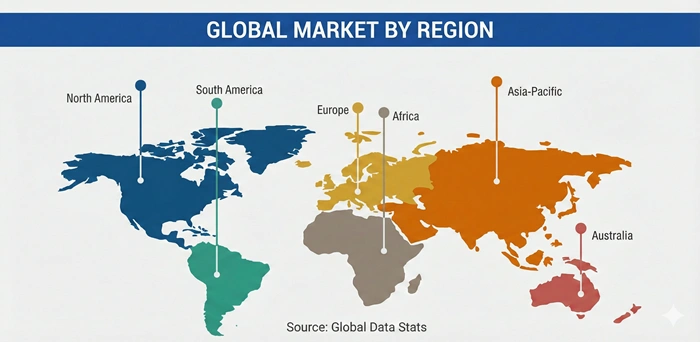
Regional Insights
From North America's Established Leadership to Asia Pacific's High-Velocity Expansion, Regional Dynamics Are Reshaping the Global Wound Closure Market Landscape
North America
North America's Advanced Healthcare Ecosystem and High Surgical Activity Continue to Make It the Most Valuable Geographic Market for Wound Closure Products
North America leads the global wound closure market with approximately 42% market share in 2025, a position it has maintained due to its well-developed hospital infrastructure, high per-capita healthcare spending, and strong adoption of advanced medical technologies. The United States is the single largest country-level market, driven by millions of surgical procedures performed annually across thousands of hospitals and ambulatory surgical centers. Major players including Ethicon (US), Medtronic (US), 3M Health Care (US), and Becton Dickinson (US) are headquartered in this region and benefit from proximity to end-users, robust distribution networks, and favorable reimbursement policies. The region is expected to grow at a steady CAGR of approximately 6.5% through 2033.
Canada and Mexico are also contributing to regional growth, with increasing healthcare investments and rising surgical volumes across both countries. The wound closure market in North America continues to benefit from a strong pipeline of FDA-cleared products and growing demand for antimicrobial and biodegradable closure solutions that align with evolving clinical guidelines. Hospitals across the region are also upgrading their wound care protocols in response to rising rates of hospital-acquired infections, which is creating additional demand for advanced closure technologies beyond conventional sutures and staples.
Asia Pacific
Asia Pacific Is Transforming Into the Wound Closure Market's Most Dynamic Growth Engine Driven by Demographic Scale and Rapid Healthcare Modernization
Asia Pacific is the fastest-growing region in the wound closure market, projected to expand at a CAGR of approximately 9.2% from 2026 to 2033. The region's growth is underpinned by a combination of demographic factors — particularly the enormous and aging populations of China and India — and aggressive government investments in healthcare infrastructure. China alone is adding hundreds of new hospitals each year, and surgical procedure volumes in the country have grown substantially over the past decade, creating a massive and expanding market for wound closure products. Key players active in this region include Johnson & Johnson (US), B. Braun Melsungen AG (Germany), Kono Seisakusho (Japan), and several local manufacturers gaining ground through competitive pricing and distribution advantages.
India and South Korea are also emerging as significant contributors to regional growth. India's rapidly expanding private hospital sector and its government initiatives to improve rural surgical care access are broadening the wound closure product market considerably. South Korea, meanwhile, has one of the highest surgical procedure rates in the region and a strong preference for technologically advanced wound care solutions. The Asia Pacific wound closure market currently holds approximately 22% of global market share and is expected to see that share increase meaningfully by 2033 as local manufacturing capacity grows and international companies ramp up their regional presence.
Customization Available by Region and Country
Tailored Market Intelligence Is Available for Every Major Region and Country, Giving Your Team the Precise Geographic Insights Needed to Make Confident Business Decisions
This wound closure market report can be fully customized to focus on specific regions and countries, delivering in-depth analysis, localized market sizing, demand trends, competitive landscapes, regulatory environments, and growth opportunities tailored to your exact geographic area of interest. Whether you are evaluating market entry, planning product launches, or conducting competitive benchmarking, customized regional reports provide the granular data required for strategic precision.
-
Customized reports are available for all major regions and countries, including:
North America
-
United States, Canada, Mexico — detailed wound closure market sizing, growth forecasts, key players, reimbursement landscape, and regulatory environment specific to each country
Europe
-
United Kingdom, Germany, France, Italy, Rest of Europe — region-specific analysis covering product adoption trends, hospital procurement patterns, CE marking considerations, and country-level competitive dynamics
Asia Pacific
-
China, India, Japan, South Korea, Australia, Rest of Asia Pacific — country-level breakdowns covering surgical procedure volumes, healthcare infrastructure expansion, local manufacturer analysis, and import/export trends
Latin America
-
Brazil, Argentina, Rest of Latin America — market sizing, growth forecasts, regulatory updates, and analysis of healthcare spending patterns across the region's key wound care markets
Middle East & Africa
-
UAE, Saudi Arabia, Rest of MEA — insights into government healthcare investment programs, hospital construction pipelines, and demand for advanced wound closure technologies across the region
Top Key Players
-
Ethicon Inc. (United States)
-
Medtronic plc (Ireland/United States)
-
3M Health Care (United States)
-
B. Braun Melsungen AG (Germany)
-
Smith+Nephew plc (United Kingdom)
-
Becton, Dickinson and Company (United States)
-
Covidien (now part of Medtronic) (United States)
-
Teleflex Incorporated (United States)
-
Integra LifeSciences (United States)
-
Cardinal Health (United States)
-
Mölnlycke Health Care (Sweden)
-
ConvaTec Group plc (United Kingdom)
Recent Developments
-
In December 2025, Solventum completed its acquisition of Acera Surgical for USD 725 million, adding synthetic tissue matrix technology to its wound closure and advanced care portfolio, significantly broadening its regenerative wound management offerings.
-
In 2025, Ethicon launched an upgraded line of antibacterial-coated absorbable sutures with enhanced tensile strength designed to reduce surgical site infection rates in high-risk surgical environments.
-
In 2024, Smith+Nephew expanded its advanced wound closure product line in Asia Pacific with dedicated distribution agreements across India and China to capture market share in these fast-growing regions.
-
In 2025, Medtronic announced a strategic investment in digital wound monitoring technology, integrating AI-assisted imaging capabilities with its existing wound closure device portfolio to support outpatient surgical centers.
-
In 2024–2025, 3M Health Care (operating under the Solventum brand post-spinoff) restructured its wound care division and accelerated R&D spending on antimicrobial wound closure strips and tissue adhesives for the ambulatory surgical market.
Market Trends
Digital Integration, Biodegradable Materials, and Patient-Centered Design Are Redefining the Standards of Innovation Across the Wound Closure Market
The most prominent trend reshaping the wound closure market is the integration of antimicrobial and biodegradable materials into standard closure products. Healthcare providers are actively seeking sutures, staples, and adhesives that not only close wounds mechanically but also provide a secondary layer of infection protection. Manufacturers are responding with product lines that incorporate silver, triclosan, and chitosan-based coatings, and the early clinical results have been strong enough to drive rapid adoption across major hospital systems in North America and Europe.
A second major trend is the move toward minimally invasive closure techniques that reduce procedure time, minimize scarring, and enable faster patient recovery. Wound closure strips, tissue adhesives, and staple-free devices are seeing accelerated adoption in outpatient and day-surgery settings where efficiency is critical. In parallel, the growing patient preference for cosmetically superior outcomes, especially in elective and reconstructive procedures, is compelling manufacturers to design closure solutions that deliver clinical efficacy alongside aesthetic benefits. These twin forces — clinical efficiency and patient preference — are expected to drive sustained product innovation through 2033.
Segments Covered in the Report
-
By Product Type
-
Sutures (Absorbable, Non-Absorbable)
-
Surgical Staples
-
Wound Closure Strips
-
Tissue Adhesives and Sealants
-
Hemostats
-
-
By Application
-
General Surgery
-
Cardiovascular Surgery
-
Orthopedic Surgery
-
Gynecology & Obstetrics
-
Cosmetic & Reconstructive Surgery
-
Other Applications
-
-
By End User
-
Hospitals
-
Ambulatory Surgical Centers (ASCs)
-
Specialty Clinics
-
Homecare Settings
-
-
By Distribution Channel
-
Direct Sales
-
Distributors
-
Online Channels
-
-
By Region
-
North America (U.S., Canada, Mexico)
-
Europe (U.K., Germany, France, Italy, Rest of Europe)
-
Asia Pacific (China, India, Japan, South Korea, Australia, Rest of Asia Pacific)
-
Latin America (Brazil, Argentina, Rest of Latin America)
-
Middle East & Africa (UAE, Saudi Arabia, Rest of MEA)
-
❝ Built for Every Level — From Startups to Industry Giants ❞
Here Is Exactly How This Report Works for You
-
This report equips decision-makers across Tier 1 giants, Tier 2 challengers, and emerging startups with the competitive intelligence needed to capture market share in the wound closure space — it covers competitor revenue analysis, revenue source breakdowns, supply-demand dynamics, and geopolitical risk mapping, enabling your leadership team to move with speed and strategic conviction regardless of market conditions.
-
Whether you are an investor evaluating entry points, a mid-level company assessing product-line expansion, or a high-growth startup benchmarking against incumbents, this report translates raw market data into actionable growth strategies — revealing exactly where demand is accelerating, which segments are being underserved, and how leading companies are repositioning their portfolios ahead of the 2033 horizon.
-
For companies operating across multiple geographies, the report's country-level breakdowns and geopolitical impact analysis provide the contextual clarity needed to navigate regulatory shifts, trade dynamics, and regional supply chain disruptions — giving your organization a measurable edge in both short-term planning and long-term market positioning.
Frequently Asked Questions
Question 1: What is the current size of the wound closure market and how fast is it growing?
Answer: The wound closure market is valued at USD 16.08 billion in 2025 and is projected to reach USD 29.29 billion by 2033. It is growing at a CAGR of 7.7% from 2026 to 2033.
Question 2: Which region dominates the wound closure market globally?
Answer: North America holds the largest share of the wound closure market at approximately 42% in 2025. The region benefits from high surgical volumes, advanced healthcare infrastructure, and strong reimbursement support.
Question 3: What are the key factors driving wound closure market growth?
Answer: The primary growth drivers include rising surgical procedure volumes, increasing prevalence of chronic wounds such as diabetic ulcers, and expanding healthcare infrastructure in emerging economies. Growing adoption of advanced biomaterials and minimally invasive closure techniques also contribute significantly to market expansion.
Question 4: Which product type holds the largest share in the wound closure market?
Answer: Sutures represent the largest product segment, holding approximately 38% share of the wound closure market in 2025. Their wide applicability across surgical disciplines and the growing preference for absorbable variants continue to drive strong demand.
Question 5: Who are the leading companies competing in the wound closure market?
Answer: Key players in the wound closure market include Ethicon, Medtronic, 3M Health Care, B. Braun Melsungen AG, Smith+Nephew, and Becton Dickinson, among others. These companies compete on product innovation, pricing, distribution reach, and clinical evidence generation.