
Wellness Supplements Market Overview
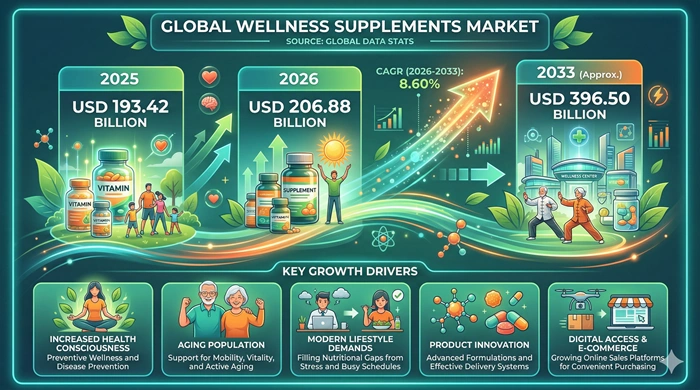
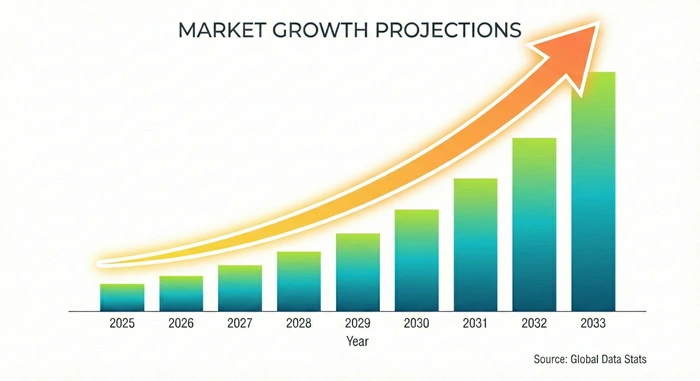
The global Wellness Supplements market size is valued at USD 193.42 billion in 2025 and is predicted to increase from USD 206.88 billion in 2026 to approximately USD 396.50 billion by 2033, growing at a CAGR of 8.60% from 2026 to 2033.
Wellness supplements encompass a broad and rapidly expanding category of dietary and nutritional products — including vitamins, minerals, herbal botanicals, probiotics, protein supplements, omega fatty acids, and specialty functional formulations — consumed by individuals seeking to support, maintain, and optimize their physical health, mental well-being, immune function, and overall quality of life. Once considered niche health products used primarily by fitness enthusiasts and the elderly, these supplements have entered the mainstream consumer market globally — becoming daily staples for hundreds of millions of people across all age groups and income levels. The Wellness Supplements market is experiencing exceptional growth momentum driven by a powerful convergence of rising health consciousness, preventive healthcare adoption, aging global demographics, and the explosive growth of e-commerce and direct-to-consumer supplement retail channels.
AI Impact on the Wellness Supplements Industry
Artificial Intelligence Is Transforming Personalized Supplement Formulation, Consumer Health Assessment, Supply Chain Optimization, and Digital Marketing Precision in Ways That Are Meaningfully Reshaping How Wellness Supplements Are Developed, Marketed, and Consumed*
Artificial intelligence is making a profound and fast-accelerating impact across the Wellness Supplements market, most visibly through the rise of AI-powered personalized nutrition platforms that assess individual consumer health profiles — including genetic data, microbiome composition, blood biomarker results, lifestyle factors, and dietary habits — to generate highly customized supplement recommendations tailored to each person's specific nutritional gaps and wellness goals. Companies such as Care/of, Ritual, and Persona Nutrition are deploying sophisticated AI-driven recommendation engines that go far beyond generic supplement advice — using machine learning models to match consumer health profiles with evidence-based supplement protocols, continuously refining recommendations based on ongoing health data and consumer feedback. This personalization capability is fundamentally transforming the consumer supplement experience — shifting purchasing behavior from generalized product selection toward precision-guided supplement regimens that deliver meaningfully higher consumer satisfaction and retention rates for wellness supplement brands.
AI is also transforming product formulation research and development within the wellness supplement industry — with deep learning models being applied to analyze vast bodies of clinical nutrition research, identify promising ingredient combinations, predict formulation stability and bioavailability outcomes, and optimize dosage parameters with far greater speed and analytical depth than traditional research methods. AI-powered ingredient intelligence platforms are enabling supplement manufacturers to identify novel botanical extract combinations, synergistic micronutrient pairings, and innovative probiotic strain formulations that deliver superior efficacy outcomes — compressing the new product development cycle and enabling brands to bring more scientifically credible and differentiated supplement products to market faster. These AI applications are collectively elevating the scientific sophistication and commercial competitiveness of the wellness supplement industry.
Growth Factors
Rising Global Health Consciousness, Aging Population Driving Preventive Supplement Adoption, E-Commerce Channel Expansion, and Growing Awareness of Gut Health and Mental Wellness Are the Core Growth Drivers*
The most foundational and structurally durable driver of the Wellness Supplements market is the global and deepening shift in consumer attitudes toward preventive healthcare — characterized by growing individual awareness of the connection between daily nutrition, lifestyle choices, and long-term health outcomes. The COVID-19 pandemic was a watershed moment for this trend — dramatically amplifying global consumer interest in immune health supplements, vitamin D, zinc, elderberry, and other immunity-supporting products — and the post-pandemic period has seen sustained and broadly elevated consumer engagement with health and wellness products that shows no signs of reverting to pre-pandemic levels. Surveys consistently indicate that a growing proportion of consumers across all age groups and geographies now view dietary supplements as an essential component of their daily health maintenance routine — reflecting a fundamental behavioral shift that is creating a large and growing customer base for the wellness supplement industry globally.
The rapid aging of global populations — with the proportion of people aged 65 and older growing significantly in North America, Europe, East Asia, and increasingly Latin America — is creating a large and commercially important incremental demand driver for wellness supplement products targeting age-related health concerns. Older consumers represent the highest per-capita supplement spending demographic — using vitamins, minerals, joint health supplements, omega-3 fatty acids, probiotics, and cognitive health products as daily tools for managing aging-related health challenges and maintaining functional independence and quality of life. Simultaneously, the emergence of mental wellness and cognitive function supplements — including adaptogens, nootropics, ashwagandha, lion's mane mushroom, and magnesium glycinate — as mainstream consumer product categories is attracting a younger, millennial and Gen Z demographic to regular supplement use, significantly broadening the market's consumer base and diversifying its product demand profile.
Market Outlook
With Global Preventive Health Spending Rising, Personalized Nutrition Technology Maturing, E-Commerce Supplement Retail Expanding, and Plant-Based and Clean-Label Products Gaining Consumer Preference, the Wellness Supplements Market Outlook Is Exceptionally Positive Through 2033*
The long-term outlook for the Wellness Supplements market is strongly positive and backed by multiple converging and self-reinforcing consumer, demographic, and technology trends that are expected to sustain strong growth throughout the 2026–2033 forecast period. The progressive mainstream adoption of personalized nutrition — enabled by increasingly accessible direct-to-consumer genetic testing, continuous health monitoring wearables, and AI-powered supplement recommendation platforms — is transforming how consumers discover, evaluate, and purchase wellness supplements in ways that are expanding average supplement spend per consumer, improving product loyalty and retention, and creating premium pricing opportunities for scientifically credentialed personalized supplement brands. As personalized nutrition technology becomes more affordable and accessible to mass market consumers, the addressable market for premium personalized supplement services will expand significantly beyond its current early adopter base.
The extraordinary growth of e-commerce and direct-to-consumer digital channels for supplement retail is simultaneously transforming the competitive landscape and market dynamics of the Wellness Supplements market in ways that are highly favorable to continued growth. Online channels eliminate geographic constraints on supplement brand distribution — enabling both established global supplement companies and emerging direct-to-consumer wellness brands to reach consumers anywhere in the world with premium product selections, detailed health education content, subscription purchasing models, and personalized recommendation experiences that drive both trial and repeat purchasing at scale. Subscription-based supplement delivery services — pioneered by companies including Ritual, Care/of, and Hims & Hers — are creating highly predictable and growing recurring revenue streams that are proving particularly effective at building long-term consumer engagement and high customer lifetime value in the wellness supplement sector.
Expert Speaks
-
James Quincey, CEO, The Coca-Cola Company — "Consumer interest in health and wellness products — including functional nutrition and dietary supplements — represents one of the most significant and enduring shifts in consumer behavior that we have observed in recent decades. We are actively expanding our portfolio in the wellness nutrition space because we see compelling long-term growth opportunities for brands that offer consumers credible, evidence-backed health benefits through accessible everyday products."
-
Ramon Laguarta, CEO, PepsiCo — "The lines between food, beverages, and wellness supplements are increasingly blurring as consumers seek nutritional products that actively support their health goals rather than simply satisfying hunger and thirst. PepsiCo is investing in health and wellness product innovation — including functional nutrition formats with supplement-level benefits — because we believe this is one of the most important and durable consumer trend opportunities in our industry."
-
Mark Schneider, CEO, Nestlé — "Nutrition science and consumer wellness are at the very heart of Nestlé's strategic vision, and the growing global demand for dietary supplements, functional foods, and personalized nutrition solutions is a major strategic opportunity that we are pursuing with significant investment across our Health Science division. Consumer trust in the quality, efficacy, and scientific credibility of wellness supplements will be the defining competitive advantage in this market."
Key Report Takeaways
-
North America dominates the Wellness Supplements market, holding approximately 37.20% of global market share in 2025, driven by the world's highest per-capita supplement spending, the largest and most developed dietary supplement retail infrastructure, strong consumer health consciousness, robust e-commerce supplement channel, and the presence of industry-leading companies including Abbott Laboratories, Amway, Nature's Sunshine Products, and a broad ecosystem of innovative direct-to-consumer wellness supplement brands.
-
Asia Pacific is the fastest-growing regional market for wellness supplements, projected to expand at a CAGR of approximately 10.20% from 2026 to 2033, driven by China's rapidly growing middle class adopting preventive health habits, India's expanding nutraceuticals and Ayurvedic supplement sector, rising health awareness across Southeast Asian markets, and the region's deep cultural affinity for herbal and botanical supplement products rooted in traditional medicine systems.
-
Vitamins and minerals are the dominant product type segment, accounting for approximately 32.40% of total market revenue in 2025, reflecting their universal consumer adoption across all age groups and geographies as the most fundamental category of wellness supplementation — encompassing high-volume products including multivitamins, vitamin D, vitamin C, B-complex vitamins, calcium, magnesium, iron, and zinc consumed by hundreds of millions of daily supplement users globally.
-
Immunity support is the leading application segment, contributing approximately 28.60% of total market revenue in 2025, driven by the sustained post-pandemic elevation in consumer prioritization of immune health maintenance — making immunity-focused supplements including vitamin C, vitamin D, zinc, elderberry, echinacea, and beta-glucan among the highest-volume and fastest-growing product categories in the wellness supplement industry globally.
-
Online retail is the fastest-growing distribution channel, expected to expand at a CAGR of approximately 12.40% through 2033, driven by the dramatic consumer shift toward e-commerce supplement purchasing — enabled by greater product selection, competitive pricing, subscription convenience, personalized recommendation technology, and direct-to-consumer brand engagement that online channels deliver more effectively than traditional brick-and-mortar retail environments.
-
Probiotics and prebiotics are the fastest-growing product type segment, projected to expand at a CAGR of approximately 11.80% through 2033, driven by the extraordinary growth of consumer awareness and scientific research interest in gut microbiome health and its connections to immune function, mental health, metabolic wellness, and overall health outcomes — creating a broad and rapidly expanding consumer market for high-quality probiotic and prebiotic supplement products.
Market Scope
| Report Coverage | Details |
|---|---|
| Market Size by 2033 | USD 396.50 Billion |
| Market Size by 2025 | USD 193.42 Billion |
| Market Size by 2026 | USD 206.88 Billion |
| Market Growth Rate (2026–2033) | CAGR of 8.60% |
| Dominating Region | North America |
| Fastest Growing Region | Asia Pacific |
| Base Year | 2025 |
| Forecast Period | 2026–2033 |
| Segments Covered | Product Type, Form, Application, Distribution Channel, End User |
| Regions Covered | North America, Europe, Asia Pacific, Latin America, Middle East & Africa |
Market Dynamics
Drivers Impact Analysis
Rising Global Health Consciousness, Aging Demographics, E-Commerce Channel Growth, and Mental Wellness Supplement Adoption Are the Four Pillars Driving Wellness Supplements Market Growth*
| Driver | ≈ % Impact on CAGR Forecast | Geographic Relevance | Impact Timeline |
|---|---|---|---|
| Rising global health consciousness and preventive healthcare adoption | ~35% | Global — especially North America, Europe, Asia Pacific | Short to Long-term |
| Rapidly aging global population driving age-focused supplement demand | ~27% | North America, Europe, East Asia | Short to Long-term |
| E-commerce and direct-to-consumer supplement channel expansion | ~24% | Global | Short to Medium-term |
| Growing consumer awareness of gut health, mental wellness, and cognitive support | ~14% | North America, Europe, Asia Pacific | Short to Medium-term |
The most powerful and enduring demand driver of the Wellness Supplements market is the globally deepening shift toward preventive health management — where consumers increasingly invest in daily supplement routines as a proactive strategy for maintaining health, supporting immunity, managing energy levels, and reducing long-term chronic disease risk rather than waiting for health problems to emerge before seeking intervention. This preventive health orientation has been powerfully reinforced by the post-pandemic period, during which immune health supplement sales surged globally and consumer health awareness reached unprecedented levels — permanently shifting a large segment of the adult consumer population toward regular supplement use as a health maintenance habit. The breadth and depth of this behavioral shift — spanning all demographic segments, income levels, and geographies — creates a truly global and structurally growing demand base for wellness supplement products that is highly resistant to economic cycle disruption.
The rapid aging of populations in North America, Europe, and East Asia is simultaneously creating both volume and value growth opportunities in the Wellness Supplements market — as older consumers represent the highest supplement-spending demographic with broad and persistent needs across multiple health categories simultaneously. Baby boomers in the United States and Western Europe, along with rapidly aging populations in Japan, South Korea, and China, are driving strong and growing demand for bone and joint health supplements, cardiovascular support products, cognitive and brain health formulations, eye health supplements, and energy and vitality products — all of which command premium price points and strong repeat purchasing dynamics. This aging demographic demand driver is expected to become progressively more commercially significant throughout the 2026–2033 forecast period as the global proportion of elderly consumers continues to grow.
Restraints Impact Analysis
Regulatory Complexity and Labeling Compliance, Product Efficacy and Safety Credibility Concerns, Market Fragmentation and Quality Inconsistency, and Raw Material Supply Chain Volatility Restrain Faster Market Growth*
| Restraint | ≈ % Impact on CAGR Forecast | Geographic Relevance | Impact Timeline |
|---|---|---|---|
| Complex and inconsistent regulatory frameworks across global markets | ~33% | Global — especially Asia Pacific, Latin America | Short to Long-term |
| Consumer skepticism regarding supplement efficacy claims and scientific credibility | ~29% | North America, Europe | Short to Medium-term |
| Market fragmentation and inconsistent product quality damaging category trust | ~26% | Global | Short to Medium-term |
| Raw material ingredient supply chain volatility affecting formulation cost and availability | ~12% | Global | Short to Medium-term |
The Wellness Supplements market operates across a diverse and often inconsistent global regulatory landscape — with the United States, European Union, China, India, and other major markets each maintaining distinct regulatory frameworks governing supplement ingredient approval, label claims, quality standards, and marketing practices. These regulatory variations create significant operational complexity for supplement companies seeking to sell products across multiple markets, requiring costly formulation adjustments, separate regulatory submissions, and market-specific labeling that increases product development and compliance costs. In many emerging markets, regulatory oversight of dietary supplement quality and labeling claims is less rigorous than in the U.S. and EU — creating opportunities for low-quality and adulterated products that undermine consumer confidence in the overall supplement category and disadvantage reputable manufacturers with genuinely high-quality and scientifically supported products.
Consumer skepticism about the scientific credibility of supplement efficacy claims represents a meaningful and persistent restraint on category growth — particularly among educated consumers in North America and Europe who are increasingly demanding clinical evidence, third-party quality certifications, and transparent sourcing information before committing to supplement purchases. The proliferation of exaggerated or scientifically unsubstantiated health claims by some supplement brands has contributed to category credibility challenges that can dampen trial rates and reduce consumer willingness to pay premium prices for wellness supplement products. Supplement companies that invest seriously in clinical research substantiation, independent quality certification programs, and transparent ingredient sourcing and manufacturing practices are progressively building stronger consumer trust and commanding durable price premiums — but the overall category continues to face a baseline credibility challenge that limits its penetration among highly skeptical consumer segments.
Opportunities Impact Analysis
Personalized Nutrition Technology Expansion, Plant-Based and Adaptogen Supplement Growth, Emerging Market Consumer Health Awareness, and Sports and Active Nutrition Segment Premiumization Create Major Growth Opportunities*
| Opportunity | ≈ % Impact on CAGR Forecast | Geographic Relevance | Impact Timeline |
|---|---|---|---|
| AI-powered personalized nutrition and customized supplement platform growth | ~32% | North America, Europe, Asia Pacific | Short to Medium-term |
| Plant-based, adaptogen, and clean-label supplement demand expansion | ~28% | North America, Europe | Short to Medium-term |
| Emerging market health awareness driving first-time supplement adoption | ~26% | Asia Pacific, Latin America, MEA | Medium to Long-term |
| Sports and active nutrition supplement premiumization and mainstream adoption | ~14% | North America, Europe, Asia Pacific | Short to Medium-term |
The rapid maturation and mainstream consumer adoption of AI-powered personalized nutrition platforms represents the most transformative near-term growth opportunity in the Wellness Supplements market. As personalized supplement subscription services — which deliver customized daily supplement packs based on individual health assessments — become increasingly accessible, affordable, and scientifically credible, they are converting a growing segment of the adult consumer population from occasional generic supplement purchasers into committed high-frequency supplement subscribers spending significantly more per year on wellness products. This personalization trend is simultaneously creating premium pricing power for supplement brands that can credibly deliver personalized health outcomes — enabling above-average revenue growth and margin expansion relative to commoditized generic supplement products.
The extraordinary consumer enthusiasm for plant-based, adaptogenic, and clean-label supplement products — driven by growing interest in natural ingredient sourcing, holistic wellness traditions including Ayurveda and Traditional Chinese Medicine, and environmental sustainability — is creating a powerful product category diversification opportunity for wellness supplement manufacturers. Adaptogenic herbs including ashwagandha, rhodiola, reishi mushroom, lion's mane, and holy basil are experiencing exceptional demand growth as consumers seek natural stress management, cognitive enhancement, and hormonal balance support solutions. Emerging market consumers in India, China, Southeast Asia, and Latin America — where cultural familiarity with botanical medicine traditions is deeply rooted — represent a large and rapidly growing addressable market for plant-based and herbal wellness supplement products as disposable incomes rise and modern supplement retail infrastructure develops.
Segment Analysis
By Product Type
Vitamins and Minerals Anchor the Wellness Supplements Market Revenue While Probiotics and Prebiotics Emerge as the Highest-Growth Segment Driven by Gut Health Awareness*
Vitamins and minerals represent the dominant product type in the Wellness Supplements market, accounting for approximately 32.40% of total global market revenue in 2025 — reflecting their universal daily use across virtually all demographic segments as the most fundamental and widely adopted category of nutritional supplementation. This segment's commercial dominance is rooted in decades of consumer education about the health benefits of essential micronutrient adequacy, broad physician and healthcare provider recommendations for specific vitamin supplementation, and the accessibility and affordability of vitamin and mineral products across all retail channels globally. North America is the largest regional market for vitamin and mineral supplements, where high per-capita supplement spending and broad-based daily multivitamin adoption by adults across all age groups drives consistent and high-volume product demand. Leading companies dominating this segment include Abbott Laboratories (Ensure), Pfizer Consumer Healthcare (Centrum, Caltrate), Nature Made, Garden of Life, and Solgar — all of which have built strong consumer brand recognition and extensive multi-channel retail distribution networks for their vitamin and mineral product portfolios.
Probiotics and prebiotics represent the fastest-growing product segment in the Wellness Supplements market, projected to expand at a CAGR of approximately 11.80% from 2026 to 2033, driven by the explosive growth of scientific research and consumer awareness around gut microbiome health and its far-reaching connections to immune function, mental health, metabolic wellness, skin health, and overall systemic health outcomes. Asia Pacific is the fastest-growing region for probiotic supplement adoption — driven by Japan's mature and highly sophisticated fermented food and probiotic supplement culture, China's rapidly expanding functional health product market, and South Korea's strong consumer engagement with probiotic dairy and supplement products. Leading companies in the global probiotic supplement segment include Chr. Hansen, International Flavors & Fragrances (IFF), Lallemand, Nestlé Health Science, and a growing number of emerging direct-to-consumer probiotic brands including Seed, Culturelle, and Garden of Life that are capturing strong online channel growth.
By Distribution Channel
Online Retail Is the Fastest-Growing Channel in the Wellness Supplements Market While Specialty Health Stores Maintain Premium Positioning and Strong Consumer Trust*
Online retail has emerged as the most dynamic and fastest-growing distribution channel in the Wellness Supplements market, projected to expand at a CAGR of approximately 12.40% from 2026 to 2033, driven by the structural consumer shift toward e-commerce purchasing, the extraordinary reach and convenience of direct-to-consumer supplement subscription services, and the ability of online platforms to deliver personalized product recommendations and health education content at scale. Amazon, iHerb, and brand direct-to-consumer websites collectively represent the largest and fastest-growing online supplement retail channels globally — with iHerb alone serving customers in over 180 countries with a product catalog of more than 50000 health and wellness items. North America and Asia Pacific are the two largest regions for online wellness supplement purchasing, with the United States accounting for the highest absolute online supplement revenue and China's rapidly growing e-commerce ecosystem — particularly through platforms including Tmall, JD.com, and Douyin — generating exceptional online supplement sales growth. Market leaders including Amway, Herbalife, and USANA have also built highly successful direct sales and digital commerce models that complement traditional retail channel distribution.
Specialty health stores — including chains such as GNC, Vitamin Shoppe, Holland & Barrett, and Natural Grocers — maintain an important and enduring role in the Wellness Supplements market distribution landscape, commanding premium positioning, high consumer trust, and strong staff-assisted selling capabilities that are particularly effective at driving trial of new and innovative supplement products with consumers seeking knowledgeable health guidance. These specialty retail environments are growing at a more moderate pace compared to online channels but continue to generate significant revenue — particularly in North America and Europe, where health-conscious consumer segments actively seek out specialty wellness retail environments for expert guidance and premium supplement product access. The specialty health store channel is also investing in digital integration — combining in-store expert consultation with online ordering, subscription services, and personalized health assessment tools — to enhance its competitive positioning relative to pure e-commerce supplement retailers.
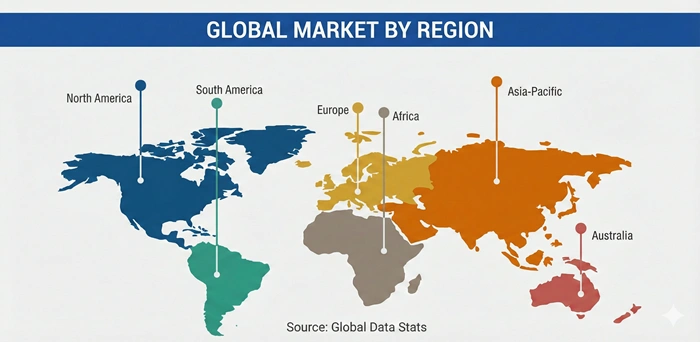
Regional Insights
North America
North America Leads the Global Wellness Supplements Market With the World's Highest Per-Capita Supplement Spending, Most Developed Retail Infrastructure, and Strongest Direct-to-Consumer Digital Commerce Ecosystem*
North America holds the dominant position in the global Wellness Supplements market, accounting for approximately 37.20% of total global market revenue in 2025, and is projected to maintain steady growth at a CAGR of approximately 8.10% from 2026 to 2033. The United States is overwhelmingly the primary revenue driver within the region — home to the world's largest and most developed dietary supplement industry, the highest per-capita annual supplement spending of any major national market, a deeply ingrained consumer supplement usage culture supported by decades of health education, and a highly competitive and innovative supplement brand ecosystem encompassing both established global companies and a large number of emerging direct-to-consumer wellness brands. Leading companies dominating the North American Wellness Supplements market include Abbott Laboratories, Amway Corporation, Herbalife Nutrition, Nature's Sunshine Products, and a rapidly growing cohort of premium DTC brands including Ritual, Care/of, and Athletic Greens — all of which are capitalizing on the region's exceptional e-commerce infrastructure and health-conscious consumer base.
Canada contributes meaningfully to regional market revenue through its large and health-conscious urban consumer market and growing adoption of premium wellness supplement categories including probiotics, plant-based proteins, and cognitive health products. The North American market outlook for 2026–2033 is strongly positive — reinforced by continued growth in personalized nutrition technology adoption, the progressive mainstream acceptance of functional and therapeutic supplement categories including adaptogens and nootropics, and sustained high consumer investment in preventive health management that positions the region as the most commercially sophisticated and highest-value regional market in the global wellness supplement industry.
Asia Pacific
Asia Pacific Is the Fastest-Growing Wellness Supplements Market, Driven by China's Health Consumer Revolution, India's Nutraceuticals Expansion, and Deep Regional Affinity for Herbal and Botanical Supplement Traditions*
Asia Pacific is the fastest-growing regional segment in the Wellness Supplements market, projected to expand at a CAGR of approximately 10.20% from 2026 to 2033 — the highest of any region globally. China is the single most important growth market within Asia Pacific — where a massive and rapidly expanding middle class with rising disposable incomes and deepening health consciousness is driving exceptional demand growth across virtually all supplement categories, from vitamins and minerals to traditional Chinese herbal supplements, probiotic products, and imported premium wellness brands. Leading supplement companies with strong China market positions include By-Health, Amway China, China Resources Health, and a growing number of international brands including Blackmores, Swisse, and GNC that have established significant consumer recognition and distribution networks in the Chinese market. India represents the second-most important growth market in the region — where the government's active support for the Ayurveda, Yoga, Naturopathy, Unani, Siddha, and Homeopathy (AYUSH) sector is fueling rapid growth of herbal and Ayurvedic supplement products alongside conventional vitamin and mineral supplementation.
Japan, South Korea, Australia, and Southeast Asian markets are additional important contributors to Asia Pacific supplement revenue. Japan's highly sophisticated functional food and supplement market — characterized by the government's FOSHU (Foods for Specified Health Uses) regulatory framework — supports strong premium supplement consumption. Australia's Blackmores and Swisse brands have built significant regional presence across the Asia Pacific supplement market, while South Korea's domestic supplement industry is growing strongly on the back of high consumer health awareness and rapidly expanding online supplement commerce. The combination of demographic growth, rising incomes, expanding health awareness, and deep cultural familiarity with botanical health traditions positions Asia Pacific as the most commercially dynamic and fastest-expanding regional opportunity in global wellness supplements through 2033.
Top Key Players
-
Abbott Laboratories (United States)
-
Amway Corporation (United States)
-
Herbalife Nutrition Ltd. (United States)
-
Nature's Sunshine Products Inc. (United States)
-
Nestlé Health Science S.A. (Switzerland)
-
Pfizer Consumer Healthcare — Centrum (United States)
-
GNC Holdings LLC (United States)
-
By-Health Co. Ltd. (China)
-
Blackmores Limited (Australia)
-
USANA Health Sciences Inc. (United States)
-
Chr. Hansen Holding A/S (Denmark)
-
Glanbia plc (Ireland)
-
NOW Health Group Inc. (United States)
-
Garden of Life LLC (United States)
-
Swisse Wellness Pty Ltd. (Australia)
Recent Developments
-
Abbott Laboratories (2025) — Expanded its Ensure adult nutrition and wellness supplement product portfolio with the launch of new specialized formulations targeting the fast-growing cognitive health and healthy aging supplement segments — incorporating clinically studied ingredients including HMB, omega-3 DHA, and B-vitamin complexes — reinforcing Abbott's position as the global leader in science-backed adult nutritional supplements and responding to the growing consumer demand for evidence-based cognitive and longevity wellness products.
-
Nestlé Health Science (2024) — Announced the strategic acquisition of a leading probiotic and gut health supplement company — significantly expanding Nestlé Health Science's microbiome health product portfolio and manufacturing capabilities — reflecting the company's conviction in the extraordinary commercial growth potential of the gut health supplement category and its strategic priority of building a world-class personalized nutrition and therapeutic supplement business under the Nestlé Health Science platform.
-
Herbalife Nutrition (2025) — Launched a comprehensive digital wellness platform integrating AI-powered personalized nutrition assessment, customized supplement recommendation, and wellness coaching services — designed to enhance the company's direct sales network effectiveness and improve consumer health outcome delivery — marking a significant strategic investment in technology-enabled personalized wellness that positions Herbalife competitively in the rapidly growing personalized supplement market segment.
-
Amway Corporation (2024) — Expanded its Nutrilite supplement product line with a new range of plant-based and sustainably sourced botanical supplement formulations — incorporating certified organic herbal ingredients including ashwagandha, turmeric, and elderberry — targeting the growing consumer preference for clean-label, plant-derived wellness supplements and reinforcing Nutrilite's market positioning as the world's leading plant-based supplement brand with a heritage of sustainable agricultural sourcing.
-
Glanbia plc (2025) — Completed a strategic bolt-on acquisition of a specialized sports nutrition and active wellness supplement brand in North America — strengthening Glanbia's premium sports and performance nutrition portfolio alongside its existing Optimum Nutrition and BSN supplement brands — enabling the company to capture the growing convergence between sports performance nutrition and mainstream wellness supplement categories that is creating significant cross-sell and market expansion opportunities in the active nutrition segment.
Market Trends
The Convergence of Personalized Nutrition Technology and the Extraordinary Consumer Enthusiasm for Plant-Based, Adaptogenic, and Gut Health Supplements Are the Two Most Defining Trends Reshaping the Wellness Supplements Market*
The most transformative trend reshaping the Wellness Supplements market is the convergence of advanced personalization technology — including AI-powered health assessment platforms, direct-to-consumer DNA and microbiome testing, and continuous health monitoring wearables — with the consumer supplement purchasing journey. Consumers are increasingly moving away from generalized supplement regimens toward highly individualized daily supplement protocols informed by their personal health data — creating powerful demand for premium personalized supplement subscription services that deliver customized product formulations based on each individual's unique nutritional profile, health goals, and biomarker data. As the technology enabling personalized supplement recommendations becomes more sophisticated, accessible, and affordable, this trend is expected to progressively convert a growing proportion of the supplement consumer population from low-engagement generic supplement buyers into high-engagement personalized supplement subscribers with significantly higher annual supplement spending.
The extraordinary and sustained consumer enthusiasm for plant-based, adaptogenic, and functional botanical supplement products represents the second major trend reshaping the wellness supplement industry's product innovation priorities and consumer demand patterns. Adaptogens — herbal compounds with traditional roots in Ayurveda and Traditional Chinese Medicine that support the body's ability to adapt to physical and mental stress — have crossed from niche functional food status into mainstream consumer supplement categories, with ashwagandha, rhodiola, reishi mushroom, lion's mane, and maca root among the most commercially successful adaptogenic ingredients experiencing exceptional retail sales growth across both specialty health and mainstream grocery channels. This plant-based and botanical supplement trend is simultaneously aligning with broader consumer sustainability values — as plant-derived supplement ingredients carry a significantly smaller environmental footprint than synthetic or animal-derived alternatives — creating a virtuous alignment between consumer health priorities, environmental values, and clean-label product preferences.
Segments Covered in the Report
By Product Type:
-
Vitamins and Minerals
-
Herbal and Botanical Supplements
-
Protein and Amino Acid Supplements
-
Probiotics and Prebiotics
-
Omega Fatty Acids
-
Specialty Supplements
-
Sports Nutrition Supplements
By Form:
-
Tablets
-
Capsules
-
Softgels
-
Powders
-
Liquids
-
Gummies and Chewables
By Application:
-
General Wellness
-
Immunity Support
-
Digestive Health
-
Bone and Joint Health
-
Heart Health
-
Mental Health and Cognitive Function
-
Weight Management
-
Sports Performance
By Distribution Channel:
-
Online Retail
-
Specialty Health Stores
-
Pharmacies and Drug Stores
-
Supermarkets and Hypermarkets
-
Direct Sales
By End User:
-
Adults
-
Geriatric Population
-
Children
-
Athletes and Fitness Enthusiasts
By Region:
-
North America
-
Europe
-
Asia Pacific
-
Latin America
-
Middle East & Africa
Frequently Asked Questions
Question 1: What is the current size of the Wellness Supplements market and what is its projected value by 2033?
Answer: The Wellness Supplements market was valued at USD 193.42 billion in 2025 and is projected to reach USD 396.50 billion by 2033. It is expected to grow at a CAGR of 8.60% from 2026 to 2033, driven by rising health consciousness, aging demographics, e-commerce channel growth, and growing consumer interest in gut health and mental wellness supplements.
Question 2: What are the primary growth drivers of the Wellness Supplements market?
Answer: The global shift toward preventive healthcare — with consumers increasingly adopting daily supplement routines for immunity, energy, and long-term health maintenance — is the most fundamental driver of the Wellness Supplements market. The rapidly aging global population driving age-specific supplement demand, expanding e-commerce supplement retail, and growing consumer awareness of gut microbiome and cognitive health are additional strong structural growth contributors.
Question 3: Which region dominates the Wellness Supplements market and which is growing fastest?
Answer: North America leads the Wellness Supplements market with approximately 37.20% of global revenue in 2025, driven by the world's highest per-capita supplement spending and most developed health retail and direct-to-consumer digital infrastructure. Asia Pacific is the fastest-growing region at approximately 10.20% CAGR through 2033, driven by China's health consumer revolution, India's expanding nutraceuticals sector, and the region's deep cultural affinity for herbal and botanical supplement products.
Question 4: Which product type and application segment lead the Wellness Supplements market?
Answer: Vitamins and minerals dominate the Wellness Supplements market product segment with approximately 32.40% of total revenue in 2025, reflecting their universal daily adoption across all demographic groups. Immunity support is the leading application segment at approximately 28.60% market share, while probiotics and prebiotics are the fastest-growing product type at approximately 11.80% CAGR, driven by the extraordinary growth of consumer gut health awareness.
Question 5: How is personalized nutrition technology impacting the future of the Wellness Supplements market?
Answer: AI-powered personalized nutrition platforms — which use health assessments, genetic data, and biomarker testing to generate customized supplement recommendations — are transforming how consumers discover and purchase wellness supplements, converting occasional buyers into committed high-frequency supplement subscribers with significantly higher annual spending. This personalization trend is creating premium pricing opportunities for supplement brands that deliver credible personalized health outcomes and is expected to be one of the most commercially significant growth dynamics in the Wellness Supplements market through 2033.