
Wearable Sensors Market Overview
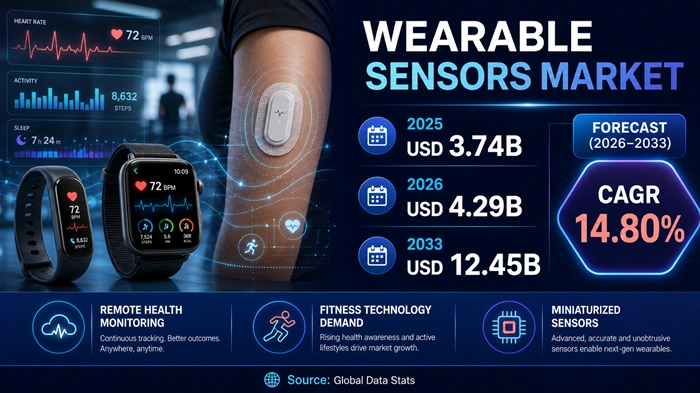
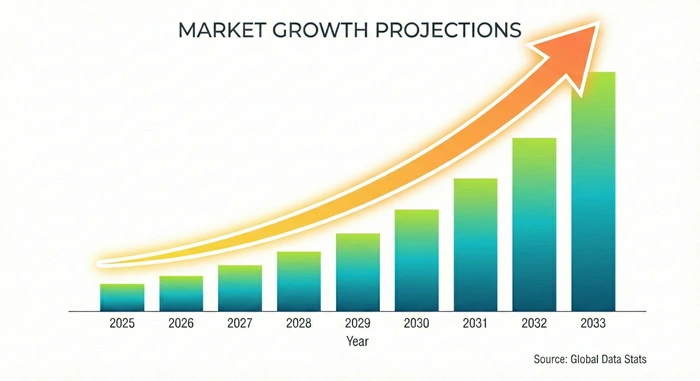
The global wearable sensors market size is valued at USD 3.74 billion in 2025 and is predicted to increase from USD 4.29 billion in 2026 to approximately USD 12.45 billion by 2033, growing at a CAGR of 14.80% from 2026 to 2033.
The wearable sensors market encompasses miniaturized electronic devices capable of detecting and measuring physical, chemical, and biological parameters when integrated into clothing, accessories, or directly attached to the human body.
Rising health consciousness, accelerating adoption of connected devices, and growing emphasis on preventive healthcare drive substantial demand for sensor-enabled wearables across consumer, medical, and industrial applications worldwide. Organizations and individuals increasingly recognize that continuous monitoring through wearable sensors delivers superior insights compared to periodic clinical measurements, enabling early disease detection, personalized treatment, and lifestyle optimization. The market benefits from technological advancements including flexible and stretchable sensors, energy-efficient microelectronics, artificial intelligence integration, and multi-parameter monitoring capabilities that expand application possibilities.
AI Impact on the Wearable Sensors Industry
Intelligent Analytics and Predictive Capabilities Transform Health Monitoring
Artificial intelligence is fundamentally revolutionizing the wearable sensors market by introducing intelligent data analysis, predictive health alerts, and personalized insights that significantly enhance the value proposition of sensor-enabled devices beyond simple data collection. AI algorithms enable wearable sensors to continuously analyze physiological data including heart rate variability, sleep patterns, activity levels, and biochemical markers to identify anomalies indicating potential health issues before clinical symptoms manifest. Machine learning models trained on extensive health datasets predict disease progression, estimate fitness recovery timelines, recommend personalized exercise intensities, and generate actionable insights that transform raw sensor data into meaningful health guidance.
The integration of AI with wearable sensors transforms preventive healthcare through early detection capabilities that identify cardiovascular irregularities, sleep disorders, stress indicators, and metabolic dysfunction weeks or months before traditional diagnostic methods reveal problems. AI-powered wearables automatically adjust monitoring parameters based on individual baseline patterns, filtering false alerts while highlighting genuine health concerns that require medical attention. Advanced AI capabilities include context-aware analytics that distinguish exercise-induced heart rate elevation from cardiac events, sentiment analysis combining physiological signals with behavioral patterns, and predictive models forecasting health trajectories supporting proactive intervention. Furthermore, AI-driven sensor fusion combines data from multiple sensor types including accelerometers, optical sensors, and biosensors to generate comprehensive health assessments more accurate than individual sensor readings.
Growth Factors
Health Awareness and Chronic Disease Management Drive Market Expansion
Rising global health consciousness and increasing emphasis on preventive care represent primary drivers propelling wearable sensors market growth as individuals proactively monitor fitness metrics, sleep quality, stress levels, and vital signs to maintain wellness and prevent disease. The global burden of chronic diseases including diabetes, cardiovascular conditions, obesity, and respiratory disorders creates substantial demand for continuous monitoring solutions that enable patients and healthcare providers to track disease progression, medication effectiveness, and lifestyle interventions. Wearable sensors deliver non-invasive, continuous monitoring that proves particularly valuable for chronic disease management where frequent clinical visits prove impractical and traditional monitoring methods provide only intermittent snapshots of patient conditions. Healthcare cost containment initiatives motivate payers and providers to adopt remote patient monitoring solutions incorporating wearable sensors that reduce hospital readmissions, enable early intervention, and shift care delivery from reactive treatment to proactive management.
Technological advancements in microelectronics, materials science, and nanotechnology enable development of smaller, more accurate, and more comfortable sensors that integrate seamlessly into wearable devices without compromising user experience. The proliferation of smartphones and wireless connectivity infrastructure creates essential ecosystem support for wearable sensors market expansion by providing data processing, cloud storage, user interfaces, and communication channels connecting sensors to broader health management platforms. Innovations including flexible electronics, conductive textiles, graphene-based sensors, and biocompatible materials enable new form factors ranging from skin patches to smart clothing that deliver medical-grade monitoring in everyday wearables. Additionally, declining sensor costs resulting from manufacturing scale efficiencies and component commoditization make wearable health monitoring accessible to broader consumer segments beyond premium device buyers.
Market Outlook
Expanding Applications and Technology Convergence Sustain Growth Momentum
The wearable sensors market outlook remains exceptionally positive as converging trends including telemedicine expansion, personalized medicine adoption, and digital health transformation create expanding opportunities across healthcare, wellness, sports, and industrial safety applications. Market participants continue investing heavily in research and development to enhance sensor capabilities through improved accuracy, extended battery life, multi-parameter monitoring, miniaturization, and integration of advanced features including continuous glucose monitoring, blood pressure tracking, and biochemical analysis. The integration of wearable sensors with augmented reality, virtual reality, and metaverse applications creates novel use cases beyond traditional health monitoring, including gesture control, environmental sensing, and immersive experiences requiring real-time biometric feedback.
Sports and fitness applications demonstrate particularly strong growth potential as professional athletes, fitness enthusiasts, and recreational exercisers adopt sensor-enabled wearables for performance optimization, injury prevention, and training program personalization. The corporate wellness sector shows accelerating adoption as employers implement wearable sensor programs supporting employee health initiatives, workplace safety monitoring, and productivity optimization through fatigue detection and ergonomic assessment. Healthcare applications expand beyond fitness tracking into clinical-grade monitoring for applications including cardiac arrhythmia detection, fall prediction for elderly care, medication adherence verification, and post-surgical recovery tracking. Industry analysts project continued market expansion throughout the forecast period with particularly robust growth anticipated in biosensor segments serving diabetes management, mental health monitoring, and personalized nutrition applications.
Expert Speaks
-
Rob Milnes, CEO of Sonda and viO HealthTech, emphasized that wearables have evolved beyond step counting and heart rate monitoring into sophisticated devices graduating from passive monitors to active health partners capable of real-time intervention and predictive care, with technology now enabling detection of neurological conditions and prediction of health events before they occur, fundamentally reshaping how we understand and manage our health.
-
Industry experts from MATTER Health Technology Hub highlighted that the global smart wearables market is projected to grow at CAGR of 15.3% reaching USD 283 billion by 2030, with healthcare applications leading this explosive growth as devices transition from simple monitoring to comprehensive health management platforms supporting preventive care and personalized treatment.
-
Sam Propis, Staff Product Manager at WHOOP, along with industry leaders, emphasized that modern wearable technology pushes boundaries of possibility in health monitoring, enabling continuous assessment of multiple physiological parameters that provide unprecedented insights into human performance, recovery, and overall wellness supporting data-driven health decisions.
Key Report Takeaways
-
North America leads the global wearable sensors market with approximately 35.9% to 60.13% regional share in 2025, driven by high adoption of wearable devices, advanced healthcare infrastructure, presence of major technology companies, and strong consumer awareness regarding preventive health monitoring.
-
Asia Pacific represents the fastest-growing regional market, expected to register robust CAGR through 2033, fueled by rising disposable incomes, increasing smartphone penetration, growing health consciousness, and substantial electronics manufacturing capacity across China, Japan, and South Korea.
-
Motion sensors dominate market demand accounting for approximately 33.60% share in 2025, with accelerometers, gyroscopes, and magnetometers forming the foundation for activity tracking, gesture recognition, and navigation applications across fitness bands, smartwatches, and gaming controllers.
-
Smart wristwear applications lead end-use segments with USD 1.26 billion revenue in 2024 projected to reach USD 10.23 billion by 2034 at CAGR of 23.5%, driven by smartwatch proliferation, fitness tracker popularity, and continuous feature enhancement attracting mass market adoption.
-
Biosensors represent the fastest-growing sensor category, projected to expand at 18.85% CAGR challenging motion sensor dominance as skin-conformal chemistry extends monitoring from glucose to cortisol, lactate, and other biochemical markers supporting personalized health management.
-
Healthcare end-user segment demonstrates exceptional growth potential as medical-grade wearable sensors gain regulatory approvals, reimbursement support, and clinical validation enabling remote patient monitoring, chronic disease management, and early disease detection applications.
Market Scope
| Report Coverage Details | |
|---|---|
| Market Size by 2033 | USD 12.45 Billion |
| Market Size by 2025 | USD 3.74 Billion |
| Market Size by 2026 | USD 4.29 Billion |
| Market Growth Rate from 2026 to 2033 | CAGR of 14.80% |
| Dominating Region | North America |
| Fastest Growing Region | Asia Pacific |
| Base Year | 2025 |
| Forecast Period | 2026 to 2033 |
| Segments Covered | Sensor Type, Application, End User, Region |
| Regions Covered | North America, Europe, Asia Pacific, Latin America, Middle East & Africa |
Market Dynamics
Drivers Impact Analysis
Preventive Healthcare Focus and Technology Miniaturization Accelerate Adoption
| Factor | (≈) % Impact on CAGR Forecast | Geographic Relevance | Impact Timeline |
|---|---|---|---|
| Preventive healthcare emphasis | 4.2% | Global, particularly developed markets | Immediate and ongoing |
| Chronic disease prevalence | 3.6% | Global focus | Immediate to long-term |
| Smartphone ecosystem growth | 3.1% | Asia Pacific, North America | Medium-term |
| Technological miniaturization | 2.5% | Global | Ongoing |
The global shift toward preventive healthcare and wellness monitoring represents the most significant driver propelling wearable sensors market expansion as individuals increasingly adopt proactive health management strategies enabled by continuous physiological monitoring. Growing awareness regarding the connection between lifestyle factors and chronic disease motivates consumers to track activity levels, sleep patterns, heart rate variability, and stress indicators that inform behavioral modifications supporting long-term health. Healthcare systems worldwide recognize economic advantages of preventive care through reduced treatment costs, fewer hospital admissions, and improved patient outcomes, creating supportive environments for wearable sensor adoption across clinical and consumer applications. Insurance providers and employers increasingly offer incentives including premium discounts and wellness rewards for individuals utilizing wearable sensors to demonstrate healthy behaviors, creating financial motivations supporting market growth.
The escalating prevalence of chronic diseases including diabetes, cardiovascular conditions, obesity, and hypertension creates substantial demand for continuous monitoring solutions that wearable sensors market products uniquely deliver through non-invasive, comfortable, real-time data collection. Diabetes management particularly drives biosensor adoption as continuous glucose monitors transform disease management from periodic finger-stick testing to comprehensive glucose pattern analysis enabling precise insulin dosing and dietary optimization. Remote patient monitoring programs incorporating wearable sensors enable healthcare providers to track patient conditions between clinic visits, identify deteriorating health status requiring intervention, and personalize treatment based on individual response patterns rather than population averages. The smartphone proliferation creating ubiquitous computing platforms supporting wearable sensor ecosystems through data processing, cloud connectivity, user interfaces, and integration with health applications that transform raw sensor data into actionable insights. Technological advancements in microelectronics, MEMS fabrication, and materials science enable development of smaller, more accurate, lower-power sensors that integrate into comfortable wearable form factors from wristbands to skin patches without compromising user experience.
Restraints Impact Analysis
Accuracy Concerns and Data Privacy Issues Create Adoption Barriers
| Factor | (≈) % Impact on CAGR Forecast | Geographic Relevance | Impact Timeline |
|---|---|---|---|
| Accuracy and reliability concerns | -2.3% | Healthcare applications globally | Ongoing |
| Data privacy and security issues | -1.8% | Global, particularly Europe | Ongoing |
| Battery life limitations | -1.4% | Consumer segments | Medium-term |
| High device costs | -1.2% | Price-sensitive emerging markets | Short to medium-term |
Concerns regarding measurement accuracy and reliability of consumer-grade wearable sensors create significant barriers to wearable sensors market adoption in clinical applications where data quality directly impacts medical decision-making. Consumer wearables often exhibit variability in measurement precision compared to medical-grade equipment, with factors including sensor placement, skin characteristics, motion artifacts, and environmental conditions affecting data quality. Healthcare providers express hesitation adopting consumer wearable data into clinical workflows without rigorous validation demonstrating measurement accuracy meets medical standards, creating regulatory and liability concerns that slow market penetration. The lack of standardization across different manufacturers regarding measurement methodologies, data formats, and quality metrics complicates data interpretation and integration into electronic health records.
Data privacy and security concerns surrounding continuous health monitoring create consumer apprehension regarding potential misuse of sensitive physiological information by device manufacturers, application developers, insurers, or employers. The wearable sensors market faces regulatory scrutiny in regions including Europe where GDPR mandates stringent data protection requirements including explicit consent, data minimization, and user control over personal health information. High-profile data breaches affecting health technology companies amplify consumer concerns about security vulnerabilities that could expose intimate health details to malicious actors. Battery life limitations constraining continuous monitoring duration require frequent recharging that diminishes user convenience and creates gaps in data collection when devices remain uncharged. Additionally, premium pricing for advanced wearable sensors equipped with comprehensive monitoring capabilities exceeds affordability thresholds for price-sensitive consumers in emerging markets despite growing interest in health tracking.
Opportunities Impact Analysis
Clinical Integration and Biochemical Monitoring Create Growth Prospects
| Factor | (≈) % Impact on CAGR Forecast | Geographic Relevance | Impact Timeline |
|---|---|---|---|
| Medical-grade sensor development | 3.4% | Global, particularly developed markets | Medium-term |
| Biochemical sensing advancement | 2.9% | Healthcare applications globally | Medium to long-term |
| Industrial safety applications | 2.1% | Manufacturing and construction sectors | Medium-term |
| Smart clothing integration | 1.7% | Sports and healthcare | Long-term |
The development of medical-grade wearable sensors receiving regulatory approvals from agencies including FDA and CE marking creates substantial opportunities within the wearable sensors market by enabling clinical applications requiring validated measurement accuracy. Medical-grade devices supporting remote patient monitoring, post-discharge surveillance, chronic disease management, and clinical trial data collection command premium pricing while opening reimbursement opportunities through health insurance coverage. Strategic partnerships between sensor manufacturers and healthcare providers, pharmaceutical companies, and telemedicine platforms create integrated care delivery models where continuous monitoring informs clinical decisions, medication adjustments, and intervention timing. Regulatory pathways including FDA's Digital Health Center of Excellence streamline approval processes for innovative wearable sensors demonstrating clinical utility, accelerating market entry for novel monitoring technologies.
Advancements in biochemical sensing technologies enabling non-invasive or minimally invasive monitoring of glucose, lactate, cortisol, electrolytes, and other biomarkers represent transformative opportunities expanding wearable sensors market applications beyond mechanical motion and optical measurements. Continuous glucose monitoring evolution from invasive sensors to non-invasive optical or transdermal approaches addresses massive diabetes market while establishing technical foundations for monitoring additional metabolites. Mental health applications leveraging cortisol monitoring, heart rate variability analysis, and behavioral pattern recognition create novel intervention opportunities for stress management, anxiety disorders, and depression monitoring that complement traditional therapeutic approaches. Industrial safety applications incorporating wearable sensors for worker fatigue detection, environmental hazard exposure monitoring, ergonomic assessment, and location tracking in hazardous environments create expanding demand beyond consumer and healthcare segments. The integration of sensors into smart textiles and clothing creates comfortable, unobtrusive monitoring solutions supporting continuous health surveillance without requiring users to remember wearing separate devices.
Segment Analysis
Motion Sensors Dominance
Established Technology and Wide Application Maintain Market Leadership
Motion sensors command the dominant position within the wearable sensors market, accounting for approximately 33.60% of total market share in 2025, as accelerometers, gyroscopes, and magnetometers provide essential functionality for activity tracking, step counting, gesture recognition, and navigation applications across fitness trackers, smartwatches, and gaming devices. These sensors leverage mature microelectromechanical systems technology delivering reliable performance at low cost with minimal power consumption suitable for battery-operated wearables requiring extended operational duration between charges. The widespread adoption of motion sensors across consumer electronics establishes component commoditization supporting competitive pricing that enables mass market penetration across price tiers from budget fitness bands to premium smartwatches. Motion sensor data forms the foundation for popular wearable features including automatic activity recognition distinguishing walking from running or cycling, sleep stage detection through movement patterns, and fall detection for elderly care applications.
North America demonstrates particularly strong motion sensor adoption with fitness-conscious consumers embracing activity trackers and smartwatches from companies including Apple, Fitbit, and Garmin that leverage accelerometer and gyroscope data for comprehensive movement analysis, while leading semiconductor manufacturers including STMicroelectronics from Switzerland, Bosch Sensortec from Germany, and InvenSense from the United States dominate component supply through advanced MEMS fabrication capabilities. The wearable sensors market motion segment benefits from continuous innovation including higher sensitivity sensors detecting subtle movements, multi-axis configurations providing comprehensive orientation tracking, and integration with other sensor types creating comprehensive activity profiles. Sports and fitness applications particularly value motion sensors for performance analytics including running cadence optimization, swimming stroke analysis, golf swing assessment, and general activity quantification supporting training program adjustments. However, the mature technology faces commoditization pressure limiting profit margins, while biosensors demonstrate faster growth rates as biochemical monitoring addresses unmet needs in health management and disease detection that motion sensing cannot satisfy.
Smart Wristwear Application Leadership
Convenience and Feature Integration Drive Substantial Market Share
Smart wristwear applications maintain market leadership within the wearable sensors market, generating USD 1.26 billion revenue in 2024 with projections reaching USD 10.23 billion by 2034 at remarkable CAGR of 23.5%, as smartwatches and fitness bands offer convenient, socially acceptable form factors integrating multiple sensors into devices consumers wear daily. Wrist-worn devices provide optimal locations for optical heart rate sensors, motion sensors, and proximity to major arteries enabling blood oxygen monitoring, blood pressure estimation, and other cardiovascular measurements without requiring invasive sensor placement. The proliferation of smartwatch adoption driven by technology leaders including Apple, Samsung, and Garmin normalizes wrist-worn technology across demographics from fitness enthusiasts to elderly users monitoring health conditions. Feature integration combining communications, notifications, payments, and health monitoring creates comprehensive value propositions justifying premium pricing while supporting high replacement rates as consumers upgrade to latest models.
Asia Pacific demonstrates exceptional smart wristwear growth momentum driven by massive electronics manufacturing capacity in China enabling cost-competitive device production, rising middle-class populations with growing purchasing power, and technology-savvy young consumers embracing connected devices, while manufacturers including Xiaomi Corporation, Huawei, and Samsung Electronics effectively serve regional markets through competitively priced offerings featuring advanced sensor capabilities. North America shows strong smart wristwear demand with health-conscious consumers willing to invest in premium devices offering medical-grade sensors, FDA clearances for specific health monitoring applications, and comprehensive ecosystem integration with healthcare providers and insurance companies. The wearable sensors market wristwear segment particularly benefits from continuous feature enhancement as manufacturers add capabilities including ECG monitoring, blood oxygen sensing, skin temperature measurement, and stress tracking that transform devices from simple fitness trackers into comprehensive health management platforms. Battery technology improvements extending operational duration to multiple days despite increasing sensor counts address primary consumer convenience concerns, while wireless charging solutions simplify power management.
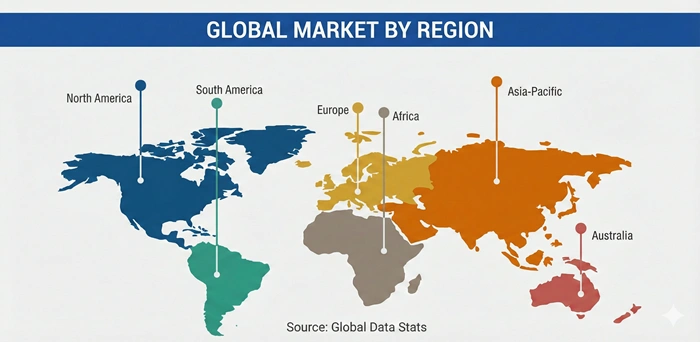
Regional Insights
North America Market Leadership
Technology Innovation and Healthcare Infrastructure Drive Regional Dominance
North America commands substantial leadership within the wearable sensors market, maintaining approximately 35.9% to 60.13% regional share in 2025, driven by high adoption rates of wearable devices, advanced healthcare infrastructure supporting remote monitoring integration, presence of major technology companies including Apple and Fitbit, and strong consumer awareness regarding preventive health benefits. The United States represents the primary growth engine with market valued at USD 644.30 million in 2025 projected to reach USD 2.41 billion by 2034, reflecting robust consumer demand for smartwatches, fitness trackers, and medical-grade wearables across demographic segments. Healthcare system transformation toward value-based care models emphasizing patient outcomes rather than service volume creates supportive environment for remote patient monitoring programs incorporating wearable sensors that reduce hospital readmissions and enable early intervention.
Major corporations headquartered throughout North America including Apple, Fitbit (Google), Garmin, and Whoop maintain strong market positions through comprehensive product portfolios spanning consumer fitness to clinical-grade monitoring, complemented by sophisticated software platforms transforming sensor data into actionable health insights. The wearable sensors market in North America particularly benefits from favorable regulatory environment with FDA pathways supporting medical device classification for clinically validated sensors, reimbursement programs covering remote patient monitoring, and innovation-friendly policies encouraging digital health entrepreneurship. Research institutions and technology hubs including Silicon Valley, Boston, and Seattle concentrate innovative startups developing novel sensor technologies spanning flexible electronics, biochemical monitoring, and AI-powered analytics that advance industry capabilities. Canada demonstrates growing adoption across healthcare applications with government initiatives supporting digital health integration and aging population creating demand for elderly care monitoring solutions.
Asia Pacific Fastest Growth
Manufacturing Scale and Rising Health Consciousness Drive Regional Expansion
Asia Pacific emerges as the fastest-growing regional wearable sensors market, expected to register robust CAGR through 2033, propelled by rising disposable incomes enabling consumer electronics purchases, increasing smartphone penetration creating ecosystem support, growing health consciousness particularly among urban populations, and substantial electronics manufacturing capacity concentrated in China, Japan, South Korea, and Taiwan. The region encompasses massive population bases across China, India, and Southeast Asia where growing middle classes demonstrate increasing willingness to invest in health and wellness products including fitness trackers and smartwatches. Electronics manufacturing services providers maintain extensive supply chains supporting rapid integration of sensor technologies into wearable devices at competitive price points enabling mass market accessibility.
Japan demonstrates particular strength in sensor technology development with companies including Murata Manufacturing, Rohm Semiconductor, and Omron leveraging decades of electronic component expertise to create advanced motion sensors, biosensors, and integration platforms serving global wearables industry. China represents the largest national market within Asia Pacific with domestic brands including Xiaomi, Huawei, and Oppo offering feature-rich wearables at aggressive price points capturing substantial market share while established multinationals compete for premium segments. The wearable sensors market in Asia Pacific benefits from government initiatives promoting digital health infrastructure, aging populations across developed markets including Japan and South Korea creating elderly care monitoring demand, and sports and fitness culture gaining popularity among younger generations. Southeast Asian nations demonstrate accelerating adoption as economic development improves affordability, smartphone proliferation reaches critical mass, and health awareness campaigns promote preventive care.
Top Key Players
-
STMicroelectronics N.V. (Switzerland)
-
Bosch Sensortec GmbH (Germany)
-
Texas Instruments Incorporated (United States)
-
Analog Devices Inc. (United States)
-
NXP Semiconductors N.V. (Netherlands)
-
Infineon Technologies AG (Germany)
-
TE Connectivity Ltd. (Switzerland)
-
Panasonic Corporation (Japan)
-
Murata Manufacturing Co. Ltd. (Japan)
-
ROHM Semiconductor (Japan)
-
Knowles Electronics LLC (United States)
-
TDK Corporation (Japan)
-
Sensirion AG (Switzerland)
-
InvenSense Inc. (United States)
-
MEMSIC Semiconductor Co. Ltd. (China)
Recent Developments
-
DexCom Inc. (2024): In November 2024, DexCom announced strategic data-sharing partnership with Ōura investing USD 75 million, enabling continuous glucose monitoring data integration with ring-based health metrics including sleep quality, stress levels, and activity patterns creating comprehensive metabolic health monitoring platform combining wearable biosensors with lifestyle analytics.
-
Medtronic PLC (2024): In September 2024, Medtronic obtained exclusive distribution rights for Corsano's multi-parameter wearable device featuring ECG, SpO2, and blood pressure monitoring in Western Europe, enhancing acute care portfolio with advanced physiological sensors supporting continuous patient surveillance in hospital and post-discharge settings.
-
Fitbit (Google) (2024): In August 2024, Fitbit collaborated with Quest Diagnostics launching WEAR-ME pilot study pairing Fitbit's biometric and behavioral data with laboratory test results exploring how wearable sensors combined with clinical diagnostics improve metabolic health assessment and disease prevention strategies.
-
Bosch Sensortec (2025): In March 2025, Bosch unveiled integrated development platform combining MEMS accelerometer, magnetometer, gyroscope, environmental sensors, and wireless connectivity with comprehensive software toolkit enabling developers to rapidly prototype sensor-based wearable applications reducing time-to-market for innovative health monitoring devices.
-
Texas Instruments (2025): In March 2025, Texas Instruments introduced DesignDrive Position Manager technology with new microcontrollers simplifying integration of digital and analog sensors into wearable and industrial applications, demonstrating semiconductor companies' commitment to reducing development complexity supporting broader wearable sensor adoption.
Market Trends
Flexible Electronics and Multi-Parameter Monitoring Transform Device Capabilities
The rapid advancement of flexible and stretchable sensor technologies represents a transformative trend within the wearable sensors market, enabling comfortable, conformal devices that maintain intimate skin contact for accurate biometric measurement while adapting to body movements without constraining user activities. Graphene-based sensors, conductive polymers, and organic electronics deliver mechanical flexibility impossible with traditional rigid silicon components, creating novel form factors including skin patches, smart textiles, and temporary tattoo sensors that provide medical-grade monitoring with consumer-friendly user experiences. Materials innovations support development of biodegradable and sustainable wearable sensors addressing environmental concerns associated with electronic waste from disposable health monitoring devices. Flexible sensor arrays enable large-area monitoring configurations suitable for applications including pressure mapping for wound care, distributed temperature sensing for infection detection, and electromyography for rehabilitation therapy.
The trend toward multi-parameter sensing incorporating complementary sensor modalities into single wearable devices creates comprehensive health monitoring platforms delivering richer insights than individual measurements. Modern smartwatches integrate optical heart rate sensors, accelerometers, gyroscopes, skin temperature sensors, electrocardiogram electrodes, blood oxygen monitors, and bioimpedance sensors providing holistic cardiovascular, activity, sleep, and stress assessment. The wearable sensors market demonstrates increasing emphasis on energy-efficient sensor designs extending battery life through low-power electronics, intermittent sampling strategies, and energy harvesting from body heat or motion that enable continuous monitoring without frequent charging. Cloud connectivity and edge computing integration enable sophisticated data analysis combining sensor measurements with contextual information including location, environmental conditions, and user-reported symptoms creating personalized health insights accounting for individual circumstances rather than generic population-based interpretations.
Segments Covered in the Report
By Sensor Type:
-
Accelerometer
-
Gyroscope
-
Magnetometer
-
Pressure Sensor
-
Temperature Sensor
-
Biosensors
-
Heart Rate Sensors
-
Glucose Sensors
-
Blood Pressure Sensors
-
SpO2 Sensors
-
-
Optical Sensors
-
Force Sensors
-
Humidity Sensors
By Application:
-
Smart Wristwear
-
Smartwatches
-
Fitness Bands
-
-
Smart Bodywear
-
Smart Footwear
-
Smart Eyewear
-
Smart Clothing
By End User:
-
Consumer Electronics
-
Smartphones & Tablets
-
Gaming Devices
-
-
Healthcare
-
Remote Patient Monitoring
-
Chronic Disease Management
-
Clinical Trials
-
-
Sports & Fitness
-
Performance Tracking
-
Training Optimization
-
-
Industrial
-
Worker Safety
-
Ergonomic Monitoring
-
-
Defense & Military
-
Soldier Health Monitoring
-
Tactical Applications
-
By Region:
-
North America
-
United States
-
Canada
-
Mexico
-
-
Europe
-
Germany
-
United Kingdom
-
France
-
Italy
-
Spain
-
Rest of Europe
-
-
Asia Pacific
-
China
-
Japan
-
South Korea
-
India
-
Southeast Asia
-
Rest of Asia Pacific
-
-
Latin America
-
Brazil
-
Argentina
-
Rest of Latin America
-
-
Middle East & Africa
-
United Arab Emirates
-
Saudi Arabia
-
South Africa
-
Rest of Middle East & Africa
-
Frequently Asked Questions
Question 1: What is the projected wearable sensors market size by 2033?
Answer: The global wearable sensors market is projected to reach USD 12.45 billion by 2033, growing from USD 4.29 billion in 2026 at a CAGR of 14.80%.
Question 2: Which region dominates the wearable sensors market currently?
Answer: North America dominates the wearable sensors market with approximately 35.9% to 60.13% share in 2025, driven by high device adoption and advanced healthcare infrastructure.
Question 3: What are the key drivers of wearable sensors market growth?
Answer: Key drivers include preventive healthcare emphasis, chronic disease prevalence, smartphone ecosystem growth, technological miniaturization, and increasing health consciousness among consumers worldwide.
Question 4: Which sensor type leads the wearable sensors market?
Answer: Motion sensors lead with approximately 33.60% market share in 2025, though biosensors demonstrate fastest growth at 18.85% CAGR challenging current dominance.
Question 5: How is AI impacting the wearable sensors market?
Answer: AI enables intelligent data analysis, predictive health alerts, personalized insights, early disease detection, and context-aware monitoring that transform raw sensor data into actionable health guidance.