
Volumetric Display Market Overview
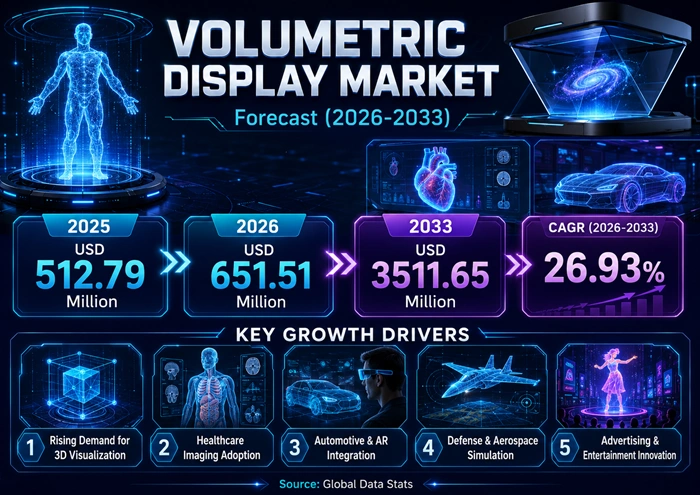
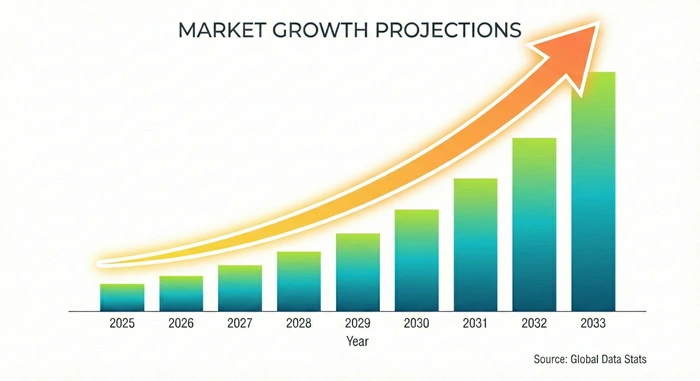
The global volumetric display market size is valued at USD 512.79 million in 2025 and is predicted to increase from USD 651.51 million in 2026 to approximately USD 3511.65 million by 2033, growing at a CAGR of 26.93% from 2026 to 2033. This exceptional growth reflects the accelerating demand for immersive, glasses-free three-dimensional visualization technologies across medical imaging, entertainment, defense, retail, and scientific research — as conventional 2D flat-panel displays increasingly fail to meet the spatial visualization requirements of modern professional and consumer applications.
The volumetric display industry sits at the intersection of advanced photonics, computer graphics, and spatial computing — three fields simultaneously undergoing rapid innovation. As digital-physical convergence deepens across industries, volumetric and holographic display technologies are transitioning from laboratory curiosities into commercially deployable platforms with compelling real-world value propositions.
AI Impact on the Volumetric Display Industry
Artificial Intelligence Is Unlocking New Levels of Real-Time Rendering, Content Personalization, and Scene Reconstruction That Are Transforming What Volumetric Display Systems Can Deliver to End Users
Artificial intelligence is playing a transformational role in the volumetric display market by solving some of the most complex computational challenges that have historically limited the practical deployment of three-dimensional display technology. Real-time volumetric rendering — the process of generating photorealistic 3D light fields at interactive frame rates — has long demanded enormous computational resources that made live or dynamic volumetric content impractical for most use cases. AI-powered neural rendering techniques, including neural radiance fields (NeRF) and related architectures, are now enabling the compression and reconstruction of complex 3D scenes with dramatically lower computational overhead, making real-time volumetric content creation and delivery increasingly feasible for consumer and professional platforms alike.
In the medical sector, AI is significantly amplifying the clinical utility of volumetric display systems by enabling intelligent, anatomy-aware 3D rendering of imaging data from CT, MRI, and ultrasound sources. AI segmentation algorithms can automatically isolate and highlight anatomical structures of interest — a tumor, a vascular anomaly, or a fracture plane — and render them as spatially accurate volumetric objects that surgeons can examine from any angle without specialized eyewear. This capability is transforming surgical planning and intraoperative guidance workflows, providing clinicians with an intuitive spatial understanding of patient anatomy that flat-screen 2D imaging simply cannot match. As AI imaging models become more accurate and faster, their integration with volumetric displays is expected to become a standard feature of premium medical visualization platforms across the forecast period.
Growth Factors
Surging Demand for Immersive Visualization in Healthcare and Defense, Combined With the Rise of Spatial Computing Platforms and the AR/VR Revolution, Is Driving the Volumetric Display Market Into a New Era of Rapid Expansion
The healthcare industry is one of the most powerful growth engines behind the volumetric display market today. Surgeons, radiologists, and medical educators are increasingly recognizing that true three-dimensional visualization of patient anatomy — achievable through volumetric displays — provides a fundamentally superior diagnostic and procedural planning experience compared to interpreting 2D cross-sections on a conventional monitor. Applications in neurosurgery, orthopedics, cardiovascular intervention planning, and complex oncology case review are all benefiting from the spatial accuracy that volumetric displays offer. As hospital systems invest in next-generation surgical suites and imaging centers, volumetric display technology is increasingly being evaluated as a premium tool that can improve clinical decision-making and potentially reduce procedural risk through better preoperative spatial understanding.
The broader spatial computing revolution — driven by the mass-market adoption of augmented reality, mixed reality, and virtual reality headsets — is also creating strong indirect demand for volumetric display content and technology. Platforms including Apple Vision Pro, Meta Quest, and Microsoft HoloLens are familiarizing consumers, enterprise users, and developers with spatial 3D content formats that are naturally complementary to volumetric display viewing experiences. As spatial content creation pipelines mature and as the cost of high-performance photonic and laser display components continues to decline, the unit economics of volumetric display systems will improve substantially — driving adoption in retail, live events, advertising, and consumer home entertainment segments that are currently cost-constrained but represent enormous latent demand over the 2026–2033 forecast horizon.
Market Outlook
Falling Component Costs, Expanding 5G-Enabled Content Delivery Infrastructure, and Cross-Industry Deployment Across Healthcare, Defense, and Entertainment Position the Volumetric Display Market for Explosive Long-Term Growth Through 2033
The long-term outlook for the volumetric display market is exceptionally compelling, with the combination of technology maturation, falling production costs, and multi-vertical demand expansion creating a structural growth environment that few display technology markets have achieved in recent memory. As laser, photonic crystal, and advanced optical component manufacturing scales up — driven by demand from adjacent markets including lidar, AR/VR optics, and advanced photonics — the cost of building high-quality volumetric display systems is expected to decrease significantly, making them increasingly accessible to mid-market commercial applications in retail, corporate communication, and live events.
The deployment of 5G and Wi-Fi 6E networks is enabling high-bandwidth, low-latency content streaming that is essential for delivering the volumetric video formats (which are far larger in data size than conventional 2D video) that make real-time remote volumetric visualization practical. As content creation tools for volumetric formats become more accessible through platforms like Microsoft Mesh, Leia Inc.'s 3D ecosystem, and Looking Glass Factory's development SDKs, the volume of deployable volumetric content will grow rapidly — addressing one of the most significant demand constraints the market has faced. Together, these technology enablers and content ecosystem developments are expected to produce consistently above-average market growth through 2033.
Expert Speaks
-
"Three-dimensional spatial visualization is the natural evolution of how humans interact with complex digital information. At Microsoft, our investment in holographic and mixed reality platforms reflects our conviction that volumetric display technology will become as fundamental to professional knowledge work as the flat-screen monitor was in the 1990s." — CEO, Microsoft Corporation
-
"Sony has been at the forefront of display innovation for decades, and volumetric and light field technologies represent the next horizon. We believe the convergence of spatial audio, volumetric video, and interactive 3D display will redefine entertainment, education, and creative production in ways that are just beginning to become commercially visible." — CEO, Sony Corporation
-
"The medical imaging revolution is far from over. At GE HealthCare, we are deeply invested in the next generation of visualization — including volumetric display technologies that will allow surgeons and radiologists to interact with patient data in three dimensions, making every diagnosis more precise and every procedure better planned." — CEO, GE HealthCare
Key Report Takeaways
-
North America dominates the volumetric display market with approximately 39% of global revenue share in 2025, supported by high R&D investment from leading technology companies, strong healthcare infrastructure investment, active defense procurement programs, and early adoption of advanced visualization technology across commercial and industrial sectors
-
Asia Pacific is the fastest-growing region, projected to expand at a CAGR of approximately 29.5% from 2026 to 2033, driven by accelerating digital transformation investments in China, Japan, and South Korea, rising consumer demand for immersive entertainment experiences, and significant government-backed R&D spending on advanced display technologies
-
The commercial end-user segment is the leading revenue contributor, accounting for approximately 38% of market share in 2025, driven by enterprise adoption in retail visualization, corporate training, architectural and engineering design review, and brand activation event applications where volumetric displays deliver dramatic audience engagement advantages
-
Medical imaging and surgical planning is the leading application segment, contributing approximately 32% of total market revenue in 2025, as hospitals and surgical centers adopt three-dimensional visualization platforms to improve procedural planning accuracy, clinical education, and patient communication in complex care settings
-
Swept-volume displays are the most widely deployed type, holding approximately 42% of market share in 2025, valued for their ability to produce high-resolution, full-color 3D images visible from multiple viewing angles simultaneously without requiring special eyewear, making them well-suited to professional demonstration and visualization environments
-
The entertainment and gaming application segment is projected to grow the fastest, expected to expand at a CAGR of approximately 32% through 2033, capturing an increasing share of the market as consumer-grade holographic and light field display platforms approach affordable price points and as spatial content production pipelines mature to support large-scale commercial deployment
Market Scope
| Report Coverage | Details |
|---|---|
| Market Size by 2033 | USD 3511.65 Million |
| Market Size by 2025 | USD 512.79 Million |
| Market Size by 2026 | USD 651.51 Million |
| Market Growth Rate from 2026 to 2033 | CAGR of 26.93% |
| Dominating Region | North America |
| Fastest Growing Region | Asia Pacific |
| Base Year | 2025 |
| Forecast Period | 2026 – 2033 |
| Segments Covered | Type, Technology, End User, Application, Region |
| Regions Covered | North America, Europe, Asia Pacific, Latin America, Middle East & Africa |
Market Dynamics
Drivers Impact Analysis
Rising Healthcare Visualization Needs, Growing Defense and Aerospace Procurement, and the Explosive Expansion of Spatial Computing Ecosystems Are the Primary Engines Driving Global Volumetric Display Market Growth
| Driver | ≈ % Impact on CAGR Forecast | Geographic Relevance | Impact Timeline |
|---|---|---|---|
| Healthcare medical imaging and surgical planning adoption | ~28% | North America, Europe | Short to Long Term |
| Defense and aerospace visualization programs | ~22% | North America, Europe, MEA | Short to Medium Term |
| AR/VR and spatial computing ecosystem expansion | ~20% | North America, Asia Pacific | Medium to Long Term |
| Retail and advertising immersive experience demand | ~18% | Global | Short to Medium Term |
| Declining component and manufacturing costs | ~12% | Global | Medium to Long Term |
The volumetric display market is benefiting enormously from the healthcare sector's growing appetite for three-dimensional patient data visualization. Clinical applications are not limited to surgical planning — they extend to medical education, remote telemedicine consultation with 3D anatomy reference, pharmaceutical research visualization, and radiotherapy planning. In each of these contexts, the ability to manipulate a spatially accurate, full-color volumetric representation of real patient or molecular data provides clinicians and researchers with insights that no amount of 2D imaging can replicate. As hospital procurement committees increasingly evaluate advanced visualization tools as part of surgical suite modernization programs, volumetric displays are moving from experimental demonstrations to active evaluation pipelines.
Defense and aerospace applications represent a second powerful and high-value demand channel that is less price-sensitive and more technology-driven than most commercial markets. Military command and control centers, battlefield planning systems, satellite data visualization platforms, and training simulation environments all have compelling use cases for three-dimensional spatial display technology. The ability to display real-time tactical or geographic information in three-dimensional space — visible to multiple operators simultaneously, without headsets or special equipment — is a capability that defense agencies are actively willing to invest in at premium price points. This high-value, relatively concentrated procurement channel provides important early-market revenue support while the broader consumer and commercial markets continue to develop.
Restraints Impact Analysis
High System Cost, Limited Volumetric Content Availability, and Technical Complexity in Manufacturing and Deployment Remain the Most Significant Barriers Moderating Growth in the Volumetric Display Market
| Restraint | ≈ % Impact on CAGR Forecast | Geographic Relevance | Impact Timeline |
|---|---|---|---|
| High hardware cost and production complexity | ~-28% | Emerging markets, consumer segment | Ongoing |
| Limited volumetric content creation ecosystem | ~-24% | Global | Short to Medium Term |
| Technical challenges in image brightness and resolution | ~-20% | Global | Medium Term |
| Lack of industry-wide standards and formats | ~-16% | Global | Medium to Long Term |
| Limited specialist workforce for system integration | ~-12% | Emerging markets | Long Term |
The primary constraint limiting faster adoption of the volumetric display market across most segments is the significant hardware cost associated with current-generation volumetric display systems. High-end swept-volume and static-volume displays capable of delivering commercially acceptable image quality and brightness currently cost between tens of thousands and hundreds of thousands of dollars per unit — a price point that is accessible to well-funded healthcare institutions, defense agencies, and technology demonstrators, but remains far beyond the reach of mainstream commercial, educational, or consumer applications. The complex optical, mechanical, and computing subsystems involved in generating true three-dimensional volumetric imagery drive manufacturing costs that current production volumes have not yet been sufficient to bring down significantly.
The limited availability of native volumetric content represents an equally significant constraint that operates as a demand bottleneck independent of hardware cost. Most existing digital media — including broadcast video, streamed content, and enterprise data visualization — has been created for conventional 2D displays and requires either costly conversion workflows or entirely new content production pipelines to be presented effectively in volumetric format. Without a broad and growing library of compelling volumetric content, even customers who can afford the hardware have limited justification for deployment beyond niche demonstration or specialized professional applications. This chicken-and-egg dynamic between hardware deployment and content availability is one of the key challenges that the industry must address to unlock the market's full growth potential.
Opportunities Impact Analysis
The Convergence of Light Field Display Innovation, Spatial Video Content From AR/VR Platforms, and Expanding Medical and Defense Procurement Are Creating Transformational Opportunities Across the Volumetric Display Market
| Opportunity | ≈ % Impact on CAGR Forecast | Geographic Relevance | Impact Timeline |
|---|---|---|---|
| Consumer spatial video content from Apple Vision Pro and Meta | ~+30% | North America, Europe, Asia Pacific | Short to Medium Term |
| Hospital and surgical center premium visualization investment | ~+25% | North America, Europe | Short to Medium Term |
| Holographic telepresence and remote communication | ~+22% | Global | Medium to Long Term |
| Smart retail and immersive advertising deployments | ~+14% | Global | Short to Medium Term |
| Academic and scientific research visualization | ~+9% | North America, Europe | Long Term |
The rapid adoption of spatial video formats and three-dimensional content creation tools by mainstream technology platforms is creating a critical content ecosystem opportunity that could fundamentally accelerate the volumetric display market. Apple's introduction of spatial video capture and playback through the Vision Pro headset — and the subsequent adoption of spatial video recording by iPhone 15 Pro and later devices — has for the first time created a mass-market pipeline of three-dimensional content that volumetric display manufacturers can leverage. As this spatial content library grows into the billions of videos over the coming years, the value proposition for volumetric display playback devices — which can render this content without requiring the viewer to wear a headset — becomes dramatically stronger.
Holographic telepresence represents perhaps the most transformative long-term opportunity in the market. The ability to project a photorealistic, life-size volumetric representation of a remote meeting participant — visible to multiple people in the room simultaneously without headsets — would fundamentally transform how distributed teams collaborate, how medical consultations are conducted remotely, and how global businesses communicate with clients and partners. Microsoft, META (with its Codec Avatars research program), and several well-funded startups are actively developing components of this capability. As each technical element matures — volumetric capture, real-time neural rendering, high-brightness display, and 5G transport — the pieces of a viable holographic telepresence system are coming together in ways that make commercial deployment within the 2026–2033 forecast window plausible for specialized high-value markets.
Segment Analysis
By Type
Swept-Volume Displays Lead Current Market Deployment, While Static-Volume Displays Emerge as the Higher-Growth Segment for Future Professional and Consumer Volumetric Applications
Swept-volume displays are the leading type in the volumetric display market, holding approximately 42% of global market share in 2025 and growing at a CAGR of approximately 25.5% through 2033. These systems work by rapidly rotating or oscillating a two-dimensional display surface through a three-dimensional space, exploiting the persistence of human vision to create the perception of a solid, floating volumetric image visible from multiple angles simultaneously. Their relative maturity, established manufacturing processes, and strong multi-angle visibility without eyewear make them the preferred choice for medical visualization, industrial design review, defense situational awareness displays, and professional trade show demonstrations. North America leads in swept-volume display adoption, driven by defense R&D contracts and medical device procurement programs; companies including Voxon Photonics (Australia), Looking Glass Factory (USA), and Burton Inc. (Japan) are the primary technology providers in this segment, each offering differentiated display form factors and brightness specifications.
Static-volume displays are the higher-growth segment within the volumetric display landscape, projected to expand at a CAGR of approximately 28.5% through 2033 as photonic and laser technology advances enable higher-brightness, higher-resolution, and more compact implementations. Static-volume displays trap light at fixed three-dimensional coordinates within a medium — typically through laser-induced fluorescence or two-photon absorption techniques — creating persistent 3D image elements that do not require mechanical motion, making them more robust, quieter, and capable of producing sharper images than swept-volume alternatives. While currently more expensive and technically complex to implement at commercial scale, static-volume displays are attracting significant R&D investment from academic institutions and deep-tech startups seeking to build the next generation of volumetric platforms. Asia Pacific — particularly Japan, South Korea, and China — is emerging as the most active region for static-volume display research and early commercial development, reflecting the region's broader strength in photonics and laser technology innovation.
By Application
Medical Imaging and Surgical Planning Leads Application Revenue, While Entertainment and Gaming Represents the Highest-Growth Application Segment in the Volumetric Display Market Through 2033
Medical imaging and surgical planning holds the leading application position in the volumetric display market, contributing approximately 32% of total market revenue in 2025 and growing at a CAGR of approximately 26% through 2033. This dominance reflects the exceptional value that three-dimensional spatial visualization provides to clinical teams dealing with complex anatomical cases — from planning multi-vessel cardiovascular interventions and navigating complex spinal surgery approaches to mapping tumor margins in neurosurgery and evaluating orthopedic implant sizing. The intuitive, from-any-angle visibility of volumetric displays eliminates the need for clinicians to mentally reconstruct three-dimensional spatial relationships from 2D image stacks — a cognitively demanding task that introduces both time cost and potential error. North America leads in medical volumetric display adoption, supported by strong healthcare technology investment and a large base of research hospitals and academic medical centers; companies including Holoxica Ltd. (UK), Leia Inc. (USA), and EchoPixel (USA) have developed specialized medical visualization platforms on volumetric and light field display technology foundations.
The entertainment and gaming application segment currently holds approximately 20% of the market in 2025 but is projected to grow at the fastest application CAGR of approximately 32% through 2033, eventually becoming one of the two largest application segments by market value. This growth is being fueled by the spatial computing revolution, the mainstreaming of holographic concert experiences, the adoption of volumetric video in sports broadcasts and live event coverage, and growing consumer curiosity with immersive, glasses-free 3D entertainment that delivers a qualitatively different experience from conventional TV or streaming. Companies including Looking Glass Factory (USA), Leia Inc. (USA), and Voxon Photonics (Australia) are at the forefront of making consumer-accessible volumetric entertainment platforms commercially viable, while major technology brands are investing in the underlying content creation infrastructure that will populate these platforms with compelling experiences as pricing continues to fall toward consumer accessibility levels.
Regional Insights
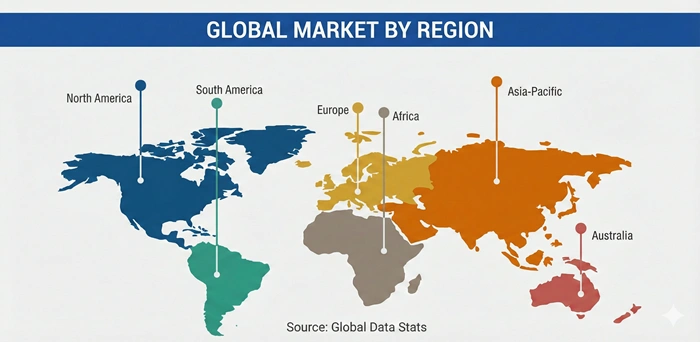
North America's Deep Technology Investment and Research Leadership, Combined With Asia Pacific's Explosive Innovation Growth, Define the Two Most Strategically Important Geographies in the Global Volumetric Display Market
North America
North America's Concentration of Deep-Tech Companies, Defense Procurement Programs, and World-Leading Healthcare Research Institutions Establishes It as the Clear Global Leader in the Volumetric Display Market
North America holds the dominant position in the volumetric display market, accounting for approximately 39% of global revenue share in 2025, with the United States driving the vast majority of regional demand. The region's leadership is anchored by the concentration of volumetric display technology developers, the depth of venture capital and corporate R&D funding flowing into spatial computing and holographic display startups, and the strength of institutional demand from healthcare systems and defense procurement programs. The U.S. Department of Defense has funded multiple research programs exploring volumetric and holographic display applications for battlefield situational awareness, command and control visualization, and pilot training simulation — creating sustained technology pull that accelerates innovation across the broader ecosystem. The regional CAGR for North America is projected at approximately 26% from 2026 to 2033, reflecting both continuing innovation leadership and expanding commercial deployment.
Key companies operating at the forefront of the North American market include Looking Glass Factory (USA), Leia Inc. (USA), Coretec Group Inc. (USA), Lightspace Technologies (USA), Voxon Photonics (Australia, with significant U.S. market presence), and Holoxica Ltd. (UK, with active U.S. partnerships). The region's vibrant startup ecosystem is continuously producing new entrants with novel approaches to volumetric display technology, supported by university research programs at MIT, Stanford, and Carnegie Mellon that have historically been among the most productive sources of breakthrough display technology innovation globally.
Asia Pacific
Asia Pacific's Government-Backed Advanced Display R&D, Booming Consumer Technology Ecosystem, and Leading Photonics Manufacturing Infrastructure Are Powering the Fastest Regional Growth Rate in the Volumetric Display Market
Asia Pacific is the fastest-growing region in the volumetric display market, projected to expand at a CAGR of approximately 29.5% from 2026 to 2033, slightly above the global average, driven by the extraordinary dynamism of the region's technology and innovation ecosystems. China is the region's most active investment market, with government-directed R&D programs in advanced display technology, growing consumer technology giants with deep interest in spatial computing, and a large pool of photonics and laser engineering talent capable of rapidly advancing volumetric display manufacturing capabilities. Japan contributes deep precision optics and electronics manufacturing expertise that is directly relevant to volumetric display production, while South Korea — home to globally leading display manufacturers including Samsung and LG — is investing in next-generation spatial display research with an eye toward the consumer electronics market that could ultimately represent the largest volume channel for volumetric technology.
India is emerging as an interesting secondary market, driven by its rapidly growing technology services sector and increasing adoption of immersive visualization tools in medical education and industrial training applications. Australia, home to Voxon Photonics — one of the world's most commercially active volumetric display companies — is punching above its weight in technological contribution to the global market. Key regional players include Jiangmen Seekway Technology Limited (China), Holoxica Ltd. (collaborative presence in Asia Pacific), Burton Inc. (Japan), and regional operations of Looking Glass Factory and Leia Inc., all of which are actively building Asia Pacific distribution and partnership networks to capture the region's rapid growth in demand for immersive three-dimensional visualization technology.
Report Customization Available by Region and Country
This report is fully customizable to provide targeted volumetric display market intelligence for specific regions, countries, and geographies, delivering localized market sizing, competitive landscape analysis, technology adoption rates, investment trends, and growth opportunity assessments tailored to your precise geographic focus.
Customized versions of this report are available for all major global regions and their constituent countries, offering granular insights into local demand drivers, regulatory environments, key player market share, and strategic opportunity maps for each specific market. Whether your organization requires a single-country deep-dive into an emerging volumetric technology ecosystem or a multi-region competitive landscape overview, the report can be tailored to deliver exactly the geographic intelligence your decision-making requires.
North America
-
United States — Global leader in volumetric display innovation, with the highest concentration of deep-tech companies, defense procurement programs, and healthcare visualization investment
-
Canada — Growing technology innovation ecosystem with increasing interest in immersive visualization for healthcare and creative industries
-
Mexico — Developing commercial and retail market with growing adoption of advanced display technologies in entertainment and advertising sectors
Europe
-
United Kingdom — Active volumetric display research and healthcare visualization market, home to Holoxica Ltd. and several academic technology transfer programs
-
Germany — Strong industrial and automotive design visualization adoption, with growing interest in volumetric display for precision manufacturing and engineering review applications
-
France — Growing creative technology and luxury retail market with interest in holographic display for premium brand experiences and interactive advertising
-
Italy — Expanding design and fashion industry adoption of advanced visualization technologies for product development and consumer experience applications
-
Rest of Europe — Includes Netherlands, Sweden, and Denmark as active research and creative technology markets for volumetric display innovation
Asia Pacific
-
China — Fastest-growing country market with government-backed display R&D investment and rapidly expanding consumer technology and entertainment sectors
-
India — Emerging market with growing medical education and industrial training adoption of immersive three-dimensional visualization technologies
-
Japan — Deep photonics and precision optics manufacturing capability with established players including Burton Inc. at the forefront of volumetric display technology
-
South Korea — Leading consumer display innovation ecosystem with Samsung and LG exploring next-generation spatial display formats for consumer electronics applications
-
Australia — Home of Voxon Photonics, one of the world's most commercially active volumetric display companies, with growing enterprise and event market adoption
-
Rest of Asia Pacific — Includes Singapore, Taiwan, and Vietnam as growing technology adoption and manufacturing markets for advanced display systems
Latin America
-
Brazil — Largest Latin American technology market with growing interest in volumetric display for entertainment, events, and medical education
-
Argentina — Developing technology ecosystem with increasing adoption of advanced visualization tools in healthcare and education sectors
-
Rest of Latin America — Includes Colombia and Chile as emerging markets for immersive display technology adoption in commercial and educational contexts
Middle East & Africa
-
UAE — Premium technology adoption market with strong government investment in smart city, entertainment, and defense visualization technologies aligned with national digital transformation vision
-
Saudi Arabia — Rapidly expanding technology market with Vision 2030-driven investment in immersive entertainment, defense modernization, and advanced healthcare visualization infrastructure
-
Rest of MEA — Includes Israel (strong defense and cybersecurity technology ecosystem) and South Africa as emerging markets for advanced display technology applications
Top Key Players
-
Looking Glass Factory Inc. (United States)
-
Voxon Photonics (Australia)
-
Leia Inc. (United States)
-
Coretec Group Inc. (United States)
-
Lightspace Technologies Inc. (United States)
-
Holoxica Ltd. (United Kingdom)
-
Burton Inc. (Japan)
-
Jiangmen Seekway Technology Limited (China)
-
Sony Corporation (Japan)
-
Zebra Imaging Inc. (United States)
-
Alioscopy SAS (France)
-
Holografika Kft. (Hungary)
-
Eon Reality Inc. (United States)
-
Dimenco B.V. (Netherlands)
-
RealFiction ApS (Denmark)
Recent Developments
-
In 2024, Leia Inc. completed its strategic acquisition of Dimenco B.V., a Netherlands-based pioneer in three-dimensional display technology, significantly strengthening its light field display intellectual property portfolio and expanding its European market presence and R&D capabilities in glassfree 3D visualization
-
In 2025, Looking Glass Factory launched its Looking Glass Go platform — a compact, affordable consumer-accessible holographic display device — alongside a major SDK update that enabled developers to directly convert spatial video content captured on Apple iPhone into Looking Glass-compatible three-dimensional holographic formats
-
In 2025, Voxon Photonics announced a partnership with a leading medical simulation company to integrate its VX2 volumetric display into surgical training and anatomy education programs at medical schools across North America and Europe, marking its most significant expansion into the healthcare education sector
-
In 2024, Sony Corporation unveiled its advanced light field display research prototype at a major international display technology conference, signaling its intention to enter the professional volumetric visualization market with a premium product targeting broadcast, creative production, and healthcare visualization applications
-
In 2025, Coretec Group Inc. progressed its CSpace volumetric display technology into expanded pilot programs with defense and aerospace customers in the United States, securing new evaluation contracts that validate the commercial readiness of its three-dimensional situational awareness visualization platform for mission-critical applications
Market Trends
The Convergence of Spatial Video Content Ecosystems, Advances in Photophoretic and Laser Display Physics, and the Mainstreaming of Holographic Telepresence Are Defining the Most Consequential Near-Term Trends Reshaping the Volumetric Display Market
The most significant trend reshaping the volumetric display market right now is the arrival of mainstream spatial video content ecosystems driven by Apple's Vision Pro platform and iPhone spatial video recording. For the first time, consumers, content creators, and enterprises are generating three-dimensional spatial media at scale — creating a growing library of content that is natively suited to volumetric display playback. Volumetric display manufacturers who can position their hardware as the ideal glasses-free playback device for this content are accessing a demand catalyst that previous display technology generations never enjoyed. This trend is also accelerating investment in volumetric display software ecosystems, with SDKs, content conversion pipelines, and cloud-based volumetric media platforms being developed by both startups and major technology companies eager to serve this emerging content category.
A parallel trend of great scientific and commercial significance is the rapid advancement of free-space volumetric display techniques — particularly photophoretic trap and multi-photon laser display approaches — that generate three-dimensional light points suspended in open air rather than within a physical display medium. While still at early stages of commercial maturity, demonstrations of these technologies at research institutions and deep-tech startups have produced remarkable results — including the ability to project touch-responsive floating light sculptures visible from all directions without any physical display enclosure. If even a fraction of the current research pace can be translated into manufacturable systems within the 2026–2033 timeframe, these technologies could represent a step-change leap in volumetric display capability that would dramatically expand the market's application breadth and commercial appeal.
Segments Covered in the Report
-
By Type
-
Swept-Volume Display
-
Static-Volume Display
-
3D Printing-Based Display
-
Others
-
-
By Technology
-
DLP (Digital Light Processing)
-
LCD (Liquid Crystal Display)
-
OLED (Organic Light Emitting Diode)
-
Laser Technology
-
Others
-
-
By End User
-
Consumer
-
Commercial
-
Industrial
-
Healthcare
-
Aerospace & Defense
-
Others
-
-
By Application
-
Medical Imaging & Surgical Planning
-
Entertainment & Gaming
-
Retail & Advertising
-
Aerospace & Defense Visualization
-
Scientific Research & Education
-
Others
-
-
By Region
-
North America
-
U.S.
-
Canada
-
Mexico
-
-
Europe
-
U.K.
-
Germany
-
France
-
Italy
-
Rest of Europe
-
-
Asia Pacific
-
China
-
India
-
Japan
-
South Korea
-
Australia
-
Rest of Asia Pacific
-
-
Latin America
-
Brazil
-
Argentina
-
Rest of Latin America
-
-
Middle East & Africa
-
UAE
-
Saudi Arabia
-
Rest of MEA
-
-
❝ Built for Every Level — From Startups to Industry Giants ❞
Here Is Exactly How This Report Works for You
-
For tier-1 technology corporations, institutional investors, and executive leadership teams evaluating market entry or portfolio expansion in the emerging immersive display sector, this report delivers precise volumetric display market sizing, competitor revenue analysis, competitor technology and revenue source breakdowns, and geopolitical risk assessment — providing the evidence-based foundation needed to evaluate M&A targeting, strategic partnership opportunities, and capital allocation timing in a market that is transitioning rapidly from research prototype to commercial deployment phase across multiple high-value verticals
-
For mid-market companies in medical device, defense, retail technology, and creative production sectors, the report provides segment-level demand forecasting, technology adoption readiness analysis, and end-user procurement driver mapping — giving product managers, business development teams, and technology integrators the intelligence needed to identify which volumetric display configurations are gaining fastest traction in specific verticals, how supply-demand dynamics are affecting component pricing, and which competitive approaches are proving most effective in winning design-ins and deployment contracts
-
Startups and emerging deep-tech innovators in the photonics, spatial computing, and advanced display space will find the report's technology landscape mapping, investment flow analysis, partnership ecosystem intelligence, and early-adopter vertical identification critically valuable for refining product positioning, prioritizing go-to-market applications, and demonstrating market credibility to investors and strategic partners who require evidence-based projections of the volumetric display market's commercial trajectory through 2033
Frequently Asked Questions
Question 1: What is the current size and growth forecast of the volumetric display market?
Answer: The volumetric display market was valued at USD 512.79 million in 2025 and is projected to reach approximately USD 3511.65 million by 2033. It is expected to grow at a CAGR of 26.93% from 2026 to 2033, reflecting extraordinary demand across healthcare, defense, and entertainment applications.
Question 2: What are the main types of technology used in the volumetric display market?
Answer: The volumetric display market primarily comprises swept-volume displays, static-volume displays, and emerging laser and photophoretic-based systems. Swept-volume technology currently holds the largest market share at approximately 42%, though static-volume approaches are growing faster due to their superior image quality potential and mechanical simplicity.
Question 3: Which application is driving the most revenue in the volumetric display market?
Answer: Medical imaging and surgical planning is the leading application in the volumetric display market, contributing approximately 32% of total revenue in 2025. Clinical demand for accurate three-dimensional patient anatomy visualization in complex surgical planning and radiological review drives this leadership.
Question 4: Which region dominates the volumetric display market and which is growing fastest?
Answer: North America dominates the volumetric display market with approximately 39% of global share in 2025, driven by defense investment and healthcare technology adoption. Asia Pacific is the fastest-growing region, expanding at a CAGR of approximately 29.5% through 2033 driven by China's government-backed display technology investment and the region's photonics manufacturing strength.
Question 5: What are the biggest challenges facing the volumetric display market today?
Answer: The volumetric display market faces two primary challenges — high hardware system costs that limit adoption to well-funded institutional buyers, and a limited ecosystem of native volumetric content that reduces the deployment justification for most commercial and consumer customers. Both challenges are expected to ease progressively over the forecast period as manufacturing scales and spatial content creation becomes mainstream through platforms like Apple Vision Pro and Meta Quest.