
Virtual Private Network (VPN) Market Overview
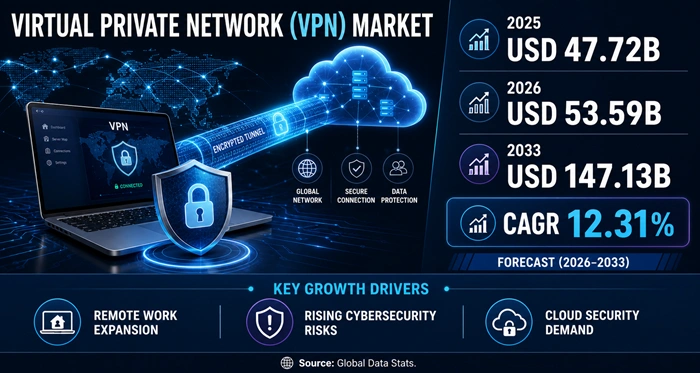
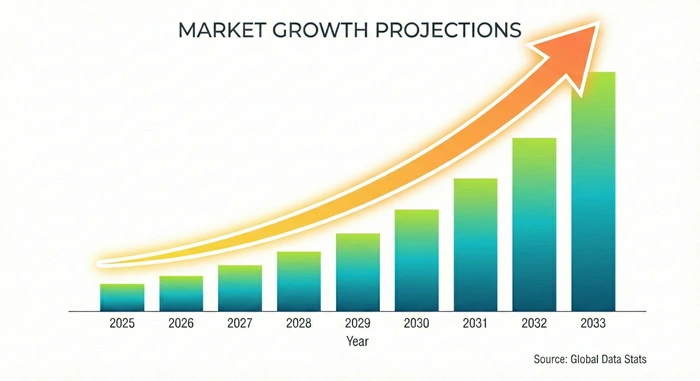
The global virtual private network market size is valued at USD 47.72 billion in 2025 and is predicted to increase from USD 53.59 billion in 2026 to approximately USD 147.13 billion by 2033, growing at a CAGR of 12.31% from 2026 to 2033.
The virtual private network market encompasses secure encrypted tunneling technologies and services that enable organizations and individuals to protect data transmission, maintain privacy, and establish secure connections across public networks including the internet.
Rising cyber threats, accelerating remote work adoption, and growing data privacy concerns drive substantial market expansion worldwide. Organizations increasingly recognize that VPN solutions deliver superior security, regulatory compliance support, and operational continuity compared to unprotected network connections exposing sensitive information to interception and unauthorized access. The market benefits from technological advancements including zero-trust architecture integration, software-defined perimeter capabilities, cloud-native deployments, and artificial intelligence-powered threat detection that transform VPNs from simple encryption tools into comprehensive security platforms.
AI Impact on the Virtual Private Network Industry
Intelligent Threat Detection and Adaptive Security Enhance Protection
Artificial intelligence is fundamentally transforming the virtual private network market by introducing intelligent threat detection, adaptive security protocols, and automated incident response capabilities that significantly enhance protection beyond traditional static encryption approaches. AI-powered VPN systems continuously analyze traffic patterns, user behaviors, connection anomalies, and potential security threats to identify suspicious activities including malware infiltration attempts, unauthorized access efforts, and data exfiltration schemes that rule-based systems might miss. Machine learning algorithms process historical connection data, geographical access patterns, device characteristics, and authentication behaviors to establish baseline profiles enabling real-time anomaly detection when deviations suggest compromised credentials or malicious activities. Advanced AI capabilities support predictive security by identifying emerging threat patterns, recommending protocol optimizations, and automatically adjusting encryption standards based on risk assessments.
The integration of AI with VPN infrastructure enables intelligent bandwidth allocation, dynamic routing optimization, and automated server selection delivering improved performance while maintaining security standards. AI-driven systems analyze network congestion, server loads, latency measurements, and user proximity to automatically route connections through optimal pathways balancing speed with security requirements. Natural language processing capabilities enhance user experience through conversational interfaces supporting troubleshooting, configuration assistance, and security recommendations without requiring technical expertise. Furthermore, AI-powered authentication strengthens access controls through behavioral biometrics, contextual risk scoring, and continuous verification replacing traditional single-factor authentication with adaptive multi-factor approaches adjusting security requirements based on connection contexts, device trust levels, and user behavior patterns.
Growth Factors
Remote Work Proliferation and Cyber Threat Escalation Drive Market Expansion
The explosive growth of remote and hybrid work models represents the primary driver propelling virtual private network market expansion as organizations require secure connectivity solutions enabling employees to access corporate resources from distributed locations without compromising data protection. The COVID-19 pandemic permanently altered workplace dynamics with surveys indicating that work-from-home arrangements will remain prevalent, creating sustained demand for VPN infrastructure supporting remote workforce productivity. Enterprise VPN deployments secure connections from home offices, co-working spaces, coffee shops, and mobile locations where employees access sensitive corporate systems, confidential documents, and proprietary applications through potentially insecure public networks. Organizations recognize that VPN implementations reduce security risks associated with remote access while enabling business continuity, geographic flexibility, and talent acquisition unconstrained by physical office proximity.
Escalating cyber threats including ransomware attacks, data breaches, phishing campaigns, and nation-state intrusions create urgent imperatives for virtual private network market adoption as encrypted tunneling protects data transmission from interception and manipulation. Cybersecurity statistics showing ransomware incidents rising dramatically in 2024 and data breaches affecting 300 million users annually demonstrate the pervasive threat landscape motivating security investments. VPN solutions provide essential defense layers encrypting communications between endpoints and corporate networks, preventing eavesdropping on sensitive information including credentials, financial data, personal information, and proprietary business intelligence. Regulatory compliance requirements including GDPR in Europe, CCPA in California, HIPAA for healthcare, and industry-specific mandates necessitate data protection measures that VPN implementations directly support. Additionally, cloud service adoption accelerates VPN demand as organizations migrating workloads to AWS, Azure, Google Cloud, and hybrid environments require secure connectivity between on-premise infrastructure and cloud resources.
Market Outlook
Zero Trust Architecture and SASE Integration Transform Market Landscape
The virtual private network market outlook remains exceptionally positive as converging trends including zero-trust security models, secure access service edge architectures, cloud-native technologies, and software-defined networking create opportunities for next-generation VPN solutions. Market participants continue investing heavily in research and development to enhance VPN capabilities through improved encryption protocols, multi-factor authentication integration, endpoint security coordination, and seamless platform interoperability. Strategic evolution toward SASE frameworks combining VPN functionality with cloud security, firewall services, data loss prevention, and threat protection delivers comprehensive security platforms replacing isolated point solutions. North America demonstrates particularly strong momentum with federal and state programs accelerating upgrades from legacy IPsec concentrators to identity-centric SASE nodes supporting zero-trust implementations.
Enterprise spending patterns indicate sustained growth with managed VPN services projected to expand from USD 29.6 billion in 2026 to USD 83.2 billion by 2033 at 15.9% CAGR driven by hybrid work adoption, cyber threat evolution, and SASE integration requirements. Organizations increasingly prefer managed services eliminating internal infrastructure burdens, providing expert security oversight, and delivering automatic updates maintaining protection against emerging threats. The virtual private network market benefits from consumer segment growth as individuals adopt personal VPN services for privacy protection, content access, public Wi-Fi security, and censorship circumvention with individual users expected to grow at 24% CAGR through 2034. Technology vendors including Cisco, Microsoft, Palo Alto Networks, Fortinet, and emerging cloud providers continuously enhance offerings through AI integration, performance optimization, and user experience improvements. Industry analysts project North America will maintain regional leadership with 38% to 40% market share while Asia Pacific demonstrates fastest growth driven by digital economy expansion, privacy awareness, and infrastructure investments.
Expert Speaks
-
Ken Xie, Founder, Chairman and CEO of Fortinet, emphasized that work from home or the hybrid way to work will pretty much become permanent, noting that sometimes the data accessed can be pretty important and confidential, highlighting Fortinet's partnership strategy to support hybrid working environments and make work from home more secure through security-driven networking approaches that tightly integrate network infrastructure with security architecture.
-
Fortinet leadership explained that today's networks can provide connectivity and speed, but security-driven networking enables organizations to make networking decisions based on security functions, different applications, content, users, devices, or locations, identifying this capability as experiencing huge demand as organizations require flexible IT environments without compromising critical protection for the increasingly distributed workforce.
-
Industry analysts tracking cybersecurity trends reported that by 2035, 60% of large corporations are expected to incorporate VPNs as a vital part of their multi-layered defense against potential breaches, data theft, and hacking, emphasizing that by encrypting communications and securing remote connections, VPNs help enterprises maintain secure networks especially for remote employees and distributed workforces as cyber threats become more sophisticated.
Key Report Takeaways
-
North America leads the global virtual private network market with approximately 26.85% to 40% regional share, driven by early zero-trust security pilots, stringent breach disclosure regulations, federal and state infrastructure programs, and hyperscaler presence maintaining low latency for dispersed users across enterprise and government sectors.
-
Asia Pacific represents the fastest-growing regional market, expected to demonstrate exceptional expansion through 2033, fueled by digital economy growth, privacy awareness increases, infrastructure development programs, and government initiatives supporting cybersecurity adoption across emerging economies.
-
Cloud-based VPN deployments surge as the fastest-growing segment with projected CAGR of 22% through 2033, decisively outpacing hardware amid enterprise pivots to cloud-native architectures that eliminate capital expenditures for physical hardware purchases and maintenance while providing scalability and flexibility.
-
Site-to-site VPN demonstrates robust growth with CAGR of 18.3% driven by cloud migration initiatives projected to encompass nearly all new workloads, data sovereignty laws including CCPA, and cyber threat evolution compelling businesses to deploy IPsec-based tunnels for high-bandwidth, low-latency links aggregating traffic across global operations.
-
BFSI sector represents the largest end-user industry for VPN services, accounting for significant market share driven by high demand for secure financial transactions, regulatory compliance requirements, customer data protection mandates, and sophisticated cybercrime prevention across banking, financial services, and insurance operations.
-
Individual consumer segment experiences rapid growth with CAGR of 24% through 2034, outpacing commercial growth due to booming demand for personal privacy on public Wi-Fi, streaming content access, torrenting security, and data breach concerns affecting hundreds of millions of users annually.
Market Scope
| Report Coverage Details | |
|---|---|
| Market Size by 2033 | USD 147.13 Billion |
| Market Size by 2025 | USD 47.72 Billion |
| Market Size by 2026 | USD 53.59 Billion |
| Market Growth Rate from 2026 to 2033 | CAGR of 12.31% |
| Dominating Region | North America |
| Fastest Growing Region | Asia Pacific |
| Base Year | 2025 |
| Forecast Period | 2026 to 2033 |
| Segments Covered | Type, Deployment Mode, End User, Component, Region |
| Regions Covered | North America, Europe, Asia Pacific, Latin America, Middle East & Africa |
Market Dynamics
Drivers Impact Analysis
Remote Workforce Security and Regulatory Compliance Accelerate Adoption
| Factor | (≈) % Impact on CAGR Forecast | Geographic Relevance | Impact Timeline |
|---|---|---|---|
| Remote work adoption | 4.2% | Global, particularly developed markets | Immediate and ongoing |
| Cyber threat escalation | 3.8% | Global focus | Immediate to medium-term |
| Regulatory compliance | 2.6% | North America, Europe | Ongoing |
| Cloud migration | 2.3% | Global markets | Medium-term |
The permanent shift toward remote and hybrid work models represents the most significant driver propelling virtual private network market expansion as organizations require secure connectivity enabling distributed workforce productivity without compromising data protection standards. Enterprise surveys indicate work-from-home arrangements will remain prevalent with 60% to 70% of organizations maintaining flexible workplace policies beyond pandemic requirements, creating sustained VPN infrastructure demand. Employees accessing corporate systems, confidential documents, proprietary applications, and sensitive customer data from home offices, co-working spaces, mobile locations, and public networks require encrypted connections preventing unauthorized interception. Organizations recognize that VPN deployments reduce security risks while enabling business continuity, geographic talent acquisition, real estate cost savings, and employee satisfaction through workplace flexibility.
Escalating cyber threats including ransomware attacks, sophisticated phishing campaigns, nation-state intrusions, and data breach incidents create urgent imperatives for virtual private network market adoption as encrypted tunneling protects sensitive information transmission. Cybersecurity statistics showing ransomware rising dramatically and data breaches affecting 300 million users annually demonstrate pervasive threat landscapes motivating security investments. VPN solutions provide essential defense encrypting communications, preventing credential theft, protecting financial transactions, and securing intellectual property transfers across potentially vulnerable network connections. Regulatory compliance requirements including GDPR mandating European data protection, CCPA establishing California privacy standards, HIPAA governing healthcare information security, and industry-specific regulations necessitate VPN implementations supporting audit requirements and penalty avoidance. Additionally, cloud service migration accelerates VPN demand as organizations moving workloads to AWS, Azure, Google Cloud, and hybrid environments require secure connectivity between on-premise infrastructure, cloud resources, and distributed offices.
Restraints Impact Analysis
Performance Limitations and Configuration Complexity Create Adoption Barriers
| Factor | (≈) % Impact on CAGR Forecast | Geographic Relevance | Impact Timeline |
|---|---|---|---|
| Performance overhead | -2.1% | Bandwidth-intensive applications | Ongoing |
| Configuration complexity | -1.8% | Small and medium enterprises | Medium-term |
| Cost considerations | -1.5% | Price-sensitive markets | Ongoing |
| Compatibility issues | -1.2% | Legacy systems | Medium-term |
Performance overhead associated with VPN encryption and tunneling protocols creates adoption resistance as processing requirements, latency increases, and bandwidth consumption impact application responsiveness particularly for video conferencing, real-time collaboration, and cloud-based services. Organizations deploying VPNs experience connection speed reductions ranging from 10% to 50% depending on encryption strength, protocol selection, server locations, and network conditions affecting user experience and productivity. Bandwidth-intensive applications including 4K video streaming, large file transfers, and real-time data synchronization face particular challenges when routed through VPN connections adding encryption overhead and routing complexity. Employees express frustration when VPN connections slow routine activities including email access, document editing, and web browsing, sometimes circumventing security policies by disconnecting VPNs to improve performance.
Configuration complexity and technical requirements surrounding virtual private network market implementations create barriers particularly for small and medium enterprises lacking dedicated IT resources and cybersecurity expertise. Successful VPN deployments require careful planning including protocol selection, authentication configuration, access policy definition, endpoint management, and ongoing maintenance addressing software updates and security patches. Organizations struggle with decisions comparing IPsec versus SSL protocols, evaluating cloud versus on-premise deployments, determining split-tunneling policies, and integrating VPN infrastructure with existing network architectures and security tools. Cost considerations affect adoption as enterprise VPN solutions require investments in software licenses, hardware infrastructure, management platforms, and professional services while smaller organizations find budget justification challenging despite security benefits. Additionally, compatibility issues emerge when VPN implementations conflict with legacy applications, older operating systems, mobile device management platforms, or specialized industry software requiring custom configurations or workarounds maintaining functionality.
Opportunities Impact Analysis
Zero Trust Integration and SASE Adoption Create Growth Prospects
| Factor | (≈) % Impact on CAGR Forecast | Geographic Relevance | Impact Timeline |
|---|---|---|---|
| Zero trust architecture | 3.6% | Enterprise segment globally | Medium-term |
| SASE framework adoption | 3.2% | Cloud-first organizations | Medium to long-term |
| Consumer privacy awareness | 2.8% | Individual users globally | Medium-term |
| 5G network rollout | 2.1% | Mobile workforce | Long-term |
The industry-wide evolution toward zero-trust security architectures creates exceptional opportunities within the virtual private network market as organizations abandon perimeter-based defenses in favor of identity-centric access controls requiring VPN integration with authentication, authorization, and continuous verification systems. Zero-trust implementations treat all network connections as untrusted regardless of origin, requiring VPN solutions that validate user identities, assess device security postures, evaluate access contexts, and enforce granular permissions before granting resource access. Federal and state government programs accelerate upgrades from legacy IPsec concentrators to identity-centric SASE nodes supporting zero-trust principles, driving substantial infrastructure replacement cycles. Enterprise recognition that traditional castle-and-moat security models fail against modern threats including insider risks, compromised credentials, and lateral movement attacks motivates investments in zero-trust VPN architectures.
SASE framework adoption combining VPN functionality with cloud security, firewall services, secure web gateways, data loss prevention, and threat protection creates opportunities for comprehensive security platforms replacing isolated point solutions. Organizations increasingly prefer integrated SASE offerings delivering consistent security policies across users, devices, locations, and applications through cloud-delivered services eliminating complex on-premise infrastructure. The virtual private network market benefits from explosive consumer privacy awareness as individuals adopt personal VPN services protecting browsing activities, securing public Wi-Fi connections, accessing geo-restricted content, and circumventing censorship. Consumer segment growth at 24% CAGR through 2034 reflects mainstream recognition that personal data protection requires proactive measures beyond relying on internet service providers and website operators. 5G network rollout enables enhanced VPN capabilities through improved bandwidth, reduced latency, and ubiquitous mobile connectivity supporting seamless secure access for increasingly mobile workforces. Additionally, emerging markets across Asia Pacific, Latin America, and Middle East present exceptional growth opportunities as smartphone penetration increases, internet connectivity improves, digital privacy awareness grows, and governments implement cybersecurity regulations.
Segment Analysis
Remote Access VPN Leadership
Distributed Workforce Connectivity Drives Segment Dominance
Remote access VPN solutions command the dominant position within the virtual private network market, significantly outperforming site-to-site alternatives as the distributed workforce requires secure individual connections from diverse locations including home offices, mobile devices, and temporary workspaces. These client-based VPN implementations enable employees to establish encrypted tunnels from laptops, smartphones, and tablets to corporate networks, authenticating users through credentials, certificates, or multi-factor authentication before granting access to internal resources. Organizations value remote access VPNs for supporting flexible work arrangements, enabling business travel connectivity, and maintaining productivity during office closures while protecting sensitive data transmission across untrusted networks including public Wi-Fi, hotel connections, and cellular networks. Modern remote access solutions incorporate split-tunneling capabilities allowing organizations to route corporate traffic through VPN encryption while permitting direct internet access for personal activities, balancing security with performance.
North America demonstrates particularly strong remote access VPN adoption with United States enterprises deploying solutions from vendors including Cisco AnyConnect commanding 28.6% market share, Microsoft Azure VPN, Palo Alto Networks GlobalProtect, and Fortinet FortiClient serving millions of remote workers. The segment benefits from permanent workplace transformation as Ken Xie of Fortinet emphasized that hybrid work will remain prevalent, requiring organizations to secure work-from-home environments through integrated security-driven networking. Cloud-based remote access VPN deployments accelerate offering advantages including rapid provisioning, automatic scaling, geographic distribution, and subscription-based pricing eliminating large capital expenditures. Europe shows robust adoption driven by GDPR compliance requirements necessitating data protection for remote workforce communications and customer information access. The enterprise VPN market is projected to reach USD 30 billion by 2035 from USD 15 billion in 2025, reflecting sustained growth as organizations prioritize secure remote connectivity supporting distributed operations.
Cloud-Based Deployment Rapid Expansion
Scalability and Cost Efficiency Drive Cloud VPN Adoption
Cloud-based VPN deployments emerge as the fastest-growing segment within the virtual private network market, projected to achieve 22% CAGR through 2033, decisively outpacing hardware alternatives amid enterprise shifts toward cloud-native architectures eliminating capital expenditures for physical infrastructure. Cloud VPN services deliver secure connectivity through vendor-managed infrastructure distributed across global data centers, providing organizations with automatic scaling, geographic redundancy, rapid deployment, and operational simplicity. These solutions particularly benefit remote workforce support as cloud VPN providers maintain extensive server networks enabling employees to connect through nearby endpoints minimizing latency while maintaining encryption standards. Organizations value cloud deployments for eliminating hardware procurement, reducing maintenance burdens, accelerating time-to-deployment, and converting fixed capital costs into flexible operational expenses scaling with business requirements.
North America leads cloud VPN adoption with hyperscalers including Amazon Web Services, Microsoft Azure, and Google Cloud providing integrated VPN services connecting virtual private clouds, on-premise data centers, and remote users through managed infrastructure. The cloud VPN services market worth USD 15.94 billion in 2026 is projected to reach USD 43.33 billion by 2031 at 22.15% CAGR driven by cloud migration momentum and hybrid infrastructure requirements. Asia Pacific demonstrates exceptional cloud VPN growth as regional enterprises rapidly adopt cloud computing, skip legacy infrastructure investments, and leverage software-as-a-service security platforms. Major vendors including Cisco Systems, Microsoft Corporation, Amazon Web Services, Google LLC, and Huawei Technologies compete through comprehensive cloud VPN portfolios integrating with broader security service edge offerings. The segment benefits from SASE architecture adoption as organizations prefer consuming VPN capabilities through cloud-delivered platforms alongside firewall, threat prevention, and secure web gateway services.
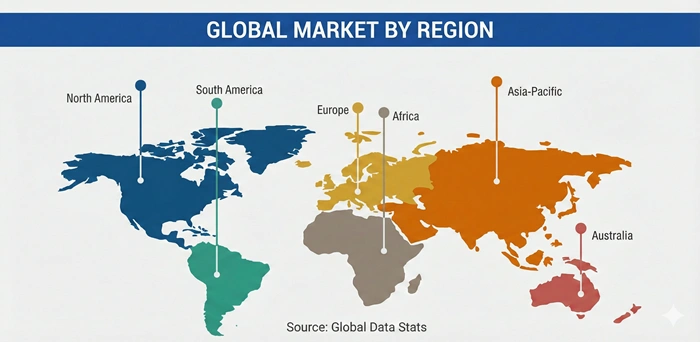
Regional Insights
North America Market Leadership
Technology Infrastructure and Regulatory Environment Drive Regional Dominance
North America commands substantial leadership within the virtual private network market, maintaining 26.85% to 40% regional share, driven by robust cybersecurity infrastructure, stringent data protection regulations, early technology adoption, and extensive enterprise IT spending. The United States represents the primary growth engine with the U.S. VPN market valued at USD 23.04 billion in 2025 projected to reach USD 141.23 billion by 2034 at 22.27% CAGR reflecting strong enterprise and consumer demand. Federal and state programs accelerate VPN infrastructure upgrades from legacy IPsec concentrators to modern identity-centric SASE nodes supporting zero-trust security implementations. Stringent breach disclosure regulations including state-level requirements and sector-specific mandates create compliance imperatives motivating VPN investments protecting sensitive data.
Major technology vendors including Cisco Systems commanding over 54% combined VPN market share through AnyConnect and Cisco VPN solutions, Palo Alto Networks, Fortinet, Microsoft, and IBM maintain strong North American presence through comprehensive enterprise portfolios. The region benefits from hyperscaler infrastructure density as Amazon Web Services, Microsoft Azure, and Google Cloud operate extensive data center networks providing low-latency VPN connectivity for distributed users. Canada demonstrates growing virtual private network market adoption across government, financial services, healthcare, and telecommunications sectors driven by privacy regulations and cross-border data protection requirements. Managed VPN services show particularly strong North American traction as organizations prefer outsourcing infrastructure management, security monitoring, and incident response to specialized providers.
Asia Pacific Fastest Growth
Digital Economy Expansion and Privacy Awareness Drive Regional Acceleration
Asia Pacific emerges as the fastest-growing regional virtual private network market, expected to demonstrate exceptional expansion through 2033, propelled by digital economy growth, rapid cloud adoption, increasing privacy awareness, and government cybersecurity initiatives across emerging economies. The region encompasses massive populations with billions of internet users creating enormous addressable markets for both enterprise and consumer VPN services. China represents a substantial market despite regulatory complexities, with organizations implementing VPNs for secure international business communications, cloud service connectivity, and data protection. India demonstrates exceptional growth potential driven by expanding IT sector, digital transformation initiatives, remote work adoption, and growing cybersecurity awareness.
Southeast Asian nations including Indonesia, Thailand, Vietnam, and Philippines show accelerating VPN adoption as economic development, e-commerce growth, and mobile internet proliferation drive demand for secure connectivity solutions. The virtual private network market in Asia Pacific particularly benefits from consumer privacy concerns as individuals adopt personal VPN services for content access, censorship circumvention, and public Wi-Fi security. Australia and New Zealand demonstrate mature VPN markets with enterprise adoption driven by data protection regulations, business continuity requirements, and remote workforce support. Regional technology providers including Huawei Technologies, Alibaba Cloud, and Tencent compete alongside global vendors including Cisco, Microsoft, and Palo Alto Networks through localized offerings. Government digital transformation programs, smart city initiatives, and cybersecurity regulations create supportive environments for VPN technology adoption across public and private sectors.
Top Key Players
-
Cisco Systems Inc. (United States)
-
Microsoft Corporation (United States)
-
Palo Alto Networks Inc. (United States)
-
Check Point Software Technologies Ltd. (Israel)
-
IBM Corporation (United States)
-
NordVPN (Panama)
-
ExpressVPN (British Virgin Islands)
-
Fortinet Inc. (United States)
-
Juniper Networks Inc. (United States)
-
Citrix Systems Inc. (United States)
-
OpenVPN Technologies Inc. (United States)
-
Amazon Web Services Inc. (United States)
-
Google LLC (United States)
-
Huawei Technologies Co. Ltd. (China)
-
Oracle Corporation (United States)
Recent Developments
-
Palo Alto Networks (April 2025): Palo Alto Networks acquired Protect AI, an artificial intelligence and machine learning cybersecurity startup, to enhance its Prisma AIRS platform with deep AI security expertise, enabling businesses to build AI applications with robust, purpose-built security tools integrated with VPN and network security offerings.
-
Google (March 2025): In March 2025, Google agreed to acquire Wiz for USD 32 billion, gaining a significant position in the Cloud Native Application Protection Platform space with capabilities complementing Google Cloud VPN services, though the deal awaits regulatory review and represents Google's strategic expansion into comprehensive cloud security.
-
Nokia (February 2025): Nokia finalized its USD 2.3 billion acquisition of Infinera in February 2025, expanding optical networking solutions for cloud and data center applications supporting next-generation transport strategies including secure VPN connectivity for high-bandwidth enterprise applications.
-
Kape Technologies (September 2022): In September 2022, Kape Technologies, a UK-based cybersecurity firm, acquired ExpressVPN from Express VPN International Ltd. for USD 936 million, expanding Kape Technologies' presence in the commercial digital privacy sector and doubling its customer base from 3 million to 6 million users strengthening market position in consumer VPN services.
-
Microsoft (January 2024): In January 2024, Microsoft announced comprehensive integration of its AI chatbot and networking capabilities with Microsoft Bot Framework and Teams applications, while simultaneously strengthening Azure VPN offerings supporting enterprise workplace productivity, collaboration, and secure remote connectivity.
Market Trends
Zero Trust Architecture and SASE Convergence Transform Industry Standards
The rapid evolution toward zero-trust security architectures and secure access service edge frameworks represents a transformative trend within the virtual private network market, fundamentally changing how organizations approach network security, access controls, and connectivity strategies. Traditional perimeter-based security models assuming trusted internal networks and untrusted external connections prove inadequate against modern threats including insider risks, compromised credentials, lateral movement attacks, and cloud-based applications accessible from anywhere. Zero-trust implementations treat all connections as untrusted regardless of origin, requiring VPN solutions integrated with identity verification, device posture assessment, contextual risk analysis, and continuous authentication validating users and endpoints before granting resource access. Federal and state government programs accelerate infrastructure upgrades from legacy VPN concentrators to identity-centric SASE nodes delivering consistent security policies across distributed users, devices, and locations.
SASE frameworks converging VPN functionality with cloud security, firewall services, secure web gateways, data loss prevention, and threat protection deliver comprehensive platforms replacing isolated point solutions requiring separate management and configuration. Organizations increasingly prefer integrated SASE offerings providing cloud-delivered services that eliminate complex on-premise infrastructure, enable rapid deployment, support automatic scaling, and maintain consistent policies across hybrid environments. The virtual private network market shows growing emphasis on managed services as enterprises outsource VPN infrastructure management, security monitoring, incident response, and ongoing optimization to specialized providers with managed VPN market projected to grow from USD 29.6 billion in 2026 to USD 83.2 billion by 2033. Consumer privacy awareness drives individual VPN adoption for personal data protection, public Wi-Fi security, content access, and censorship circumvention with consumer segment growing at 24% CAGR as mainstream recognition that privacy requires proactive measures.
Segments Covered in the Report
By Type:
-
Remote Access VPN
-
Client-Based VPN
-
SSL VPN
-
Mobile VPN
-
-
Site-to-Site VPN
-
Intranet VPN
-
Extranet VPN
-
-
Cloud VPN
-
Virtual Private Cloud
-
Hybrid Cloud VPN
-
By Deployment Mode:
-
Cloud-Based
-
Public Cloud
-
Private Cloud
-
-
On-Premise
-
Hybrid Deployment
By End User:
-
BFSI (Banking, Financial Services, Insurance)
-
IT & Telecommunications
-
Healthcare
-
Retail
-
Government
-
Education
-
Manufacturing
-
Media & Entertainment
By Component:
-
Solution
-
Hardware
-
Software
-
-
Services
-
Managed Services
-
Professional Services
-
By Region:
-
North America
-
United States
-
Canada
-
Mexico
-
-
Europe
-
Germany
-
United Kingdom
-
France
-
Italy
-
Spain
-
Rest of Europe
-
-
Asia Pacific
-
China
-
India
-
Japan
-
South Korea
-
Southeast Asia
-
Australia
-
Rest of Asia Pacific
-
-
Latin America
-
Brazil
-
Argentina
-
Rest of Latin America
-
-
Middle East & Africa
-
United Arab Emirates
-
Saudi Arabia
-
South Africa
-
Rest of Middle East & Africa
-
Frequently Asked Questions
Question 1: What is the projected virtual private network market size by 2033?
Answer: The global virtual private network market is projected to reach USD 147.13 billion by 2033, growing from USD 53.59 billion in 2026 at a CAGR of 12.31%.
Question 2: Which region dominates the virtual private network market currently?
Answer: North America dominates the virtual private network market with 26.85% to 40% regional share, driven by robust cybersecurity infrastructure, stringent regulations, and enterprise IT spending.
Question 3: What are the key drivers of virtual private network market growth?
Answer: Key drivers include remote work adoption becoming permanent, escalating cyber threats including ransomware and data breaches, regulatory compliance requirements, and cloud service migration necessitating secure connectivity.
Question 4: Which deployment mode shows fastest growth in the virtual private network market?
Answer: Cloud-based deployment demonstrates fastest growth with projected CAGR of 22% through 2033, driven by enterprise shifts to cloud-native architectures eliminating capital expenditures for physical infrastructure.
Question 5: Which end-user industry leads the virtual private network market?
Answer: The BFSI sector represents the largest end-user industry for virtual private network services, driven by high demand for secure financial transactions, regulatory compliance, and sophisticated cybercrime prevention.