
Viral Vectors & Plasmid DNA Manufacturing Market Overview
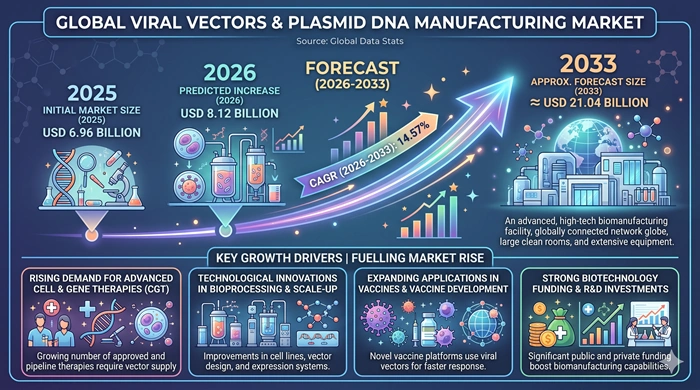
The global viral vectors & plasmid DNA manufacturing market size is valued at USD 6.96 billion in 2025 and is predicted to increase from USD 8.12 billion in 2026 to approximately USD 21.04 billion by 2033, growing at a CAGR of 14.57% from 2026 to 2033. The accelerating clinical and commercial advancement of gene therapies, cell therapies, and genetic vaccines is driving unprecedented demand for viral vector and plasmid DNA production capabilities globally, positioning this market as one of the fastest-growing sectors within the broader biopharmaceutical manufacturing industry.
AI Impact on the Viral Vectors & Plasmid DNA Manufacturing Industry
Artificial Intelligence Is Accelerating Process Development, Yield Optimization, and Quality Control Across Viral Vector and Plasmid DNA Manufacturing Operations*
AI is reshaping how viral vector and plasmid DNA manufacturing processes are designed, monitored, and scaled. Machine learning algorithms are now being deployed to optimize upstream bioprocess parameters — including bioreactor conditions, cell culture media, and transfection protocols — enabling manufacturers to achieve higher yields of clinical-grade vectors in significantly shorter development timelines. Platforms powered by AI can analyze thousands of process variables simultaneously, identifying optimal conditions that human researchers would take months to determine through conventional experimentation. This capability is becoming critical in an industry where manufacturing bottlenecks have been one of the primary barriers to delivering gene therapies to patients at scale.
On the quality control side, AI-driven analytical tools are improving the detection of process-related impurities, empty capsid ratios, and vector genome integrity — all of which are critical quality attributes (CQAs) for viral vector products. Digital twin technology is being used by leading CDMOs to simulate entire manufacturing processes virtually before physical execution, reducing costly batch failures and accelerating process transfer activities. Companies such as Thermo Fisher Scientific and Lonza Group are actively integrating AI-based process analytical technology (PAT) tools into their manufacturing platforms to strengthen reproducibility and regulatory compliance. As gene therapy pipelines mature and commercial-scale manufacturing demands intensify, AI's role in the viral vectors & plasmid DNA manufacturing sector will only grow more central.
Growth Factors
An Expanding Gene and Cell Therapy Pipeline, Growing Number of Regulatory Approvals, and Rising CDMO Investments Are Driving Rapid Market Growth*
The most powerful driver of the viral vectors & plasmid DNA manufacturing market is the explosive growth of the global gene therapy and cell therapy pipeline. Hundreds of gene therapy clinical trials are active globally, and the number of regulatory approvals for commercial gene therapy products has accelerated significantly in recent years. Each approved and pipeline gene therapy product requires consistent, validated, high-quality supplies of viral vectors — most commonly adeno-associated virus (AAV), lentiviral, or adenoviral vectors — along with the plasmid DNA templates required for vector production. This creates a direct and growing manufacturing demand that is stretching the industry's existing capacity.
The growing role of CDMOs (Contract Development and Manufacturing Organizations) in viral vector and plasmid DNA production is another critical driver. Large pharmaceutical and biotechnology companies are increasingly outsourcing their vector manufacturing to specialized CDMOs that offer scalable, validated, and compliant production capabilities. This trend is supported by the high capital investment required to build internal vector manufacturing infrastructure, which makes outsourcing a more cost-effective and time-efficient strategy for most companies. Leading CDMOs such as Catalent Biologics, Charles River Laboratories, and AGC Biologics are expanding their viral vector and plasmid DNA capacities significantly to meet growing client demand.
Market Outlook
Strong Commercial Gene Therapy Activity, Next-Generation Manufacturing Technologies, and Capacity Expansion Programs Will Sustain High Growth Through 2033*
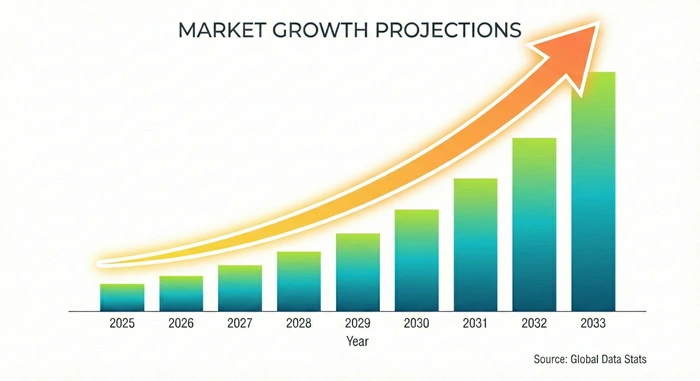
The long-term outlook for the viral vectors & plasmid DNA manufacturing market is exceptionally positive. With dozens of gene therapy products approaching commercial approval and hundreds more in active clinical development, demand for manufacturing capacity is expected to continue growing well beyond current installed capacity levels. Regulatory agencies including the U.S. FDA and the EMA have established dedicated gene therapy approval pathways and provided guidance specifically for viral vector manufacturing, which is reducing regulatory uncertainty and encouraging more investment in production infrastructure. As commercial-scale manufacturing experience accumulates, the industry is also moving toward more standardized and efficient production methods that will improve scalability and reduce per-unit costs.
Emerging innovations such as helper-free plasmid systems for AAV manufacturing, suspension-adapted HEK293 cell lines, and baculovirus expression vector systems (BEVS) are expanding the technological toolkit available to manufacturers, improving both yield and product quality. The rapid growth of RNA-based therapeutics — particularly mRNA vaccines and mRNA-based gene therapies — is also creating increasing demand for high-quality plasmid DNA, which serves as the starting template for mRNA synthesis. The combination of strong clinical pipeline activity, growing commercial revenues, and continuous manufacturing technology improvement positions this market for sustained double-digit growth through 2033 and beyond.
Expert Speaks
-
"Gene therapy manufacturing is at a critical inflection point. At Thermo Fisher Scientific, we are committed to providing the capacity, technology, and expertise needed to help our partners bring transformative gene therapies to patients faster and at commercial scale." — Marc Casper, CEO, Thermo Fisher Scientific
-
"The demand for viral vectors and plasmid DNA continues to outpace existing manufacturing capacity globally. Lonza is making substantial investments in dedicated gene therapy manufacturing infrastructure to ensure we can support the increasing volume of programs moving from clinical to commercial phases." — Wolfgang Wienand, CEO, Lonza Group
-
"The commercial promise of gene therapy is real, and the manufacturing ecosystem must scale to match it. Catalent is expanding its viral vector capabilities aggressively to serve the growing number of gene therapy developers who need a reliable, expert manufacturing partner." — Alessandro Maselli, CEO, Catalent Inc.
Key Report Takeaways
-
North America leads the global viral vectors & plasmid DNA manufacturing market, holding the largest revenue share of approximately 52–55% in 2026, supported by the highest concentration of gene therapy developers, leading CDMOs, major academic research institutions, and robust FDA regulatory support for advanced therapy approvals.
-
Asia Pacific is the fastest-growing regional market, expanding at a CAGR of approximately 17.8% through 2033, driven by increasing government investment in gene therapy R&D, growing CDMO infrastructure, and rapidly expanding biotechnology sectors in China, Japan, South Korea, and India.
-
CDMOs are the dominant end-user segment, accounting for the largest revenue share as pharmaceutical and biotechnology companies continue to outsource viral vector and plasmid DNA manufacturing to specialized contract manufacturers with validated platforms and existing regulatory track records.
-
Viral vectors contribute the largest share of market revenue, representing approximately 55% of total market revenues in 2025, with AAV vectors being the most widely used vector type due to their favorable safety profile and broad tropism across multiple tissue types.
-
The AAV vector segment is the most popular viral vector type, driving the highest volume of manufacturing activity and commanding the largest share of vector manufacturing revenues, particularly in North America where AAV-based gene therapy programs are most concentrated.
-
The plasmid DNA segment is set to grow the fastest among all product type sub-segments, expanding at a CAGR of approximately 18.2% through 2033 driven by its dual role as a manufacturing template for viral vectors and as a direct therapeutic agent in DNA vaccines and non-viral gene therapy approaches.
Market Scope
| Report Coverage | Details |
|---|---|
| Market Size by 2025 | USD 6.96 Billion |
| Market Size by 2026 | USD 8.12 Billion |
| Market Size by 2033 | USD 21.04 Billion |
| Market Growth Rate (2026–2033) | CAGR of 14.57% |
| Dominating Region | North America |
| Fastest Growing Region | Asia Pacific |
| Base Year | 2025 |
| Forecast Period | 2026 to 2033 |
| Segments Covered | Product Type, Vector Type, Application, End User, Region |
| Regions Covered | North America, Europe, Asia Pacific, Latin America, Middle East & Africa |
Market Dynamics
Drivers Impact Analysis
A Rapidly Expanding Gene Therapy Pipeline, Growing CDMO Outsourcing Trends, and Increasing Regulatory Approvals Are the Core Forces Propelling the Viral Vectors & Plasmid DNA Manufacturing Market*
| Driver | ≈% Impact on CAGR Forecast | Geographic Relevance | Impact Timeline |
|---|---|---|---|
| Expanding gene and cell therapy clinical pipeline | ~38% | Global, highest in North America & Europe | Near to long-term |
| Rising number of gene therapy regulatory approvals | ~25% | North America, Europe | Near to medium-term |
| Growing outsourcing to CDMOs | ~18% | Global | Near to medium-term |
| Increasing investment in vector manufacturing capacity | ~12% | North America, Europe, Asia Pacific | Medium to long-term |
| Advancement of plasmid DNA in mRNA and non-viral therapies | ~7% | Global | Medium to long-term |
The viral vectors & plasmid DNA manufacturing market is fundamentally driven by the rapid growth of the gene therapy and cell therapy clinical development pipeline. As of 2025, there are over 2,000 active gene therapy clinical trials globally, and a growing proportion of these programs are entering Phase 2 and Phase 3 stages — the phases that require the largest volumes of clinical-grade vectors and plasmid DNA. The commercial approval of products like gene therapies for hemophilia, sickle cell disease, and Duchenne muscular dystrophy has validated the therapeutic model and encouraged further pipeline investment, creating a compounding cycle of demand growth.
The outsourcing of viral vector and plasmid DNA manufacturing to CDMOs continues to be a powerful demand driver. Building an internal vector manufacturing facility from scratch requires capital investments in the hundreds of millions of dollars, specialized cleanroom infrastructure, and teams of highly trained bioprocess engineers — resources that most emerging gene therapy companies cannot afford to deploy independently. CDMOs like Catalent Biologics, Charles River Laboratories, and Wuxi AppTec serve as critical production partners, enabling gene therapy developers to access validated manufacturing capacity without prohibitive capital outlays and faster timelines than building in-house.
Restraints Impact Analysis
High Manufacturing Complexity, Capacity Constraints, High Production Costs, and Scalability Challenges Are Significant Barriers Limiting Broader Market Expansion*
| Restraint | ≈% Impact on CAGR Forecast | Geographic Relevance | Impact Timeline |
|---|---|---|---|
| High production costs and complex manufacturing processes | ~35% | Global | Near to medium-term |
| Limited manufacturing capacity relative to demand | ~30% | North America, Europe | Near-term |
| Stringent regulatory requirements for vector quality | ~22% | North America, Europe | Near to medium-term |
| Risk of batch failures and low production yields | ~13% | Global | Near-term |
Manufacturing viral vectors — particularly AAV and lentiviral vectors — is one of the most technically complex and expensive processes in the biopharmaceutical industry. Achieving consistent product quality, adequate yield, and full pharmacopoeial compliance across multiple batches is an ongoing challenge for both internal and contract manufacturers. The sensitivity of viral vector production to small variations in process conditions means that even minor deviations can result in costly batch failures, which can delay clinical trial timelines and significantly increase per-dose manufacturing costs.
The sector also faces a structural capacity constraint issue. Despite significant investment in new manufacturing facilities, demand for vector manufacturing capacity continues to exceed supply, creating long lead times and booking delays at leading CDMOs. This capacity bottleneck is particularly acute for AAV manufacturing, where the rapid growth of clinical and commercial programs has outpaced the expansion of production infrastructure. For smaller gene therapy developers, securing manufacturing slots with reliable CDMOs remains a significant operational challenge that can delay clinical milestones and ultimately slow down the pace of market growth.
Opportunities Impact Analysis
Next-Generation Manufacturing Platforms, Asia Pacific Expansion, and the mRNA Plasmid Demand Wave Represent the Most Transformative Growth Opportunities in the Market*
| Opportunity | ≈% Impact on CAGR Forecast | Geographic Relevance | Impact Timeline |
|---|---|---|---|
| Emerging manufacturing technologies (suspension cultures, BEVS) | ~32% | Global | Medium to long-term |
| Expansion of CDMO infrastructure in Asia Pacific | ~28% | Asia Pacific | Medium-term |
| Rising plasmid DNA demand from mRNA and DNA vaccine programs | ~24% | Global | Near to medium-term |
| In vivo gene editing therapies driving new vector demand | ~16% | North America, Europe | Long-term |
Next-generation viral vector manufacturing platforms represent one of the most significant opportunities for market value creation. Suspension-adapted HEK293 and SF9 cell lines, coupled with large-scale bioreactor systems, are enabling manufacturers to dramatically improve production yields and reduce per-batch costs compared to older adherent-cell and roller bottle production methods. These platform improvements are attracting investment from both established CDMOs and technology developers seeking to differentiate their manufacturing offerings in an increasingly competitive market.
The surge in plasmid DNA demand driven by mRNA vaccine programs is a transformative near-term opportunity. Plasmid DNA serves as the essential starting material for mRNA synthesis, and the post-pandemic expansion of mRNA platforms for influenza, cancer, and infectious disease vaccines has generated a massive new demand stream that runs parallel to and complements the gene therapy-driven demand. Companies such as Aldevron, Pfenex (Ligand Pharmaceuticals), and Thermo Fisher Scientific are expanding their plasmid DNA manufacturing capacities specifically to serve this rapidly growing mRNA supply chain.
Segment Analysis
By Product Type
Viral Vectors Dominate Revenue Contribution While Plasmid DNA Emerges as the Fastest-Growing Segment Driven by mRNA and Gene Therapy Demand*
The viral vectors segment is the largest product type within the viral vectors & plasmid DNA manufacturing market, accounting for approximately 55% of total revenue in 2025, growing at a CAGR of approximately 13.9% through 2033. This dominant position reflects the broad and growing clinical use of viral vectors — particularly AAV, lentiviral, and adenoviral vectors — in gene therapy, CAR-T cell therapy manufacturing, and genetic vaccine development. North America is the leading geography for viral vector production, home to the largest concentration of gene therapy developers and the most advanced CDMO manufacturing infrastructure. Companies including Lonza Group, Catalent Biologics, Charles River Laboratories, and Oxford BioMedica operate major viral vector manufacturing facilities across the United States and United Kingdom, serving both clinical-stage and commercial programs.
The plasmid DNA segment is the fastest-growing area in the viral vectors & plasmid DNA manufacturing market, expanding at an impressive CAGR of approximately 18.2% through 2033, driven by both its direct therapeutic use in DNA vaccines and non-viral gene therapies and its foundational role as the starting material for viral vector and mRNA production. Europe and North America are currently the core markets for commercial plasmid DNA manufacturing, with companies like Aldevron (North America) and Cobra Biologics (Europe) dominating the competitive landscape. However, Asia Pacific — particularly China and South Korea — is registering the fastest regional growth in plasmid DNA manufacturing investment, fueled by growing local gene therapy and mRNA vaccine programs and government-backed biomanufacturing infrastructure initiatives. The breadth of plasmid DNA's applications across multiple emerging therapeutic modalities makes it one of the most strategically important segments in the entire manufacturing value chain.
By End User
CDMOs Lead End-User Revenue While In-House Biopharmaceutical Manufacturing Grows with Pipeline Maturity*
Contract development and manufacturing organizations (CDMOs) represent the dominant end-user segment in the viral vectors & plasmid DNA manufacturing market, commanding approximately 48–50% of total end-user revenues in 2025 at a CAGR of approximately 15.1% through 2033. CDMOs occupy this leading position because the vast majority of gene therapy developers — particularly early and mid-stage companies — rely entirely on contract manufacturers for their clinical-grade vector and plasmid DNA supply. The specialized infrastructure, regulatory expertise, and validated platforms maintained by leading CDMOs provide gene therapy developers with critical manufacturing access that would otherwise require hundreds of millions of dollars and years of time to build independently. Catalent Biologics, Thermo Fisher Scientific's viral vector CDMO division, and Wuxi AppTec's gene therapy manufacturing operations are among the market leaders in this space, particularly in North America and Europe.
The pharmaceutical and biotechnology company end-user segment is growing at a CAGR of approximately 14.3% through 2033 as a growing number of gene therapy developers with approved commercial products are investing in proprietary, in-house manufacturing capabilities to reduce supply chain dependency and achieve better control over cost of goods. North America leads this shift, with large companies such as Novartis (Spark Therapeutics) and BioMarin Pharmaceutical having established dedicated gene therapy manufacturing facilities. Asia Pacific is also emerging as a fast-growing geography for in-house pharmaceutical manufacturer vector production, particularly in China where domestic gene therapy companies are scaling rapidly with government support.
Regional Insights
North America
North America Dominates the Viral Vectors & Plasmid DNA Manufacturing Market, Underpinned by the World's Largest Gene Therapy Pipeline and a Highly Capable CDMO Ecosystem*
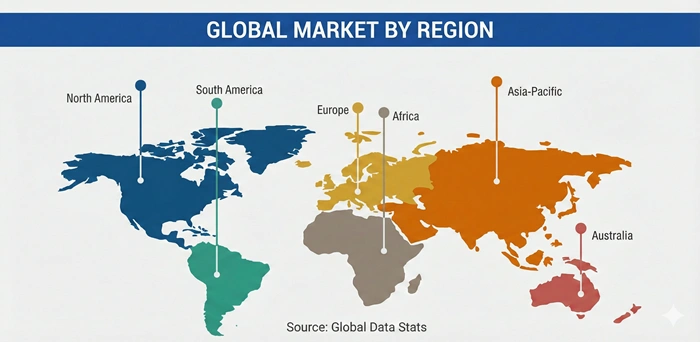
North America is the leading region in the viral vectors & plasmid DNA manufacturing market, holding approximately 52–55% of global revenues in 2026 and expanding at a CAGR of approximately 13.8% through 2033. The United States alone accounts for the overwhelming majority of North America's market share, driven by its unmatched concentration of gene therapy and cell therapy developers, world-class academic research centers, and the most active regulatory environment for advanced therapy approvals. The FDA's CBER (Center for Biologics Evaluation and Research) has established dedicated guidance specifically for viral vector manufacturers, creating a clear and supportive regulatory pathway that further encourages manufacturing investment. Leading companies active in the region include Lonza Group (with major U.S. facilities), Catalent Biologics, Charles River Laboratories, Aldevron, and Thermo Fisher Scientific, all of which maintain large-scale vector and plasmid DNA manufacturing capabilities in the United States.
Canada also contributes meaningfully to North America's position, with a growing gene therapy research ecosystem and emerging CDMO infrastructure. The region benefits from substantial National Institutes of Health (NIH) and BARDA funding directed at gene therapy manufacturing research, which is helping to develop next-generation production technologies that reduce costs and improve scalability. North America's leadership in the viral vectors & plasmid DNA manufacturing sector is expected to remain intact through 2033, as its incumbent infrastructure advantage, deep talent pool, and regulatory experience provide durable competitive advantages.
Asia Pacific
Asia Pacific Is the Fastest-Growing Region, Propelled by Rising Gene Therapy R&D Investment, Expanding CDMO Infrastructure, and Strong Government Support for Biopharmaceutical Manufacturing*
Asia Pacific is the fastest-growing regional market, projected to expand at a CAGR of approximately 17.8% through 2033, with a current market share of approximately 15–18% in 2026. China is the primary growth engine, driven by a rapidly growing domestic gene therapy development ecosystem supported by government funding, favorable regulatory reforms under the National Medical Products Administration (NMPA), and substantial private investment in biomanufacturing infrastructure. Chinese CDMOs such as Wuxi AppTec and Genezen (with Asia Pacific partnerships) are expanding their viral vector manufacturing capabilities at a rapid pace, positioning the region as an increasingly competitive alternative to established North American and European manufacturing hubs.
Japan and South Korea are also important contributors to the region's growth, with sophisticated biopharmaceutical sectors, highly trained scientific workforces, and government-backed programs supporting advanced therapy manufacturing. India is an emerging player, with its established pharmaceutical manufacturing base and growing biotechnology sector providing a foundation for future viral vector and plasmid DNA manufacturing investments. Government initiatives in China and South Korea focused on making these countries global hubs for cell and gene therapy manufacturing are expected to drive sustained above-average growth in the viral vectors & plasmid DNA manufacturing market in Asia Pacific well through the forecast period.
Top Key Players
-
Lonza Group AG (Switzerland)
-
Catalent Biologics (United States)
-
Thermo Fisher Scientific Inc. (United States)
-
Charles River Laboratories International (United States)
-
Wuxi AppTec Co. Ltd. (China)
-
Oxford BioMedica plc (United Kingdom)
-
AGC Biologics (Japan)
-
Aldevron LLC (United States)
-
Cobra Biologics (Recipharm) (United Kingdom)
-
Vigene Biosciences Inc. (United States)
-
Brammer Bio (Thermo Fisher Scientific) (United States)
-
Batavia Biosciences (Netherlands)
-
VYJUVEK (Krystal Biotech) (United States)
-
Genezen LLC (United States)
-
Spark Therapeutics (Roche) (United States)
Recent Developments
-
2024 – Lonza Group expanded its viral vector manufacturing capacity at its Bend, Oregon facility through a major capital investment program, adding new bioreactor suites specifically designed for AAV and lentiviral vector commercial-scale production to support its growing gene therapy client portfolio.
-
2024 – Thermo Fisher Scientific completed the full integration of its Brammer Bio viral vector CDMO acquisition, consolidating it into a unified gene therapy CDMO platform that now serves as one of the largest dedicated viral vector manufacturing operations globally.
-
2024 – Charles River Laboratories announced a strategic partnership with a leading European gene therapy developer to provide integrated plasmid DNA, viral vector manufacturing, and quality testing services under a multi-year supply agreement, reinforcing its end-to-end gene therapy manufacturing capabilities.
-
2025 – Catalent Biologics opened an expanded viral vector manufacturing suite at its Harmans, Maryland campus, adding significant clinical and commercial-scale AAV manufacturing capacity to serve the rapidly growing number of gene therapy programs advancing through late-stage clinical trials.
-
2025 – Wuxi AppTec launched a dedicated gene therapy manufacturing center in China specifically focused on lentiviral vector and plasmid DNA production, targeting the rapidly growing Asian gene therapy market and expanding access to cost-competitive manufacturing capacity for global partners operating in the region.
Market Trends
Suspension-Based Manufacturing Platforms, Integrated End-to-End CDMO Services, and the Convergence of Gene Therapy and mRNA Manufacturing Are the Defining Trends in the Market*
One of the most significant technology trends in the viral vectors & plasmid DNA manufacturing market is the rapid shift from traditional adherent-cell and roller bottle manufacturing methods to suspension-based bioreactor systems. Suspension cultures using HEK293 or SF9 cell lines in stirred-tank bioreactors allow manufacturers to achieve dramatically higher production volumes, better process consistency, and improved scalability compared to conventional manufacturing approaches. This transition is particularly important for commercial-scale AAV manufacturing, where the industry has historically struggled to produce sufficient quantities of high-quality vector at commercially viable costs. Leading CDMOs that have successfully deployed suspension manufacturing platforms are gaining significant competitive advantages in the market.
The integration of plasmid DNA manufacturing, viral vector production, and downstream analytical services within a single CDMO platform is another major market trend. Gene therapy developers are increasingly seeking partners who can manage the entire manufacturing value chain — from plasmid DNA production through vector manufacturing, purification, fill-finish, and quality release testing — to simplify supply chain management and reduce technical risk. This demand for integrated, end-to-end gene therapy manufacturing solutions is reshaping the competitive landscape, rewarding CDMOs with broad, validated capabilities and driving consolidation through mergers and acquisitions as companies seek to build comprehensive service portfolios.
Segments Covered in the Report
By Product Type:
-
Viral Vectors
-
Plasmid DNA
-
Other Product Types
By Vector Type:
-
Adeno-Associated Virus (AAV) Vectors
-
Lentiviral Vectors
-
Adenoviral Vectors
-
Retroviral Vectors
-
Herpes Simplex Virus (HSV) Vectors
-
Other Viral Vectors
By Application:
-
Oncology
-
Rare and Genetic Diseases
-
Infectious Diseases
-
Cardiovascular Diseases
-
Ophthalmology
-
Neurology
-
Other Applications
By End User:
-
Contract Development and Manufacturing Organizations (CDMOs)
-
Pharmaceutical and Biotechnology Companies
-
Academic and Research Institutions
-
Other End Users
By Region:
-
North America
-
United States
-
Canada
-
-
Europe
-
Germany
-
United Kingdom
-
France
-
Italy
-
Spain
-
Rest of Europe
-
-
Asia Pacific
-
China
-
India
-
Japan
-
South Korea
-
Australia
-
Rest of Asia Pacific
-
-
Latin America
-
Brazil
-
Mexico
-
Rest of Latin America
-
-
Middle East & Africa
-
GCC Countries
-
South Africa
-
Rest of Middle East & Africa
-
Frequently Asked Questions
Question 1: What is the current market size of the viral vectors & plasmid DNA manufacturing market and what is the growth forecast through 2033?
Answer: The viral vectors & plasmid DNA manufacturing market is valued at USD 6.96 billion in 2025 and is projected to reach USD 21.04 billion by 2033. The market is expected to grow at a CAGR of 14.57% from 2026 to 2033.
Question 2: What factors are driving growth in the viral vectors & plasmid DNA manufacturing market?
Answer: The primary growth drivers in the viral vectors & plasmid DNA manufacturing market include the rapid expansion of the global gene therapy pipeline and the growing number of regulatory approvals for advanced therapy products. Increasing outsourcing of vector manufacturing to CDMOs and rising demand for plasmid DNA in mRNA programs are further accelerating market growth.
Question 3: Which vector type holds the largest share in the viral vectors & plasmid DNA manufacturing market?
Answer: AAV (adeno-associated virus) vectors hold the largest share within the viral vector segment of the market, driven by their strong safety profile, broad tissue tropism, and dominant use in approved gene therapy products. The AAV segment continues to attract the highest volume of manufacturing investment globally, particularly in North America.
Question 4: Which region leads the viral vectors & plasmid DNA manufacturing market and which region is growing fastest?
Answer: North America leads the viral vectors & plasmid DNA manufacturing market with approximately 52–55% of global revenues, supported by the largest gene therapy pipeline and most advanced CDMO infrastructure in the world. Asia Pacific is the fastest-growing region, expanding at approximately 17.8% CAGR through 2033.
Question 5: Who are the top companies in the viral vectors & plasmid DNA manufacturing market?
Answer: Leading companies in the viral vectors & plasmid DNA manufacturing market include Lonza Group, Catalent Biologics, Thermo Fisher Scientific, Charles River Laboratories, Oxford BioMedica, AGC Biologics, Wuxi AppTec, and Aldevron, among others. These companies compete through specialized manufacturing platforms, regulatory expertise, and integrated CDMO service offerings.