
Video Streaming Market Overview
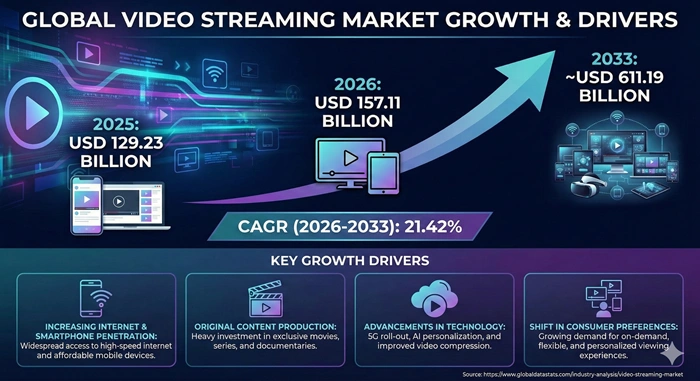
The global video streaming market size is valued at USD 129.23 billion in 2025 and is predicted to increase from USD 157.11 billion in 2026 to approximately USD 611.19 billion by 2033, growing at a CAGR of 21.42% from 2026 to 2033. Video streaming represents the continuous transmission of video files from a server to a client, enabling users to watch multimedia content in real-time without downloading entire files to their devices. This technology revolutionizes content consumption by offering on-demand access to movies, television shows, live sports, educational programs, and user-generated content through internet-connected devices including smartphones, tablets, smart TVs, and computers.
The video streaming market continues transforming media and entertainment landscapes through unprecedented consumer adoption of over-the-top platforms, cord-cutting trends disrupting traditional cable television, and technological innovations improving streaming quality and user experiences. Organizations increasingly leverage streaming solutions beyond entertainment, deploying video platforms for corporate communications, distance learning, telehealth consultations, and virtual events connecting geographically dispersed audiences. The proliferation of high-speed internet infrastructure, affordable data plans, and advanced content delivery networks enables seamless streaming experiences that meet rising consumer expectations for instant access to diverse content libraries across multiple devices and locations.
AI Impact on the Video Streaming Industry
Personalizing Content Discovery and Automating Production Workflows
Artificial intelligence fundamentally transforms the video streaming market by powering sophisticated recommendation engines that analyze viewing histories, search patterns, engagement metrics, and demographic information to suggest content matching individual preferences with remarkable accuracy. Streaming platforms leverage machine learning algorithms processing billions of data points to predict what subscribers want to watch next, increasing engagement, reducing churn, and maximizing content library utilization. Netflix reports that over 80% of viewer activity comes from personalized recommendations rather than search, demonstrating AI's critical role in content discovery. These systems continuously learn from user interactions, adapting suggestions based on time of day, device type, mood indicators, and viewing context to deliver increasingly relevant recommendations that keep audiences engaged for longer sessions.
Furthermore, AI-powered automation revolutionizes content production and management workflows by streamlining video editing, generating automated captions and translations, optimizing video quality through upscaling and noise reduction, and identifying inappropriate content requiring moderation. Generative AI tools enable creators to produce high-quality videos more efficiently, reducing production costs while maintaining professional standards. Video streaming platforms deploy AI for intelligent video compression that preserves quality while reducing bandwidth consumption, adaptive bitrate streaming that adjusts resolution based on network conditions, and predictive caching that preloads content users likely to watch next, improving playback smoothness and reducing buffering frustrations. The integration of large language models facilitates natural language search allowing users to describe desired content conversationally rather than relying on keyword matching, while AI-driven dubbing and subtitle generation expand global reach by making content accessible across language barriers.
Growth Factors
Smartphone Proliferation and High-Speed Internet Expansion Drive Adoption
The video streaming market experiences robust growth driven by explosive smartphone adoption worldwide, with over five billion smartphone users globally accessing streaming content through mobile devices offering portability, convenience, and always-on connectivity. Mobile-first markets in Asia Pacific, Latin America, and Africa demonstrate particular strength as consumers bypass traditional television infrastructure, adopting streaming as primary entertainment source through affordable smartphones and competitive mobile data plans. Platforms optimize mobile experiences through dedicated apps featuring offline download capabilities, data-saving modes, and vertical video formats catering to smartphone viewing preferences. The shift toward mobile viewing fundamentally changes content creation strategies, with producers developing shorter formats, interactive elements, and mobile-optimized interfaces addressing smaller screens and touch-based navigation.
High-speed internet infrastructure expansion through fiber-optic networks, 5G wireless deployment, and government broadband initiatives eliminates bandwidth constraints that historically limited streaming quality and accessibility. Countries investing in digital infrastructure experience rapid video streaming market growth as reliable high-speed connectivity enables 4K and 8K resolution streaming, reduces buffering interruptions, and supports simultaneous multi-device usage within households. The proliferation of connected devices including smart TVs, gaming consoles, streaming sticks, and set-top boxes creates multiple access points for streaming content, while declining hardware costs make premium viewing experiences accessible across income segments. Content delivery networks strategically position edge servers closer to end users, reducing latency and improving playback quality particularly in regions distant from primary data centers, expanding addressable markets in developing economies where streaming previously suffered from poor performance.
Market Outlook
Subscription Fatigue and Platform Consolidation Shape Future Dynamics
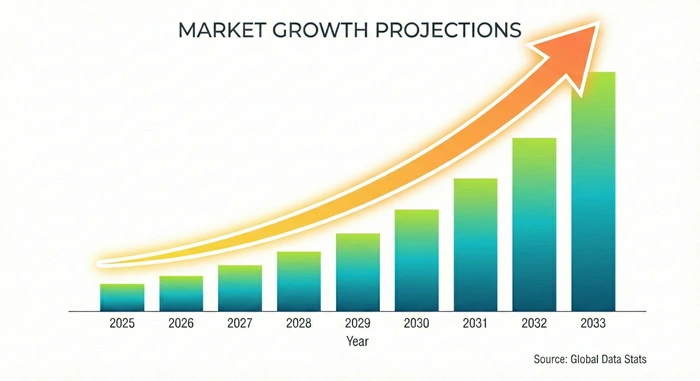
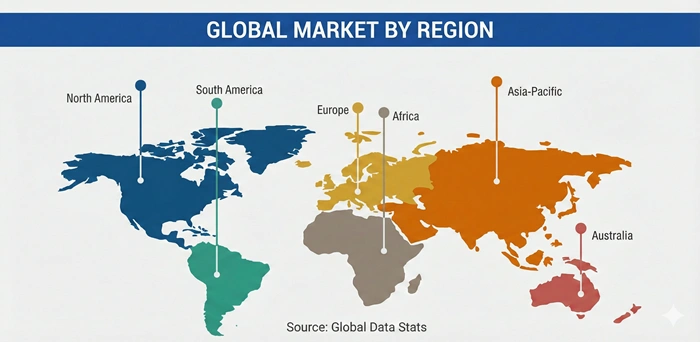
The video streaming market demonstrates exceptional growth prospects through the forecast period, supported by continuous content investment, technological innovation, and expanding global subscriber bases, while facing challenges from subscription fatigue as average households juggle multiple platform subscriptions creating budget pressures. North America maintains market leadership through mature streaming ecosystems, high disposable incomes, and technology infrastructure supporting premium experiences, while Asia Pacific exhibits fastest growth rates driven by massive population bases, rising middle classes, and increasing digital payment adoption. The market benefits from hybrid revenue models combining subscription tiers, advertising-supported options, and transactional rentals providing consumer choice and expanding total addressable markets beyond pure subscription services.
Investment in the video streaming market spans content production budgets exceeding hundreds of millions per show, technology infrastructure supporting billions of daily streams, and strategic acquisitions consolidating fragmented competitive landscapes. Major media companies transition from traditional broadcasting toward streaming-first strategies, launching proprietary platforms leveraging existing content libraries while investing heavily in original programming differentiating services. The industry experiences growing pains from unsustainable content spending as platforms compete for subscriber attention, password-sharing enforcement attempts to convert non-paying users into subscribers, and advertising tier introductions generating alternative revenue streams supplementing subscriptions. Regulatory developments around content licensing, geo-blocking restrictions, and platform accountability for hosted content increasingly influence market dynamics as governments worldwide grapple with streaming's disruption of traditional media and cultural policy objectives.
Expert Speaks
-
Neal Mohan, CEO of YouTube, stated that "YouTube is the epicenter of culture, where creators are reinventing entertainment and building the media companies of the future. We are the world's original and largest creator economy, and we intend to remain that way, with creators being the new studios reinventing entertainment".
-
Industry experts observe that "the streaming landscape is fundamentally changing, with sub-scale platforms considering mergers and acquisitions as larger players expand content libraries and technology capabilities while retaining pricing power through differentiated content offerings and superior user experiences".
-
Marc Randolph, Netflix Co-Founder, emphasized that "companies demonstrating relentless focus on the future at the expense of present and past businesses will succeed in streaming, as the future is the only thing that counts. If you're not going to have the courage to do what's right for the future at the expense of your current business, then you're doomed".
Key Report Takeaways
-
North America leads the video streaming market with the largest regional share of 38.30% in 2025, driven by sophisticated internet infrastructure, widespread smartphone adoption, mature OTT ecosystems, and presence of global streaming giants including Netflix, Disney+, and Amazon Prime Video
-
Asia Pacific emerges as the fastest-growing region during the forecast period with projected CAGR of 22.59%, fueled by rapid smartphone penetration, increasing internet accessibility, young populations engaged with digital content, affordable mobile data plans, and growing demand for localized content
-
Content delivery services dominate the component segment with 66% market share in 2026, driven by increasing consumer spending on OTT platforms, demand for live broadcasting, video-on-demand services, and low latency streaming capabilities supporting real-time content consumption
-
OTT streaming exhibits the highest channel segment CAGR during the forecast period, propelled by surge in OTT platform adoption across developing countries, rising paid subscriber bases, and consumer preferences shifting from traditional cable television toward on-demand streaming services
-
Subscription-based revenue model holds the largest market share in 2024 and demonstrates highest growth rate, driven by increasing service availability, growing subscriber populations, and consumer demand for unlimited access to extensive content libraries through monthly or annual subscriptions
-
Sports/esports vertical commands the largest application share in 2024 due to surge in esports platform users and live sports streaming demand, while enterprise segment projects significant growth driven by increased video streaming adoption for corporate communications and training purposes
Market Scope
| Report Coverage | Details |
|---|---|
| Market Size by 2033 | USD 611.19 Billion |
| Market Size by 2025 | USD 129.23 Billion |
| Market Size by 2026 | USD 157.11 Billion |
| Market Growth Rate from 2026 to 2033 | CAGR of 21.42% |
| Dominating Region | North America |
| Fastest Growing Region | Asia Pacific |
| Base Year | 2025 |
| Forecast Period | 2026 to 2033 |
| Segments Covered | Component, Channel, Revenue Model, Vertical, User, Region |
| Regions Covered | North America, Europe, Asia Pacific, Latin America, Middle East & Africa |
Market Dynamics
Drivers Impact Analysis
Rising On-Demand Content Consumption and Original Programming Investment
The increasing consumer preference for on-demand content consumption over scheduled broadcasting drives video streaming market expansion as viewers demand flexibility to watch desired content anytime, anywhere, across multiple devices without advertisement interruptions. Traditional linear television viewership declines particularly among younger demographics who grow up with streaming as default entertainment medium, preferring binge-watching entire series over weekly episode releases and customizing viewing schedules around personal commitments rather than network programming calendars. Subscription video-on-demand services provide unlimited access to vast content libraries spanning decades of television, film, and documentaries, while transactional video-on-demand enables rental or purchase of latest releases unavailable through subscription tiers, addressing diverse consumer preferences and willingness to pay across content categories.
Massive investment in original programming by video streaming platforms creates competitive differentiation attracting and retaining subscribers through exclusive content unavailable elsewhere. Netflix, Disney+, Amazon Prime Video, Apple TV+, and other platforms collectively spend tens of billions annually producing original series, films, documentaries, and specials featuring top talent, high production values, and diverse genres appealing to global audiences. Original content ownership provides long-term value through perpetual licensing rights avoiding expensive third-party content deals with uncertain renewal terms, while award-winning programming generates cultural relevance, social media buzz, and prestige elevating platform brands. The shift toward original production transforms streaming companies into major entertainment studios rivaling traditional Hollywood players, with some platforms producing hundreds of original titles annually across multiple languages targeting specific demographic segments and geographic markets.
| Driver | ≈ Impact on CAGR Forecast | Geographic Relevance | Impact Timeline |
|---|---|---|---|
| On-Demand Content Consumption and Cord-Cutting Trends | High (+4-5%) | Global, particularly North America and Europe | Immediate to Long-term (2026-2033) |
| Original Programming Investment and Exclusive Content | High (+3-4%) | Global, particularly mature markets | Immediate to Long-term (2026-2033) |
Restraints Impact Analysis
Content Licensing Costs and Subscriber Churn Challenges
The escalating costs of content licensing and production represent significant restraints affecting video streaming market profitability as platforms compete for popular titles, driving licensing fees to unsustainable levels while original content production budgets spiral upward matching Hollywood blockbuster expenditures. Major studios recognize streaming's importance, demanding premium prices for content libraries and imposing shorter licensing terms forcing platforms to continuously renegotiate agreements at increasing costs or risk losing popular content that attracted initial subscribers. Some content owners launch proprietary streaming services, withdrawing valuable libraries from third-party platforms to fuel their own subscriber growth, fragmenting content availability across multiple services and frustrating consumers facing impossible choices between numerous subscriptions accessing complete content selections.
Subscriber churn presents ongoing challenges as consumers exhibit decreasing platform loyalty, subscribing selectively to access specific content then canceling once desired shows complete, rotating subscriptions based on content calendars, or maintaining only one or two services despite wanting access to content across multiple platforms. The video streaming market experiences annual churn rates exceeding 30% in some segments, requiring continuous subscriber acquisition spending to offset cancellations and maintain growth trajectories investors expect. Password sharing reduces addressable subscriber bases as multiple users access single accounts, with platforms estimating hundreds of millions of unauthorized users accessing content without paying subscriptions. Enforcement efforts risk alienating legitimate subscribers who consider sharing acceptable behavior, while technical limitations make complete prevention difficult without degrading user experiences through excessive authentication requirements and device restrictions.
| Restraint | ≈ Impact on CAGR Forecast | Geographic Relevance | Impact Timeline |
|---|---|---|---|
| High Content Licensing and Production Costs | Medium (-2-3%) | Global, particularly competitive markets | Immediate to Long-term (2026-2033) |
| Subscriber Churn and Password Sharing | Medium (-2-3%) | Global, particularly saturated markets | Immediate to Medium-term (2026-2030) |
Opportunities Impact Analysis
Emerging Market Expansion and Live Sports Streaming Rights
The expansion into emerging markets across Asia Pacific, Latin America, Middle East, and Africa creates transformative opportunities for the video streaming market as billions of potential subscribers gain internet access, smartphone ownership, and disposable income supporting entertainment spending. These regions demonstrate distinct characteristics including mobile-first consumption patterns, price sensitivity requiring affordable subscription tiers, demand for localized content reflecting regional languages and cultural preferences, and limited legacy pay-TV infrastructure creating opportunity for streaming to become primary video consumption method. Platforms developing region-specific strategies including local content production, strategic partnerships with telecommunications providers bundling streaming with mobile plans, and flexible payment options accommodating markets with limited credit card penetration position themselves to capture substantial subscriber growth as these economies develop.
Live sports streaming represents enormous growth opportunity as leagues, teams, and broadcasters recognize digital distribution's potential reaching global audiences beyond traditional geographic boundaries, engaging younger demographics abandoning cable television, and generating interactive experiences impossible through conventional broadcasts. The video streaming market benefits from major sports organizations selling exclusive streaming rights worth billions, with platforms acquiring Premier League, NFL, NBA, and other premium sports content attracting dedicated fan bases willing to subscribe specifically for sports access. Live streaming offers unique advantages including multi-camera angles, real-time statistics overlays, interactive betting integration, and social features enabling fans to connect during matches, creating engagement surpassing passive television viewing. As streaming platforms prove capability to handle massive concurrent audiences for live events without quality degradation, more sports properties consider digital-first distribution strategies potentially bypassing traditional broadcasters entirely for next-generation rights agreements.
| Opportunity | ≈ Impact on CAGR Forecast | Geographic Relevance | Impact Timeline |
|---|---|---|---|
| Emerging Market Expansion and Localization | High (+4-5%) | Asia Pacific, Latin America, Middle East & Africa | Medium to Long-term (2027-2033) |
| Live Sports Streaming Rights and Event Broadcasting | High (+3-4%) | Global, particularly North America and Europe | Immediate to Long-term (2026-2033) |
Segment Analysis
Component Analysis
Content Delivery Services Dominate While Software Demonstrates Steady Growth
The content delivery services segment accounts for 66% of the video streaming market share in 2026, driven by increasing consumer spending on over-the-top platforms, rising demand for live broadcasting capabilities, and proliferation of video-on-demand services across entertainment, education, and enterprise sectors. Content delivery encompasses actual streaming of video files to end users through sophisticated infrastructure combining origin servers, content delivery networks, edge caching, and adaptive bitrate streaming protocols ensuring optimal playback quality regardless of device capabilities or network conditions. The segment benefits from massive subscription growth across Netflix, Disney+, Amazon Prime Video, YouTube, and regional platforms serving billions of monthly active users consuming countless hours of video content. Live broadcasting sub-segment demonstrates particular strength through real-time sports events, news coverage, gaming streams, and virtual events requiring ultra-low latency delivery maintaining synchronization across millions of concurrent viewers.
The software segment grows at moderate pace as video streaming platforms invest in transcoding engines converting source videos into multiple resolutions and formats, video management systems organizing massive content libraries, distribution frameworks orchestrating content delivery across global infrastructure, and analytics tools tracking viewer engagement patterns informing content strategies. Leading technology vendors including Brightcove, Kaltura, Wowza Media Systems, and IBM provide enterprise-grade streaming software enabling organizations to launch proprietary video platforms without building complex infrastructure from scratch. North America leads software adoption driven by mature enterprise markets deploying video for internal communications, customer engagement, and training purposes, while Asia Pacific exhibits rapid growth as organizations across the region accelerate digital transformation initiatives incorporating video into business processes. The software segment benefits from cloud-based software-as-a-service models reducing upfront capital investments and providing scalability accommodating variable viewing demand without over-provisioning expensive infrastructure.
Channel Analysis
OTT Streaming Exhibits Fastest Growth While Cable TV Maintains Largest Base
The OTT streaming segment demonstrates the highest projected CAGR during the forecast period, driven by surge in over-the-top platform adoption across developing countries, rising paid subscriber populations, and fundamental shift in consumer preferences from scheduled cable programming toward on-demand internet-delivered content accessible across any connected device. Over-the-top refers to video content delivered directly to viewers via internet bypassing traditional cable, broadcast, and satellite television platforms, with OTT services ranging from subscription video-on-demand including Netflix and Disney+ to free ad-supported streaming through YouTube and Pluto TV. The video streaming market segment thrives in regions with robust internet infrastructure, competitive broadband pricing, and populations comfortable with digital payment methods, while mobile-first OTT adoption accelerates in emerging markets where smartphones serve as primary or sole internet access devices.
The cable TV segment maintains largest market share with 37.86% in 2026 despite declining subscriber counts in mature markets, benefiting from established household penetration, bundled service offerings combining television with internet and phone, and demographics preferring traditional channel surfing over app-based navigation. Cable providers respond to OTT competition by launching their own streaming services, offering flexible skinny bundles targeting cord-cutters, and integrating popular streaming apps directly into set-top boxes providing unified interfaces accessing both cable channels and internet-delivered content. Asia Pacific and Latin America demonstrate continued cable growth in regions where pay-TV represents aspirational middle-class amenity and infrastructure deployment reaches previously underserved areas, while North America and Europe experience accelerating cord-cutting as consumers particularly younger demographics abandon expensive cable packages favoring combinations of streaming subscriptions costing less while providing desired content. The segment faces ongoing challenges from rising programming costs, complex user interfaces compared to modern streaming apps, and inflexible viewing experiences incompatible with contemporary multi-device, on-demand consumption patterns.
Regional Insights
North America
Mature OTT Ecosystem and Technology Innovation Drive Regional Leadership
North America dominates the global video streaming market with 38.30% market share in 2025, supported by sophisticated broadband and wireless infrastructure supporting 4K streaming, widespread smart device ownership spanning televisions to smartphones, and presence of global streaming platforms including Netflix, Disney+, Amazon Prime Video, Hulu, and YouTube headquartered in the region. The United States leads North American activity with market value reaching USD 35.74 billion in 2025, driven by high household incomes supporting multiple streaming subscriptions, mature cord-cutting trends as consumers abandon expensive cable packages, and competitive streaming landscape spurring continuous innovation in content quality, user experience, and pricing strategies. Canada contributes to regional growth through strong technology adoption rates and bilingual content demand, while Mexico emerges as important growth market with expanding middle class and increasing smartphone penetration driving streaming accessibility.
The North American video streaming market thrives due to continuous technology innovation including AI-powered recommendation engines, interactive programming allowing viewer choice in narrative directions, cloud gaming integration, and virtual reality experiences expanding beyond traditional passive viewing. Regional platforms invest tens of billions annually in original content production featuring top-tier talent, prestige programming winning major entertainment awards, and diverse content portfolios serving specialized audiences from children to seniors across countless genres and interests. The market benefits from advanced advertising technology enabling precise audience targeting through programmatic ad insertion, sponsorship integration, and measurement capabilities demonstrating return on investment attracting brand spending migrating from declining linear television. Leading regional players including Netflix, Disney+, and Amazon Prime Video command global market presence, while regional services like Peacock, Paramount+, and Max compete for subscribers through differentiated content strategies and competitive pricing models including advertising-supported tiers expanding addressable markets beyond pure subscription services.
Asia Pacific
Rapid Smartphone Adoption and Localized Content Fuel Fastest Regional Growth
Asia Pacific emerges as the fastest-growing region for the video streaming market during the forecast period with projected CAGR of 22.59%, driven by explosive smartphone penetration across populous countries including China, India, Indonesia, and Southeast Asian nations where mobile devices serve as primary internet access points and entertainment consumption devices. The region's growth stems from rapidly improving internet infrastructure through government broadband initiatives and aggressive 4G/5G network deployment, affordable mobile data plans making streaming accessible across income segments, and young populations enthusiastically adopting digital entertainment over traditional media. China dominates regional market activity through massive platforms including Tencent Video, iQIYI, and Youku serving hundreds of millions of subscribers with content ranging from domestic dramas to international blockbusters, while government regulations shape market dynamics through content restrictions and platform licensing requirements.
The Asia Pacific video streaming market benefits from intense focus on localized content production reflecting diverse regional languages, cultural preferences, and storytelling traditions resonating with audiences overlooked by Western-centric global platforms. India demonstrates explosive growth through Disney+ Hotstar, Amazon Prime Video, Netflix, and domestic services producing content in Hindi, Tamil, Telugu, and regional languages serving market exceeding 1.4 billion people with rapidly expanding internet user base. Japan maintains sophisticated streaming market with established services delivering anime, dramas, and variety programming to tech-savvy population, while South Korea leverages hallyu global popularity streaming K-dramas and variety shows worldwide through platforms like Wavve and TVING. Southeast Asian markets including Indonesia, Thailand, Vietnam, and Philippines exhibit rapid adoption driven by mobile-first populations, increasing disposable incomes, and platforms like Viu and iflix developing regional content strategies. The region faces challenges from piracy concerns, payment infrastructure limitations in some markets, and regulatory uncertainties, while demonstrating tremendous growth potential as hundreds of millions of new internet users come online through next decade.
Top Key Players
-
Netflix Inc. (United States)
-
Amazon.com Inc. (United States)
-
The Walt Disney Company (United States)
-
Google LLC (United States)
-
Apple Inc. (United States)
-
Hulu LLC (United States)
-
Paramount Global (United States)
-
Warner Bros. Discovery Inc. (United States)
-
Comcast Corporation (United States)
-
Tencent Holdings Ltd. (China)
-
Alibaba Group Holding Ltd. (China)
-
Roku Inc. (United States)
-
Spotify Technology SA (Sweden)
-
Akamai Technologies Inc. (United States)
-
Brightcove Inc. (United States)
Recent Developments
-
March 2024: Reliance Industries Limited collaborated with The Walt Disney Company to merge their Indian television and streaming assets, creating an entertainment entity valued at USD 8.5 billion combining Disney+ Hotstar and JioCinema with extensive content library including 30,000 Disney assets and exclusive sports content
-
October 2024: Amlogic strengthened collaboration with Netflix to enhance integration of Netflix services into global ecosystems through cost-effective, faster-to-market set-top box solutions and improved user experiences advancing audio, video, and AI technologies
-
March 2023: Brightcove Inc. announced integrations with Instagram, Shopify, and Salesforce Sales Cloud to their video cloud platform, enabling companies to reach, capture, and activate audiences with interactive, immersive, and live and on-demand video content
-
March 2023: IBM Watson Media announced event registration features integrated into IBM Enterprise Video Streaming, enabling customers to manage virtual events more efficiently through streamlined registration form capabilities
-
May 2021: Meta (Facebook Inc.) reported surpassing 2.40 billion users across its social media platform, with WhatsApp and YouTube each exceeding 1 billion users demonstrating massive reach of video streaming capabilities through social networking infrastructure
Market Trends
Advertising-Supported Tiers and Bundling Strategies Reshape Revenue Models
The video streaming market demonstrates clear trends toward advertising-supported subscription tiers as platforms introduce lower-priced options featuring commercial interruptions, attracting price-sensitive consumers unwilling to pay premium ad-free subscriptions while generating alternative revenue streams supplementing subscription income. Netflix, Disney+, and other historically ad-free services reverse course launching advertising tiers after recognizing substantial populations preferring affordable access with ads over expensive ad-free experiences or piracy alternatives. These hybrid models leverage sophisticated programmatic advertising technology targeting specific demographics, measuring engagement, and commanding premium rates from brands seeking audiences abandoning traditional television. The advertising inventory creates opportunities for interactive ads, shoppable video commerce, and branded content integration generating incremental revenue beyond subscriptions while maintaining premium ad-free tiers for subscribers valuing uninterrupted viewing experiences.
Platform bundling emerges as strategic response to subscription fatigue and competitive pressures, with companies combining multiple streaming services into discounted packages providing better value while increasing subscriber retention and reducing churn. Disney bundles Disney+, Hulu, and ESPN+ into attractive packages capturing family entertainment, general content, and sports fans through single subscription, while telecommunications providers bundle streaming services with internet and mobile plans creating convenience and perceived value encouraging subscribers to maintain combined services. The video streaming market increasingly features content aggregation platforms and recommendation engines helping consumers discover content across multiple subscriptions through unified interfaces, addressing frustration from fragmented content libraries scattered across incompatible apps and services. Partnership strategies see competitors collaborating on technology standards, content licensing agreements, and even co-productions reducing costs while expanding addressable markets, signaling potential industry consolidation as unsustainable spending patterns force smaller platforms toward mergers or exits.
Segments Covered in the Report
By Component
-
Software (Transcoding & Processing, Video Delivery & Distribution, Video Management, Analytics & Monitoring)
-
Content Delivery Services (Live Broadcasting, Video-on-Demand, Complementary Content, Low Latency Streaming)
By Channel
-
Satellite TV
-
Cable TV
-
Internet Protocol TV (IPTV)
-
Over-the-Top (OTT) Streaming
By Revenue Model
-
Subscription-Based (SVOD)
-
Transactional-Based (TVOD)
-
Advertising-Based (AVOD)
By Vertical
-
Education/E-Learning
-
Healthcare
-
Government
-
Sports/Esports
-
Gaming
-
Enterprise & Corporate
-
Auction & Bidding
-
Fitness & Lifestyle
-
Music & Entertainment
-
Others (Transportation, Real Estate)
By User
-
Consumer (Real-Time Entertainment, Web Browsing & Advertising, Gaming, Social Networking, E-Learning)
-
Enterprise (Corporate Communications, Knowledge Sharing & Collaborations, Marketing & Client Engagement, Training & Development)
By Region
-
North America (United States, Canada, Mexico)
-
Europe (United Kingdom, Germany, France, Italy, Spain)
-
Asia Pacific (China, Japan, India, South Korea, Australia, Southeast Asia)
-
Latin America (Brazil, Argentina, Chile)
-
Middle East & Africa (UAE, Saudi Arabia, South Africa, GCC Countries)
Frequently Asked Questions
Question 1: What is the video streaming market size and projected growth?
Answer: The global video streaming market is valued at USD 129.23 billion in 2025 and is predicted to reach USD 611.19 billion by 2033, growing at a CAGR of 21.42% from 2026 to 2033. This growth reflects increasing smartphone adoption, rising internet penetration, and consumer preferences shifting toward on-demand content consumption worldwide.
Question 2: Which region dominates the video streaming market currently?
Answer: North America leads the video streaming market with 38.30% market share in 2025, supported by mature OTT ecosystems, high-speed internet infrastructure, and presence of global streaming giants. Asia Pacific demonstrates the fastest growth rate at CAGR of 22.59% driven by rapid smartphone adoption, affordable mobile data, and increasing demand for localized content.
Question 3: What revenue models drive the video streaming market expansion?
Answer: The subscription-based revenue model holds the largest share in the video streaming market, driven by consumer demand for unlimited content access through monthly or annual fees. Advertising-supported and hybrid models demonstrate rapid growth as platforms introduce lower-priced tiers featuring commercials, expanding addressable markets beyond pure subscription services.
Question 4: How does the video streaming market benefit from original content production?
Answer: The video streaming market leverages original programming to attract and retain subscribers through exclusive content unavailable elsewhere, creating competitive differentiation. Platforms invest tens of billions annually in original series, films, and documentaries featuring top talent, with content ownership providing long-term value through perpetual licensing rights avoiding expensive third-party deals.
Question 5: What challenges affect video streaming market profitability?
Answer: The video streaming market faces challenges including high content licensing and production costs escalating as platforms compete for popular titles and invest heavily in originals. Subscriber churn exceeding 30% annually in some segments requires continuous acquisition spending, while password sharing reduces potential subscriber bases and fragments revenue across unauthorized users.