
Veterinary Services Market Overview
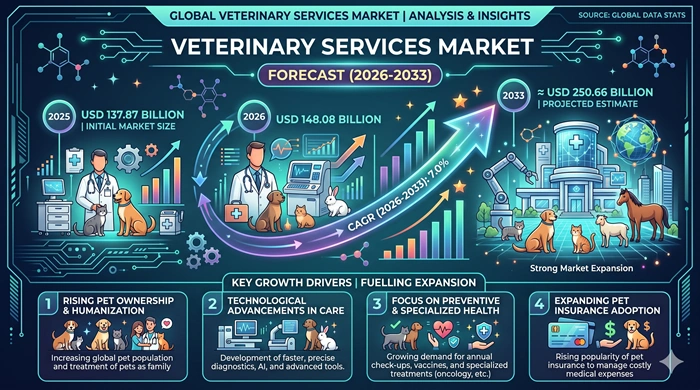
The global veterinary services market size is valued at USD 137.87 billion in 2025 and is predicted to increase from USD 148.08 billion in 2026 to approximately USD 250.66 billion by 2033, growing at a CAGR of 7.0% from 2026 to 2033.
Veterinary services encompass the full spectrum of professional health services delivered to animals — including preventive wellness examinations, medical treatment, surgical procedures, diagnostic testing, dental care, emergency and critical care, rehabilitation, and specialized specialist services such as oncology, neurology, and cardiology — provided to both companion animals and production livestock by licensed veterinary professionals across clinics, hospitals, mobile practices, and telehealth platforms. The market is benefiting from a powerful and converging set of structural growth drivers including the global rise of pet ownership and companion animal humanization, intensifying food safety and animal disease surveillance imperatives in livestock management, advancing veterinary medical technology, and the progressive corporatization of the veterinary practice industry through large-scale consolidation by national and international veterinary group operators. These dynamics are collectively generating above-average growth in the veterinary services market globally.
AI Impact on the Veterinary Services Industry
Artificial Intelligence Is Transforming Veterinary Services Through AI-Powered Diagnostic Imaging Analysis, Predictive Health Monitoring for Companion Animals and Livestock, Telemedicine-Integrated Clinical Consultation Platforms, and AI-Assisted Treatment Planning Tools for Specialist Veterinary Practices
Artificial intelligence is beginning to meaningfully change the clinical quality, operational efficiency, and accessibility of veterinary services in ways that benefit both veterinary professionals and animal owners. AI-powered diagnostic imaging analysis — applying computer vision and deep learning algorithms to veterinary radiographs, ultrasound studies, and dermatological images — is enabling veterinary clinicians to detect pathological findings with greater speed and consistency, particularly in high-volume clinical settings where radiograph reading volume exceeds available specialist review capacity. Telemedicine and AI-driven remote triage platforms are simultaneously expanding access to veterinary expertise for pet owners in geographically underserved areas — enabling veterinary nurses and general practitioners to consult AI decision support tools or specialist veterinarians remotely, improving the quality of initial patient assessment and reducing unnecessary emergency clinic visits across the veterinary services market.
In livestock and production animal settings, AI-powered precision livestock farming platforms are transforming veterinary services delivery by enabling continuous real-time monitoring of individual animal health indicators — including activity levels, feeding behavior, rumination patterns, body temperature, and reproductive cycling — through wearable sensors and computer vision systems that automatically detect early disease signals and alert farm veterinarians before clinical signs become severe. These AI-enhanced monitoring systems are fundamentally changing the economic and clinical model of production animal veterinary services — shifting from reactive emergency care toward predictive, data-driven health management that improves herd productivity while reducing antibiotic usage and disease-related production losses. As AI health monitoring technology becomes more affordable and accessible across larger farms and livestock operations globally, it is progressively expanding the commercial scope of technology-integrated veterinary services in the production animal sector.
Growth Factors
Rising Global Pet Ownership and Companion Animal Humanization Driving Veterinary Spending, Escalating Zoonotic Disease Concerns Strengthening Livestock Health Investment, and Corporate Veterinary Group Consolidation Expanding Service Capacity and Quality Are the Core Growth Drivers
The ongoing global rise in pet ownership — particularly the extraordinary surge in dog and cat adoption during and following the COVID-19 pandemic, which added millions of new pet-owning households in developed and developing markets — is the most consistent and powerful structural growth driver for the veterinary services market. As pet ownership has deepened and companion animals have increasingly been viewed as family members in developed markets, the average annual veterinary spending per pet has risen substantially — driven by growing adoption of preventive care programs, more frequent veterinary visits, greater willingness to pursue advanced diagnostic workups and specialist referrals, and the increasing cultural norm of providing pets with medical care of a quality comparable to human healthcare. This combination of expanding pet population and rising spend per pet is creating a reliably growing total revenue base for the veterinary services market that is largely resilient to economic cycles in high-income markets.
The growing global recognition of zoonotic disease risks — powerfully reinforced by the COVID-19 pandemic's impact on public health awareness — is driving increased government and private sector investment in livestock veterinary health surveillance, disease monitoring, and rapid response capacity. The One Health framework, which formally recognizes the interdependence of human, animal, and environmental health, is generating international policy momentum for strengthening veterinary service infrastructure in both developed and developing markets — creating government procurement programs, international development funding, and regulatory mandates that create additional demand streams for the veterinary services market that complement the private consumer demand from companion animal owners. Growing pet insurance adoption in the United States, United Kingdom, Sweden, and other markets is also elevating average veterinary spending per insured animal by reducing the out-of-pocket cost barrier that previously limited the intensity of care many pet owners sought.
Market Outlook
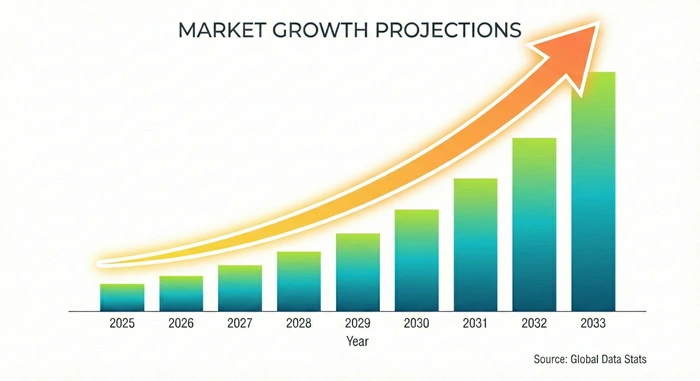
The Veterinary Services Market Is Positioned for Sustained Above-Average Growth Through 2033, Supported by Corporate Practice Consolidation Expanding Service Capacity, Telehealth Democratizing Access, and the Progressive Adoption of Advanced Diagnostic and Therapeutic Technologies
The commercial outlook for the veterinary services market through 2033 is strongly positive, characterized by multiple structural demand drivers that are simultaneously expanding the total patient population, increasing average revenue per patient visit, and extending the geographic reach of veterinary care through telemedicine and mobile practice models. The progressive corporatization of the veterinary practice industry — driven by consolidating groups including Mars (Banfield, BluePearl, VCA), National Veterinary Associates, IVC Evidensia, CVS Group, and Ethos Veterinary Health — is creating economies of scale in practice management, diagnostic technology investment, and specialist recruitment that are progressively raising the quality and comprehensiveness of services available at affiliated clinics. This corporate consolidation trend is expected to continue through the forecast period, with independent practices being acquired at an ongoing pace and private equity investment sustaining the financial capacity for further consolidation across the veterinary services market globally.
The expanding adoption of telemedicine, digital health monitoring tools, and connected practice management platforms is simultaneously broadening access to veterinary services for underserved populations and improving the operational efficiency of veterinary practices. Telemedicine platforms including Vetster, TeleTails, and the telehealth capabilities embedded within major corporate veterinary group portals are enabling pet owners to access veterinary consultation for non-emergency concerns without clinic visits — providing a more accessible and affordable entry point to the veterinary services market that is expected to grow substantially as consumer familiarity with veterinary telemedicine deepens. The overall trajectory of the market through 2033 is one of expanding access, rising clinical standards, growing consumer spending, and deepening technology integration across the full spectrum of veterinary care modalities.
Expert Speaks
-
Poul Weihrauch, Division President – Mars Veterinary Health, Mars Incorporated — "The fundamental drivers of the veterinary services market — pet humanization, rising healthcare expectations, and the growing clinical capabilities of veterinary medicine — are creating a sustained period of above-average industry growth that shows no signs of moderating. Mars Veterinary Health's continued investment in expanding our clinical network, specialist capabilities, and digital health platforms reflects our conviction that the global demand for high-quality veterinary services will grow substantially through this decade and beyond as the companion animal healthcare culture deepens in both established and emerging markets."
-
John Payne, CEO, Zoetis — "The growing investment by pet owners in preventive and proactive animal healthcare — reflecting the humanization trend that is deeply established across developed markets and rapidly emerging in Asia-Pacific and Latin America — is creating a consistently expanding revenue opportunity for the veterinary services market. Our products and technologies are designed to support this growing intensity of veterinary care — from advanced diagnostic tools that enable better clinical decision-making to pharmaceuticals and vaccines that help prevent the diseases that veterinary practices treat — and we see the intersection of veterinary services and animal health technology as one of the most commercially compelling spaces in healthcare."
-
Rob Gillette, CEO, National Veterinary Associates — "The professional veterinary services market is experiencing a structural transformation driven by corporate consolidation, technology adoption, and evolving client expectations — and organizations that invest in clinical excellence, specialist availability, and digital client experience will capture a disproportionate share of the growing demand for high-quality animal healthcare. We continue to see strong organic revenue growth across our affiliated clinic network, driven by rising visit frequency, expanding specialist referral volumes, and the progressive implementation of diagnostic and treatment technologies that improve both clinical outcomes and practice revenue per patient episode."
Key Report Takeaways
-
North America leads the veterinary services market, holding approximately 36.8% of global revenue in 2025, driven by the highest global companion animal veterinary spending per pet, the world's most comprehensive network of specialty and emergency veterinary hospitals, established pet insurance infrastructure supporting higher per-animal care intensity, and the strong presence of globally leading corporate veterinary group operators including Mars Veterinary Health, National Veterinary Associates, and Ethos Veterinary Health
-
Asia-Pacific is the fastest-growing regional market, projected to expand at a CAGR of over 8.2% through 2033, driven by explosive companion animal ownership growth across China, India, Japan, South Korea, and Southeast Asia, rising middle-class disposable incomes enabling greater veterinary care spending, rapidly expanding corporate veterinary clinic networks in major Asian metropolitan markets, and growing government livestock veterinary infrastructure investment
-
Medical services dominate the service type segment, accounting for approximately 70.4% of total service type revenue in 2025, reflecting the primary commercial contribution of clinical examination, disease treatment, surgery, emergency care, and specialist medical services that constitute the core revenue-generating activity of veterinary practices — with this segment's dominance driven by rising prevalence of chronic disease management in aging companion animal populations
-
Companion animals represent the fastest-growing animal type segment in the veterinary services market, projected to grow at the highest CAGR through 2033, driven by global pet population expansion and the progressive humanization of companion animal care that is elevating average spending per pet across developed markets and creating first-wave veterinary demand in emerging markets where companion animal ownership is a newer cultural phenomenon
-
Production animals remain the dominant animal type by revenue, accounting for approximately 58.5% of total animal type revenue in 2025, reflecting the enormous scale of global livestock populations and the commercial veterinary service demand generated by cattle, poultry, swine, sheep, and goat production operations — where veterinary health management directly impacts food supply chain productivity, safety, and regulatory compliance
-
Telehealth and virtual veterinary care is the fastest-growing service delivery format in the veterinary services market, projected to grow at a CAGR of approximately 12.5% through 2033 and expected to account for approximately 15% of total service delivery revenue by 2033, driven by growing consumer preference for convenient digital health access, expanding telemedicine platform technology, and the growing clinical acceptance of asynchronous and synchronous remote veterinary consultation as a complement to in-clinic care
Market Scope
| Report Coverage | Details |
|---|---|
| Market Size by 2033 | USD 250.66 Billion |
| Market Size by 2025 | USD 137.87 Billion |
| Market Size by 2026 | USD 148.08 Billion |
| Market Growth Rate (2026–2033) | CAGR of 7.0% |
| Dominating Region | North America |
| Fastest Growing Region | Asia-Pacific |
| Base Year | 2025 |
| Forecast Period | 2026 – 2033 |
| Segments Covered | Service Type, Animal Type, Practice Type, End User, Delivery Mode |
| Regions Covered | North America, Europe, Asia-Pacific, Latin America, Middle East & Africa |
Market Dynamics
Drivers Impact Analysis
Rising Companion Animal Ownership and Per-Pet Healthcare Spending, Zoonotic Disease Awareness Driving Livestock Veterinary Investment, Corporate Veterinary Group Consolidation Expanding Clinical Capacity, and Advancing Veterinary Medical Technology Are the Core Drivers of the Veterinary Services Market
| Driver | ≈ % Impact on CAGR Forecast | Geographic Relevance | Impact Timeline |
|---|---|---|---|
| Rising global companion animal ownership and per-pet healthcare spending | ~30% | North America, Europe, Asia-Pacific | Short to Long-term |
| Zoonotic disease concerns and One Health policy driving livestock veterinary investment | ~24% | Global, especially Asia-Pacific and MEA | Short to Long-term |
| Corporate veterinary group consolidation expanding service network capacity | ~21% | North America, Europe, Asia-Pacific | Short to Long-term |
| Advancing diagnostic and treatment technology improving care quality and driving utilization | ~17% | North America, Europe | Short to Long-term |
| Pet insurance adoption increasing average veterinary spending per insured animal | ~8% | North America, Europe | Short to Medium-term |
The companion animal humanization trend — the cultural shift in which pet owners in developed and progressively in emerging markets treat dogs and cats as family members and make significant financial commitments to their veterinary health management — is the most commercially powerful long-term growth driver for the veterinary services market. This cultural shift is reflected in measurable behavioral changes: higher veterinary visit frequency, greater adoption of preventive wellness programs and health screening, stronger willingness to pursue specialist referrals and advanced treatment for chronic and oncological conditions, and growing demand for the same standard of medical care for pets as for human family members. As this humanization culture deepens in established markets and emerges in new ones — particularly in urban China, India, Brazil, and Southeast Asia where a growing middle class is adopting companion animals and the cultural norms of pet ownership are evolving toward the Western model — the veterinary services market's addressable revenue base is expanding on a global scale.
The ongoing consolidation of the veterinary practice industry by corporate operators is simultaneously expanding the capacity, clinical capability, and geographic reach of high-quality veterinary services in ways that are driving both supply-side and demand-side growth in the veterinary services market. Corporate veterinary group operators invest in staff training, diagnostic equipment, and practice management technology at a scale that independent practices cannot match — raising the clinical ceiling of services available at affiliated practices and enabling specialist care access in markets where it was previously limited. As corporate groups continue to expand — through acquisitions of independent practices and greenfield clinic openings — they are progressively normalizing advanced veterinary care standards across broader geographic markets, creating both new capacity and new client expectations that sustain above-baseline veterinary spending growth across the veterinary services market.
Restraints Impact Analysis
Veterinary Workforce Shortage Constraining Service Capacity, High Veterinary Service Costs Limiting Access for Cost-Sensitive Pet Owners, Geographic Service Gaps in Rural and Emerging Markets, and Rising Practice Overhead Costs Compressing Margins Are the Primary Restraints
| Restraint | ≈ % Impact on CAGR Forecast | Geographic Relevance | Impact Timeline |
|---|---|---|---|
| Severe veterinary workforce shortage constraining clinical service capacity | ~33% | North America, Europe, Australia | Ongoing |
| High veterinary service costs limiting access for uninsured or cost-sensitive pet owners | ~27% | Emerging markets, lower-income consumers | Ongoing |
| Geographic service gaps in rural, remote, and underserved regions | ~21% | Global | Ongoing |
| Rising veterinary practice overhead costs compressing practice profitability | ~12% | North America, Europe | Ongoing |
| Zoonotic disease risks creating practice biosafety challenges and cost burdens | ~7% | Global | Ongoing |
The veterinary workforce shortage is the most operationally acute constraint on the veterinary services market in developed economies, particularly in the United States, Canada, Australia, and the United Kingdom — where the number of licensed veterinarians and veterinary nursing professionals is insufficient to meet the rapidly growing demand for companion animal veterinary services. The American Veterinary Medical Association has identified veterinarian shortages as a national concern, with veterinary school enrollment capacity unable to keep pace with the surging demand driven by the pandemic-era pet adoption boom. The practical consequence is that many veterinary practices are operating at full capacity with extended appointment wait times, limiting their ability to accept new patients and constraining the organic revenue growth that the market's strong demand fundamentals would otherwise support. Telehealth adoption, veterinary technician scope-of-practice expansion, and para-professional care models are being explored as partial solutions to this workforce constraint.
The high cost of advanced veterinary care — including specialist consultations, diagnostic imaging, surgical procedures, oncology treatment, and emergency critical care — creates meaningful access barriers for pet owners without comprehensive pet insurance or high disposable income. While the humanization trend is driving willingness to spend on veterinary care among affluent pet owners, a significant proportion of the companion animal owner population in both developed and developing markets cannot afford advanced diagnostic workups or specialist treatment — resulting in suboptimal clinical decisions and potential patient welfare concerns. The growing gap between the most advanced veterinary care available at leading specialty hospitals and what most pet owners can practically access and afford is a persistent tension within the veterinary services market that pet insurance expansion, payment plan programs, and lower-cost clinic models are partially addressing.
Opportunities Impact Analysis
Telehealth and Digital Veterinary Service Platform Expansion, Emerging Market Companion Animal Veterinary Care Buildout, Preventive Wellness Program Development, and Specialist Veterinary Service Network Growth Are the Most Compelling Growth Opportunities
| Opportunity | ≈ % Impact on CAGR Forecast | Geographic Relevance | Impact Timeline |
|---|---|---|---|
| Telehealth and digital veterinary care platform expansion | ~31% | North America, Europe, Asia-Pacific | Short to Long-term |
| Emerging market companion animal veterinary care infrastructure development | ~26% | Asia-Pacific, Latin America, MEA | Medium to Long-term |
| Preventive wellness and subscription-based care plan program growth | ~22% | North America, Europe | Short to Medium-term |
| Specialty and emergency veterinary service network geographic expansion | ~14% | North America, Asia-Pacific | Short to Medium-term |
| Precision nutrition and nutraceutical integration into preventive veterinary care programs | ~7% | North America, Europe | Short to Medium-term |
Veterinary telehealth represents one of the most commercially compelling near-term growth opportunities within the veterinary services market — addressing both the consumer demand for convenient, accessible care and the veterinary workforce capacity constraint by enabling veterinarians to efficiently conduct triage consultations, prescription reviews, and chronic disease monitoring visits remotely. Asynchronous tele-triage platforms that allow pet owners to submit symptom descriptions, photographs, and video clips for remote veterinary nurse or physician review are particularly well-suited to the high-frequency, lower-complexity consultation demand that currently overwhelms physical clinic appointment capacity at many practices. As regulatory frameworks for veterinary telemedicine mature — establishing clear standards for when physical examination requirements can be waived and remote prescribing authority appropriately exercised — the telehealth segment of the veterinary services market is expected to expand rapidly across both B2C and employer-benefit delivery models.
Preventive wellness and subscription-based health plan programs — offering bundled annual veterinary care packages including vaccinations, parasite prevention, dental cleanings, and routine health screenings for a monthly subscription fee — represent a powerful revenue model innovation that is simultaneously improving pet health outcomes, generating predictable recurring practice revenue, and deepening pet owner engagement with veterinary care. Programs modeled on the Banfield Optimum Wellness Plans and similar subscription offerings from corporate and independent veterinary practices are expanding the frequency and regularity of veterinary visits among subscribed pet owners — increasing practice revenue per patient and improving early disease detection rates that reduce the long-term cost of complex care. As subscription wellness plan adoption grows across the veterinary services market's companion animal segment, it is creating a more stable and predictable revenue base for practices while expanding the addressable scope of preventive care services that drive market growth.
Segment Analysis
By Service Type
Medical Services Dominate the Veterinary Services Market as the Core Revenue Category While Preventive and Wellness Care Emerges as the Fastest-Growing Segment Driven by Companion Animal Humanization and Subscription Wellness Plan Adoption
The medical services segment is the dominant service type in the veterinary services market, accounting for approximately 70.4% of total service type revenue in 2025 and projected to maintain a steady CAGR of 6.8% through 2033. Medical services encompass the full range of clinical examination, disease diagnosis and treatment, surgical procedures, emergency and critical care, specialist referral services, and hospitalization services that constitute the core revenue-generating activity of veterinary practices and hospitals. North America is the dominant region for medical services revenue, where high per-animal spending, the largest network of specialty and emergency veterinary hospitals globally, and the strong presence of corporate veterinary groups operating at premium service levels drive the world's highest per-encounter veterinary service revenue. The concentration of globally leading veterinary practice operators — including Mars Veterinary Health (Banfield, BluePearl, VCA), National Veterinary Associates, and Ethos Veterinary Health — in North America contributes substantially to the region's dominance within the veterinary services market's medical segment.
Europe is the second-largest regional medical services market, with strong specialty and referral veterinary service infrastructure across the United Kingdom, Germany, France, and the Netherlands — supported by IVC Evidensia, CVS Group, and Linnaeus Group as major corporate operators. Asia-Pacific is the fastest-growing region for medical veterinary services, driven by the rapid expansion of urban companion animal healthcare infrastructure across China, Japan, South Korea, and Australia — where new specialty hospitals and high-end companion animal veterinary clinics are being established at a pace that reflects the region's rapidly growing affluent pet owner demographic. Preventive and wellness care — encompassing vaccinations, parasite prevention, dental care, and routine health examinations — is the fastest-growing service type segment in the veterinary services market, projected to grow at a CAGR of 7.6% through 2033, driven by veterinary practices' active promotion of preventive care programs and the growing consumer awareness of the cost and outcome benefits of preventive versus reactive animal health management.
By Animal Type
Production Animals Lead the Veterinary Services Market by Total Revenue While Companion Animals Emerge as the Fastest-Growing Animal Type Segment Driven by Humanization Culture and Rising Per-Pet Veterinary Spending
The production animal segment is the dominant animal type category in the veterinary services market, accounting for approximately 58.5% of total animal type revenue in 2025 and projected to maintain a steady CAGR of 6.3% through 2033. This segment encompasses veterinary services delivered to cattle, poultry, swine, sheep, goats, and aquaculture species across commercial farming operations, where veterinary health management directly impacts production efficiency, food safety compliance, antibiotic stewardship, and livestock biosecurity. North America and Europe are the dominant regions for production animal veterinary services, where large commercial farming operations maintain ongoing veterinary consulting relationships and where regulatory requirements for veterinary oversight of antibiotic prescribing and food safety certification create mandatory service utilization. Key companies active in production animal veterinary services include Zoetis, Boehringer Ingelheim Animal Health, Elanco, and large regional veterinary practice groups specializing in livestock health management.
The companion animal segment — encompassing veterinary services for dogs, cats, horses, and other pets — is the fastest-growing animal type in the veterinary services market, projected to grow at a CAGR of 7.6% through 2033, driven by global companion animal population growth, rising per-animal veterinary spending, and the expansion of companion animal veterinary care into emerging markets across Asia-Pacific and Latin America. Asia-Pacific is the fastest-growing region for companion animal services within the veterinary services market, where China's urban companion animal population is growing at extraordinary rates and where the veterinary services infrastructure serving this population is expanding rapidly through both corporate group investment and the establishment of new independent specialty practices in major metropolitan areas. India, South Korea, and Australia are also important growth markets for companion animal veterinary services, with growing middle-class pet ownership and rising veterinary care expectations creating consistently expanding demand.
Regional Insights
North America
North America Leads the Global Veterinary Services Market With the Dominant Revenue Share, the World's Highest Per-Animal Veterinary Spending, the Most Advanced Specialty and Emergency Care Infrastructure, and the Headquarters of Leading Global Corporate Veterinary Groups
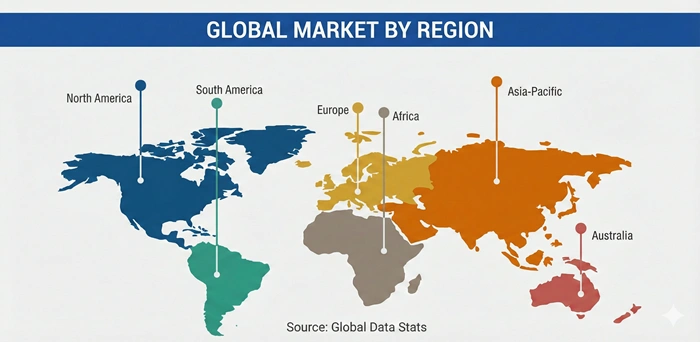
North America holds the dominant position in the global veterinary services market, accounting for approximately 36.8% of total global revenue in 2025 and projected to maintain a CAGR of 7.0% through 2033. The United States is overwhelmingly the primary national market — home to approximately 192 million owned pets, the world's highest per-animal veterinary spending at over USD 300 per pet annually, and a comprehensive network of over 29,000 veterinary practices ranging from general practice clinics to advanced specialty and emergency hospitals. The corporate consolidation of US veterinary practice — led by Mars Veterinary Health (operating Banfield, BluePearl, and VCA), National Veterinary Associates, Ethos Veterinary Health, and Mission Veterinary Partners — has driven substantial quality and service capability improvements across affiliated practice networks, elevating the standard of care and average revenue per visit across the veterinary services market. Canada is the second-largest North American market, with strong companion animal veterinary care culture and an increasingly consolidated practice landscape that mirrors US corporate consolidation trends.
Growing pet insurance penetration — currently covering approximately 4% of US pets but expanding rapidly — is meaningfully elevating the average veterinary spending per insured animal in North America by reducing out-of-pocket cost barriers that previously limited the intensity of care many pet owners sought. As pet insurance adoption deepens, driven by growing employer benefit program inclusion and consumer awareness of veterinary cost risk management, the North American veterinary services market's per-animal revenue is expected to increase substantially — sustaining the region's global leadership position even as Asia-Pacific growth rates exceed North American CAGR during the forecast period.
Asia-Pacific
Asia-Pacific Is the Fastest-Growing Regional Market for Veterinary Services, Fueled by Explosive Companion Animal Adoption in China and India, Rising Disposable Income, Rapidly Expanding Corporate Veterinary Clinic Networks, and Government Livestock Veterinary Infrastructure Investment
Asia-Pacific is the most rapidly expanding regional market in the global veterinary services landscape, projected to grow at a CAGR of 8.2% from 2026 to 2033. The region currently accounts for approximately 26.1% of global veterinary services market revenue in 2025, with China, Japan, India, Australia, and South Korea as the primary national markets. China represents the single most commercially significant emerging growth opportunity within the Asia-Pacific veterinary services market — with a companion animal population estimated at over 100 million and growing rapidly among urban millennials, and a veterinary services infrastructure that is expanding at extraordinary pace through the establishment of new specialty animal hospitals, the entry of global corporate veterinary groups, and rapidly growing domestic veterinary practice chains including New Ruipeng Pet Healthcare Group, which has become one of the world's largest veterinary practice operators. Japan has the most mature and technically sophisticated companion animal veterinary services market in Asia-Pacific, with high per-animal spending, established specialty practice infrastructure, and strong cultural alignment with the humanization of pets that drives above-average veterinary care intensity.
India is an important dual-role market within Asia-Pacific for the veterinary services market — simultaneously a growing companion animal services market driven by urban middle-class pet adoption, and a major commercial livestock veterinary market driven by the world's largest cattle and buffalo population requiring ongoing veterinary health management. Government investment in India's veterinary laboratory infrastructure, disease surveillance networks, and rural veterinary care access programs is progressively improving the veterinary services delivery landscape across India's vast livestock sector, while private sector investment in urban companion animal hospitals is expanding the quality and range of veterinary services available to India's growing urban pet owner population.
Top Key Players
-
Mars Veterinary Health (Banfield, BluePearl, VCA) (United States)
-
National Veterinary Associates (NVA) (United States)
-
IVC Evidensia (United Kingdom / Europe)
-
CVS Group plc (United Kingdom)
-
Ethos Veterinary Health (United States)
-
Linnaeus Group (United Kingdom)
-
New Ruipeng Pet Healthcare Group (China)
-
Greencross Ltd. (Australia)
-
Pets at Home Group plc (United Kingdom)
-
PetIQ Inc. (United States)
-
Mission Veterinary Partners (United States)
-
VetStrategy (Canada)
Recent Developments
-
Mars Veterinary Health (2025) — Continued aggressive expansion of its BluePearl Specialty and Emergency Pet Hospital network across the United States, opening new specialty hospital locations in underserved metropolitan markets and further investing in specialist recruitment programs targeting board-certified veterinary internists, oncologists, cardiologists, and neurologists — reinforcing Mars Veterinary Health's position as the global leader in specialty veterinary services by network scale and clinical capability within the veterinary services market
-
IVC Evidensia (2025) — Completed further acquisitions of independent veterinary practices across the United Kingdom, Germany, France, and Spain as part of its European market consolidation strategy, reaching over 1500 clinics across Europe and continuing to build the largest pan-European veterinary services network — and invested in expanding its telehealth and digital client communication platform capabilities to improve client engagement and appointment efficiency across its affiliated practice network
-
CVS Group (2025) — Reported continued organic revenue growth driven by above-average pet health visit frequency among its client base and expanding specialist referral revenue, while simultaneously advancing its strategic investment in digital practice management tools, online pharmacy capabilities, and preventive health plan program development that are increasing revenue per client and improving long-term client retention rates within CVS Group's UK and Netherlands veterinary services operations
-
New Ruipeng Pet Healthcare Group (2025) — Continued rapid expansion of its premium companion animal hospital network across Chinese tier-one and tier-two cities, investing in specialist veterinary talent recruitment, advanced diagnostic technology deployment, and branded client experience programs that are progressively establishing New Ruipeng as China's dominant corporate companion animal veterinary services operator — and advanced partnerships with international veterinary education institutions to address specialist veterinarian supply constraints in China's rapidly growing veterinary services market
-
National Veterinary Associates (2025) — Expanded its North American veterinary practice network through continued targeted acquisitions of high-quality independent companion animal and specialty practices in high-growth geographic markets, while also investing in its Connected Care telemedicine platform and digital client communication tools that are improving appointment access and increasing the frequency and quality of client interaction across NVA's affiliated clinic network within the broader veterinary services market
Market Trends
The Accelerating Corporatization of Veterinary Practice and the Rapid Expansion of Preventive Wellness and Subscription Health Plan Programs Are the Two Most Commercially Consequential Trends Reshaping the Veterinary Services Market
The progressive consolidation of veterinary practice ownership under large corporate operators — nationally in the United States, pan-regionally in Europe, and increasingly in Asia-Pacific — is the most structurally significant trend in the veterinary services market today. Corporate veterinary groups benefit from economies of scale in procurement, IT systems, staff training, specialist recruitment, marketing, and capital equipment investment that enable them to deliver consistently higher service quality and broader clinical capability than most independent practices can match individually. As corporate groups continue to acquire independent practices and open greenfield clinics in underserved markets, they are simultaneously raising clinical standards, intensifying competition, and creating larger integrated service networks that refer within-group to specialty hospitals — generating both consolidation-driven and capability-driven revenue growth that is expected to be a defining feature of veterinary services market development through 2033.
The rapid growth of preventive wellness subscription plans as a standard practice revenue model — pioneered by Banfield's Optimum Wellness Plans and now being adopted across both corporate and independent practices — is creating a more predictable, recurring revenue stream for veterinary practices while simultaneously improving companion animal health outcomes through more consistent preventive care utilization. By converting episodic veterinary visits into annual wellness plan subscriptions that include routine preventive services for a monthly fee, practices are building deeper ongoing client relationships, improving client retention, and generating the regular touchpoints that enable early disease detection and treatment before conditions become severe and costly. This shift toward subscription-based preventive care within the veterinary services market is expected to accelerate as consumer familiarity with the model grows and as corporate and independent practices increasingly compete on the quality and value of their wellness program offerings.
Segments Covered in the Report
By Service Type:
-
Medical Services (Clinical Examination, Disease Treatment, Surgery, Emergency and Critical Care, Specialist Services)
-
Preventive and Wellness Care (Vaccinations, Parasite Prevention, Health Screenings, Dental Care)
-
Diagnostic Services (Laboratory Testing, Imaging and Radiology, Point-of-Care Testing)
-
Cosmetic Services (Grooming, Aesthetic Procedures)
-
Telehealth and Virtual Veterinary Care
By Animal Type:
-
Companion Animals (Dogs, Cats, Horses, Small Mammals, Birds, Reptiles, Others)
-
Production Animals (Cattle, Poultry, Swine, Sheep and Goats, Aquaculture, Others)
By Practice Type:
-
General Practice Clinics
-
Specialty and Referral Hospitals
-
Emergency and Critical Care Hospitals
-
Mobile Veterinary Services
-
Others
By End User:
-
Individual Pet Owners
-
Commercial Livestock and Poultry Producers
-
Research Institutions and Universities
-
Zoos and Wildlife Sanctuaries
-
Government and Regulatory Bodies
-
Others
By Delivery Mode:
-
In-Clinic Services
-
Telehealth and Remote Consultation
-
Mobile and Home Visit Services
-
Others
By Region:
-
North America (United States, Canada, Mexico)
-
Europe (United Kingdom, Germany, France, Netherlands, Spain, Rest of Europe)
-
Asia-Pacific (China, Japan, India, South Korea, Australia, Rest of Asia-Pacific)
-
Latin America (Brazil, Argentina, Rest of Latin America)
-
Middle East & Africa (UAE, Saudi Arabia, South Africa, Rest of MEA)
Frequently Asked Questions
Question 1: What is the current size of the global veterinary services market?
Answer: The global veterinary services market is valued at USD 137.87 billion in 2025 and is projected to reach USD 250.66 billion by 2033. The market is growing at a CAGR of 7.0% from 2026 to 2033, driven by rising companion animal ownership, escalating per-pet veterinary spending, growing zoonotic disease awareness supporting livestock health investment, and the progressive consolidation of the veterinary practice industry under large corporate operators expanding clinical network capacity.
Question 2: Which animal type dominates the veterinary services market?
Answer: Production animals — including cattle, poultry, swine, and sheep — dominate the veterinary services market by total revenue, accounting for approximately 58.5% of total animal type revenue in 2025, driven by the enormous scale of global livestock populations and the commercial imperative of veterinary health management for food production efficiency and food safety compliance. Companion animals are the fastest-growing segment, projected to expand at a CAGR of 7.6% through 2033, driven by the global pet ownership boom, companion animal humanization culture, and rising per-animal veterinary spending across both developed and emerging markets.
Question 3: Why is North America the leading region in the veterinary services market?
Answer: North America leads the veterinary services market with approximately 36.8% of global revenue in 2025, driven by the world's highest per-animal veterinary spending, the largest and most advanced network of specialty and emergency veterinary hospitals, comprehensive pet insurance infrastructure that supports higher-intensity care, and the headquarters concentration of global corporate veterinary group leaders including Mars Veterinary Health, National Veterinary Associates, and Ethos Veterinary Health. The United States' multi-pet household culture, strong clinical veterinary education infrastructure, and progressively expanding corporate practice network create a uniquely favorable commercial environment for sustained veterinary services market growth.
Question 4: How is telehealth changing the veterinary services market?
Answer: Telehealth is rapidly emerging as one of the most commercially significant growth segments in the veterinary services market, expanding access to veterinary expertise for pet owners in geographically underserved areas, enabling efficient remote triage and chronic disease monitoring consultations that reduce physical clinic visit burden, and providing a more affordable and convenient entry point to professional veterinary care for cost-sensitive pet owners. The telehealth and virtual care segment of the veterinary services market is projected to grow at approximately 12.5% CAGR through 2033, making it the fastest-growing service delivery format as consumer familiarity with remote veterinary consultation deepens and regulatory frameworks for veterinary telemedicine continue to mature.
Question 5: What role does corporate consolidation play in the veterinary services market?
Answer: Corporate consolidation — driven by large veterinary group operators including Mars Veterinary Health, IVC Evidensia, CVS Group, and National Veterinary Associates acquiring independent practices and building integrated multi-site networks — is the most structurally significant commercial trend in the veterinary services market, raising clinical standards, expanding specialist access, and creating economies of scale in technology investment and staff training that progressively differentiate corporate network-affiliated practices from smaller independent operators. As corporate consolidation continues through the forecast period, the veterinary services market's revenue concentration among large operators is expected to increase — creating competitive pressure for independent practices while simultaneously expanding total market capacity through the superior investment capability that corporate ownership provides.