
Veterinary Diagnostics Market Overview
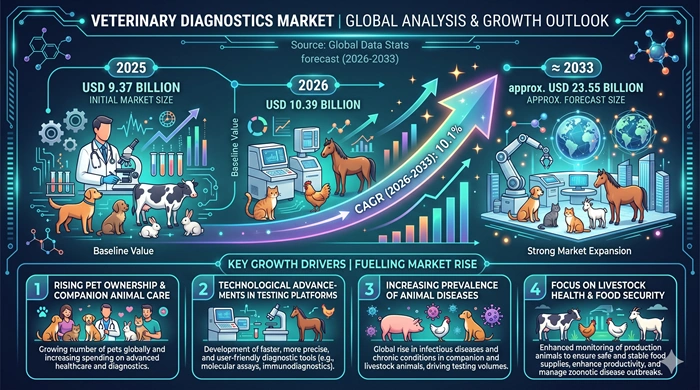
The global veterinary diagnostics market size is valued at USD 9.37 billion in 2025 and is predicted to increase from USD 10.39 billion in 2026 to approximately USD 23.55 billion by 2033, growing at a CAGR of 10.1% from 2026 to 2033.
Veterinary diagnostics encompasses the full spectrum of tools, technologies, and services used to identify diseases, infections, and health conditions in both companion animals and livestock — including immunodiagnostics, molecular diagnostics, clinical chemistry, hematology, microbiology, and imaging-based approaches. The market is benefiting from a powerful convergence of rising global pet ownership, growing awareness of animal health and preventive care, the intensifying threat of zoonotic diseases, and the progressive adoption of advanced diagnostic technologies at veterinary clinics, reference laboratories, and point-of-care settings. These drivers are collectively sustaining above-average growth across the veterinary diagnostics market globally.
AI Impact on the Veterinary Diagnostics Industry
Artificial Intelligence Is Transforming Veterinary Diagnostics Through Automated Pathology Analysis, AI-Powered Point-of-Care Device Development, Predictive Disease Surveillance, and Integrated Digital Veterinary Health Platforms
Artificial intelligence is beginning to reshape how diagnostic data is generated, analyzed, and applied in veterinary clinical settings. AI-powered image analysis systems are being integrated into digital radiography, ultrasound interpretation, and histopathology slide analysis platforms — enabling automated detection of abnormalities, lesion characterization, and pattern recognition in animal imaging studies with a level of speed and consistency that supports faster clinical decision-making in busy veterinary practice environments. These AI-enhanced diagnostic tools are particularly valuable for high-throughput reference laboratory settings where large volumes of diagnostic samples and imaging studies require rapid and accurate review, and where reducing veterinary pathologist workload without compromising diagnostic quality is a major operational priority.
Beyond image analysis, AI is being applied to epidemiological disease surveillance within the veterinary diagnostics market — integrating real-time diagnostic test result data from veterinary laboratory networks with environmental, geographic, and population health data to identify emerging disease clusters and predict zoonotic outbreak risks before they escalate. This predictive epidemiology capability has particular commercial and public health value in livestock and food-producing animal diagnostics, where early detection of infectious disease at the herd level can prevent catastrophic production losses and reduce the risk of human disease transmission through the food supply chain. AI-driven diagnostic analytics platforms are also creating new opportunities for veterinary health data monetization and population health management services that are extending the commercial scope of the veterinary diagnostics market well beyond traditional reagent and instrument sales.
Growth Factors
Rising Global Pet Ownership and Humanization of Companion Animals, Escalating Zoonotic Disease Concerns Driving Livestock Surveillance, and Technological Advancements in Point-of-Care Veterinary Testing Are the Primary Growth Engines
The steady rise in global pet ownership — combined with the progressive humanization of companion animals, particularly dogs and cats, in developed and increasingly in developing markets — is the most consistent structural growth driver for the veterinary diagnostics market. Pet owners in high-income countries are increasingly treating their animals as family members and making significant financial commitments to preventive health management — including routine wellness testing, vaccination titer monitoring, early disease screening, and chronic disease management monitoring — that require veterinary diagnostic services throughout the animal's life. This behavioral trend is simultaneously raising average per-animal diagnostic spending and expanding the total number of annual veterinary visits that generate diagnostic testing demand, creating a reliably growing revenue base for the veterinary diagnostics market in companion animal-focused practices and reference laboratories.
The growing global recognition of zoonotic diseases — infectious diseases transmissible between animals and humans — as a major public health, food security, and economic threat is substantially elevating both private and government investment in veterinary diagnostic infrastructure. The COVID-19 pandemic demonstrated the existential risks associated with zoonotic disease emergence, creating lasting policy momentum for strengthening veterinary disease surveillance capacity globally. The One Health framework — which recognizes the interconnection between human, animal, and environmental health — is driving coordinated international investment in veterinary diagnostic network modernization, laboratory capacity expansion, and real-time disease reporting systems that create sustained demand for both diagnostic products and veterinary laboratory services across the full spectrum of the veterinary diagnostics market.
Market Outlook
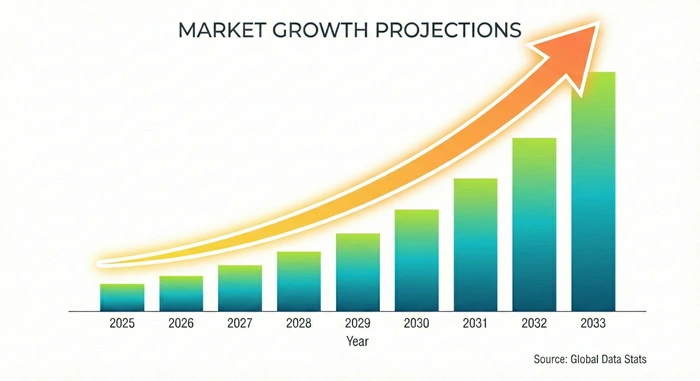
The Veterinary Diagnostics Market Is Set for a Decade of Robust Above-Average Growth Through 2033, Powered by Companion Animal Wellness Culture, Expanding Point-of-Care Diagnostics Adoption, and Livestock Disease Surveillance Investment
The commercial outlook for the veterinary diagnostics market through 2033 is strongly positive, supported by multiple reinforcing macro trends that are simultaneously expanding the total addressable market, increasing per-animal diagnostic intensity, and advancing the technological capabilities of available diagnostic solutions. The progressive shift toward preventive veterinary care — driven by both changing pet owner attitudes and the clinical community's advocacy for early disease detection and wellness monitoring — is increasing the frequency and breadth of routine diagnostic testing in companion animal practice. This shift toward diagnostics-intensive preventive care is elevating average revenue per veterinary practice visit and creating a growing baseline of routine testing demand that provides the veterinary diagnostics market with stable and predictable revenue growth independent of episodic disease events.
Point-of-care veterinary diagnostics represents one of the most commercially dynamic segments within the broader veterinary diagnostics market, and its continued rapid expansion is expected to be a defining feature of market development through 2033. The availability of bench-top analyzers and handheld point-of-care devices capable of performing comprehensive blood chemistry panels, hematology analysis, infectious disease screening, and urinalysis within the veterinary clinic — delivering results in minutes rather than the hours or days required by external reference laboratory testing — is fundamentally changing how veterinary diagnostic services are delivered. As device costs continue to decline and analytical performance improves, point-of-care diagnostic adoption is expanding rapidly across both companion animal clinics and mixed practice settings, creating substantial ongoing consumable reagent revenue streams and long-term instrument replacement cycles that will sustain the veterinary diagnostics market's growth momentum.
Expert Speaks
-
Jay Mazelsky, President & CEO, IDEXX Laboratories — "The veterinary diagnostics market continues to demonstrate remarkable resilience and growth potential, driven by the deepening bond between pet owners and their animals and the veterinary profession's growing embrace of diagnostic-driven clinical practice. Our investments in expanding in-clinic diagnostic capabilities, AI-powered reference laboratory services, and connected digital health platforms reflect our conviction that veterinary diagnostics will remain one of the most compelling growth opportunities in the animal health space throughout this decade."
-
Kristin Peck, CEO, Zoetis — "Animal health diagnostics are increasingly central to how we think about comprehensive animal health management — both in companion animal practice and across our livestock health business. Expanding access to rapid, accurate veterinary diagnostic tools is essential for enabling the kind of proactive, precision animal health management that benefits both the animals in our care and the sustainability of food production systems globally."
-
Kevin Wilson, CEO, Heska Corporation — "The transformation underway in point-of-care veterinary diagnostics — driven by miniaturization, connectivity, AI-powered analysis, and cloud-based data management — is creating a fundamentally more capable and more integrated veterinary diagnostic ecosystem. Veterinary practices that leverage comprehensive in-clinic diagnostics alongside connected reference laboratory services are delivering measurably better clinical outcomes, and we see this as the defining trend shaping the veterinary diagnostics market for years to come."
Key Report Takeaways
-
North America leads the veterinary diagnostics market, accounting for approximately 40% of global revenue in 2025, driven by the world's largest companion animal population, highest per-animal veterinary spending, extensive network of accredited veterinary reference laboratories, and the concentration of leading global veterinary diagnostics companies including IDEXX Laboratories, Zoetis, Heska Corporation, and ANTECH Diagnostics
-
Asia-Pacific is the fastest-growing regional market, projected to expand at a CAGR of over 12.3% through 2033, driven by rapidly expanding pet ownership across China, Japan, India, South Korea, and Southeast Asia, rising disposable income enabling greater veterinary care spending, growing government investment in livestock disease surveillance infrastructure, and the progressive establishment of organized veterinary diagnostic laboratory networks in major urban markets
-
Consumables, reagents, and kits dominate the product segment, accounting for approximately 52.5% of total product revenue in 2025, reflecting the high-frequency, recurring consumption of diagnostic reagents and test kits across the global installed base of veterinary analyzers, point-of-care devices, and reference laboratory testing platforms — creating a stable and growing revenue stream that expands in direct proportion to overall veterinary diagnostic test volumes
-
Companion animals represent the dominant animal type segment in the veterinary diagnostics market, holding approximately 56.2% of total animal type revenue in 2025, driven by the large and growing global pet population, high per-animal diagnostic spend among pet owners in developed markets, and the broad penetration of routine wellness testing, preventive screening, and chronic disease monitoring programs in companion animal veterinary practice
-
Immunodiagnostics is the leading technology segment, contributing approximately 38.6% of total technology-based revenue in 2025, driven by the broad clinical utility of enzyme-linked immunosorbent assay (ELISA) testing, lateral flow immunoassay point-of-care platforms, and serology-based infectious disease screening across both companion animal and livestock diagnostic applications
-
Molecular diagnostics is the fastest-growing technology segment in the veterinary diagnostics market, projected to expand at a CAGR of 13.5% through 2033 and expected to account for approximately 22% of total technology-based market share by 2033, driven by the accelerating clinical adoption of PCR-based pathogen detection panels, next-generation sequencing for microbial identification, and advanced molecular tests for genetic disease screening in companion animals and breeding programs
Market Scope
| Report Coverage | Details |
|---|---|
| Market Size by 2033 | USD 23.55 Billion |
| Market Size by 2025 | USD 9.37 Billion |
| Market Size by 2026 | USD 10.39 Billion |
| Market Growth Rate (2026–2033) | CAGR of 10.1% |
| Dominating Region | North America |
| Fastest Growing Region | Asia-Pacific |
| Base Year | 2025 |
| Forecast Period | 2026 – 2033 |
| Segments Covered | Product, Technology, Animal Type, Testing Category, End User |
| Regions Covered | North America, Europe, Asia-Pacific, Latin America, Middle East & Africa |
Market Dynamics
Drivers Impact Analysis
Rising Companion Animal Ownership and Humanization Trends, Zoonotic Disease Threat Driving Livestock Diagnostic Investment, Point-of-Care Technology Advances, and One Health Framework Policy Support Are the Core Drivers of the Veterinary Diagnostics Market
| Driver | ≈ % Impact on CAGR Forecast | Geographic Relevance | Impact Timeline |
|---|---|---|---|
| Rising global pet ownership and companion animal wellness testing demand | ~28% | North America, Europe, Asia-Pacific | Short to Long-term |
| Zoonotic disease surveillance investment and One Health policy support | ~24% | Global, especially Asia-Pacific and MEA | Short to Long-term |
| Point-of-care diagnostic technology advances enabling in-clinic testing | ~22% | North America, Europe | Short to Long-term |
| Growing livestock health management programs in emerging markets | ~16% | Asia-Pacific, Latin America, MEA | Medium to Long-term |
| Increasing pet insurance adoption expanding veterinary care spending | ~10% | North America, Europe | Short to Medium-term |
The companion animal diagnostics segment of the veterinary diagnostics market is being powered by a fundamental cultural shift in how pet owners perceive and invest in their animals' health. In the United States, the United Kingdom, Germany, and Japan — the four largest national veterinary markets — pet humanization has reached a level where a majority of dog and cat owners describe their animals as family members and express willingness to spend on comprehensive veterinary care, including advanced diagnostics. This cultural shift is reflected in growing routine wellness testing adoption, expanded chronic disease monitoring programs, and the willingness of pet owners to pursue advanced molecular, imaging, and reference laboratory diagnostics when animals present with complex health concerns. These behavioral trends are creating structural demand growth in the veterinary diagnostics market that is largely independent of economic cycles and will continue to expand as global pet ownership broadens and deepens.
The global livestock sector is facing growing diagnostic investment requirements driven by the twin imperatives of disease control and food safety assurance. African swine fever, avian influenza, foot-and-mouth disease, and emerging antimicrobial resistance patterns in food-producing animals represent persistent threats to livestock production systems globally — each requiring rapid, accurate, and scalable diagnostic surveillance capabilities at herd, regional, and national levels. Governments in Asia-Pacific, Africa, and Latin America are increasingly investing in veterinary laboratory infrastructure modernization — including the procurement of molecular diagnostic platforms, automated serology systems, and real-time disease reporting networks — that creates substantial and sustained public sector procurement demand within the veterinary diagnostics market. Private sector livestock producers are also increasingly investing in on-farm and processing-chain diagnostic testing to demonstrate food safety compliance, manage herd health more effectively, and reduce antibiotic use in response to antimicrobial resistance regulations.
Restraints Impact Analysis
High Cost of Advanced Veterinary Diagnostic Instruments, Limited Veterinary Laboratory Infrastructure in Emerging Markets, Skilled Workforce Shortages, and Regulatory Approval Complexity Are the Primary Constraints on the Veterinary Diagnostics Market
| Restraint | ≈ % Impact on CAGR Forecast | Geographic Relevance | Impact Timeline |
|---|---|---|---|
| High cost of advanced diagnostic instruments limiting access for smaller practices | ~30% | Emerging markets, independent practices | Ongoing |
| Limited veterinary laboratory infrastructure in developing markets | ~27% | Africa, South Asia, Southeast Asia | Ongoing |
| Shortage of trained veterinary diagnostic professionals | ~21% | Global | Ongoing |
| Pet owner cost sensitivity limiting diagnostic test uptake in non-insured markets | ~15% | Emerging markets, cost-conscious segments | Short to Medium-term |
| Regulatory complexity for diagnostic device approval in fragmented markets | ~7% | Global | Ongoing |
The high capital cost of advanced veterinary diagnostic instruments — including multi-parameter chemistry analyzers, hematology systems, digital radiography platforms, and molecular PCR systems designed for in-clinic or field deployment — creates a meaningful access barrier for smaller independent veterinary practices and rural veterinary providers who lack the patient volumes or capital resources to justify large upfront equipment investments. This cost barrier concentrates advanced in-clinic diagnostic capabilities in larger multi-veterinarian practices, corporate veterinary group clinics, and hospital-based facilities — while smaller independent practices continue to rely on external reference laboratory services for most diagnostic needs. The resulting dependence on reference laboratory testing introduces sample shipping delays that can compromise clinical decision-making in time-sensitive cases, creating both a clinical and commercial argument for expanded point-of-care adoption that instrument manufacturers and leasing program providers are progressively addressing through flexible pricing and subscription-based instrument access models.
The shortage of trained veterinary diagnosticians, veterinary pathologists, and clinical laboratory technicians represents a structural constraint on the capacity and quality of veterinary diagnostic services globally — particularly in emerging markets where the overall veterinary workforce is insufficient relative to animal population requirements. Advanced molecular and digital diagnostic technologies require operator expertise for reliable implementation and quality-controlled operation — expertise that is not uniformly available across the global veterinary laboratory network. This human capital constraint limits the pace of technology adoption in regions where diagnostic laboratory infrastructure investment is otherwise progressing, and represents a meaningful bottleneck that training programs, professional societies, and diagnostic companies' application specialist teams are working to address within the veterinary diagnostics market.
Opportunities Impact Analysis
Digital Veterinary Diagnostics Platform Development, Molecular Diagnostics Expansion in Emerging Markets, Telehealth-Integrated Remote Diagnostic Services, and Companion Animal Genetic and Preventive Health Screening Programs Are the Most Compelling Growth Opportunities
| Opportunity | ≈ % Impact on CAGR Forecast | Geographic Relevance | Impact Timeline |
|---|---|---|---|
| Digital and AI-powered veterinary diagnostic platform development | ~31% | North America, Europe | Short to Long-term |
| Expanding molecular diagnostic adoption in emerging market veterinary labs | ~26% | Asia-Pacific, Latin America | Medium to Long-term |
| Telehealth-integrated remote veterinary consultation and diagnostic services | ~21% | North America, Europe, Asia-Pacific | Short to Medium-term |
| Companion animal genetic health screening and breed disease panel programs | ~15% | North America, Europe | Short to Medium-term |
| Point-of-care miniaturization enabling field diagnostics for livestock programs | ~7% | Global, especially MEA and Asia-Pacific | Medium to Long-term |
The progressive integration of veterinary diagnostic platforms with telehealth and digital veterinary practice management systems is creating new commercial models for diagnostic service delivery that extend well beyond traditional in-clinic testing and reference laboratory channels. Connected in-clinic diagnostic analyzers that transmit results directly to cloud-based practice management systems — where AI-powered clinical decision support tools interpret diagnostic data in the context of patient history, signalment, and clinician notes — are enabling more integrated, data-driven veterinary care. These connected diagnostic ecosystems are commercially attractive to both veterinary practice groups investing in practice efficiency and patient care quality, and to diagnostic companies seeking to expand recurring consumable revenue streams and deepen customer switching barriers through deep integration of their platforms into veterinary workflow infrastructure.
Companion animal genetic testing represents an expanding and high-margin opportunity segment within the veterinary diagnostics market. The growing availability of breed disease genetic panels — identifying inherited conditions including hip dysplasia predisposition, multidrug resistance mutations, progressive retinal atrophy, and exercise-induced collapse — is attracting increasing consumer and breeder interest in dog and cat genetic health testing. DNA-based breed identification and health risk screening services offered directly to pet owners through mail-in sample collection kits are generating a new direct-to-consumer revenue channel that complements traditional clinic-based veterinary testing and is expected to expand substantially as pet owner interest in personalized animal health management deepens across the global companion animal market.
Segment Analysis
By Product
Consumables, Reagents, and Kits Lead the Veterinary Diagnostics Market as the Most Essential and High-Frequency Product Category, While Instruments Drive Capital Procurement Cycles and Software/Services Represent the Fastest-Growing Sub-Segment
Consumables, reagents, and kits are the dominant product segment in the veterinary diagnostics market, accounting for approximately 52.5% of total product revenue in 2025 and projected to maintain a strong CAGR of 9.7% through 2033. This segment's dominance reflects the inherently recurring and volume-proportional nature of reagent consumption — every diagnostic test performed across the global installed base of veterinary analyzers, immunoassay platforms, and molecular PCR systems requires dedicated reagent kits and consumable supplies that are repurchased continuously. North America is the largest regional market for veterinary diagnostic consumables, where the high density of IDEXX in-clinic analyzers, Zoetis point-of-care platforms, and reference laboratory testing volumes drives enormous consumable consumption volumes annually. Key companies leading the veterinary diagnostics consumables segment include IDEXX Laboratories (United States), Zoetis (United States), Heska Corporation (United States), and Thermo Fisher Scientific — collectively accounting for the majority of globally distributed veterinary reagent and kit revenue.
Europe is the second-largest region for veterinary diagnostic consumables, with particularly strong demand from German, French, British, and Dutch companion animal veterinary practice networks. Asia-Pacific is the fastest-growing region for consumable sales, driven by rapidly expanding veterinary analyzer installed base growth in China, Japan, India, and South Korea as new veterinary clinics and diagnostic laboratories are established and existing facilities upgrade their in-clinic diagnostic capabilities. Instruments represent the second-largest product segment, driven by capital procurement cycles for hematology analyzers, biochemistry systems, digital radiography units, and molecular diagnostic platforms — creating periodic but high-value procurement opportunities for instrument vendors across the veterinary diagnostics market globally.
By Technology
Immunodiagnostics Leads the Veterinary Diagnostics Market Technology Landscape While Molecular Diagnostics Emerges as the Most Rapidly Expanding Technology Segment
Immunodiagnostics is the dominant technology segment in the veterinary diagnostics market, accounting for approximately 38.6% of total technology-based revenue in 2025 and projected to grow at a CAGR of 9.4% through 2033. This segment encompasses ELISA-based quantitative serology, lateral flow immunoassay point-of-care rapid tests, and automated immunoassay platforms used across a wide spectrum of companion animal and livestock diagnostic applications — including infectious disease antibody and antigen detection, hormone level measurement, allergy testing, and biomarker analysis. Immunodiagnostics' dominance in the veterinary diagnostics market reflects its versatility, clinical utility across multiple species and disease categories, and the wide availability of validated, affordable immunoassay products for the most common veterinary diagnostic indications. North America is the largest market for immunodiagnostics, led by IDEXX Laboratories' SNAP point-of-care immunoassay platform and comprehensive reference laboratory serology menu. Asia-Pacific is the fastest-growing region for immunodiagnostic adoption, where rapidly increasing veterinary clinic density, growing livestock disease testing requirements, and government-funded animal disease surveillance programs are driving strong test volume growth.
Molecular diagnostics is the fastest-growing technology segment in the veterinary diagnostics market, projected to grow at a CAGR of 13.5% through 2033 as PCR-based pathogen detection, next-generation sequencing for antimicrobial resistance profiling, and molecular genetic health screening platforms achieve progressively broader clinical adoption. This segment's rapid growth reflects both the expanding clinical value of molecular diagnostic approaches in veterinary medicine — providing faster, more specific, and more sensitive pathogen identification than culture-based methods — and the declining cost of PCR platform technology that is making molecular diagnostics increasingly accessible outside large reference laboratories. Asia-Pacific and North America are the primary growth markets for veterinary molecular diagnostics, with IDEXX Laboratories, Thermo Fisher Scientific, QIAGEN, and Zoetis among the leading vendors offering molecular veterinary diagnostic platforms and validated test menus for companion animal, livestock, and poultry applications.
Regional Insights
North America
North America Leads the Global Veterinary Diagnostics Market With the Highest Revenue Share, Driven by an Exceptionally Strong Companion Animal Culture, Comprehensive Insurance Infrastructure, and World-Leading Veterinary Diagnostic Technology Companies
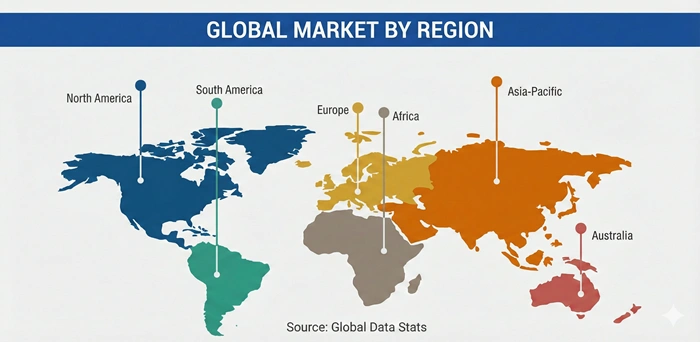
North America holds the dominant position in the global veterinary diagnostics market, accounting for approximately 40% of total global revenue in 2025 and projected to maintain a CAGR of 9.6% through 2033. The United States is by far the primary national market, home to approximately 90 million pet dogs, 100 million pet cats, and an estimated 29,000 veterinary practices that collectively generate the world's largest concentration of companion animal veterinary diagnostic demand. IDEXX Laboratories — headquartered in Maine and the global leader in veterinary diagnostics with revenues exceeding USD 3.6 billion annually — derives the majority of its revenue from the North American market through its in-clinic analyzer installed base, VetConnect reference laboratory network, and digital veterinary health platform. Other major companies contributing to North American veterinary diagnostics market leadership include Zoetis (United States), Heska Corporation (United States), ANTECH Diagnostics, Thermo Fisher Scientific, and the North American operations of global players including Zoetis and Boehringer Ingelheim.
The United States government's ongoing investment in the USDA Animal and Plant Health Inspection Service (APHIS) diagnostic laboratory network — which supports national livestock disease surveillance and rapid response capabilities — provides a substantial and stable public sector procurement base that complements the large commercial veterinary diagnostics market. Canada is the second-largest North American market, with strong companion animal veterinary care culture and a well-developed veterinary reference laboratory network that mirrors US diagnostic service patterns. The progressive adoption of pet insurance across North American markets — currently covering approximately 4% of US pets but growing rapidly — is increasing veterinary spending per insured animal and supporting a higher per-pet diagnostic intensity that benefits the regional veterinary diagnostics market.
Asia-Pacific
Asia-Pacific Is the Fastest-Growing Regional Market in Veterinary Diagnostics, Fueled by Explosive Companion Animal Adoption, Rising Disposable Income, and Government-Driven Livestock Disease Surveillance Investment
Asia-Pacific is the most rapidly expanding regional market in the global veterinary diagnostics landscape, projected to grow at a CAGR of 12.3% from 2026 to 2033. The region currently accounts for approximately 23.4% of global veterinary diagnostics market revenue in 2026, with China, Japan, South Korea, India, and Australia as the primary national markets. China is the fastest-growing national market in the region and globally — driven by an extraordinary surge in companion animal ownership among urban Chinese millennials and Generation Z consumers, rapidly expanding organized veterinary practice infrastructure in major cities, and government-mandated livestock health surveillance programs addressing African swine fever and avian influenza threats. Japan has the most mature and technically advanced companion animal veterinary diagnostics ecosystem in Asia-Pacific, with high per-animal spending, widespread adoption of in-clinic diagnostics, and strong utilization of advanced molecular and imaging diagnostics at specialist veterinary hospitals. Key companies active in the Asia-Pacific veterinary diagnostics market include IDEXX Laboratories, Zoetis, Heska Corporation, and regional players including Mindray Bio-Medical Electronics (China) and Fujifilm (Japan).
India is emerging as one of the most strategically important developing markets within Asia-Pacific for veterinary diagnostics. India has the world's largest livestock population — including approximately 300 million cattle and buffalo — and an expanding companion animal sector driven by rising urban middle-class incomes and changing attitudes toward pet ownership. Government investment in India's network of state and central veterinary diagnostic laboratories, combined with private sector veterinary clinic expansion in metropolitan areas, is creating accelerating demand across both livestock and companion animal diagnostic segments. Southeast Asian markets including Vietnam, Thailand, and Indonesia are also growing rapidly as aquaculture disease diagnostics, poultry health surveillance, and companion animal veterinary care expansion drive new diagnostic infrastructure investment across the veterinary diagnostics market.
Top Key Players
-
IDEXX Laboratories Inc. (United States)
-
Zoetis Inc. (United States)
-
Heska Corporation (United States)
-
ANTECH Diagnostics / Mars Veterinary Health (United States)
-
Thermo Fisher Scientific Inc. (United States)
-
Boehringer Ingelheim GmbH (Germany)
-
Bio-Rad Laboratories Inc. (United States)
-
QIAGEN N.V. (Netherlands)
-
Mindray Bio-Medical Electronics Co. Ltd. (China)
-
Fujifilm Holdings Corporation (Japan)
-
Neogen Corporation (United States)
-
Elanco Animal Health Incorporated (United States)
Recent Developments
-
IDEXX Laboratories (2025) — Continued expanding its global reference laboratory network with new laboratory site openings and capacity expansions across Europe and Asia-Pacific, while also launching updated AI-powered urinalysis and digital cytology analysis capabilities within its IDEXX VetLab Station connected diagnostic platform — reinforcing its position as the global leader in integrated in-clinic and reference laboratory veterinary diagnostics solutions with the broadest connected digital ecosystem in the industry
-
Zoetis (2025) — Advanced its veterinary diagnostics strategy through the integration of its Vetscan portfolio of point-of-care analyzers with expanded digital connectivity capabilities, including cloud-based result transmission and AI-assisted clinical interpretation tools, while also investing in companion animal genetic health screening and dermatology allergy testing platforms that address the growing consumer demand for preventive and precision veterinary health management
-
Heska Corporation (2025) — Launched next-generation versions of its Element DC hematology and chemistry analyzer systems featuring enhanced connectivity, improved analytical performance, and expanded test menus — targeting companion animal specialty and emergency practices seeking comprehensive in-clinic diagnostic capabilities — while also strengthening its subscription-based instrument access model that reduces upfront capital barriers for independent veterinary practices investing in in-clinic diagnostics
-
Boehringer Ingelheim (2024–2025) — Strengthened its animal health diagnostics capabilities through continued development of its swine and poultry disease molecular diagnostic tools aligned with its global livestock vaccine portfolio, enabling integrated prevention-and-surveillance approaches to herd health management — and announced new partnerships with veterinary laboratory networks in Asia-Pacific to expand regional access to its diagnostic product portfolio in high-priority livestock disease surveillance markets
-
QIAGEN (2025) — Expanded its veterinary molecular diagnostics product portfolio with new validated PCR assay panels targeting key companion animal respiratory pathogens and major livestock infectious diseases, leveraging its established PCR platform expertise and global distribution infrastructure to capture growing molecular veterinary diagnostics market demand — and reported above-market growth in veterinary molecular test kit sales driven by expanded clinical adoption of PCR-based pathogen identification in reference and in-clinic laboratory settings
Market Trends
The Rapid Adoption of Connected In-Clinic Diagnostic Platforms and the Acceleration of Molecular and Genetic Testing in Companion Animal Health Are the Two Most Commercially Consequential Trends Reshaping the Veterinary Diagnostics Market
The most transformative trend in the veterinary diagnostics market today is the accelerating transition from standalone in-clinic diagnostic devices to fully connected, cloud-integrated diagnostic ecosystems. Modern veterinary diagnostic platforms from IDEXX, Heska, and Zoetis transmit test results directly to cloud-based practice management systems, generate AI-assisted clinical interpretation prompts, enable longitudinal trend analysis across serial tests, and connect in-clinic results with reference laboratory data in a unified patient health record. This connectivity-first approach to veterinary diagnostics is creating a deeper integration between diagnostic data and clinical decision-making that is improving practice efficiency, enabling proactive case management, and generating valuable longitudinal health data that supports population-level veterinary health analytics. The commercial implication is a significant increase in the stickiness of each instrument installation — as the value of the connected ecosystem grows, veterinary practice switching costs increase substantially — creating durable competitive advantages for diagnostic companies that lead in connected platform development.
Molecular and genetic diagnostics are experiencing accelerating adoption in companion animal practice that represents a fundamental expansion of the veterinary diagnostics market's clinical and commercial scope. PCR-based pathogen panels for respiratory disease, gastrointestinal infection, vector-borne disease, and dermatological infections are progressively replacing culture-based microbiological testing in reference laboratory settings — delivering faster, more sensitive, and more specific results that directly improve clinical outcomes. Simultaneously, companion animal genetic health panel testing — offered both through veterinary clinics and directly to consumers — is growing rapidly as pet owners seek proactive insight into their animals' inherited health risks, breeding compatibility, and predicted disease susceptibilities. These molecular and genetic applications are generating high-value test revenue that carries significantly better margins than routine chemistry and hematology testing, and their continued expansion is expected to be an important driver of above-average revenue growth within the veterinary diagnostics market through 2033.
Segments Covered in the Report
By Product:
-
Consumables, Reagents, and Kits
-
Instruments (Analyzers, Imaging Systems, Point-of-Care Devices)
-
Software and Services (Laboratory Information Management Systems, AI-Powered Analysis Platforms, Telehealth Integration Tools)
By Technology:
-
Immunodiagnostics (ELISA, Lateral Flow Immunoassay, Immunofluorescence)
-
Molecular Diagnostics (PCR, Next-Generation Sequencing, Microarrays)
-
Clinical Chemistry
-
Hematology
-
Microbiology
-
Imaging (Digital Radiography, Ultrasound, CT)
-
Others
By Animal Type:
-
Companion Animals (Dogs, Cats, Horses, Other Companion Animals)
-
Livestock (Cattle, Poultry, Swine, Sheep and Goats, Others)
-
Aquatic Animals
-
Others
By Testing Category:
-
Infectious Disease Testing
-
Clinical Chemistry Testing
-
Hematology Testing
-
Urinalysis
-
Genetic Testing
-
Others
By End User:
-
Veterinary Reference Laboratories
-
Veterinary Hospitals and Clinics
-
Point-of-Care / In-Clinic Settings
-
Academic and Research Institutes
-
Government and Regulatory Bodies
-
Others
By Region:
-
North America (United States, Canada, Mexico)
-
Europe (Germany, United Kingdom, France, Netherlands, Italy, Spain, Rest of Europe)
-
Asia-Pacific (China, Japan, India, South Korea, Australia, Rest of Asia-Pacific)
-
Latin America (Brazil, Argentina, Rest of Latin America)
-
Middle East & Africa (UAE, Saudi Arabia, South Africa, Rest of MEA)
Frequently Asked Questions
Question 1: What is the current size of the global veterinary diagnostics market?
Answer: The global veterinary diagnostics market is valued at USD 9.37 billion in 2025 and is projected to reach USD 23.55 billion by 2033. The market is growing at a CAGR of 10.1% from 2026 to 2033, driven by rising pet ownership, expanding point-of-care diagnostic adoption, zoonotic disease surveillance investment, and growing molecular and genetic testing utilization in companion animal and livestock settings.
Question 2: Which product segment leads the veterinary diagnostics market?
Answer: Consumables, reagents, and kits lead the veterinary diagnostics market, accounting for approximately 52.5% of total product revenue in 2025, driven by the high-volume recurring demand generated by reagent and test kit consumption across the global installed base of veterinary analyzers and point-of-care platforms. Instruments represent the second-largest product segment, while software and digital veterinary health platforms are the fastest-growing sub-segment — expanding rapidly as connected in-clinic diagnostic ecosystems become the new standard in modern veterinary practice.
Question 3: Which animal type generates the most revenue in the veterinary diagnostics market?
Answer: Companion animals — including dogs, cats, and horses — generate the dominant share of veterinary diagnostics market revenue, accounting for approximately 56.2% of total animal type revenue in 2025, reflecting the high per-animal diagnostic spending among pet owners in developed markets and the broad adoption of routine wellness testing and preventive screening programs in companion animal veterinary practice. Livestock diagnostics represent the second-largest segment and are the fastest-growing in emerging markets driven by government investment in food safety and animal disease surveillance programs.
Question 4: Why is Asia-Pacific the fastest-growing region in the veterinary diagnostics market?
Answer: Asia-Pacific is the fastest-growing regional market for veterinary diagnostics, projected to expand at a CAGR of 12.3% through 2033, driven by explosive companion animal adoption among urban consumers in China, South Korea, and India, rapidly improving veterinary care infrastructure, and major government programs investing in livestock disease surveillance to address African swine fever, avian influenza, and food safety challenges. The region's enormous livestock population combined with growing middle-class pet ownership creates a uniquely large and diverse demand base that is expanding faster than any other region in the global veterinary diagnostics market.
Question 5: What role does molecular diagnostics play in the veterinary diagnostics market?
Answer: Molecular diagnostics — including PCR-based pathogen panels, next-generation sequencing for antimicrobial resistance profiling, and companion animal genetic health screening tests — is the fastest-growing technology segment in the veterinary diagnostics market, projected to grow at a CAGR of 13.5% through 2033. Molecular testing delivers superior sensitivity, specificity, and speed compared to traditional culture-based methods, and its growing clinical adoption in both companion animal and livestock settings is creating high-value, high-margin test revenue that is disproportionately contributing to overall veterinary diagnostics market growth.