
Vascular Grafts Market Overview
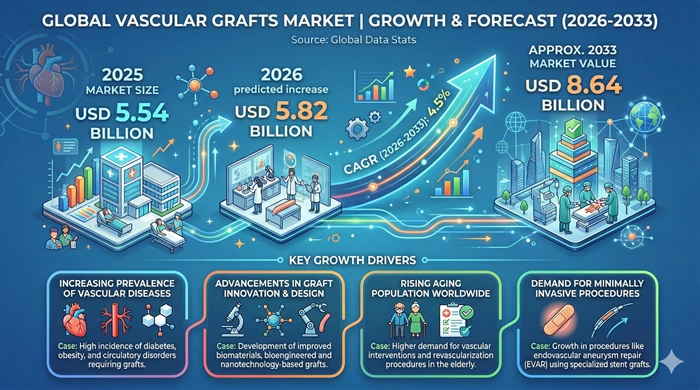
The global vascular grafts market size is valued at USD 5.54 billion in 2025 and is predicted to increase from USD 5.82 billion in 2026 to approximately USD 8.64 billion by 2033, growing at a CAGR of 4.5% from 2026 to 2033.
The vascular grafts market is gaining solid traction globally, underpinned by the accelerating burden of cardiovascular diseases, rising demand for arterial bypass procedures, and expanding applications in hemodialysis access. Technological innovations in graft materials — from expanded polytetrafluoroethylene (ePTFE) to bioengineered scaffolds — are enabling surgeons to achieve better long-term patency rates and reduced complication profiles across a widening patient population.
AI Impact on the Vascular Grafts Industry
Artificial Intelligence Is Revolutionizing Vascular Graft Design, Surgical Planning, and Patient Outcomes Monitoring Across Global Vascular Surgery Programs
Artificial intelligence is beginning to leave a meaningful footprint on the vascular grafts space, particularly in the areas of surgical planning, biomaterial optimization, and postoperative monitoring. AI-driven imaging analysis platforms can now map complex aortic anatomy with greater precision, enabling surgeons to select the most appropriate graft size, geometry, and material prior to entering the operating room. This reduces intraoperative complications and improves graft placement accuracy, especially in high-risk endovascular aneurysm repair (EVAR) procedures.
On the manufacturing side, machine learning models are being applied to accelerate the development of next-generation graft materials by predicting how candidate polymers will perform under simulated physiological conditions. In postoperative care, AI-powered remote monitoring tools help detect early signs of graft occlusion or anastomotic failure, allowing clinical teams to intervene before complications escalate. These capabilities are attracting significant R&D investment from both established medtech companies and startups focused on vascular intervention technologies.
Growth Factors
Rising Cardiovascular Disease Prevalence, Growing Surgical Volumes, and Advancements in Synthetic and Biological Graft Technologies Are Fueling Steady Market Expansion
The primary catalyst for growth in the vascular grafts market is the surging global prevalence of cardiovascular and peripheral artery diseases. Aortic aneurysms, peripheral arterial disease (PAD), and end-stage renal disease (ESRD) collectively create an enormous and expanding patient pool requiring surgical vascular reconstruction. As populations age in North America, Europe, and East Asia, the frequency of vascular bypass surgeries and hemodialysis access procedures continues to rise, directly driving demand for grafts across both open surgical and endovascular approaches.
Beyond disease burden, technological progress in graft materials has been a powerful growth enabler. Modern ePTFE and polyester grafts now offer improved biocompatibility and durability, while the emergence of bioengineered and bioresorbable scaffolds promises to address limitations like thrombogenicity and intimal hyperplasia that have historically challenged long-term graft performance. The growing adoption of minimally invasive endovascular techniques is also expanding the market, as these procedures require specialized stent grafts that are increasingly sophisticated and command premium pricing.
Market Outlook
The Vascular Grafts Market Is Set for Consistent Long-Term Growth Supported by Endovascular Innovation, Expanding Hemodialysis Demand, and Improving Healthcare Infrastructure in Emerging Economies
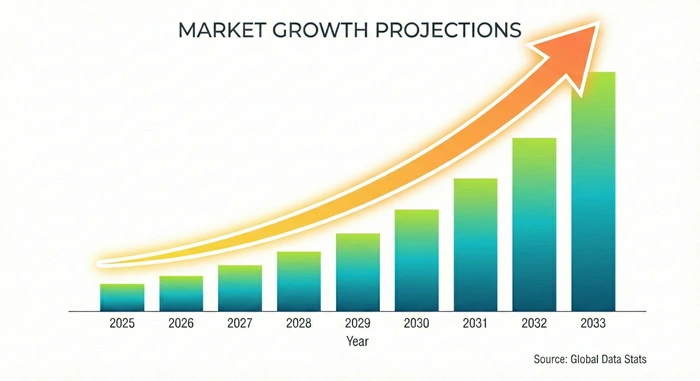
Through 2033, the vascular grafts market is expected to record stable and consistent expansion driven by a combination of demographic, clinical, and technological forces. The global dialysis population is projected to reach record levels, with hemodialysis access grafts representing a fast-growing subsegment as renal disease rates climb alongside diabetes and hypertension prevalence. Simultaneously, the increasing penetration of endovascular aneurysm repair in place of open surgery is stimulating demand for advanced stent graft systems with more customizable anatomical configurations.
Emerging markets across Asia-Pacific, Latin America, and the Middle East are poised to become increasingly significant contributors to market growth as healthcare infrastructure investment accelerates and more vascular surgery specialists are trained. Expanding insurance coverage and government health programs in countries like India, China, and Brazil are improving patient access to life-saving vascular reconstruction procedures. Combined with a healthy product pipeline, strengthening clinical evidence for newer graft materials, and growing physician adoption of endovascular techniques, the long-term outlook for this market through 2033 remains firmly positive.
Expert Speaks
-
Geoffrey Martha, CEO, Medtronic — "Vascular intervention remains a cornerstone of our cardiovascular portfolio strategy. We continue to see strong procedural demand globally, and our pipeline of next-generation endovascular graft systems is designed to address the growing complexity of aortic disease presentations that surgeons encounter."
-
Robert Ford, CEO, Abbott — "The cardiovascular device landscape is evolving rapidly, and vascular access and repair solutions are central to that evolution. We are focused on delivering technologies that improve patient outcomes while reducing procedural risk — and the clinical response from vascular surgeons worldwide has been very encouraging."
-
Mikael Hansson, CEO, Getinge AB — "Vascular reconstruction procedures are becoming more sophisticated, and surgeons need reliable, high-performance graft solutions they can trust. Our focus on biomaterials innovation and procedural support is directly aligned with where the market is heading over the next decade."
Key Report Takeaways
-
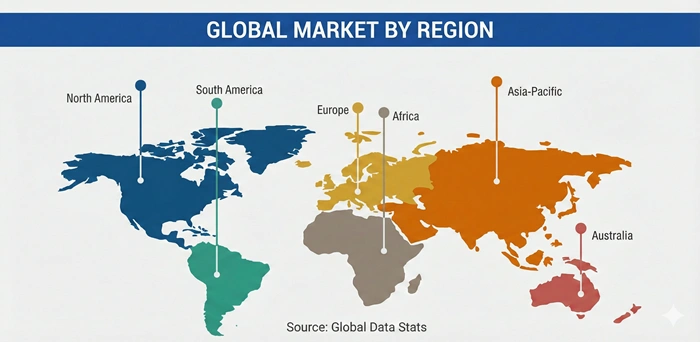
North America dominates the vascular grafts market, holding the largest revenue share of approximately 38% in 2025, driven by a high incidence of aortic aneurysms and peripheral artery disease, a well-established vascular surgery ecosystem, and strong reimbursement frameworks for both open surgical and endovascular graft procedures
-
Asia-Pacific is the fastest-growing region, projected to expand at a CAGR of over 6.2% through 2033, driven by rapidly aging populations in China, Japan, and South Korea, increasing cardiovascular disease awareness, and growing investment in specialized vascular surgery centers
-
Hospitals represent the dominant end-user segment, accounting for the largest share of vascular graft consumption due to the concentration of complex aortic and peripheral bypass surgeries in tertiary care and academic medical center settings
-
Synthetic grafts — particularly ePTFE and polyester — hold the leading product share, with ePTFE grafts alone capturing approximately 54% of raw material-based revenue in 2025, supported by their proven clinical track record in both large-caliber aortic repair and small-caliber peripheral bypass procedures
-
Endovascular stent grafts contribute the most to revenue within the product segment, reflecting the strong clinical shift toward minimally invasive EVAR and thoracic endovascular aortic repair (TEVAR) procedures over traditional open surgery
-
Bioengineered and tissue-engineered vascular grafts represent the fastest-growing future segment, with a projected market share of approximately 15% by 2033 and an estimated CAGR of 9.8%, driven by ongoing clinical trials demonstrating superior biological integration and long-term patency compared to purely synthetic alternatives
Market Scope
| Report Coverage | Details |
|---|---|
| Market Size by 2033 | USD 8.64 Billion |
| Market Size by 2025 | USD 5.54 Billion |
| Market Size by 2026 | USD 5.82 Billion |
| Market Growth Rate (2026–2033) | CAGR of 4.5% |
| Dominating Region | North America |
| Fastest Growing Region | Asia-Pacific |
| Base Year | 2025 |
| Forecast Period | 2026 – 2033 |
| Segments Covered | Product, Raw Material, Application, End User |
| Regions Covered | North America, Europe, Asia-Pacific, Latin America, Middle East & Africa |
Market Dynamics
Drivers Impact Analysis
Surging Incidence of Aortic Aneurysms, Peripheral Artery Disease, and ESRD-Related Hemodialysis Access Needs Are the Central Forces Propelling Vascular Graft Market Growth
| Driver | ≈ % Impact on CAGR Forecast | Geographic Relevance | Impact Timeline |
|---|---|---|---|
| Rising prevalence of cardiovascular and peripheral artery diseases | ~32% | Global, especially North America & Europe | Short to Long-term |
| Growing adoption of endovascular aneurysm repair (EVAR) | ~24% | North America, Europe, Asia-Pacific | Short to Medium-term |
| Increasing ESRD and hemodialysis access graft demand | ~20% | Global, led by North America and Asia | Medium to Long-term |
| Biomaterial innovations in synthetic and bioengineered grafts | ~15% | North America, Europe | Medium to Long-term |
| Expanding vascular surgery infrastructure in emerging markets | ~9% | Asia-Pacific, Latin America, MEA | Medium to Long-term |
The increasing global burden of cardiovascular disease is the most powerful driver shaping the vascular grafts market. Conditions such as abdominal aortic aneurysm (AAA), peripheral arterial occlusive disease, and atherosclerosis are creating a steadily growing patient base requiring surgical or endovascular revascularization. With aging populations in developed markets and rising lifestyle disease rates in developing countries, the pipeline of patients requiring vascular graft procedures is expanding across every major geography.
Technological progress in surgical approaches is equally important. The rapid clinical shift from open aortic surgery to minimally invasive EVAR has fundamentally transformed the product mix demanded in this market, driving strong growth in endovascular stent graft systems. As procedural techniques improve and clinical guidelines increasingly favor endovascular approaches for anatomically suitable patients, both device volumes and average selling prices for advanced graft systems are rising — creating a favorable environment for manufacturers with sophisticated stent graft portfolios.
Restraints Impact Analysis
High Device Costs, Risk of Graft Failure and Infection, and Complex Regulatory Pathways Continue to Limit Broader Adoption in Cost-Sensitive and Resource-Limited Settings
| Restraint | ≈ % Impact on CAGR Forecast | Geographic Relevance | Impact Timeline |
|---|---|---|---|
| High cost of advanced endovascular stent graft systems | ~30% | Emerging markets, Low-income settings | Short to Medium-term |
| Risk of graft occlusion, infection, and secondary interventions | ~25% | Global | Ongoing |
| Stringent regulatory approval requirements for novel graft materials | ~22% | Global, particularly USA and EU | Medium-term |
| Limited availability of trained vascular surgeons in emerging markets | ~15% | Africa, Rural Asia-Pacific, Latin America | Medium to Long-term |
| Reimbursement gaps for newer graft technologies | ~8% | Middle East & Africa, parts of Asia | Medium-term |
One of the most persistent challenges facing the vascular grafts market is the high cost associated with advanced endovascular graft systems, which can present significant affordability barriers in markets without robust insurance or reimbursement structures. Stent graft systems for EVAR, in particular, involve complex multi-component device platforms that are resource-intensive to manufacture and often priced beyond reach for public healthcare systems in lower-income countries.
Clinical concerns about long-term graft durability also create hesitancy among some surgeons, particularly in settings where secondary intervention capabilities are limited. Issues such as intimal hyperplasia, anastomotic pseudoaneurysms, and graft infection — though relatively uncommon with modern devices — remain important considerations in patient selection and surgical planning. These factors, combined with a demanding regulatory pathway for novel biomaterials, create meaningful headwinds that moderate the overall growth pace of the market.
Opportunities Impact Analysis
Bioengineered Vascular Grafts, Expanding ESRD Patient Populations, and Untapped Emerging Market Demand Represent the Most Promising Growth Avenues in the Coming Years
| Opportunity | ≈ % Impact on CAGR Forecast | Geographic Relevance | Impact Timeline |
|---|---|---|---|
| Development of bioengineered and tissue-engineered vascular grafts | ~35% | Global, led by North America & Europe | Medium to Long-term |
| Growing hemodialysis access graft demand from ESRD patients | ~28% | North America, Asia-Pacific | Short to Long-term |
| Market expansion in Asia-Pacific and Latin America | ~22% | Asia-Pacific, Latin America | Short to Long-term |
| Robotic-assisted and image-guided vascular surgery adoption | ~10% | North America, Europe | Medium-term |
| Antithrombotic graft surface coating innovations | ~5% | Global | Medium to Long-term |
Bioengineered vascular grafts — including decellularized allografts and scaffold-based tissue-engineered constructs — represent perhaps the most transformative long-term opportunity in the vascular grafts market. Several academic medical centers and biotech companies are advancing clinical programs that demonstrate improved biological integration and lower infection risk compared to purely synthetic materials. Positive late-stage clinical data in the next few years could trigger a significant shift in graft material preference and open entirely new market segments.
The growing global ESRD population provides a more near-term and equally compelling opportunity. As diabetes and chronic kidney disease rates rise worldwide, the demand for durable hemodialysis access grafts is expected to expand substantially. This is particularly evident in Asia-Pacific, where kidney disease incidence is climbing rapidly. Companies that can develop and commercialize hemodialysis-specific graft solutions with improved patency and infection resistance will be well-positioned to capture a significant share of this growing subsegment.
Segment Analysis
By Product
Endovascular Stent Grafts Lead the Vascular Grafts Market as Minimally Invasive Aortic Repair Becomes the Preferred Surgical Standard Across High-Volume Vascular Centers
Endovascular stent grafts represent the dominant product segment in the vascular grafts market, accounting for approximately 58% of total product-based revenue in 2025. This segment is projected to sustain a CAGR of 5.1% through 2033, fueled by the near-universal adoption of EVAR and TEVAR as the preferred technique for managing abdominal and thoracic aortic aneurysms in anatomically eligible patients. North America leads this segment with the largest revenue share, driven by high procedural volumes at tertiary care centers, comprehensive insurance coverage for endovascular repair, and the presence of leading device manufacturers. Key companies dominating this segment in North America include Medtronic, W.L. Gore & Associates, Cook Medical, and Endologix, each offering proprietary stent graft platforms with distinct design features and clinical data packages.
Europe follows as the second-largest geography for endovascular stent graft adoption, with strong procedural volumes in Germany, the United Kingdom, and France. Companies like Getinge AB and JOTEC GmbH are particularly active in the European market, offering specialized solutions for complex anatomies including fenestrated and branched stent graft configurations. The segment is also gaining momentum in Asia-Pacific, where government initiatives to expand vascular surgery capabilities and growing physician training programs are accelerating EVAR adoption in countries like Japan, China, and South Korea. The long-term clinical evidence base supporting endovascular stent grafts continues to strengthen, further reinforcing their position as the product of choice for both physicians and hospital procurement teams.
By Application
Aortic Aneurysm Repair Dominates the Application Segment While Hemodialysis Access Is Emerging as the Fastest-Growing Application in the Vascular Grafts Market
Aortic aneurysm repair — including both abdominal and thoracic procedures — accounts for the largest share within the application segment of the vascular grafts market, contributing approximately 42% of total application-based revenue in 2025. This dominance reflects the high global prevalence of aortic aneurysm disease, particularly among older male patients, and the critical clinical need for reliable graft solutions in both emergency and elective repair settings. North America and Europe together represent the majority of revenue in this application, supported by well-established screening programs that detect aneurysms at earlier, more manageable stages. Major players like Medtronic, Cook Medical, and W.L. Gore & Associates maintain strong positions in this application through long-standing clinical partnerships and extensive procedural support services.
Hemodialysis access is the fastest-growing application, projected to expand at a CAGR of 7.2% through 2033, reflecting the surging global prevalence of ESRD driven by diabetes, hypertension, and aging. Asia-Pacific is the most dynamic region for this application, where renal disease incidence is rising sharply and dialysis infrastructure is expanding rapidly in countries like China, India, and Japan. Companies such as LeMaitre Vascular, B. Braun Melsungen AG, and Terumo Corporation are actively investing in hemodialysis-specific graft product lines designed to deliver superior patency and reduced intervention rates. The combination of an enormous addressable patient population and ongoing biomaterial innovations makes hemodialysis access a strategically critical application for companies competing in the vascular grafts space.
Regional Insights
North America
North America Commands the Largest Revenue Share in the Vascular Grafts Market, Underpinned by High Aortic Disease Prevalence, Advanced Surgical Infrastructure, and Comprehensive Insurance Coverage
North America holds the leading position in the global vascular grafts market, accounting for approximately 38% of total revenue in 2025 and projected to maintain a CAGR of 4.1% through 2033. The United States is the engine of this regional market, supported by an exceptionally high volume of EVAR procedures, a mature reimbursement framework, and the concentration of world-class academic vascular surgery programs that drive early adoption of innovative graft technologies. Canada contributes meaningfully to the regional market through its public healthcare system, which covers both open surgical and endovascular vascular repair procedures for eligible patients. Leading companies with a dominant commercial presence in North America include Medtronic, W.L. Gore & Associates, Cook Medical, Endologix, and LeMaitre Vascular — all of which maintain active clinical training programs and medical education initiatives that reinforce prescriber loyalty.
The region benefits from robust clinical trial infrastructure and active professional society guidelines from the Society for Vascular Surgery (SVS) and the American College of Cardiology, which help establish and update the evidence-based protocols that drive graft selection decisions in major vascular centers. The growing adoption of robotic-assisted vascular surgery in the United States is also creating demand for specialized graft configurations compatible with these emerging procedural platforms. North America's dominant position is expected to be sustained throughout the forecast period, backed by continued device innovation and steady growth in the aging patient population requiring vascular repair procedures.
Asia-Pacific
Asia-Pacific Is the Fastest-Growing Regional Market for Vascular Grafts, Driven by Rising Cardiovascular and Renal Disease Burden, Expanding Surgical Capabilities, and Government Healthcare Investments
Asia-Pacific is the most rapidly expanding region in the vascular grafts market, projected to grow at a CAGR of 6.2% from 2026 to 2033 — the highest growth rate of any region globally. The region currently accounts for approximately 24% of global market share, with Japan, China, South Korea, and India emerging as the most significant national markets. Japan has long been a mature market for vascular graft adoption, driven by advanced surgical infrastructure and a rapidly aging population with high cardiovascular disease prevalence. China and India represent the largest growth frontiers, where both private and government hospital networks are aggressively expanding vascular surgery capabilities and investing in the training of specialized surgeons. Key companies active across Asia-Pacific include Terumo Corporation, Daiichi Medical, B. Braun Melsungen AG, Medtronic, and Getinge AB, with several local manufacturers in China also gaining market share through competitively priced alternatives.
Government-backed universal health programs in India (Ayushman Bharat) and China's national medical insurance expansion are steadily improving patient access to vascular reconstruction procedures that were previously cost-prohibitive for a large segment of the population. Rising rates of diabetes-related ESRD and atherosclerosis in Southeast Asian countries are also driving growing demand for both peripheral bypass grafts and hemodialysis access solutions. The combination of demographic pressure, healthcare infrastructure investment, and increasing physician specialization makes Asia-Pacific the most compelling long-term growth story within the global vascular grafts landscape.
Top Key Players
-
Medtronic plc (United States)
-
W.L. Gore & Associates Inc. (United States)
-
Cook Medical LLC (United States)
-
LeMaitre Vascular Inc. (United States)
-
Endologix Inc. (United States)
-
Abbott Laboratories (United States)
-
Terumo Corporation (Japan)
-
Getinge AB (Sweden)
-
B. Braun Melsungen AG (Germany)
-
JOTEC GmbH (Germany)
-
CryoLife Inc. (United States)
-
BD (Becton Dickinson and Company) (United States)
-
MicroPort Scientific Corporation (China)
-
Perouse Medical (France)
Recent Developments
-
Medtronic (2025) — Received CE Mark approval in the European Union for its next-generation Endurant IIs AAA stent graft system featuring enhanced conformability for challenging aortic neck anatomies, further reinforcing its leadership position in the global endovascular aneurysm repair segment
-
Cook Medical (2025) — Announced a significant expansion of its fenestrated EVAR (FEVAR) program following positive long-term clinical outcomes data presented at the Society for Vascular Surgery annual meeting, with the company also entering into a partnership with a leading European vascular surgery training center to accelerate physician adoption
-
W.L. Gore & Associates (2024) — Launched an updated iteration of its GORE EXCLUDER AAA Endoprosthesis with an improved low-profile delivery system designed to enable access in patients with smaller iliac vessels, expanding the eligible patient population for minimally invasive aortic repair
-
Getinge AB (2024) — Completed the strategic acquisition of a European vascular biomaterial company specializing in bioengineered graft scaffolds, with the transaction aimed at strengthening Getinge's long-term position in the emerging tissue-engineered vascular graft segment
-
LeMaitre Vascular (2025) — Reported strong revenue growth driven by expanding international distribution of its AlboGraft polyester vascular graft line and XenoSure biological patch, with new distributor agreements signed across multiple Asia-Pacific and Middle Eastern markets
Market Trends
Transition to Minimally Invasive Endovascular Techniques and the Emergence of Bioengineered Vascular Grafts Are Reshaping the Competitive and Clinical Landscape of This Market
The most consequential trend reshaping the vascular grafts market is the accelerating clinical migration from open surgical repair to endovascular approaches for aortic and peripheral vascular disease. EVAR and TEVAR now account for the majority of elective aortic aneurysm repairs at high-volume centers in North America and Europe, driving strong demand for sophisticated multi-component stent graft systems. Device manufacturers are responding by developing increasingly customizable graft platforms — including fenestrated, branched, and physician-modified configurations — that extend endovascular repair eligibility to patients with complex aortic anatomies previously unsuitable for standard devices.
The second major trend gaining momentum is the advancement of bioengineered and tissue-engineered vascular grafts as potential next-generation alternatives to conventional synthetic materials. Academic-industry collaborations are producing promising early-phase clinical data on decellularized allograft scaffolds and cell-seeded synthetic constructs that may offer superior biological integration and reduced long-term complications. As regulatory agencies in the United States and Europe develop clearer pathways for advanced therapy medicinal products (ATMPs) with vascular graft applications, the pace of clinical translation is expected to accelerate significantly through the late 2020s and into the 2030s.
Segments Covered in the Report
By Product:
-
Endovascular Stent Grafts
-
Conventional Vascular Grafts
By Raw Material:
-
ePTFE (Expanded Polytetrafluoroethylene) Grafts
-
Polyester Grafts
-
Polyurethane Grafts
-
Biosynthetic Grafts
-
Others
By Application:
-
Aortic Aneurysm Repair
-
Peripheral Vascular Disease
-
Hemodialysis Access
-
Coronary Artery Bypass
-
Others
By End User:
-
Hospitals
-
Ambulatory Surgical Centers
-
Specialty Vascular Clinics
-
Others
By Region:
-
North America (United States, Canada, Mexico)
-
Europe (Germany, United Kingdom, France, Italy, Spain, Rest of Europe)
-
Asia-Pacific (China, Japan, India, South Korea, Australia, Rest of Asia-Pacific)
-
Latin America (Brazil, Argentina, Rest of Latin America)
-
Middle East & Africa (GCC Countries, South Africa, Rest of MEA)
Frequently Asked Questions
Question 1: What is the current size of the global vascular grafts market?
Answer: The global vascular grafts market is valued at USD 5.54 billion in 2025 and is projected to reach USD 8.64 billion by 2033. The market is growing at a CAGR of 4.5% during the forecast period from 2026 to 2033.
Question 2: Which product type leads the vascular grafts market?
Answer: Endovascular stent grafts dominate the vascular grafts market, accounting for approximately 58% of product-based revenue in 2025. Their dominance is driven by the strong clinical preference for minimally invasive EVAR and TEVAR procedures over traditional open aortic surgery.
Question 3: Which region shows the fastest growth in the vascular grafts market?
Answer: Asia-Pacific is the fastest-growing region in the vascular grafts market, projected to expand at a CAGR of 6.2% through 2033. Rising cardiovascular disease prevalence, growing surgical capabilities, and government healthcare investments are the primary growth enablers.
Question 4: What are the major applications driving demand in the vascular grafts market?
Answer: Aortic aneurysm repair is the leading application, contributing approximately 42% of total application revenue in the vascular grafts market. Hemodialysis access is the fastest-growing application, fueled by surging global ESRD rates linked to diabetes and chronic kidney disease.
Question 5: What future innovations are expected to transform the vascular grafts market?
Answer: Bioengineered and tissue-engineered vascular grafts represent the most anticipated innovation in this market, with clinical trials demonstrating promising biological integration outcomes. Antithrombotic surface coatings and AI-assisted surgical planning tools are also expected to significantly improve graft performance and patient selection over the coming years.