
Ultrasound Probe Disinfection Market Overview
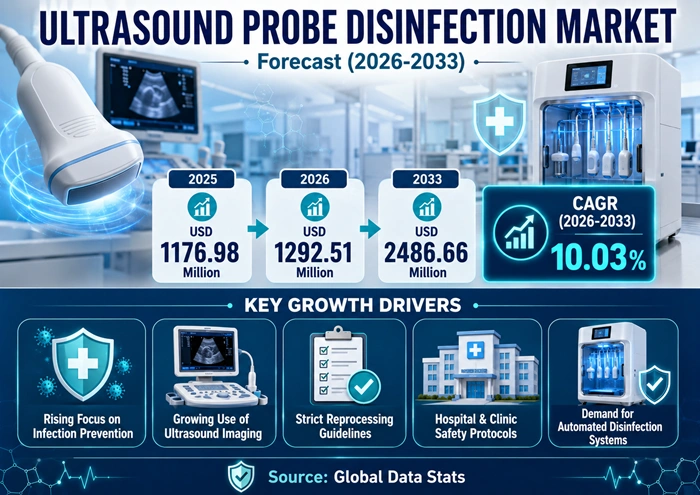
The global ultrasound probe disinfection market size is valued at USD 1176.98 million in 2025 and is predicted to increase from USD 1292.51 million in 2026 to approximately USD 2486.66 million by 2033, growing at a CAGR of 10.03% from 2026 to 2033. This robust growth is driven by the escalating focus on healthcare-associated infection prevention, expanding ultrasound utilization volumes across imaging and interventional procedures, tightening regulatory standards for reprocessing of semi-critical and critical medical devices, and growing institutional awareness of the cross-contamination risks associated with improperly disinfected probes in busy clinical environments.
Ultrasound probes — particularly those used in endocavitary and interventional applications — are classified as semi-critical or critical medical devices by leading infection control bodies, requiring high-level disinfection or sterilization between patient uses. This regulatory classification creates a non-discretionary, recurring demand for disinfection products and systems that grows in proportion to ultrasound procedure volume.
AI Impact on the Ultrasound Probe Disinfection Industry
Artificial Intelligence Is Transforming Quality Assurance in Probe Reprocessing, Enabling Automated Compliance Tracking, Cycle Verification, and Infection Risk Prediction That Manual Workflows Cannot Match
Artificial intelligence is beginning to reshape the ultrasound probe disinfection market by enabling smart, automated reprocessing workflows that address the critical quality assurance gaps of traditional manual disinfection protocols. In conventional clinical settings, probe disinfection compliance depends heavily on individual technician adherence to multi-step manual protocols — a process vulnerable to human error, time pressure, and inconsistent training across busy hospital departments. AI-powered automated disinfection systems can now monitor and document every step of the reprocessing cycle, capture real-time data on disinfectant concentration, contact time, and probe surface coverage, and generate digital compliance audit trails that satisfy accreditation body requirements without additional staff documentation effort. These capabilities are increasingly attractive to infection control departments dealing with ever-tighter regulatory scrutiny and the growing pressure of HAI liability exposure.
Predictive analytics and machine learning are also being applied to infection risk management at the institutional level, enabling hospitals to correlate probe reprocessing data with downstream patient infection surveillance outcomes. By identifying statistical patterns linking specific reprocessing protocol deviations, probe model characteristics, or environmental factors with elevated infection event rates, AI-driven platforms can support evidence-based protocol optimization and risk-stratified reprocessing decision-making. Equipment vendors including Nanosonics and Advanced Sterilization Products are investing in cloud-connected reprocessing systems that generate the data streams necessary to support these analytical capabilities, positioning their platforms as infection control intelligence tools rather than simple disinfection devices — a positioning that commands significantly higher price premiums and longer customer retention in the competitive ultrasound probe disinfection market.
Growth Factors
Rising HAI Awareness and Regulatory Pressure, Explosive Growth in Ultrasound Procedure Volumes Globally, and the Clinical Transition to Automated High-Level Disinfection Systems Are Driving Sustained Market Expansion
Healthcare-associated infection prevention is the foundational demand driver for the ultrasound probe disinfection market. Regulatory bodies including the U.S. Food and Drug Administration (FDA), the U.S. Centers for Disease Control and Prevention (CDC), the European Centre for Disease Prevention and Control (ECDC), and multiple national health ministries have in recent years significantly strengthened their guidance and enforcement activity related to ultrasound probe reprocessing — particularly for endocavitary probes used in transvaginal, transrectal, and transesophageal applications, which carry the highest cross-contamination risk. Published evidence of patient infections linked to inadequately disinfected ultrasound probes, combined with several high-profile institutional outbreaks and associated litigation, have elevated probe reprocessing from a procedural afterthought to a priority safety quality indicator at most accredited healthcare facilities. This regulatory and liability environment creates durable, non-price-sensitive demand for validated, compliance-ready disinfection products and systems.
The second major growth driver is the extraordinary expansion of ultrasound as the preferred first-line imaging modality across virtually all clinical specialties. Point-of-care ultrasound (POCUS) has moved from specialist radiology and cardiology departments into emergency medicine, critical care, anesthesiology, obstetrics, urology, gastroenterology, and even primary care settings — dramatically expanding both the number of probes in clinical service and the frequency with which each probe requires reprocessing. The global installed base of ultrasound systems is growing at a healthy rate driven by falling equipment costs, portable and handheld system adoption, and expanding diagnostic imaging capacity in emerging markets. Each new ultrasound system in clinical service generates recurring demand for the consumables and systems needed to keep it safely reprocessed between patient uses — creating a long-term, recurring revenue stream that makes the ultrasound probe disinfection market highly predictable for manufacturers and investors alike.
Market Outlook
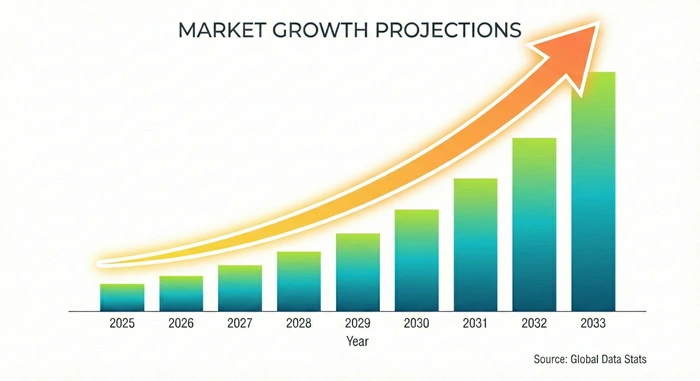
Increasing Adoption of Automated HLD Platforms, Expansion of Point-of-Care Ultrasound, and Growing Healthcare Infrastructure Investment in Emerging Markets Position the Ultrasound Probe Disinfection Market for Reliable Long-Term Growth Through 2033
The long-term outlook for the ultrasound probe disinfection market is anchored by several converging dynamics that together create a demand profile that is both resilient and growing. The most significant structural shift is the ongoing transition from manual chemical disinfection protocols — which are labor-intensive, time-consuming, and prone to compliance gaps — toward fully automated high-level disinfection (HLD) platforms that deliver validated, reproducible reprocessing cycles with minimal staff involvement. Systems like Nanosonics' Trophon EPR and Trophon 2, Advanced Sterilization Products' Evotech UV, and Germitec's Chronos platform are gaining rapid institutional adoption as hospital infection control teams recognize that automation is the most reliable path to consistent protocol compliance and accreditation success. As the installed base of these systems grows, the recurring consumable revenue they generate — proprietary chemical cartridges, single-use sheaths, maintenance kits — is creating increasingly predictable long-term revenue streams for leading vendors.
Emerging market healthcare expansion is an equally significant long-term growth driver. China, India, Brazil, and countries across the Middle East and Southeast Asia are investing substantially in tertiary and quaternary care hospital infrastructure and in expanding diagnostic imaging capacity to meet growing chronic disease and maternal health needs. As ultrasound utilization in these markets scales rapidly, awareness of probe reprocessing standards is rising — driven partly by international accreditation programs like JCI, partly by local regulatory modernization, and partly by the risk management demands of large hospital group operators entering these markets. This creates an enormous greenfield opportunity for manufacturers of probe disinfection products and systems to establish early market positions in regions that will generate significant long-term recurring revenue as their healthcare systems mature.
Expert Speaks
-
"At Getinge, we believe that no procedure should ever cause a healthcare-associated infection — and that applies equally to the reprocessing of ultrasound probes as to any other reusable medical device. The market is demanding higher standards of disinfection consistency, traceability, and automation, and we are investing in the systems and consumables to meet that demand at scale." — CEO, Getinge AB
-
"Nanosonics was founded on the principle that there had to be a better, safer way to disinfect ultrasound probes than the chemical soaking methods that the industry accepted for too long. The clinical evidence supporting automated high-level disinfection is now overwhelming, and we are seeing this reflected in accelerating adoption across major health systems on every continent." — CEO, Nanosonics Limited
-
"The growing use of ultrasound in point-of-care and emergency settings is a tremendous advance for patient care — but it also creates reprocessing challenges that must be taken seriously. At Philips, we work closely with infection control partners to ensure that probe design supports effective disinfection and that our customers have access to validated reprocessing protocols that protect every patient." — CEO, Philips Healthcare
Key Report Takeaways
-
North America leads the ultrasound probe disinfection market with approximately 42% of global revenue share in 2025, supported by stringent FDA and CDC guidelines on probe reprocessing, high ultrasound procedure volumes across hospitals and diagnostic imaging centers, strong institutional awareness of HAI risk, and early adoption of automated HLD platforms by major health systems
-
Asia Pacific is the fastest-growing region, projected to expand at a CAGR of approximately 12.1% from 2026 to 2033, driven by rapid hospital construction and modernization in China and India, expanding point-of-care ultrasound adoption, rising regulatory standards for infection control, and growing awareness among healthcare operators of global probe reprocessing best practices
-
Hospitals and clinics are the dominant end-user segment, accounting for approximately 55% of market revenue in 2025, driven by high daily ultrasound procedure volumes across radiology, cardiology, obstetrics, and emergency medicine departments that require consistent, validated probe reprocessing between every patient use
-
Endocavitary probe disinfection is the leading application segment, contributing approximately 48% of total market revenue in 2025, reflecting the critical importance of high-level disinfection for transvaginal, transrectal, and transesophageal probes — classified as semi-critical or critical medical devices by all major infection control regulatory frameworks
-
Automated disinfection is the most widely adopted process, holding approximately 58% of market share in 2025 and growing at a strong pace as hospital infection control teams standardize on validated, reproducible automated HLD cycles that minimize staff variation, reduce protocol compliance risk, and generate digital audit trails for accreditation purposes
-
The disinfection equipment segment is expected to grow the fastest, projected at a CAGR of approximately 12.6% through 2033, capturing increasing market share as UV-C automated disinfectors and high-level disinfection workstations replace manual chemical protocols in both developed market hospital upgrade programs and emerging market greenfield hospital construction projects
Market Scope
| Report Coverage | Details |
|---|---|
| Market Size by 2033 | USD 2486.66 Million |
| Market Size by 2025 | USD 1176.98 Million |
| Market Size by 2026 | USD 1292.51 Million |
| Market Growth Rate from 2026 to 2033 | CAGR of 10.03% |
| Dominating Region | North America |
| Fastest Growing Region | Asia Pacific |
| Base Year | 2025 |
| Forecast Period | 2026 – 2033 |
| Segments Covered | Product Type, Process, Application, End User, Region |
| Regions Covered | North America, Europe, Asia Pacific, Latin America, Middle East & Africa |
Market Dynamics
Drivers Impact Analysis
Tightening Regulatory Enforcement, Accelerating POCUS Adoption, and the Institutional Shift to Automated HLD Systems Are the Three Most Powerful Forces Expanding the Global Ultrasound Probe Disinfection Market
| Driver | ≈ % Impact on CAGR Forecast | Geographic Relevance | Impact Timeline |
|---|---|---|---|
| Regulatory enforcement and HAI liability awareness | ~32% | North America, Europe | Short to Long Term |
| Growth in ultrasound procedure volumes and POCUS expansion | ~27% | Global | Short to Long Term |
| Transition from manual to automated HLD systems | ~22% | North America, Europe, Asia Pacific | Short to Medium Term |
| Emerging market hospital construction and imaging capacity expansion | ~12% | Asia Pacific, MEA, Latin America | Medium to Long Term |
| JCI and international accreditation-driven compliance upgrades | ~7% | Global | Medium Term |
The ultrasound probe disinfection market is experiencing strong structural demand growth because the clinical, regulatory, and institutional conditions that drive probe reprocessing investment are simultaneously intensifying across virtually all major healthcare markets. Regulatory authorities have moved from issuing guidance to actively enforcing compliance, with FDA Warning Letters to healthcare facilities, ECDC alert notifications across Europe, and equivalent enforcement actions in Australia and Canada all contributing to elevated institutional awareness of probe reprocessing risk. This regulatory attention is being amplified by plaintiff litigation following documented patient infections linked to inadequately disinfected probes — creating a liability environment that makes investment in validated, defensible automated disinfection systems increasingly non-optional for risk-conscious hospital administrators.
Point-of-care ultrasound adoption represents an equally important structural driver that is generating new probe disinfection demand across clinical settings that previously had minimal reprocessing requirements. Emergency departments, intensive care units, anesthesiology suites, and primary care clinics are all deploying ultrasound for bedside assessment — using the same probe models that require high-level disinfection in endocavitary applications, creating reprocessing obligations in settings that were not historically equipped or trained for HLD compliance. This expansion of ultrasound use into non-imaging-department clinical environments is both broadening the addressable customer base for probe disinfection products and increasing the complexity of institutional compliance programs, creating demand for simpler, faster automated systems that can be deployed outside traditional radiology or sterile processing department environments.
Restraints Impact Analysis
High Cost of Automated HLD Systems, Limited Reprocessing Infrastructure in Cost-Sensitive Settings, and Fragmented Awareness of Evidence-Based Protocols in Emerging Markets Are the Primary Restraints on Faster Ultrasound Probe Disinfection Market Growth
| Restraint | ≈ % Impact on CAGR Forecast | Geographic Relevance | Impact Timeline |
|---|---|---|---|
| High capital and consumable cost of automated HLD systems | ~-30% | Emerging markets, small facilities | Ongoing |
| Limited reprocessing infrastructure in point-of-care settings | ~-25% | Global | Short to Medium Term |
| Inconsistent awareness and enforcement in developing markets | ~-22% | Asia Pacific, Latin America, MEA | Ongoing |
| Compatibility complexity across probe models and brands | ~-14% | Global | Medium Term |
| Training and workflow integration challenges | ~-9% | Emerging markets | Ongoing |
The most significant restraint on faster growth in the ultrasound probe disinfection market is the high total cost of ownership associated with automated HLD systems. Systems from leading vendors such as Nanosonics, Germitec, and Advanced Sterilization Products carry substantial capital costs — often in the range of several thousand to tens of thousands of dollars per unit — in addition to recurring consumable costs for proprietary chemical cartridges, single-use probe sheaths, and maintenance contracts. For smaller hospitals, ambulatory surgical centers, and diagnostic imaging clinics operating on tight budgets — particularly in emerging markets where reimbursement structures do not adequately fund infection control overhead — these costs create significant barriers to automated HLD adoption and sustain reliance on lower-cost but compliance-risk manual chemical protocols.
Fragmented awareness and inconsistent enforcement of evidence-based probe reprocessing standards in developing markets represents a structural market development restraint that limits short-to-medium-term adoption across a large portion of the global healthcare opportunity. In many Asia Pacific, Latin American, and Middle Eastern markets, ultrasound probe reprocessing practices vary widely across facility types and ownership structures — from complete absence of HLD protocols in lower-tier hospitals to fully automated reprocessing programs in internationally accredited institutions. Building the regulatory infrastructure, clinical education systems, and product distribution networks necessary to systematically improve probe reprocessing standards across these fragmented markets takes time, and the pace of change is often slower than the underlying procedural volume growth that would otherwise justify rapid market expansion.
Opportunities Impact Analysis
UV-C Automated Disinfection Technology Adoption, Single-Use Probe Sheath Expansion, and Regulatory-Driven Upgrade Cycles in Emerging Markets Represent the Highest-Value Growth Opportunities in the Ultrasound Probe Disinfection Market
| Opportunity | ≈ % Impact on CAGR Forecast | Geographic Relevance | Impact Timeline |
|---|---|---|---|
| UV-C probe disinfection system market penetration | ~+30% | North America, Europe, Asia Pacific | Short to Medium Term |
| Single-use probe cover and sheath volume growth | ~+25% | Global | Short to Long Term |
| Emerging market regulatory modernization and compliance upgrade | ~+22% | Asia Pacific, MEA, Latin America | Medium to Long Term |
| POCUS-specific compact automated HLD system development | ~+14% | Global | Medium Term |
| Digital compliance tracking and connected reprocessing platforms | ~+9% | North America, Europe | Short to Medium Term |
UV-C automated probe disinfection represents one of the most strategically compelling opportunities in the ultrasound probe disinfection market today. UV-C systems offer rapid, chemical-free, and highly effective disinfection cycles — typically completing in under 60 seconds — that are particularly well-suited to the time-constrained workflow of emergency departments, intensive care units, and high-volume outpatient imaging centers. The Grand View Research data on UV-C disinfectors showed a CAGR of approximately 14.8% — substantially above the overall market rate — confirming the strong momentum behind this technology segment. As clinical awareness of UV-C's efficacy grows, supported by expanding peer-reviewed evidence, and as system costs decline with manufacturing scale, adoption of UV-C automated disinfection is expected to accelerate significantly across both institutional upgraders in developed markets and greenfield deployments in emerging healthcare environments.
Single-use probe sheaths and covers represent a parallel high-growth opportunity, particularly as point-of-care ultrasound use expands into clinical settings where full automated HLD cycles are impractical between rapid consecutive patient uses. The use of sterile, single-use probe covers does not eliminate the need for subsequent probe cleaning and disinfection, but it significantly reduces contamination risk during the procedure itself and is increasingly recommended by infection control guidelines for specific clinical scenarios. As the installed base of ultrasound systems in POCUS settings grows rapidly, the recurring consumable volume generated by mandatory sheath use creates a highly attractive, low-capital-intensity recurring revenue opportunity for manufacturers who can establish preferred supplier relationships with hospital group procurement departments and imaging center chains.
Segment Analysis
By Product Type
Disinfection Equipment Leads Market Revenue Generation While the Consumables Segment Delivers Higher Recurring Revenue Growth, Together Defining the Dual Commercial Engines of the Ultrasound Probe Disinfection Market
Disinfection equipment — comprising UV-C disinfectors, automated high-level disinfection workstations, and chemical-based HLD systems — holds approximately 52% of the ultrasound probe disinfection market revenue in 2025 and is growing at a CAGR of approximately 12.6% through 2033, making it both the largest and fastest-growing product segment. The equipment segment's strength reflects the accelerating institutional transition from manual reprocessing to validated automated HLD platforms, driven by regulatory pressure, HAI liability concerns, and the operational efficiency advantages of automated systems in high-volume departments. North America and Europe are the primary markets driving equipment segment growth, as large hospital systems and academic medical centers standardize on single-brand automated HLD platforms to simplify staff training, reduce compliance variability, and generate the digital documentation records required for infection control accreditation; leading vendors in these geographies include Nanosonics Limited (Australia, dominant North American market share), Advanced Sterilization Products (USA), and Germitec SAS (France).
The disinfection consumables segment — including single-use probe sheaths, proprietary chemical disinfectant cartridges, and cleaning wipes and sprays — accounts for approximately 48% of market revenue in 2025 and grows at a slightly lower but highly predictable CAGR of approximately 8.2% through 2033, driven by the recurring nature of consumable demand attached to the growing installed base of automated HLD systems and manual reprocessing programs. The consumables segment is particularly important commercially because it generates annuity-like revenue that is far less sensitive to capital procurement cycles than equipment sales, providing revenue stability through healthcare budget cycles. Asia Pacific is the most dynamic growth geography for consumables, driven by the rapid expansion of the regional ultrasound installed base and the increasing adoption of single-use probe covers in high-volume imaging centers in China, India, and Japan; companies including CIVCO Medical Solutions (USA) and Sheathing Technologies (USA) are key suppliers in this category, alongside regional distributors serving the diverse Asia Pacific healthcare procurement landscape.
By Application
Endocavitary Probe Disinfection Leads Application Revenue While Point-of-Care Ultrasound Probe Reprocessing Emerges as the Fastest-Growing Application Expanding the Addressable Market
Endocavitary probe disinfection accounts for approximately 48% of the total ultrasound probe disinfection market revenue in 2025 and is growing at a CAGR of approximately 9.5% through 2033, driven by the stringent regulatory classification of endocavitary probes as semi-critical or critical medical devices requiring high-level disinfection between every patient use without exception. Transvaginal, transrectal, and transesophageal probe applications collectively generate the largest and most consistent demand for validated HLD systems, because the consequences of inadequate disinfection in endocavitary procedures — including documented cases of bacterial and viral pathogen transmission — are most severe and most directly regulated by healthcare accreditation standards. North America leads in endocavitary probe disinfection adoption, reflecting both the high volume of OB-GYN, urology, and cardiac procedures performed in U.S. and Canadian hospitals and the stringent enforcement of HLD requirements by Joint Commission accreditation programs; Nanosonics (Australia) and ASP (USA) are the dominant platform providers for this segment in the North American market.
External probe disinfection — covering abdominal, cardiac, musculoskeletal, and linear transducer applications — holds approximately 37% of market share in 2025, with the remainder attributed to intraoperative probe disinfection in surgical settings. While the regulatory requirements for external probes are less stringent than for endocavitary applications, the sheer volume of external ultrasound examinations performed daily in radiology departments, emergency medicine, cardiology, and point-of-care settings creates an enormous aggregate demand for probe wipes, sprays, and low-to-intermediate level disinfection products. The intraoperative probe disinfection segment, though smaller in current revenue share at approximately 15%, is growing at the fastest application-specific rate — approximately 13.2% CAGR through 2033 — driven by the rapid expansion of intraoperative ultrasound guidance in cardiac surgery, neurosurgery, and laparoscopic procedures that require sterile-field-compatible probe covers and validated high-level disinfection or sterilization protocols for probe heads used in sterile surgical sites.
Regional Insights
North America's Regulatory Leadership and Asia Pacific's Explosive Healthcare Infrastructure Expansion Define the Two Most Strategically Significant Geographies in the Global Ultrasound Probe Disinfection Market
North America
North America's Combination of Rigorous Regulatory Enforcement, High Ultrasound Utilization Rates, and Strong Institutional HAI Prevention Culture Makes It the Undisputed Leader in the Ultrasound Probe Disinfection Market
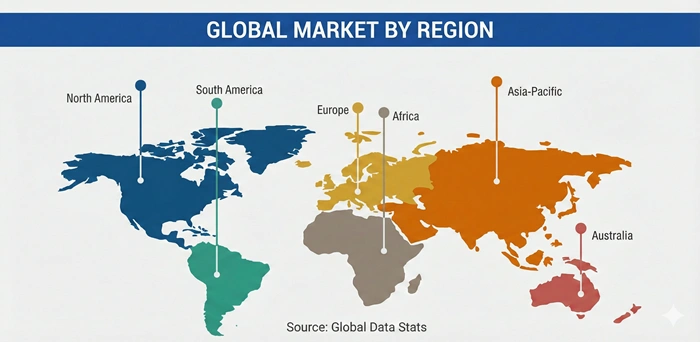
North America holds the dominant regional position in the ultrasound probe disinfection market, accounting for approximately 42% of global revenue in 2025 and projected to grow at a CAGR of approximately 9.1% from 2026 to 2033. The United States is the primary demand engine, driven by the combination of FDA regulatory oversight, CDC and SHEA evidence-based reprocessing guidelines, Joint Commission accreditation requirements, and a highly active medical malpractice environment that collectively make investment in validated, automated probe reprocessing systems a risk management imperative for hospital systems. The breadth of ultrasound utilization across U.S. healthcare — spanning hospital radiology, emergency medicine, obstetrics, cardiology, urology, and a rapidly expanding point-of-care sector — ensures that probe reprocessing demand is distributed across a wide and growing range of clinical settings rather than concentrated in specialist departments.
Key companies with dominant North American market presence include Nanosonics Limited (Australia, commanding the largest share of automated HLD system installations in U.S. hospitals through its Trophon platform), Advanced Sterilization Products (USA), CIVCO Medical Solutions (USA), Parker Laboratories Inc. (USA), and Germitec SAS (France, active in the U.S. market with its UV-C Chronos platform). Canada's healthcare system contributes meaningful additional demand, particularly as Canadian provincial health authorities have strengthened probe reprocessing recommendations following a series of infection control advisory publications in recent years. Mexico is a growing secondary market, with private hospital groups adopting international probe disinfection standards as they pursue JCI accreditation for their flagship facilities.
Asia Pacific
Asia Pacific's Rapid Hospital Modernization, Expanding Ultrasound Utilization, and Rising Regulatory Awareness Are Making It the Fastest-Growing Region in the Ultrasound Probe Disinfection Market
Asia Pacific is the fastest-growing region in the ultrasound probe disinfection market, projected to expand at a CAGR of approximately 12.1% from 2026 to 2033, driven by the extraordinary pace of healthcare infrastructure investment and ultrasound system deployment across the region. China is the largest regional market, supported by its massive hospital construction programs, rapidly growing maternal and reproductive health service utilization, and increasing adoption of international infection control standards by major hospital groups seeking international accreditation or serving internationally insured patient populations. China's National Health Commission has progressively tightened medical device reprocessing regulations, and the growing awareness among hospital administrators of HAI liability risk is accelerating the adoption of validated probe disinfection systems beyond tier-one hospitals into the broader secondary and community hospital segments.
Japan is the region's most technologically advanced probe disinfection market, with a highly developed infection control culture and strong adoption of automated HLD platforms in university hospitals and large community medical centers. South Korea, India, and Australia each contribute significant and growing regional demand. Key companies operating across Asia Pacific include Nanosonics Limited (Australia, particularly strong in Australian and Japanese markets), Olympus Corporation (Japan, active in medical device reprocessing solutions), GE HealthCare (USA, with significant Asia Pacific probe installed base generating reprocessing demand), and a growing number of regional distributors serving hospital tenders across China, India, and Southeast Asia with both international brand systems and locally approved disinfection products.
Report Customization Available by Region and Country
This report is fully customizable to deliver targeted ultrasound probe disinfection market intelligence for specific regions, countries, and geographies, providing localized market sizing, competitive landscape analysis, regulatory environment profiles, technology adoption rates, and growth opportunity assessments tailored to your precise geographic focus area.
Customized versions of this report are available for every major global region and their constituent countries, ensuring that your investment, market entry, and product strategy decisions are supported by granular, locally relevant intelligence. Whether you require a focused analysis of a single national healthcare market or a comparative multi-country regional overview, the report can be configured to deliver the geographic depth your business strategy requires.
North America
-
United States — World's largest ultrasound probe disinfection market, driven by FDA oversight, Joint Commission accreditation requirements, and strong adoption of automated HLD platforms by major health systems
-
Canada — Growing probe disinfection investment driven by strengthened provincial health authority reprocessing recommendations and international accreditation programs
-
Mexico — Expanding private hospital market adopting international probe disinfection standards aligned with JCI accreditation requirements
Europe
-
United Kingdom — Active probe disinfection market with NHS infection control standards driving consistent investment in validated automated reprocessing systems
-
Germany — Strong medical device reprocessing culture with growing adoption of UV-C and chemical HLD automated platforms across hospital and outpatient imaging settings
-
France — Growing probe disinfection market with Germitec SAS (manufacturer of Chronos UV-C platform) contributing both domestic and global technology leadership
-
Italy — Expanding healthcare infection control investment with growing probe disinfection adoption in hospital and ambulatory imaging centers
-
Rest of Europe — Includes Netherlands, Spain, and Sweden as active healthcare markets with increasing probe reprocessing standards enforcement
Asia Pacific
-
China — Largest and fastest-growing Asia Pacific market for probe disinfection, driven by hospital construction programs and tightening NHC infection control regulations
-
India — Rapidly growing market with increasing HAI awareness among hospital administrators and expanding international-standard hospital group adoption of validated probe reprocessing
-
Japan — Advanced infection control market with strong automated HLD adoption and Olympus Corporation as a key domestic technology contributor
-
South Korea — Active medical device reprocessing market with Samsung and LG-affiliated healthcare groups adopting international probe disinfection standards
-
Australia — Home of Nanosonics Limited, global leader in automated probe HLD, with strong domestic market adoption underpinning its international expansion
-
Rest of Asia Pacific — Includes Singapore, Thailand, and Indonesia as growing healthcare markets with increasing probe disinfection investment driven by accreditation and regulatory modernization
Latin America
-
Brazil — Largest Latin American healthcare market with growing HAI prevention investment and expanding private hospital adoption of validated probe reprocessing protocols
-
Argentina — Developing probe disinfection market with increasing awareness of international reprocessing standards in private healthcare sector
-
Rest of Latin America — Includes Colombia and Chile as emerging healthcare markets with growing adoption of medical device infection control standards
Middle East & Africa
-
UAE — Premium healthcare market with JCI-accredited hospitals driving strong adoption of international probe disinfection standards and automated HLD platforms
-
Saudi Arabia — Rapidly expanding healthcare infrastructure with Vision 2030 investment driving adoption of modern infection control systems including probe disinfection equipment across new hospital construction projects
-
Rest of MEA — Includes South Africa, Egypt, and Turkey as growing healthcare markets with increasing government and private sector investment in medical device infection control infrastructure
Top Key Players
-
Nanosonics Limited (Australia)
-
Advanced Sterilization Products (ASP) (United States)
-
Germitec SAS (France)
-
Civco Medical Solutions (United States)
-
Parker Laboratories Inc. (United States)
-
Olympus Corporation (Japan)
-
CS Medical LLC (United States)
-
Sheathing Technologies Inc. (United States)
-
Tristel Solutions Ltd. (United Kingdom)
-
Soluscope SAS (France)
-
Medivators Inc. (Cantel Medical) (United States)
-
Ecolab Inc. (United States)
-
CONMED Corporation (United States)
-
GE HealthCare Technologies Inc. (United States)
-
Danaher Corporation / Cepheid (United States)
Recent Developments
-
In 2025, Nanosonics Limited expanded its Trophon 2 automated probe disinfection platform into additional Asia Pacific markets including South Korea and expanded distribution partnerships in Southeast Asia, supported by a new regional service infrastructure investment to serve the growing installed base of HLD systems outside its traditional Australia, North America, and Europe strongholds
-
In 2024, Advanced Sterilization Products received 510(k) clearance from the U.S. FDA for an enhanced version of its Evotech UV probe disinfection system, featuring improved cycle time performance and expanded probe compatibility, directly addressing one of the key purchasing barriers for high-volume ultrasound departments evaluating UV-C automated disinfection platforms
-
In 2025, Tristel Solutions Ltd. reported strong growth in its ultrasound probe disinfection consumables business internationally, with particular momentum in European markets where regulatory enforcement of HLD requirements for endocavitary probes continued to intensify and drive conversion from manual chemical soaking protocols to validated single-pass disinfection products
-
In 2024, Germitec SAS entered into a distribution partnership with a major U.S. medical device distributor to accelerate the commercial rollout of its Chronos UV-C probe disinfection platform in North America, targeting emergency medicine, anesthesiology, and high-volume OB-GYN departments where rapid cycle time and no-chemical operation provide compelling workflow advantages
-
In 2025, CS Medical LLC launched an enhanced version of its TEEClean automated transesophageal echocardiography probe reprocessing system, incorporating digital cycle verification and remote monitoring capabilities that enable cardiology departments to demonstrate real-time HLD compliance documentation to accreditation surveyors and infection control teams
Market Trends
The Rapid Transition to UV-C Automated Probe Disinfection, Digital Compliance Documentation, and the Expansion of Mandatory HLD Requirements Into Point-of-Care Settings Are the Defining Trends Reshaping the Ultrasound Probe Disinfection Market
The most consequential technology trend in the ultrasound probe disinfection market is the accelerating adoption of UV-C light-based automated probe disinfection systems as an alternative to chemical HLD protocols. UV-C systems offer compelling workflow advantages — cycle times typically under 60 seconds, no chemical handling requirements, no ventilation infrastructure for fume management, and no chemical concentration monitoring — that make them particularly attractive for deployment in point-of-care settings such as emergency departments and intensive care units where the traditional logistics of chemical HLD are difficult to manage. The GVR data showing a 14.8% CAGR for UV-C disinfectors — well above the overall market rate — confirms that this technology is gaining market share rapidly, and continued investment in UV-C efficacy validation and regulatory clearance by leading vendors is expected to accelerate its displacement of chemical-based manual protocols across multiple clinical environments.
Digital compliance documentation and connected reprocessing management platforms represent the second defining trend. Healthcare accreditation bodies are increasingly expecting hospitals to demonstrate documented, traceable proof that every probe was appropriately reprocessed before each patient use — not just that protocols exist, but that they were actually followed for every individual procedure. Cloud-connected automated HLD systems that generate digital cycle logs, send real-time alerts for protocol deviations, and produce compliance dashboards for infection control teams are moving from premium differentiators to expected standard features. As hospitals face growing regulatory scrutiny and potential liability from HAI events linked to inadequate reprocessing, the ability to demonstrate documented compliance at the individual cycle level is becoming a clinical governance requirement that directly shapes purchasing decisions and reinforces the competitive position of premium automated platform providers in the ultrasound probe disinfection market.
Segments Covered in the Report
-
By Product Type
-
Disinfection Equipment
-
UV-C Disinfectors
-
High-Level Disinfection Systems
-
Automated Disinfection Workstations
-
-
Disinfection Consumables
-
Disinfection Sheaths & Probe Covers
-
Chemical Disinfectants
-
Wipes & Sprays
-
-
-
By Process
-
Automated Disinfection
-
Manual Disinfection
-
-
By Application
-
Endocavitary Probe Disinfection
-
External Probe Disinfection
-
Intraoperative Probe Disinfection
-
-
By End User
-
Hospitals & Clinics
-
Ambulatory Surgical Centers
-
Diagnostic Imaging Centers
-
Others
-
-
By Region
-
North America
-
U.S.
-
Canada
-
Mexico
-
-
Europe
-
U.K.
-
Germany
-
France
-
Italy
-
Rest of Europe
-
-
Asia Pacific
-
China
-
India
-
Japan
-
South Korea
-
Australia
-
Rest of Asia Pacific
-
-
Latin America
-
Brazil
-
Argentina
-
Rest of Latin America
-
-
Middle East & Africa
-
UAE
-
Saudi Arabia
-
Rest of MEA
-
-
❝ Built for Every Level — From Startups to Industry Giants ❞
Here Is Exactly How This Report Works for You
-
For tier-1 medical device corporations, hospital group procurement leadership, and institutional healthcare investors, this report delivers precise ultrasound probe disinfection market sizing, competitor revenue analysis by product type and geography, supply-demand dynamics, and geopolitical risk assessments — including how evolving FDA, ECDC, and national regulatory enforcement trends are reshaping procurement urgency and competitive positioning across the automated HLD platform landscape, and how these dynamics impact capital allocation and M&A strategy decisions for companies seeking to strengthen their infection control product portfolios
-
For mid-market disinfection product manufacturers, medical device distributors, and healthcare technology integrators, the report provides segment-level demand forecasts, end-user adoption driver analysis, and top vendor market share intelligence — giving sales teams and product managers the clarity needed to identify which probe disinfection product categories are growing fastest in specific clinical settings, how pricing and reimbursement dynamics are evolving across manual and automated segments, and which geographic markets offer the most attractive near-term penetration opportunities for targeted business development investment
-
Startups developing next-generation probe disinfection technologies, digital compliance platforms, or infection control AI tools will find the report's technology adoption curve mapping, customer willingness-to-invest benchmarking, and early-adopter segment identification essential for refining product-market fit, building credible investor narratives grounded in verified market data, and making evidence-based prioritization decisions about which clinical applications and geographic markets offer the most compelling entry points in the rapidly evolving ultrasound probe disinfection market
Frequently Asked Questions
Question 1: What is the projected size of the ultrasound probe disinfection market by 2033?
Answer: The ultrasound probe disinfection market is projected to reach approximately USD 2486.66 million by 2033, growing from USD 1292.51 million in 2026 at a CAGR of 10.03%. This growth is driven by rising HAI prevention investment, expanding ultrasound procedure volumes, and accelerating adoption of automated HLD systems globally.
Question 2: Why is high-level disinfection required for ultrasound probes?
Answer: Endocavitary ultrasound probes are classified as semi-critical or critical medical devices by the FDA and CDC because they contact mucous membranes, requiring high-level disinfection between every patient use to prevent pathogen transmission. The ultrasound probe disinfection market exists fundamentally because this regulatory classification creates a non-discretionary, recurring demand for validated reprocessing products across all healthcare settings using endocavitary or interventional ultrasound.
Question 3: Which region leads the ultrasound probe disinfection market?
Answer: North America leads the ultrasound probe disinfection market with approximately 42% of global revenue in 2025, supported by stringent FDA and CDC probe reprocessing guidelines, high ultrasound procedure volumes, and strong institutional adoption of automated HLD platforms. Asia Pacific is the fastest-growing region, expanding at approximately 12.1% CAGR through 2033.
Question 4: What are the main products in the ultrasound probe disinfection market?
Answer: The ultrasound probe disinfection market includes both equipment — automated HLD workstations, UV-C disinfectors, and chemical disinfection systems — and consumables such as single-use probe sheaths, chemical disinfectant cartridges, and cleaning wipes. Equipment currently holds approximately 52% of market revenue, while consumables provide highly predictable recurring revenue from the growing installed base of ultrasound systems in clinical use.
Question 5: Who are the key companies in the ultrasound probe disinfection market?
Answer: The ultrasound probe disinfection market is led by Nanosonics Limited, Advanced Sterilization Products, Germitec SAS, Tristel Solutions, and CS Medical LLC, with additional significant players including CIVCO Medical Solutions, Parker Laboratories, and Soluscope. Nanosonics holds the largest share in automated HLD systems through its Trophon platform, particularly in North America and Australia.