
Ultrasound Probe Covers Market Overview
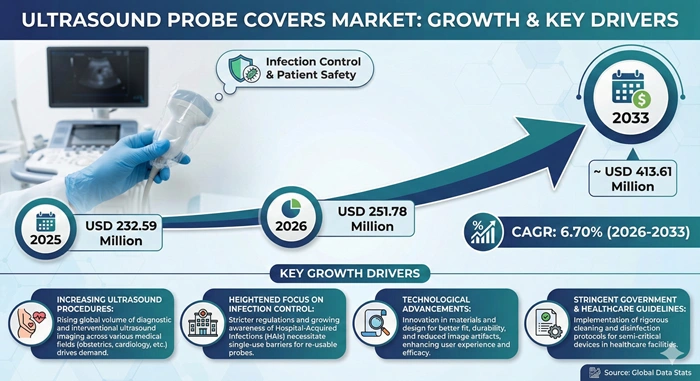
The global ultrasound probe covers market size is valued at USD 232.59 million in 2025 and is predicted to increase from USD 251.78 million in 2026 to approximately USD 413.61 million by 2033, growing at a CAGR of 6.70% from 2026 to 2033.
This market expansion is primarily driven by the increasing volume of ultrasound diagnostic procedures performed across healthcare facilities worldwide, coupled with the heightened emphasis on infection prevention and control measures. The growing awareness among healthcare providers about cross-contamination risks during ultrasound examinations has made these protective barriers an essential component of clinical practice. Healthcare facilities are implementing stringent hygiene protocols to safeguard patient safety, which directly boosts the adoption of single-use sterile probe covers. Additionally, the rising prevalence of chronic diseases requiring frequent diagnostic imaging, technological advancements in ultrasound systems, and the expansion of point-of-care ultrasound applications are collectively contributing to robust market growth throughout the forecast period.
AI Impact on the Ultrasound Probe Covers Industry
Artificial Intelligence Revolutionizes Infection Control Protocols and Supply Chain Management in Medical Imaging Accessories
Artificial intelligence is transforming the ultrasound probe covers market by enhancing infection control monitoring systems and optimizing inventory management across healthcare facilities. AI-powered surveillance systems can now track proper probe cover usage during ultrasound procedures, automatically flagging compliance violations and reducing the risk of healthcare-associated infections. Machine learning algorithms analyze usage patterns across different departments and procedural types, enabling hospitals to predict demand more accurately and prevent stockouts of critical sterile supplies. These intelligent systems also assess patient flow data to recommend optimal probe cover specifications for different clinical scenarios, ensuring that the right product type is available when needed.
Furthermore, AI is driving innovation in product development by analyzing vast amounts of clinical data to identify design improvements that enhance tactile sensitivity without compromising barrier protection. Predictive analytics help manufacturers forecast regional demand fluctuations based on disease prevalence trends, seasonal variations in medical procedures, and demographic shifts. Smart packaging solutions integrated with IoT sensors can monitor storage conditions and alert staff when products approach expiration dates, minimizing waste and ensuring sterility compliance. As healthcare systems increasingly adopt AI-driven quality management platforms, the ultrasound probe covers market benefits from improved traceability, reduced contamination incidents, and more efficient resource allocation throughout the medical supply chain.
Growth Factors
Rising Diagnostic Imaging Volumes and Stringent Regulatory Standards Fuel Market Expansion
The ultrasound probe covers market is experiencing substantial growth due to the dramatic increase in diagnostic ultrasound examinations performed worldwide for prenatal care, cardiovascular assessment, musculoskeletal evaluation, and abdominal imaging. Healthcare facilities are conducting millions of ultrasound procedures annually, with each examination requiring a fresh sterile probe cover to prevent pathogen transmission between patients. The non-invasive nature of ultrasound technology and its ability to produce real-time images have made it the preferred imaging modality for numerous clinical applications, directly driving demand for protective accessories. Hospitals and diagnostic centers are expanding their ultrasound capabilities to meet growing patient volumes, particularly in obstetrics, cardiology, and emergency medicine departments where probe covers are consumed at high rates.
Regulatory bodies across major markets have implemented mandatory infection prevention guidelines that specifically address ultrasound equipment hygiene, making probe cover usage a compliance requirement rather than an optional practice. Organizations such as the CDC and WHO have published detailed protocols for ultrasound probe disinfection and barrier protection, which healthcare facilities must follow to maintain accreditation. The increasing incidence of healthcare-associated infections has prompted governmental oversight agencies to conduct regular audits of infection control practices, with particular attention to semi-critical medical devices like ultrasound probes. Manufacturers are responding by developing advanced probe covers with antimicrobial coatings and improved material formulations that offer enhanced barrier protection while maintaining acoustic transparency. The combination of rising procedural volumes, stricter regulatory enforcement, and heightened patient safety awareness creates a favorable environment for sustained ultrasound probe covers market growth throughout the forecast period.

Market Outlook
Point-of-Care Ultrasound Adoption and Minimally Invasive Procedures Drive Future Market Trajectory
The ultrasound probe covers market outlook remains highly positive as point-of-care ultrasound technology proliferates beyond traditional radiology departments into emergency rooms, intensive care units, and even primary care settings. Portable and handheld ultrasound devices are enabling physicians to perform bedside examinations during patient consultations, emergency assessments, and surgical procedures, significantly expanding the settings where probe covers are required. This democratization of ultrasound technology means that healthcare providers across multiple specialties now rely on these imaging tools for immediate diagnostic guidance, creating new consumption patterns for protective accessories. The convenience and diagnostic accuracy of modern ultrasound systems have made them indispensable in acute care environments where rapid clinical decisions can save lives.
The growing preference for minimally invasive surgical techniques represents another significant factor shaping the market's future trajectory. Surgeons increasingly utilize ultrasound guidance during interventional procedures such as biopsies, catheter placements, regional anesthesia blocks, and vascular access procedures, all of which demand sterile probe covers to maintain aseptic conditions in operating theaters. The surgical and interventional procedures segment is experiencing accelerated growth as healthcare systems recognize the benefits of image-guided interventions in reducing complications and improving patient outcomes. Additionally, the expansion of ambulatory surgical centers and outpatient diagnostic facilities is creating new distribution channels for ultrasound probe covers market participants. These facilities prioritize single-use disposable products to streamline operations and minimize reprocessing costs, further reinforcing the transition toward disposable probe covers across the healthcare landscape.
Expert Speaks
-
Kieran Murphy, President and CEO of GE Healthcare, emphasized that ultrasound technology forms an integral part of many care pathways, and their strategic focus on expanding beyond diagnostics into surgical and therapeutic interventions will deliver faster, more personalized care for patients while representing another step toward precision health.
-
Roland Rott, President and CEO of GE Healthcare Ultrasound, stated that adding real-time surgical visualization capabilities to GE's pre- and post-operative ultrasound offerings will create an end-to-end solution through the full continuum of care, from diagnosis through therapy and beyond, strengthening their market position.
-
Brooks West, President and CEO of BK Medical, highlighted that combining their expertise in intraoperative imaging and surgical navigation with global healthcare capabilities will accelerate their mission to change the standard of care in surgical interventions, helping surgeons make critical decisions using active imaging technology.
Key Report Takeaways
-
North America leads the ultrasound probe covers market with a dominant 38% market share in 2025, driven by advanced healthcare infrastructure, stringent infection control regulations, and high diagnostic imaging volumes across hospitals and ambulatory surgical centers.
-
Asia Pacific represents the fastest-growing region with the highest anticipated growth rate during the forecast period, fueled by expanding healthcare investments, rising medical tourism, increasing awareness of infection prevention measures, and the rapid adoption of advanced diagnostic imaging technologies across emerging economies.
-
Hospitals and clinics constitute the largest end-user segment accounting for 54% market share in 2025, attributed to the high volume of ultrasound procedures performed daily, strict institutional infection control protocols, and comprehensive diagnostic imaging capabilities that require substantial probe cover consumption.
-
Diagnostic imaging application dominates with 47% market share in 2025 due to the extensive use of ultrasound for prenatal care, cardiac assessments, abdominal examinations, and vascular studies, coupled with the growing adoption of point-of-care ultrasound systems across various healthcare settings.
-
Linear probe covers hold significant market share at 29% in 2025 owing to their widespread application in high-resolution imaging for vascular, musculoskeletal, and small-part examinations where precise, snug-fitting covers are essential for maintaining diagnostic image quality and accuracy.
-
Surgical and interventional procedures segment is projected to grow at the fastest CAGR of 7.90% from 2026 to 2035, reflecting the increasing adoption of minimally invasive techniques, ultrasound-guided biopsies, catheter placements, and real-time surgical navigation systems that require sterile probe protection.
Market Scope
| Report Coverage Details | |
|---|---|
| Market Size by 2033 | USD 413.61 Million |
| Market Size by 2025 | USD 232.59 Million |
| Market Size by 2026 | USD 251.78 Million |
| Market Growth Rate from 2026 to 2033 | CAGR of 6.70% |
| Dominating Region | North America |
| Fastest Growing Region | Asia Pacific |
| Base Year | 2025 |
| Forecast Period | 2026 to 2033 |
| Segments Covered | Product Type, Probe Type, Application, End User, Region |
| Regions Covered | North America, Europe, Asia Pacific, Latin America, Middle East and Africa |
Market Dynamics
Drivers Impact Analysis
Escalating Prevalence of Chronic Diseases and Expanding Ultrasound Applications Drive Market Demand
| Impact Factor | Details |
|---|---|
| ≈ Impact on CAGR Forecast | +1.8% to +2.2% |
| Geographic Relevance | Global with strongest impact in developed markets |
| Impact Timeline | Immediate and sustained through 2033 |
The increasing global burden of chronic diseases such as cardiovascular disorders, cancer, diabetes, and musculoskeletal conditions is significantly propelling the ultrasound probe covers market forward. Patients with these conditions require frequent diagnostic monitoring through ultrasound examinations to assess disease progression, evaluate treatment effectiveness, and detect complications early. Cardiovascular ultrasound procedures including echocardiography have become standard practice for diagnosing and managing heart diseases, which affect hundreds of millions of people worldwide. Similarly, ultrasound plays a critical role in cancer detection and monitoring, with applications in breast imaging, thyroid assessments, and abdominal tumor evaluations. The aging global population is particularly susceptible to these chronic conditions, creating sustained demand for diagnostic imaging services that rely on probe covers for infection prevention.
The expansion of ultrasound technology into new clinical applications beyond traditional diagnostic imaging is another powerful driver reshaping the market landscape. Emergency medicine departments now routinely use focused assessment with sonography for trauma evaluations, while anesthesiologists employ ultrasound guidance for regional nerve blocks and vascular access procedures. Obstetric and gynecological practices have made ultrasound examinations standard components of prenatal care, with multiple scans performed throughout pregnancy. Point-of-care ultrasound has emerged as an essential tool in intensive care units, enabling real-time assessment of lung conditions, cardiac function, and fluid status without transporting critically ill patients. Each of these diverse applications requires sterile probe covers to maintain hygienic standards, and the proliferation of ultrasound across multiple medical specialties directly correlates with increased consumption of protective accessories throughout healthcare systems worldwide.

Restraints Impact Analysis
Price Sensitivity in Emerging Markets and Reusable Alternatives Present Growth Challenges
| Impact Factor | Details |
|---|---|
| ≈ Impact on CAGR Forecast | -0.5% to -0.8% |
| Geographic Relevance | Primarily emerging economies in Asia, Africa, and Latin America |
| Impact Timeline | Short to medium term (2026-2029) |
Cost considerations represent a significant restraint for the ultrasound probe covers market, particularly in price-sensitive emerging economies where healthcare budgets are constrained. Many hospitals and diagnostic centers in developing regions operate with limited financial resources and must carefully prioritize expenditures across competing needs including personnel, equipment, medications, and consumables. Single-use disposable probe covers, while offering optimal infection control, add recurring costs to each ultrasound examination, which can strain operational budgets when facilities perform thousands of procedures monthly. Healthcare administrators in these markets often seek cost-reduction strategies, sometimes questioning the necessity of probe covers for low-risk examinations or exploring cheaper alternatives that may not meet international quality standards. This price sensitivity can slow market penetration in regions with substantial populations that would otherwise represent significant growth opportunities.
The availability of reusable probe covers and alternative disinfection methods poses another restraint on market expansion. Some healthcare facilities, particularly those facing budget pressures, consider reusable probe covers that can be cleaned and sterilized between uses as economical alternatives to disposable products. While reusable options reduce per-procedure costs, they introduce complexities related to reprocessing workflows, sterilization validation, and potential cross-contamination risks if cleaning protocols are not meticulously followed. Additionally, certain facilities rely solely on high-level disinfection of ultrasound probes without barrier protection, especially for low-risk external examinations, although this practice contradicts infection control best practices recommended by health authorities. The debate over cost-effectiveness versus infection prevention creates hesitation among some healthcare decision-makers, potentially limiting the adoption rate of disposable ultrasound probe covers in specific market segments despite their clear safety advantages.
Opportunities Impact Analysis
Sustainable Material Innovations and Emerging Market Expansion Create Growth Avenues
| Impact Factor | Details |
|---|---|
| ≈ Impact on CAGR Forecast | +1.2% to +1.5% |
| Geographic Relevance | Global with emphasis on Asia Pacific and Latin America |
| Impact Timeline | Medium to long term (2027-2033) |
The development of eco-friendly and biodegradable probe cover materials presents a substantial opportunity for differentiation in the ultrasound probe covers market. Healthcare systems worldwide are increasingly prioritizing environmental sustainability initiatives to reduce medical waste and minimize their ecological footprint. Traditional probe covers made from conventional plastics contribute to the millions of tons of medical waste generated annually, creating disposal challenges and environmental concerns. Manufacturers investing in research to develop probe covers from biodegradable polymers, plant-based materials, or recyclable compounds can capture market share among environmentally conscious healthcare organizations. These sustainable innovations align with global trends toward green healthcare practices and can command premium pricing while addressing regulatory pressures for waste reduction. Companies that successfully commercialize high-performance eco-friendly probe covers will gain competitive advantages as sustainability becomes a purchasing criterion alongside clinical effectiveness and cost.
Rapid healthcare infrastructure development in emerging economies offers tremendous growth potential for the ultrasound probe covers market. Countries across Asia Pacific, Latin America, Middle East, and Africa are substantially increasing investments in modern medical facilities, expanding diagnostic imaging capabilities, and improving access to quality healthcare services for their growing populations. Government initiatives to establish new hospitals, upgrade existing facilities, and extend healthcare coverage to rural areas are creating fresh demand for ultrasound equipment and associated consumables. The rising middle class in these regions exhibits greater willingness to pay for quality healthcare services, including diagnostic imaging with proper infection control measures. Medical tourism is flourishing in countries like India, Thailand, and Malaysia, where international patients expect standards comparable to developed markets, necessitating the use of sterile probe covers. Furthermore, multinational medical device manufacturers are establishing local distribution networks and forming partnerships with regional players to penetrate these high-growth markets more effectively, facilitating wider adoption of ultrasound probe covers across diverse healthcare settings.
Segment Analysis
By Probe Type
Linear Probe Covers Dominate Market Share Through Versatile Clinical Applications and High-Frequency Usage
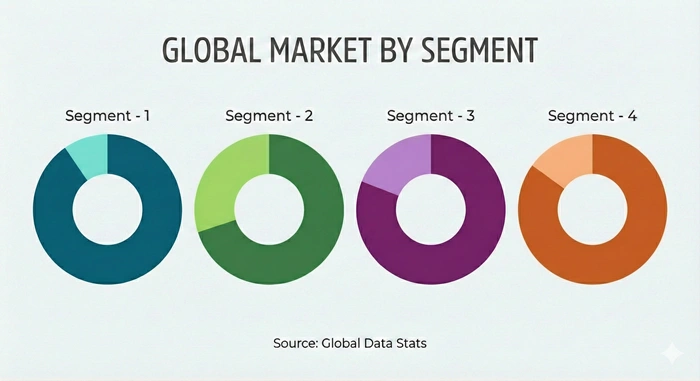
Linear probe covers represent the dominant segment within the ultrasound probe covers market, holding approximately 29% market share in 2025, and this leadership position is projected to strengthen throughout the forecast period. This market dominance stems from the extensive utilization of linear probes across multiple high-volume clinical applications including vascular imaging, musculoskeletal examinations, superficial tissue assessments, thyroid evaluations, and breast imaging. Linear probes operate at higher frequencies compared to other probe types, delivering superior resolution for visualizing superficial structures, which makes them indispensable tools in radiology departments, vascular laboratories, and orthopedic clinics. The probe's flat rectangular footprint requires precisely manufactured covers that maintain tight contact with the transducer surface to preserve acoustic coupling and image quality, driving demand for specialized linear probe cover designs. Healthcare facilities performing vascular access procedures, peripheral nerve blocks, and musculoskeletal interventions consume substantial quantities of linear probe covers daily, as these procedures have become standard practice in emergency departments, operating rooms, and pain management clinics.
North America and Europe exhibit particularly strong demand for linear probe covers due to well-established protocols for ultrasound-guided procedures and comprehensive diagnostic imaging programs. Major manufacturers including CIVCO Medical Solutions, Parker Laboratories, and GE Healthcare have developed extensive product lines specifically optimized for different linear probe dimensions and clinical applications, ensuring broad market coverage. The segment benefits from continuous innovation in cover materials that enhance tactile sensitivity for sonographers while maintaining robust barrier protection against fluid penetration and pathogen transmission. As point-of-care ultrasound adoption accelerates and more healthcare providers incorporate ultrasound guidance into their clinical workflows, the linear probe covers segment is positioned for sustained growth, with Asia Pacific emerging as a high-growth region where expanding healthcare infrastructure and increasing procedural volumes create substantial market opportunities for manufacturers targeting this segment.
By Application
Diagnostic Imaging Application Commands Market Leadership Through Comprehensive Ultrasound Examination Volumes
The diagnostic imaging application segment dominates the ultrasound probe covers market with an impressive 47% market share in 2025, reflecting the fundamental role of ultrasound in modern medical diagnostics across diverse clinical specialties. This segment encompasses the vast array of ultrasound examinations performed for disease detection, condition monitoring, and treatment planning, including obstetric and gynecological imaging, abdominal scans, cardiac echocardiography, vascular studies, and small-part examinations. Prenatal ultrasound alone accounts for millions of procedures annually worldwide, with expectant mothers typically undergoing multiple scans throughout pregnancy to monitor fetal development and detect potential complications. Abdominal ultrasound serves as a first-line imaging modality for evaluating liver, kidney, gallbladder, and pancreatic conditions, while echocardiography provides essential diagnostic information for cardiovascular disease management. Each diagnostic examination requires a fresh sterile probe cover to prevent cross-contamination between patients, generating consistent high-volume demand that underpins this segment's market leadership.
Hospitals and dedicated diagnostic imaging centers represent the primary consumers within this application segment, driven by established imaging protocols and regulatory requirements for infection prevention. The United States, Germany, Japan, and other developed markets maintain extensive diagnostic imaging infrastructure with high per-capita ultrasound examination rates, contributing to strong probe cover consumption. Leading companies such as GE Healthcare, Siemens Healthineers, and Philips Healthcare have integrated probe cover recommendations into their ultrasound system documentation and training programs, reinforcing adoption among their installed base of equipment. The diagnostic imaging segment is experiencing robust growth in Asia Pacific markets including China and India, where government healthcare initiatives are expanding access to diagnostic services and modernizing medical facilities with advanced ultrasound technology. The segment is projected to maintain steady growth throughout the forecast period at a CAGR exceeding 6%, supported by increasing disease screening programs, aging populations requiring more frequent diagnostic monitoring, and the proliferation of portable ultrasound devices that extend diagnostic imaging capabilities beyond traditional hospital radiology departments.
Regional Insights
North America
Advanced Healthcare Infrastructure and Stringent Infection Control Standards Cement Regional Market Leadership
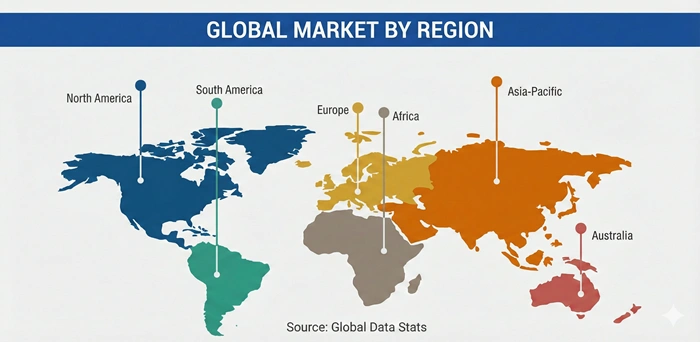
North America maintains its position as the dominant region in the ultrasound probe covers market, commanding approximately 38% of global market share in 2025, with this leadership expected to persist throughout the forecast period. The region's market dominance is underpinned by sophisticated healthcare infrastructure featuring comprehensive diagnostic imaging capabilities across thousands of hospitals, ambulatory surgical centers, and specialized imaging facilities. The United States leads North American consumption due to its extensive healthcare system that performs millions of ultrasound examinations annually across diverse clinical applications. American healthcare facilities adhere to rigorous infection prevention protocols mandated by organizations such as the Centers for Disease Control and Prevention, The Joint Commission, and state health departments, which specify mandatory use of probe covers for ultrasound examinations to minimize healthcare-associated infection risks. The regulatory environment in North America emphasizes patient safety and quality assurance, driving consistent adoption of single-use sterile probe covers even in lower-risk examination scenarios.
The region benefits from the presence of major market participants including CIVCO Medical Solutions (United States), Parker Laboratories (United States), and numerous other manufacturers and distributors that maintain robust supply chains ensuring product availability across urban and rural healthcare facilities. North American healthcare providers demonstrate willingness to invest in premium-quality probe covers that offer enhanced features such as improved tactile sensitivity, antimicrobial coatings, and eco-friendly materials, supporting higher average selling prices compared to other regions. The market in Canada follows similar trends to the United States with universal healthcare coverage ensuring widespread access to diagnostic imaging services. Mexico represents a growing market within the region as healthcare modernization initiatives and medical tourism expansion drive investments in quality medical consumables. North America's ultrasound probe covers market is projected to grow at a steady CAGR of approximately 6% from 2026 to 2033, sustained by increasing ultrasound procedure volumes, technological advancements in imaging equipment, and ongoing emphasis on infection control excellence throughout healthcare delivery systems.
Asia Pacific
Rapid Healthcare Expansion and Rising Disease Burden Position Region as Fastest-Growing Market
Asia Pacific represents the fastest-growing regional market for ultrasound probe covers, projected to achieve the highest CAGR during the forecast period of 2026 to 2033, driven by transformative healthcare infrastructure investments and expanding diagnostic imaging capabilities across populous nations. Countries including China, India, Japan, South Korea, and Southeast Asian nations are substantially increasing healthcare expenditures to meet the needs of their large and aging populations, with governments prioritizing the establishment of modern hospitals and diagnostic centers equipped with advanced medical technology. China's healthcare reforms have accelerated the installation of ultrasound systems across urban and rural facilities, creating exponential growth in probe cover consumption. India's burgeoning private healthcare sector combined with government initiatives to improve public health infrastructure is driving rapid adoption of international infection control standards that mandate probe cover usage. The region's growing middle class exhibits increasing healthcare awareness and willingness to seek quality diagnostic services, further stimulating market expansion.
Medical tourism flourishes across Asia Pacific, with countries like Thailand, Singapore, and Malaysia attracting international patients who expect infection control practices meeting global standards, necessitating consistent probe cover utilization. The rising prevalence of chronic diseases including diabetes, cardiovascular conditions, and cancer throughout Asia Pacific populations creates sustained demand for diagnostic ultrasound examinations and associated consumables. Major global manufacturers including GE Healthcare, Siemens Healthineers, and regional players such as Hitachi Medical Systems are expanding their distribution networks and forming strategic partnerships with local companies to capture market share in this high-growth region. Japan and South Korea, with their advanced healthcare systems and aging demographics, maintain substantial markets with consumption patterns similar to Western developed nations. The ultrasound probe covers market in Asia Pacific is characterized by diverse pricing dynamics, with premium segments in developed markets coexisting with cost-sensitive segments in emerging economies, creating opportunities for manufacturers offering tiered product portfolios. The regional market share and growth trajectory position Asia Pacific as a critical focus area for companies seeking to capitalize on the global ultrasound probe covers market expansion throughout the coming decade.
Top Key Players
-
CIVCO Medical Solutions (United States)
-
Parker Laboratories (United States)
-
GE Healthcare (United States)
-
Ecolab (United States)
-
BD (Becton, Dickinson and Company) (United States)
-
Protek Medical (Aspen Surgical) (United States)
-
Nanosonics Inc (Australia)
-
Sheathing Technologies (Canada)
-
Laboratoire CCD (France)
-
Fairmont Medical (United Kingdom)
-
Mermaid Medical (Sweden)
-
Cone Instruments (United States)
-
HR Pharmaceuticals (United States)
-
Precision Dynamics Corporation (United States)
-
Microtek Medical (United States)
Recent Developments
-
GE Healthcare completed its USD 1.45 billion all-cash acquisition of BK Medical from Altaris Capital Partners in February 2022, expanding its ultrasound business to a USD 3 billion portfolio and strengthening its capabilities in surgical visualization and intraoperative imaging to create end-to-end solutions across the full continuum of patient care from diagnosis through therapy.
-
Nanosonics Inc expanded its product portfolio in 2024 with enhanced ultrasound probe disinfection systems that integrate seamlessly with probe cover protocols, addressing the growing global emphasis on comprehensive infection prevention in ultrasound imaging across hospitals and diagnostic centers worldwide.
-
CIVCO Medical Solutions launched next-generation probe cover designs in 2025 featuring improved tactile sensitivity and enhanced acoustic transparency, responding to sonographer feedback and advancing the standard for diagnostic image quality while maintaining robust barrier protection against pathogen transmission.
-
Parker Laboratories announced strategic distribution partnerships across Asia Pacific markets in 2025, significantly expanding its market reach in high-growth regions including India, Southeast Asia, and China where healthcare infrastructure investments are driving demand for quality ultrasound consumables.
-
Ecolab introduced environmentally sustainable probe cover solutions in 2024 using biodegradable materials, addressing the healthcare industry's growing focus on reducing medical waste and environmental impact while meeting infection control requirements for ultrasound procedures.
Market Trends
Transition Toward Single-Use Products and Sustainability Innovation Shape Market Evolution
The ultrasound probe covers market is experiencing a definitive shift toward single-use disposable products as healthcare facilities prioritize infection prevention over reprocessing economics. This trend reflects growing awareness of healthcare-associated infection risks and the documented challenges of achieving consistent high-level disinfection for reusable medical devices. Regulatory guidance from health authorities increasingly emphasizes barrier protection as a critical component of ultrasound infection control protocols, moving away from reliance solely on probe disinfection. Healthcare organizations recognize that the costs associated with treating even a single healthcare-associated infection far exceed the cumulative expense of disposable probe covers, making single-use products a cost-effective risk mitigation strategy. This market trend is particularly pronounced in developed economies where patient safety regulations are stringent and liability concerns influence purchasing decisions. The disposable probe covers segment is expanding rapidly across all probe types and applications, with manufacturers investing in production capacity expansion to meet accelerating demand from hospitals, diagnostic centers, and ambulatory care facilities worldwide.
Sustainability initiatives represent an emerging trend reshaping product development priorities within the ultrasound probe covers market. Healthcare systems globally are confronting the environmental impact of medical waste generation, with single-use medical devices contributing substantially to landfill volumes and plastic pollution concerns. Forward-thinking manufacturers are responding by developing probe covers from biodegradable polymers, plant-derived materials, and recyclable compounds that decompose more readily than conventional petroleum-based plastics while maintaining the barrier performance and acoustic properties required for clinical applications. Some companies are exploring innovative packaging designs that minimize material usage and incorporate recycled content without compromising sterility assurance. Healthcare purchasing organizations are beginning to incorporate environmental sustainability criteria into procurement decisions alongside traditional factors such as clinical effectiveness, cost, and regulatory compliance. This trend creates competitive differentiation opportunities for manufacturers who successfully balance ecological responsibility with clinical performance requirements. As younger healthcare professionals and environmentally conscious consumers influence institutional decision-making, the demand for sustainable probe cover alternatives is expected to accelerate, potentially commanding premium pricing and reshaping competitive dynamics within the market throughout the forecast period.
Segments Covered in the Report
By Product Type
-
Latex Probe Covers
-
Latex-Free Probe Covers
By Probe Type
-
Linear Probe Covers
-
Endocavitary Probe Covers
-
Convex Probe Covers
-
Phased Array Probe Covers
By Application
-
Diagnostic Imaging
-
Obstetric and Gynecological Imaging
-
Abdominal Imaging
-
Cardiac Imaging
-
Vascular Imaging
-
Musculoskeletal Imaging
-
-
Surgical and Interventional Procedures
-
Others
By End User
-
Hospitals and Clinics
-
Diagnostic Imaging Centers
-
Ambulatory Surgical Centers
-
Others
By Region
-
North America
-
United States
-
Canada
-
Mexico
-
-
Europe
-
Germany
-
United Kingdom
-
France
-
Italy
-
Spain
-
Rest of Europe
-
-
Asia Pacific
-
China
-
India
-
Japan
-
South Korea
-
Australia
-
Southeast Asia
-
Rest of Asia Pacific
-
-
Latin America
-
Brazil
-
Argentina
-
Rest of Latin America
-
-
Middle East and Africa
-
GCC Countries
-
South Africa
-
Rest of Middle East and Africa
-
Frequently Asked Questions
Question 1: What is the current ultrasound probe covers market size and expected growth?
Answer: The global ultrasound probe covers market is valued at USD 232.59 million in 2025 and is projected to reach USD 413.61 million by 2033, growing at a CAGR of 6.70% from 2026 to 2033.
Question 2: Which region dominates the ultrasound probe covers market globally?
Answer: North America leads the ultrasound probe covers market with approximately 38% market share in 2025, driven by advanced healthcare infrastructure and stringent infection control regulations. Asia Pacific represents the fastest-growing region with the highest projected CAGR.
Question 3: What are the primary drivers of the ultrasound probe covers market growth?
Answer: Key drivers include increasing ultrasound diagnostic procedures, rising chronic disease prevalence, stringent infection prevention regulations, and growing adoption of minimally invasive surgical techniques. The expansion of point-of-care ultrasound applications further accelerates ultrasound probe covers market demand.
Question 4: Which application segment holds the largest share in the ultrasound probe covers market?
Answer: Diagnostic imaging dominates the ultrasound probe covers market with 47% market share in 2025, attributed to high volumes of prenatal, cardiac, abdominal, and vascular ultrasound examinations. The surgical and interventional procedures segment is growing at the fastest CAGR of 7.90%.
Question 5: Who are the major companies operating in the ultrasound probe covers market?
Answer: Leading players include CIVCO Medical Solutions, Parker Laboratories, GE Healthcare, Ecolab, BD, Nanosonics Inc, and Protek Medical from the United States. Other key companies include Laboratoire CCD from France, Fairmont Medical from the United Kingdom, and Mermaid Medical from Sweden.