
Trade Credit Insurance Market Overview
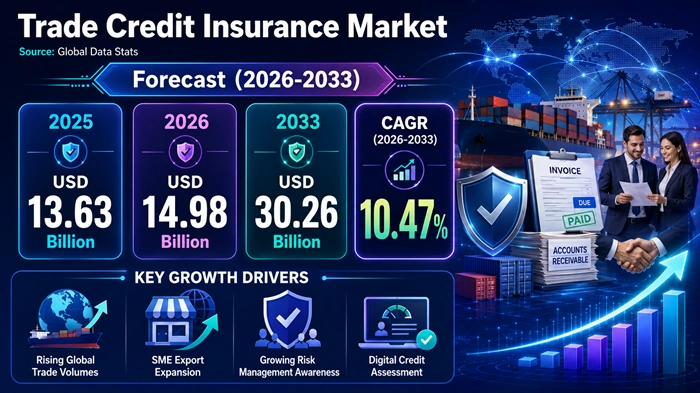
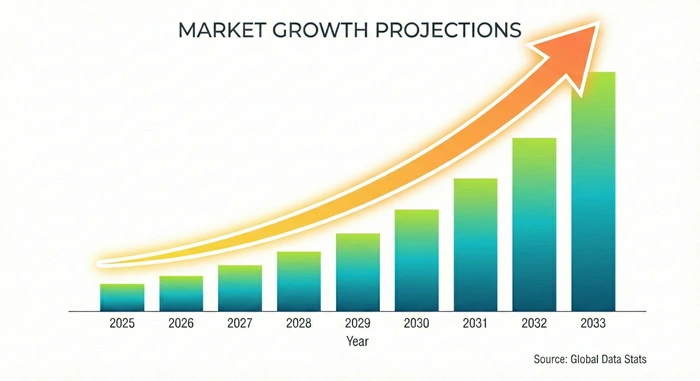
The global trade credit insurance market size is valued at USD 13.63 billion in 2025 and is predicted to increase from USD 14.98 billion in 2026 to approximately USD 30.26 billion by 2033, growing at a CAGR of 10.47% from 2026 to 2033. This robust growth reflects an accelerating need among businesses of all sizes to protect their accounts receivable from the risk of buyer non-payment, insolvency, and prolonged default — particularly as geopolitical instability, supply chain disruption, and rising corporate insolvency rates create an increasingly uncertain trading environment. From large multinationals protecting cross-border export receivables to mid-size manufacturers safeguarding domestic trade, the demand for credit risk protection solutions is expanding steadily across every major geography.
AI Impact on the Trade Credit Insurance Industry
Artificial Intelligence and Advanced Data Analytics Are Fundamentally Transforming How Credit Risk Is Assessed, Monitored, and Insured Across Global Trade Networks
Artificial intelligence is reshaping the foundational practices of the trade credit insurance industry in profound ways. Traditionally, credit risk underwriting was a slow, document-heavy process reliant on historical financial data and manual assessor judgment. AI-powered risk engines can now process thousands of financial, macroeconomic, news-sentiment, and transaction data points in near real-time, generating far more dynamic and accurate buyer credit scores than any legacy approach could achieve. Insurers using machine learning models report measurable improvements in loss ratio management, faster policy issuance, and higher customer satisfaction due to reduced documentation burden and faster underwriting decisions.
Beyond underwriting, AI is transforming claims management and fraud detection. Automated claims assessment tools can verify buyer insolvency events and cross-reference trade documentation with far greater speed and accuracy than manual review teams, reducing claims settlement timelines significantly. AI-driven continuous monitoring platforms now alert policyholders when a buyer's credit profile deteriorates — enabling businesses to reduce credit exposure proactively before a default event occurs. This shift from reactive to predictive risk management is one of the most commercially significant capabilities AI is delivering to the trade credit insurance market, and it is accelerating adoption particularly among technology-forward insurers and digitally mature corporate risk management teams.
Growth Factors
Rising Global Trade Volumes, Growing Corporate Insolvency Risk, and Regulatory Encouragement of Credit Insurance Are Together Building a Strong and Durable Growth Foundation
The primary driver of demand in the trade credit insurance sector is the sustained growth in global cross-border and domestic trade, combined with escalating payment risk in that trade. As businesses expand into new markets — particularly in Asia, Africa, and Latin America — they frequently extend open credit terms to buyers whose creditworthiness is difficult to independently assess. The need for a structured mechanism to protect receivables against non-payment in these relationships has never been greater. Corporate insolvency rates across Europe and North America, which have risen steadily following the end of pandemic-era government support programs, are making buyer default a lived reality for a growing number of exporters and domestic suppliers — directly driving awareness and purchase intent for credit risk coverage.
At the same time, regulatory and financial ecosystem factors are creating powerful structural tailwinds. Many financial institutions now require trade credit insurance as a condition for extending working capital finance or trade finance facilities to SMEs, linking insurance adoption directly to access to credit. Regulatory developments in key markets — including India's IRDAI guidelines encouraging insurer participation in the credit insurance market and the European Commission's ongoing support for export credit facilitation — are creating formal incentives for both supply-side product development and demand-side adoption. These combined forces ensure that market growth is not purely cyclical but reflects a deepening structural integration of credit insurance into mainstream trade finance and corporate risk management practice.
Market Outlook
The Trade Credit Insurance Market Is Entering a Period of Strong Structural Expansion, Supported by Digital Transformation, SME Segment Growth, and Emerging Market Penetration
The long-term outlook for the trade credit insurance market is firmly positive, shaped by several durable growth forces. The ongoing digitalization of trade finance — including e-invoicing platforms, digital trade documentation, and blockchain-based supply chain finance tools — is creating new data streams and operational efficiencies that are enabling insurers to underwrite smaller businesses and single transactions that were previously not commercially viable to insure. This is opening the market to millions of SMEs globally that have historically been underserved by traditional whole-turnover credit insurance products that required large minimum premium thresholds and complex reporting obligations.
Emerging markets will be a key expansion frontier through 2033. Countries across Asia Pacific, Latin America, and Sub-Saharan Africa are experiencing rapid growth in cross-border and domestic trade activity, rising financial literacy among business owners, and improving credit information infrastructure — all of which support broader adoption of trade credit insurance products. Governments in markets like India, China, Brazil, and the UAE are actively investing in export promotion initiatives that include credit insurance access as a core tool for helping domestic companies compete in global markets. Insurers that invest in local partnerships, simplified digital product offerings, and local-language customer servicing in these markets stand to capture substantial new premium volume over the forecast period.
Expert Speaks
-
"The surge in corporate insolvencies globally and the persistent unpredictability of cross-border trade conditions are driving meaningful new demand for trade credit insurance. Businesses are recognizing that protecting their receivables is not a luxury — it is a fundamental prerequisite for sustainable growth in today's environment." — CEO, Allianz Trade
-
"We are investing heavily in digital underwriting capabilities and AI-powered risk monitoring precisely because our clients need faster, more accurate credit risk information to make sound trade decisions. The trade credit insurance market is evolving from a reactive protection product to a proactive trade intelligence service." — CEO, Atradius N.V.
-
"Geopolitical fragmentation, nearshoring trends, and supply chain reconfiguration are all reshaping global trade flows — and where trade flows change, credit risk exposure changes. Our clients across every sector are looking to credit insurance to provide the confidence they need to keep trading and growing, even in volatile conditions." — CEO, Coface S.A.
Key Report Takeaways
-
Europe leads the global trade credit insurance market with approximately 38% market share in 2025, supported by a deeply entrenched credit insurance culture, the presence of global market leaders including Allianz Trade, Atradius, and Coface, and a regulatory environment that actively encourages the use of credit risk protection tools in cross-border trade
-
Asia Pacific is the fastest-growing regional market, projected to expand at approximately 11.5% CAGR through 2033, driven by rapidly growing intra-regional and cross-border trade, rising corporate awareness of credit risk management, and government-backed export credit agency frameworks in China, India, South Korea, and Japan
-
Large enterprises are the dominant enterprise size segment, accounting for over 62% of total market share in 2025, given their large accounts receivable portfolios, extensive cross-border trade exposure, and established risk management practices that include credit insurance as a standard instrument
-
Whole turnover cover is the most widely adopted coverage type, contributing approximately 69% of the coverage segment share in 2026, reflecting the preference of businesses for comprehensive policies that cover their entire buyer portfolio rather than insuring individual accounts selectively
-
Manufacturing is the leading industry vertical segment, commanding the largest revenue share in 2025 due to its large B2B receivables pools, export-intensive supply chains, extended credit terms, and exposure to cross-border buyer default risk across chemicals, metals, machinery, and electronics sectors
-
The SME segment under enterprise size is expected to grow at the fastest CAGR through 2033, driven by financial institution mandates linking trade finance access to credit insurance adoption, digital product simplification making insurance accessible to smaller businesses, and government programs promoting SME export activity in emerging markets
Market Scope
| Report Coverage | Details |
|---|---|
| Market Size by 2033 | USD 30.26 Billion |
| Market Size by 2025 | USD 13.63 Billion |
| Market Size by 2026 | USD 14.98 Billion |
| Market Growth Rate from 2026 to 2033 | CAGR of 10.47% |
| Dominating Region | Europe |
| Fastest Growing Region | Asia Pacific |
| Base Year | 2025 |
| Forecast Period | 2026 to 2033 |
| Segments Covered | Coverage, Enterprise Size, Industry Vertical, Application, Distribution Channel, Region |
| Regions Covered | North America, Europe, Asia Pacific, Latin America, Middle East & Africa |
Market Dynamics
Drivers Impact Analysis
Escalating Corporate Insolvency Risk and the Expanding Integration of Credit Insurance Into Trade Finance Frameworks Are the Two Most Potent Drivers Accelerating Market Growth
| Driver | ≈ % Impact on CAGR Forecast | Geographic Relevance | Impact Timeline |
|---|---|---|---|
| Rising corporate insolvency rates and buyer default risk | ~36% | Europe, North America, Asia Pacific | Short to long-term |
| Expansion of global cross-border trade volumes | ~28% | Asia Pacific, Latin America, MEA | Medium to long-term |
| Financial institution requirements linking credit insurance to trade finance | ~22% | Europe, North America | Short to medium-term |
| Government-backed export promotion programs including credit insurance | ~14% | Asia Pacific, Latin America, MEA | Medium to long-term |
The rapid rise in corporate insolvency rates across major trading economies is the most immediate and commercially significant demand driver in the trade credit insurance market. Europe has experienced a marked increase in business failures since the withdrawal of pandemic-era government support, with insolvency rates in several key markets reaching multi-year highs. In North America, rising interest rates and tightening credit conditions have increased financial stress among businesses operating on thin margins with extended credit terms. Each insolvency event that leaves a supplier unpaid drives awareness of credit insurance among similar businesses in the same sector — creating a self-reinforcing adoption cycle that is structurally expanding the market's customer base.
The integration of credit insurance requirements into trade finance frameworks is a second, highly durable structural driver. When a bank extends a working capital facility, invoice discounting arrangement, or trade finance line to a corporate client, it is increasingly common to require credit insurance cover on the underlying receivables as a condition of the facility. This practice, while most mature in Europe, is spreading rapidly across North America and Asia Pacific as financial institutions recognize the risk management benefits of insured receivables portfolios. For businesses seeking to optimize their financing costs and maintain access to credit facilities, purchasing trade credit insurance is becoming a financial necessity rather than a purely discretionary risk management decision — which is qualitatively expanding the market's addressable customer universe.
Restraints Impact Analysis
Lack of SME Awareness, Complex Product Documentation, and Cyclical Insurer Capacity Constraints Remain Meaningful Barriers to Broader Market Penetration
| Restraint | ≈ % Impact on CAGR Forecast | Geographic Relevance | Impact Timeline |
|---|---|---|---|
| Limited awareness and understanding among SMEs | ~40% | Latin America, MEA, Southeast Asia | Short to medium-term |
| Complex policy documentation and high minimum premium thresholds | ~30% | Global, particularly SME segment | Medium-term |
| Cyclical reduction in insurer capacity during high-claims periods | ~18% | Europe, North America | Short-term, cyclical |
| Regulatory complexity across multi-jurisdiction insurance compliance | ~12% | Global, especially emerging markets | Long-term |
The single largest structural barrier to growth in the trade credit insurance market is the persistent lack of awareness and understanding of credit insurance products among small and mid-size businesses, which represent the majority of businesses engaged in trade globally. Many SME owners remain unfamiliar with how credit insurance works, what it costs, and what practical value it delivers beyond basic non-payment protection. Traditional insurance distribution models — centered on specialist brokers and relationship-based sales — have historically favored large corporate clients with complex, high-premium requirements. This leaves a vast population of SMEs without adequate credit risk protection and represents both the largest untapped market opportunity and the most persistent penetration challenge in the industry.
Product complexity is a closely related constraint. Whole-turnover credit insurance policies typically require detailed buyer schedule reporting, ongoing credit limit management, notification of overdue accounts, and compliance with complex claims procedures. For businesses without dedicated credit management functions, these obligations can feel administratively burdensome — leading some SMEs and mid-market businesses to decline coverage despite recognizing the underlying need. Insurers that are simplifying product structures through digital-native platforms, automated reporting integrations with accounting software, and streamlined claims processes are making meaningful progress in reducing this friction. However, truly mass-market SME credit insurance penetration will require further product innovation and distribution channel diversification beyond the specialist broker model.
Opportunities Impact Analysis
Digital Product Simplification, SME Market Expansion, and Emerging Market Penetration Represent the Three Highest-Value Strategic Opportunities in the Trade Credit Insurance Sector
| Opportunity | ≈ % Impact on CAGR Forecast | Geographic Relevance | Impact Timeline |
|---|---|---|---|
| Digital platform development enabling simplified SME credit insurance | ~42% | Global, led by Europe, Asia Pacific | Short to medium-term |
| Expansion into high-growth emerging markets with rising trade activity | ~35% | Asia Pacific, Latin America, MEA | Medium to long-term |
| Embedded credit insurance within trade finance and e-commerce platforms | ~23% | Global | Medium to long-term |
The development of digital-native credit insurance platforms represents the single most commercially transformative near-term opportunity in the market. By building streamlined, API-connected products that integrate directly with SME accounting software, ERP systems, and digital banking platforms, insurers can dramatically lower the administrative burden that has historically deterred smaller businesses from purchasing coverage. Several insurtech startups — alongside established players investing in digital transformation — are already demonstrating that simplified, transparent credit insurance products delivered through digital channels can achieve rapid SME adoption. This approach also reduces insurer distribution costs and enables real-time underwriting data ingestion that improves risk accuracy.
The embedding of credit insurance within third-party trade finance, e-commerce, and supply chain finance platforms represents a second high-potential opportunity vector. Rather than selling credit insurance as a standalone product requiring a dedicated purchasing decision, insurers can embed coverage as a feature of trade finance facilities, invoice financing platforms, or B2B e-commerce checkout flows. This distribution model reduces friction dramatically and reaches businesses at the precise moment when credit risk is most salient — when a transaction is being executed. Partnerships between established credit insurers and fintech platforms in Europe and Asia Pacific are already demonstrating the commercial viability of this model, and broader adoption is expected to accelerate through 2033.
Segment Analysis
By Coverage Type
Whole Turnover Cover Dominates the Trade Credit Insurance Market and Remains the Preferred Risk Management Instrument for Large Enterprises with Extensive Buyer Portfolios
Whole turnover cover holds the dominant position in the trade credit insurance market, accounting for approximately 69% of the coverage segment share in 2026 and continuing to grow at a steady CAGR through 2033. This coverage type provides protection across a policyholder's entire buyer portfolio rather than insuring individual accounts, offering businesses a comprehensive safety net against the systemic risk of widespread buyer default during economic downturns. Large manufacturing companies, distributors, and exporters with hundreds of trade debtors across multiple geographies strongly prefer this approach because it provides blanket protection without the administrative overhead of managing individual cover limits per buyer. Europe leads adoption of whole turnover policies, with Allianz Trade, Atradius, and Coface offering deeply established product lines that are embedded in the working capital management practices of major European exporters.
North America is emerging as a strong growth region for whole turnover coverage, expanding at approximately 10.9% CAGR as rising corporate insolvency awareness and bank-driven adoption mandates bring more businesses into the credit insurance ecosystem for the first time. Companies like American International Group (AIG), Zurich Insurance Group, and Chubb are expanding their whole turnover product portfolios to serve mid-market U.S. and Canadian businesses, and digital onboarding investments are reducing the minimum viable policy size — making this segment increasingly accessible to businesses below the traditional large-corporate threshold. Key account and single-risk cover segments, while smaller, are expected to grow at above-average rates as businesses seek targeted protection for their most critical buyer relationships in volatile emerging market environments.
By Application
Cross-Border Trade Leads Application Revenue While Domestic Trade Is the Fastest-Growing Application as Business Insolvency Rates Rise in Core Markets
Cross-border trade application commands approximately 58.7% of the total application segment share in the trade credit insurance market in 2025, reflecting the historically higher risk profile and greater complexity of international trade compared to domestic commerce. Exporters face challenges of buyer creditworthiness assessment across unfamiliar jurisdictions, currency risk, complex legal systems governing debt recovery, and longer transit times that extend credit exposure periods. Credit insurance for cross-border trade is well established across European export markets, with the EU's extensive trade relationships across Asia, Africa, and the Americas generating large volumes of insurable export receivables every year. Key players including Coface and Euler Hermes (Allianz Trade) have built multi-decade networks of local credit intelligence and claims management capabilities that directly support cross-border coverage for policyholders operating in over 100 countries.
The domestic trade application segment is growing at a notably strong CAGR — approximately 11.8% through 2033 — as business insolvency rates in key domestic markets rise and businesses that previously managed credit risk through informal relationships or internal limits recognize the need for formal protection. Asia Pacific is the primary growth region for domestic trade credit insurance, where expanding intra-regional trade, rapid formalization of B2B credit practices, and government initiatives promoting commercial insurance adoption are combining to build a strong domestic coverage market from a relatively low base. The trade credit insurance market for domestic applications in China and India is growing particularly rapidly, supported by the development of national credit information databases that are enabling more accurate underwriting of domestic buyer risk in these previously challenging markets.
Regional Insights
Europe
Europe's Deep-Rooted Credit Insurance Culture, Large Export Economy, and Presence of All Global Market Leaders Make It the Dominant Region in the Trade Credit Insurance Landscape
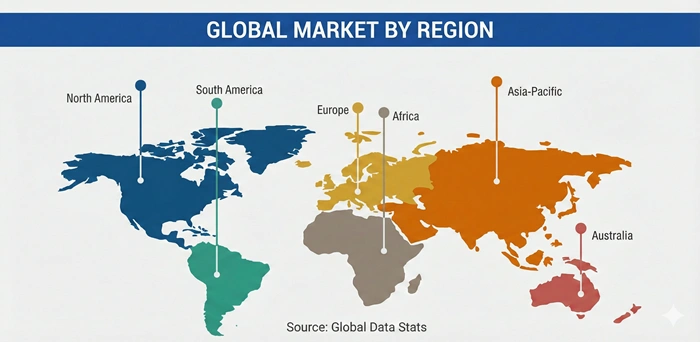
Europe holds the dominant position in the global trade credit insurance market, commanding approximately 38% market share in 2025 and expanding at a steady CAGR of around 9.8% through 2033. The continent's leadership position reflects centuries-old trade finance traditions, a sophisticated export-oriented economy across Germany, France, the UK, Italy, and the Benelux countries, and the headquarters presence of the world's three largest credit insurers — Allianz Trade (Germany), Atradius (Netherlands), and Coface (France) — all of which have built unrivaled global risk intelligence networks from their European bases. EU regulatory frameworks requiring risk disclosure, combined with the active role of European export credit agencies in co-insuring large sovereign and emerging market exposures, have created a deeply institutionalized credit insurance ecosystem that is structurally more mature than any other region globally.
The UK, Germany, and France are the three largest national markets within Europe, collectively accounting for the bulk of regional premium volume. The post-Brexit environment has added new trade compliance complexities for UK exporters dealing with EU counterparties, which has in some cases increased demand for credit insurance cover as a risk mitigation tool. Germany's enormous export sector — spanning automotive, machinery, chemicals, and electronics — generates a particularly large volume of insurable cross-border receivables, making it one of the world's single most important credit insurance markets. Continued geopolitical uncertainty, including trade disruptions with Russia and ongoing concerns about Middle Eastern market stability, is maintaining elevated demand for credit risk protection across the European corporate sector, providing a durable growth foundation through 2033.
Asia Pacific
Asia Pacific Is Poised to Sustain the Highest Regional CAGR Through 2033, Driven by China and India's Trade Expansion, Government Export Credit Programs, and Rising Corporate Credit Awareness
Asia Pacific is the fastest-growing region in the global trade credit insurance market, expected to expand at approximately 11.5% CAGR through 2033 — comfortably above the global market average of 10.47%. China, India, Japan, South Korea, and a cluster of rapidly growing Southeast Asian economies are collectively building one of the world's most dynamic credit insurance markets, supported by government export credit agencies (Sinosure in China, ECGC in India, NEXI in Japan, K-Sure in South Korea) that provide a public risk-bearing foundation on which private insurers can overlay commercial products. This dual-layer ecosystem of public and private credit insurance is accelerating market development significantly faster than would be achievable through private market forces alone.
India represents one of the most exciting individual country growth stories within the region, with the insurance regulator IRDAI issuing guidelines to stimulate credit insurance product innovation and competition among domestic and international insurers. India's rapidly growing SME export sector, combined with expanding domestic B2B trade volumes, is generating strong organic demand for coverage products that are only beginning to be met by the developing commercial credit insurance market. International players including Coface, Atradius, and AIG are deepening their Asia Pacific distribution networks through local partnerships and regulatory approvals, recognizing that the region's long-term premium growth trajectory makes it a strategic investment priority through and beyond 2033.
Customization Available for This Report
This report offers comprehensive region-wise and country-wise customization, delivering tailored market insights, competitive intelligence, regulatory analysis, and demand assessments aligned precisely to your selected geography and the trade credit insurance keyword combination.
A fully customized version of this report can be delivered for any region or country listed below, providing detailed analysis of market sizing, growth dynamics, key player positioning, distribution channel mapping, regulatory landscape, and buyer segment intelligence specific to each market:
North America
-
U.S. — Corporate insolvency trends, bank-driven credit insurance mandates, federal export promotion programs, and key insurer market share analysis
-
Canada — Export development credit programs, domestic SME coverage market, and financial institution tie-ups with credit insurers
-
Mexico — Manufacturing export sector credit risk exposure, nearshoring-driven demand growth, and NAFTA/USMCA-related credit risk dynamics
Europe
-
U.K. — Post-Brexit trade credit risk environment, UKEF export credit programs, and domestic insolvency-driven demand
-
Germany — Export-intensive manufacturing sector, Allianz Trade and Atradius market dominance, and SME mid-market segment growth
-
France — Coface home market analysis, French exporter credit insurance adoption, and BPI France export support interactions
-
Italy — SACE-driven export credit market, manufacturing SME credit risk exposure, and Southern European buyer default risk profile
-
Rest of Europe — Eastern European market development, Nordic export credit traditions, and Balkan market emergence
Asia Pacific
-
China — Sinosure ecosystem, private market growth, Pearl River Delta manufacturing export credit risk, and domestic trade coverage
-
India — ECGC framework, IRDAI regulatory reform impact, SME export market development, and private insurer competitive landscape
-
Japan — NEXI support structure, sophisticated corporate credit insurance market, and cross-border Asia trade exposure
-
South Korea — K-Sure framework, tech and automotive export sector credit risk, and domestic insolvency dynamics
-
Australia — Cross-regional export credit insurance, resource sector trade risk management, and SME market development
-
Rest of Asia Pacific — Southeast Asia country-level analysis for Vietnam, Indonesia, Thailand, Philippines, and Malaysia
Latin America
-
Brazil — Export credit insurance for agri-industrial sector, government SBCE programs, and domestic insolvency-driven demand
-
Argentina — Trade credit risk in high-inflation environment, export sector protection needs, and credit insurer market activity
-
Rest of Latin America — Colombia, Peru, and Chile trade credit insurance market sizing and growth opportunity analysis
Middle East & Africa
-
UAE — Dubai as a cross-regional trade hub, ICIEC programs, and commercial credit insurer market development
-
Saudi Arabia — Vision 2030 trade diversification, SACE and Atradius market activity, and non-oil export sector credit risk
-
Rest of MEA — Sub-Saharan African trade credit insurance development, IFC-backed programs, and emerging market entry analysis
Top Key Players
-
Allianz Trade (Euler Hermes) (Germany)
-
Atradius N.V. (Netherlands)
-
Coface S.A. (France)
-
American International Group Inc. (United States)
-
Zurich Insurance Group Ltd (Switzerland)
-
Chubb Limited (Switzerland / United States)
-
AXA XL (France / United Kingdom)
-
Credendo Group (Belgium)
-
SACE S.p.A. (Italy)
-
QBE Insurance Group Limited (Australia)
-
Aon plc (United Kingdom)
-
Markel Corporation (United States)
-
Tokio Marine HCC (Japan / United States)
-
Export Credit Guarantee Corporation of India (ECGC) (India)
-
Sinosure (China Export & Credit Insurance Corporation) (China)
Recent Developments
-
In March 2025, Allianz Trade launched its enhanced digital underwriting platform incorporating AI-powered real-time buyer credit monitoring, enabling policyholders to access live credit limit recommendations and deterioration alerts directly through a self-service digital portal — a significant step forward in transforming credit insurance from a reactive to a proactive risk management tool
-
In November 2024, Coface announced a strategic partnership with a leading European fintech platform to embed trade credit insurance coverage into invoice financing workflows, enabling SME users of the platform to access cover at the point of transaction without a separate insurance purchasing process — a model that represents the future of SME credit insurance distribution
-
In January 2025, Atradius expanded its Asia Pacific presence by establishing a new underwriting hub in Singapore, strengthening its capacity to serve cross-border trade credit insurance needs across Southeast Asian markets including Vietnam, Indonesia, Thailand, and Malaysia, where demand for formal credit risk protection is growing rapidly
-
In September 2024, AIG's trade credit insurance division announced a significant expansion of its North American SME product portfolio, introducing simplified whole-turnover cover products with streamlined digital onboarding and integration with major accounting software platforms, targeting the previously underserved SME segment in the U.S. and Canadian markets
-
In February 2025, Credendo Group completed the acquisition of a specialized Eastern European trade credit insurer, strengthening its presence in the high-growth Polish, Czech, and Romanian markets and expanding its regional capacity for both domestic and cross-border trade credit insurance underwriting across Central and Eastern Europe
Market Trends
Two Major Forces Are Reshaping the Trade Credit Insurance Market: The Acceleration of Digital Underwriting and Embedded Insurance Models, and the Structural Expansion of SME Market Coverage
The most impactful structural trend transforming the trade credit insurance market is the rapid digitalization of underwriting, policy management, and claims settlement processes. Insurers that have invested in AI-driven risk assessment engines, real-time buyer credit monitoring dashboards, and API-connected policy management platforms are gaining significant competitive advantages in both pricing accuracy and operational efficiency. Digital platforms are enabling straight-through processing for smaller policies, reducing turnaround time from weeks to hours, and allowing insurers to serve customer segments — particularly SMEs — that were previously too costly to underwrite through traditional manual processes. This digitalization trend is reshaping competitive dynamics, accelerating new entrant activity from both insurtechs and established insurers with strong technology investment programs.
The second defining trend is the growing integration of credit insurance into adjacent financial services ecosystems — particularly trade finance, supply chain finance, and B2B e-commerce platforms. Embedded insurance models that present credit cover to a business owner at the moment of a trade transaction — within their existing banking, invoicing, or ERP software — are proving highly effective at reaching businesses that would never proactively seek out a specialist insurance broker. This distribution evolution is fundamentally changing the customer acquisition economics of the credit insurance industry, enabling scale penetration of the SME segment at a fraction of the traditional broker-driven customer acquisition cost. Insurers that successfully build embedded distribution partnerships will be well positioned to capture the fastest-growing segments of the market through 2033.
Segments Covered in the Report
By Coverage Type
-
Whole Turnover Cover
-
Comprehensive Portfolio Protection
-
Open Account Trade Coverage
-
-
Key Account Cover
-
Named Buyer Policies
-
Concentration Risk Coverage
-
-
Single Risk Cover
-
Individual Transaction Insurance
-
Project-Specific Credit Cover
-
-
Specific Buyer Cover
-
Selective Buyer Credit Policies
-
High-Value Buyer Protection
-
By Enterprise Size
-
Large Enterprises
-
Multinational Corporations
-
Large Domestic Exporters
-
-
Small and Medium Enterprises (SMEs)
-
Growing Exporter SMEs
-
Domestic Trade SMEs
-
By Industry Vertical
-
Manufacturing
-
Chemicals and Petrochemicals
-
Metals and Machinery
-
Electronics and Technology
-
-
Retail
-
Consumer Goods Retail
-
Wholesale Trade
-
-
Food and Beverages
-
Agricultural Commodity Trade
-
Processed Food Export
-
-
Automotive
-
OEM Supply Chain Finance
-
Auto Parts Export
-
-
IT and Telecom
-
Technology Product Trade
-
Services Export Coverage
-
-
Energy
-
Oil, Gas, and Renewables
-
Energy Equipment Trade
-
-
Others
By Application
-
Domestic Trade
-
B2B Credit Risk Domestic
-
Local Supply Chain Protection
-
-
Cross-Border Trade
-
Export Credit Coverage
-
Import Payment Risk Protection
-
By Distribution Channel
-
Brokers and Agents
-
Specialist Credit Insurance Brokers
-
General Commercial Insurance Brokers
-
-
Direct Sales
-
Insurer Direct Sales Teams
-
Online Direct Policy Issuance
-
-
Others
-
Embedded Insurance Platforms
-
Bank and Fintech Partnerships
-
By Region
-
North America (U.S., Canada, Mexico)
-
Europe (U.K., Germany, France, Italy, Rest of Europe)
-
Asia Pacific (China, India, Japan, South Korea, Australia, Rest of Asia Pacific)
-
Latin America (Brazil, Argentina, Rest of Latin America)
-
Middle East and Africa (UAE, Saudi Arabia, Rest of MEA)
❝ Built for Every Level — From Startups to Industry Giants ❞
Here Is Exactly How This Report Works for You
-
For tier 1 enterprises, institutional investors, and senior risk management executives, this report delivers detailed competitor revenue analysis, revenue source breakdowns by coverage type and geography, geopolitical risk impact frameworks, and supply-demand dynamics — equipping you to make confident strategic decisions around market entry, product expansion, acquisition targeting, and capital allocation in the rapidly growing trade credit insurance sector
-
For tier 2, tier 3 businesses, SMEs, and insurance brokers, this report identifies the most commercially viable product segments, underserved geographic markets, and distribution partnership opportunities — giving you a concrete strategic roadmap to compete effectively against established market leaders and grow your trade finance or credit risk advisory business with data-backed confidence
-
For all decision-makers across the trade credit insurance value chain, this report explains precisely how regulatory changes, geopolitical trade disruptions, insolvency cycles, and emerging market development trajectories are reshaping the competitive landscape through 2033 — providing the intelligence framework you need to transform market insight into competitive advantage and measurable business growth
Frequently Asked Questions
Question 1: What is the current size of the global trade credit insurance market and what growth is expected through 2033?
Answer: The global trade credit insurance market was valued at USD 13.63 billion in 2025 and is projected to reach USD 30.26 billion by 2033. This growth is driven by rising corporate insolvency risks, expanding cross-border trade volumes, and the increasing integration of credit insurance into trade finance frameworks globally.
Question 2: What are the key factors driving growth in the trade credit insurance market?
Answer: The primary drivers of the trade credit insurance market include rising buyer default and insolvency risk, growing financial institution requirements linking credit insurance to trade finance access, and government export promotion programs. Digitalization of underwriting and the expansion of embedded insurance distribution models are additional high-impact accelerators.
Question 3: Which region dominates the trade credit insurance market and which is growing fastest?
Answer: Europe holds the dominant position in the trade credit insurance market with approximately 38% market share in 2025, home to the world's three largest credit insurers. Asia Pacific is the fastest-growing region, expanding at approximately 11.5% CAGR, driven by China, India, and Southeast Asian trade growth alongside government export credit frameworks.
Question 4: What types of coverage are most popular in the trade credit insurance market?
Answer: Whole turnover cover is the most widely adopted coverage type in the trade credit insurance market, accounting for approximately 69% of the coverage segment share in 2026. This comprehensive approach protects businesses' entire buyer portfolios and is particularly preferred by large exporters and manufacturers with extensive domestic and cross-border trade receivables.
Question 5: Who are the leading companies operating in the trade credit insurance market?
Answer: The leading global players in the trade credit insurance market include Allianz Trade (Euler Hermes), Atradius, Coface, American International Group (AIG), and Zurich Insurance Group. These companies compete through broad geographic coverage, proprietary credit intelligence databases, digital platform investment, and strong relationships with international financial institutions and export agencies.