
Topical Drug Delivery Market Overview
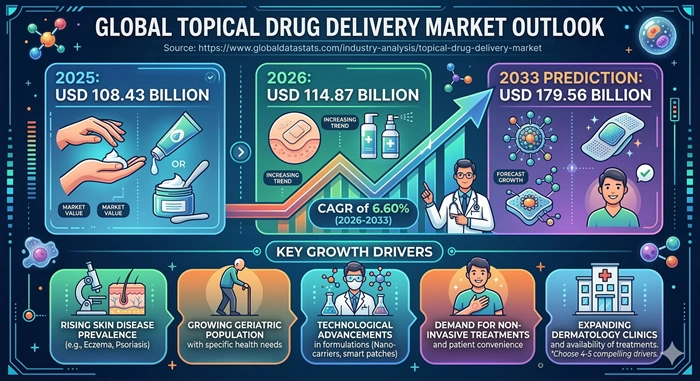
The global topical drug delivery market size is valued at USD 108.43 billion in 2025 and is predicted to increase from USD 114.87 billion in 2026 to approximately USD 179.56 billion by 2033, growing at a CAGR of 6.60% from 2026 to 2033. The market is witnessing strong momentum driven by the growing prevalence of skin disorders, increased patient preference for non-invasive drug administration, and continuous innovations in transdermal and topical formulation technologies.
AI Impact on the Topical Drug Delivery Industry
Artificial Intelligence Is Transforming Formulation Development, Drug Penetration Analysis, and Personalized Skin-Based Therapy Across the Global Pharmaceutical Landscape
Artificial intelligence is fundamentally changing the way pharmaceutical companies approach topical drug development. AI-powered modeling tools can now predict drug absorption rates through skin layers, simulate penetration pathways across diverse skin types, and optimize formulation components with significantly reduced trial-and-error cycles. This accelerates time-to-market for new topical therapies and reduces the cost of clinical development — outcomes that directly benefit both manufacturers and patients.
Beyond formulation science, AI is also enabling precision medicine applications within the topical drug delivery market. Machine learning algorithms are being trained on dermatological datasets to identify patient-specific treatment profiles, allowing clinicians to recommend topical formulations tailored to individual skin conditions, genetics, and lifestyle factors. This shift toward data-driven personalization is expanding the clinical value of topical treatments and strengthening their role in chronic disease management.
Growth Factors
Rising Burden of Chronic Skin Conditions, Demand for Non-Invasive Drug Administration, and Continuous Formulation Innovation Are the Primary Engines Fueling Market Expansion
The topical drug delivery market is growing steadily on the back of increasing global incidence of dermatological conditions such as psoriasis, eczema, acne, and skin cancer. These chronic diseases require ongoing treatment, creating consistent long-term demand for effective topical formulations. At the same time, the aging global population is driving demand for products targeting age-related skin disorders, wound care, and pain management through transdermal patches and medicated creams.
Innovation in drug delivery vehicles — including nano-emulsions, liposomes, hydrogels, and microneedle patches — is further accelerating market growth. These advanced platforms enhance bioavailability, improve patient compliance, and reduce systemic side effects compared to oral or injectable routes. As pharmaceutical companies increase their R&D investment in skin-based delivery systems, the pipeline of novel topical therapies continues to expand, creating robust long-term growth opportunities across the sector.
Market Outlook
The 2026–2033 Forecast Period Signals Sustained Expansion as Emerging Markets Scale Up Healthcare Access and Advanced Topical Formulations Enter Mainstream Clinical Use
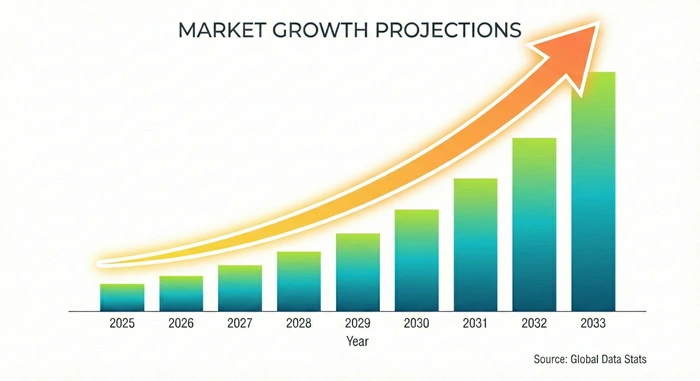
The outlook for the topical drug delivery market over the 2026–2033 period is highly favorable. Established markets in North America and Europe are expected to maintain steady demand driven by well-funded healthcare systems, a large base of dermatology patients, and a mature regulatory environment that supports product innovation. Simultaneously, emerging markets across Asia-Pacific, Latin America, and the Middle East are expanding their pharmaceutical distribution networks, improving patient access to topical therapies at scale.
The biosimilar and generic topical drug segment is also expected to contribute meaningfully to market volume, as patent expirations on several blockbuster topical products open the door for affordable alternatives. Combined with the commercial emergence of smart transdermal delivery systems — patches that respond to biological signals or deliver controlled doses over time — the market is set to evolve both in terms of product sophistication and geographic reach. Companies with diversified portfolios covering both established and next-generation delivery formats are best positioned to capitalize on this trajectory.
Expert Speaks
-
Albert Bourla, CEO of Pfizer Inc. (USA): "Skin-based drug delivery continues to be a high-priority area for pharmaceutical innovation. Patient preference for non-invasive therapies is driving demand for more effective and convenient topical solutions, and we are committed to delivering on that need."
-
Joaquin Duato, CEO of Johnson & Johnson (USA): "The intersection of dermatology and advanced drug delivery science is creating exciting opportunities. We are investing heavily in formulation technologies that improve penetration, tolerability, and patient outcomes across our topical product lines."
-
Vas Narasimhan, CEO of Novartis AG (Switzerland): "We see tremendous potential in targeted topical delivery platforms, especially for autoimmune and inflammatory skin conditions. The next generation of topical biologics and small molecules will redefine how patients with chronic skin diseases are treated."
Key Report Takeaways
-
North America leads the global topical drug delivery market, commanding approximately 38.45% revenue share in 2025, driven by a high prevalence of dermatological disorders, strong healthcare infrastructure, and a well-established pharmaceutical manufacturing base with consistent R&D investment.
-
Asia-Pacific is the fastest-growing regional market, projected to expand at a CAGR of 9.20% through 2033, supported by rapid urbanization, growing awareness of skin health, improving healthcare access, and a rising middle class with increasing spending on prescription and over-the-counter dermatological products.
-
Hospitals and dermatology clinics represent the largest end-user segment, as they are the primary channels for prescribing and dispensing prescription-grade topical drugs for chronic and acute skin conditions, accounting for the highest share of volume consumption in the market.
-
Skin disorders — particularly psoriasis, eczema, and acne — account for the largest application segment within the topical drug delivery market, reflecting the global burden of chronic dermatological disease and the preference for localized treatment with minimized systemic exposure.
-
Creams and ointments hold the leading product format position, capturing over 40% market share in 2025 due to their widespread clinical use, ease of formulation, patient familiarity, and versatility across a range of dermatological indications.
-
Transdermal patches are the fastest-growing product segment, with a projected CAGR above 8.50% through 2033, as pharmaceutical companies continue to invest in extended-release and stimulus-responsive patch technologies for pain management, hormone therapy, and neurological indications.
Market Scope
| Report Coverage | Details |
|---|---|
| Market Size by 2033 | USD 179.56 Billion |
| Market Size by 2025 | USD 108.43 Billion |
| Market Size by 2026 | USD 114.87 Billion |
| Market Growth Rate from 2026 to 2033 | CAGR of 6.60% |
| Dominating Region | North America |
| Fastest Growing Region | Asia-Pacific |
| Base Year | 2025 |
| Forecast Period | 2026 – 2033 |
| Segments Covered | By Product Type, By Formulation, By Application, By End User, By Region |
| Regions Covered | North America, Europe, Asia-Pacific, Latin America, Middle East & Africa |
Market Dynamics
Drivers Impact Analysis
Surging Global Incidence of Skin Disorders, Growing Patient Preference for Non-Invasive Therapies, and Advances in Transdermal Technology Are Collectively Driving the Topical Drug Delivery Market
| Driver | ≈ % Impact on CAGR Forecast | Geographic Relevance | Impact Timeline |
|---|---|---|---|
| Rising prevalence of chronic dermatological disorders | ~30% | Global (North America, Europe, Asia-Pacific) | Short to Long Term |
| Growing preference for non-invasive drug administration routes | ~25% | North America, Europe | Short to Medium Term |
| Innovations in transdermal and nano-based delivery systems | ~20% | North America, Europe, Asia-Pacific | Medium to Long Term |
| Expanding geriatric population requiring topical pain and wound care | ~15% | North America, Europe | Medium to Long Term |
| Increasing OTC topical product availability and self-medication trends | ~10% | Asia-Pacific, Latin America | Short to Medium Term |
The topical drug delivery market benefits enormously from the rising global burden of chronic skin conditions. Psoriasis affects over 125 million people worldwide, while eczema, rosacea, and fungal skin infections collectively affect hundreds of millions more. This creates an immense, consistent demand base for topical treatment solutions that offer targeted relief with lower systemic risk compared to oral medications. Healthcare providers and patients alike increasingly prefer topical routes for managing localized conditions, and this preference is becoming more pronounced as formulation science improves.
Technological progress in drug delivery vehicles is another powerful growth driver. The development of nano-carriers, lipid-based emulsions, and microneedle systems has dramatically expanded what topical formulations can achieve — enabling delivery of large molecules, biologics, and poorly water-soluble compounds that were previously unsuitable for skin-based administration. Pharmaceutical companies are investing substantially in these technologies, creating a pipeline of next-generation products that is expected to sustain high market activity well into the 2033 forecast horizon.
Restraints Impact Analysis
Skin Permeability Barriers, Regulatory Complexity, and High Formulation Development Costs Are the Primary Factors Limiting Market Penetration and Broader Adoption
| Restraint | ≈ % Impact on CAGR Forecast | Geographic Relevance | Impact Timeline |
|---|---|---|---|
| Skin permeability limitations restricting drug absorption | ~32% | Global | Ongoing |
| High cost of advanced nano and transdermal formulation development | ~28% | Emerging Markets | Short to Medium Term |
| Stringent regulatory requirements for topical drug approvals | ~20% | North America, Europe | Medium Term |
| Risk of local skin irritation and sensitization reactions | ~12% | Global | Ongoing |
| Generic competition eroding margins in established product categories | ~8% | North America, Europe | Short to Medium Term |
The stratum corneum — the outermost layer of human skin — poses one of the most fundamental challenges in the topical drug delivery market. Its function as a barrier against environmental threats also limits the penetration of therapeutic compounds, restricting the range of drugs that can be effectively delivered through skin. Overcoming this barrier requires sophisticated formulation engineering, which adds cost and complexity to the development process, particularly for newer drug classes such as biologics and nucleic acid-based therapies.
Regulatory pathways for topical drugs, while increasingly well-defined in mature markets, remain complex and time-consuming. Demonstrating bioequivalence for generic topical products, for instance, requires rigorous dermatopharmacokinetic studies that are more demanding than those required for oral generics. These regulatory hurdles slow the entry of affordable alternatives into the market and can limit patient access, particularly in cost-sensitive healthcare environments across emerging economies.
Opportunities Impact Analysis
Expansion Into Biosimilar Topical Therapies, Smart Patch Technologies, and Underserved Emerging Markets Represents the Most Compelling Forward-Looking Opportunity for Stakeholders
| Opportunity | ≈ % Impact on CAGR Forecast | Geographic Relevance | Impact Timeline |
|---|---|---|---|
| Growing pipeline of biosimilar and generic topical drugs post-patent expiry | ~30% | North America, Europe, Asia-Pacific | Medium to Long Term |
| Development of smart and connected transdermal patch systems | ~27% | North America, Europe | Short to Medium Term |
| Rising demand for topical pain management therapies (NSAIDs, opioids) | ~20% | North America, Europe | Short to Medium Term |
| Expanding pharmaceutical retail and e-pharmacy channels in Asia-Pacific | ~15% | Asia-Pacific, Latin America | Medium Term |
| Growing adoption of topical immunotherapy for dermatological oncology | ~8% | North America, Europe | Long Term |
The expiry of patents on several leading topical drugs — including branded corticosteroids, retinoids, and antifungals — is creating substantial opportunities for generic and biosimilar manufacturers worldwide. These patent cliffs are particularly significant in the North American and European markets, where regulatory frameworks for topical generics are maturing rapidly. Companies capable of demonstrating bioequivalence through innovative in-vitro and in-vivo testing methods will be well-positioned to capture meaningful market share in the growing generics segment.
Smart transdermal systems that integrate electronic monitoring, dose control, and real-time feedback represent a high-value frontier in the topical drug delivery market. These devices are being developed for indications such as chronic pain, Parkinson's disease, and hormone replacement therapy — areas where consistent, programmable drug delivery offers clear clinical advantages over conventional patches or creams. As the cost of electronics miniaturization continues to decline, these systems are expected to transition from niche innovations to mainstream clinical tools within the forecast period.
Segment Analysis
By Product Type
Transdermal Patches Are Redefining Continuous Drug Delivery and Represent the Most Innovation-Driven Segment Within the Broader Topical Drug Delivery Landscape
Creams and ointments currently dominate the product type segment of the topical drug delivery market, accounting for over 40% revenue share in 2025. Their dominance reflects decades of clinical use, widespread physician familiarity, and versatility across multiple dermatological and musculoskeletal indications. The North American market leads in this sub-segment, with companies such as Johnson & Johnson, Pfizer Inc., and GlaxoSmithKline plc driving revenue through both branded and generic cream-based products. Regulatory clarity around cream formulations in the U.S. and EU further supports their continued market leadership.
Transdermal patches, while currently smaller in revenue share at approximately 22% of the market, are the fastest-growing product format, forecast to expand at a CAGR of 8.50% through 2033. This growth is driven by clinical demand for extended-release drug delivery in pain management, nicotine replacement, hormone therapy, and neurological conditions. Asia-Pacific is the fastest-growing region for this sub-segment, with Japanese and South Korean pharmaceutical companies investing heavily in novel patch designs. Hisamitsu Pharmaceutical Co. and Nitto Denko Corporation are among the key regional players advancing transdermal patch commercialization alongside global leaders like Novartis AG and Tesa Labtec GmbH.
By Application
Dermatology Remains the Anchor Application Segment Driving the Largest Volume Demand Within the Topical Drug Delivery Market Globally
The dermatology application segment leads the topical drug delivery market, representing approximately 47.32% of total market share in 2025. The persistent global prevalence of psoriasis, atopic dermatitis, acne vulgaris, and rosacea ensures consistent prescription and OTC product demand. North America commands the highest revenue share within this application, supported by a large dermatologist base, strong patient awareness, and active insurance coverage for dermatological prescriptions. Companies like AbbVie Inc., Pfizer Inc., and Bayer AG are among the leading contributors in this application area, with broad portfolios of topical corticosteroids, retinoids, and calcineurin inhibitors.
The pain management application sub-segment — encompassing topical NSAIDs, lidocaine-based formulations, and capsaicin patches — is growing at a CAGR of approximately 8.10% through 2033, driven by rising preference for localized analgesics that avoid gastrointestinal and systemic side effects. Europe leads this sub-segment, particularly in countries with aging populations such as Germany, France, and Italy, where musculoskeletal and neuropathic pain conditions are highly prevalent. Hisamitsu Pharmaceutical, Grünenthal GmbH, and Sorrento Therapeutics are notable players in this space, investing in next-generation topical analgesic platforms that address both acute and chronic pain indications.
Regional Insights
North America
North America Dominates the Global Topical Drug Delivery Market Backed by High Disease Prevalence, Robust Pharmaceutical R&D, and Well-Established Regulatory Frameworks
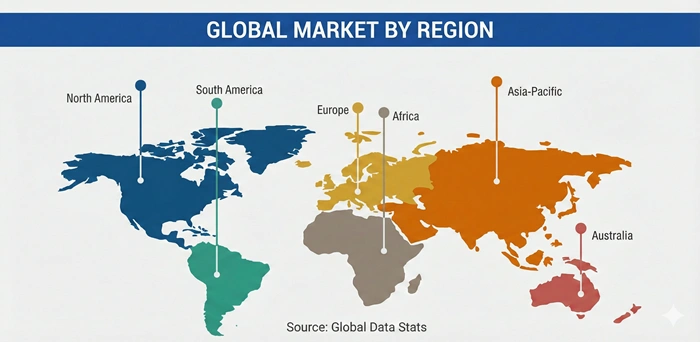
North America holds the largest share of the global topical drug delivery market, accounting for approximately 38.45% revenue in 2025, with a regional CAGR estimated at 6.80% through 2033. The United States is the primary growth engine, underpinned by the highest per-capita healthcare expenditure globally and a large population base managing chronic skin and pain disorders. The region benefits from a sophisticated pharmaceutical ecosystem in which companies like Pfizer Inc., Johnson & Johnson, AbbVie Inc., and Bausch Health Companies Inc. continuously launch innovative topical products, supported by clear FDA regulatory pathways for both branded and generic formulations.
The North American market is also shaped by strong consumer demand for OTC topical products, including antifungals, analgesics, and acne treatments, which are widely distributed through major pharmacy chains and e-commerce platforms. The growing adoption of telehealth and direct-to-patient dermatology services is further boosting topical drug dispensing in the region. With substantial pipeline activity in topical biologics and immunomodulators, North America is expected to sustain its market leadership throughout the forecast period.
Asia-Pacific
Asia-Pacific Is Emerging as the Fastest-Growing Topical Drug Delivery Market, Powered by Healthcare Infrastructure Investment, Growing Disease Burden, and Rising Pharmaceutical Manufacturing Capacity
Asia-Pacific is the fastest-growing region in the global topical drug delivery market, projected to advance at a CAGR of 9.20% from 2026 to 2033. China, India, Japan, and South Korea are the four largest contributing markets, each growing for distinct reasons — China and India through healthcare infrastructure expansion and generic drug production, Japan through advanced transdermal patch development, and South Korea through its globally recognized dermatology and cosmeceutical innovation ecosystem. Key regional players include Hisamitsu Pharmaceutical Co. (Japan), Sun Pharmaceutical Industries Ltd. (India), and Nitto Denko Corporation (Japan), alongside global companies operating major regional facilities.
The region's growth is further supported by an increasingly sophisticated consumer base that is actively seeking both prescription and over-the-counter topical therapies for skin conditions, pain management, and cosmetic indications. Regulatory modernization across several Asia-Pacific economies is improving the approval timeline for new topical formulations, creating a more attractive market for both domestic and foreign pharmaceutical investment. As a result, Asia-Pacific is expected to become a critical growth pillar for the global topical drug delivery market over the coming decade.
Top Key Players
-
Pfizer Inc. (United States)
-
Johnson & Johnson (United States)
-
Novartis AG (Switzerland)
-
GlaxoSmithKline plc (United Kingdom)
-
AbbVie Inc. (United States)
-
Bayer AG (Germany)
-
Bausch Health Companies Inc. (Canada)
-
Hisamitsu Pharmaceutical Co. Inc. (Japan)
-
Sun Pharmaceutical Industries Ltd. (India)
-
Nitto Denko Corporation (Japan)
-
Tesa Labtec GmbH (Germany)
-
Grünenthal GmbH (Germany)
-
Mylan N.V. (Viatris Inc.) (United States)
-
Sorrento Therapeutics Inc. (United States)
Recent Developments
-
AbbVie Inc. (2025): AbbVie received FDA approval for an expanded indication of its topical JAK inhibitor formulation for atopic dermatitis in pediatric patients, strengthening its leadership position in the dermatology segment and broadening patient access to targeted non-steroidal topical therapy.
-
Pfizer Inc. (2024): Pfizer entered into a strategic licensing agreement with a specialty dermatology company to co-develop and commercialize a next-generation topical biologic for plaque psoriasis, reinforcing its pipeline in the high-growth prescription dermatology segment.
-
Johnson & Johnson (2025): Johnson & Johnson's dermatology division launched a reformulated version of its flagship topical corticosteroid product with an improved penetration-enhancing vehicle, demonstrating enhanced skin bioavailability and reduced application frequency in clinical studies.
-
Novartis AG (2024): Novartis announced a collaboration with a digital health company to develop a connected transdermal patch platform capable of real-time drug release monitoring, targeting chronic pain and neurological therapy markets in Europe and North America.
-
Sun Pharmaceutical Industries Ltd. (2024): Sun Pharma completed the acquisition of a U.S.-based specialty topical dermatology brand, expanding its branded product portfolio in the North American market and enhancing its presence in the prescription dermatology channel.
Market Trends
Digital Health Integration, Biosimilar Entry, and Nanotechnology-Based Formulations Are Reshaping the Competitive and Clinical Landscape of the Topical Drug Delivery Market
The topical drug delivery market is undergoing significant transformation driven by nanotechnology and smart drug delivery innovations. Nano-structured lipid carriers, solid lipid nanoparticles, and polymeric micelles are increasingly being used to improve dermal penetration, enhance drug stability, and enable controlled release of active pharmaceutical ingredients. These formulation advances are not only improving therapeutic outcomes but also enabling the delivery of previously unsuitable drug classes — including peptides and nucleic acids — through the skin, broadening the market's clinical scope considerably.
At the same time, the increasing integration of digital and connected health technologies with transdermal delivery platforms is a defining trend. Smart patches equipped with biosensors, microfluidics, and wireless communication capabilities are moving toward commercialization across pain management and metabolic disease indications. Pharmaceutical companies and medtech firms are forming cross-sector partnerships to accelerate this convergence, and regulatory agencies in the U.S. and Europe are beginning to develop specific guidance for combination drug-device topical products — signaling institutional recognition of this segment's long-term commercial importance.
Segments Covered in the Report
By Product Type:
-
Creams & Ointments
-
Transdermal Patches
-
Gels & Lotions
-
Foams
-
Solutions
-
Other Product Types
By Formulation:
-
Semi-Solid Formulations
-
Solid Formulations
-
Liquid Formulations
By Application:
-
Dermatology (Psoriasis, Eczema, Acne, Rosacea, Fungal Infections)
-
Pain Management
-
Hormone Replacement Therapy
-
Oncology
-
Ophthalmic
-
Other Applications
By End User:
-
Hospitals & Dermatology Clinics
-
Retail & Community Pharmacies
-
Home Healthcare
-
Ambulatory Surgical Centers
-
Other End Users
By Region:
-
North America (United States, Canada, Mexico)
-
Europe (Germany, United Kingdom, France, Italy, Spain, Rest of Europe)
-
Asia-Pacific (China, India, Japan, South Korea, Australia, Rest of Asia-Pacific)
-
Latin America (Brazil, Argentina, Rest of Latin America)
-
Middle East & Africa (GCC Countries, South Africa, Rest of MEA)
Frequently Asked Questions
Question 1: What is the current market size of the global topical drug delivery market?
Answer: The global topical drug delivery market is valued at USD 108.43 billion in 2025 and is expected to reach USD 179.56 billion by 2033. It is projected to grow at a CAGR of 6.60% from 2026 to 2033.
Question 2: What are the key growth drivers of the topical drug delivery market?
Answer: The topical drug delivery market is primarily driven by rising prevalence of chronic skin conditions, growing patient preference for non-invasive drug administration, and continuous innovation in transdermal and nano-based delivery technologies. Expanding healthcare access in Asia-Pacific and Latin America is also contributing significantly to overall market growth.
Question 3: Which region dominates the global topical drug delivery market?
Answer: North America holds the leading position in the topical drug delivery market with approximately 38.45% revenue share in 2025. The region's dominance is supported by high chronic disease prevalence, strong pharmaceutical infrastructure, and a robust regulatory framework for topical drug approvals.
Question 4: Which product type is growing fastest in the topical drug delivery market?
Answer: Transdermal patches represent the fastest-growing product type within the topical drug delivery market, projected to grow at a CAGR of approximately 8.50% through 2033. Their growth is driven by demand for extended-release therapies in pain management, hormone replacement, and neurological conditions.
Question 5: Who are the leading companies operating in the topical drug delivery market?
Answer: Leading companies in the topical drug delivery market include Pfizer Inc., Johnson & Johnson, AbbVie Inc., Novartis AG, and Hisamitsu Pharmaceutical Co. Inc. These players are investing in next-generation transdermal systems, topical biologics, and nano-formulation technologies to strengthen their global market positions.