
Thin Film Solar Cell Market Overview
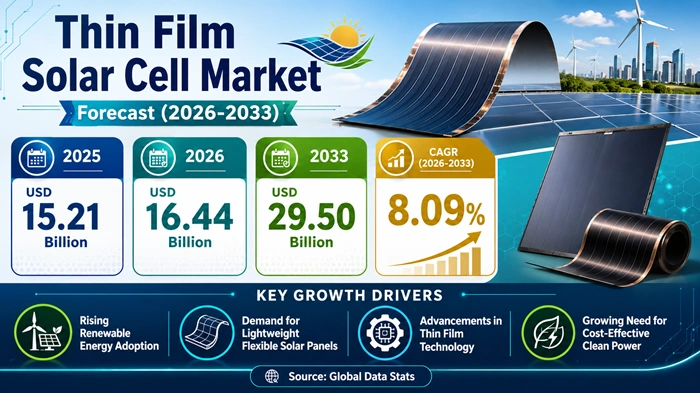
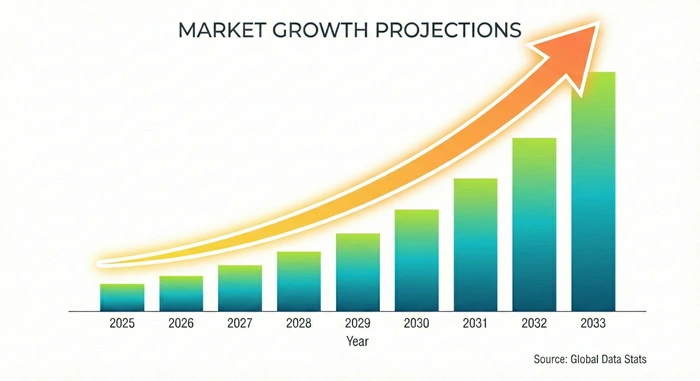
The global thin film solar cell market size is valued at USD 15.21 billion in 2025 and is predicted to increase from USD 16.44 billion in 2026 to approximately USD 29.50 billion by 2033, growing at a CAGR of 8.09% from 2026 to 2033.
Thin film solar cells represent advanced photovoltaic technology constructed from multiple thin layers of photovoltaic materials deposited onto substrates including glass, plastic, or metal. These innovative solar solutions offer significant advantages over traditional crystalline silicon panels through reduced material consumption, lightweight construction, and flexible form factors enabling diverse installation applications. The thin film solar cell market encompasses technologies including cadmium telluride, copper indium gallium selenide, and amorphous silicon variants delivering cost-effective renewable energy generation across residential, commercial, and utility-scale deployments worldwide.
AI Impact On The Thin Film Solar Cell Industry
Optimizing Manufacturing Efficiency And Quality Control Through Intelligent Automation
Artificial intelligence revolutionizes thin film solar cell production by enabling real-time monitoring and optimization of complex deposition processes critical to photovoltaic performance. Machine learning algorithms analyze thousands of process parameters including substrate temperature, vapor pressure, deposition rates, and atmospheric conditions to identify optimal manufacturing windows maximizing conversion efficiency while minimizing defects. Computer vision systems inspect thin film layers at microscopic scales detecting imperfections, thickness variations, and compositional inconsistencies invisible to human operators. The thin film solar cell market benefits from AI-driven quality control reducing waste, improving yield rates, and accelerating production throughput while maintaining stringent performance specifications demanded by utility and commercial customers.
Predictive analytics transform operational management as AI systems forecast equipment maintenance requirements, optimize energy consumption during manufacturing, and predict material supply chain disruptions before they impact production schedules. Digital twins create virtual replicas of entire manufacturing facilities enabling engineers to simulate process modifications, test new material formulations, and validate equipment upgrades without disrupting actual production lines. The thin film solar cell market witnesses accelerated innovation cycles as AI compresses development timelines from years to months, identifying promising material combinations and processing techniques through computational screening that would require decades of traditional laboratory experimentation. Smart grid integration powered by AI algorithms optimizes thin film solar array performance through real-time load balancing, weather-responsive output predictions, and automated cleaning schedule optimization maximizing energy generation throughout operational lifespans.
Growth Factors
Government Incentives And Cost Advantages Driving Widespread Market Adoption
Government policies worldwide establish compelling frameworks supporting thin film solar cell deployment through feed-in tariffs, tax incentives, and renewable energy mandates. National programs across Europe, North America, and Asia Pacific provide financial subsidies reducing upfront installation costs for residential and commercial customers while renewable portfolio standards mandate utilities source specified electricity percentages from clean sources. The thin film solar cell market expands rapidly as policy support addresses initial cost barriers while carbon reduction commitments force industries toward sustainable energy alternatives. International climate agreements including Paris Accord drive national governments to establish aggressive decarbonization targets requiring massive renewable energy capacity additions where thin film technologies deliver cost-effective solutions suitable for diverse geographic and climatic conditions.
Manufacturing cost reductions position thin film solar cells competitively against crystalline silicon alternatives as improved production techniques, materials optimization, and economies of scale drive down per-watt pricing. Thin film technologies require significantly less semiconductor material compared to traditional panels, utilizing layers measured in micrometers rather than millimeters reducing raw material expenses substantially. The thin film solar cell market benefits from flexible installation capabilities as lightweight panels mount on structures unable to support heavier crystalline alternatives, including curved surfaces, building facades, and portable applications. Enhanced performance in low-light and high-temperature conditions delivers superior energy generation across challenging environments where traditional panels underperform, expanding addressable markets into tropical regions, cloudy climates, and applications requiring consistent output regardless of optimal solar exposure conditions.
Market Outlook
Technology Maturation And Building Integration Creating Robust Long-Term Growth Prospects
Material science breakthroughs improve thin film solar cell efficiency as research laboratories achieve record conversion rates exceeding 23% for cadmium telluride and 22% for CIGS technologies, narrowing performance gaps with crystalline silicon while maintaining cost advantages. Tandem thin film architectures combining multiple semiconductor layers capture broader solar spectrum wavelengths increasing energy generation per installed area. The thin film solar cell market witnesses enhanced commercial viability as efficiency improvements reduce balance-of-system costs, shorten payback periods, and increase return on investment attracting risk-averse utility and commercial buyers previously hesitant adopting emerging technologies. Durability enhancements address earlier degradation concerns as improved encapsulation techniques, moisture barriers, and anti-soiling coatings extend operational lifespans toward 25-plus years matching crystalline panel warranties while maintaining performance guarantees satisfying long-term power purchase agreement requirements.
Building-integrated photovoltaic applications transform architectural design as thin film solar cells seamlessly incorporate into facades, windows, roofing materials, and shading systems delivering both energy generation and aesthetic value. Semitransparent thin film formulations enable solar windows maintaining daylighting while generating electricity, creating dual-purpose building envelope systems increasingly specified in green building certifications and net-zero energy designs. The thin film solar cell market captures growing demand from commercial real estate developers, institutional facilities, and urban residential projects where premium aesthetics, design flexibility, and space constraints favor integrated solutions over traditional rooftop arrays. Technology convergence with energy storage systems creates complete distributed generation solutions as batteries complement thin film solar arrays providing dispatchable renewable power addressing intermittency concerns while maximizing self-consumption rates and grid independence attracting customers seeking energy security and resilience beyond environmental motivations alone.
Expert Speaks
-
Mark Widmar, CEO at First Solar, emphasized during recent earnings calls that cadmium telluride thin film technology delivers superior energy yield per installed watt compared to crystalline alternatives through enhanced high-temperature performance and spectral response characteristics, positioning First Solar to capitalize on accelerating utility-scale solar deployment driven by corporate renewable energy procurement and decarbonization mandates.
-
Jim Robo, former CEO at NextEra Energy, highlighted through investor presentations that utility-scale solar economics including thin film technologies achieve grid parity with fossil fuel generation across most markets, noting that renewable energy procurement represents purely economic decisions rather than environmental subsidies as solar power delivery costs continue declining below coal and natural gas alternatives.
-
Antonio Carrillo, President of Global Solar at Canadian Solar, noted through industry communications that diversified technology portfolios including thin film capabilities enable solar manufacturers to address varied customer requirements across residential, commercial, and utility segments, emphasizing how different photovoltaic technologies suit specific applications based on installation constraints, performance requirements, and economic considerations.
Key Report Takeaways
-
Asia Pacific dominates the thin film solar cell market capturing approximately 44% regional share valued around USD 6.69 billion in 2025, driven by massive manufacturing capacity concentrated in China, aggressive solar deployment targets across India and Southeast Asia, supportive government policies, and abundant raw material availability supporting regional supply chain dominance.
-
North America emerges as fastest-growing region with projected CAGR exceeding 8.4% through 2033, fueled by utility-scale solar farm expansion, residential rooftop system adoption, favorable federal tax incentives, and state-level renewable energy mandates driving substantial capacity additions across United States and emerging Canadian markets.
-
Cadmium telluride represents the largest product type segment accounting for approximately 52% market share due to superior conversion efficiency exceeding 16%, lowest manufacturing costs among thin film technologies, proven performance in utility-scale applications, and dominant market position of First Solar driving global CdTe deployment.
-
Utility applications contribute the most significant demand representing roughly 62% of total market as large-scale solar farms leverage thin film cost advantages, installation efficiency benefits, and land-use flexibility deploying megawatt-scale projects supplying wholesale electricity markets and corporate power purchase agreements.
-
On-grid installation maintains dominant position commanding nearly 71% market share owing to economic advantages from net metering policies, grid stability benefits, and elimination of expensive battery storage requirements enabling maximum return on investment for residential, commercial, and utility customers.
-
Commercial segment exhibits fastest end-user growth projected to expand at 8.8% CAGR through 2033 with market share reaching approximately 25%, driven by corporate sustainability commitments, energy cost reduction priorities, and building-integrated photovoltaic adoption across office complexes, retail centers, and industrial facilities.
Market Scope
| Report Coverage | Details |
|---|---|
| Market Size by 2033 | USD 29.50 Billion |
| Market Size by 2025 | USD 15.21 Billion |
| Market Size by 2026 | USD 16.44 Billion |
| Market Growth Rate from 2026 to 2033 | CAGR of 8.09% |
| Dominating Region | Asia Pacific |
| Fastest Growing Region | North America |
| Base Year | 2025 |
| Forecast Period | 2026 to 2033 |
| Segments Covered | Product Type, Installation, Application, End-User, Region |
| Regions Covered | North America, Europe, Asia-Pacific, Latin America, Middle East and Africa |
Market Dynamics
Drivers Impact Analysis
Declining Installation Costs And Urbanization Trends Accelerating Market Penetration
| Factor | (≈) % Impact on CAGR Forecast | Geographic Relevance | Impact Timeline |
|---|---|---|---|
| Rooftop solar adoption growth | 19-24% | Urban centers globally | 2026-2033 |
| Government subsidy programs | 16-22% | Europe, Asia Pacific, North America | 2026-2033 |
| Energy cost reduction benefits | 14-19% | High electricity rate regions | 2026-2033 |
Residential and commercial rooftop solar installations accelerate globally as electricity costs rise while thin film solar cell system prices decline steadily through manufacturing improvements and competitive market dynamics. Urban population growth concentrates energy demand in metropolitan areas where rooftop space represents valuable underutilized real estate suitable for distributed solar generation. The thin film solar cell market benefits from lightweight panel characteristics enabling installation on structures with limited load-bearing capacity, including older buildings, warehouses with lightweight roofing, and architectural applications where traditional heavy panels prove unsuitable. Net metering policies across numerous jurisdictions allow consumers to sell excess electricity back to grids, improving economic returns and shortening payback periods to under seven years in favorable markets creating compelling value propositions for property owners seeking long-term energy cost stability.
Financial incentive programs substantially reduce upfront capital requirements through direct rebates, tax credits, and accelerated depreciation schemes improving project economics for residential and commercial adopters. United States Investment Tax Credit provides 30% federal tax credit for solar installations while state programs offer additional incentives. European feed-in tariffs guarantee premium electricity prices for solar-generated power creating predictable revenue streams supporting project financing. The thin film solar cell market expands as emerging markets including India, Brazil, and Southeast Asian nations implement subsidy programs, low-interest financing schemes, and net metering frameworks accelerating adoption among price-sensitive customer segments. Corporate sustainability commitments drive commercial installations as businesses pursue carbon neutrality goals, green building certifications, and positive environmental public relations while simultaneously reducing operational costs through on-site renewable generation displacing expensive grid electricity with predictable long-term solar power delivery costs.
Restraints Impact Analysis
Efficiency Gaps And Crystalline Silicon Competition Limiting Market Share Gains
| Factor | (≈) % Impact on CAGR Forecast | Geographic Relevance | Impact Timeline |
|---|---|---|---|
| Lower conversion efficiency | -11 to -16% | Space-constrained applications | 2026-2033 |
| Crystalline silicon price competition | -9 to -13% | Global markets | 2026-2030 |
| Performance degradation concerns | -7 to -11% | High humidity environments | 2026-2029 |
Conversion efficiency disadvantages persist as thin film solar cells generally achieve 10-16% efficiency compared to crystalline silicon panels reaching 20-24% efficiency in commercial products. Lower efficiency requires larger installation areas generating equivalent power output creating challenges for space-constrained residential rooftops, urban commercial buildings, and land-limited utility projects. The thin film solar cell market faces customer preference for maximum power density particularly in premium residential and commercial segments where roof space commands high value and aesthetic considerations favor minimizing panel quantities. Efficiency gaps translate directly into higher balance-of-system costs as more mounting hardware, wiring, and installation labor spread across larger arrays eroding thin film cost advantages versus crystalline alternatives in applications prioritizing power density over absolute cost per watt.
Crystalline silicon manufacturing scale economies drive aggressive pricing pressure as Chinese manufacturers leverage massive production capacity and vertical integration flooding global markets with competitively priced mono and polycrystalline panels. Commodity pricing for silicon feedstock declines while automated production technologies reduce manufacturing costs enabling crystalline products to match or undercut thin film pricing in certain market segments. The thin film solar cell market confronts margin compression as price competition intensifies particularly in utility-scale tenders where performance specifications favor proven crystalline technology and buyers demonstrate limited technology preference beyond cost minimization objectives. Long-term degradation rates historically higher for certain thin film technologies compared to crystalline silicon create warranty concerns among conservative utility buyers and commercial customers requiring 25-year performance guarantees with minimal output decline, though improved encapsulation and materials formulations address earlier degradation challenges demonstrating stable long-term performance approaching crystalline standards.
Opportunities Impact Analysis
Flexible Substrates And Portable Applications Creating New Market Segments
| Factor | (≈) % Impact on CAGR Forecast | Geographic Relevance | Impact Timeline |
|---|---|---|---|
| Building-integrated photovoltaics | +15 to +20% | Urban construction markets | 2027-2033 |
| Portable electronics integration | +13 to +18% | Consumer electronics globally | 2027-2033 |
| Transportation sector applications | +11 to +15% | Electric vehicle markets | 2028-2033 |
Flexible thin film solar cells enable entirely new application categories impossible with rigid crystalline panels including curved architectural surfaces, vehicle-integrated systems, and portable consumer electronics. Building-integrated photovoltaic systems transform facades, windows, and roofing materials into electricity-generating surfaces seamlessly incorporated into architectural designs. The thin film solar cell market captures premium pricing opportunities as BIPV products deliver aesthetic value beyond pure energy generation, appealing to architects, developers, and building owners prioritizing design quality alongside sustainability objectives. Urban construction growth across Asia and developing markets creates substantial BIPV demand as green building certifications, net-zero energy mandates, and corporate environmental commitments drive specification of integrated photovoltaic building envelope systems particularly in commercial office towers, institutional facilities, and high-end residential developments.
Transportation applications emerge as automotive manufacturers integrate thin film solar cells into electric vehicles generating supplemental power for climate control systems, battery conditioning, and accessory loads extending driving range. Marine applications including sailboats, yachts, and commercial vessels deploy flexible panels on curved surfaces, bimini tops, and deck areas providing off-grid power generation. The thin film solar cell market diversifies revenue streams beyond traditional stationary installations as consumer electronics manufacturers incorporate photovoltaic charging into smartphones, tablets, wearables, and outdoor equipment. Military and aerospace sectors pursue lightweight portable solar solutions for remote operations, satellite power systems, and high-altitude platforms where weight constraints and deployment flexibility favor thin film technologies over heavier crystalline alternatives. Disaster relief applications value portable deployable solar arrays providing emergency power generation capabilities where infrastructure damage or remote locations preclude conventional electricity access creating specialized market niches commanding premium pricing.
Segment Analysis
By Product Type: Cadmium Telluride
Manufacturing Cost Leadership And Utility-Scale Dominance Establishing Segment Supremacy
Cadmium telluride technology commands the largest share within the thin film solar cell market at approximately 52%, valued around USD 7.91 billion in 2025 owing to superior conversion efficiencies exceeding 16% among thin film alternatives and lowest manufacturing costs enabling competitive pricing versus crystalline silicon panels. CdTe panels demonstrate excellent high-temperature performance maintaining output during hot summer conditions where crystalline efficiency declines significantly. First Solar dominates global CdTe production leveraging vertically integrated manufacturing, proprietary deposition techniques, and economies of scale producing gigawatts annually at competitive costs. The thin film solar cell market benefits from CdTe's proven utility-scale deployment track record with tens of gigawatts installed worldwide validating long-term reliability, durability, and financial performance meeting utility buyer requirements for 25-plus year operational lifespans.
North America leads CdTe thin film adoption with United States hosting First Solar's manufacturing facilities and serving as primary deployment market for utility-scale projects. India emerges as major growth market as government solar programs and competitive auction mechanisms favor lowest-cost technologies where CdTe price advantages prove compelling. The thin film solar cell market sees this segment maintaining steady growth near 7.8% CAGR through 2033 as manufacturing improvements increase efficiency while maintaining cost leadership. Technology evolution addresses earlier toxicity concerns through comprehensive recycling programs recovering 95% of materials while regulatory frameworks increasingly recognize CdTe's sealed encapsulation, minimal environmental risk profile, and circular economy manufacturing models. Balance-of-system cost reductions emerge as larger module sizes reduce installation labor and mounting hardware requirements per watt while improved energy yield in real-world conditions creates superior lifetime energy generation compared to crystalline alternatives in high-temperature, low-light, and dusty environments.
By End-User: Commercial
Corporate Sustainability Mandates And Economic Returns Driving Segment Acceleration
Commercial applications represent the fastest-growing segment in the thin film solar cell market projected to expand at robust 8.8% CAGR through 2033, driven by corporate commitments to carbon neutrality, energy cost reduction priorities, and building-integrated photovoltaic adoption across office complexes, retail centers, and industrial facilities. Large flat rooftops characteristic of commercial buildings provide ideal installation surfaces for thin film arrays where cost advantages and installation efficiency benefits outweigh efficiency disadvantages compared to residential applications with limited roof space. The thin film solar cell market benefits from commercial sector financial sophistication as businesses conduct detailed return-on-investment analyses recognizing solar investments delivering 10-15% annual returns through electricity cost savings, tax incentives, and accelerated depreciation benefits.
Europe and North America lead commercial thin film deployment as multinational corporations pursue RE100 commitments requiring 100% renewable electricity procurement while green building certifications including LEED and BREEAM reward on-site generation. Asia Pacific commercial adoption accelerates as manufacturing facilities, distribution warehouses, and technology campuses install rooftop solar reducing operational costs and improving sustainability credentials. The thin film solar cell market witnesses this segment capturing growing investment as power purchase agreement structures eliminate upfront capital requirements allowing businesses to procure solar electricity below grid rates through third-party ownership models. Technology companies, retailers, food processing facilities, and logistics operations represent major commercial adopters leveraging expansive roof space and high daytime electricity consumption patterns aligning with solar generation profiles maximizing self-consumption rates and grid independence. Corporate sustainability reporting requirements drive installations as businesses quantify carbon reductions, showcase environmental leadership, and meet stakeholder expectations for measurable climate action beyond aspirational commitments alone.
Regional Insights
Asia Pacific
Manufacturing Dominance And Deployment Scale Cementing Regional Market Leadership
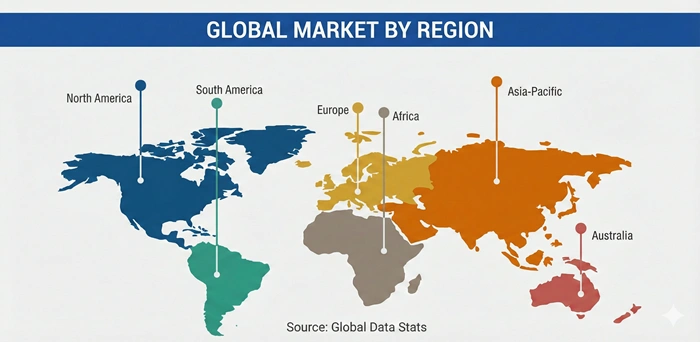
Asia Pacific dominates the thin film solar cell market commanding approximately 44% global share valued at USD 6.69 billion in 2025, projected to reach USD 12.98 billion by 2033 growing at 8.3% CAGR. China establishes overwhelming regional leadership through massive manufacturing capacity producing majority of global thin film panels while simultaneously representing largest deployment market with hundreds of gigawatts of solar capacity installed and aggressive expansion targets supporting national energy security and climate objectives. Government policies including feed-in tariffs, renewable energy mandates, and solar park development programs accelerate installations across utility, commercial, and residential segments. The thin film solar cell market benefits from integrated regional supply chains as raw material suppliers, equipment manufacturers, and module producers concentrate operations across China, Japan, South Korea, and Southeast Asia creating cost efficiencies and rapid innovation cycles.
India emerges as critical growth market leveraging abundant sunlight resources, rising electricity demand, and government programs targeting 500 gigawatts renewable capacity by 2030. National Solar Mission provides financial incentives, streamlined permitting, and grid connectivity support while state programs offer additional subsidies encouraging rooftop installations across residential and commercial segments. The thin film solar cell market witnesses regional advantages including lower labor costs, manufacturing expertise, and supportive industrial policies enabling competitive pricing and rapid capacity expansion. Leading regional players include First Solar operating manufacturing facilities, Chinese producers including Hanergy and local manufacturers serving domestic markets, and Japanese companies including Solar Frontier advancing CIGS technology. Southeast Asian nations including Vietnam, Thailand, and Indonesia accelerate deployment addressing energy access challenges, reducing fossil fuel imports, and meeting climate commitments positioning Asia Pacific as dominant force throughout forecast period.
North America
Policy Support And Utility-Scale Deployment Driving Fastest Regional Growth
North America emerges as the fastest-growing region in the thin film solar cell market with CAGR exceeding 8.4% from 2026 to 2033, with market value expanding from approximately USD 3.95 billion in 2025 toward USD 7.65 billion by 2033. United States leads regional expansion through Investment Tax Credit providing 30% federal tax credit for solar installations combined with state renewable portfolio standards mandating utilities source specified electricity percentages from clean sources. Utility-scale solar farm development accelerates across southwestern states leveraging excellent solar resources, available land, and transmission infrastructure connecting generation to demand centers. The thin film solar cell market captures momentum from corporate power purchase agreements as technology companies, retailers, and manufacturers commit to 100% renewable electricity procurement supporting project financing for gigawatt-scale solar developments.
Residential rooftop adoption grows across California, Arizona, Texas, and northeastern states as electricity costs rise, net metering policies remain supportive, and environmental consciousness drives consumer behavior. Canadian markets expand as federal carbon pricing, provincial incentive programs, and cold climate performance advantages favor certain thin film technologies over crystalline alternatives in northern latitudes. The thin film solar cell market benefits from North America's established solar installation infrastructure, experienced workforce, and financial sector expertise structuring tax equity partnerships, green bonds, and project financing mechanisms enabling rapid capacity scaling. Leading regional players include First Solar dominating utility segment, residential installers offering thin film options, and emerging building-integrated photovoltaic suppliers targeting commercial new construction. Technology leadership, supportive policies, and diversified applications across utility, commercial, and residential segments position North America as primary growth engine for global thin film solar cell expansion throughout forecast period.
Top Key Players
-
First Solar Inc. (United States)
-
Solar Frontier K.K. (Japan)
-
Hanergy Thin Film Power Group (China)
-
Sharp Corporation (Japan)
-
MiaSolé Hi-Tech Corp. (United States)
-
Global Solar Energy Inc. (United States)
-
Ascent Solar Technologies Inc. (United States)
-
NexPower Technology Corporation (Taiwan)
-
Avancis GmbH (Germany)
-
Sungen International Ltd. (China)
-
Trony Solar Holdings Company Limited (China)
-
Kaneka Corporation (Japan)
-
Sunprime Solar Inc. (United States)
-
Flisom AG (Switzerland)
-
TSMC Solar (Taiwan)
Recent Developments
-
First Solar (June 2024): Announced USD 1.1 billion investment expanding manufacturing capacity across Alabama and Louisiana facilities adding 6 gigawatts annual production supporting forecasted demand growth from utility-scale projects and corporate power purchase agreements, with enhanced Series 7 modules achieving industry-leading conversion efficiency and cost structure positioning company for sustained market leadership.
-
Solar Frontier (March 2024): Completed technology transfer agreement with Saudi Arabian partners establishing CIS thin film manufacturing facility in Middle East region, expanding global production footprint while supporting Saudi Vision 2030 renewable energy targets through technology localization and regional supply chain development initiatives.
-
Hanergy (August 2024): Achieved breakthrough thin film solar cell efficiency record exceeding 23% for CIGS technology through advanced deposition techniques and semiconductor materials optimization, validated by third-party testing laboratories demonstrating competitive performance with crystalline silicon while maintaining thin film cost and flexibility advantages.
-
Sharp Corporation (November 2024): Launched new building-integrated photovoltaic product line featuring semi-transparent thin film solar modules for architectural glazing applications, targeting commercial office towers and institutional facilities seeking dual-purpose building envelope systems combining daylighting with renewable electricity generation.
-
MiaSolé (May 2024): Secured USD 50 million Series C funding round supporting production capacity expansion and next-generation flexible CIGS module development, targeting transportation, portable electronics, and specialized industrial applications where lightweight, conformable photovoltaic solutions command premium pricing versus rigid panel alternatives.
Market Trends
Tandem Architectures And Perovskite Integration Reshaping Technology Evolution
Multi-junction thin film architectures combining different semiconductor materials capture broader solar spectrum wavelengths increasing conversion efficiency substantially beyond single-layer designs. Perovskite top cells paired with CIGS or CdTe bottom layers achieve laboratory efficiencies exceeding 28% demonstrating pathways toward commercial products rivaling high-efficiency crystalline silicon while maintaining thin film manufacturing cost advantages. The thin film solar cell market witnesses accelerating research investment from universities, national laboratories, and manufacturers pursuing tandem designs as next-generation products. Stability improvements address perovskite degradation concerns through encapsulation innovations, composition optimization, and interface engineering enabling outdoor operational lifespans approaching commercial requirements. Technology convergence creates opportunities for established thin film manufacturers to leverage existing production infrastructure, materials expertise, and market channels deploying tandem products into utility and commercial segments commanding premium pricing justified by superior power density.
Manufacturing automation advances reduce production costs while improving quality consistency as robotic handling systems, machine vision inspection, and process control algorithms optimize throughput. The thin film solar cell market benefits from Industry 4.0 integration as smart factories leverage Internet of Things sensors, predictive maintenance, and real-time analytics maximizing equipment uptime and yield rates. Larger module formats reduce balance-of-system costs spreading mounting hardware, wiring, and installation labor across fewer higher-power units improving overall project economics particularly in utility-scale applications. Supply chain resilience gains strategic importance as geopolitical tensions and pandemic disruptions motivate regional manufacturing diversification and vertical integration strategies. Environmental product declarations and circular economy principles influence purchasing decisions as sustainability-focused buyers evaluate full lifecycle impacts including materials sourcing, manufacturing emissions, operational performance, and end-of-life recycling capabilities differentiating products beyond purely technical performance and cost considerations.
Segments Covered In The Report
By Product Type
-
Cadmium Telluride (CdTe)
-
Copper Indium Gallium Selenide (CIGS)
-
Amorphous Silicon (a-Si)
-
Others
By Installation
-
On-Grid
-
Off-Grid
By Application
-
Residential
-
Commercial
-
Utility
By End-User
-
Industrial
-
Building Integrated Photovoltaics (BIPV)
-
Consumer Electronics
-
Military and Aerospace
-
Others
By Region
-
North America (United States, Canada, Mexico)
-
Europe (Germany, United Kingdom, France, Spain, Italy, Rest of Europe)
-
Asia-Pacific (China, India, Japan, South Korea, Australia, Southeast Asia, Rest of Asia-Pacific)
-
Latin America (Brazil, Argentina, Rest of Latin America)
-
Middle East and Africa (Saudi Arabia, UAE, South Africa, Rest of MEA)
Frequently Asked Questions
Question 1: What is the expected size of the thin film solar cell market by 2033?
Answer: The global thin film solar cell market is projected to reach approximately USD 29.50 billion by 2033, expanding from USD 16.44 billion in 2026. This growth reflects increasing utility-scale deployment, residential rooftop adoption, building-integrated photovoltaic applications, and supportive government policies worldwide promoting renewable energy infrastructure.
Question 2: Which region dominates the thin film solar cell market currently?
Answer: Asia Pacific dominates the thin film solar cell market with approximately 44% market share due to massive manufacturing capacity concentrated in China, aggressive solar deployment targets across India, supportive government policies, and integrated regional supply chains. The region benefits from cost-competitive production, abundant raw materials, and large-scale installations across utility, commercial, and residential segments.
Question 3: What CAGR will the thin film solar cell market experience from 2026 to 2033?
Answer: The thin film solar cell market will grow at a compound annual growth rate of 8.09% from 2026 to 2033. This expansion reflects declining installation costs, government incentive programs, rising electricity prices incentivizing solar adoption, and technology improvements enhancing conversion efficiency and durability approaching crystalline silicon performance standards.
Question 4: Which product type holds the largest share in the thin film solar cell market?
Answer: Cadmium telluride technology commands the largest product share at approximately 52% due to superior conversion efficiency exceeding 16%, lowest manufacturing costs among thin film alternatives, and proven utility-scale deployment track record. First Solar's market dominance and CdTe's excellent high-temperature performance characteristics drive segment leadership across utility applications globally.
Question 5: What are the primary growth drivers for the thin film solar cell market?
Answer: Primary drivers include rooftop solar adoption growth in urban centers, government subsidy programs providing installation incentives, and energy cost reduction benefits as electricity prices rise. The thin film solar cell market also benefits from building-integrated photovoltaic opportunities, corporate sustainability commitments driving commercial installations, and lightweight flexible characteristics enabling diverse applications impossible with traditional rigid crystalline panels.