
Synthetic Monitoring Market Overview
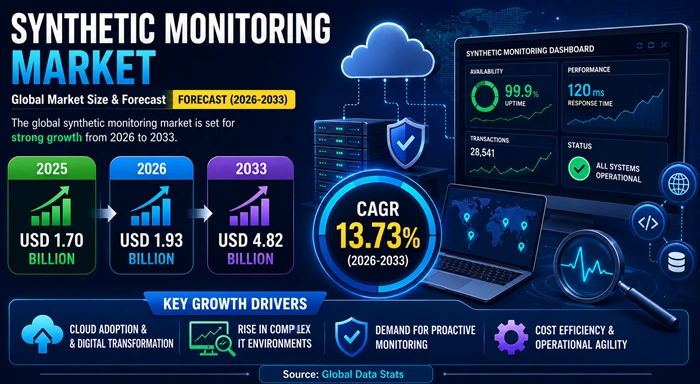
The global synthetic monitoring market size is valued at USD 1.70 billion in 2025 and is predicted to increase from USD 1.93 billion in 2026 to approximately USD 4.82 billion by 2033, growing at a CAGR of 13.73% from 2026 to 2033.
As organizations worldwide accelerate their digital transformation journeys, the demand for proactive application performance management is growing at an unprecedented pace. Synthetic monitoring — which simulates real user interactions across web, mobile, and API-based systems to detect performance issues before actual users are affected — has become a mission-critical component of modern IT operations. Businesses across banking, e-commerce, healthcare, and telecommunications are deploying synthetic monitoring platforms to ensure seamless digital experiences, uphold service-level agreements, and protect revenue from the cascading financial impact of application downtime.
AI Impact on the Synthetic Monitoring Industry
Artificial Intelligence Is Transforming Synthetic Monitoring From a Reactive Detection Tool Into an Intelligent, Predictive Performance Management Platform That Reshapes How IT Teams Operate
Artificial intelligence is profoundly reshaping how synthetic monitoring solutions identify, diagnose, and resolve digital performance issues. Traditional synthetic monitoring relied on scripted test flows that triggered alerts when predefined thresholds were breached. Today, AI-powered monitoring platforms apply machine learning algorithms to historical performance baselines, traffic patterns, and anomaly signals to predict degradation events before they become visible to end users. This shift from threshold-based alerting to intelligent anomaly detection is reducing mean-time-to-detect (MTTD) and mean-time-to-resolve (MTTR) across complex, distributed application environments — directly improving customer experience and reducing the operational burden on IT teams.
Beyond anomaly detection, AI is enabling synthetic monitoring platforms to autonomously generate test scripts, adapt test coverage based on evolving application architectures, and correlate performance telemetry across microservices, APIs, and cloud infrastructure layers. Natural language processing capabilities are being integrated into monitoring dashboards to allow non-technical stakeholders to query performance data through conversational interfaces. As enterprises increasingly operate in hybrid cloud and multi-cloud environments where application topology changes continuously, AI-driven synthetic monitoring tools are becoming indispensable for maintaining real-time visibility across the full application delivery chain. This capability is attracting investment from hyperscalers, DevOps platform providers, and observability tool vendors alike, significantly broadening the competitive and commercial landscape.
Growth Factors
Accelerating Cloud Adoption, Rising Digital Commerce Volumes, and the Expanding Complexity of Distributed IT Architectures Are Creating Powerful, Sustained Tailwinds for the Synthetic Monitoring Market
The most fundamental growth driver behind the synthetic monitoring market is the global shift toward cloud-native application architectures. As organizations migrate workloads to public cloud platforms and adopt containerized microservices, Kubernetes orchestration, and serverless computing, the visibility provided by legacy network monitoring tools becomes insufficient. Synthetic monitoring fills this gap by providing end-to-end performance validation across distributed services — regardless of where individual application components are hosted. The rapid expansion of multi-cloud deployments further amplifies this need, as performance bottlenecks can occur at any integration point across dozens of interdependent services and third-party API dependencies. Enterprises across North America and Europe are allocating meaningful portions of their IT operations budgets to synthetic monitoring platforms to manage this growing infrastructure complexity.
The explosive growth of online commerce, digital banking, and SaaS-based business applications has created a second, equally powerful growth lever. Research consistently demonstrates that application load times directly correlate with consumer conversion rates and revenue outcomes — making performance visibility a board-level business priority rather than a purely technical concern. Retailers, financial institutions, and media companies are deploying synthetic monitoring solutions to continuously validate application performance from geographically distributed vantage points that mirror their real user demographics. The concurrent rise of DevOps and continuous delivery practices is further embedding synthetic monitoring into development pipelines, where automated performance tests gate production deployments and prevent regressions before they reach live environments. This integration with CI/CD workflows is substantially expanding the daily-active-usage footprint of monitoring platforms across enterprise IT organizations globally.
Market Outlook
The Synthetic Monitoring Market Is Entering a Period of Structural Maturity Driven by Integration With Full-Stack Observability, API Economy Expansion, and Enterprise Digital Experience Mandates
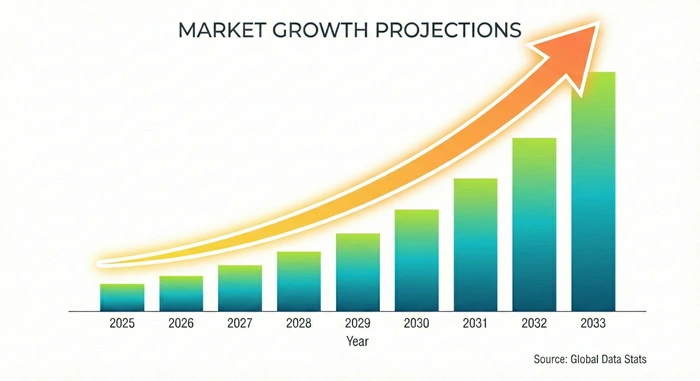
The outlook for the synthetic monitoring market through 2033 is shaped by two converging forces: the deepening integration of synthetic monitoring within broader full-stack observability platforms, and the accelerating enterprise mandate to deliver consistently excellent digital user experiences across every touchpoint. Major observability platform providers — including Dynatrace, New Relic, Datadog, and Broadcom — are actively broadening their synthetic monitoring capabilities through both organic product development and strategic acquisitions, building unified platforms that correlate synthetic test results with real-user monitoring (RUM), infrastructure metrics, log analytics, and distributed tracing data. This platform consolidation trend is both an opportunity and a challenge for point-solution vendors, who must either evolve into comprehensive observability suites or carve out defensible niches through specialization.
Looking further ahead, the explosion of API-driven ecosystems will create the single largest expansion opportunity for the synthetic monitoring market in the coming years. As businesses increasingly monetize their data and capabilities through external APIs — and as application delivery becomes dependent on dozens of third-party API integrations — the need to continuously validate API availability, latency, and data integrity from the perspective of consuming applications is becoming critical. The IoT landscape represents an equally compelling frontier, with connected device networks requiring ongoing synthetic validation of backend service endpoints to ensure reliable operation. By 2033, the boundaries between synthetic monitoring, real-user monitoring, and continuous testing are expected to blur significantly, with leading platforms offering unified digital experience intelligence that spans the entire software delivery and operation lifecycle.
Expert Speaks
-
"Performance visibility is no longer an IT concern — it is a business continuity and customer loyalty imperative. Synthetic monitoring gives our teams the confidence to deploy faster while maintaining the digital experience quality our customers expect." — Satya Nadella, CEO, Microsoft
-
"The complexity of modern distributed architectures demands monitoring solutions that go beyond simple uptime checks. AI-driven synthetic testing is becoming the foundation of intelligent observability strategies across enterprise technology organizations." — Arvind Krishna, CEO, IBM
-
"In a world where every customer interaction is digital, the difference between a one-second delay and instant response is the difference between winning and losing business. Continuous performance monitoring is table stakes for any organization serious about digital transformation." — Chuck Robbins, CEO, Cisco
Key Report Takeaways
-
North America leads the synthetic monitoring market with the largest regional market share — estimated at over 40% of global 2024 revenues — driven by the region's high concentration of cloud-native enterprises, early adoption of DevOps practices, and strong SaaS application usage across BFSI, retail, and technology verticals.
-
Asia Pacific is the fastest-growing region in the synthetic monitoring market, propelled by accelerating digital transformation programs, rapidly growing e-commerce and digital banking ecosystems, and government-backed technology investment initiatives across China, India, Japan, and South Korea.
-
The IT and Telecommunications vertical contributes the most revenue, accounting for approximately 28.4% of total 2024 market share, as telecom operators and technology companies require continuous API and service endpoint validation across complex, multi-layered network and application architectures.
-
The cloud-based deployment mode dominates the market, representing over 62% of 2024 revenues, as SaaS-delivered synthetic monitoring platforms offer deployment flexibility, global vantage point coverage, automatic feature updates, and lower total cost of ownership compared to on-premises alternatives.
-
The API monitoring type is the most widely adopted application category, reflecting the centrality of API-driven architectures in modern application ecosystems and the critical need to validate API performance and availability from multiple geographic locations.
-
The BFSI end-user segment is projected to be the fastest-growing vertical through 2033, expected to sustain a strong double-digit CAGR driven by zero-tolerance requirements for application downtime, strict regulatory compliance mandates, and the intensifying competitive pressure to deliver instant, always-on digital banking experiences.
Market Scope
| Report Coverage | Details |
|---|---|
| Market Size by 2033 | USD 4.82 Billion |
| Market Size by 2025 | USD 1.70 Billion |
| Market Size by 2026 | USD 1.93 Billion |
| Market Growth Rate from 2026 to 2033 | CAGR of 13.73% |
| Dominating Region | North America |
| Fastest Growing Region | Asia Pacific |
| Base Year | 2025 |
| Forecast Period | 2026 – 2033 |
| Segments Covered | By Type, By Services, By Deployment Mode, By Application, By End-User Vertical, By Region |
| Regions Covered | North America, Europe, Asia Pacific, Latin America, Middle East & Africa |
Market Dynamics
Drivers Impact Analysis
Cloud Migration, DevOps Adoption, and the Business Imperative of Seamless Digital Experiences Are the Primary Forces Powering the Sustained Growth of the Synthetic Monitoring Market
| Driver | ≈ % Impact on CAGR Forecast | Geographic Relevance | Impact Timeline |
|---|---|---|---|
| Accelerating cloud-native and multi-cloud adoption | ~33% | Global; led by North America and Europe | Long Term (≥ 4 years) |
| Rising demand for proactive digital experience management | ~28% | Global; high-impact in BFSI, e-commerce, telecom | Medium to Long Term |
| Integration of synthetic monitoring in CI/CD and DevOps pipelines | ~22% | North America, Europe, Asia Pacific | Short to Medium Term |
| Proliferation of API-driven applications and third-party dependencies | ~17% | Global | Medium Term |
The migration of enterprise workloads to cloud-native, microservices-based architectures has fundamentally dismantled the visibility that traditional network monitoring tools provided. In monolithic application environments, a single performance test could validate end-to-end user experience. In containerized, API-interconnected ecosystems — where a single user transaction may traverse dozens of independently deployed services — continuous synthetic monitoring is the only reliable way to validate the composite digital experience from the end-user's perspective. This architectural reality is creating a long-term, structurally embedded demand for synthetic monitoring platforms across every industry that operates digital-first services. North America and Europe are at the forefront of this transition, with large enterprises accelerating cloud modernization programs that directly expand the addressable market for leading vendors.
The integration of synthetic monitoring into DevOps toolchains and continuous integration / continuous delivery pipelines represents a particularly powerful short-to-medium-term growth driver. Engineering teams that automate performance testing as part of every code release cycle are creating daily-recurring platform usage — a usage pattern that is dramatically more sticky than periodic manual testing. Vendors like Dynatrace, SmartBear, and New Relic have invested heavily in developer-friendly APIs, IDE integrations, and Kubernetes-native deployment models that make synthetic monitoring a natural extension of the software development workflow. As DevOps practices mature in Asia Pacific markets and adoption deepens in the SME segment globally, this driver is expected to sustain meaningful incremental growth contributions throughout the entire 2026 to 2033 forecast period.
Restraints Impact Analysis
High Implementation Complexity, Significant Script Maintenance Overhead, and Budget Constraints Among SMEs Represent the Key Friction Points Moderating the Growth Rate of This Market
| Restraint | ≈ % Impact on CAGR Forecast | Geographic Relevance | Impact Timeline |
|---|---|---|---|
| High cost and complexity of script authoring and maintenance | ~38% | Global; most acute in SME segment | Medium Term (2–4 years) |
| Budget constraints and ROI justification challenges | ~30% | Developing markets; SME segment globally | Short to Medium Term |
| Limited in-house expertise for managing advanced monitoring platforms | ~20% | Emerging markets; SME segment | Medium Term |
| False positives and alert fatigue reducing platform trust | ~12% | Global | Short Term |
The most significant technical restraint facing the synthetic monitoring market is the ongoing cost and effort associated with maintaining up-to-date test scripts across rapidly changing application interfaces. Modern web and mobile applications undergo frequent UI updates, API contract changes, and infrastructure topology shifts — each of which can invalidate existing synthetic test scripts and generate false-positive alerts. IT teams at mid-market companies often lack the specialized scripting expertise required to maintain comprehensive test coverage as applications evolve, leading to degraded monitoring fidelity and reduced confidence in platform outputs. While AI-assisted auto-remediation features offered by leading vendors are beginning to address this challenge, they remain imperfect and require ongoing human oversight, particularly in complex enterprise environments with customized application architectures.
Budget constraints represent a secondary but meaningful restraint, particularly in price-sensitive markets across Asia Pacific, Latin America, and the Middle East. Small and mid-sized enterprises frequently struggle to justify the total cost of ownership for enterprise-grade synthetic monitoring platforms, especially when competing priorities like cybersecurity, cloud migration, and ERP modernization place demands on limited IT budgets. The lack of clear ROI metrics for synthetic monitoring investments — compared to revenue-generating digital initiatives — makes internal budget approval processes slow and uncertain. Freemium models and consumption-based pricing tiers offered by vendors like New Relic and Datadog are gradually addressing this barrier, but cost sensitivity remains a structural moderating factor on the overall market growth rate, particularly outside the high-income economies of North America and Europe.
Opportunities Impact Analysis
AI-Native Observability Platforms, Expanding API Ecosystems, and Untapped SME Market Potential Represent the Most Compelling Growth Opportunities for the Synthetic Monitoring Market Through 2033
| Opportunity | ≈ % Impact on CAGR Forecast | Geographic Relevance | Impact Timeline |
|---|---|---|---|
| AI-native full-stack observability platform convergence | ~34% | Global; North America and Europe lead | Medium to Long Term |
| Expansion of API monitoring as API economy accelerates | ~30% | Global | Medium Term (2–4 years) |
| SME market penetration through affordable SaaS and freemium tiers | ~22% | Asia Pacific, Latin America, MEA | Medium Term |
| IoT and edge computing performance monitoring expansion | ~14% | Global; led by manufacturing and telecom sectors | Long Term |
The convergence of synthetic monitoring with full-stack observability platforms is creating the most significant platform value expansion opportunity in the market. As enterprise IT teams consolidate their toolsets to reduce operational complexity, vendors that offer unified platforms combining synthetic monitoring, real-user monitoring, log management, distributed tracing, and infrastructure metrics within a single pane of glass are gaining strong commercial preference over point-solution providers. Dynatrace, New Relic, and Broadcom are leading this consolidation wave, actively acquiring and building capabilities that expand the scope of synthetic monitoring from standalone scripted testing to intelligent, correlated observability. Vendors able to deliver this integrated value proposition are well-positioned to capture larger per-account revenues and expand contract values through cross-sell and upsell motion.
The expansion of the API economy presents a concurrent growth opportunity of comparable magnitude. As enterprises increasingly expose their core business capabilities through developer APIs — and as application ecosystems become interdependent webs of third-party service integrations — the need to continuously validate API performance, availability, and data integrity from multiple geographic vantage points is becoming universal. The synthetic monitoring market is uniquely positioned to address this need, as scripted API test sequences can validate complex multi-step API workflows at the frequency and geographic distribution that real-user monitoring cannot replicate. Vendors that invest in purpose-built API monitoring capabilities — including contract testing, version compatibility validation, and latency benchmarking — are expected to capture disproportionate growth from the API economy segment through 2033.
Segment Analysis
By Type
API Monitoring Commands the Largest Revenue Share as API-Driven Architectures Become the Universal Standard for Modern Application Development and Integration
The API monitoring segment commands the largest share within the synthetic monitoring market, reflecting the central role that APIs now play in connecting enterprise applications, third-party services, and digital business processes. API monitoring solutions continuously send scripted requests to service endpoints — validating response codes, response time, data payload integrity, and availability across multiple global vantage points — to ensure that API-dependent workflows function correctly before failures reach end users. The segment holds approximately 38.5% of total 2024 market revenues and is growing at a strong CAGR through 2033, driven by the explosion of microservices-based application architectures that require hundreds of internal API calls per user transaction. North America is the dominant geography for API monitoring adoption, where companies like SmartBear Software, Dynatrace, and Postman serve a large base of enterprise development teams building API-first digital products. As API security, governance, and performance monitoring converge into integrated platforms, the commercial scope of this segment is expected to expand further.
The API monitoring segment is also benefiting from the growing adoption of API-as-a-product business models, where companies monetize access to their data and capabilities through subscription-based external APIs. For these businesses, API availability and performance are directly tied to customer satisfaction and contractual SLA compliance — making continuous synthetic API validation a non-negotiable operational requirement. Asia Pacific is the fastest-growing region within this segment, fueled by the rapid expansion of digital payments, e-commerce platforms, and open banking ecosystems in India, China, and Southeast Asia, all of which are built on API-driven service architectures. Leading companies expanding their API monitoring presence across Asia Pacific include Dynatrace (United States), SmartBear (United States), and IBM (United States), which are investing in regional data center deployments and local go-to-market capabilities to serve the growing enterprise demand for synthetic monitoring solutions in the region.
By End-User Vertical
BFSI Dominates Current Market Revenue While Emerging Verticals Like E-Commerce and Healthcare Are Rapidly Expanding Their Share of Synthetic Monitoring Investments
The BFSI vertical holds the dominant end-user position in the synthetic monitoring market, accounting for approximately 26.3% of total 2024 market share. Banks, insurance companies, and financial technology firms operate under zero-tolerance performance standards — where transaction processing delays, payment gateway failures, or investment platform outages carry direct financial consequences and regulatory implications. Synthetic monitoring enables BFSI firms to continuously validate the performance of online banking portals, mobile payment apps, trade execution platforms, and fraud detection APIs from the geographic locations where their customers are most concentrated. Major financial institutions across North America and Europe are deploying synthetic monitoring solutions from providers including Dynatrace, Broadcom AppNetics, and Hewlett Packard Enterprise to maintain 99.99% application availability benchmarks. Regulatory compliance requirements in jurisdictions including the United States, EU, and UK — which mandate documented evidence of system availability and performance management practices — further institutionalize demand from this vertical and support stable, predictable revenue growth.
The IT and Telecommunications vertical is the second-largest end-user segment, contributing 28.4% of 2024 revenues as telecom operators and technology companies use synthetic monitoring to manage performance across complex, geographically distributed network and application environments. However, the retail and e-commerce segment is projected to record the fastest CAGR through 2033, driven by the direct financial impact of page load time on consumer conversion rates and the increasing complexity of omnichannel commerce architectures that span web, mobile, and in-store digital touchpoints. Retailers operating global e-commerce platforms require synthetic monitoring from dozens of international vantage points to ensure that product pages, checkout flows, and payment integrations perform identically across diverse geographies, devices, and network conditions. Asia Pacific is the fastest-growing region for the retail vertical within the synthetic monitoring market, as Chinese, Southeast Asian, and Indian e-commerce platforms scale rapidly and invest in digital performance infrastructure to support massive transaction volumes during peak shopping events.
Regional Insights
North America
North America's Digital-First Enterprise Culture, Advanced Cloud Infrastructure, and Regulatory Performance Standards Sustain Its Leadership Position in the Global Synthetic Monitoring Market
High DevOps Maturity, SaaS Adoption Across Every Business Vertical, and a Deeply Competitive Digital Services Landscape Collectively Drive North America's Outsized Share of Global Market Revenue
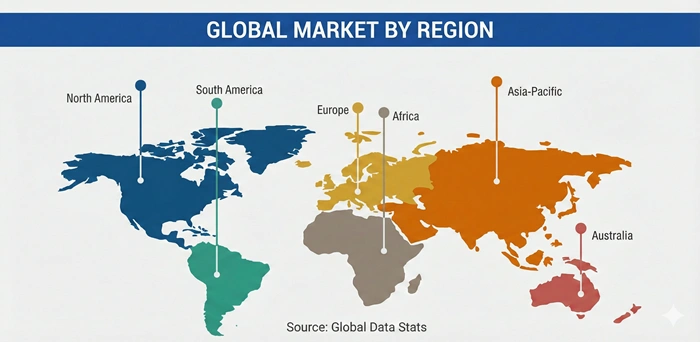
North America holds the dominant position in the synthetic monitoring market with approximately 40.2% of global 2024 market revenues, driven by the region's exceptional concentration of cloud-native enterprises, high SaaS adoption rates, and advanced DevOps program maturity. The United States accounts for the vast majority of North American revenues, with large technology companies, financial institutions, retailers, and healthcare organizations deploying synthetic monitoring platforms as standard components of their application performance management stacks. Key companies driving North American market activity include Dynatrace (United States), Broadcom Inc. (United States), New Relic Inc. (United States), SmartBear Software (United States), IBM Corporation (United States), and Hewlett Packard Enterprise (United States). The North American market is also supported by a strong vendor ecosystem that competes on feature depth, AI-powered analytics capabilities, and platform integration breadth — creating continuous product innovation that keeps synthetic monitoring solutions at the forefront of enterprise IT investment priorities.
The North American market benefits from strong regulatory tailwinds as well. Financial regulators including the SEC, FINRA, and federal banking agencies increasingly require documented evidence of application availability management and performance incident response procedures — requirements that directly elevate the institutional priority placed on synthetic monitoring investments. Canada is a growing contributor to the regional market, particularly in the financial services and healthcare sectors where digital experience performance is tied to both patient outcomes and consumer trust. North America's CAGR through 2033 is expected to moderate relative to Asia Pacific as the market approaches mid-stage maturity, but the region will continue to generate the largest absolute revenue volumes globally, supported by ongoing cloud migration programs, multi-cloud complexity growth, and expanding API ecosystem management requirements across all major industry verticals.
Asia Pacific
Asia Pacific's Explosive Digital Economy Growth, Massive E-Commerce Volumes, and Rapid Cloud Infrastructure Expansion Are Positioning the Region as the Most Dynamic Growth Market for Synthetic Monitoring Solutions
Government Digital Transformation Programs, Growing DevOps Adoption, and a Rapidly Expanding SME Technology Market Are Fueling Asia Pacific's Status as the Fastest-Growing Region in This Market
Asia Pacific is the fastest-growing regional market in the synthetic monitoring landscape, recording a CAGR that consistently outpaces the global average as the region's digital economy expands at extraordinary speed. China, India, Japan, South Korea, and Australia are the primary growth contributors, collectively driven by massive e-commerce transaction volumes, rapid fintech expansion, and government-mandated digital transformation programs across public services and healthcare. The region currently accounts for approximately 22–25% of global synthetic monitoring revenues in 2024, and this share is expected to expand meaningfully through 2033 as enterprise-grade IT operations practices mature across the region's growing base of large-scale digital businesses. Key players active in Asia Pacific include Dynatrace (United States, strong APAC deployment), New Relic (United States), IBM (United States), Cisco's AppDynamics (United States), and several regional cloud monitoring startups backed by Chinese and South Korean technology groups.
India is emerging as a particularly compelling growth market within Asia Pacific, as the country's booming technology services sector, rapidly expanding UPI-based digital payments infrastructure, and large base of SaaS startup companies collectively drive demand for performance monitoring solutions. Government initiatives including India's Digital India program and the National Cloud Program are accelerating the migration of public sector workloads to cloud platforms, creating new demand for synthetic validation of government digital services. Japan and South Korea maintain sophisticated IT operations cultures with high DevOps adoption rates, while Australia is advancing as a regional hub for cloud-native enterprise applications with strong vendor ecosystem support. As platform localization improves and regional pricing models become more accessible, Asia Pacific is expected to become the second-largest regional market in overall synthetic monitoring revenue within the forecast period.
Report Customization Available for All Regions and Countries
This Report Offers Full Region-Wise and Country-Wise Customization, Enabling Organizations to Access Targeted Market Intelligence Tailored Precisely to Their Geographic Strategic Priorities
This report can be fully customized for any specific region or country listed below, providing detailed market sizing, local competitive landscape analysis, region-specific growth drivers, regulatory environment assessments, and demand-supply intelligence tailored to the synthetic monitoring market context in your selected geography. Whether you are planning a market entry, competitive benchmarking exercise, or regional investment analysis, the customized version delivers the precise intelligence your team needs.
Customized reports are available for the following regions and countries, each offering dedicated insights, market analysis, trends, and opportunities:
North America
-
Customized insights available for U.S., Canada, and Mexico, covering region-specific market size, enterprise DevOps adoption rates, SaaS application monitoring trends, regulatory performance requirements, and local vendor competitive dynamics.
Europe
-
Tailored analysis available for U.K., Germany, France, Italy, and Rest of Europe, including GDPR-related data sovereignty impact on deployment mode selection, regional cloud adoption maturity, EU Digital Single Market initiatives, and country-level competitive intelligence.
Asia Pacific
-
Detailed coverage for China, India, Japan, South Korea, Australia, and Rest of Asia Pacific, with insights into government digital transformation programs, e-commerce performance monitoring demand, mobile-first monitoring requirements, and regional SaaS market expansion.
Latin America
-
Country-level customization for Brazil, Argentina, and Rest of Latin America, covering digital banking growth, e-commerce monitoring adoption, SME technology investment trends, and local regulatory environment dynamics.
Middle East & Africa
-
Targeted intelligence for UAE, Saudi Arabia, and Rest of MEA, addressing Vision 2030 digital economy programs, smart city infrastructure monitoring requirements, cloud adoption timelines, and regional vendor ecosystem development.
Top Key Players
-
Dynatrace LLC (United States)
-
SmartBear Software Inc. (United States)
-
Hewlett Packard Enterprise Company (United States)
-
Broadcom Inc. (United States)
-
New Relic Inc. (United States)
-
IBM Corporation (United States)
-
BMC Software Inc. (United States)
-
Cisco Systems Inc. / AppDynamics (United States)
-
Splunk Inc. (United States)
-
Dell Technologies Inc. (United States)
-
Microsoft Corporation (United States)
-
Datadog Inc. (United States)
-
Riverbed Technology (United States)
-
Micro Focus International Plc (United Kingdom)
-
Catchpoint Systems Inc. (United States)
Recent Developments
-
In February 2025, Dynatrace launched Davis AI CoPilot for Synthetic, an AI-powered assistant that automatically generates and updates synthetic test scripts based on application changes detected within its observability platform, significantly reducing the manual maintenance burden that has historically slowed synthetic monitoring adoption in large enterprise environments.
-
In November 2024, Broadcom completed the integration of its AppNetics synthetic monitoring capabilities with the VMware Aria Operations platform, creating a unified hybrid cloud performance management solution that enables enterprises to manage synthetic test execution alongside infrastructure health metrics within a single consolidated operations console.
-
In September 2024, SmartBear Software acquired Reflect, a no-code synthetic test authoring platform, significantly expanding SmartBear's accessibility for teams without scripting expertise and adding a new non-technical user persona to its ReadyAPI and AlertSite synthetic monitoring product lines.
-
In July 2024, New Relic released Synthetics Scripted Browser v2.0, featuring AI-assisted test generation and a redesigned dashboard that correlates synthetic test results with real-user session replays, enabling engineering teams to understand the business impact of detected performance issues with substantially greater contextual clarity.
-
In May 2024, Catchpoint Systems expanded its global synthetic monitoring vantage point network from 800 to over 1200 locations across 90 countries, making it the broadest global test execution network in the industry and significantly improving geographic coverage for enterprises monitoring digital performance across emerging markets.
Market Trends
AIOps Integration and the Convergence of Synthetic and Real-User Monitoring Are the Defining Trends Reshaping the Competitive Architecture of the Synthetic Monitoring Market
The most transformational trend reshaping the synthetic monitoring market is the integration of artificial intelligence and machine learning into the core monitoring analytics layer — a development commonly referred to as AIOps. Modern synthetic monitoring platforms are moving beyond scripted pass/fail test execution to deliver intelligent, context-aware performance intelligence. AI algorithms continuously analyze synthetic test telemetry against dynamic baselines, automatically distinguishing genuine performance anomalies from normal variation patterns — dramatically reducing the alert fatigue that undermined trust in earlier generations of monitoring tools. Causal AI capabilities, pioneered by Dynatrace's Davis engine and adopted in various forms by other leading vendors, can trace performance degradations through distributed system topologies and pinpoint root-cause components without requiring manual investigation by engineering teams. This shift from reactive alerting to proactive, AI-guided remediation is redefining the value proposition of synthetic monitoring and driving upgrades from legacy point-solution deployments to AI-native platforms.
A second powerful trend is the rapid convergence of synthetic monitoring with real-user monitoring (RUM) and distributed tracing into unified digital experience monitoring platforms. Organizations increasingly require a correlated view that shows both how their applications perform in scripted synthetic conditions and how actual users experience performance in the wild — allowing teams to validate assumptions, reproduce user-reported issues, and measure the effectiveness of performance improvements with statistical confidence. This convergence is accelerating platform consolidation, with observability leaders building or acquiring capabilities across all three monitoring modalities to offer a single, comprehensive digital experience intelligence platform. The movement toward platform consolidation is simultaneously pressuring standalone synthetic monitoring vendors to specialize in defensible niches — including enterprise-grade API contract testing, global vantage point density, and carrier-grade network monitoring — while accelerating the value growth of full-platform vendors.
Segments Covered in the Report
-
By Type
-
API Monitoring
-
Website Monitoring
-
Mobile Application Monitoring
-
SaaS Application Monitoring
-
-
By Services
-
Managed Services
-
Consulting Services
-
Implementation Services
-
Training and Support Services
-
-
By Deployment Mode
-
On-Premises
-
Cloud-Based
-
Hybrid
-
-
By Application
-
Competitive Benchmarking
-
Service-Level Agreement Monitoring
-
Application Testing
-
Content Delivery Network Testing
-
Others
-
-
By End-User Vertical
-
BFSI
-
IT and Telecommunication
-
Retail
-
Media and Entertainment
-
Travel and Hospitality
-
Government
-
Manufacturing and Automotive
-
Others
-
-
By Region
-
North America (U.S., Canada, Mexico)
-
Europe (U.K., Germany, France, Italy, Rest of Europe)
-
Asia Pacific (China, India, Japan, South Korea, Australia, Rest of Asia Pacific)
-
Latin America (Brazil, Argentina, Rest of Latin America)
-
Middle East & Africa (UAE, Saudi Arabia, Rest of MEA)
-
❝ Built for Every Level — From Startups to Industry Giants ❞
Here Is Exactly How This Report Works for You
-
Whether you are a startup entering the application performance monitoring space, a Tier 2 company scaling your digital operations product line, or a global enterprise evaluating full-stack observability platform investments, this report provides the competitive revenue intelligence, market share benchmarking, and segment-level CAGR data you need to understand exactly where the synthetic monitoring market is growing fastest — and precisely where your product, pricing, and go-to-market strategy must evolve to capture that growth ahead of competitors.
-
For investors and enterprise strategy teams navigating the increasingly complex geopolitical and regulatory landscape for technology products, this report delivers a structured analysis of how data sovereignty regulations, cross-border cloud deployment restrictions, and government digital infrastructure mandates across North America, Europe, Asia Pacific, Latin America, and MEA are reshaping competitive dynamics, influencing supply-chain decisions, and creating both risk and opportunity for vendors operating in the synthetic monitoring market — enabling evidence-based strategic and capital allocation decisions.
-
The full purchased version of this report includes complete competitor revenue profiles, detailed revenue source breakdowns, country-level market size data, supply-demand analysis, and a forward-looking scenario framework covering base-case and high-growth trajectories — equipping product managers, corporate development teams, and C-suite executives with everything they need to define winning competitive strategies and maximize their return from the global synthetic monitoring opportunity through 2033.
Frequently Asked Questions
Question 1: What is the current size of the synthetic monitoring market and how fast is it projected to grow?
Answer: The global synthetic monitoring market is valued at USD 1.70 billion in 2025 and is projected to reach USD 4.82 billion by 2033 at a CAGR of 13.73% from 2026 to 2033. This growth is driven by rising cloud adoption, DevOps integration, and growing enterprise demand for proactive digital experience management.
Question 2: Which region dominates the synthetic monitoring market globally?
Answer: North America holds the largest share of the synthetic monitoring market, accounting for approximately 40.2% of global 2024 revenues, driven by high cloud-native adoption and advanced DevOps maturity. Asia Pacific is the fastest-growing region, supported by rapid digital transformation programs and expanding e-commerce and fintech ecosystems.
Question 3: What are the primary drivers of growth in the synthetic monitoring market?
Answer: The synthetic monitoring market is primarily driven by accelerating cloud migration, the adoption of API-driven microservices architectures, and the growing business imperative to deliver seamless digital experiences across web, mobile, and API channels. Integration of synthetic testing within CI/CD and DevOps pipelines is also a major growth accelerator, embedding monitoring into the daily software development workflow.
Question 4: What are the key challenges facing the synthetic monitoring market?
Answer: The synthetic monitoring market faces challenges including high script maintenance overhead as application interfaces change frequently, which can generate false positives and erode platform trust. Budget constraints and limited in-house expertise among SMEs in developing markets also moderate adoption rates, though AI-assisted auto-remediation and affordable SaaS pricing models are gradually addressing these barriers.
Question 5: Who are the leading companies operating in the synthetic monitoring market?
Answer: The synthetic monitoring market is led by established technology companies including Dynatrace, Broadcom, SmartBear Software, New Relic, IBM, and Hewlett Packard Enterprise, which collectively offer the most comprehensive and widely deployed platforms across enterprise IT environments. These vendors are competing on AI-powered analytics capabilities, global vantage point coverage, and integration with broader full-stack observability platforms.