
Synthetic Absorbable Sutures Market Overview
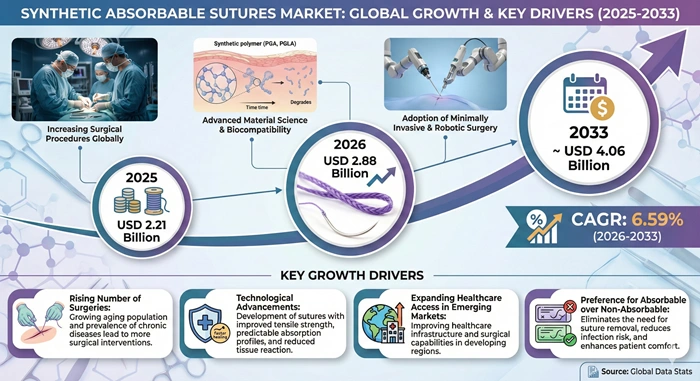
The global synthetic absorbable sutures market size is valued at USD 2.21 billion in 2025 and is predicted to increase from USD 2.88 billion in 2026 to approximately USD 4.06 billion by 2033, growing at a CAGR of 6.59% from 2026 to 2033.
Synthetic absorbable sutures represent advanced medical devices manufactured from biodegradable polymers including polyglycolic acid, polylactic acid, polydioxanone, and polyglycaprone designed to provide temporary wound support during healing before naturally degrading through hydrolysis within predictable timeframes. These sophisticated surgical materials eliminate the need for suture removal procedures, reducing patient discomfort, healthcare costs, and infection risks associated with subsequent medical visits. Healthcare professionals across surgical specialties including general surgery, orthopedics, gynecology, cardiovascular procedures, and plastic surgery increasingly prefer synthetic absorbable options over natural alternatives due to superior strength retention, predictable absorption rates, minimal tissue reactivity, and consistent manufacturing quality supporting standardized clinical outcomes.
AI Impact on the Synthetic Absorbable Sutures Industry
Revolutionizing Manufacturing Processes and Quality Control Through Advanced Predictive Analytics and Automation Systems
Artificial intelligence transforms the synthetic absorbable sutures market by optimizing manufacturing processes through machine learning algorithms analyzing production parameters including polymer extrusion temperatures, fiber drawing speeds, coating application precision, and sterilization conditions to maintain consistent product quality across millions of units. AI-powered quality control systems utilize computer vision technologies inspecting every suture strand for dimensional accuracy, surface uniformity, barb formation consistency, and material defects at speeds impossible for human inspectors, ensuring only products meeting stringent specifications reach surgical facilities. Predictive maintenance algorithms monitor production equipment performance detecting subtle vibration patterns, temperature fluctuations, and mechanical wear indicators forecasting potential failures before disruptions occur, minimizing downtime and maintaining continuous supply chains supporting global healthcare needs. These technological innovations enable manufacturers to achieve unprecedented quality consistency while reducing production costs through optimized resource utilization and waste minimization throughout complex multistep fabrication processes.
Supply chain management within the synthetic absorbable sutures market benefits tremendously from artificial intelligence applications forecasting demand patterns across hospitals, surgical centers, and geographic regions based on historical procedure volumes, seasonal variations, demographic trends, and emerging surgical techniques. Natural language processing technologies analyze medical literature, surgical conference proceedings, and clinical guidelines identifying evolving suture preferences among different surgical specialties, enabling proactive product development addressing anticipated market needs before formal requests emerge. AI-driven inventory optimization systems balance warehouse stock levels across distribution networks, automatically triggering production runs and logistics arrangements preventing shortages during peak demand periods while minimizing excess inventory carrying costs for slow-moving products with limited shelf life. Digital platforms leverage chatbots and virtual assistants providing instant technical support to surgical teams regarding appropriate suture selection for specific procedures, optimal knot-tying techniques, and troubleshooting unusual tissue responses, enhancing clinical confidence and supporting evidence-based decision-making throughout perioperative workflows.
Growth Factors
Rising Surgical Volumes and Minimally Invasive Procedure Adoption Drive Robust Synthetic Absorbable Sutures Market Expansion
The synthetic absorbable sutures market experiences accelerated growth propelled by unprecedented increases in global surgical volumes, with estimates indicating over 300 million major surgical procedures performed annually worldwide addressing trauma injuries, cancer treatments, cardiovascular diseases, orthopedic conditions, and elective cosmetic interventions requiring secure wound closure. Aging demographics throughout developed and emerging economies create sustained surgical demand as elderly populations experience higher incidence rates for conditions necessitating operative interventions including joint replacements, cardiac procedures, hernia repairs, and cancer surgeries requiring extensive tissue approximation during closure. The market gains tremendous momentum from minimally invasive surgery proliferation, with laparoscopic, endoscopic, and robotic-assisted procedures requiring specialized sutures capable of performing reliably within confined anatomical spaces, through small incisions, and under visualization challenges demanding consistent handling characteristics and predictable tensile strength retention.
Technological advancements in synthetic polymer chemistry deliver improved suture formulations offering extended strength retention supporting healing in high-tension areas, faster absorption profiles appropriate for delicate tissues, and antimicrobial coatings reducing surgical site infection risks representing major complication sources associated with significant morbidity and healthcare costs. The synthetic absorbable sutures market benefits from growing clinical evidence documenting superior outcomes compared to natural absorbable alternatives including catgut sutures prone to unpredictable absorption rates, tissue inflammation, and strength variability based on patient factors and storage conditions. Healthcare cost containment pressures favor absorbable options eliminating expenses associated with suture removal appointments, reducing patient burden, and decreasing overall treatment costs compared to non-absorbable alternatives requiring subsequent procedures. Regulatory frameworks worldwide implement stringent standards governing surgical device safety, efficacy, and biocompatibility, creating barriers favoring established synthetic suture manufacturers with proven track records, extensive clinical validation, and comprehensive quality management systems meeting international compliance requirements.

Market Outlook
Strategic Innovation and Emerging Market Penetration Shape Promising Synthetic Absorbable Sutures Market Trajectory
The synthetic absorbable sutures market outlook reflects optimistic projections supported by continuing surgical demand growth, advancing material science capabilities, and expanding healthcare infrastructure throughout developing regions. Manufacturers invest substantially in research activities exploring novel polymer compositions, copolymer blends, and additive technologies delivering enhanced performance characteristics including improved knot security, reduced tissue drag, extended shelf life, and customized absorption profiles matching specific clinical applications. Market dynamics increasingly favor barbed suture designs incorporating directional projections along the suture length providing tissue anchoring without knot tying, reducing operative times, minimizing foreign material burden, and supporting knotless closure techniques particularly valuable during minimally invasive procedures where conventional knot tying proves technically challenging.
The industry witnesses consolidation trends as major medical device corporations acquire specialized suture manufacturers, integrate production facilities, and establish comprehensive wound closure portfolios combining traditional sutures, advanced closure devices, tissue adhesives, and surgical staplers creating one-stop solutions for surgical facilities. The synthetic absorbable sutures market adapts to sustainability considerations as environmentally conscious healthcare organizations prioritize suppliers implementing green manufacturing practices, utilizing renewable polymer sources, and developing biodegradable packaging reducing medical waste environmental impacts. Digital health integration enables electronic surgical supply management systems automatically tracking suture consumption patterns, generating predictive ordering recommendations, and maintaining regulatory compliance documentation streamlining administrative burdens while ensuring product availability. Regulatory harmonization efforts facilitate international commerce through standardized testing protocols, mutual recognition agreements, and simplified approval pathways enabling manufacturers to serve multiple markets with consistent products rather than developing region-specific formulations accommodating varying regulatory requirements.
Expert Speaks
-
Joaquin Duato, CEO of Johnson & Johnson, reported strong third-quarter results with 6.8 percent sales growth reaching 24.0 billion USD driven by solid execution across MedTech portfolio including surgical sutures and wound closure innovations, emphasizing the company's commitment to advancing patient care through continued investment in research and development while maintaining operational excellence and financial discipline supporting long-term shareholder value creation.
-
Geoff Martha, Chairman and CEO of Medtronic, highlighted the company's strategic focus on strengthening core businesses including surgical technologies where innovations in suturing systems and wound closure devices support minimally invasive procedure growth, noting that disciplined execution, operational improvements, and portfolio optimization position Medtronic for sustained revenue growth while delivering meaningful clinical outcomes improving patient lives worldwide.
-
Ashley McEvoy, Executive Vice President of Worldwide Chairman MedTech at Johnson & Johnson, emphasized the company's leadership in surgical innovation including advanced suture technologies stating that continuous investment in next-generation wound closure solutions, surgeon education programs, and digital integration initiatives reinforce Johnson & Johnson's commitment to transforming surgical care while partnering with healthcare professionals improving procedural efficiency and patient outcomes across diverse clinical specialties.
Key Report Takeaways
-
North America leads the synthetic absorbable sutures market with approximately 40 percent regional share, driven by advanced healthcare infrastructure, high surgical procedure volumes, strong adoption of minimally invasive techniques, comprehensive reimbursement coverage, stringent quality standards, and presence of major manufacturers including Johnson & Johnson and Medtronic supporting continuous innovation and market leadership.
-
Asia-Pacific demonstrates the fastest growth trajectory in the synthetic absorbable sutures market, expanding at a CAGR of approximately 9.31 percent, propelled by rapidly developing healthcare systems, increasing surgical volumes, rising healthcare expenditure, expanding middle-class populations with insurance access, and growing awareness regarding advanced suture technologies throughout China, India, Southeast Asian nations, and developing economies.
-
Hospitals represent the largest end-user segment consuming synthetic absorbable sutures with approximately 55 percent market share, as these institutions perform majority of surgical procedures across diverse specialties including cardiovascular, orthopedic, general surgery, gynecological interventions, and emergency trauma care requiring extensive wound closure materials supporting comprehensive surgical service offerings.
-
Polyglycolic acid sutures contribute the most substantial material segment share at approximately 38 percent, driven by excellent tensile strength, predictable absorption profiles, minimal tissue reactivity, comprehensive clinical validation across surgical specialties, and widespread surgeon familiarity supporting consistent adoption patterns throughout operating rooms globally despite availability of alternative synthetic polymer options.
-
General surgery applications dominate usage categories as the most prevalent indication, accounting for approximately 32 percent market share, based on high procedure volumes including abdominal surgeries, appendectomies, hernia repairs, bowel resections, and various soft tissue procedures universally requiring secure wound closure supporting healing while maintaining appropriate cosmetic outcomes and minimizing complication risks.
-
Ambulatory surgical centers will experience rapid future growth through 2033, expanding at a CAGR of approximately 10.9 percent and capturing increasing market share percentage as healthcare delivery shifts toward outpatient settings for cost-effective surgical care, creating demand for reliable suture products supporting same-day discharge protocols without subsequent removal appointments or complications requiring emergency interventions.
Market Scope
| Report Coverage Details | |
|---|---|
| Market Size by 2033 | USD 4.06 Billion |
| Market Size by 2025 | USD 2.21 Billion |
| Market Size by 2026 | USD 2.88 Billion |
| Market Growth Rate from 2026 to 2033 | CAGR of 6.59% |
| Dominating Region | North America |
| Fastest Growing Region | Asia-Pacific |
| Base Year | 2025 |
| Forecast Period | 2026 to 2033 |
| Segments Covered | By Material Type, By Application, By End-User, By Region |
| Regions Covered | North America, Europe, Asia-Pacific, Latin America, Middle East & Africa |
Market Dynamics
Drivers Impact Analysis
Escalating Surgical Procedure Volumes and Infection Prevention Emphasis Propel Sustained Synthetic Absorbable Sutures Market Momentum
The synthetic absorbable sutures market benefits tremendously from relentless increases in surgical procedure volumes globally, driven by aging demographics requiring joint replacements, cardiac interventions, cancer surgeries, and various age-related operative treatments creating sustained demand for wound closure materials. The World Health Organization estimates that global surgical volumes exceed 300 million procedures annually, with projections indicating continued growth as healthcare access expands throughout emerging economies and populations receive previously unavailable surgical treatments for chronic conditions, traumatic injuries, and elective improvements. Minimally invasive surgery proliferation represents fundamental market driver, with laparoscopic, endoscopic, and robotic-assisted techniques requiring specialized sutures performing reliably within confined anatomical spaces through small incisions where conventional surgical access proves limited and visualization challenges demand consistent material handling characteristics supporting precise tissue approximation despite technical difficulties.
Surgical site infection prevention priorities elevate synthetic absorbable sutures over natural alternatives prone to bacterial colonization, with braided structures and organic materials creating environments supporting microbial growth compared to smooth monofilament synthetic designs minimizing infection risks. The synthetic absorbable sutures market gains momentum from antimicrobial coating technologies incorporating triclosan, silver nanoparticles, and other antibacterial agents directly into suture materials, providing localized antimicrobial activity at wound sites reducing infection rates representing major complication source associated with extended hospitalizations, additional treatments, and substantial healthcare costs. Barbed suture innovation transforms wound closure approaches by incorporating directional barbs along suture length providing tissue anchoring without knot tying, reducing operative times by 20 to 40 percent compared to conventional techniques, minimizing foreign material burden, and supporting knotless closure methods particularly valuable during minimally invasive procedures where knot tying proves technically challenging and time-consuming. Healthcare cost containment pressures favor absorbable options eliminating expenses associated with suture removal appointments including professional fees, facility costs, and patient time burdens, while reducing risks of removal-related complications, missed appointments, and lost-to-follow-up patients potentially developing problems from retained non-absorbable materials.
| Driver Factor | ≈ Impact on CAGR Forecast | Geographic Relevance | Impact Timeline |
|---|---|---|---|
| Rising global surgical procedure volumes | +1.8% to +2.4% | Global, particularly strong in aging populations | Immediate and ongoing |
| Minimally invasive surgery proliferation | +1.4% to +1.8% | Primarily developed markets with advanced equipment | Immediate and ongoing |
| Infection prevention and antimicrobial innovation | +1.0% to +1.4% | Global with emphasis on quality-focused systems | Short to medium-term |
| Healthcare cost containment and efficiency focus | +0.8% to +1.2% | Particularly relevant in value-based care models | Immediate and ongoing |
Restraints Impact Analysis
Product Cost Pressures and Material Competition Moderate Synthetic Absorbable Sutures Market Growth Expectations
The synthetic absorbable sutures market confronts significant challenges from cost pressures within healthcare systems implementing aggressive medical device procurement strategies, group purchasing organization negotiations, and value-based payment models emphasizing total care costs over individual product quality, potentially favoring lower-priced alternatives despite performance differences. Reimbursement limitations affect market penetration as insurance coverage policies categorize sutures as basic supplies rather than specialized devices, providing fixed allowances insufficient for premium products incorporating advanced features including antimicrobial coatings, barbed designs, or specialized polymer formulations despite potential clinical advantages and complication reduction benefits. The market experiences headwinds from non-absorbable suture competition in certain applications where permanent tissue support proves necessary including vascular anastomoses, tendon repairs, and prosthetic device attachments requiring indefinite strength maintenance beyond absorption timeframes appropriate for synthetic absorbable materials.
Surgeon preference patterns established through training, habit, and familiarity create adoption barriers for novel suture technologies requiring education regarding proper handling techniques, appropriate clinical applications, and evidence supporting superior outcomes compared to familiar conventional options. The synthetic absorbable sutures market faces challenges from alternative wound closure technologies including surgical staplers, tissue adhesives, and hemostatic agents offering different advantages in specific applications, potentially displacing traditional sutures in certain procedure types or anatomical locations where these alternatives demonstrate superior speed, simplicity, or clinical outcomes. Regulatory compliance burdens including extensive biocompatibility testing, strength retention validation, absorption rate documentation, and clinical trial requirements impose substantial development costs and extended timelines before new products reach markets, particularly challenging for smaller manufacturers lacking resources for comprehensive regulatory submissions across multiple jurisdictions with varying requirements. Material science limitations constrain available options as synthetic polymers suitable for surgical suture applications remain relatively limited to several established formulations including PGA, PLA, PDO, and related copolymers, with novel polymer development requiring extensive safety validation before clinical adoption despite potential performance advantages.
| Restraint Factor | ≈ Impact on CAGR Forecast | Geographic Relevance | Impact Timeline |
|---|---|---|---|
| Healthcare cost pressures and price competition | -0.8% to -1.2% | Strongest in price-sensitive and government-funded systems | Immediate and ongoing |
| Competition from alternative closure technologies | -0.6% to -0.9% | Primarily developed markets with diverse options | Immediate to medium-term |
| Surgeon preference inertia and adoption barriers | -0.5% to -0.8% | Global, particularly pronounced in conservative markets | Medium to long-term |
| Regulatory compliance burdens and development costs | -0.3% to -0.6% | Particularly challenging for smaller manufacturers | Ongoing |
Opportunities Impact Analysis
Emerging Market Expansion and Advanced Material Development Create Substantial Synthetic Absorbable Sutures Market Growth Potential
The synthetic absorbable sutures market presents compelling opportunities through geographic expansion into rapidly developing regions throughout Asia-Pacific, Latin America, Middle East, and Africa where healthcare infrastructure improvements, rising surgical volumes, and expanding insurance coverage create favorable conditions for advanced suture adoption. Countries including China, India, Brazil, Indonesia, and Vietnam demonstrate particularly strong growth potential based on large populations, rapidly expanding healthcare expenditure, increasing numbers of trained surgeons, and modernizing hospital facilities implementing international quality standards requiring high-performance surgical materials. International development initiatives, medical mission organizations, and surgical training programs introduce advanced suture technologies to regions historically relying on basic materials, establishing familiarity and preference patterns supporting sustained market development beyond initial humanitarian applications.
Research and development activities focused on next-generation polymer formulations offer opportunities for differentiated products including ultra-fast absorbing materials appropriate for superficial wounds and delicate tissues, extended strength retention formulations supporting high-tension closures in obese patients or contaminated wounds, and customized absorption profiles matching specific tissue healing characteristics. The synthetic absorbable sutures market benefits from antimicrobial coating technology advancement incorporating novel antibacterial agents, controlled-release mechanisms, and combination approaches addressing antibiotic-resistant organisms representing growing clinical concern throughout healthcare facilities globally. Barbed suture portfolio expansion into additional size ranges, specialized configurations, and novel applications creates opportunities for market share capture in procedures traditionally using conventional sutures, while patent expirations on pioneer products enable competitive entry from generic manufacturers offering cost-effective alternatives expanding access throughout price-sensitive markets. Digital health integration including surgical inventory management systems, procedure-specific suture recommendation algorithms, and outcomes tracking platforms create value-added service opportunities differentiating manufacturers beyond pure product attributes while supporting evidence generation demonstrating clinical and economic advantages justifying premium pricing compared to commodity alternatives.
| Opportunity Factor | ≈ Impact on CAGR Forecast | Geographic Relevance | Impact Timeline |
|---|---|---|---|
| Emerging market healthcare infrastructure expansion | +1.2% to +1.7% | Asia-Pacific, Latin America, Middle East, Africa | Short to medium-term |
| Next-generation polymer and coating technology development | +0.9% to +1.3% | Initially developed markets expanding globally | Medium to long-term |
| Barbed suture portfolio expansion and adoption | +0.7% to +1.1% | Global with faster uptake in technology-enabled markets | Short to medium-term |
| Digital health integration and value-added services | +0.5% to +0.9% | Primarily large healthcare systems with IT infrastructure | Medium-term |
Segment Analysis
By Material Type - Polyglycolic Acid Sutures
Superior Tensile Strength and Predictable Absorption Establish Polyglycolic Acid as Dominant Synthetic Absorbable Sutures Market Material
Polyglycolic acid sutures command approximately 38 percent of the synthetic absorbable sutures market share, expanding at a CAGR of 6.4 percent throughout the forecast period as these pioneering synthetic absorbable materials demonstrate excellent tensile strength retention supporting wound healing in high-tension areas, predictable absorption profiles occurring through hydrolysis over 60 to 90 days, and minimal tissue reactivity creating favorable healing environments. Healthcare professionals appreciate PGA suture handling characteristics including smooth passage through tissues, secure knot holding, and consistent performance across diverse surgical specialties including general surgery, gynecology, urology, and plastic surgery where reliable wound closure proves essential for optimal outcomes. The segment benefits from extensive clinical validation accumulated over decades since PGA introduction revolutionized surgical practice by providing first truly reliable synthetic absorbable alternative to catgut sutures prone to unpredictable performance and inflammatory reactions. Manufacturers offer PGA formulations in various configurations including monofilament and braided structures, multiple diameter sizes accommodating different tissue types, and colored options enhancing visibility during procedures supporting precise placement and quality verification.
North America maintains dominant PGA suture consumption within the synthetic absorbable sutures market, supported by established surgical practices, comprehensive surgeon training emphasizing evidence-based material selection, and strong preference patterns favoring proven technologies with extensive safety documentation. Europe demonstrates similar utilization levels with particular strength in countries including Germany, United Kingdom, and France where quality-focused healthcare systems prioritize clinical outcomes over cost considerations alone. Leading manufacturers serving the PGA segment include Johnson & Johnson through Ethicon division offering Dexon and related products, Medtronic providing comprehensive suture portfolios, B. Braun Melsungen supplying various configurations, and numerous regional manufacturers throughout Asia producing cost-competitive alternatives expanding access in price-sensitive markets. The synthetic absorbable sutures market benefits from continuing PGA technology refinement including coating innovations improving passage through tissues, antimicrobial additives reducing infection risks, and copolymer blends modifying absorption characteristics addressing specific clinical needs while maintaining fundamental performance attributes establishing PGA as gold standard against which alternative materials are compared.
By End-User - Hospitals
High Surgical Volumes and Comprehensive Service Offerings Position Hospitals as Primary Synthetic Absorbable Sutures Market Consumer
Hospitals account for approximately 55 percent of the synthetic absorbable sutures market consumption, growing at a CAGR of 6.3 percent as these complex healthcare institutions perform majority of surgical procedures worldwide including emergency trauma surgeries, complex cardiovascular interventions, orthopedic reconstructions, cancer resections, organ transplants, and numerous elective procedures requiring extensive wound closure support. Large hospital systems with multiple operating rooms, diverse surgical specialties, and thousands of annual procedures create substantial recurring demand for synthetic absorbable sutures across product types, sizes, and configurations accommodating varied clinical needs throughout surgical service lines. The segment encompasses both academic medical centers performing cutting-edge procedures and community hospitals providing essential surgical services, all requiring reliable suture supplies supporting consistent quality care delivery. Hospitals implement sophisticated supply chain management systems including automated inventory tracking, par-level maintenance, preference card management, and value analysis committees evaluating products based on clinical outcomes, cost-effectiveness, and surgeon satisfaction balancing competing priorities.
North America maintains the largest hospital segment share for the synthetic absorbable sutures market, supported by approximately 6,200 hospitals throughout the United States performing over 50 million inpatient surgical procedures annually plus substantial additional outpatient operations requiring wound closure materials. Europe demonstrates strong hospital consumption patterns with comprehensive healthcare systems across Germany, France, United Kingdom, and other nations maintaining high surgical volumes. Major suture manufacturers including Johnson & Johnson, Medtronic, B. Braun, and Smith & Nephew maintain dedicated hospital sales forces providing technical support, surgical education, product trials, and volume-based pricing incentives encouraging standardization and long-term partnership relationships. The segment benefits from group purchasing organization participation where hospital networks consolidate procurement across multiple facilities, negotiating favorable pricing while standardizing product selections simplifying inventory management, reducing complexity, and supporting economies of scale throughout supply chains. Future growth reflects continuing surgical demand increases, hospital consolidation creating larger systems with greater purchasing power, and value-based care emphasis prioritizing complication reduction where high-quality sutures preventing infections and wound dehiscence deliver measurable clinical and economic advantages justifying premium product investments.
Regional Insights
North America
Advanced Healthcare Infrastructure and High Surgical Standards Establish North America as Dominant Synthetic Absorbable Sutures Market Leader
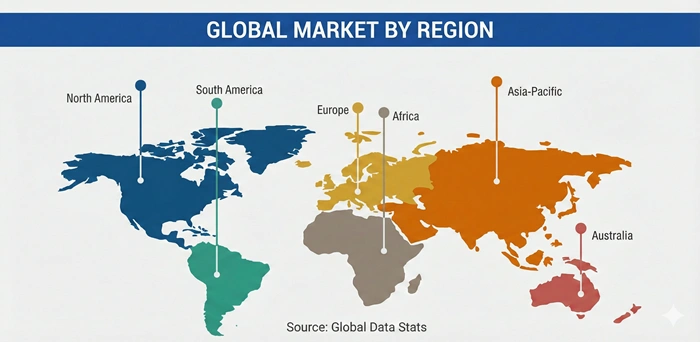
North America commands approximately 40 percent of the global synthetic absorbable sutures market share, expanding at a CAGR of 6.4 percent from 2026 to 2033, driven by sophisticated healthcare infrastructure, high surgical procedure volumes exceeding 50 million inpatient operations annually in the United States alone, strong quality standards emphasizing infection prevention and optimal outcomes, comprehensive reimbursement coverage supporting advanced medical device utilization, and presence of major manufacturers including Johnson & Johnson and Medtronic maintaining market leadership through continuous innovation. The region benefits from well-established surgical training programs emphasizing evidence-based practice, robust regulatory oversight through FDA ensuring product safety and efficacy, and litigious environment incentivizing use of high-quality materials reducing complication risks and associated liability exposures. United States represents the dominant country market within North America, with healthcare expenditure exceeding 4 trillion USD annually including substantial allocations for surgical services, medical devices, and quality improvement initiatives supporting advanced wound closure technology adoption.
The North American synthetic absorbable sutures market features leading manufacturers including Johnson & Johnson operating through Ethicon division with comprehensive product portfolios, Medtronic providing integrated surgical solutions, B. Braun maintaining specialized offerings, and numerous distributors serving diverse customer segments from large hospital systems to small surgical centers. Regulatory framework emphasizes rigorous testing including biocompatibility assessments, strength retention validation, sterility assurance, and clinical trial evidence supporting safety and effectiveness claims before market approval. The region demonstrates strong adoption of advanced technologies including barbed sutures, antimicrobial coatings, and specialized configurations addressing specific surgical needs, reflecting willingness to invest in premium products delivering measurable clinical advantages. Market dynamics include intense competition among established players, continuous product innovation cycles, sophisticated value analysis processes within healthcare organizations, and evolving reimbursement models emphasizing outcomes over volumes creating opportunities for manufacturers demonstrating superior clinical and economic performance compared to commodity alternatives.
Asia-Pacific
Rapid Healthcare Development and Expanding Surgical Access Position Asia-Pacific as Fastest Growing Synthetic Absorbable Sutures Market
Asia-Pacific demonstrates the fastest synthetic absorbable sutures market growth trajectory, expanding at a CAGR of 9.31 percent from 2026 to 2033, propelled by massive population bases exceeding 4.5 billion people, rapidly developing healthcare infrastructure supporting increased surgical capacity, rising healthcare expenditure as percentage of GDP throughout developing economies, expanding middle-class populations with insurance coverage enabling surgical access, and growing awareness regarding advanced suture technologies among healthcare professionals trained in modern techniques. The region encompasses diverse market characteristics ranging from highly developed systems in Japan, South Korea, Singapore, and Australia to rapidly emerging capabilities throughout China, India, Southeast Asian nations, and developing economies experiencing accelerated infrastructure investment and quality improvement initiatives. China represents particularly substantial growth opportunity with an estimated 1.4 billion population, rapidly expanding healthcare system performing hundreds of millions of surgical procedures annually, and government initiatives prioritizing healthcare quality through hospital accreditation programs and medical device standards enforcement.
The Asia-Pacific synthetic absorbable sutures market features diverse competitive dynamics combining multinational corporations including Johnson & Johnson, Medtronic, and B. Braun establishing regional manufacturing and distribution alongside domestic producers including Indian manufacturers, Chinese companies, and numerous smaller regional players supplying local markets with cost-competitive products. Healthcare infrastructure development throughout the region includes hospital construction, surgical center proliferation, medical education expansion producing larger trained workforce populations, and technology adoption supporting modern surgical practices including minimally invasive techniques requiring advanced suture materials. Government healthcare initiatives implement quality improvement programs, medical device regulatory frameworks, and reimbursement systems supporting appropriate technology utilization throughout public and private sector facilities. The region's market outlook remains exceptionally favorable based on continuing economic development, urbanization concentrating populations near advanced healthcare facilities, rising health insurance coverage expanding surgical access beyond wealthy segments, and increasing integration with global medical supply chains supporting international quality standards and best practice adoption throughout surgical wound closure protocols.
Top Key Players
-
Johnson & Johnson / Ethicon Inc. (United States)
-
Medtronic plc (Ireland)
-
B. Braun Melsungen AG (Germany)
-
Smith & Nephew plc (United Kingdom)
-
Peters Surgical (France)
-
Teleflex Incorporated (United States)
-
DemeTECH Corporation (United States)
-
Internacional Farmacéutica S.A. de C.V. (Mexico)
-
Sutures India Pvt. Ltd. (India)
-
W.L. Gore & Associates, Inc. (United States)
-
Conmed Corporation (United States)
-
Boston Scientific Corporation (United States)
-
Surgical Specialties Corporation (United States)
-
Lotus Surgicals Pvt. Ltd. (India)
-
Katsan Surgical Sutures (Turkey)
Recent Developments
-
Johnson & Johnson MedTech - 2024: Updated brand identity consolidating Ethicon, DePuy Synthes, Biosense Webster, Abiomed, and Cerenovus under unified Johnson & Johnson MedTech branding without impacting product lines, representing strategic positioning emphasizing integrated medical technology leadership while maintaining specialized product expertise including comprehensive surgical suture portfolios supporting wound closure innovation across surgical specialties and healthcare settings globally.
-
Johnson & Johnson Medical Devices - 2021: Completed acquisition of Megadyne Medical Products assets in July, expanding electrosurgical tools and accessories portfolio while enhancing operating room efficiency capabilities through integrated product offerings combining advanced sutures with complementary surgical technologies supporting comprehensive procedural solutions, demonstrating commitment to strategic growth through targeted acquisitions strengthening market position and technology capabilities.
-
Medtronic - 2021: Finalized acquisition of Medicrea International SAS in May, broadening interventional medicine portfolio and surgical technologies offerings integrating advanced spinal implants and patient-specific solutions with existing product lines including suture systems, strengthening next-generation surgical care capabilities through technology convergence supporting personalized treatment approaches and improved patient outcomes across diverse surgical specialties.
-
Ethicon (Johnson & Johnson) - 2025: Continued innovation in antimicrobial suture technologies and barbed suture portfolio expansion, introducing enhanced formulations incorporating triclosan coatings and silver nanoparticles reducing surgical site infection risks while advancing knotless wound closure capabilities through directional barb designs supporting faster operative times, reduced foreign material burden, and improved outcomes particularly in minimally invasive surgical applications.
-
B. Braun Melsungen - 2025: Advanced synthetic absorbable suture portfolio through manufacturing capacity expansion, quality system enhancements, and strategic distribution partnerships extending market reach throughout emerging economies while maintaining premium positioning in developed markets through continuous product innovation, comprehensive technical support, and surgeon education programs supporting evidence-based suture selection and optimal surgical techniques across diverse clinical applications.
Market Trends
Antimicrobial Coatings and Barbed Designs Define Contemporary Synthetic Absorbable Sutures Market Evolution
The synthetic absorbable sutures market increasingly emphasizes antimicrobial coating technologies incorporating antibacterial agents including triclosan, silver nanoparticles, and chlorhexidine directly into suture materials providing localized infection prevention at wound sites, addressing surgical site infection concerns representing major complication source affecting 2 to 5 percent of surgical patients despite sterile technique adherence and prophylactic antibiotic administration. Clinical evidence demonstrates that antimicrobial-coated sutures reduce infection rates by 30 to 50 percent compared to uncoated alternatives across various surgical specialties, delivering measurable clinical value through decreased morbidity, shorter hospital stays, reduced readmission rates, and substantial cost savings offsetting premium product pricing. The market witnesses growing adoption of barbed suture technologies incorporating directional projections along suture length providing tissue anchoring without knot tying, reducing operative times significantly particularly during laparoscopic and robotic procedures where conventional knot tying proves technically challenging and time-consuming while potentially compromising knot security through limited visibility and restricted instrument maneuverability.
Customization trends emerge as manufacturers develop specialized formulations addressing specific surgical needs including ultra-fast absorbing sutures appropriate for superficial skin closure and cosmetic procedures, extended strength retention variants supporting high-tension areas or compromised healing environments, and intermediate options matching particular tissue characteristics and healing timeframes. The synthetic absorbable sutures market adapts to sustainability considerations as environmentally conscious healthcare organizations prioritize suppliers implementing green manufacturing practices, utilizing renewable polymer sources derived from corn or other plant materials, and developing biodegradable packaging reducing medical waste environmental burden while maintaining product sterility and shelf life requirements. Digital integration advances through smart packaging incorporating RFID tags, QR codes, and blockchain verification supporting inventory management automation, product authentication preventing counterfeit materials, and supply chain transparency enabling recall efficiency if quality issues emerge. Combination product development integrates sutures with drug delivery capabilities, hemostatic agents, and tissue engineering scaffolds creating multifunctional devices addressing multiple wound healing challenges simultaneously through single implanted material rather than separate interventions requiring additional operative steps, complexity, and cost.
Segments Covered in the Report
By Material Type
-
Polyglycolic Acid (PGA) Sutures
-
Polylactic Acid (PLA) Sutures
-
Polydioxanone (PDO) Sutures
-
Polyglactin Sutures
-
Poliglecaprone Sutures
-
Others
By Application
-
General Surgery
-
Orthopedic Surgery
-
Gynecological Surgery
-
Cardiovascular Surgery
-
Ophthalmic Surgery
-
Cosmetic & Plastic Surgery
-
Others
By End-User
-
Hospitals
-
Ambulatory Surgical Centers
-
Clinics & Physician Offices
-
Others
By Region
-
North America (United States, Canada, Mexico)
-
Europe (Germany, United Kingdom, France, Italy, Spain, Rest of Europe)
-
Asia-Pacific (China, India, Japan, South Korea, Australia, Southeast Asia, Rest of Asia-Pacific)
-
Latin America (Brazil, Argentina, Rest of Latin America)
-
Middle East & Africa (Saudi Arabia, UAE, South Africa, Rest of MEA)
Frequently Asked Questions
Question 1: What is the expected synthetic absorbable sutures market size by 2033?
Answer: The global synthetic absorbable sutures market is projected to reach approximately USD 4.06 billion by 2033, growing from USD 2.88 billion in 2026. This substantial expansion reflects increasing surgical procedure volumes, minimally invasive technique adoption, antimicrobial coating innovations, barbed suture technology advancement, and expanding healthcare infrastructure throughout emerging economies supporting advanced wound closure material utilization.
Question 2: Which region dominates the synthetic absorbable sutures market currently?
Answer: North America dominates the synthetic absorbable sutures market with approximately 40 percent share, driven by advanced healthcare infrastructure and high surgical standards. The region benefits from substantial procedure volumes, comprehensive reimbursement coverage, strong quality emphasis, stringent regulatory oversight, and presence of major manufacturers including Johnson & Johnson and Medtronic maintaining market leadership through continuous innovation.
Question 3: What factors drive synthetic absorbable sutures market growth during the forecast period?
Answer: Rising surgical procedure volumes, minimally invasive surgery proliferation, infection prevention emphasis, and healthcare cost containment drive synthetic absorbable sutures market growth. These factors collectively expand wound closure material demand, support advanced technology adoption, enhance clinical outcomes, and deliver economic advantages through complication reduction and elimination of suture removal procedures.
Question 4: Which material type segment holds the largest synthetic absorbable sutures market share?
Answer: Polyglycolic acid sutures represent the largest material segment with approximately 38 percent synthetic absorbable sutures market share based on superior tensile strength retention and predictable absorption profiles. These pioneering synthetic materials demonstrate excellent performance across surgical specialties, minimal tissue reactivity, secure knot holding, and extensive clinical validation supporting widespread surgeon preference and consistent adoption patterns.
Question 5: How do hospitals contribute to the synthetic absorbable sutures market?
Answer: Hospitals account for approximately 55 percent of synthetic absorbable sutures market consumption through high surgical procedure volumes and comprehensive service offerings. These institutions perform majority of operations worldwide across diverse specialties including cardiovascular, orthopedic, general surgery, trauma care, and cancer treatment requiring extensive wound closure material supplies supporting quality care delivery.