
Sustainable Bioprocessing Market Overview
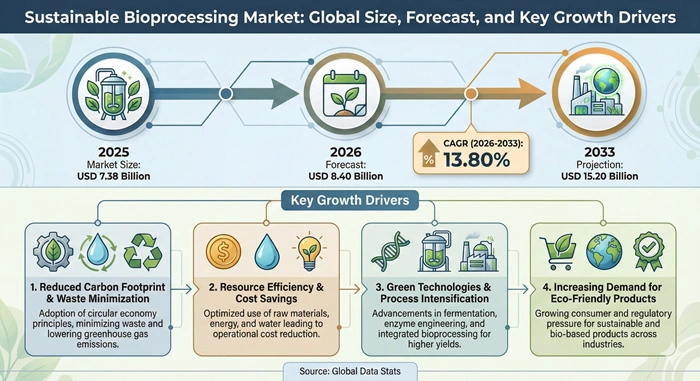
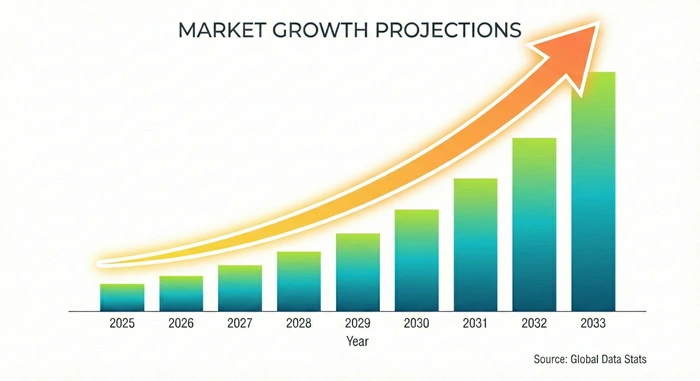
The global sustainable bioprocessing market size is valued at USD 7.38 billion in 2025 and is predicted to increase from USD 8.40 billion in 2026 to approximately USD 15.20 billion by 2033, growing at a CAGR of 13.80% from 2026 to 2033.
The sustainable bioprocessing market focuses on environmentally conscious biomanufacturing techniques that minimize waste generation, reduce energy consumption, and lower carbon emissions across pharmaceutical and biotechnology production facilities. This approach integrates advanced bioprocessing equipment including continuous processing systems, intensified bioreactor platforms, recyclable single-use equipment, and energy-efficient upstream and downstream technologies. The market encompasses innovative solutions designed to decrease water usage, minimize carbon footprint, reduce waste generation, and enhance overall process sustainability throughout the biologics manufacturing lifecycle.
The transformation toward sustainable bioprocessing represents a fundamental shift in how biopharmaceutical companies approach production operations. Modern facilities now incorporate digital monitoring systems, artificial intelligence-based analytics, intelligent process control mechanisms, predictive maintenance capabilities, and real-time optimization tools. These technological advancements enable manufacturers to achieve superior operational efficiency while simultaneously meeting stringent environmental regulations and corporate sustainability commitments. Growing pressure from regulatory bodies, investors, and consumers has accelerated adoption of sustainable bioprocessing practices across both established pharmaceutical manufacturers and emerging biotechnology companies.
AI Impact on the Sustainable Bioprocessing Industry
Artificial Intelligence Revolutionizes Bioprocess Optimization and Accelerates Sustainable Manufacturing Transformation
The sustainable bioprocessing market is experiencing rapid adoption of artificial intelligence-assisted process optimization technologies that enable sophisticated monitoring capabilities, real-time control mechanisms, and automated decision-making across complex biomanufacturing operations. AI technologies enhance process transparency by analyzing extensive volumes of data generated from sensors, bioreactors, and digital twin simulations. This analytical capability allows manufacturers to quickly detect process deviations, generate accurate yield predictions, and maintain rigorous quality control standards throughout production cycles.
Machine learning algorithms are being systematically optimized for upstream fermentation processes, downstream purification steps, and resource-intensive manufacturing phases. These optimizations maximize efficient utilization of raw materials while simultaneously reducing carbon footprint across biomanufacturing facilities. AI-enabled digital twin technologies provide opportunities to conduct virtual experiments, accelerate scale-up processes, and continuously fulfill sustainability goals without requiring physical prototyping. The progressive shift toward intelligent automation positions the sustainable bioprocessing market at the forefront of scalable, efficient operations that align ecological responsibility with commercial viability across pharmaceutical and biotechnology sectors.
Growth Factors
Rising Biologics Demand and Regulatory Pressures Drive Market Expansion
The sustainable bioprocessing market experiences substantial growth momentum driven by increasing global demand for biologics including monoclonal antibodies, vaccines, cell therapies, and gene therapies. Pharmaceutical companies and contract development and manufacturing organizations are investing heavily in flexible manufacturing solutions that incorporate sustainable technologies to accelerate development timelines and reduce production costs. The expansion of biosimilars following patent expirations of branded biologics further intensifies demand for cost-effective and environmentally responsible bioprocessing systems. Chronic disease prevalence, aging populations, and personalized medicine trends create sustained pressure for advanced therapeutic development, directly benefiting sustainable bioprocessing market growth.
Stringent environmental regulations imposed by governmental agencies and increasing investor focus on Environmental Social Governance criteria compel biopharmaceutical manufacturers to reduce operational carbon emissions, water consumption, and plastic waste generation. Regulatory frameworks established by agencies including the United States Food and Drug Administration and European Medicines Agency mandate compliance with Good Manufacturing Practice standards while encouraging adoption of sustainable manufacturing approaches. Companies face mounting pressure to demonstrate environmental stewardship through implementation of green bioprocessing strategies including continuous processing systems, smart monitoring technologies, and single-use systems. Technological innovations such as automation capabilities, Internet of Things-enabled bioprocessing equipment, and next-generation bioreactor designs optimize production output while substantially reducing energy usage, positioning sustainable bioprocessing as both an environmental imperative and competitive business advantage.
Market Outlook
Industry Transitions Toward Carbon-Neutral Operations and Circular Economy Principles
The sustainable bioprocessing market outlook reflects an industry undergoing fundamental transformation as manufacturers embrace eco-efficient production methodologies in response to decarbonization objectives and circular economy principles. Demand for biologics, biofuels, and bio-based materials combined with sustainability regulations drives robust market expansion across developed and emerging economies. Continuous processing technologies, intelligent monitoring systems, and advanced single-use platforms are gaining mainstream acceptance as essential components of modern biomanufacturing facilities. Companies are deploying complete digital ecosystems that integrate laboratory operations with Manufacturing Execution Systems and Enterprise Resource Planning platforms to support data-driven decision-making and enhance collaboration throughout manufacturing operations.
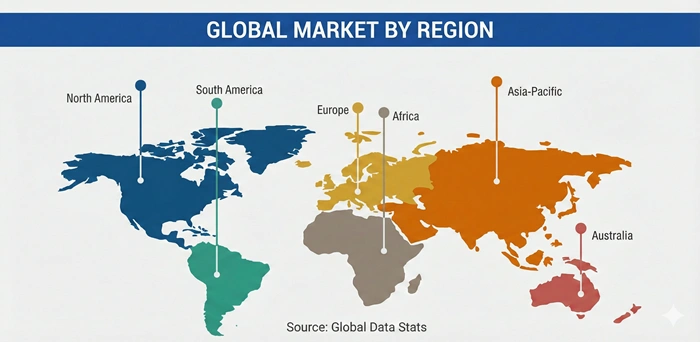
Regional expansion patterns demonstrate significant investment activity across Asia Pacific, Europe, and North America as pharmaceutical companies, biotechnology firms, and venture capital organizations prioritize sustainability-focused innovations. Government initiatives, research grants, and collaborative partnerships between academic institutions and industry players accelerate commercialization of sustainable bioprocessing technologies. The startup ecosystem contributes innovative solutions including environmentally friendly bioreactors, advanced monitoring devices, and novel biomaterials that push industry boundaries. Strategic alliances between established pharmaceutical manufacturers and emerging technology providers facilitate rapid deployment of sustainable bioprocessing equipment at commercial scale. The convergence of regulatory requirements, investor expectations, and consumer preferences creates powerful incentives for biomanufacturing facilities worldwide to adopt sustainable bioprocessing practices as standard operating procedures rather than optional enhancements.
Expert Speaks
-
Rainer Blair, CEO of Danaher Corporation, stated that the company remains committed to advancing sustainable biomanufacturing solutions and continues investing significantly in technologies that help customers reduce environmental impact while maintaining operational excellence across bioprocessing facilities worldwide.
-
Marc Casper, President and CEO of Thermo Fisher Scientific, emphasized that environmental sustainability represents a core component of the company's mission, highlighting ongoing efforts to develop innovative single-use technologies and bioreactor systems that substantially reduce water consumption, energy usage, and greenhouse gas emissions throughout biologics production.
-
Joachim Kreuzburg, former CEO of Sartorius AG, noted that implementing sustainable practices throughout bioprocessing operations has become essential for the pharmaceutical industry, with the company focusing on perfusion-enabled bioreactor technologies and flow-through platforms that minimize facility footprint and contribute to lower carbon emissions.
Key Report Takeaways
-
North America leads the sustainable bioprocessing market with the largest revenue share of 40.5% in 2025 due to robust biotechnology infrastructure, advanced research and development capabilities, and early adoption of digitalized and intensified bioprocessing systems across pharmaceutical manufacturing facilities
-
Asia Pacific emerges as the fastest growing region expected to expand at a CAGR of 16.5% from 2026 to 2033 driven by rapid biomanufacturing capacity development, favorable government policies supporting biotechnology innovation, and substantial investments in sustainable production infrastructure across China, India, South Korea, and Singapore
-
The biopharmaceuticals application segment dominates the sustainable bioprocessing market accounting for 46.8% revenue share in 2024 propelled by high demand for monoclonal antibodies, vaccines, cell therapies, and gene therapies requiring sustainable, efficient, and flexible bioprocess technologies
-
The industrial biotechnology segment represents the fastest growing application expected to witness CAGR of 14.7% during forecast period as industries implement sustainable bioprocess technologies for producing enzymes, biomaterials, biofuels, and specialty chemicals aligned with circular economy principles
-
The continuous perfusion processing mode is projected to grow at highest CAGR of 14.4% between 2026 and 2033 due to demand for intensive and highly efficient bioprocessing enabling continuous production that reduces downtimes, improves volumetric productivity, and aligns with sustainability goals through reduced resource consumption per production unit
-
The downstream segment holds market share of 47.15% and is expected to expand rapidly with CAGR of 14.6% driven by increasing need for refined purification, enhanced filtration efficiency, and superior product quality through sustainable solutions including continuous chromatography, membrane filtration, and eco-efficient purification technologies that minimize waste and energy consumption
Market Scope
| Report Coverage | Details |
|---|---|
| Market Size by 2033 | USD 15.20 Billion |
| Market Size by 2025 | USD 7.38 Billion |
| Market Size by 2026 | USD 8.40 Billion |
| Market Growth Rate from 2026 to 2033 | CAGR of 13.80% |
| Dominating Region | North America |
| Fastest Growing Region | Asia Pacific |
| Base Year | 2025 |
| Forecast Period | 2026 to 2033 |
| Segments Covered | Offering/Product, Processing Mode/Technology, Process Stage, Application/End-user, Material/Sustainability Approach, Deployment/Business Model, and Region |
| Regions Covered | North America, Europe, Asia-Pacific, Latin America, and Middle East & Africa |
Market Dynamics
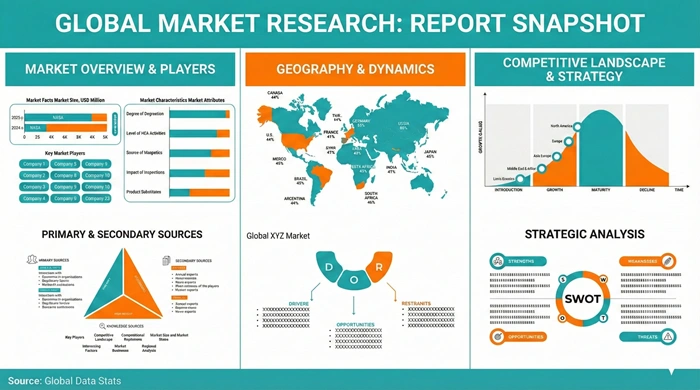
Drivers Impact Analysis
Growing Environmental Compliance Requirements and Corporate Sustainability Commitments Accelerate Market Adoption
| Factor | (≈) % Impact on CAGR Forecast | Geographic Relevance | Impact Timeline |
|---|---|---|---|
| Increasing demand for biologics and biopharmaceuticals | 4.2% | Global with concentration in North America and Europe | 2026-2033 |
| Stringent environmental regulations and ESG mandates | 3.8% | North America, Europe, Asia Pacific | 2026-2030 |
| Technological advancements in single-use and continuous processing | 3.5% | North America, Europe, China | 2026-2033 |
| Rising investments in biotechnology research and infrastructure | 2.3% | Asia Pacific, North America | 2027-2033 |
The sustainable bioprocessing market experiences powerful growth drivers originating from mounting environmental compliance requirements imposed by governmental regulatory agencies worldwide. Pharmaceutical and biotechnology companies face increasing pressure to demonstrate measurable reductions in carbon emissions, water consumption, and plastic waste generation throughout manufacturing operations. Corporate sustainability commitments aligned with Environmental Social Governance frameworks have transformed from voluntary initiatives into business imperatives that influence investor decisions, customer preferences, and competitive positioning. Companies implementing sustainable bioprocessing technologies gain competitive advantages through reduced operational costs, enhanced regulatory compliance, improved brand reputation, and alignment with stakeholder expectations for environmental responsibility.
Technological innovations across bioprocessing equipment categories enable manufacturers to achieve sustainability objectives without compromising production efficiency or product quality. Advanced single-use technologies eliminate requirements for extensive cleaning procedures that consume significant water and energy resources in traditional stainless steel systems. Continuous processing platforms reduce facility footprint requirements while improving volumetric productivity and resource utilization efficiency. Integration of artificial intelligence, machine learning algorithms, and Internet of Things sensors enables real-time process optimization that minimizes raw material waste and energy consumption. The convergence of regulatory pressures, technological capabilities, and economic incentives creates sustained momentum for sustainable bioprocessing market expansion across pharmaceutical manufacturing facilities globally. Increasing adoption rates among both established pharmaceutical companies and emerging biotechnology startups demonstrate broad industry recognition that sustainable bioprocessing represents the future standard for biologics manufacturing rather than a niche specialization.
Restraints Impact Analysis
High Initial Capital Investment and Technical Complexity Present Adoption Barriers
| Factor | (≈) % Impact on CAGR Forecast | Geographic Relevance | Impact Timeline |
|---|---|---|---|
| High upfront investment costs for sustainable technologies | -1.8% | Emerging markets in Latin America and Middle East & Africa | 2026-2029 |
| Technical complexity requiring specialized workforce training | -1.2% | Asia Pacific (excluding China, Japan), Africa | 2026-2028 |
| Limited recycling infrastructure for single-use components | -0.9% | Latin America, Middle East & Africa, parts of Asia Pacific | 2026-2030 |
| Regulatory uncertainties in emerging bioprocessing markets | -0.7% | Southeast Asia, Middle East, Africa | 2026-2027 |
The sustainable bioprocessing market faces notable restraints stemming from substantial upfront capital investment requirements associated with implementing advanced sustainable technologies across biomanufacturing facilities. Smaller biotechnology companies and contract development manufacturing organizations operating with limited financial resources encounter significant barriers when attempting to transition from established stainless steel infrastructure to modern sustainable bioprocessing platforms. Equipment costs for next-generation bioreactors, continuous chromatography systems, and digital monitoring technologies represent substantial financial commitments that require careful justification through long-term return on investment analysis. Organizations must balance immediate capital expenditures against projected operational cost savings and environmental benefits realized over extended timeframes.
Technical complexity associated with sustainable bioprocessing technologies presents additional challenges particularly for facilities located in regions with limited access to specialized workforce talent. Implementation of artificial intelligence-driven process optimization, continuous perfusion systems, and integrated digital platforms requires employees with sophisticated technical skills spanning biotechnology, data analytics, and automation engineering. Training existing personnel or recruiting qualified talent adds time and cost to technology adoption initiatives. Furthermore, inadequate recycling infrastructure for single-use bioprocessing components in certain geographic regions undermines overall sustainability value propositions. While single-use systems offer advantages including reduced contamination risk and eliminated cleaning requirements, lack of established collection and recycling programs results in waste disposal challenges. Regulatory uncertainties in emerging bioprocessing markets create hesitation among manufacturers considering substantial investments in sustainable technologies without clear guidance on compliance requirements and approval pathways for products manufactured using novel bioprocessing approaches.
Opportunities Impact Analysis
Emerging Markets and Advanced Therapy Development Create Growth Avenues
| Factor | (≈) % Impact on CAGR Forecast | Geographic Relevance | Impact Timeline |
|---|---|---|---|
| Expansion of biosimilars and generic biologics production | 2.7% | Asia Pacific, Eastern Europe, Latin America | 2027-2033 |
| Cell and gene therapy manufacturing scale-up requirements | 2.4% | North America, Europe, Asia Pacific | 2026-2033 |
| Development of biobased polymers and recyclable materials | 1.9% | Europe, North America | 2028-2033 |
| Contract manufacturing organization capacity expansion | 2.1% | Asia Pacific, North America | 2026-2033 |
The sustainable bioprocessing market presents substantial growth opportunities through expanding biosimilars and generic biologics production in cost-competitive manufacturing regions. Patent expirations for blockbuster biologic drugs create market entry opportunities for biosimilar manufacturers seeking to establish production capacity using cost-effective and environmentally responsible bioprocessing technologies. Emerging markets across Asia Pacific, Eastern Europe, and Latin America offer favorable economic conditions including lower labor costs, growing technical expertise, and supportive governmental policies encouraging biotechnology sector development. Sustainable bioprocessing technologies enable these facilities to compete globally while meeting international regulatory standards and environmental expectations from the outset rather than requiring costly retrofitting of older infrastructure.
Cell and gene therapy manufacturing represents a transformative opportunity for sustainable bioprocessing market expansion as these advanced therapeutic modalities transition from research concepts to commercial reality. Personalized medicine approaches require flexible manufacturing platforms capable of producing small batches with rapid changeover capabilities between different therapeutic products. Sustainable bioprocessing technologies including modular facilities, single-use systems, and automated manufacturing platforms align perfectly with operational requirements for cell and gene therapy production. Development of innovative biobased polymers and recyclable materials for bioprocessing equipment components addresses environmental concerns associated with plastic waste from single-use systems while maintaining contamination prevention benefits. Contract development and manufacturing organizations expanding capacity to serve growing biologics pipelines increasingly prioritize sustainable facility designs, energy-efficient equipment, and circular economy principles. These organizations recognize that sustainability credentials enhance competitive positioning when pursuing partnerships with pharmaceutical companies facing stakeholder pressure to demonstrate environmental responsibility throughout supply chains. Strategic investments in sustainable bioprocessing capabilities position contract manufacturers as preferred partners for next-generation therapeutic development and commercial production.
Segment Analysis
By Process Stage - Upstream Processing
Upstream Segment Dominates with Advanced Bioreactor Technologies and Cell Culture Optimization Driving Sustainable Manufacturing Excellence
The upstream processing segment registered dominance in the sustainable bioprocessing market with a commanding revenue share of 53.4% in 2025 attributable to increasing adoption of advanced bioreactor systems, cell culture media optimization techniques, and innovative processing technologies that enhance productivity while minimizing environmental impact. Upstream operations represent the foundation of biomanufacturing processes directly influencing product deliverability, overall productivity metrics, and sustainability performance across entire production workflows. Digital monitoring capabilities, artificial intelligence-based automation platforms, and intelligent bioprocessing control systems prove particularly valuable in upstream processes demanding stringent environmental control including temperature regulation, dissolved oxygen management, pH stability, and nutrient feeding optimization.
Investment in upstream bioprocessing technologies continues accelerating driven by surging demand for biologics including monoclonal antibodies, recombinant proteins, vaccines, cell therapies, and gene therapies requiring scalable and reproducible production platforms. Sustainable upstream solutions incorporate perfusion-enabled bioreactor systems allowing continuous operation that reduces facility footprint requirements compared to traditional batch processing approaches. Single-use bioreactor technologies eliminate water and energy consumption associated with cleaning and sterilization procedures required for stainless steel equipment while simultaneously reducing cross-contamination risks. Advanced cell culture media formulations optimize cell growth and protein expression while minimizing raw material waste through improved nutrient utilization efficiency. Integration of real-time analytical technologies enables process analytical technology implementations that facilitate continuous process verification, rapid deviation detection, and immediate corrective actions maintaining product quality consistency. The upstream segment benefits from North America leadership in biotechnology innovation combined with rapid capacity expansion across Asia Pacific manufacturing hubs where companies including Thermo Fisher Scientific, Sartorius AG, Danaher Corporation, and Merck KGaA establish state-of-the-art facilities incorporating latest sustainable bioprocessing innovations.
Manufacturing facilities across biopharmaceutical companies and contract development manufacturing organizations prioritize upstream technology investments recognizing that optimization at this initial production stage delivers multiplicative benefits throughout subsequent downstream processing operations. Enhanced upstream productivity through higher cell densities, improved product titers, and extended culture durations directly reduces per-unit production costs while decreasing environmental impact per dose of therapeutic product manufactured. The upstream segment is projected to grow at approximately 13.2% CAGR from 2026 to 2033 with particularly strong expansion in Asia Pacific region expected at 15.8% CAGR as Chinese, Indian, and South Korean manufacturers rapidly adopt sustainable bioprocessing technologies. Leading companies in this segment including Cytiva, Eppendorf AG, Corning Incorporated, and PBS Biotech continue launching innovative products incorporating sustainability features such as reduced-plastic designs, energy-efficient operation modes, and compatibility with renewable materials. Strategic partnerships between equipment manufacturers and biopharmaceutical companies accelerate technology transfer and facilitate customized solutions addressing specific upstream bioprocessing challenges while advancing overall industry sustainability objectives.
By Application/End-user - Industrial Biotechnology
Industrial Biotechnology Segment Emerges as Fastest Growing Application Driven by Sustainable Production of Enzymes, Biomaterials, Biofuels, and Specialty Chemicals
The industrial biotechnology segment represents the fastest growing application category in the sustainable bioprocessing market projected to expand at a robust CAGR of 14.7% throughout the forecast period as industries across manufacturing sectors implement sustainable bioprocess technologies for producing enzymes, biomaterials, biofuels, and specialty chemicals aligned with circular economy principles and carbon neutrality objectives. Traditional petrochemical-based production methods face mounting regulatory scrutiny and consumer resistance due to environmental impacts including greenhouse gas emissions, non-renewable resource depletion, and persistent pollution from synthetic chemical residues. Industrial biotechnology offers compelling alternatives through biological manufacturing processes that utilize renewable feedstocks, operate at ambient temperatures and pressures, generate biodegradable products, and integrate seamlessly with circular economy systems converting waste streams into valuable outputs.
Sustainable bioprocessing technologies enable industrial biotechnology applications to achieve commercial viability through improved process efficiency, enhanced product yields, and reduced production costs compared to earlier generation bioprocessing equipment. Fermentation systems optimized for microbial production of industrial enzymes incorporate continuous processing capabilities, automated nutrient feeding systems, and integrated product recovery operations that minimize energy consumption and waste generation. Biomaterials production including bioplastics, natural fibers, and bio-based chemicals benefits from advances in metabolic engineering combined with sustainable bioprocessing platforms that support economically competitive manufacturing at commercial scale. Biofuels sector adoption of sustainable bioprocessing accelerates as governments implement renewable energy mandates and carbon pricing mechanisms that improve economic attractiveness of biological fuel production from agricultural residues, algae, and other renewable biomass sources. Specialty chemicals including biosurfactants, natural pigments, and pharmaceutical intermediates increasingly utilize sustainable bioprocessing to meet customer requirements for environmentally responsible supply chains.
The industrial biotechnology segment experiences particularly strong growth across Europe where stringent environmental regulations, established circular economy policies, and consumer preference for sustainable products create favorable market conditions. European companies including BASF SE, DSM, and Roquette Frères lead innovation in applying sustainable bioprocessing for industrial applications with extensive research collaborations spanning academic institutions, technology startups, and manufacturing end-users. Asia Pacific region demonstrates rapid adoption as governments in China, India, and Southeast Asian nations implement industrial modernization programs prioritizing green manufacturing technologies. Industrial biotechnology market share reached approximately 18.3% in 2025 and is expected to exceed 22% by 2033 as sustainable bioprocessing enables broader range of industrial applications. North American industrial biotechnology sector benefits from venture capital investment in synthetic biology startups developing novel production organisms combined with established chemical manufacturing infrastructure supporting technology commercialization. Leading sustainable bioprocessing equipment suppliers including Thermo Fisher Scientific, Merck KGaA, and Sartorius AG develop specialized platforms tailored for industrial biotechnology applications featuring robust operation in challenging fermentation conditions, scalable designs supporting pilot through commercial production, and integration capabilities with existing industrial infrastructure.
Regional Insights
North America
North America Maintains Market Leadership Through Advanced Infrastructure and Early Technology Adoption
North America dominated the sustainable bioprocessing market commanding the largest revenue share of 40.5% in 2025 attributed to robust biotechnology infrastructure, sophisticated research and development capabilities, and early adoption of digitalized and intensified bioprocessing systems across pharmaceutical manufacturing facilities throughout the region. The United States leads North American market performance driven by concentrated biopharmaceutical industry presence, substantial government and private sector funding supporting biotechnology innovation, and established regulatory frameworks encouraging sustainable manufacturing practices. Major pharmaceutical companies including Amgen, Gilead Sciences, Regeneron Pharmaceuticals, and Bristol Myers Squibb operate extensive biomanufacturing facilities incorporating latest sustainable bioprocessing technologies to meet production demands for blockbuster biologic drugs while achieving corporate sustainability commitments.
Contract development and manufacturing organizations based in North America invest heavily in sustainable facility designs recognizing competitive advantages gained through environmental credentials when pursuing partnerships with pharmaceutical sponsors. Companies such as Lonza, Catalent, and Samsung Biologics North American operations implement continuous processing platforms, single-use technology suites, and energy management systems achieving measurable reductions in water consumption, electricity usage, and greenhouse gas emissions per unit of therapeutic product manufactured. Regulatory environment established by United States Food and Drug Administration supports sustainable bioprocessing adoption through guidance documents encouraging quality by design approaches, process analytical technology implementations, and continuous manufacturing methodologies that align with sustainability objectives. Canada contributes growing biomanufacturing capacity particularly in cell and gene therapy production where companies leverage favorable regulatory pathways and government incentives supporting advanced therapy commercialization.
North America region achieved sustainable bioprocessing market valuation of approximately USD 2.99 billion in 2025 and is projected to reach USD 5.89 billion by 2033 growing at CAGR of 13.1% throughout forecast period. Regional growth reflects combination of existing facility modernization investments and new manufacturing capacity additions incorporating sustainable design principles from initial construction phases. Academic research institutions including Massachusetts Institute of Technology, University of California system, and North Carolina State University collaborate extensively with industry partners advancing sustainable bioprocessing innovations through government-funded research programs and industry-sponsored development initiatives. The United States market specifically benefits from presence of leading bioprocessing equipment manufacturers including Thermo Fisher Scientific, Cytiva, Repligen Corporation, and Pall Corporation maintaining headquarters, research facilities, and manufacturing operations supporting rapid technology commercialization and customer technical support. Venture capital investment in biotechnology startups developing novel therapeutic modalities creates sustained demand for flexible sustainable bioprocessing platforms supporting pilot-scale development through commercial manufacturing scale-up. North America sustainable bioprocessing market is expected to maintain leadership position throughout forecast period supported by continued pharmaceutical industry innovation, regulatory framework stability, and established supplier ecosystem delivering comprehensive technology solutions.
Asia Pacific
Asia Pacific Emerges as Fastest Growing Region Fueled by Manufacturing Capacity Expansion and Government Support
Asia Pacific represents the fastest growing region in the sustainable bioprocessing market projected to expand at remarkable CAGR of 16.5% from 2026 to 2033 driven by rapid biomanufacturing capacity development, favorable government policies supporting biotechnology sector growth, and substantial investments in sustainable production infrastructure across China, India, South Korea, Singapore, and emerging Southeast Asian markets. Regional growth reflects strategic initiatives by pharmaceutical companies and contract development manufacturing organizations establishing cost-competitive production facilities serving both domestic markets experiencing rising healthcare demand and international markets through biosimilar exports and contract manufacturing services. Economic development across Asia Pacific nations enables increased healthcare sector investment supporting biologics manufacturing capacity additions incorporating modern sustainable bioprocessing technologies from initial facility design stages.
China leads Asia Pacific sustainable bioprocessing market growth achieving dominant position with approximately 42% regional market share in 2025 attributable to aggressive government policies promoting biopharmaceutical innovation, substantial domestic market demand for biologic therapeutics, and rapid technical capability development across manufacturing workforce. Chinese biotechnology companies including WuXi Biologics, BeiGene, and Innovent Biologics expand manufacturing operations incorporating sustainable single-use systems, continuous processing technologies, and digital monitoring platforms meeting international quality standards while achieving operational cost advantages through economies of scale. Government investments through national programs supporting pharmaceutical innovation accelerate adoption of environmentally friendly and energy-efficient technologies positioning China as global biomanufacturing hub. India demonstrates strong growth momentum driven by established pharmaceutical manufacturing expertise, cost-competitive production capabilities, and expanding biologics sector targeting both domestic patient population and international biosimilar markets.
Asia Pacific sustainable bioprocessing market achieved valuation of approximately USD 2.21 billion in 2025 and is expected to reach USD 7.09 billion by 2033 representing fastest regional growth rate globally. South Korea emerges as innovation leader within region with companies including Samsung Biologics and Celltrion operating world-class biomanufacturing facilities incorporating advanced sustainable bioprocessing technologies. Strategic investments by multinational equipment manufacturers including Thermo Fisher Scientific establishing production facility in Singapore, Merck KGaA opening bioprocessing center in South Korea, and Sartorius AG expanding Asian operations demonstrate industry recognition of regional growth opportunities. Regional competitiveness benefits from manufacturing cost efficiency, availability of skilled technical workforce graduating from expanding biotechnology education programs, and strategic partnerships between regional companies and global biopharmaceutical organizations. Singapore positions itself as regional biotechnology hub through government incentives, robust intellectual property protection, and world-class research infrastructure attracting multinational pharmaceutical companies establishing Asian headquarters and manufacturing operations. Southeast Asian nations including Thailand, Malaysia, and Vietnam emerge as next wave of bioprocessing capacity development offering additional cost advantages and supportive government policies. Asia Pacific growth trajectory positions region as critical component of global biopharmaceutical supply chain with sustainable bioprocessing technologies enabling quality standards compliance while maintaining cost competitiveness essential for biosimilar production and contract manufacturing services.
Top Key Players
-
Sartorius AG (Germany)
-
Danaher Corporation (United States)
-
Thermo Fisher Scientific Inc. (United States)
-
Merck KGaA (Germany)
-
Repligen Corporation (United States)
-
Avantor Inc. (United States)
-
Corning Incorporated (United States)
-
Eppendorf AG (Germany)
-
Saint-Gobain Life Sciences (France)
-
Greiner Bio-One International GmbH (Austria)
-
Lonza Group AG (Switzerland)
-
Celanese Corporation (United States)
-
Roquette Frères (France)
-
BASF SE (Germany)
-
DSM (Netherlands)
-
PBS Biotech Inc. (United States)
-
Getinge AB (Sweden)
-
Entegris Inc. (United States)
-
Univercells Technologies (Belgium)
-
Meissner Filtration Products Inc. (United States)
Recent Developments
-
Thermo Fisher Scientific Inc. (2025) - In February 2025 the company announced plans to acquire Solventum's Purification and Filtration business for USD 4.1 billion substantially enhancing its global bioproduction capabilities and expanding sustainable bioprocessing technology portfolio serving biopharmaceutical manufacturing customers worldwide
-
Cytiva (Danaher Corporation) (2025) - In March 2025 expanded its Xcellerex X-platform bioreactor portfolio by introducing 500 liter and 2000 liter single-use systems enabling seamless scale-up from 50 liter to 2000 liter supporting development of advanced therapeutics across early clinical to commercial production stages
-
Thermo Fisher Scientific Inc. (2024) - In July 2024 launched biobased films for single-use bioprocessing containers reducing greenhouse gas emissions and supporting recycling efforts across pharmaceutical manufacturing facilities with these innovative films receiving ISCC PLUS certification validating sustainability credentials
-
Lonza Group AG (2024) - In October 2024 completed acquisition of Genentech's large-scale biomanufacturing site in Vacaville California for USD 1.2 billion expanding its global mammalian production network and enhancing sustainable manufacturing capacity serving commercial biologics production
-
Univercells Technologies (2024) - In October 2024 launched its scale-X nexo fixed-bed bioreactor in Nivelles Belgium optimizing small-scale cell culture workflows reducing development timelines and costs while enabling seamless scalability for biopharmaceutical applications supporting sustainable manufacturing principles
Market Trends
Integration of Digital Technologies and Circular Economy Principles Reshape Industry Practices
The sustainable bioprocessing market experiences transformative trends as manufacturers integrate comprehensive digital technology ecosystems throughout biomanufacturing operations enabling data-driven decision making and predictive analytics. Internet of Things sensors deployed across bioprocessing equipment generate continuous streams of operational data captured by cloud-based platforms and analyzed using artificial intelligence algorithms identifying optimization opportunities, predicting maintenance requirements, and ensuring consistent product quality. Digital twin technologies allow virtual simulation of bioprocess modifications before implementation in physical facilities reducing experimental costs and accelerating process development timelines. Blockchain integration emerges for supply chain transparency enabling pharmaceutical companies to demonstrate sustainability credentials throughout raw material sourcing, manufacturing operations, and product distribution networks. Regulatory agencies increasingly recognize digital bioprocessing data as acceptable evidence supporting product quality demonstrations potentially streamlining approval processes for facilities implementing advanced digital monitoring capabilities.
Circular economy principles gain prominence as sustainable bioprocessing market participants address plastic waste concerns associated with single-use technologies through development of recyclable materials, establishment of collection programs, and innovation in reprocessing technologies. Equipment manufacturers collaborate with specialty chemical companies developing biobased polymers derived from renewable resources offering equivalent performance characteristics to petroleum-based plastics while providing end-of-life biodegradability or recyclability options. Pharmaceutical companies implement comprehensive waste reduction programs encompassing sustainable procurement practices, manufacturing process optimization minimizing byproduct generation, and closed-loop water recycling systems substantially decreasing freshwater consumption. Industry consortiums form to address collective sustainability challenges including standardization of recyclable single-use component designs, establishment of regional collection networks, and development of environmental impact assessment methodologies enabling comparative evaluation of alternative bioprocessing approaches. These collaborative initiatives accelerate sustainable bioprocessing market evolution toward comprehensive environmental responsibility encompassing entire product lifecycles from raw material extraction through end-of-life disposal or recycling demonstrating pharmaceutical industry commitment to long-term ecological stewardship while maintaining therapeutic product quality and patient safety as paramount priorities.
Segments Covered in the Report
By Offering/Product
-
Single-use Systems (Bioreactors, Bags, Tubing)
-
Downstream Chromatography and Filtration
-
Reusable/Stainless Equipment
-
Consumables (Filters, Membranes)
-
Media and Reagents
-
Process Analytics and Software
-
Services (Engineering, Lifecycle)
By Processing Mode/Technology
-
Batch (Fed-batch)
-
Continuous/Perfusion
-
Hybrid (Integrated Continuous with Single-use)
-
Cell-free/Enzymatic Biocatalysis
By Process Stage
-
Upstream (Bioreactors, Cell Culture Media)
-
Downstream (Clarification, Chromatography, Filtration)
-
Formulation and Fill-finish
-
Analytics and Quality Control
By Application/End-user
-
Biopharmaceuticals (Monoclonal Antibodies, Vaccines, Cell and Gene Therapy)
-
Industrial Biotechnology (Enzymes, Specialty Chemicals)
-
Food and Beverage
-
Biofuels
-
Environmental/Bioremediation
By Material/Sustainability Approach
-
Recyclable/Biobased Polymers and Coatings
-
Reduced-plastic Single-use Designs
-
Reusable Stainless Components
-
Chemical/Solvent Replacement (Green Solvents)
-
Water and Energy Recovery Systems
By Deployment/Business Model
-
OEM Sales
-
Consumables Recurring Model
-
Contract Manufacturing/CDMO
-
Equipment-as-a-Service
-
Software and Digital Services (LIMS, PAT)
By Region
-
North America (United States, Canada, Mexico)
-
Europe (Germany, United Kingdom, France, Italy, Spain, Rest of Europe)
-
Asia-Pacific (China, India, Japan, South Korea, Singapore, Australia, Rest of Asia-Pacific)
-
Latin America (Brazil, Argentina, Rest of Latin America)
-
Middle East and Africa (UAE, Saudi Arabia, South Africa, Rest of MEA)
Frequently Asked Questions
Question 1: What is the sustainable bioprocessing market size expected to reach by 2033?
Answer: The sustainable bioprocessing market is projected to reach approximately USD 15.20 billion by 2033, growing at a CAGR of 13.80% from 2026 to 2033. The market is driven by increasing adoption of eco-friendly biomanufacturing technologies across pharmaceutical and biotechnology industries worldwide.
Question 2: Which region dominates the sustainable bioprocessing market currently?
Answer: North America dominates the sustainable bioprocessing market with 40.5% revenue share in 2025 due to robust biotechnology infrastructure and early adoption of advanced technologies. The region benefits from strong regulatory frameworks and substantial investments in environmentally responsible manufacturing practices.
Question 3: What are the primary factors driving sustainable bioprocessing market growth?
Answer: The sustainable bioprocessing market growth is primarily driven by increasing global demand for biologics and rising environmental regulations requiring reduced carbon emissions. Additional factors include technological advancements in single-use systems and growing corporate commitments to Environmental Social Governance principles across pharmaceutical manufacturing operations.
Question 4: Which application segment shows fastest growth in sustainable bioprocessing market?
Answer: The industrial biotechnology application segment demonstrates fastest growth with projected CAGR of 14.7% through 2033 in the sustainable bioprocessing market. This segment benefits from increasing adoption of biological manufacturing processes for enzymes, biomaterials, biofuels, and specialty chemicals aligned with circular economy objectives.
Question 5: What role does artificial intelligence play in sustainable bioprocessing market development?
Answer: Artificial intelligence enables real-time process optimization and predictive analytics in the sustainable bioprocessing market improving operational efficiency significantly. AI technologies analyze extensive sensor data facilitating rapid deviation detection, accurate yield predictions, and automated decision-making that reduces resource consumption while maintaining product quality standards.