
Stone Crushing Equipment Market Overview
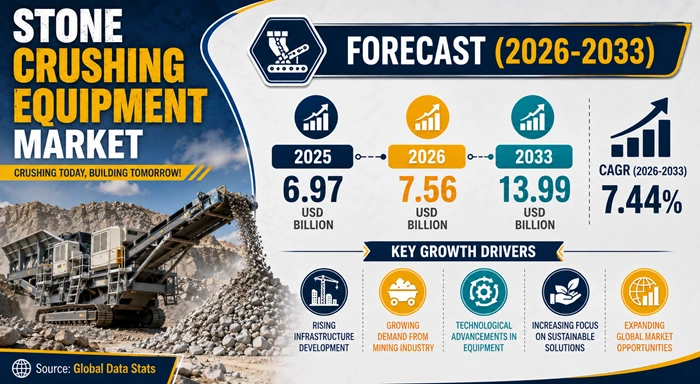
The global stone crushing equipment market size is valued at USD 6.97 billion in 2025 and is predicted to increase from USD 7.56 billion in 2026 to approximately USD 13.99 billion by 2033, growing at a CAGR of 7.44% from 2026 to 2033. Infrastructure development projects worldwide are creating unprecedented demand for crushed aggregates used in construction, road building, and mining operations. Modern crushing equipment incorporates advanced technologies that enhance efficiency, reduce operational costs, and minimize environmental impact compared to traditional machinery.
AI Impact on the Stone Crushing Equipment Industry
Intelligent Automation Revolutionizing Crushing Operations and Predictive Maintenance
Artificial intelligence is fundamentally transforming the stone crushing equipment market by introducing sophisticated automation capabilities, predictive maintenance systems, and real-time optimization that dramatically improve operational efficiency and equipment longevity. Machine learning algorithms analyze vast amounts of operational data collected from sensors embedded throughout crushing equipment, detecting patterns that indicate optimal performance parameters for different material types, feed rates, and environmental conditions. AI-powered control systems automatically adjust crusher settings including gap widths, rotation speeds, and feed rates in real-time based on material hardness, moisture content, and desired output specifications, eliminating the need for manual interventions that often result in suboptimal performance. Computer vision systems integrated with high-resolution cameras monitor aggregate output continuously, analyzing particle size distribution, shape characteristics, and contamination levels to ensure consistent product quality that meets stringent construction specifications.
Predictive maintenance represents one of the most valuable AI applications in the stone crushing equipment market, where algorithms analyze vibration patterns, temperature fluctuations, power consumption variations, and acoustic signatures to identify potential equipment failures days or weeks before they occur. This proactive approach enables maintenance teams to schedule repairs during planned downtime rather than experiencing unexpected breakdowns that halt production and result in costly delays. Advanced AI systems create digital twins of crushing equipment, simulating operational scenarios virtually to optimize production strategies, test new configurations, and train operators without risking actual machinery or production interruptions. Natural language processing interfaces allow operators to interact with crushing equipment using voice commands, receiving instant status updates, performance recommendations, and troubleshooting guidance that enhances safety while reducing the learning curve for new personnel.
Growth Factors
Infrastructure Investment and Urbanization Drive Aggregate Demand
The stone crushing equipment market is experiencing robust growth propelled by massive global infrastructure investments, accelerating urbanization, and expanding mining activities that require enormous quantities of crushed aggregates. Governments worldwide are committing trillions of dollars to infrastructure modernization projects including highways, railways, airports, ports, and urban transit systems that consume vast amounts of crushed stone, gravel, and sand produced by crushing equipment. The United States Infrastructure Investment and Jobs Act allocates over USD 1 trillion for infrastructure improvements over the next decade, while China's Belt and Road Initiative represents multi-trillion dollar investments in infrastructure development across Asia, Europe, and Africa. Rapid urbanization particularly in developing regions drives construction of residential buildings, commercial complexes, industrial facilities, and supporting infrastructure that all require crushed aggregate as fundamental raw materials.
The mining industry's expansion to meet growing demand for minerals, metals, and rare earth elements creates sustained demand for high-capacity crushing equipment capable of processing hard rock materials efficiently. Population growth worldwide necessitates continuous expansion of housing, commercial spaces, and public infrastructure, maintaining steady demand for construction aggregates throughout the forecast period. Technological advancements in crushing equipment including automation, energy efficiency improvements, and enhanced wear-resistant materials make modern equipment significantly more productive and cost-effective than older generation machinery, encouraging replacement cycles and upgrades. Environmental regulations requiring recycling of construction and demolition waste create new market opportunities for specialized crushing equipment designed to process concrete, asphalt, and other recyclable materials back into usable aggregates.
Market Outlook
Sustainability Focus and Technological Innovation Shape Future Trajectory
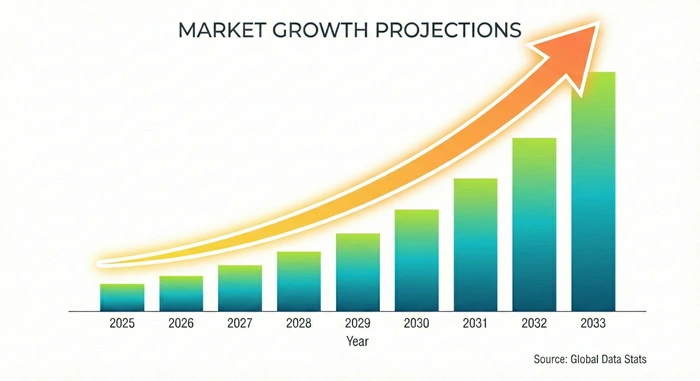
The stone crushing equipment market is positioned for sustained growth through 2033 as manufacturers innovate to address evolving customer demands for more efficient, environmentally friendly, and technologically advanced crushing solutions. Mobile and portable crushing equipment continues gaining market share as contractors and mining operations appreciate the flexibility to relocate crushing operations to different sites, reducing material transportation costs and environmental impacts associated with hauling raw materials over long distances. Electric and hybrid-powered crushing equipment emerges as viable alternatives to traditional diesel-powered machinery, offering significant reductions in fuel consumption, greenhouse gas emissions, and operational noise that address increasingly stringent environmental regulations. Advanced wear-resistant materials including ceramic composites and specialized alloy steels extend equipment service life while maintaining optimal performance, reducing maintenance frequency and total cost of ownership.
Integration of crushing equipment with comprehensive fleet management systems enables remote monitoring, performance optimization, and predictive maintenance across multiple machines operating at distributed locations. The shift toward circular economy principles drives demand for crushing equipment optimized for recycling applications, processing construction demolition waste, and converting industrial byproducts into valuable aggregates. Emerging markets in Africa, Southeast Asia, and Latin America present enormous growth opportunities as infrastructure development accelerates in regions with rapidly expanding populations and economies. Collaborative partnerships between equipment manufacturers and construction companies facilitate development of application-specific crushing solutions tailored to unique material characteristics, production requirements, and operational environments.
Expert Speaks
-
Joseph E. Creed, Chairman and Chief Executive Officer of Caterpillar Inc., emphasized that the company remains committed to innovation in construction and mining equipment, focusing on developing autonomous and electric-powered machinery that delivers superior productivity while supporting customers' sustainability objectives and operational efficiency goals in challenging mining and construction environments.
-
Takuya Imayoshi, President and Chief Executive Officer of Komatsu Ltd., highlighted that advancing automation technologies and electric equipment solutions represents strategic priorities for the company, noting that customers increasingly demand machinery combining high performance with reduced environmental impact, driving significant research and development investments in next-generation crushing and excavation equipment.
-
Mark Bristow, President and Chief Executive Officer of Barrick Gold Corporation, stated that partnerships with leading equipment manufacturers like Komatsu enable mining operations to adopt cutting-edge technology including electric excavators and automated crushing systems that substantially reduce operational costs while supporting decarbonization commitments essential for sustainable long-term mining operations.
Key Report Takeaways
-
Asia Pacific leads the stone crushing equipment market with approximately 38% market share in 2025, driven by massive infrastructure development projects, expanding mining and construction industries, abundant natural resources, and strong government support for urbanization and industrialization initiatives across China, India, Japan, and Southeast Asian nations.
-
North America is growing the fastest with a projected CAGR of 7.82% from 2026 to 2033, fueled by substantial infrastructure investments under federal and state programs, technological leadership in equipment automation and AI integration, robust mining sector growth, and ongoing replacement of aging equipment fleets with modern high-efficiency machinery.
-
Mining segment represents the primary application area for stone crushing equipment, accounting for approximately 42% of market consumption as mining operations require powerful crushing machinery for primary and secondary crushing of hard rock materials during mineral extraction, ore processing, and aggregate production for industrial applications.
-
The jaw crusher segment contributes the most to overall market revenue with approximately 45% share in 2025, reflecting widespread adoption across mining, quarrying, and construction applications due to its cost-effectiveness, reliability, versatility in handling various material types, and ability to process large quantities of raw materials efficiently.
-
Mobile crushing equipment is the most rapidly growing mobility segment with a projected CAGR of 8.15%, as contractors and mining companies increasingly prefer flexible, relocatable crushing solutions that reduce material transportation costs, enable on-site processing, and provide rapid deployment capabilities for temporary projects.
-
The cone crusher segment will grow quickly with an estimated CAGR of 7.84% and market share expanding from 28% to 31% by 2033, driven by superior performance in crushing hard and abrasive materials, technological advancements incorporating automation and hydraulic adjustments, and growing popularity of mobile cone crushers offering enhanced operational flexibility.
Market Scope
| Report Coverage | Details |
|---|---|
| Market Size by 2033 | USD 13.99 Billion |
| Market Size by 2025 | USD 6.97 Billion |
| Market Size by 2026 | USD 7.56 Billion |
| Market Growth Rate from 2026 to 2033 | CAGR of 7.44% |
| Dominating Region | Asia Pacific |
| Fastest Growing Region | North America |
| Base Year | 2025 |
| Forecast Period | 2026 to 2033 |
| Segments Covered | Product, Application, Mobility, Region |
| Regions Covered | North America, Europe, Asia Pacific, Latin America, Middle East and Africa |
Market Dynamics
Driver Impact Analysis
Accelerating Infrastructure Development and Construction Activities Fuel Market Growth
Global infrastructure development represents the most significant driver propelling the stone crushing equipment market toward sustained expansion across all geographic regions and application segments. Governments worldwide recognize infrastructure as fundamental to economic competitiveness, committing unprecedented funding levels to modernize aging transportation networks, expand urban infrastructure, and develop new economic corridors connecting population centers. The United States alone has earmarked over USD 1 trillion through the Infrastructure Investment and Jobs Act for highways, bridges, railways, airports, and water systems over the coming decade, creating sustained demand for crushed aggregates and the equipment that produces them. China continues massive infrastructure investments through domestic urbanization programs and international Belt and Road Initiative projects spanning over 140 countries across Asia, Europe, Africa, and Latin America.
Rapid urbanization transforms demographic landscapes worldwide, with the United Nations projecting that 68% of the global population will reside in urban areas by 2050, up from 55% in 2018, necessitating construction of residential housing, commercial buildings, industrial facilities, and supporting infrastructure that consume enormous quantities of crushed stone aggregates. The stone crushing equipment market benefits from growing construction activity in both developed markets undergoing infrastructure renewal and emerging markets experiencing first-time urban development. Mining industry expansion to extract minerals, metals, coal, and industrial materials essential for manufacturing, energy production, and technology applications drives sustained demand for primary crushing equipment capable of processing hard rock materials into manageable sizes for further processing. Technological improvements in crushing equipment enhance productivity, reduce operational costs, and improve product quality, making investments in modern machinery increasingly attractive to contractors and mining companies seeking competitive advantages.
| Driver | ≈ % Impact on CAGR Forecast | Geographic Relevance | Impact Timeline |
|---|---|---|---|
| Infrastructure Investment | +2.10% | Global, particularly North America and Asia Pacific | 2026-2033 |
| Urbanization and Construction Growth | +1.85% | Asia Pacific, Middle East, Africa | 2026-2033 |
| Mining Sector Expansion | +1.60% | Global, strongest in resource-rich regions | 2026-2033 |
| Technology Advancement | +1.25% | North America, Europe, developed Asia | 2026-2033 |
Restraints Impact Analysis
High Capital Costs and Environmental Regulations Create Market Barriers
The stone crushing equipment market confronts significant challenges related to high capital costs, substantial operational expenses, and increasingly stringent environmental regulations that constrain market penetration particularly in developing regions and among smaller operators. Modern crushing equipment represents major capital investments ranging from hundreds of thousands to several million dollars depending on capacity, automation level, and mobility features, creating financial barriers for small to medium-sized contractors and mining companies with limited access to capital financing. Operational costs including electricity or fuel consumption, maintenance requirements, replacement parts, and skilled labor expenses add substantially to total ownership costs, with energy-intensive crushing operations particularly vulnerable to commodity price fluctuations that can rapidly erode profitability margins.
Environmental regulations addressing noise pollution, dust emissions, vibration impacts, and land disturbance impose additional compliance costs and operational restrictions on crushing operations in the stone crushing equipment market. Residential development encroaching on traditional quarrying areas creates conflicts between crushing operations and nearby communities concerned about noise, dust, truck traffic, and aesthetic impacts, resulting in restricted operating hours, expensive mitigation measures, or forced relocations to more remote locations. Obtaining required environmental permits, consents to establish and operate, and regulatory approvals involves complex bureaucratic processes, extensive documentation requirements, environmental impact assessments, and community consultations that delay project timelines and increase development costs. Equipment maintenance complexity and reliance on specialized technical expertise creates challenges in regions lacking adequate service infrastructure, trained technicians, and reliable parts supply chains, potentially resulting in extended downtime and lost productivity.
| Restraint | ≈ % Impact on CAGR Forecast | Geographic Relevance | Impact Timeline |
|---|---|---|---|
| High Capital and Operating Costs | -1.40% | Developing markets, small operators globally | 2026-2033 |
| Environmental Regulations | -1.10% | Europe, North America, developed Asia | 2026-2033 |
| Skilled Labor Shortage | -0.75% | Global, particularly remote locations | 2026-2033 |
Opportunities Impact Analysis
Mobile Equipment and Recycling Applications Create Growth Avenues
The growing demand for mobile and portable crushing equipment presents substantial opportunities for manufacturers in the stone crushing equipment market to develop innovative products addressing customer requirements for flexibility, reduced transportation costs, and rapid deployment capabilities. Mobile crushers eliminate the need to transport raw materials to fixed crushing facilities, instead bringing crushing operations directly to quarry faces, construction sites, or demolition projects, significantly reducing haulage costs while minimizing environmental impacts associated with material transportation. Contractors appreciate mobile equipment's ability to relocate between projects as work completes, maximizing asset utilization across multiple job sites rather than leaving stationary equipment idle between projects. Technological advancements make modern mobile crushers increasingly sophisticated with features including remote operation, automated setup procedures, integrated screening capabilities, and comprehensive monitoring systems rivaling stationary installations.
Construction and demolition waste recycling represents rapidly expanding applications creating new market opportunities as circular economy principles gain traction and landfill disposal costs escalate. Specialized crushing equipment designed for recycling applications processes concrete, asphalt, bricks, and mixed construction waste into reusable aggregates suitable for road base, fill materials, or new concrete production, diverting waste from landfills while creating valuable secondary materials. Government mandates and industry sustainability commitments drive increasing adoption of recycled aggregates in construction projects, creating sustained demand for recycling-optimized crushing equipment throughout the stone crushing equipment market. Emerging markets in Africa, Southeast Asia, and Latin America offer enormous growth potential as infrastructure development accelerates, mining operations expand, and equipment adoption rates remain significantly below developed market levels, providing opportunities for both established manufacturers and local equipment producers.
| Opportunity | ≈ % Impact on CAGR Forecast | Geographic Relevance | Impact Timeline |
|---|---|---|---|
| Mobile Equipment Demand | +1.95% | Global, particularly North America and Europe | 2026-2033 |
| Recycling Applications | +1.50% | Europe, North America, developed Asia | 2027-2033 |
| Emerging Market Expansion | +1.30% | Africa, Southeast Asia, Latin America | 2026-2033 |
| Automation and AI Integration | +1.15% | Developed markets globally | 2027-2033 |
Segment Analysis
Jaw Crusher
Market Leadership Through Versatility and Cost-Effective Performance
The jaw crusher segment dominates the stone crushing equipment market with approximately 45% market share in 2025, valued at USD 3.14 billion, reflecting its fundamental role as the primary crushing solution across mining, quarrying, construction, and recycling applications worldwide. This segment's market leadership stems from jaw crushers' unmatched versatility in handling diverse material types ranging from soft limestone to extremely hard granite and basalt, with feed sizes accommodating boulders exceeding one meter in diameter. Cost-effectiveness represents a crucial advantage as jaw crushers typically require lower initial capital investment compared to cone or impact crushers with similar capacity ratings, making them accessible to smaller operators while offering excellent return on investment through reliable long-term performance. Simple mechanical design facilitates straightforward maintenance procedures that can be performed by operators with basic technical skills, reducing downtime and dependency on specialized service technicians.
North America shows particularly strong growth in the jaw crusher segment with a CAGR of 7.65%, driven by infrastructure renewal projects and mining operations modernizing equipment fleets with advanced models incorporating automation, remote monitoring, and energy-efficient drive systems. Major manufacturers including Metso Oyj, Sandvik AB, Terex Corporation, and Caterpillar Inc. dominate this segment through extensive product portfolios spanning capacities from compact portable units processing 50 tons per hour to massive stationary installations handling over 1,000 tons per hour for large mining operations. Technological innovations including hydraulically-adjusted discharge settings, automated gap control systems, and integrated condition monitoring sensors enhance jaw crusher capabilities while maintaining the fundamental simplicity that makes them industry workhorses. The stone crushing equipment market benefits from jaw crushers' ability to process contaminated feed materials including demolition waste and recycled concrete that would damage more sensitive cone or impact crushers, expanding application versatility across the recycling sector.
Cone Crusher
Fastest Growing Segment Capitalizing on Superior Performance in Hard Rock Applications
The cone crusher segment represents the fastest-growing product category in the stone crushing equipment market with a projected CAGR of 7.84% from 2026 to 2033, driven by superior performance characteristics when crushing hard, abrasive materials and growing adoption of mobile cone crushers offering unprecedented operational flexibility. Cone crushers excel at producing uniform cubical-shaped aggregates meeting strict specifications for asphalt and concrete production, commanding premium prices that justify their higher capital costs compared to jaw crushers. Advanced hydraulic adjustment systems enable operators to modify crushing chamber configurations and discharge settings quickly without mechanical dismantling, optimizing production for different material types and product specifications while minimizing downtime during changeovers. Automation integration including automated cavity level control, real-time performance monitoring, and predictive maintenance capabilities transforms cone crushers into sophisticated production assets delivering consistent output quality and maximum uptime.
Asia Pacific leads cone crusher adoption with a CAGR exceeding 8.10%, particularly in China and India where large-scale infrastructure projects and expanding mining operations demand high-capacity secondary and tertiary crushing equipment capable of processing hard rock materials efficiently. Key manufacturers including Metso Oyj, Sandvik AB, Komatsu Ltd., and Terex Corporation invest heavily in research and development of next-generation cone crushers incorporating electric drive systems, advanced wear materials extending component life, and modular designs facilitating rapid component replacement and capacity upgrades. Mobile and tracked cone crushers gain market share rapidly as their mobility advantages become increasingly valuable to contractors seeking to minimize material transportation costs while maintaining production quality standards. The growing emphasis on sustainable quarrying practices drives demand for energy-efficient cone crushers that reduce power consumption per ton of processed material while delivering the precise aggregate gradations required for high-performance construction applications throughout the stone crushing equipment market.
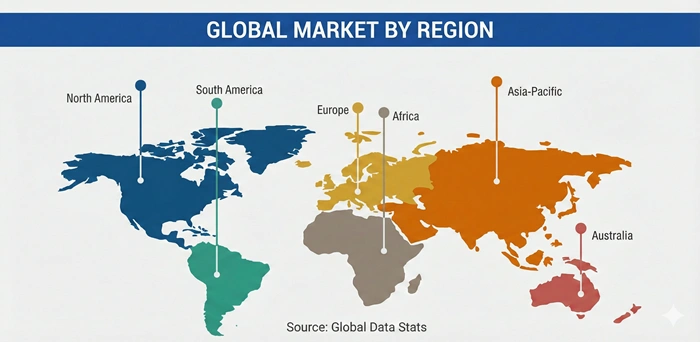
Regional Insights
Asia Pacific
Market Dominance Through Infrastructure Mega-Projects and Manufacturing Excellence
Asia Pacific maintains its position as the dominant region in the stone crushing equipment market, commanding approximately 38% of global market share in 2025 with an estimated value of USD 2.65 billion, projected to reach USD 5.08 billion by 2033 growing at a CAGR of 7.59%. The region's leadership stems from unprecedented infrastructure development initiatives, massive urbanization programs, abundant natural resources supporting extensive mining and quarrying operations, and the presence of major equipment manufacturers serving both domestic and export markets. China represents the largest market within Asia Pacific, accounting for approximately 52% of regional demand driven by the world's most extensive high-speed rail network, ongoing urban development programs, Belt and Road Initiative infrastructure projects, and the planet's largest mining industry extracting coal, iron ore, and numerous other minerals.
Government infrastructure investments across the region total trillions of dollars, with India's National Infrastructure Pipeline allocating USD 1.4 trillion for infrastructure development through 2025, Japan's comprehensive infrastructure renewal programs addressing aging facilities, and Southeast Asian nations including Indonesia, Vietnam, and the Philippines implementing ambitious transportation and urban development projects. Leading companies dominating the Asia Pacific stone crushing equipment market include Shanghai Shibang Machinery, Zhejiang Shuangjin Machinery, and numerous domestic Chinese manufacturers alongside international players like Metso, Sandvik, Komatsu, and Caterpillar that operate extensive manufacturing facilities and service networks throughout the region. The region benefits from abundant limestone, granite, basalt, and other rock resources supporting thousands of active quarries supplying construction aggregates to infrastructure projects, while extensive coal mining operations in China, India, and Indonesia require heavy-duty primary crushing equipment for ore processing applications.
North America
Fastest Regional Growth Fueled by Infrastructure Investment and Technology Leadership
North America represents the fastest-growing region in the stone crushing equipment market with a projected CAGR of 7.82% from 2026 to 2033, with market value expected to increase from USD 2.09 billion in 2025 to USD 3.56 billion by 2033, capturing an expanding share of global revenue. The region's exceptional growth trajectory stems from the historic Infrastructure Investment and Jobs Act providing USD 1.2 trillion for infrastructure modernization, technological leadership in equipment automation and AI integration, robust mining sector supporting energy transition minerals, and ongoing fleet replacement cycles as aging equipment reaches end-of-service life. The United States accounts for approximately 76% of North American demand, driven by extensive highway reconstruction programs, urban transit system expansions, and mining operations extracting copper, gold, silver, aggregates, and industrial minerals across western states.
Canada contributes significantly to regional growth through active mining sector extracting potash, nickel, copper, and industrial minerals, plus infrastructure development addressing urban growth in major metropolitan areas. Key manufacturers serving the North American stone crushing equipment market including Terex Corporation, Caterpillar Inc., Eagle Crusher Company, and Astec Industries maintain headquarters, manufacturing facilities, and comprehensive dealer networks providing sales, service, and parts support across the United States and Canada. The region leads globally in adoption of advanced crushing technologies including autonomous operation capabilities, electric and hybrid power systems, comprehensive telematics for fleet management, and AI-powered optimization systems that maximize productivity while minimizing energy consumption. Stringent environmental regulations in North America drive demand for equipment incorporating dust suppression systems, noise reduction technologies, and emission control features that exceed baseline requirements in less regulated markets.
Top Key Players
-
Metso Oyj (Finland)
-
Sandvik AB (Sweden)
-
Terex Corporation (United States)
-
Caterpillar Inc. (United States)
-
Komatsu Ltd. (Japan)
-
Astec Industries Inc. (United States)
-
ThyssenKrupp AG (Germany)
-
CNH Industrial N.V. (United Kingdom)
-
Eagle Crusher Company Inc. (United States)
-
Shanghai Shibang Machinery Co., Ltd. (China)
-
McCloskey International (Canada)
-
Wirtgen Group (Germany)
-
The Weir Group PLC (United Kingdom)
-
Stedman Machine Company (United States)
-
Tesab Engineering Ltd. (United Kingdom)
Recent Developments
-
Eagle Crusher Company (2025): Announced launch of next-generation 1200-CC portable crushing and screening plant in February 2025 featuring self-lowering control panel, fully hydraulic side discharge conveyor, and optional onboard cross-belt permanent magnet for enhanced operational efficiency, with official debut scheduled for March 2025 at World of Asphalt/AGG1 exhibition in St. Louis showcasing advanced automation capabilities.
-
Terex Corporation (2024): Unveiled MAGNA brand in June 2024 specifically targeting large-scale quarrying operations in crushing, mining, construction, and recycling industries, representing strategic repositioning to capture high-volume crushing market segments with specialized equipment portfolio designed for maximum productivity and reliability in demanding applications.
-
Metso Oyj (2024): Completed USD 580 million acquisition of crushing and screening equipment assets from competitor portfolio in September 2024, expanding market presence in mobile crushing segment and strengthening position as global market leader through enhanced product portfolio spanning stationary, mobile, and portable crushing solutions across all capacity ranges.
-
Sandvik AB (2023): Launched revolutionary CS660 cone crusher series in October 2023 incorporating advanced automation features, AI-powered optimization algorithms, and electric drive systems achieving 30% energy consumption reduction compared to previous generation models, targeting sustainability-focused mining operations and aggregate producers in Europe and North America.
-
Komatsu Ltd. (2023): Secured USD 440 million contract in July 2023 to supply electric and electrified mining equipment including PC4000-11E hydraulic excavators and crushing systems to Reko Diq copper-gold project in Pakistan, demonstrating company's leadership in electric mining equipment technology and commitment to supporting customer decarbonization objectives through innovative equipment solutions.
Market Trends
Electrification and Sustainability Drive Equipment Evolution
The stone crushing equipment market is undergoing significant transformation driven by electrification initiatives, sustainability commitments, and circular economy principles that fundamentally reshape equipment design, operational practices, and customer expectations. Electric and hybrid-powered crushing equipment gains commercial traction as manufacturers develop viable alternatives to traditional diesel-powered machinery, with electric drive systems offering 40-50% reductions in energy costs, elimination of direct emissions at crushing sites, and substantially reduced noise levels that address community concerns and regulatory requirements. Battery-electric mobile crushers enter pilot deployment programs with rental fleets and progressive contractors, though limitations in operating duration and charging infrastructure currently restrict widespread adoption outside of specific applications with reliable grid access or integrated renewable energy systems.
Automation technologies progress rapidly with autonomous crushing operations piloting in mining environments where crushers operate continuously without on-site personnel, monitored and controlled remotely through advanced sensor networks and AI-powered management systems. Manufacturers prioritize development of modular crushing equipment designs enabling rapid component replacement, capacity upgrades, and configuration changes that extend equipment service life while adapting to evolving production requirements and maintaining technological currency without complete equipment replacement. Sustainability metrics including energy consumption per ton, water usage, dust generation, and material efficiency become important selection criteria as major contractors and mining companies establish ambitious environmental performance targets driving procurement specifications toward best-in-class equipment delivering superior environmental performance alongside production capabilities throughout the stone crushing equipment market.
Segments Covered in the Report
By Product
-
Jaw Crusher
-
Cone Crusher
-
Impact Crusher
-
Roller Crusher
-
Gyratory Crusher
By Application
-
Mining
-
Quarrying
-
Recycling
-
Construction
-
Road Building
By Mobility
-
Mobile Crushing Equipment
-
Tracked Mobile Crushers
-
Wheeled Mobile Crushers
-
-
Stationary Crushing Equipment
-
Fixed Plant Installations
-
Modular Crushing Plants
-
By Region
-
North America
-
United States
-
Canada
-
Mexico
-
-
Europe
-
Germany
-
United Kingdom
-
France
-
Italy
-
Spain
-
Sweden
-
Rest of Europe
-
-
Asia Pacific
-
China
-
India
-
Japan
-
South Korea
-
Australia
-
Indonesia
-
Rest of Asia Pacific
-
-
Latin America
-
Brazil
-
Argentina
-
Chile
-
Rest of Latin America
-
-
Middle East and Africa
-
Saudi Arabia
-
United Arab Emirates
-
South Africa
-
Egypt
-
Rest of Middle East and Africa
-
Frequently Asked Questions
Question 1: What is the projected stone crushing equipment market size by 2033?
Answer: The stone crushing equipment market is projected to reach USD 13.99 billion by 2033, growing from USD 7.56 billion in 2026. This represents robust expansion driven by global infrastructure investment, urbanization, and mining sector growth requiring efficient aggregate production equipment.
Question 2: Which region dominates the global stone crushing equipment market share?
Answer: Asia Pacific dominates the global stone crushing equipment market with approximately 38% market share in 2025, valued at USD 2.65 billion. This leadership position is supported by massive infrastructure development, expanding construction and mining industries, and abundant natural resources across China, India, and Southeast Asian nations.
Question 3: What factors are driving the stone crushing equipment market growth?
Answer: Key factors driving stone crushing equipment market growth include unprecedented infrastructure investment globally, rapid urbanization requiring construction aggregates, expanding mining operations extracting minerals and industrial materials, and technological advancements improving equipment efficiency and capabilities. Environmental regulations promoting recycling also contribute to market expansion.
Question 4: Which product segment holds the largest share in the stone crushing equipment market?
Answer: The jaw crusher segment holds the largest share in the stone crushing equipment market with approximately 45% in 2025. This dominance reflects jaw crushers' versatility handling diverse materials, cost-effectiveness, reliability, and suitability across mining, quarrying, construction, and recycling applications requiring primary crushing capabilities.
Question 5: What are the emerging trends in the stone crushing equipment market?
Answer: Emerging trends in the stone crushing equipment market include rapid adoption of mobile and portable crushing solutions, electrification with electric and hybrid power systems, AI-powered automation optimizing operations, and sustainability focus driving energy-efficient designs. Advanced wear materials, predictive maintenance capabilities, and recycling applications also gain significant traction industry-wide.