
Standard Pen Needles Market Overview
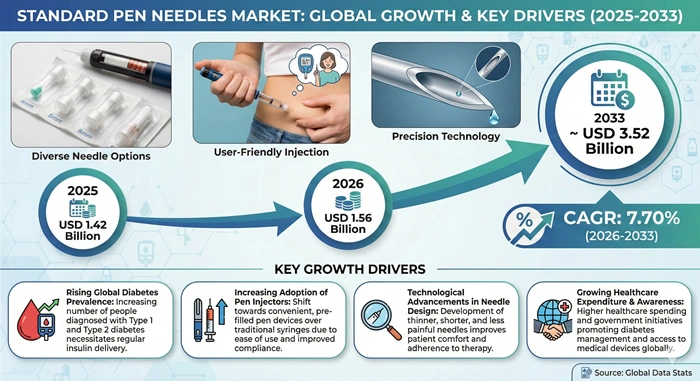
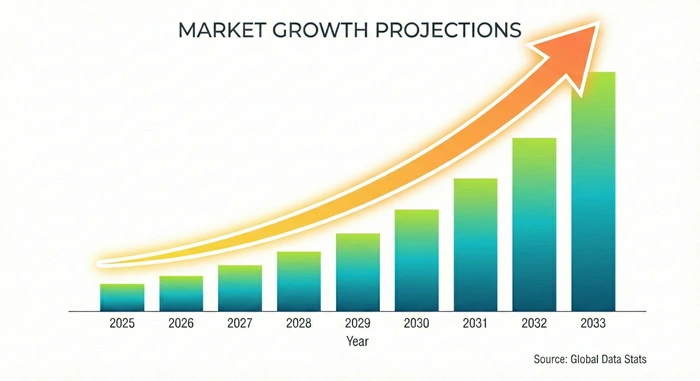
The global standard pen needles market size is valued at USD 1.42 billion in 2025 and is predicted to increase from USD 1.56 billion in 2026 to approximately USD 3.52 billion by 2033, growing at a CAGR of 7.70% from 2026 to 2033.
Standard pen needles represent essential medical devices utilized for subcutaneous insulin delivery and injectable medication administration among diabetic patients worldwide. These disposable needles attach to reusable insulin pen devices, offering convenient self-injection capabilities that significantly improve treatment adherence and quality of life for individuals managing diabetes. Healthcare professionals increasingly recommend pen needle systems due to their superior accuracy, reduced injection pain, ease of use, and improved patient comfort compared to traditional vial-and-syringe methods. The growing diabetes epidemic combined with technological innovations in needle design drives sustained market expansion across developed and emerging economies seeking improved patient outcomes through advanced insulin delivery systems.
AI Impact on the Standard Pen Needles Industry
Transforming Diabetes Management Through Intelligent Injection Tracking and Personalized Treatment Optimization
Artificial intelligence revolutionizes the standard pen needles market by enabling smart insulin pen systems that automatically record injection data including dosage amounts, timing, injection site locations, and medication types, transmitting information wirelessly to mobile applications and healthcare provider dashboards. Machine learning algorithms analyze patient injection patterns to identify adherence issues, dosing inconsistencies, and potential complications, generating personalized recommendations that optimize diabetes management outcomes. AI-powered predictive analytics assess individual glucose control patterns, medication effectiveness, and lifestyle factors to suggest optimal injection timing and dosage adjustments, empowering patients with data-driven insights supporting informed treatment decisions. Digital health platforms integrate artificial intelligence to provide real-time feedback during injection procedures, ensuring proper technique execution, appropriate needle insertion depth, and adequate injection duration that maximize medication absorption while minimizing tissue damage.
Remote monitoring capabilities enhanced by artificial intelligence enable healthcare providers to oversee patient injection behaviors without requiring frequent office visits, identifying non-adherence patterns early and implementing timely interventions preventing diabetes complications. The standard pen needles market benefits from AI-driven supply chain optimization that predicts needle consumption patterns based on prescription data, seasonal variations, and patient demographics, ensuring adequate inventory levels across distribution channels while minimizing wastage. Natural language processing technologies analyze patient feedback, social media discussions, and medical literature to identify emerging safety concerns, design preferences, and unmet needs informing product development priorities. Telemedicine platforms leveraging artificial intelligence facilitate virtual diabetes consultations where clinicians review injection technique videos, assess needle selection appropriateness, and provide personalized education supporting optimal standard pen needle utilization across geographically dispersed patient populations.
Growth Factors
Rising Diabetes Prevalence and Patient Preference for Self-Administration Drive Robust Standard Pen Needles Market Expansion
The standard pen needles market experiences accelerated growth propelled by alarming increases in global diabetes prevalence, with the International Diabetes Federation estimating over 537 million adults currently living with diabetes worldwide, projected to reach 643 million by 2030. Type 2 diabetes accounts for approximately 90 percent of cases, predominantly affecting populations in middle-income countries experiencing rapid urbanization, sedentary lifestyle adoption, and dietary pattern changes favoring processed foods high in calories and low in nutritional value. Obesity epidemic expansion creates additional diabetes risk, as excess body weight substantially increases insulin resistance and pancreatic beta cell dysfunction leading to hyperglycemia requiring pharmaceutical intervention. Healthcare infrastructure improvements throughout Asia-Pacific, Latin America, and Middle Eastern regions expand diagnosis rates, bringing previously undetected diabetic patients into formal healthcare systems requiring insulin therapy and associated injection devices.
Patient preference for self-administration at home rather than clinic-based injections drives substantial standard pen needles market demand, as individuals increasingly desire convenient treatment options compatible with busy lifestyles, professional commitments, and personal independence. Technological advancements in needle design deliver ultra-thin gauge options ranging from 32G to 34G with shorter lengths between 4mm and 5mm that significantly reduce injection pain, tissue trauma, and psychological barriers deterring consistent insulin administration. The standard pen needles market gains momentum from healthcare provider recommendations emphasizing pen systems over traditional syringe methods based on improved dosing accuracy, reduced medication wastage, enhanced patient satisfaction, and lower complication rates. Growing awareness campaigns by diabetes associations, pharmaceutical companies, and government health agencies educate patients regarding proper injection techniques, needle safety practices, and available product options supporting informed decision-making and treatment optimization.
Market Outlook
Strategic Innovation and Emerging Market Penetration Shape Promising Standard Pen Needles Market Trajectory
The standard pen needles market outlook reflects optimistic projections supported by continuous product innovation addressing patient comfort concerns, safety requirements, and usability preferences across diverse demographic segments. Manufacturers invest substantially in research activities developing advanced needle coatings including silicone lubricants and proprietary surface treatments that reduce insertion force, minimize friction during penetration, and enhance glide characteristics delivering virtually painless injection experiences. Market dynamics favor safety-engineered needle designs incorporating automatic retraction mechanisms, shield protection systems, and needlestick injury prevention features that address occupational hazards affecting healthcare workers, family caregivers, and patients themselves during disposal procedures. The industry witnesses growing adoption of standardized needle compatibility specifications enabling interchangeability across multiple insulin pen brands, expanding patient choice while reducing confusion regarding appropriate needle selection.
Digital health integration including smart cap accessories, Bluetooth-enabled injection tracking, and mobile application connectivity transforms standard pen needles from passive disposable devices into components of comprehensive diabetes management ecosystems generating valuable data supporting clinical decision-making. The standard pen needles market adapts to evolving regulatory landscapes emphasizing environmental sustainability through initiatives promoting proper disposal practices, developing biodegradable materials, and implementing take-back programs reducing medical waste accumulation. Generic needle manufacturers gain market share by offering cost-effective alternatives to branded products, particularly important in price-sensitive emerging markets where affordability considerations significantly influence product selection and patient access. Strategic partnerships between insulin pen manufacturers, needle producers, and pharmaceutical companies create integrated marketing approaches, bundled product offerings, and patient education programs enhancing overall market penetration and brand loyalty.
Expert Speaks
-
Mike Doustdar, CEO of Novo Nordisk, shared that 2026 will be characterized as the year of price pressure due to drug pricing agreements and generic competition, while emphasizing the company's commitment to expanding access to diabetes and obesity treatments through innovative delivery systems and strategic partnerships supporting their leadership position in incretin therapy markets worldwide.
-
Jared Watkin, Executive Vice President of Abbott's Diabetes Care Business, highlighted that partnerships between global leaders in glucose sensing technology and insulin delivery systems make diabetes management easier for patients, stating that connecting advanced continuous glucose monitoring with automated insulin delivery systems enables people to spend less time thinking about their diabetes and more time living fulfilling lives.
-
Que Dallara, Executive Vice President and President of Medtronic Diabetes, emphasized the company's commitment to simplifying diabetes management through strategic collaborations that expand access to advanced automated insulin delivery and smart multiple daily injection systems delivering best-in-class outcomes, making the transition to automated technology more seamless for individuals seeking to achieve better diabetes care results.
Key Report Takeaways
-
North America leads the standard pen needles market with approximately 40 percent regional share, driven by high diabetes prevalence, advanced healthcare infrastructure, strong reimbursement coverage, widespread insulin pen adoption, and established patient education programs promoting proper injection techniques and consistent needle replacement practices supporting optimal glycemic control outcomes.
-
Asia-Pacific demonstrates the fastest growth trajectory in the standard pen needles market, expanding at a CAGR of approximately 8.2 percent, propelled by massive diabetic populations in China and India, rapidly improving healthcare access, rising disposable incomes, increasing insulin therapy utilization, and government initiatives prioritizing chronic disease management through affordable medical device availability.
-
Homecare and self-administration represent the largest end-user segment consuming standard pen needles with approximately 62 percent market share, as patients increasingly prefer convenient at-home insulin injections over clinic visits, enabled by comprehensive diabetes education programs teaching proper injection techniques and healthcare systems supporting outpatient medication administration through insurance coverage and accessible pharmacy distribution.
-
4mm needle length contributes the most substantial product segment share at approximately 48 percent, driven by clinical evidence demonstrating adequate subcutaneous injection depth across diverse patient body types, reduced injection pain compared to longer needles, minimized risk of intramuscular injection complications, and healthcare professional recommendations favoring shorter needle options for improved patient comfort.
-
Insulin therapy dominates therapeutic application categories as the most popular indication for standard pen needle usage, accounting for approximately 76 percent market share, based on universal insulin requirements among Type 1 diabetic patients and substantial Type 2 diabetic populations progressing to insulin therapy after oral medication inadequacy for achieving target glycemic control.
-
The online pharmacy distribution channel will experience rapid future growth through 2033, expanding at a CAGR of approximately 8.8 percent and capturing increasing market share percentage as digital healthcare platforms proliferate, home delivery services gain consumer acceptance, subscription models simplify needle procurement, and e-commerce convenience appeals to tech-savvy younger diabetic populations managing chronic conditions alongside busy professional lives.
Market Scope
| Report Coverage Details | |
|---|---|
| Market Size by 2033 | USD 3.52 Billion |
| Market Size by 2025 | USD 1.42 Billion |
| Market Size by 2026 | USD 1.56 Billion |
| Market Growth Rate from 2026 to 2033 | CAGR of 7.70% |
| Dominating Region | North America |
| Fastest Growing Region | Asia-Pacific |
| Base Year | 2025 |
| Forecast Period | 2026 to 2033 |
| Segments Covered | By Needle Length, By Therapy Type, By Distribution Channel, By End-User, By Region |
| Regions Covered | North America, Europe, Asia-Pacific, Latin America, Middle East & Africa |
Market Dynamics
Drivers Impact Analysis
Escalating Global Diabetes Burden and Technological Needle Innovations Propel Sustained Standard Pen Needles Market Momentum
The standard pen needles market benefits tremendously from relentless increases in global diabetes prevalence driven by aging populations, obesity epidemic expansion, sedentary lifestyle adoption, unhealthy dietary patterns, and genetic predispositions affecting vulnerable populations worldwide. The International Diabetes Federation estimates diabetes affects over 537 million adults globally, with projections indicating 643 million cases by 2030 and 783 million by 2045, creating enormous patient populations requiring daily insulin injections throughout extended treatment durations spanning decades. Type 2 diabetes rates surge particularly rapidly across Asia-Pacific regions including China, India, Indonesia, and Southeast Asian nations experiencing economic development, urbanization, and Western lifestyle adoption that dramatically increase metabolic disease risks. Healthcare system improvements expand diabetes diagnosis capabilities, bringing previously undetected cases into formal medical care requiring pharmaceutical interventions including injectable medications delivered through standard pen needle systems.
Patient preference for insulin pen delivery over traditional vial-and-syringe methods drives substantial standard pen needles market adoption, as pen systems offer superior convenience, improved dosing accuracy, reduced injection pain, enhanced discretion enabling public administration, and simplified operational procedures requiring minimal training. Technological innovations in needle manufacturing deliver ultra-thin wall construction enabling medication flow through narrower gauge needles, specialized bevel designs reducing tissue penetration force, silicone coating applications minimizing friction-related discomfort, and precision manufacturing tolerances ensuring consistent injection experiences. The standard pen needles market gains momentum from healthcare provider recommendations emphasizing shorter needle lengths between 4mm and 5mm that adequately reach subcutaneous tissue across diverse patient body compositions while reducing intramuscular injection risks, nerve damage concerns, and psychological barriers associated with longer needles. Growing awareness regarding proper needle disposal practices, single-use importance preventing infection transmission, and regular needle replacement optimizing injection comfort encourages appropriate product utilization supporting market volume expansion.
| Driver Factor | ≈ Impact on CAGR Forecast | Geographic Relevance | Impact Timeline |
|---|---|---|---|
| Rising global diabetes prevalence and insulin therapy adoption | +2.4% to +3.0% | Global, particularly strong in Asia-Pacific and Middle East | Immediate and ongoing |
| Patient preference for convenient self-administration | +1.6% to +2.2% | Strongest in North America, Europe, developed Asia | Immediate and ongoing |
| Technological innovations improving needle comfort and safety | +1.0% to +1.4% | Global markets with emphasis on quality products | Medium-term |
| Healthcare infrastructure expansion and diagnosis improvements | +0.8% to +1.2% | Primarily Asia-Pacific, Latin America, Africa | Short to medium-term |
Restraints Impact Analysis
Needle Reuse Practices and Alternative Delivery Systems Moderate Standard Pen Needles Market Growth Expectations
The standard pen needles market confronts significant challenges from widespread needle reuse practices, particularly prevalent across price-sensitive emerging markets where patients repeatedly utilize single-use needles to reduce out-of-pocket medical expenses, compromising injection comfort as needle tips dull, increasing infection risks, and potentially damaging insulin pen mechanisms through repeated insertions. Economic constraints affect diabetic patients in low- and middle-income countries where healthcare budgets allocate limited resources to medication costs prioritizing insulin purchases over disposable accessories perceived as less essential despite manufacturer recommendations and clinical guidelines emphasizing single-use protocols. The market experiences headwinds from inadequate insurance coverage for pen needles in certain healthcare systems, requiring patients to bear full costs for devices that accumulate substantial expenses over time when proper replacement practices require multiple needle changes daily.
Alternative insulin delivery technologies including insulin pumps providing continuous subcutaneous infusion, inhalable insulin formulations eliminating injection requirements, and emerging oral insulin preparations under development potentially disrupt traditional injection-based therapy paradigms. The standard pen needles market faces competitive pressure from advanced automated insulin delivery systems integrating continuous glucose monitoring with algorithmic dosing adjustments that appeal to technologically sophisticated patients seeking cutting-edge diabetes management tools. Regulatory complexities regarding medical device classifications, quality standards, and import requirements create barriers for manufacturers seeking market entry across multiple jurisdictions with divergent compliance expectations and documentation obligations. Supply chain vulnerabilities including raw material shortages, manufacturing capacity constraints, and transportation disruptions occasionally impact product availability, particularly affecting generic suppliers operating on thin margins with limited inventory buffers absorbing demand fluctuations.
| Restraint Factor | ≈ Impact on CAGR Forecast | Geographic Relevance | Impact Timeline |
|---|---|---|---|
| Needle reuse practices and affordability barriers | -1.0% to -1.4% | Strongest impact in price-sensitive emerging markets | Immediate and ongoing |
| Alternative insulin delivery system competition | -0.8% to -1.2% | Primarily developed markets with technology access | Medium to long-term |
| Inadequate insurance coverage and reimbursement gaps | -0.6% to -0.9% | Varies significantly by country healthcare systems | Immediate and ongoing |
| Regulatory complexities and supply chain vulnerabilities | -0.4% to -0.7% | Global impact with regional variations | Short to medium-term |
Opportunities Impact Analysis
Emerging Market Expansion and Safety-Engineered Needle Development Create Substantial Standard Pen Needles Market Growth Potential
The standard pen needles market presents compelling opportunities through geographic expansion into rapidly developing regions across Asia-Pacific, Latin America, Middle East, and Africa where improving economic conditions, healthcare infrastructure development, and expanding middle-class populations create favorable environments for medical device adoption. Countries including India, China, Indonesia, Brazil, Mexico, and Nigeria demonstrate particularly strong growth potential based on large diabetic populations, rising healthcare expenditure, improving insurance coverage, and government initiatives prioritizing chronic disease management through essential medicine and device accessibility programs. International development organizations, public-private partnerships, and pharmaceutical company access initiatives implement comprehensive diabetes care programs integrating patient education, medication provision, and device distribution supporting standard pen needle market penetration across previously underserved communities.
Research and development initiatives focused on safety-engineered needle designs incorporating automatic retraction mechanisms, shield protection systems, and needlestick injury prevention features address occupational safety concerns affecting healthcare workers, family caregivers, and patients during disposal procedures. The standard pen needles market benefits from digital health integration opportunities including smart cap accessories tracking injection timing and dosages, Bluetooth connectivity enabling data transmission to mobile applications, and artificial intelligence systems analyzing injection patterns providing personalized recommendations optimizing diabetes management. Sustainability initiatives developing biodegradable needle materials, implementing take-back programs for proper disposal, and creating environmentally responsible packaging appeal to environmentally conscious consumers and regulatory bodies emphasizing medical waste reduction. Strategic collaborations between needle manufacturers, insulin pen producers, pharmaceutical companies, and diabetes associations create synergistic relationships supporting market development through coordinated marketing, patient education, bundled product offerings, and comprehensive care programs improving treatment outcomes.
| Opportunity Factor | ≈ Impact on CAGR Forecast | Geographic Relevance | Impact Timeline |
|---|---|---|---|
| Emerging market expansion and healthcare access improvements | +1.8% to +2.4% | Asia-Pacific, Latin America, Middle East, Africa | Short to medium-term |
| Safety-engineered needle development and adoption | +1.2% to +1.6% | Global, particularly developed healthcare markets | Medium-term |
| Digital health integration and smart injection tracking | +0.9% to +1.3% | Technology-enabled markets globally | Short to medium-term |
| Strategic partnerships and comprehensive care programs | +0.6% to +1.0% | Global with emphasis on coordinated initiatives | Medium-term |
Segment Analysis
By Needle Length - 4mm Needles
Optimal Subcutaneous Penetration and Superior Patient Comfort Establish 4mm Needles as Dominant Standard Pen Needles Market Segment
The 4mm needle length commands approximately 48 percent of the standard pen needles market share, expanding at a steady CAGR of 7.5 percent throughout the forecast period as extensive clinical evidence demonstrates adequate subcutaneous insulin delivery across diverse patient populations regardless of body mass index variations. Healthcare professionals increasingly recommend 4mm needles as the optimal length providing consistent medication absorption into subcutaneous adipose tissue while minimizing intramuscular injection risks that potentially cause rapid insulin uptake, unpredictable glycemic responses, and injection site discomfort. Patients strongly prefer shorter needles due to reduced injection pain, decreased needle phobia, improved psychological comfort enabling consistent treatment adherence, and simplified injection technique requiring less precision regarding injection angle and skin pinching requirements. The segment benefits from international diabetes organization guidelines endorsing shorter needles as appropriate for all patient groups including children, adolescents, normal weight adults, and obese individuals based on comprehensive anatomical studies measuring subcutaneous tissue thickness at common injection sites.
North America maintains substantial 4mm needle consumption within the standard pen needles market, supported by evidence-based clinical practice adoption, comprehensive diabetes education programs teaching proper injection techniques, and healthcare provider preferences for standardized needle recommendations simplifying patient counseling. Europe demonstrates similar utilization patterns with established guidelines from European diabetes associations, national health systems supporting shorter needle adoption, and patient advocacy groups promoting comfort-focused injection practices. Leading manufacturers serving the 4mm needle segment include Becton, Dickinson and Company offering extensive needle portfolios under BD brand recognition, Novo Nordisk A/S providing needles designed for compatibility with company insulin pens, Ypsomed AG supplying high-quality Swiss-engineered products, Owen Mumford Ltd. manufacturing specialized designs, and numerous generic producers including HTL-STREFA S.A. delivering cost-effective alternatives expanding accessibility across price-sensitive markets where affordability significantly influences patient needle selection and replacement frequency.
By Therapy Type - Insulin Therapy
Universal Treatment Requirements and High-Volume Daily Injections Position Insulin Therapy as Leading Standard Pen Needles Market Application
Insulin therapy accounts for approximately 76 percent of the standard pen needles market share, growing at a robust CAGR of 7.6 percent as Type 1 diabetic patients require lifelong insulin replacement with multiple daily injections and substantial Type 2 diabetic populations progress to insulin therapy after oral medication inadequacy. Treatment protocols typically involve basal-bolus regimens combining long-acting background insulin administered once or twice daily with rapid-acting mealtime insulin injections before major meals, creating consistent high-volume needle consumption ranging from three to six injections daily per patient. The segment encompasses diverse insulin formulations including rapid-acting analogs, short-acting regular insulin, intermediate-acting NPH preparations, and long-acting basal insulins delivered through prefilled disposable pens or reusable durable pen devices requiring compatible standard pen needles. Healthcare systems prioritize insulin therapy access as essential diabetes management foundation preventing acute complications including diabetic ketoacidosis and hyperosmolar hyperglycemic state alongside long-term complication prevention through consistent glycemic control.
Asia-Pacific demonstrates the fastest insulin therapy segment growth within the standard pen needles market, driven by massive diabetic populations throughout China and India where healthcare system modernization increases insulin pen adoption replacing traditional vial-and-syringe methods. The region benefits from expanding generic insulin availability, government initiatives subsidizing diabetes medications, improving cold chain infrastructure supporting temperature-sensitive insulin distribution, and growing patient education programs teaching proper injection techniques. Major pharmaceutical companies addressing insulin therapy indication include Novo Nordisk A/S commanding substantial global insulin market share, Sanofi S.A. offering comprehensive insulin portfolios, Eli Lilly and Company providing innovative formulations, and numerous biosimilar manufacturers entering markets following originator patent expirations. The standard pen needles market benefits from insulin therapy's established clinical acceptance, extensive real-world evidence supporting efficacy, healthcare provider familiarity with insulin management protocols, and patient preference for pen systems over syringe methods based on convenience, discretion, and improved quality of life during chronic disease management requiring decades of consistent daily injections.
Regional Insights
North America
Advanced Healthcare Infrastructure and High Diabetes Prevalence Establish North America as Dominant Standard Pen Needles Market Leader
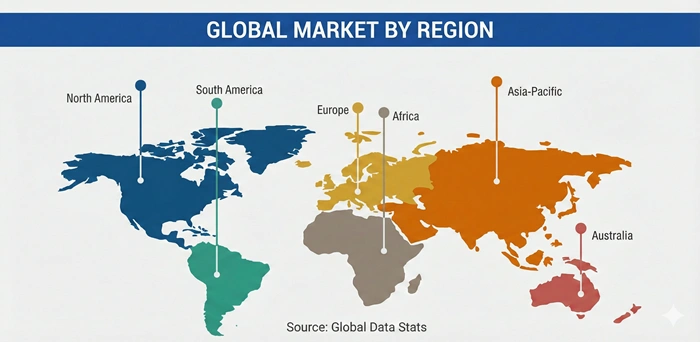
North America commands approximately 40 percent of the global standard pen needles market share, expanding at a CAGR of 7.4 percent from 2026 to 2033, driven by sophisticated healthcare infrastructure, comprehensive insurance coverage supporting diabetes care, high awareness regarding proper injection practices, and established patient education programs delivered through diabetes specialty clinics and certified diabetes educators. The region benefits from substantial diabetic populations exceeding 37 million Americans with diagnosed diabetes plus additional millions with undiagnosed conditions and prediabetes requiring intervention. United States represents the dominant country market within North America, consuming significant needle volumes through extensive retail pharmacy networks, mail-order prescription services, and increasingly popular online pharmacy channels offering convenient home delivery options appealing to busy patients managing chronic conditions alongside professional and personal commitments.
The North American standard pen needles market features leading manufacturers including Becton, Dickinson and Company maintaining dominant positions through BD brand recognition, comprehensive product portfolios spanning multiple needle lengths and gauges, strong relationships with healthcare providers and retail pharmacy chains, and continuous innovation delivering advanced features including pentapoint comfort technology and ultra-thin wall construction. Other significant players include Novo Nordisk A/S offering needles designed for seamless compatibility with company insulin pens, Ypsomed AG providing premium Swiss-engineered products, and various generic manufacturers capturing price-sensitive market segments. Healthcare insurance coverage through private plans, Medicare, and Medicaid programs substantially supports diabetes supply access, although coverage policies vary regarding quantity limits, preferred products, and prior authorization requirements affecting patient access patterns. The region demonstrates concerning diabetes trends with prevalence increasing across all demographic groups, particularly affecting minority populations including African Americans, Hispanic Americans, and Native Americans experiencing significant health disparities driving policy initiatives, research investments, and quality improvement programs aimed at reducing complications through optimized treatment including proper standard pen needle utilization.
Asia-Pacific
Massive Diabetic Populations and Rapid Healthcare Development Position Asia-Pacific as Fastest Growing Standard Pen Needles Market
Asia-Pacific demonstrates the fastest standard pen needles market growth trajectory, expanding at a CAGR of 8.2 percent from 2026 to 2033, propelled by enormous diabetic populations concentrated in China and India collectively accounting for over 200 million diagnosed cases, rapidly improving healthcare infrastructure expanding institutional diabetes care access, and economic development enabling greater medical device affordability across expanding middle-class populations. The region encompasses diverse market dynamics ranging from highly developed systems in Japan, South Korea, and Singapore to rapidly emerging capabilities throughout Southeast Asian nations including Indonesia, Thailand, Philippines, and Vietnam experiencing accelerated economic growth. China represents the largest individual country market based on sheer population scale with approximately 140 million diabetic adults, though per-capita needle consumption remains below developed nation levels indicating substantial growth potential as healthcare access improves and insulin pen adoption increases replacing traditional vial-and-syringe methods.
The Asia-Pacific standard pen needles market features multinational manufacturers including Becton, Dickinson and Company establishing regional production facilities and distribution networks, Novo Nordisk A/S expanding market presence through local partnerships, Ypsomed AG targeting premium segments, and numerous regional producers including HTL-STREFA S.A., Terumo Corporation, and Chinese manufacturers supplying cost-effective generic alternatives dominating price-sensitive market segments. Government health initiatives throughout the region implement diabetes management programs including medication subsidies, device distribution projects, patient education campaigns, and healthcare provider training supporting insulin therapy adoption and proper injection technique instruction. Countries including India launch dedicated initiatives such as National Programme for Prevention and Control of Cancer, Diabetes, Cardiovascular Diseases and Stroke providing framework for comprehensive diabetes care including essential medicine and device access. The region demonstrates substantial growth potential based on continuing economic development, healthcare expenditure increases, expanding insurance coverage, pharmaceutical market liberalization supporting generic competition, and growing patient awareness regarding diabetes complications prevention through consistent treatment adherence supported by comfortable, convenient standard pen needle systems.
Top Key Players
-
Becton, Dickinson and Company (United States)
-
Novo Nordisk A/S (Denmark)
-
Ypsomed AG (Switzerland)
-
Owen Mumford Ltd. (United Kingdom)
-
HTL-STREFA S.A. (Poland)
-
Terumo Corporation (Japan)
-
B. Braun Melsungen AG (Germany)
-
Allison Medical, Inc. (United States)
-
Artsana S.p.A. (Italy)
-
Trividia Health, Inc. (United States)
-
Perrigo Company plc (Ireland)
-
UltiMed, Inc. (United States)
-
Montmed Inc. (China)
-
Beipu (Zhuhai) Pharmaceutical Technology Co. Ltd. (China)
-
Promisemed Co. Ltd. (South Korea)
Recent Developments
-
MTD Group - 2024: Completed strategic acquisition of Ypsomed's Pen Needles and Blood Glucose Monitoring Systems business in August 2024, significantly expanding production capacity to exceed 2.5 billion units annually and establishing the company as the second-largest pen needle manufacturer globally, opening new strategic markets and diversifying product portfolio to serve growing diabetes care demands.
-
Abbott Laboratories - 2024: Announced unique global partnership with Medtronic in August 2024 to collaborate on integrated continuous glucose monitoring system based on Abbott's FreeStyle Libre technology connecting with Medtronic's automated insulin delivery and smart insulin pen systems, pairing two global leaders in glucose sensing technology and insulin delivery to simplify diabetes management for patients worldwide.
-
Ypsomed AG - 2024: Completed divestment of pen needle and blood glucose monitoring business to MTD Group while establishing transitional contract manufacturing arrangement ensuring seamless business transfer and maintaining supply continuity for existing customers during equipment relocation to MTD production facilities across multiple geographic locations supporting global distribution requirements.
-
Becton, Dickinson and Company - 2024: Advanced needle technology innovation through continued research investments focused on ultra-thin wall construction, advanced coating applications, and safety-engineered designs addressing needlestick injury prevention while maintaining dominant market position through comprehensive product portfolios, strong brand recognition, and extensive distribution networks serving healthcare providers and retail pharmacies globally.
-
Novo Nordisk A/S - 2025: Strengthened diabetes care leadership through strategic focus on obesity and diabetes treatment areas, redirecting resources toward growth opportunities serving approximately two billion people living with obesity, overweight, or diabetes conditions while continuing insulin therapy innovation and supporting comprehensive diabetes management ecosystems integrating medications, devices, and patient education programs.
Market Trends
Safety Innovation and Digital Integration Define Contemporary Standard Pen Needles Market Evolution
The standard pen needles market increasingly emphasizes safety-engineered designs incorporating automatic needle retraction mechanisms, shield protection systems, and needlestick injury prevention features addressing occupational hazards affecting healthcare workers, family caregivers assisting with injections, and patients during disposal procedures. Manufacturers develop sophisticated spring-loaded mechanisms, pressure-triggered activation systems, and auditory confirmation signals indicating proper safety feature engagement, reducing accidental needle exposure by over 80 percent compared to conventional designs according to clinical studies. Regulatory bodies worldwide implement guidelines encouraging or mandating safety-engineered medical device adoption, particularly within healthcare institutional settings where needlestick injuries create significant occupational health concerns, liability exposures, and post-exposure prophylaxis costs. The market witnesses growing consumer preference for safety needles despite premium pricing, as patients increasingly prioritize injury prevention protecting household members including children from accidental exposures to contaminated needles.
Digital health integration transforms standard pen needles from passive disposable devices into connected components of comprehensive diabetes management ecosystems through smart cap accessories, Bluetooth-enabled injection tracking systems, and mobile applications recording administration data. These technologies automatically log injection timing, dosage information, and medication types, transmitting data to electronic health records, continuous glucose monitoring platforms, and artificial intelligence systems analyzing patterns identifying adherence issues or technique problems requiring intervention. The standard pen needles market adapts to sustainability priorities through initiatives developing biodegradable materials reducing environmental persistence, implementing take-back programs facilitating proper disposal, and creating recycling pathways for certain needle components. Personalization trends emerge as manufacturers offer expanded needle length options, multiple gauge choices, and specialized designs addressing specific patient preferences regarding comfort, injection angle requirements, and anatomical considerations, moving beyond one-size-fits-all approaches toward customized solutions optimizing individual treatment experiences.
Segments Covered in the Report
By Needle Length
-
4mm
-
5mm
-
6mm
-
8mm
-
10mm
-
12mm
By Therapy Type
-
Insulin Therapy
-
GLP-1 Therapy
-
Growth Hormone Therapy
-
Others
By Distribution Channel
-
Retail Pharmacies
-
Hospital Pharmacies
-
Online Pharmacies
-
Diabetes Clinics
By End-User
-
Homecare/Self-Administration
-
Hospitals
-
Clinics
-
Others
By Region
-
North America (United States, Canada, Mexico)
-
Europe (Germany, United Kingdom, France, Italy, Spain, Rest of Europe)
-
Asia-Pacific (China, India, Japan, South Korea, Australia, Southeast Asia, Rest of Asia-Pacific)
-
Latin America (Brazil, Argentina, Rest of Latin America)
-
Middle East & Africa (Saudi Arabia, UAE, South Africa, Rest of MEA)
Frequently Asked Questions
Question 1: What is the expected standard pen needles market size by 2033?
Answer: The global standard pen needles market is projected to reach approximately USD 3.52 billion by 2033, growing from USD 1.56 billion in 2026. This substantial expansion reflects increasing diabetes prevalence, growing insulin therapy adoption, and technological innovations improving needle comfort and safety features supporting patient adherence.
Question 2: Which region dominates the standard pen needles market currently?
Answer: North America dominates the standard pen needles market with approximately 40 percent share, driven by advanced healthcare infrastructure and comprehensive insurance coverage. The region benefits from high diabetes awareness, established patient education programs, and strong pharmaceutical company presence supporting therapeutic innovation and proper injection technique promotion.
Question 3: What factors drive standard pen needles market growth during the forecast period?
Answer: Rising global diabetes prevalence, patient preference for convenient self-administration, technological needle innovations improving comfort, and healthcare infrastructure expansion drive standard pen needles market growth. These factors collectively expand patient populations, improve treatment accessibility, enhance injection experiences, and support consistent therapy adherence across diverse geographic regions.
Question 4: Which needle length segment holds the largest standard pen needles market share?
Answer: The 4mm needle length represents the largest segment with approximately 48 percent standard pen needles market share based on clinical evidence demonstrating adequate subcutaneous insulin delivery. Healthcare professionals increasingly recommend shorter needles due to reduced injection pain, minimized intramuscular injection risks, and improved patient comfort encouraging consistent treatment adherence.
Question 5: How does insulin therapy impact the standard pen needles market?
Answer: Insulin therapy accounts for approximately 76 percent of standard pen needles market share, requiring multiple daily injections throughout lifelong treatment. Type 1 diabetic patients need insulin replacement universally, while substantial Type 2 diabetic populations progress to insulin therapy, creating consistent high-volume needle consumption supporting sustained market demand globally.