
Solar Thermal Collector Market Overview
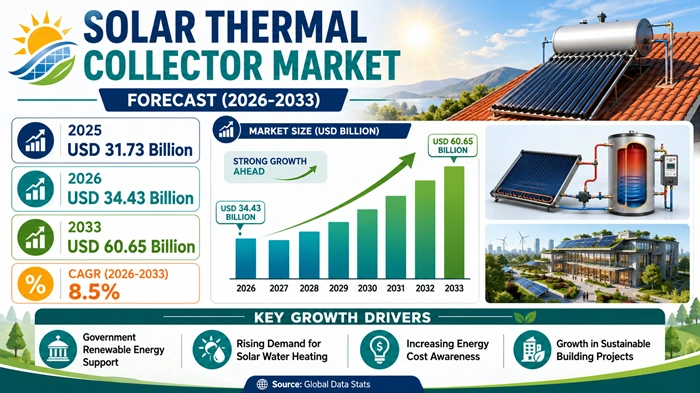
The global Solar Thermal Collector market size is valued at USD 31.73 billion in 2025 and is predicted to increase from USD 34.43 billion in 2026 to approximately USD 60.65 billion by 2033, growing at a CAGR of 8.5% from 2026 to 2033. Solar thermal collectors are devices that absorb sunlight and convert it into usable heat energy for applications including domestic water heating, space heating, industrial process heat, and solar cooling — making them one of the most cost-effective and widely deployed renewable energy technologies globally. The accelerating global transition away from fossil fuel-based heating systems, rising energy prices, expanding government incentive programs for renewable thermal energy adoption, and growing industrial sector demand for low-carbon process heat solutions are collectively driving robust expansion of the solar thermal energy market through 2033 and beyond.
AI Impact on the Solar Thermal Collector Industry
Artificial Intelligence Is Driving a New Era of Performance Optimization, Predictive Maintenance, and Smart System Integration in the Solar Thermal Collector Industry — Enabling Higher Efficiency, Lower Lifetime Costs, and Greater Grid-Interactive Value for Solar Heating Systems
Artificial intelligence is reshaping the operational performance and commercial value of solar thermal collector systems across residential, commercial, and industrial applications. AI-powered control systems are optimizing heat transfer fluid circulation, storage charging and discharge cycles, and auxiliary heating backup activation in real time — using weather forecast data, historical solar irradiance patterns, and building occupancy models to maximize solar fraction and minimize auxiliary energy consumption. These intelligent energy management systems deliver measurable improvements in system efficiency and annual energy yield compared to conventional thermostatic controls, making AI integration an increasingly important differentiator for solar thermal system manufacturers and installers targeting premium performance-conscious customers. Machine learning algorithms are also being used to continuously refine system control strategies based on accumulated real-world performance data, enabling ongoing efficiency improvements throughout the system operating life.
Predictive maintenance platforms powered by AI are becoming a key value-added service in the solar thermal collector market, enabling system operators and service providers to detect performance degradation, scaling buildup in heat exchangers, collector glass soiling, and pump or valve malfunctions before they result in significant energy yield losses or system failures. IoT-connected sensors monitoring collector temperatures, flow rates, and pressure differentials feed AI diagnostic models that can identify anomalies and generate proactive service alerts — reducing downtime and extending system lifetimes. In large-scale industrial and district heating applications, AI-enabled optimization of solar thermal plant operation — integrating collector field management with seasonal thermal energy storage, heat pump systems, and building energy management platforms — is delivering significantly improved overall system economics that strengthen the commercial case for large-scale solar heat investment.
Growth Factors
Rising Global Energy Prices, Accelerating Decarbonization Mandates for the Heating Sector, and Expanding Industrial Process Heat Adoption Are Creating Powerful and Sustained Commercial Momentum for the Solar Thermal Collector Market
The heating and cooling sector accounts for approximately 50% of global final energy consumption, and the transition of this sector away from fossil fuel dependency is one of the most urgent and commercially significant challenges in global energy decarbonization. Solar thermal collectors offer one of the most cost-effective pathways for displacing fossil fuel-derived heat in both residential and commercial buildings, and the combination of rising natural gas and heating oil prices with growing carbon pricing mechanisms is rapidly improving the economic attractiveness of solar thermal investment relative to conventional heating systems. Government incentive programs — including Germany's BEG subsidy program, the U.S. Investment Tax Credit for solar thermal systems, China's rural solar heating programs, and India's MNRE solar water heating mandates — are accelerating adoption by reducing the upfront cost barrier that is the primary constraint on residential and commercial solar thermal system uptake.
The industrial process heat sector represents a large and increasingly important growth driver for the solar thermal collector market. Industrial processes requiring heat at temperatures below 250°C — including food processing, textile manufacturing, chemical production, beverage production, and pharmaceutical manufacturing — collectively represent enormous fossil fuel consumption globally, and solar thermal systems including concentrating parabolic trough collectors and advanced flat plate systems can cost-effectively supply a significant share of this thermal energy requirement. The growing carbon pricing and corporate sustainability pressure on industrial companies is creating strong financial incentives to invest in solar process heat systems that reduce both direct energy costs and carbon compliance expenses. Large-scale solar thermal process heat installations at food and beverage production facilities, breweries, textile mills, and chemical plants are becoming increasingly common across Europe, the Middle East, and Asia, driving commercial-scale system demand for the solar heating technology sector.
Market Outlook
Strong Policy Momentum, Rapid Technology Innovation, and Expanding District Heating Applications Are Building a Compelling and Diversified Growth Foundation for the Solar Thermal Collector Market Through 2033
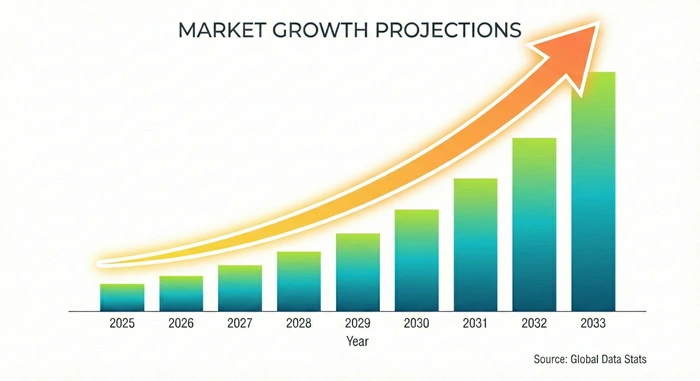
The solar thermal collector market is positioned for strong, multidimensional growth through 2033, driven by the combined expansion of residential solar water heating programs, commercial and industrial process heat adoption, and large-scale solar district heating systems. The residential segment continues to benefit from deeply mature and well-proven technology in flat plate and evacuated tube collectors that has been refined over decades, offering reliable performance, competitive installed costs, and long system lifetimes that deliver strong lifecycle economics. Commercial and industrial demand is growing rapidly as businesses face carbon pricing, corporate sustainability commitments, and energy cost volatility that make solar thermal investment increasingly financially rational. Large-scale solar district heating systems — which supply entire neighborhoods or industrial zones from centralized collector fields with seasonal thermal energy storage — are expanding particularly strongly in Northern Europe and China, representing a growing high-value market segment.
Looking toward 2033, the integration of solar thermal systems with heat pump technology represents one of the most commercially important emerging application areas. Solar-assisted heat pump systems — which use collector output to improve heat pump source temperatures and therefore significantly improve coefficient of performance — deliver greater seasonal energy yields and cost savings than either technology alone, and they are gaining traction rapidly in the European and North American building energy renovation market. Evacuated tube collectors with integrated phase-change materials, concentrating solar thermal systems for medium-temperature industrial applications, and advanced polymer flat plate collectors targeting lower-cost residential markets are all emerging technology categories that will expand the addressable market for solar thermal energy through the forecast period. As building energy efficiency standards tighten globally and heat decarbonization incentives multiply, the solar thermal collector market's growth trajectory through 2033 appears well supported across all major geographies.
Expert Speaks
-
"Solar thermal technology remains one of the most efficient and cost-effective tools available for decarbonizing building heat — and we see growing institutional and residential market demand for advanced solar collector systems as energy prices remain elevated, carbon pricing spreads, and consumers seek reliable renewable heating solutions that deliver measurable, long-term savings on their energy bills," — Tim Buckley, CEO, Viessmann Climate Solutions, highlighting the strong commercial fundamentals driving renewed market interest in solar thermal collector systems across the global heating technology landscape.
-
"The industrial process heat market for solar thermal systems is at an important inflection point — the combination of rising natural gas prices, growing carbon compliance costs, and proven large-scale solar process heat technology is making this the most compelling commercial value proposition we have seen in industrial solar thermal, and we expect to see a substantial increase in large-scale project activity across food, chemical, and textile manufacturing sectors over the next several years," — Peter van Binsbergen, CEO, Ariston Group, emphasizing the significant and rapidly growing commercial opportunity in industrial and large-scale solar thermal collector applications.
-
"China's solar thermal sector continues to be a global benchmark for scale and innovation — the sheer volume of collector installation capacity, the ongoing improvement in evacuated tube collector performance, and the growing sophistication of solar district heating systems being deployed across northern Chinese cities demonstrate that solar thermal technology has a critical role to play in national heating decarbonization strategies that other markets would do well to study and emulate," — Zhang Xiaoming, President, Himin Solar Energy Group, underscoring China's continued global leadership in driving scale and technical development across the solar thermal collector industry.
Key Report Takeaways
-
Asia Pacific leads the global solar thermal collector market with approximately 52% revenue share in 2025, dominated by China which alone accounts for over 64% of global annual solar collector installations and over 72% of cumulative global solar thermal capacity, supported by strong government residential and district heating programs, a deep domestic manufacturing base, and growing industrial process heat adoption in Chinese manufacturing sectors
-
Europe is the fastest-growing developed market region, projected to expand at a CAGR of approximately 9.8% through 2033, driven by aggressive building decarbonization targets under the EU Green Deal, strong government subsidy programs in Germany, Austria, and Denmark, and the rapid expansion of large-scale solar district heating systems in Scandinavia that are demonstrating a technically and commercially compelling model for high-latitude solar thermal deployment
-
Residential water heating is the largest application segment, contributing approximately 48% of total market revenue in 2025, driven by the widespread global deployment of solar water heaters in both urban and rural residential settings across China, India, Brazil, Turkey, and Southern Europe — markets where solar resource availability and hot water demand create strong economic returns on solar thermal investment
-
Evacuated tube collectors are the dominant technology type, holding approximately 58% of total market share in 2025, preferred for their superior thermal efficiency in cold climates, higher performance under diffuse light conditions, and lower heat loss characteristics that make them the preferred choice for the large Chinese market and for northern hemisphere applications where flat plate performance is constrained by ambient temperature losses
-
Industrial process heat is the most rapidly growing application, projected to grow at the fastest segment CAGR of approximately 12.5% through 2033, driven by the enormous fossil fuel displacement potential in manufacturing industries requiring medium-temperature process heat, growing corporate sustainability mandates, carbon pricing mechanisms, and improving economics of concentrating and advanced flat plate collector systems for high-temperature industrial heat delivery
-
Solar district heating systems represent the highest-value emerging segment, expected to capture 18% market share by 2033 growing at a CAGR of approximately 14%, driven by Northern European large-scale projects combining collector fields with seasonal pit thermal energy storage that deliver year-round renewable heat supply and are proving highly cost-competitive with alternative district heating fuel sources
Market Scope
| Report Coverage | Details |
|---|---|
| Market Size by 2025 | USD 31.73 Billion |
| Market Size by 2026 | USD 34.43 Billion |
| Market Size by 2033 | USD 60.65 Billion |
| Market Growth Rate from 2026 to 2033 | CAGR of 8.5% |
| Dominating Region | Asia Pacific |
| Fastest Growing Region | Europe |
| Base Year | 2025 |
| Forecast Period | 2026 to 2033 |
| Segments Covered | By Collector Type, By Application, By Installation Type, By End-User, By Region |
| Regions Covered | North America, Europe, Asia Pacific, Latin America, Middle East & Africa |
Market Dynamics
Drivers Impact Analysis
Rapidly Rising Heating Sector Decarbonization Pressure, Expanding Government Subsidy and Incentive Programs, and the Strong Economic Competitiveness of Solar Thermal vs. Fossil Fuel Heating Are the Primary Engines Driving the Solar Thermal Collector Market Forward
| Driver | ≈ % Impact on CAGR Forecast | Geographic Relevance | Impact Timeline |
|---|---|---|---|
| Heating Sector Decarbonization Policy Mandates | ~3.0% | Europe, North America, Asia Pacific | Near to Long Term |
| Rising Natural Gas and Fossil Fuel Heating Prices | ~2.5% | Global | Near to Medium Term |
| Government Subsidy and Incentive Programs for Solar Thermal | ~2.0% | Europe, China, India | Near to Long Term |
| Growing Industrial Process Heat Solar Thermal Adoption | ~1.5% | Europe, Asia Pacific, MEA | Medium to Long Term |
| Expanding Solar District Heating Programs | ~0.8% | Europe, China | Medium to Long Term |
The global imperative to decarbonize the heating sector is the most powerful structural driver behind the solar thermal collector market. Governments across Europe, Asia, and North America are implementing increasingly ambitious building energy efficiency standards, fossil fuel heating system phase-out timelines, and carbon pricing mechanisms that directly improve the relative economics of solar thermal investment. The EU Energy Performance of Buildings Directive recast — requiring near-zero energy performance for both new and renovated buildings — is creating enormous demand for solar thermal systems as a core renewable heat source in building energy renovation projects. In China, the government's ongoing rural coal-to-clean-heat replacement programs have deployed enormous volumes of solar thermal collectors for residential space heating in Northern Chinese provinces, creating one of the largest single-policy-driven solar thermal demand programs in the world.
Rising fossil fuel energy prices are the most immediate and consumer-visible driver of solar thermal market growth, as the payback period for solar water heating and space heating systems shortens dramatically when gas and heating oil prices are elevated. Following the energy price shocks of 2021–2022, consumer and business interest in solar thermal investment surged across Europe and North America, and while energy prices have partially normalized, the underlying volatility and long-term upward pressure on fossil fuel costs — driven by carbon pricing, supply constraints, and geopolitical dynamics — continue to make solar thermal investment economically attractive relative to continued dependence on conventional heating systems. The combination of stable, predictable solar energy resource and zero fuel cost creates a compelling long-term energy cost reduction value proposition that resonates strongly with both residential homeowners and industrial energy managers.
Restraints Impact Analysis
High Upfront Installation Costs, Competition from Heat Pumps and Photovoltaic-Based Heating Systems, and Seasonal Performance Variability Are Creating Meaningful Headwinds for Faster Solar Thermal Collector Market Growth
| Restraint | ≈ % Impact on CAGR Forecast | Geographic Relevance | Impact Timeline |
|---|---|---|---|
| High Upfront System Installation and Integration Costs | ~-2.0% | North America, Emerging Markets | Near to Medium Term |
| Competition from Air-Source and Ground-Source Heat Pumps | ~-1.8% | Europe, North America | Near to Medium Term |
| Seasonal Solar Resource Variability and Storage Limitations | ~-1.2% | High-Latitude Markets | Near to Long Term |
| Competition from Solar PV-Powered Resistance Heating | ~-0.8% | Global | Medium to Long Term |
| Limited Skilled Installer Workforce in Emerging Markets | ~-0.5% | Asia Pacific, MEA, Latin America | Near Term |
The competition from heat pump technology represents the most significant market displacement threat facing the solar thermal collector market in European and North American markets. Air-source and ground-source heat pumps have benefited from enormous government support, manufacturing scale-up, cost reductions, and strong building retrofit compatibility — and are increasingly positioned as the primary solution for fossil fuel boiler replacement in building decarbonization programs. Some policymakers and building energy consultants have defaulted to recommending heat pumps as a simpler, single-technology solution over solar thermal systems, which require more complex system integration with existing heating infrastructure. The competition between solar thermal and heat pump technologies is creating some market share pressure for solar collectors in the building renovation segment, although hybrid solar thermal-heat pump configurations that combine the benefits of both technologies are increasingly recognized as delivering superior performance compared to either alone.
High upfront installation and integration costs remain a persistent barrier to broader solar thermal market adoption, particularly in price-sensitive residential markets and in commercial buildings where the system integration complexity of connecting solar thermal to existing heating distribution infrastructure adds design and commissioning costs. While solar thermal systems deliver excellent lifetime economics — with payback periods of 5–10 years in well-designed residential applications — the upfront capital requirement continues to deter adoption among consumers who lack access to financing or who prioritize lower initial cost over long-term energy savings. The development of pre-engineered, plug-and-play solar thermal system packages that simplify installation and reduce labor costs is an important industry innovation priority that could meaningfully lower the effective cost barrier and accelerate adoption across the residential and small commercial market segments.
Opportunities Impact Analysis
Solar-Heat Pump Hybrid Systems, Large-Scale Industrial and District Heating Applications, and Emerging Market Rural Residential Adoption Are Creating High-Value Growth Pathways for the Solar Thermal Collector Market
| Opportunity | ≈ % Impact on CAGR Forecast | Geographic Relevance | Impact Timeline |
|---|---|---|---|
| Solar-Heat Pump Hybrid System Market Development | ~+2.5% | Europe, North America | Near to Long Term |
| Large-Scale Solar Industrial Process Heat Market | ~+2.0% | Europe, MEA, Asia Pacific | Medium to Long Term |
| Solar District Heating with Seasonal Storage Expansion | ~+1.8% | Europe, China | Medium to Long Term |
| Emerging Market Rural Residential Solar Water Heating | ~+1.3% | Asia Pacific, Africa, Latin America | Near to Long Term |
Solar-assisted heat pump systems represent the most commercially important near-term growth opportunity in the solar thermal collector market, particularly in the European building renovation segment. By using solar collector output to raise the source temperature of an air-source or ground-source heat pump, these hybrid systems achieve significantly higher seasonal coefficients of performance than standalone heat pump systems — reducing electricity consumption, improving cold-climate performance, and delivering lower annual operating costs. The growing recognition in building energy policy and engineering practice that solar thermal and heat pump technologies are complementary rather than competitive is driving increasing specification of hybrid systems in both new construction and deep renovation projects. Equipment manufacturers including Viessmann, Vaillant, and Bosch have developed integrated solar thermal-heat pump product systems that simplify the design and installation of hybrid configurations — making this technology combination progressively more accessible to installers and end consumers.
Emerging market rural residential solar water heating represents the largest volume growth opportunity globally, as billions of people in developing economies across Sub-Saharan Africa, South and Southeast Asia, and Latin America currently rely on firewood, kerosene, or coal for water heating — creating enormous demand for affordable, reliable solar water heating solutions that improve living standards while reducing indoor air pollution and fuel expenditure. Compact, low-cost evacuated tube solar water heater systems — the product category where Chinese manufacturers have achieved the lowest global cost positions — are increasingly accessible to rural and peri-urban households across these markets, and government programs in India, South Africa, and Kenya are actively promoting solar water heater adoption through subsidy and financing support.
Segment Analysis
By Collector Type
Evacuated Tube Collectors Lead Global Market Share While Flat Plate Collectors Maintain Dominant Positions in Premium European and North American Markets and Advanced Concentrating Collectors Drive Industrial Heat Growth
Evacuated tube collectors hold the largest share of the solar thermal collector market at approximately 58% of global market volume in 2025, generating around USD 18.40 billion in revenue. These collectors consist of glass vacuum tubes containing heat-absorbing elements through which heat transfer fluid circulates — the vacuum insulation dramatically reducing heat losses and enabling high performance even in cold or cloudy conditions, making them the preferred technology for Chinese, Northern European, and high-latitude applications. China is overwhelmingly the dominant market for evacuated tube collectors, where domestic manufacturers including Himin Solar Energy and Sunrain Group have achieved globally competitive production costs through enormous manufacturing scale. The segment is expected to grow at a CAGR of approximately 8.2% through 2033, supported by growing installation volumes in China's rural heating programs, expanding adoption in India and Southeast Asia, and increasing deployment in European district heating applications. Linuo Paradigma (China) and Sunshore (China) are also key manufacturers serving both domestic and international markets in this technology category.
Flat plate collectors represent approximately 35% of the solar thermal collector market in 2025, generating around USD 11.11 billion, and remain the preferred technology in European residential water heating and space heating applications, Australia, and the Mediterranean region where their durable, low-maintenance design and competitive installed cost make them the reference technology for solar heating system installers and architects. European manufacturers including GREENoneTEC (Austria) — the world's largest flat plate collector manufacturer — Viessmann (Germany), Bosch Thermotechnology (Germany), and Vaillant Group (Germany) produce high-quality flat plate collectors that meet stringent European solar keymark certification standards. The segment is projected to grow at a CAGR of approximately 7.9% through 2033, with growth driven by building renovation activity under EU energy efficiency directives, Nordic solar district heating expansion, and growing commercial-scale flat plate array installations. Europe leads globally in flat plate collector deployment quality and pricing premiums, supporting strong revenue contribution despite lower absolute installation volumes compared to the evacuated tube-dominant Asian market.
By Application
Residential Water Heating Leads Total Market Volume While Industrial Process Heat and Solar District Heating Represent the Fastest-Growing and Highest-Value Emerging Applications in the Expanding Solar Thermal Collector Landscape
Residential solar water heating is the largest single application in the solar thermal collector market, accounting for approximately 48% of total market revenue in 2025 and generating around USD 15.23 billion. This application benefits from the most mature and widely understood commercial value proposition in solar thermal — the simple displacement of fossil fuel or electric energy used to heat domestic hot water, which constitutes a consistent and predictable daily energy load in virtually every occupied residential building globally. China, Brazil, India, Turkey, and Germany are the top five global markets for residential solar water heating installation, collectively accounting for over 75% of annual global new collector installation capacity. Key players serving this segment include Himin Solar (China), Sunrain Group (China), Ariston Group (Italy), Bosch Thermotechnology (Germany), and Vaillant Group (Germany). This segment is projected to grow at a steady CAGR of approximately 7.5% through 2033.
Industrial process heat is the fastest-growing application for solar thermal collectors, with a CAGR of approximately 12.5% projected through 2033 and a current market share of approximately 18% in 2025, representing around USD 5.71 billion in revenue. This segment encompasses the deployment of medium-to-large-scale solar collector arrays — including advanced flat plate systems, parabolic trough concentrating collectors, and linear Fresnel systems — to supply process heat at temperatures ranging from 60°C to above 250°C for manufacturing facilities. The food and beverage industry, textile manufacturing, chemical production, automotive manufacturing, and pharmaceutical industries are among the largest solar process heat adopters, attracted by the combination of energy cost savings, carbon footprint reduction, and energy supply security that solar thermal systems provide. The Middle East and North Africa region is emerging as a particularly strong growth market for industrial solar process heat, supported by excellent solar resources, high fossil fuel costs for industrial users in water-scarce regions, and growing renewable energy industrialization programs. Abengoa Solar (Spain), GlassPoint Solar (United States), and Aalborg CSP (Denmark) are among the leading developers serving this growing industrial application segment.
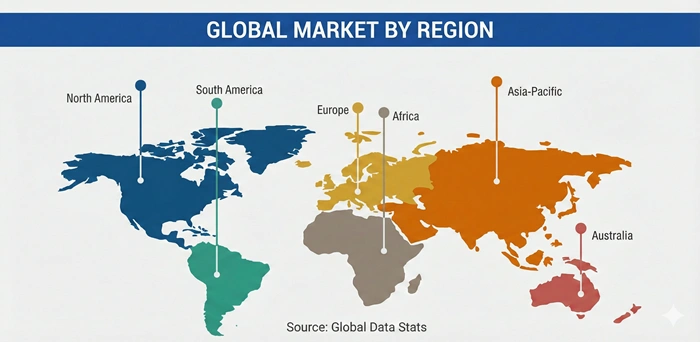
Regional Insights
Asia Pacific
Asia Pacific's Dominant Solar Thermal Manufacturing Base, Enormous Installed Base, and Aggressive Government Rural and District Heating Programs Establish It as the Clear Leader in the Global Solar Thermal Collector Market
Asia Pacific commands the largest share of the global solar thermal collector market at approximately 52% in 2025, generating around USD 16.50 billion in revenue, and is projected to grow at a CAGR of 8.3% through 2033. China alone accounts for approximately 64% of annual global new solar collector installations and maintains over 72% of cumulative global solar thermal capacity — making it by far the single largest national solar thermal market in the world. Chinese manufacturers including Himin Solar Energy Group, Sunrain Group, Linuo Paradigma, and Sunshore produce evacuated tube collectors at globally competitive costs through enormous production scale, serving both a massive domestic residential and district heating market and growing export markets across Asia, Africa, and Latin America. China's national coal-to-clean-heat replacement programs and urban district heating solar integration initiatives continue to drive annual domestic installation volumes that dwarf those of any other country.
India represents the second-most important growth market in Asia Pacific, supported by the Bureau of Energy Efficiency's solar water heating mandate for new buildings, strong solar resource availability across most of the country, and growing government renewable energy subsidy programs targeting residential and commercial solar heating adoption. Japan and South Korea maintain sophisticated domestic solar thermal markets serving premium residential and commercial customers, though annual new installation volumes are modest relative to China. The overall Asia Pacific solar thermal collector market is expected to remain the global dominant region through 2033, driven by China's continued large-scale institutional and residential programs and the rapidly growing adoption of solar heating technology across South and Southeast Asian developing economies.
Europe
Europe's Ambitious Building Decarbonization Policy Framework, World-Class Solar District Heating Deployments, and Premium Technology Development Leadership Position It as the Fastest-Growing and Most Technically Advanced Solar Thermal Collector Region
Europe is the fastest-growing major regional market for solar thermal collectors, holding approximately 25% market share in 2025 and projected to grow at a CAGR of approximately 9.8% through 2033 — the highest among major world regions. Germany leads the European market, supported by the government's Bundesförderung Energieeffizienz (BEG) subsidy program that provides substantial financial support for solar thermal installation in building renovation projects, and a deep domestic industry led by Viessmann (Germany), Bosch Thermotechnology (Germany), and Vaillant Group (Germany). Austria is home to GREENoneTEC, the world's largest flat plate collector manufacturer, reflecting the country's long-standing solar thermal manufacturing excellence and per-capita installation leadership. Scandinavia — particularly Denmark, Sweden, and Finland — is driving the fastest solar district heating growth in Europe, with multiple large-scale solar collector field projects combined with seasonal thermal energy storage delivering year-round renewable heat for entire communities and demonstrating compelling commercial economics.
Southern European markets including Italy, Greece, Spain, and Portugal continue to represent important volume markets for residential solar water heating given their high solar irradiance and favorable economics for solar thermal investment. The EU Green Deal's mandate for near-zero energy building standards and fossil fuel heating system phase-out timelines are expected to generate sustained policy-driven demand for solar thermal technology across all EU member states through 2033. The European solar thermal collector market also benefits from the most stringent and comprehensive quality certification and testing framework in the world — the Solar Keymark certification scheme — which maintains high product quality standards and consumer confidence in solar thermal system performance. Kingspan (Ireland), Wolf GmbH (Germany), and Solhart (Austria) round out the European competitive landscape alongside the global market leaders.
Report Customization: Region-Wise and Country-Wise Insights Available on Request
This Report Is Fully Customizable for All Major Regions and Countries — Delivering Locally Specific Solar Thermal Collector Market Intelligence, Policy Analysis, Competitive Landscape Profiles, and Investment Opportunity Insights Precisely Tailored to Your Geographic Focus and Business Strategy
Customized versions of this report are available for all major regions and countries listed below, providing in-depth market analysis, regulatory and policy landscape assessments, technology adoption trends, competitive landscape profiles, and application-specific growth opportunity analysis tailored to the solar thermal collector market in each selected geography.
North America
-
U.S. — federal ITC and state-level solar thermal incentive landscape, residential and commercial solar water heating market analysis, industrial process heat adoption trends, key domestic and imported product competitive analysis
-
Canada — provincial renewable heating incentive programs, domestic solar thermal market development, commercial and institutional solar heating adoption analysis
-
Mexico — growing urban residential solar water heater market, CONUEE regulatory framework, and domestic manufacturing and import dynamics for solar thermal collectors
Europe
-
U.K. — post-Brexit incentive framework for solar thermal, building renovation solar thermal market analysis, solar district heating development potential, and domestic industry competitive landscape
-
Germany — BEG subsidy program impact analysis, Viessmann and Bosch competitive positioning, solar district heating market development, and regulatory framework under BAFA
-
France — MaPrimeRénov incentive program impact, domestic solar thermal market analysis, and solar thermal integration with district heating and industrial process heat applications
-
Italy — Superbonus incentive program legacy analysis, Mediterranean residential solar thermal market, and industrial process heat opportunity assessment
-
Rest of Europe — Nordic solar district heating market leadership analysis, Eastern European residential market development, and EU Green Deal policy impact by member state
Asia Pacific
-
China — government rural and district heating program analysis, domestic manufacturer production capacity and competitive landscape, evacuated tube technology development, and export market strategy assessment
-
India — BEE solar water heating mandate implementation analysis, domestic market development, key players including EMMVEE Solar and Supreme Solar, and government incentive program landscape
-
Japan — domestic solar thermal market analysis, technology preferences, building energy code requirements, and competitive landscape for domestic and international players
-
South Korea — renewable energy building mandate framework, domestic solar thermal market analysis, and competitive landscape for solar heating technology
-
Australia — strong solar water heater market analysis, government incentive program landscape including STCs, domestic and imported product competitive dynamics, and commercial sector adoption trends
-
Rest of Asia Pacific — Southeast Asian residential solar water heater market growth, government program development, and ASEAN renewable energy policy impacts
Latin America
-
Brazil — Procel solar water heating program analysis, domestic market leadership in low-income housing solar thermal programs, key player profiles, and urban commercial market development
-
Argentina — domestic market analysis, government renewable energy incentive framework, and commercial and industrial solar thermal adoption prospects
-
Rest of Latin America — Colombia, Chile, and Mexico solar thermal market development, government program analysis, and off-grid residential solar water heating opportunity assessment
Middle East & Africa
-
UAE — Abu Dhabi and Dubai government green building mandates, solar thermal installation base analysis, and industrial and hospitality sector solar thermal opportunity assessment
-
Saudi Arabia — Vision 2030 solar heating program analysis, domestic manufacturing development, and industrial process heat opportunity in petrochemical and manufacturing sectors
-
Rest of MEA — Sub-Saharan African rural solar water heater market development, South Africa SANS 204 building standard solar thermal mandate, and North African industrial solar heat opportunity assessment
Top Key Players
-
Viessmann Climate Solutions SE (Germany)
-
GREENoneTEC Solarindustrie GmbH (Austria)
-
Himin Solar Energy Group Co. Ltd. (China)
-
Sunrain Group (China)
-
Bosch Thermotechnology GmbH (Germany)
-
Vaillant Group (Germany)
-
Ariston Group (Italy)
-
Kingspan Group plc (Ireland)
-
Linuo Paradigma Co. Ltd. (China)
-
Wolf GmbH (Germany)
-
Solhart (Austria)
-
Grammer Solar GmbH (Germany)
-
Aalborg CSP A/S (Denmark)
-
Sunshore Solar Energy Technology Co. Ltd. (China)
-
BDR Thermea Group (Netherlands)
Recent Developments
-
In 2025, Viessmann Climate Solutions SE — following its landmark acquisition by Carrier Global — completed the integration of its solar thermal product portfolio into Carrier's global HVAC and building technology platform, creating enhanced go-to-market capabilities for solar thermal collector systems in North American commercial buildings and enabling tighter integration with heat pump and building energy management systems across the global product range.
-
In 2025, GREENoneTEC announced a significant capacity expansion at its St. Veit an der Glan production facility in Austria, increasing annual flat plate collector manufacturing capacity to meet growing European demand driven by building renovation subsidy programs, establishing the facility as one of the largest single-site solar thermal collector manufacturing operations in the world.
-
In 2026, Ariston Group launched a new premium solar thermal collector series featuring improved selective absorber coating technology that delivers measurable efficiency improvements over previous product generations, specifically designed to perform competitively against heat pump alternatives in the Italian and Southern European building renovation market.
-
In 2025, Aalborg CSP completed the commissioning of a large-scale solar district heating system in Denmark combining a 50000-square-meter collector field with a 200000-cubic-meter seasonal pit thermal energy storage facility — one of the largest solar district heating projects commissioned in Europe in 2025, demonstrating the commercial viability of fully renewable year-round heat supply for Danish district heating networks.
-
In 2026, Himin Solar Energy Group announced strategic partnerships with solar energy development companies in South Africa, Kenya, and Nigeria to expand sales and technical support infrastructure for evacuated tube solar water heating systems in Sub-Saharan Africa, targeting the growing residential and commercial solar hot water demand across the region's rapidly urbanizing markets.
Market Trends
The Rapid Rise of Solar-Heat Pump Hybrid Systems and the Scaling of Large Solar District Heating With Seasonal Storage Are the Two Most Transformative Trends Defining the Solar Thermal Collector Market's Next Growth Phase
The most commercially significant trend reshaping the solar thermal collector market is the mainstream adoption of solar thermal-heat pump hybrid systems in the building renovation and new construction market. Policy recognition that these complementary technologies deliver superior decarbonization performance and energy savings when combined — rather than treating them as competing alternatives — is accelerating the specification of hybrid configurations by architects, energy consultants, and building services engineers. Equipment manufacturers are responding with tightly integrated solar thermal-heat pump product packages that simplify system design, reduce installation complexity, and enable intelligent energy management control — making hybrid systems increasingly accessible to the installer workforce and attractive to building owners seeking the highest possible energy savings and renewable fraction from their heating system investment. This convergence of solar thermal and heat pump technology is expanding the addressable market for solar collectors in the building renovation segment and differentiating sophisticated European manufacturers from conventional heat-only competitors.
A second trend of transformative importance is the rapid scaling of large-scale solar district heating systems with seasonal thermal energy storage, particularly in Scandinavia and northern China. These systems — which use collector fields of tens of thousands of square meters combined with large insulated pit or tank storage facilities that accumulate solar heat during summer months for use in winter — are overcoming the fundamental seasonality challenge that has historically limited solar thermal's penetration in high heat demand climates. Danish projects including the Dronninglund and Marstal systems have demonstrated that seasonal storage solar district heating can supply 50% or more of annual heat demand from solar energy at costs competitive with natural gas district heating — a landmark achievement that is attracting growing attention from district heating operators, municipalities, and investors across Northern Europe, Canada, and northern China. The scaling of this technology represents one of the most commercially exciting long-term growth opportunities in the entire solar thermal collector market.
Segments Covered in the Report
By Collector Type
-
Flat Plate Collectors
-
Standard Flat Plate Collectors
-
High-Performance (Selective Coating) Flat Plate Collectors
-
-
Evacuated Tube Collectors
-
All-Glass Evacuated Tube Collectors
-
Heat Pipe Evacuated Tube Collectors
-
-
Solar Air Collectors
-
Transpired (Perforated) Solar Air Collectors
-
Glazed Solar Air Collectors
-
-
Concentrating Solar Thermal Collectors
-
Parabolic Trough Collectors
-
Linear Fresnel Collectors
-
By Application
-
Domestic/Residential Water Heating
-
Space Heating and Cooling
-
Solar Combi-Systems (Water + Space Heating)
-
Solar-Assisted Heat Pump Systems
-
-
Industrial Process Heat
-
Food and Beverage Processing
-
Textile and Chemical Manufacturing
-
Other Industrial Applications
-
-
Solar District Heating
-
With Seasonal Thermal Energy Storage
-
Without Seasonal Storage
-
-
Pool Heating
By Installation Type
-
Rooftop / Building-Integrated
-
Ground-Mounted
By End-User
-
Residential
-
Commercial
-
Hotels and Hospitality
-
Healthcare Facilities
-
Educational Institutions
-
-
Industrial
-
Municipal / District Heating Utilities
By Region
-
North America (U.S., Canada, Mexico)
-
Europe (U.K., Germany, France, Italy, Rest of Europe)
-
Asia Pacific (China, India, Japan, South Korea, Australia, Rest of Asia Pacific)
-
Latin America (Brazil, Argentina, Rest of Latin America)
-
Middle East & Africa (UAE, Saudi Arabia, Rest of MEA)
❝ Built for Every Level — From Startups to Industry Giants ❞
Here Is Exactly How This Report Works for You
-
For Tier 1 solar thermal collector manufacturers, global HVAC and building technology groups, and institutional renewable energy infrastructure investors, this report delivers granular competitor revenue analysis, production capacity and market share benchmarking for key players including Viessmann, GREENoneTEC, Himin, and Ariston, and a structured assessment of how geopolitical factors — including EU taxonomy-aligned green building investment flows, China's domestic manufacturing dominance and export strategy, U.S. IRA incentive program impacts on renewable heating adoption, and carbon pricing evolution across major markets — are reshaping competitive dynamics and strategic positioning across the global solar thermal collector market through 2033.
-
For Tier 2 and Tier 3 solar system distributors, regional installers, building energy renovation contractors, and specialty engineering firms seeking to grow their solar thermal business, this report maps detailed supply-demand dynamics across all major collector technologies, applications, end-user segments, and geographies — identifying where government incentive programs, building code mandates, and heat decarbonization policy frameworks are creating the most attractive market entry and volume growth opportunities for companies positioned to serve residential, commercial, and industrial customers in each region.
-
For private equity investors, clean energy infrastructure funds, strategic corporate development teams, and venture capital firms evaluating investment or expansion opportunities in the solar thermal energy sector, this report provides rigorous market size and CAGR forecast data by segment, a comprehensive M&A and technology development activity review for the past two years, and a forward-looking analysis of how the convergence of solar-heat pump hybrid adoption, solar district heating scale-up, industrial process heat market development, and emerging market rural residential demand is creating compelling investment opportunities across the solar thermal collector market value chain through 2033.
Frequently Asked Questions
Question 1: What is the current size of the solar thermal collector market and how large will it be by 2033?
Answer: The solar thermal collector market is valued at USD 31.73 billion in 2025 and is projected to reach approximately USD 60.65 billion by 2033. The market is growing at a CAGR of 8.5% from 2026 to 2033, driven by expanding building decarbonization mandates, rising fossil fuel heating costs, and growing industrial and district heating application adoption globally.
Question 2: What are the main types of solar thermal collectors and which is most widely used?
Answer: The main types in the solar thermal collector market are flat plate collectors, evacuated tube collectors, solar air collectors, and concentrating collectors such as parabolic trough systems. Evacuated tube collectors hold the dominant market position with approximately 58% share in 2025, widely used in China and cold-climate markets for their superior thermal efficiency and low heat loss performance.
Question 3: Which region dominates the solar thermal collector market globally?
Answer: Asia Pacific leads the solar thermal collector market with approximately 52% revenue share in 2025, with China being the overwhelmingly dominant national market responsible for over 64% of annual global collector installations and more than 72% of cumulative installed capacity worldwide. China's national rural heating programs, urban district heating integration, and domestic manufacturing scale have made Asia Pacific the undisputed center of global solar thermal activity.
Question 4: How does a solar thermal collector differ from a solar photovoltaic panel?
Answer: A solar thermal collector converts sunlight directly into heat energy — which is then used for water heating, space heating, or industrial process heat — while a solar photovoltaic panel converts sunlight into electricity. Solar thermal collectors are generally more efficient at converting solar energy into usable thermal output for heating applications and typically offer lower cost per unit of energy delivered for dedicated heating uses compared to using solar PV-generated electricity to power electric resistance heaters.
Question 5: What are the key growth opportunities in the solar thermal collector market through 2033?
Answer: The most significant growth opportunities in the solar thermal collector market include the rapidly expanding industrial process heat segment, the scaling of solar district heating systems with seasonal thermal energy storage, and the growing adoption of solar thermal-heat pump hybrid configurations in building renovation programs across Europe and North America. Emerging market residential solar water heating expansion in Sub-Saharan Africa, South Asia, and Latin America also represents a large and structurally growing volume opportunity driven by population growth, urbanization, and rising living standards.