
Solar Powered Drones Market Overview
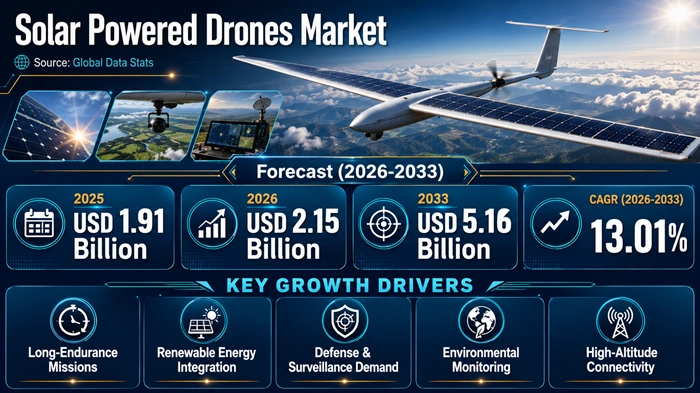
The global solar powered drones market size is valued at USD 1.91 billion in 2025 and is predicted to increase from USD 2.15 billion in 2026 to approximately USD 5.16 billion by 2033, growing at a CAGR of 13.01% from 2026 to 2033.
This strong growth trajectory reflects rising demand for long-endurance aerial platforms capable of extended flight without frequent refueling or battery replacement, particularly across defense surveillance, agricultural monitoring, and telecommunications applications. Growing investment in lightweight photovoltaic technology, expanding commercial drone applications, and increasing government funding for unmanned aerial systems continue to strengthen momentum across the global solar drone landscape.
AI Impact on the Solar Powered Drones Industry
Artificial Intelligence Is Quietly Transforming How Solar Drones Navigate, Conserve Energy, and Deliver Long-Duration Missions
Artificial intelligence is beginning to play a meaningful role in reshaping how solar powered drones manage flight paths, energy consumption, and mission execution over extended periods. Machine learning algorithms integrated into onboard flight controllers are helping drones optimize solar panel orientation relative to sun position throughout the day, maximizing energy capture while minimizing unnecessary power drain during long-duration flights. AI-powered predictive maintenance tools are also improving fleet reliability by identifying battery degradation patterns and component wear before failures occur mid-mission, a critical advantage for operators running multi-day surveillance or communication relay missions.
Beyond flight optimization, AI is enabling smarter autonomous navigation for solar drones operating in remote or hard-to-reach environments, including border monitoring and disaster response zones. Predictive weather modeling combined with AI-driven route planning allows these drones to avoid turbulent conditions that could compromise their lightweight airframes while maintaining optimal solar exposure. As defense and commercial operators increasingly rely on persistent aerial coverage, AI-integrated solar drones are becoming central to next-generation surveillance and connectivity infrastructure planning.
Growth Factors
Rising Demand for Long-Endurance Flight and Expanding Defense Investment Are Accelerating Adoption of Solar-Powered Aerial Platforms
One of the strongest growth drivers for the solar powered drones market is the increasing need for extended flight endurance across defense, surveillance, and telecommunications applications. Traditional battery-powered and fuel-based drones face significant limitations in mission duration, while solar-powered platforms can theoretically remain airborne for days or even weeks, making them highly attractive for border security, maritime patrol, and remote infrastructure monitoring. Growing defense budgets across North America, Europe, and Asia Pacific are directly translating into procurement programs for high-altitude, long-endurance solar drones.
At the same time, advancements in lightweight photovoltaic cell technology and improved battery storage systems are making solar drones more commercially viable across a broader range of applications, including precision agriculture and disaster response. As solar cell efficiency improves and manufacturing costs decline, these platforms are becoming accessible to a wider range of commercial operators beyond traditional defense and government customers. Expanding telecommunications infrastructure needs in remote and underserved regions are also driving interest in solar drones as an alternative to traditional satellite or ground-based connectivity solutions.
Market Outlook
Expanding Commercial Applications and Government-Backed Programs Are Setting the Stage for Sustained Long-Term Growth
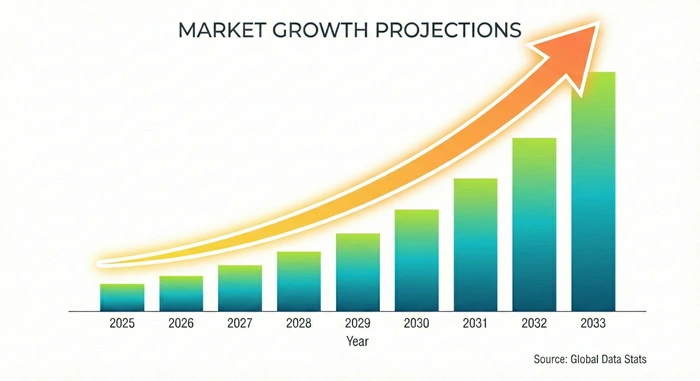
Looking ahead, the solar powered drones industry is positioned for sustained growth as both defense and commercial sectors continue expanding their use cases for persistent aerial platforms. Government-backed research programs focused on high-altitude pseudo-satellite technology are expected to accelerate innovation, particularly as countries seek cost-effective alternatives to traditional satellite communication infrastructure. This expanding application base suggests double-digit growth potential will continue well into the next decade.
Commercial adoption is also expected to accelerate as agricultural monitoring, environmental research, and telecommunications companies increasingly recognize the operational cost advantages of solar-powered platforms over traditional fuel-dependent alternatives. Combined with growing private investment in drone manufacturing startups and improving regulatory frameworks for beyond-visual-line-of-sight operations, the outlook for this market remains strongly positive. Analysts expect competitive intensity to increase as both established aerospace manufacturers and specialized drone startups compete for market share.
Expert Speaks
-
"Persistent, solar-powered aerial platforms represent one of the most promising frontiers in unmanned systems technology, offering mission durations that battery and fuel-based drones simply cannot match." — CEO, Airbus SE
-
"We continue to invest heavily in high-altitude solar drone technology as a strategic complement to satellite communications, particularly for connectivity in underserved regions." — CEO, AeroVironment Inc.
-
"The convergence of lightweight materials, efficient photovoltaic cells, and AI-driven flight optimization is unlocking commercial use cases for solar drones that were simply not feasible even five years ago." — CEO, Boeing Company
Key Report Takeaways
-
North America leads the global solar powered drones market, holding the largest regional share in 2025, supported by substantial defense spending, strong aerospace manufacturing capabilities, and early adoption of high-altitude pseudo-satellite programs.
-
Asia Pacific is the fastest-growing regional market, expected to expand at a CAGR exceeding 15% through 2033, driven by rising defense modernization programs, expanding agricultural monitoring applications, and growing government investment in China and India.
-
Defense and government end users represent the dominant customer segment, accounting for the largest revenue share due to their reliance on persistent surveillance and border monitoring capabilities.
-
Surveillance and reconnaissance applications contribute the largest share within the application segment, reflecting strong military and homeland security demand for long-duration aerial monitoring.
-
Fixed-wing solar drones remain the most widely adopted platform type, given their superior aerodynamic efficiency and ability to sustain extended flight compared to rotary-wing alternatives.
-
The telecommunications and connectivity segment is expected to grow fastest going forward, holding an estimated 16% market share by 2033 and expanding at a CAGR above 17%, driven by rising demand for stratospheric connectivity solutions in remote regions.
Market Scope
| Report Coverage | Details |
|---|---|
| Market Size by 2033 | USD 5.16 Billion |
| Market Size by 2025 | USD 1.91 Billion |
| Market Size by 2026 | USD 2.15 Billion |
| Market Growth Rate from 2026 to 2033 | CAGR of 13.01% |
| Dominating Region | North America |
| Fastest Growing Region | Asia Pacific |
| Base Year | 2025 |
| Forecast Period | 2026 to 2033 |
| Segments Covered | Platform Type, Application, End User, Component, Region |
| Regions Covered | North America, Europe, Asia Pacific, Latin America, Middle East & Africa |
Market Dynamics
Drivers Impact Analysis
Rising Demand for Long-Endurance Missions and Expanding Defense Investment Are the Two Most Powerful Forces Propelling This Market Forward
| Driver | (≈) % Impact on CAGR Forecast | Geographic Relevance | Impact Timeline |
|---|---|---|---|
| Growing demand for long-endurance aerial platforms | ~35% | Global, especially North America & Asia Pacific | Short to long-term |
| Rising defense modernization budgets | ~29% | North America, Europe, Asia Pacific | Medium-term |
| Advancements in lightweight photovoltaic technology | ~22% | Global | Long-term |
| Expanding telecommunications connectivity needs | ~14% | Asia Pacific, Latin America, MEA | Medium to long-term |
The rising demand for long-endurance aerial platforms is without question the single most powerful demand driver in the solar powered drones market. Traditional drones face significant operational limits due to battery life and fuel capacity, while solar-powered alternatives can theoretically sustain flight for days or weeks, making them exceptionally valuable for continuous surveillance, border monitoring, and disaster response missions where persistent coverage matters most.
Rising defense modernization budgets represent the second critical driver reshaping this market. Governments across North America, Europe, and Asia Pacific are increasingly allocating funding toward high-altitude pseudo-satellite programs and persistent surveillance platforms, recognizing the strategic value of solar drones in modern military operations. This sustained institutional investment continues to strengthen procurement activity across the global solar powered drones market.
Restraints Impact Analysis
High Manufacturing Costs and Weather Dependency Continue to Present Real-World Barriers to Full Market Penetration
| Restraint | (≈) % Impact on CAGR Forecast | Geographic Relevance | Impact Timeline |
|---|---|---|---|
| High manufacturing and R&D costs | ~37% | Global | Short to medium-term |
| Weather and climate dependency affecting performance | ~30% | Global | Ongoing |
| Regulatory restrictions on beyond-visual-line-of-sight flight | ~21% | North America, Europe | Short-term |
| Limited payload capacity compared to conventional drones | ~12% | Global | Medium-term |
The most significant structural restraint in the solar powered drones market is the high cost associated with lightweight materials, advanced photovoltaic cells, and specialized manufacturing processes required to build these platforms. This cost barrier limits adoption primarily to well-funded defense agencies and large commercial operators, slowing broader market penetration among smaller enterprises and emerging market customers.
Weather and climate dependency further complicates operations, as cloud cover, storms, and seasonal daylight variations can significantly affect a solar drone's ability to maintain sufficient power generation for extended missions. Regulatory restrictions on beyond-visual-line-of-sight flight operations in several developed markets also limit commercial deployment flexibility, while the lightweight design required for solar efficiency inherently constrains payload capacity compared to conventional fuel-powered drones. These combined factors are moderating the pace of adoption across the global solar powered drones market.
Opportunities Impact Analysis
Stratospheric Connectivity Solutions and Commercial Agricultural Applications Represent the Most Commercially Significant Growth Opportunities
| Opportunity | (≈) % Impact on CAGR Forecast | Geographic Relevance | Impact Timeline |
|---|---|---|---|
| Expansion into stratospheric telecommunications relay | ~40% | Global, led by North America, Asia Pacific | Medium to long-term |
| Growing commercial agricultural monitoring applications | ~33% | Asia Pacific, Latin America | Medium-term |
| Rising demand for disaster response and environmental research | ~27% | Global | Long-term |
The development of stratospheric telecommunications relay platforms represents one of the most commercially attractive opportunities within the solar powered drones sector today. These high-altitude platforms offer a cost-effective alternative to traditional satellite infrastructure for delivering internet connectivity to remote and underserved regions, opening substantial new revenue streams for manufacturers and telecommunications partners alike.
Expanding commercial agricultural monitoring applications are also creating significant opportunity, as farmers and agribusinesses increasingly recognize the value of persistent aerial crop monitoring for irrigation management and pest detection. Meanwhile, growing demand for disaster response and environmental research platforms is opening new government and NGO procurement channels, positioning manufacturers who invest early in these applications to capture a disproportionate share of future growth within the global solar powered drones market.
Segment Analysis
By Platform Type
Fixed-Wing Solar Drones Dominate the Category, Driven by Superior Aerodynamic Efficiency and Extended Flight Endurance
Fixed-wing solar drones hold the dominant position in the solar powered drones market, accounting for the largest share of total platform revenue given their superior lift-to-drag ratio and ability to sustain extended flight durations compared to rotary-wing alternatives. This dominance is deeply rooted in the aerodynamic efficiency that fixed-wing designs offer, allowing these platforms to maximize solar energy capture while minimizing power consumption during cruise flight phases. North America remains the leading region for this segment, supported by substantial defense investment in high-altitude pseudo-satellite programs. Leading companies such as Airbus, Boeing, and AeroVironment continue to strengthen their fixed-wing solar drone portfolios through sustained research investment and government partnership contracts.
Asia Pacific is emerging as a fast-growing region for fixed-wing solar drone adoption, expanding at a CAGR exceeding 16% as defense modernization programs in China and India increasingly incorporate persistent surveillance platforms. The region's growing agricultural monitoring needs, combined with expanding telecommunications infrastructure gaps in rural areas, are generating sustained institutional demand for long-endurance fixed-wing platforms. Regional manufacturers have strengthened their presence through cost-competitive product development tailored to local defense and commercial budgets, reinforcing this segment's continued relevance across the broader solar powered drones market.
By Application
Surveillance and Reconnaissance Applications Lead Institutional Demand, Driven by Persistent Border Monitoring and Security Requirements
Surveillance and reconnaissance applications represent the largest application segment within the solar powered drones market, reflecting strong demand from military and homeland security agencies seeking continuous aerial monitoring capabilities without the operational limitations of traditional drones. Government agencies across North America and Europe rely heavily on these platforms for border security, maritime patrol, and critical infrastructure protection, driving consistent institutional procurement of solar-powered surveillance systems. This segment continues to benefit from rising geopolitical tensions that have increased defense spending priorities across multiple regions.
Telecommunications and connectivity applications are witnessing the fastest growth within the application segment, as companies increasingly explore stratospheric platforms as alternatives to traditional satellite infrastructure for delivering internet access to remote populations. Companies such as AeroVironment and specialized telecommunications technology providers have expanded their solar drone connectivity initiatives, particularly targeting underserved regions across Asia Pacific and Latin America. This growing application diversity highlights the expanding commercial relevance of solar drone technology beyond its traditional defense-focused origins across the global solar powered drones market.
Regional Insights
North America
Substantial Defense Investment and Advanced Aerospace Manufacturing Have Positioned North America as the Clear Market Leader
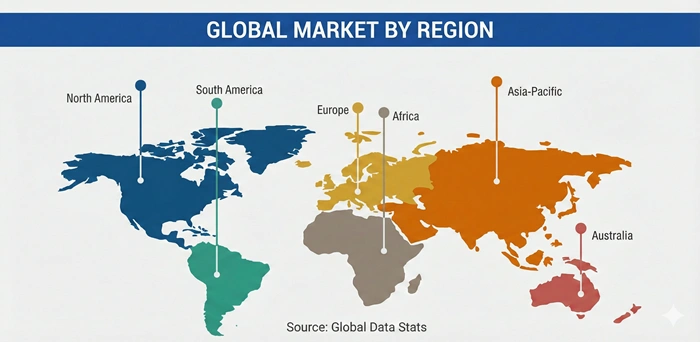
North America commands the largest share of the global solar powered drones market, supported by substantial defense spending, a mature aerospace manufacturing ecosystem, and early government investment in high-altitude pseudo-satellite research programs. The United States drives the majority of regional demand, home to leading companies including Boeing, AeroVironment, and Lockheed Martin, all of which maintain significant research and development capabilities focused on persistent aerial platforms. This region currently holds an estimated 36% share of global revenue, driven by consistent defense procurement and growing commercial interest in stratospheric connectivity solutions.
Canada also contributes meaningfully to regional growth, with government-backed research initiatives supporting solar drone applications in Arctic surveillance and remote infrastructure monitoring. Growing collaboration between defense contractors and telecommunications companies is reinforcing North America's leadership position within the solar powered drones market, with the region projected to maintain steady growth at a CAGR near 12% through 2033.
Asia Pacific
Expanding Defense Modernization and Growing Agricultural Applications Are Driving Rapid Growth Across Key Regional Markets
Asia Pacific stands out as the fastest-growing region within the solar powered drones market, fueled by expanding defense modernization programs, rising agricultural monitoring needs, and growing government investment in unmanned aerial systems research. Countries including China, India, and Japan are witnessing rapid growth in both defense and commercial solar drone adoption, supported by domestic aerospace manufacturers establishing strong regional platforms. This region is expected to grow at a CAGR exceeding 15% through 2033, outpacing all other geographies globally.
Rising border security concerns, combined with growing telecommunications infrastructure gaps in rural areas, are generating substantial demand for persistent aerial platforms across the region. India's expanding defense research ecosystem, supported by domestic manufacturing initiatives, is generating significant institutional interest in solar-powered surveillance and connectivity platforms. As affordability and localized manufacturing capabilities continue to improve, Asia Pacific is positioned to capture a growing share of the global solar powered drones market in the years ahead.
Region-Wise and Country-Wise Report Customization
Tailored Regional Breakdowns Allow Decision-Makers to Focus Their Strategy on the Specific Geographies That Matter Most to Their Business
This report can be customized to provide detailed, country-specific insights covering market analysis, trends, opportunities, and competitive positioning across the following regions and countries:
North America
-
U.S., Canada, Mexico
Europe
-
U.K., Germany, France, Italy, Rest of Europe
Asia Pacific
-
China, India, Japan, South Korea, Australia, Rest of Asia Pacific
Latin America
-
Brazil, Argentina, Rest of Latin America
Middle East & Africa
-
UAE, Saudi Arabia, Rest of MEA
Customized versions of this report deliver granular, geography-specific data tailored to your chosen market and keyword combination, helping businesses make informed regional decisions with greater precision.
Top Key Players
-
Boeing Company (United States)
-
Airbus SE (Netherlands)
-
AeroVironment Inc. (United States)
-
Lockheed Martin Corporation (United States)
-
Northrop Grumman Corporation (United States)
-
BAE Systems plc (United Kingdom)
-
Prismatic Ltd. (United Kingdom)
-
UAVOS Inc. (United States)
-
Skydweller Aero Inc. (United States)
-
Alpha Unmanned Systems S.L. (Spain)
-
Sunbirds Ltd. (Israel)
-
Elistair (France)
Recent Developments
-
In 2025, Skydweller Aero Inc. completed extended-duration flight testing of its solar-powered unmanned aircraft, targeting maritime surveillance and defense applications for government customers.
-
In 2025, AeroVironment Inc. expanded its high-altitude pseudo-satellite research program through new partnerships focused on stratospheric telecommunications relay technology.
-
In 2024, Airbus SE advanced its Zephyr solar drone program with extended test flights aimed at demonstrating multi-week endurance capabilities for defense surveillance missions.
-
In 2025, BAE Systems plc secured new government contracts to expand solar-powered persistent surveillance platform development for border security applications.
-
In 2024, Prismatic Ltd. announced new investment funding to accelerate commercial-scale production of its high-altitude solar-powered unmanned aircraft systems.
Market Trends
The Solar Powered Drones Market Is Rapidly Shifting Toward Stratospheric Connectivity Platforms and AI-Integrated Flight Optimization Systems
Two of the most consequential trends reshaping the solar powered drones landscape are the growing focus on stratospheric telecommunications relay platforms and the increasing integration of AI-driven flight optimization systems. Companies are increasingly positioning high-altitude solar drones as viable alternatives to traditional satellite infrastructure, particularly for delivering connectivity to remote and underserved regions where ground-based infrastructure investment remains economically challenging.
The second major trend is the deepening integration of artificial intelligence into flight path planning and energy management systems, allowing solar drones to maximize mission duration by intelligently balancing solar exposure, weather avoidance, and payload power requirements. As manufacturers continue refining these AI-driven capabilities, the operational reliability and commercial viability of solar-powered aerial platforms continue to improve, strengthening long-term confidence in this technology across both defense and commercial sectors.
Segments Covered in the Report
By Platform Type
-
Fixed-Wing Solar Drones
-
Rotary-Wing Solar Drones
-
Hybrid Solar Drones
By Application
-
Surveillance and Reconnaissance
-
Telecommunications and Connectivity
-
Agricultural Monitoring
-
Disaster Response and Environmental Research
-
Border and Maritime Security
By End User
-
Defense and Government Agencies
-
Commercial Enterprises
-
Research and Academic Institutions
-
Telecommunications Companies
By Component
-
Solar Panels and Photovoltaic Cells
-
Battery Storage Systems
-
Flight Control Systems
-
Airframe and Structural Components
By Region
-
North America (U.S., Canada, Mexico)
-
Europe (U.K., Germany, France, Italy, Rest of Europe)
-
Asia Pacific (China, India, Japan, South Korea, Australia, Rest of Asia Pacific)
-
Latin America (Brazil, Argentina, Rest of Latin America)
-
Middle East & Africa (UAE, Saudi Arabia, Rest of MEA)
❝ Built for Every Level — From Startups to Industry Giants ❞
Here Is Exactly How This Report Works for You
-
For tier 1 defense contractors, investors, and high-level decision-makers, this report delivers competitor revenue analysis, detailed revenue source breakdowns, geopolitical risk assessments, and supply-demand dynamics that enable confident capital allocation, M&A targeting, and strategic market entry decisions in the solar powered drones space.
-
For tier 2 and tier 3 manufacturers, mid-level businesses, and startups, this report provides a practical roadmap of the most commercially viable applications, regional opportunities, and technology investment priorities, helping you compete effectively against established players and identify white spaces before they become crowded.
-
For all decision-makers across the value chain, this report explains exactly how regulatory shifts, defense spending trends, supply chain disruptions, and competitor positioning are converging to shape market direction through 2033, giving you the intelligence framework to make proactive, evidence-based decisions rather than reactive ones.
Frequently Asked Questions
Question 1: What is the current size of the global solar powered drones market and how is it expected to grow?
Answer: The global solar powered drones market was valued at USD 1.91 billion in 2025 and is projected to reach USD 5.16 billion by 2033. This growth is driven by rising demand for long-endurance aerial platforms and expanding defense investment worldwide.
Question 2: Which factors are driving growth in the solar powered drones market?
Answer: The primary drivers of the solar powered drones market include growing demand for persistent aerial surveillance and rising defense modernization budgets. Advancements in lightweight photovoltaic technology are also accelerating adoption globally.
Question 3: Which region holds the largest share in the solar powered drones market?
Answer: North America currently dominates the solar powered drones market, supported by substantial defense investment and advanced aerospace manufacturing. Asia Pacific is the fastest-growing region, driven by expanding defense modernization and agricultural applications.
Question 4: What are the key platform segments driving revenue in the solar powered drones market?
Answer: Fixed-wing solar drones account for the largest platform share in the solar powered drones market, given their superior aerodynamic efficiency. Telecommunications connectivity applications are also gaining significant momentum.
Question 5: Who are the leading companies operating in the solar powered drones market?
Answer: Leading players in the solar powered drones market include Boeing, Airbus, AeroVironment, Lockheed Martin, and Northrop Grumman. These companies compete through sustained research investment and strategic government partnerships.