
Software-Defined Vehicles Market Overview
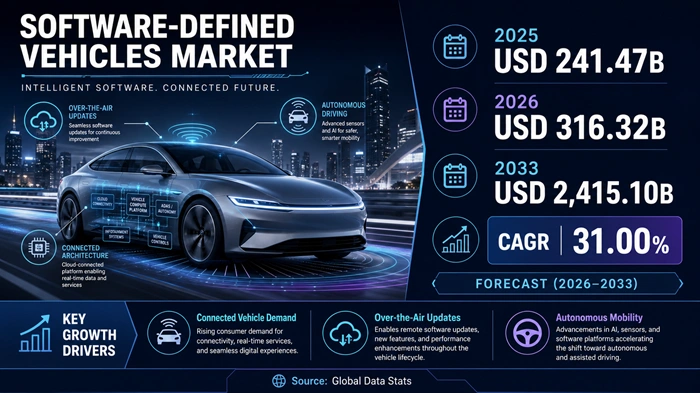
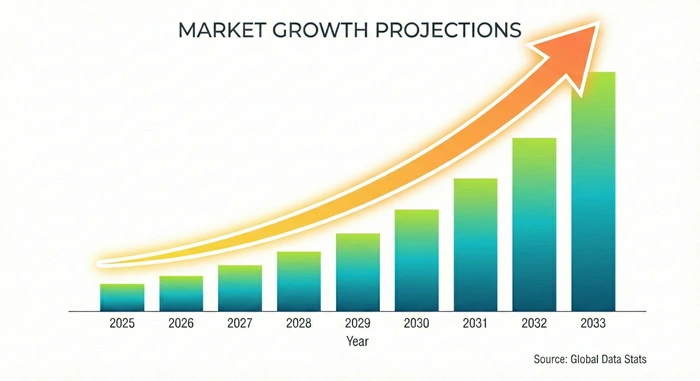
The global software-defined vehicles market size is valued at USD 241.47 billion in 2025 and is predicted to increase from USD 316.32 billion in 2026 to approximately USD 2415.10 billion by 2033, growing at a CAGR of 31.00% from 2026 to 2033.
The software-defined vehicles market encompasses automotive technologies where vehicle functionality, features, and performance are primarily controlled and enhanced through software rather than traditional hardware components, enabling continuous improvements via over-the-air updates.
Rising demand for advanced driver-assistance systems, accelerating electric vehicle adoption, and growing consumer expectations for connected car experiences drive substantial market expansion worldwide. Automakers increasingly recognize that software-defined architectures deliver superior flexibility, reduced development costs, and enhanced customer value compared to traditional distributed electronic control unit systems requiring physical modifications. The market benefits from technological advancements including artificial intelligence integration, 5G connectivity, zonal electrical architectures, and centralized computing platforms that transform vehicles from mechanical products into intelligent, continuously evolving digital platforms.
AI Impact on the Software-Defined Vehicles Industry
Machine Learning and Neural Networks Enable Intelligent Autonomous Capabilities
Artificial intelligence is fundamentally revolutionizing the software-defined vehicles market by enabling advanced perception, decision-making, and control systems that support autonomous driving, predictive maintenance, and personalized user experiences. AI-powered neural networks process massive volumes of sensor data from cameras, radar, lidar, and ultrasonic systems to recognize objects, interpret road conditions, predict pedestrian behavior, and make split-second driving decisions that ensure passenger safety. Machine learning algorithms continuously improve vehicle performance by analyzing driving patterns, environmental conditions, and user preferences to optimize energy consumption, enhance comfort settings, and refine autonomous navigation capabilities. Deep learning models enable vehicles to learn from millions of miles of real-world driving data, identifying edge cases, unusual scenarios, and safety-critical situations that traditional rule-based systems cannot adequately address.
The integration of AI with software-defined platforms enables vehicles to evolve throughout their operational lifetime, acquiring new capabilities, adapting to changing regulations, and improving functionality through remote software updates. AI-driven systems support advanced features including natural language voice assistants, facial recognition authentication, driver monitoring for fatigue detection, and personalized infotainment recommendations tailored to individual passenger preferences. Predictive maintenance leveraging AI analyzes vehicle telemetry, component wear patterns, and historical failure data to forecast maintenance needs, schedule service appointments, and prevent breakdowns before they occur. Furthermore, AI-powered cybersecurity systems continuously monitor network traffic, detect intrusion attempts, and respond to emerging threats in real-time, protecting software-defined vehicles from malicious attacks targeting connected systems.
Growth Factors
Electric Vehicle Proliferation and Autonomous Driving Development Accelerate Market Expansion
The explosive growth of electric vehicle adoption represents the primary driver propelling software-defined vehicles market expansion as battery-electric architectures inherently support centralized computing, digital interfaces, and software-centric designs that traditional internal combustion platforms cannot easily accommodate. Electric vehicle manufacturers including Tesla, BYD, NIO, XPENG, and emerging startups design vehicles from the ground up around software platforms, eliminating legacy mechanical constraints and enabling seamless integration of advanced digital features. Government mandates accelerating electric vehicle adoption across China, Europe, and North America create massive addressable markets for software-defined architectures as automakers transition entire product portfolios toward electrification. Consumer expectations for smartphone-like experiences in vehicles drive demand for regular feature updates, new application downloads, personalized interfaces, and continuous capability enhancements that only software-defined platforms can deliver.
The rapid development of autonomous driving technologies creates urgent imperatives for software-defined vehicles market adoption as self-driving systems require sophisticated software stacks processing sensor data, executing complex algorithms, and coordinating numerous vehicle functions. Autonomous driving projected to grow at the fastest CAGR of 36.6% through 2033 demonstrates the transformational impact of software-defined architectures enabling vehicles to perceive environments, make decisions, and control motion without human intervention. Major automakers and technology companies invest billions in autonomous vehicle development, with regulatory bodies including NHTSA supporting commercialization through technical guidance and safety frameworks. Advanced driver-assistance systems currently commanding an estimated 36% share of the software-defined vehicles market serve as stepping stones toward full autonomy, providing safety features including adaptive cruise control, lane-keeping assistance, and automatic emergency braking that build consumer confidence in automated driving. Additionally, over-the-air update capabilities allow manufacturers to continuously improve autonomous driving performance, add new features, fix bugs, and enhance safety without requiring physical service visits.
Market Outlook
Zonal Architecture Transition and Subscription Services Transform Industry Landscape
The software-defined vehicles market outlook remains exceptionally positive as automakers transition from traditional domain-based electrical architectures toward zonal and centralized computing platforms that reduce wiring complexity, enable faster feature deployment, and support continuous software evolution. Leading manufacturers including Volkswagen, General Motors, BMW, and Mercedes-Benz invest heavily in unified software platforms that consolidate vehicle functions, streamline development processes, and create consistent digital experiences across model ranges. Strategic evolution toward zonal architectures organizing electronics by physical location rather than functional domain reduces cable lengths by up to 50%, cuts vehicle weight, simplifies supply chains, and facilitates over-the-air updates. Technology partnerships between traditional automakers and software giants including collaborations with Google, NVIDIA, Qualcomm, and specialized automotive software providers accelerate capability development and time-to-market.
North America demonstrates particularly strong momentum with the region expected to account for 39% of growth contribution and maintain 32% market share in 2025, driven by technology leaders including Tesla pioneering software-first vehicle design and established automakers rapidly catching up. The United States advances through vertically integrated players and disruptor OEMs including Tesla and Rivian maintaining strong focus on over-the-air updates, ADAS software, and subscription-based feature monetization. The software-defined vehicles market benefits from subscription revenue models as manufacturers offer tiered feature packages, temporary capability unlocks, and ongoing service subscriptions generating recurring revenue streams beyond traditional one-time vehicle sales. China leads SDV adoption in terms of volume with EV-first OEMs, fast product development cycles, strong consumer acceptance of digital features, and government policies supporting intelligent connected vehicle development. Industry analysts project that by 2035, 60% of automotive value will derive from software and electronics, up from approximately 10% in 2010, reflecting the fundamental transformation toward software-defined platforms.
Expert Speaks
-
Jens H. Lund, Group CEO of DSV, stated that the acquisition of Schenker for EUR 14.3 billion represents a transformative event creating a world-leading transport and logistics powerhouse, emphasizing that by adding competencies and expertise to existing networks, the combined organization improves competitiveness across all divisions while providing customers with higher service levels, innovative seamless solutions, and supply chain flexibility.
-
Jim Rowan, CEO of Volvo, acknowledged that despite significant technological advancement, truly autonomous cars remain a long way off, reflecting the complex challenges surrounding sensor reliability, regulatory frameworks, liability considerations, and the massive computational requirements needed to safely navigate unpredictable real-world driving scenarios.
-
Industry analysts tracking automotive transformation reported that 45% of global OEMs now prioritize software-defined vehicle development as a strategic initiative, with market leaders including Tesla, BYD, and BMW demonstrating varying approaches across four key dimensions of adoption including architectural transformation, over-the-air capabilities, autonomous features, and digital service monetization.
Key Report Takeaways
-
North America leads the software-defined vehicles market with approximately 32% to 39% regional share in 2025, driven by technology pioneers including Tesla establishing software-first paradigms, strong presence of NVIDIA and Qualcomm providing computing platforms, and regulatory support from NHTSA facilitating autonomous vehicle testing and deployment.
-
Asia Pacific represents the fastest-growing regional market, expected to command an estimated 40% share by 2025 with the highest CAGR through 2032, fueled by China's aggressive new energy vehicle mandates, expansive manufacturing base, cutting-edge digital infrastructure development, and EV-first OEMs including BYD, NIO, and XPENG leading adoption.
-
Connected software-defined vehicles dominate current market demand with 27.4% revenue share in 2024, reflecting strong adoption of vehicle-to-everything communication, cloud connectivity, infotainment platforms, and remote diagnostics that enhance safety, convenience, and user experience while establishing foundation for autonomous capabilities.
-
Autonomous driving applications demonstrate fastest growth projected at 36.6% CAGR from 2025 to 2033, driven by AI advancement, sensor fusion improvements, machine learning progress, and substantial OEM investments in neural network-based perception and decision-making systems enabling incremental autonomy from Level 3 to Level 5.
-
ADAS segment commands largest application share with estimated 36% of the software-defined vehicles market in 2025, backed by regulatory mandates for vehicle safety, consumer demand for risk-mitigation features including adaptive cruise control and lane-keeping assistance, and expanding sensor deployments enhancing predictive driving safety.
-
Zonal architecture transition accelerates as automakers shift from traditional domain-based electrical systems toward proximity-organized zonal controllers reducing cable length, cutting copper usage, simplifying over-the-air updates, and enabling scalability that supports continuous feature additions without redesigning entire networks.
Market Scope
| Report Coverage Details | |
|---|---|
| Market Size by 2033 | USD 2415.10 Billion |
| Market Size by 2025 | USD 241.47 Billion |
| Market Size by 2026 | USD 316.32 Billion |
| Market Growth Rate from 2026 to 2033 | CAGR of 31.00% |
| Dominating Region | North America |
| Fastest Growing Region | Asia Pacific |
| Base Year | 2025 |
| Forecast Period | 2026 to 2033 |
| Segments Covered | Type, Application, Vehicle Type, Architecture, Region |
| Regions Covered | North America, Europe, Asia Pacific, Latin America, Middle East & Africa |
Market Dynamics
Drivers Impact Analysis
Electric Vehicle Transition and Consumer Digital Expectations Accelerate Adoption
| Factor | (≈) % Impact on CAGR Forecast | Geographic Relevance | Impact Timeline |
|---|---|---|---|
| Electric vehicle proliferation | 11.2% | Global, particularly China and Europe | Immediate and ongoing |
| Autonomous driving development | 9.8% | North America, Asia Pacific | Medium to long-term |
| Over-the-air update demand | 5.4% | Global markets | Immediate and ongoing |
| Consumer digital expectations | 4.6% | Developed markets | Ongoing |
The accelerating global transition toward electric vehicles represents the most significant driver propelling software-defined vehicles market expansion as battery-electric architectures inherently support centralized computing, digital interfaces, and software-centric designs that traditional internal combustion platforms cannot easily accommodate. Electric vehicle manufacturers design products from the ground up around software platforms, eliminating legacy mechanical constraints associated with engines, transmissions, and complex fuel systems, enabling seamless integration of advanced digital features. Government mandates including European Union bans on internal combustion vehicle sales by 2035, California zero-emission requirements, and China's aggressive new energy vehicle quotas create massive addressable markets for software-defined architectures. Rising EV adoption expected to encompass nearly all new vehicle sales by 2035 ensures that software-defined platforms become the dominant automotive paradigm.
Rapid autonomous driving development creates urgent imperatives for software-defined vehicles market adoption as self-driving systems require sophisticated software stacks processing sensor fusion data, executing complex neural network algorithms, and coordinating numerous vehicle subsystems. Major automakers and technology companies invest billions in autonomous vehicle R&D with the autonomous driving software segment projected to grow at the fastest rate of 36.6% CAGR through 2033. Regulatory support from bodies including NHTSA providing technical guidance, safety frameworks, and testing approval accelerates commercialization timelines. Consumer expectations for smartphone-like vehicle experiences drive demand for regular feature updates, application downloads, personalized interfaces, and continuous capability enhancements that only software-defined platforms deliver. Over-the-air update capabilities enabling remote feature deployment, performance improvements, bug fixes, and security patches without service visits represent fundamental advantages that consumers increasingly expect as standard functionality. Additionally, stricter emissions regulations, advancing safety mandates requiring ADAS features, and 5G network expansion enabling enhanced vehicle connectivity create favorable conditions for software-defined vehicle adoption.
Restraints Impact Analysis
Development Complexity and Cybersecurity Risks Create Adoption Barriers
| Factor | (≈) % Impact on CAGR Forecast | Geographic Relevance | Impact Timeline |
|---|---|---|---|
| Software development complexity | -4.2% | All regions, particularly legacy OEMs | Ongoing |
| Cybersecurity vulnerabilities | -3.6% | Global concern | Ongoing |
| High upfront investment | -2.8% | Small and emerging automakers | Medium-term |
| Regulatory uncertainty | -2.1% | Autonomous driving applications | Medium-term |
Substantial software development complexity and technical challenges surrounding software-defined vehicles market implementations create significant barriers as automakers transition from traditional hardware-focused engineering to software-first design philosophies requiring fundamentally different skill sets, organizational structures, and development processes. Software-defined vehicles require millions of lines of code coordinating numerous functions including powertrain control, chassis dynamics, safety systems, infotainment, connectivity, and autonomous features, creating integration challenges exponentially more complex than traditional automotive development. Legacy automakers including Volkswagen, General Motors, BMW, and traditional manufacturers struggle to match the software expertise of technology-native companies like Tesla, facing cultural resistance, talent acquisition difficulties, and organizational inertia favoring established hardware-centric approaches. The technological gap between ADAS Level 2+ and fully autonomous Level 4/5 driving requires billions of dollars in R&D investments that many automakers find financially challenging.
Cybersecurity vulnerabilities and potential hacking risks create substantial concerns hindering software-defined vehicles market adoption as connected vehicles with over-the-air update capabilities present attractive targets for malicious actors seeking to steal data, disrupt operations, or cause safety incidents. High-profile demonstrations of vehicle hacking including remote takeover of steering, braking, and acceleration systems heighten consumer anxiety and regulatory scrutiny around software-defined vehicle security. The complexity of securing numerous communication interfaces including cellular networks, Wi-Fi, Bluetooth, V2X connectivity, and cloud services creates multiple attack vectors requiring comprehensive security architectures. High upfront investments required for developing software platforms, establishing over-the-air update infrastructure, creating centralized computing architectures, and training engineering teams strain budgets particularly for smaller automakers lacking the financial resources of industry leaders. Additionally, regulatory uncertainty surrounding autonomous vehicle liability, software update approval processes, data privacy requirements, and safety certification standards creates hesitation as automakers navigate evolving legal frameworks across different jurisdictions.
Opportunities Impact Analysis
Subscription Services and Zonal Architecture Transition Create Growth Prospects
| Factor | (≈) % Impact on CAGR Forecast | Geographic Relevance | Impact Timeline |
|---|---|---|---|
| Subscription revenue models | 6.8% | Premium segments globally | Medium-term |
| Zonal architecture adoption | 5.9% | New vehicle platforms | Medium to long-term |
| AI and machine learning integration | 5.2% | Autonomous and ADAS applications | Medium-term |
| 5G network deployment | 3.7% | Developed markets | Medium-term |
The emergence of subscription-based revenue models creates exceptional opportunities within the software-defined vehicles market as manufacturers leverage over-the-air capabilities to offer tiered feature packages, temporary performance unlocks, and ongoing digital services generating recurring income streams beyond traditional one-time vehicle sales. Tesla pioneered subscription services including Full Self-Driving capabilities, premium connectivity, and performance upgrades that customers activate through software rather than hardware modifications. BMW, Mercedes-Benz, and other premium manufacturers now offer subscriptions for heated seats, advanced driver assistance features, and enhanced infotainment systems demonstrating mainstream adoption of software monetization strategies. Market analysts project that subscription services could generate tens of billions in annual revenue by 2030 as consumers embrace paying for capabilities on-demand rather than purchasing permanent features.
Industry-wide transition toward zonal electrical architectures replacing traditional domain-based systems creates substantial opportunities for suppliers, software providers, and technology companies supporting the software-defined vehicles market transformation. Zonal architectures reduce vehicle wiring by up to 50%, cutting cable length, saving substantial copper, lowering weight, and decreasing manufacturing complexity while enabling more flexible feature deployment. Companies including Bosch, Continental, REE Automotive, and emerging specialists develop zonal controllers, central computing units, and integration platforms supporting next-generation vehicle architectures. Rapid AI and machine learning advancement creates opportunities for enhanced autonomous capabilities, personalized user experiences, predictive maintenance, and intelligent energy management systems differentiating software-defined vehicles from conventional alternatives. 5G network deployment enables low-latency vehicle-to-everything communication, cloud-based processing offload, and real-time software updates supporting advanced features requiring high-bandwidth connectivity. Additionally, partnerships between traditional automakers and technology companies including collaborations with NVIDIA, Qualcomm, Google, and software specialists accelerate capability development creating ecosystem expansion opportunities.
Segment Analysis
Connected Software-Defined Vehicles Leadership
V2X Communication and Cloud Integration Drive Segment Dominance
Connected software-defined vehicles command the dominant position within the software-defined vehicles market, accounting for 27.4% revenue share in 2024, significantly outperforming other segments as automakers prioritize vehicle-to-everything communication, cloud connectivity, and digital service platforms. These vehicles leverage cellular networks, Wi-Fi, Bluetooth, and dedicated short-range communication protocols to establish connections with cloud services, infrastructure, other vehicles, and personal devices, enabling features including real-time traffic updates, remote diagnostics, stolen vehicle tracking, and emergency assistance. Modern connected vehicles support sophisticated infotainment platforms based on Linux and Android Automotive OS providing seamless integration with smartphones, streaming services, navigation applications, and personalized content delivery. Organizations value connected SDVs for establishing data pipelines that inform product development, enable predictive maintenance, support usage-based insurance, and create opportunities for ongoing customer engagement beyond the initial sale.
North America and Europe demonstrate particularly strong connected vehicle adoption with automakers including Tesla, BMW, Mercedes-Benz, Volkswagen, General Motors, and Ford deploying comprehensive connectivity suites across their product portfolios. The connected segment benefits from 5G network expansion enabling higher bandwidth, lower latency, and more reliable connections supporting bandwidth-intensive applications including high-definition map updates, cloud-based AI processing, and real-time software synchronization. Asia Pacific shows accelerating adoption driven by China's intelligent connected vehicle initiatives, consumer appetite for digital features, and domestic automakers including BYD, NIO, XPENG, and Li Auto integrating advanced connectivity as standard equipment. The software-defined vehicles market connected segment enables critical functionality including over-the-air software updates that manufacturers leverage to deploy new features, improve performance, fix bugs, and enhance security without requiring physical service visits. Connected architectures establish foundations supporting autonomous driving as vehicles share perception data, coordinate movements, and receive infrastructure information enabling safer, more efficient navigation.
ADAS Application Dominance
Safety Mandates and Consumer Demand Drive Advanced Driver Assistance Adoption
Advanced driver-assistance systems represent the largest application segment within the software-defined vehicles market, commanding an estimated 36% share in 2025, driven by regulatory mandates for vehicle safety, consumer demand for risk-mitigation features, and expanding sensor deployments enhancing predictive driving capabilities. ADAS encompasses a wide range of safety and convenience features including adaptive cruise control maintaining safe following distances, lane-keeping assistance preventing unintended departures, automatic emergency braking detecting collision risks, blind-spot monitoring, parking assistance, and traffic sign recognition. These systems rely on sensor fusion combining data from cameras, radar, lidar, and ultrasonic sensors processed by sophisticated software algorithms that interpret the driving environment and intervene when necessary to prevent accidents. Regulatory agencies including the European Commission, NHTSA, and international bodies increasingly mandate ADAS features as standard equipment, accelerating adoption across all vehicle segments.
North America demonstrates robust ADAS adoption with United States regulations and consumer safety ratings from organizations including IIHS and NHTSA creating strong incentives for manufacturers to include comprehensive driver assistance features. Technology providers including NVIDIA, Qualcomm, Mobileye, and specialized ADAS suppliers partner with automakers to deliver the computing platforms, sensor systems, and software stacks required for advanced functionality. Europe shows particularly strong growth driven by aggressive safety regulations, Vision Zero initiatives targeting traffic fatality elimination, and consumer willingness to pay premium prices for advanced safety technology. The ADAS segment serves as an entry point for automakers into software-defined vehicle architectures, providing incremental safety improvements while building foundations for eventual autonomous capabilities. Market analysts project ADAS will maintain leadership position through the forecast period as features migrate from premium to mass-market vehicles and capabilities expand toward Level 3 conditional automation.
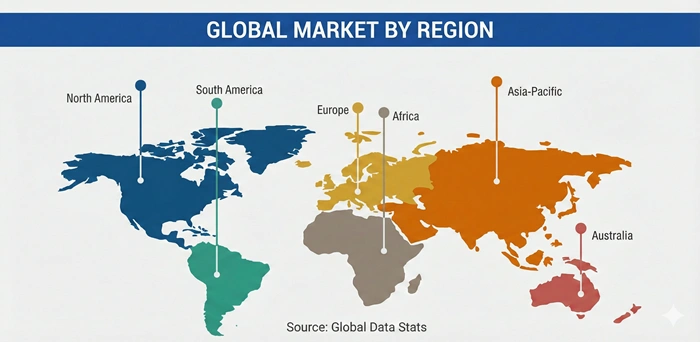
Regional Insights
North America Market Leadership
Technology Innovation and Regulatory Support Drive Regional Dominance
North America commands substantial leadership within the software-defined vehicles market, maintaining approximately 32% to 39% regional share in 2025, driven by technology pioneers including Tesla establishing software-first vehicle paradigms, strong presence of computing platform providers, and regulatory frameworks supporting innovation. The United States represents the primary growth engine with Silicon Valley technology companies, established automakers in Detroit, and emerging electric vehicle startups collectively investing billions in software-defined vehicle development. Tesla's pioneering role demonstrating that vehicles can receive significant functionality upgrades remotely through over-the-air software updates established consumer expectations and competitive benchmarks that traditional automakers must now match. NVIDIA dominates computing platforms with its DRIVE platform powering next-generation vehicles from Mercedes-Benz, Lucid, and other automakers, while Qualcomm's Snapdragon Digital Chassis provides connectivity and autonomy solutions to BMW, Honda, and numerous manufacturers.
The United States advances through vertically integrated players including Tesla and Rivian maintaining tight control over software and hardware integration, alongside traditional automakers including General Motors rolling out its Ultifi platform and Ford investing heavily in software capabilities. Regulatory support from NHTSA providing comprehensive guidance facilitating autonomous vehicle testing, deployment frameworks, and technical standards creates conducive innovation environments. The software-defined vehicles market in North America particularly benefits from consumer willingness to adopt new technologies, with surveys showing strong interest in autonomous features, connected services, and subscription-based capabilities. Canada demonstrates growing adoption across domestic manufacturing operations and import markets with consumers showing similar technology preferences as United States counterparts. Market projections indicate North America will maintain regional leadership through the forecast period despite rapid Asia Pacific growth, supported by continued innovation, strong financial performance enabling R&D investments, and established technology ecosystems.
Asia Pacific Fastest Growth
China's EV Leadership and Digital Infrastructure Drive Regional Acceleration
Asia Pacific emerges as the fastest-growing regional software-defined vehicles market, expected to command an estimated 40% share by 2025 with the highest CAGR through 2032, propelled by China's aggressive new energy vehicle mandates, expansive manufacturing base, cutting-edge digital infrastructure development, and EV-first OEMs leading adoption. China leads SDV adoption in terms of volume with domestic automakers including BYD surpassing Tesla as the world's largest EV manufacturer, alongside NIO, XPENG, Li Auto, and ZEEKR prioritizing software-defined architectures, fast product development cycles, and strong consumer acceptance of digital features. Government policies including Made in China 2025, intelligent connected vehicle initiatives, and substantial subsidies supporting electric vehicle adoption create favorable environments for software-defined vehicle proliferation. Chinese consumers demonstrate particularly strong appetite for advanced digital features, autonomous capabilities, and connected services, driving automakers to compete on software innovation rather than traditional mechanical attributes.
India demonstrates exceptional growth potential with the software-defined vehicle market projected to grow from USD 2.69 billion in FY2025 to USD 9.16 billion in FY2033 at 16.56% CAGR, driven by enhanced safety awareness, technological advancement, and rapidly evolving automotive landscape. Japanese automakers including Toyota, Honda, and Nissan transition cautiously toward software-defined architectures, balancing reliability and safety culture with competitive pressures requiring faster digital feature deployment. The software-defined vehicles market in Asia Pacific particularly benefits from extensive 5G network deployment, government smart city initiatives, and technology ecosystems supporting rapid innovation cycles. South Korea demonstrates strong capabilities with Hyundai Motor Group investing heavily in autonomous driving, electric vehicles, and software platforms while maintaining global competitiveness. Southeast Asian nations including Indonesia, Thailand, and Vietnam show accelerating adoption as economic development, rising vehicle ownership, and infrastructure improvements create expanding markets for advanced automotive technologies.
Top Key Players
-
Tesla Inc. (United States)
-
NVIDIA Corporation (United States)
-
Volkswagen AG (Germany)
-
BMW Group (Germany)
-
General Motors Company (United States)
-
Mercedes-Benz Group AG (Germany)
-
BYD Company Limited (China)
-
NIO Inc. (China)
-
XPENG Inc. (China)
-
Qualcomm Technologies Inc. (United States)
-
Intel Corporation (United States)
-
Ford Motor Company (United States)
-
Toyota Motor Corporation (Japan)
-
Li Auto Inc. (China)
-
Rivian Automotive Inc. (United States)
Recent Developments
-
Tesla Inc. (2024-2025): Tesla continued expanding its Full Self-Driving beta program reaching hundreds of thousands of customers, demonstrating continuous software capability improvements through over-the-air updates while maintaining industry leadership in software-defined vehicle architecture with proprietary operating systems, AI-powered autopilot, and integrated hardware-software design pioneering the automotive transformation.
-
Volkswagen AG (2024-2025): Volkswagen accelerated development of its unified software platform intended to consolidate vehicle functions across the entire product portfolio, investing billions in CARIAD software subsidiary to compete with technology-native competitors while addressing historical delays and technical challenges in the transition from traditional domain architectures to centralized computing platforms.
-
General Motors (2024-2025): General Motors launched its Ultifi software platform enabling applications and digital services integration into vehicles, representing the company's strategic pivot toward software-defined architectures supporting over-the-air updates, subscription services, and continuous feature deployment matching capabilities pioneered by Tesla and other software-first manufacturers.
-
BMW Group (2024-2025): BMW TechWorks India expanded development of ADAS systems, infotainment platforms, and AI-powered assistants to make vehicles smarter, safer, and more personalized, while advancing vehicle-to-everything communication building real-time bridges between cars, infrastructure, cloud services, and other vehicles ensuring instant, secure, and intelligent information flow.
-
NVIDIA Corporation (2024-2025): NVIDIA maintained dominance in automotive AI computing platforms with its DRIVE system serving as the brain for next-generation vehicles from Mercedes-Benz, Lucid Motors, and numerous other automakers, providing powerful processing capabilities supporting autonomous driving, advanced driver assistance, and AI-powered vehicle functions.
Market Trends
Over-the-Air Updates and Zonal Architecture Adoption Transform Development Paradigms
The rapid adoption of over-the-air update capabilities represents a transformative trend within the software-defined vehicles market, fundamentally changing how automakers deliver features, fix issues, and maintain vehicles throughout their operational lifetime. OTA functionality enables manufacturers to remotely deploy new features, improve performance, enhance security, and resolve bugs without requiring vehicles to visit service centers, benefiting consumers through continuous improvement while offering cost-effective fleet management. Tesla pioneered widespread OTA adoption demonstrating that vehicles can receive significant functionality upgrades including acceleration improvements, battery efficiency gains, and entirely new features like Dog Mode and Sentry Mode delivered remotely. Traditional automakers including BMW, Mercedes-Benz, Volkswagen, General Motors, and Ford now implement comprehensive OTA systems supporting infotainment updates, navigation enhancements, ADAS improvements, and increasingly powertrain and chassis software modifications. Modern OTA systems leverage secure cloud infrastructure communicating with vehicle telematics control units through cellular networks including 4G and emerging 5G connectivity, implementing encryption, authentication, and validation protocols ensuring update integrity.
Industry-wide transition toward zonal electrical architectures replacing traditional domain-based systems represents another fundamental trend reshaping the software-defined vehicles market landscape. Zonal architectures organize vehicle electronics by physical location rather than functional purpose, with dedicated controllers managing all sensors, actuators, and components within specific zones regardless of their operational domain. This approach reduces cable length by up to 50%, saves substantial copper per vehicle, lowers weight, simplifies supply chains, and enables more flexible feature deployment compared to traditional systems requiring dedicated wiring for each function. Zonal controllers connect to central computing units via high-speed Ethernet creating nervous systems organized around proximity rather than purpose, mirroring data center architectures with edge nodes feeding information to central processors. Companies including Bosch, Continental, REE Automotive, and emerging specialists develop zonal controllers, central computing platforms, and vehicle integration systems supporting next-generation architectures. Additionally, automakers increasingly adopt software-first development methodologies, agile processes, and continuous integration practices borrowed from technology industries, fundamentally changing organizational structures, talent requirements, and product development timelines.
Segments Covered in the Report
By Type:
-
Connected Software-Defined Vehicles
-
V2X Communication
-
Cloud Connectivity
-
Telematics
-
-
Autonomous Software-Defined Vehicles
-
Level 3 Conditional Automation
-
Level 4 High Automation
-
Level 5 Full Automation
-
-
Semi-Autonomous Software-Defined Vehicles
-
Level 2+ Partial Automation
-
By Application:
-
ADAS (Advanced Driver-Assistance Systems)
-
Adaptive Cruise Control
-
Lane-Keeping Assistance
-
Automatic Emergency Braking
-
-
Infotainment
-
Navigation Systems
-
Entertainment Platforms
-
Voice Assistants
-
-
Connectivity
-
Vehicle-to-Everything (V2X)
-
Cloud Services
-
Mobile Integration
-
-
Autonomous Driving
-
Perception Systems
-
Decision-Making Software
-
Control Algorithms
-
-
Over-the-Air Updates
-
Software Updates
-
Feature Deployment
-
Security Patches
-
By Vehicle Type:
-
Passenger Vehicles
-
Sedans
-
SUVs
-
Hatchbacks
-
-
Commercial Vehicles
-
Light Commercial Vehicles
-
Heavy Commercial Vehicles
-
-
Electric Vehicles
-
Battery Electric Vehicles
-
Plug-in Hybrid Electric Vehicles
-
By Architecture:
-
Domain-Based Architecture
-
Zonal-Based Architecture
-
Centralized Architecture
By Region:
-
North America
-
United States
-
Canada
-
Mexico
-
-
Europe
-
Germany
-
United Kingdom
-
France
-
Italy
-
Spain
-
Rest of Europe
-
-
Asia Pacific
-
China
-
India
-
Japan
-
South Korea
-
Southeast Asia
-
Australia
-
Rest of Asia Pacific
-
-
Latin America
-
Brazil
-
Argentina
-
Rest of Latin America
-
-
Middle East & Africa
-
United Arab Emirates
-
Saudi Arabia
-
South Africa
-
Rest of Middle East & Africa
-
Frequently Asked Questions
Question 1: What is the projected software-defined vehicles market size by 2033?
Answer: The global software-defined vehicles market is projected to reach USD 2415.10 billion by 2033, growing from USD 316.32 billion in 2026 at a CAGR of 31.00%.
Question 2: Which region dominates the software-defined vehicles market currently?
Answer: North America dominates the software-defined vehicles market with approximately 32% to 39% regional share in 2025, driven by technology pioneers like Tesla and strong computing platform provider presence.
Question 3: What are the key drivers of software-defined vehicles market growth?
Answer: Key drivers include electric vehicle proliferation enabling software-centric designs, autonomous driving development requiring sophisticated software stacks, consumer expectations for digital experiences, and over-the-air update demand for continuous improvements.
Question 4: Which application segment shows fastest growth in the software-defined vehicles market?
Answer: Autonomous driving applications demonstrate fastest growth with projected CAGR of 36.6% from 2025 to 2033, driven by AI advancement, sensor fusion improvements, and substantial OEM investments.
Question 5: What is the significance of zonal architecture in the software-defined vehicles market?
Answer: Zonal architecture reduces vehicle wiring by up to 50%, cuts weight, simplifies over-the-air updates, and enables scalability supporting continuous feature additions without redesigning entire networks.