
Software Defined Data Center Market Overview
The global Software Defined Data Center market size is valued at USD 82.47 billion in 2025 and is predicted to increase from USD 98.37 billion in 2026 to approximately USD 469.18 billion by 2033, growing at a CAGR of 22.30% from 2026 to 2033.
This transformative infrastructure approach virtualizes compute, storage, and networking resources through intelligent software controllers that enable organizations to manage entire data center operations from unified platforms rather than depending on hardware-centric configurations. The Software Defined Data Center market has accelerated dramatically as enterprises embrace cloud computing, seek operational efficiency improvements, and require agile infrastructure capable of supporting digital transformation initiatives across diverse business functions.
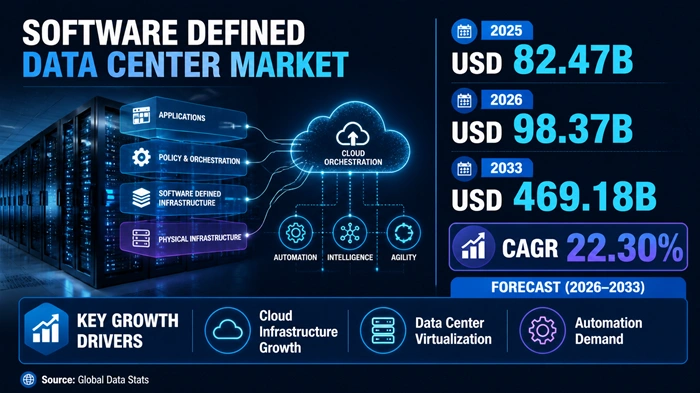
Revolutionizing Infrastructure Management Through Virtualization and Intelligent Software Control
Traditional data centers rely on physical hardware configurations that require manual intervention, significant capital expenditures, and lengthy provisioning timelines that cannot keep pace with modern business requirements. The Software Defined Data Center approach abstracts physical infrastructure into virtualized resource pools managed through software-defined computing, software-defined networking, and software-defined storage layers. This architecture enables organizations to provision resources dynamically, automate routine operations, optimize utilization across workloads, and scale capacity instantly without requiring physical equipment installations. Technology providers have developed comprehensive platforms that integrate artificial intelligence, machine learning, and automation capabilities to deliver self-optimizing infrastructure that predicts failures, balances workloads, and maintains performance targets autonomously.
AI Impact on the Software Defined Data Center Industry
Artificial Intelligence Enables Autonomous Infrastructure Management and Predictive Optimization
Artificial intelligence has emerged as a transformative force within the Software Defined Data Center market, fundamentally reshaping how organizations manage infrastructure through intelligent automation and predictive capabilities. Machine learning algorithms analyze vast amounts of operational data including resource utilization patterns, application performance metrics, and environmental conditions to optimize workload placement, predict hardware failures, and dynamically adjust resource allocation without human intervention. AI-powered management platforms have demonstrated remarkable results with organizations implementing these technologies experiencing 43% reduction in mean time to resolution for infrastructure issues compared to traditional reactive approaches. These intelligent systems continuously learn from operational patterns to improve decision-making accuracy over time while identifying optimization opportunities that human administrators might overlook.
Predictive maintenance represents a critical area where AI delivers substantial value within the Software Defined Data Center market by analyzing sensor data, performance metrics, and historical failure patterns to forecast equipment problems before they cause service disruptions. Intent-based networking powered by AI enables administrators to define desired outcomes in business terms rather than technical configurations, with intelligent systems automatically translating these intentions into appropriate network policies and dynamically adjusting settings as conditions change. The integration of AI facilitates real-time traffic management, automated problem detection, and dynamic network configurations based on current workloads, minimizing downtime while improving service performance across edge and multi-cloud environments. Organizations deploying AI-enhanced operations tools have improved user satisfaction scores by 18 percentage points compared to traditional management approaches, demonstrating the technology's significant impact on service quality. By 2025, research indicates that 85% of enterprises will have deployed advanced AI operations tools to manage network and cloud resources, primarily addressing the expanding complexity and scale of distributed environments.
Growth Factors
Cloud Adoption and Digital Transformation Drive Infrastructure Modernization
The explosive growth of cloud computing has positioned the Software Defined Data Center market as essential infrastructure for organizations transitioning from traditional on-premise systems to flexible hybrid and multi-cloud environments. Enterprises across industries recognize that legacy hardware-centric data centers cannot deliver the agility, scalability, and cost efficiency required to support modern business operations and competitive differentiation strategies. Cloud adoption enables organizations to provision resources on demand, scale capacity dynamically, and pay only for utilized services rather than maintaining expensive infrastructure that sits idle during off-peak periods. The shift toward cloud-first strategies has accelerated with recent surveys showing that over 90% of large enterprises run significant workloads in cloud environments, with hybrid cloud becoming common for mission-critical applications.
Digital transformation initiatives represent powerful catalysts propelling the Software Defined Data Center market as organizations modernize IT infrastructure to support emerging technologies including artificial intelligence, big data analytics, Internet of Things, and edge computing. The demand for agile, scalable infrastructure capable of supporting rapid innovation cycles, experimental workloads, and fluctuating resource requirements drives substantial investments in software-defined architectures. Automation capabilities embedded within SDDC platforms deliver measurable operational benefits by reducing manual intervention, eliminating configuration errors, accelerating provisioning timelines, and enabling IT teams to focus on strategic initiatives rather than routine maintenance tasks. Cost optimization pressures intensify as enterprises seek to reduce total cost of ownership through improved resource utilization, consolidated management tools, reduced physical footprint requirements, and predictable subscription-based pricing models. The growing prevalence of big data and Internet of Things applications creates massive data volumes requiring flexible infrastructure capable of scaling storage and compute resources independently while maintaining performance levels.
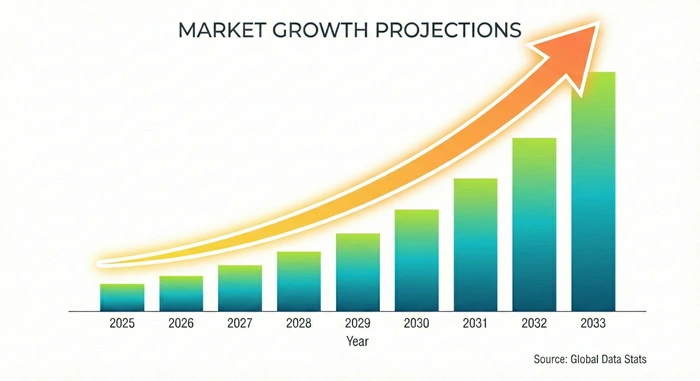
Market Outlook
Strong Growth Projections and Technology Convergence Signal Robust Future Expansion
The Software Defined Data Center market demonstrates compelling long-term prospects as providers continuously enhance platforms through integration of emerging technologies including artificial intelligence, edge computing, containerization, and quantum computing capabilities. Market analysts project sustained high growth rates extending through 2033 as organizations across all industries continue migrating from legacy infrastructure to software-defined architectures that deliver superior agility and efficiency. North America maintains market leadership with 44% share supported by advanced technology ecosystems, substantial cloud infrastructure investments, mature enterprise adoption, and strong presence of major vendors including VMware, Microsoft, Cisco, IBM, and Dell. Asia Pacific emerges as the fastest-growing region driven by rapid data center construction, expanding cloud service provider presence, government digital infrastructure initiatives, and increasing enterprise recognition of SDDC benefits.
Investment in platform innovation remains robust as technology giants compete to deliver comprehensive solutions addressing evolving customer requirements across hybrid cloud, edge computing, and AI workload scenarios. The convergence of SDDC with containerization technologies including Kubernetes enables organizations to deploy cloud-native applications that leverage microservices architectures for maximum flexibility and portability. Edge computing integration creates opportunities to extend software-defined principles beyond centralized facilities to distributed locations where low latency and local processing prove essential for applications including autonomous vehicles, industrial automation, and real-time analytics. Sustainability considerations gain prominence as SDDC platforms optimize energy consumption through intelligent workload placement, automated resource consolidation during low-demand periods, and elimination of overprovisioned infrastructure. Industry-specific solutions tailored to unique requirements in sectors including banking, healthcare, telecommunications, and government enable vendors to differentiate offerings while addressing compliance, security, and operational needs.
Expert Speaks
-
VMware Leadership emphasized their continued investment in SDDC innovation with platforms integrating AI-powered automation, hybrid cloud orchestration, and security capabilities, noting that software-defined infrastructure represents the foundation for enterprise digital transformation across industries.
-
Microsoft Executives highlighted Azure Stack's role in enabling organizations to deploy consistent cloud services across data centers and edge locations, emphasizing that hybrid infrastructure approaches combining on-premise and cloud resources will dominate enterprise strategies.
-
Cisco Management discussed their vision for intent-based networking within SDDC environments where AI-driven systems translate business objectives into infrastructure configurations automatically, predicting that automation will become the primary value proposition driving adoption.
Key Report Takeaways
-
North America leads the Software Defined Data Center market with the largest regional market share of 44% due to advanced technology adoption, substantial cloud infrastructure investments, mature enterprise customer base, and strong presence of major vendors
-
Asia Pacific emerges as the fastest-growing region with rapid expansion driven by extensive data center construction, expanding cloud service provider operations, supportive government policies, and increasing enterprise recognition of software-defined benefits
-
Solution segment dominates component category by capturing 65-66% market share as organizations prioritize software platforms providing unified management, automation capabilities, and integration across compute, storage, and networking layers
-
Software-defined networking represents the fastest-growing type segment with projected CAGR of 23% through 2034 as enterprises require network agility, dynamic traffic management, and automated security policy enforcement across distributed environments
-
Large enterprises constitute the primary customer segment with 67-68.5% market share driven by complex infrastructure requirements, substantial IT budgets, and need for advanced features including multi-cloud orchestration and enterprise-grade security
-
BFSI sector leads end-use adoption due to critical requirements for secure, compliant, highly available infrastructure supporting large-scale digital banking, risk management, data analytics, and regulatory reporting across global operations
Market Scope
| Report Coverage | Details |
|---|---|
| Market Size by 2033 | USD 469.18 Billion |
| Market Size by 2025 | USD 82.47 Billion |
| Market Size by 2026 | USD 98.37 Billion |
| Market Growth Rate from 2026 to 2033 | CAGR of 22.30% |
| Dominating Region | North America |
| Fastest Growing Region | Asia Pacific |
| Base Year | 2025 |
| Forecast Period | 2026 to 2033 |
| Segments Covered | Component, Type, Deployment Mode, Organization Size, End Use, Region |
| Regions Covered | North America, Europe, Asia Pacific, Latin America, Middle East and Africa |
Market Dynamics
Drivers Impact Analysis
Multi-Cloud Strategies and Automation Requirements Accelerate Platform Adoption
| Factor | (≈) % Impact on CAGR Forecast | Geographic Relevance | Impact Timeline |
|---|---|---|---|
| Multi-Cloud and Hybrid Cloud Adoption | High (3-4%) | Global | 2026-2033 |
| Digital Transformation Initiatives | High (3-4%) | Global | 2026-2033 |
| Demand for Infrastructure Automation | Medium-High (2-3%) | North America, Europe, Asia Pacific | 2026-2033 |
| Cost Optimization Pressures | Medium-High (2-3%) | Global | 2026-2033 |
The widespread adoption of multi-cloud and hybrid cloud strategies has positioned the Software Defined Data Center market as essential infrastructure enabling organizations to manage workloads seamlessly across on-premise data centers, private clouds, and multiple public cloud platforms. Enterprises increasingly recognize that relying on single cloud providers creates vendor lock-in risks while limiting flexibility to optimize costs, meet data sovereignty requirements, and leverage best-of-breed services across different platforms. SDDC architectures provide unified management layers that abstract underlying infrastructure complexity, enabling IT teams to provision resources, migrate workloads, and maintain consistent policies across heterogeneous environments without requiring deep expertise in each platform. This flexibility proves particularly valuable for organizations deploying cloud-native applications using containerization technologies that enable workload portability across different infrastructure environments.
Digital transformation initiatives across virtually all industries have elevated infrastructure modernization from optional projects to strategic imperatives as organizations recognize that legacy systems cannot support the agility, innovation speed, and customer experience expectations demanded by modern business. The Software Defined Data Center market benefits from enterprise requirements for infrastructure capable of supporting emerging technologies including artificial intelligence, machine learning, big data analytics, Internet of Things, and edge computing that generate massive computational demands. Automation capabilities represent critical value propositions as organizations seek to reduce operational overhead, eliminate manual configuration errors, accelerate service delivery timelines, and enable IT teams to focus on strategic initiatives rather than routine maintenance. Automation also addresses the growing skills shortage by embedding expertise into software platforms that handle complex configuration tasks without requiring deep specialized knowledge. Cost optimization pressures drive SDDC adoption as enterprises recognize that traditional infrastructure requires substantial capital expenditures for equipment purchases, lengthy depreciation cycles, and overprovisioning to handle peak capacity requirements.
Restraints Impact Analysis
Integration Complexity and Standardization Gaps Challenge Market Penetration
| Factor | (≈) % Impact on CAGR Forecast | Geographic Relevance | Impact Timeline |
|---|---|---|---|
| High Initial Investment Costs | Medium-High (-2 to -3%) | Developing Markets, SMEs | 2026-2033 |
| Lack of Standardization | Medium (-1.5 to -2%) | Global | 2026-2033 |
| Skills Shortage and Management Complexity | Medium (-1 to -1.5%) | Global | 2026-2033 |
| Security and Compliance Concerns | Low-Medium (-0.5 to -1%) | Regulated Industries | 2026-2033 |
High upfront investment requirements present significant barriers constraining Software Defined Data Center market adoption particularly among budget-conscious small and medium enterprises and organizations in developing economies. Implementing comprehensive SDDC architectures typically requires substantial capital for software licensing, hardware upgrades, network infrastructure modernization, and professional services supporting migration from legacy systems. The complexity of transforming existing data centers into software-defined environments creates additional costs associated with compatibility assessments, integration efforts, staff training, and potential service disruptions during transition periods. Organizations must carefully evaluate return on investment timelines while balancing upfront expenditures against projected operational savings, recognizing that benefits may take several years to fully materialize.
The lack of industry-wide standardization creates substantial challenges within the Software Defined Data Center market as organizations struggle to integrate hardware and software components from different vendors into cohesive environments. Without consistent standards and protocols, enterprises face compatibility issues that increase implementation complexity, raise operational costs, and create dependencies on specific vendors for ongoing support. This fragmentation hampers scalability as organizations attempt to expand infrastructure while maintaining compatibility and performance across heterogeneous components from multiple suppliers. Security implications intensify when different security measures across various components create vulnerabilities and complicate regulatory compliance efforts. The shortage of skilled professionals represents another significant restraint as SDDC platforms require expertise spanning virtualization, orchestration, cloud-native technologies, and software-defined networking that remains scarce in the labor market. Organizations struggle to find qualified personnel capable of designing, implementing, and managing complex software-defined environments, potentially delaying deployments and limiting operational effectiveness.
Opportunities Impact Analysis
Edge Computing and Industry-Specific Solutions Create Growth Pathways
| Factor | (≈) % Impact on CAGR Forecast | Geographic Relevance | Impact Timeline |
|---|---|---|---|
| Edge Computing Integration | High (2-3%) | Global | 2026-2033 |
| Government Digital Infrastructure Programs | Medium-High (2-2.5%) | Asia Pacific, Middle East | 2026-2033 |
| Industry-Specific SDDC Solutions | Medium (1.5-2%) | Global | 2026-2033 |
| Sustainability and Green IT Initiatives | Medium (1-2%) | Europe, North America | 2026-2033 |
Edge computing integration represents substantial opportunities for the Software Defined Data Center market as organizations extend infrastructure to distributed locations where low latency and local processing prove essential. Applications including autonomous vehicles, industrial automation, augmented reality, and real-time analytics require computational resources positioned close to data sources and end users to meet stringent latency requirements impossible through centralized data centers. SDDC principles applied to edge environments enable consistent management, automated provisioning, and unified orchestration across thousands of distributed sites without requiring specialized expertise at each location. The convergence of edge computing with 5G networks creates opportunities for new use cases that leverage ultra-low latency, massive device connectivity, and distributed processing capabilities.
Government-led digital infrastructure initiatives channel substantial investment into data center modernization programs particularly across Asia Pacific and Middle East regions where nations recognize technology infrastructure as critical for economic competitiveness. Public sector requirements create opportunities for vendors offering SDDC solutions tailored to government compliance standards, data sovereignty mandates, and security frameworks specific to sensitive applications. Industry-specific solutions enable vendors to differentiate offerings by addressing unique requirements in sectors including banking, healthcare, telecommunications, manufacturing, and retail. Banking and financial services organizations require infrastructure supporting stringent compliance, audit trails, and high availability for transaction processing systems. Healthcare providers need platforms accommodating regulatory requirements while enabling medical imaging, electronic health records, and research workloads. Sustainability initiatives create opportunities as enterprises seek to reduce carbon footprints through intelligent workload optimization, automated power management, and elimination of overprovisioned infrastructure.
Segment Analysis
By Component: Solution Segment
Software Platforms Drive Market Leadership Through Comprehensive Management Capabilities
The solution segment commands dominant market share of 65-66% within the Software Defined Data Center market due to the central role that software platforms play in virtualizing infrastructure and enabling unified management across compute, storage, and networking resources. This segment encompasses software-defined computing, software-defined networking, and software-defined storage solutions that abstract physical hardware into virtualized resource pools managed through centralized controllers. Organizations prioritize software platforms providing automation capabilities, policy-driven orchestration, intelligent workload placement, and integration across heterogeneous infrastructure from multiple vendors. The segment benefits from recurring revenue models as vendors transition toward subscription-based licensing that aligns costs with actual consumption while providing continuous platform updates and security enhancements. North America leads solution adoption with mature market characterized by substantial enterprise investments in VMware vSphere, Microsoft Azure Stack, Cisco ACI, and other comprehensive platforms.
Software-defined networking represents the fastest-growing sub-segment with projected CAGR of 23% through 2034 as enterprises require network agility, dynamic traffic management, and automated security policy enforcement. SDN enables organizations to manage network configurations programmatically through centralized controllers rather than manually configuring individual switches and routers, dramatically reducing provisioning times while eliminating configuration errors. The Software Defined Data Center market segment demonstrates particularly strong growth in Asia Pacific driven by rapid data center construction, expanding cloud service provider operations, and enterprise recognition that legacy network architectures cannot support modern application requirements. AI-based automation transforms SDN by facilitating real-time traffic management, predictive problem detection, and dynamic network configurations based on current workloads, minimizing downtime while improving service performance across multi-cloud environments. Leading vendors serving this segment including VMware, Cisco, Microsoft, Juniper Networks, and numerous specialized SDN providers invest substantially in developing platforms that combine network virtualization with AI-powered analytics and intent-based automation.
By Organization Size: Large Enterprises Segment
Complex Infrastructure Requirements and Advanced Feature Needs Drive Enterprise Adoption
The large enterprises segment represents the dominant customer category with 67-68.5% market share within the Software Defined Data Center market as major corporations require sophisticated platforms capable of managing massive infrastructure deployments across distributed global operations. This segment includes organizations with over 1000 employees operating complex IT environments spanning multiple data centers, cloud platforms, and edge locations that demand comprehensive orchestration, advanced security features, and enterprise-grade support services. Large enterprises typically deploy hybrid cloud architectures combining on-premise infrastructure with public cloud services from multiple providers, requiring SDDC platforms that enable unified management, consistent policies, and seamless workload mobility across heterogeneous environments. These organizations prioritize features including multi-tenancy, role-based access controls, comprehensive audit capabilities, and integration with existing enterprise management tools.
The segment demonstrates strong growth as Fortune 500 companies accelerate digital transformation initiatives requiring infrastructure modernization to support emerging technologies including artificial intelligence, machine learning, and data analytics. Large enterprises in sectors including banking, telecommunications, healthcare, and manufacturing drive substantial Software Defined Data Center market growth through multi-year infrastructure renewal programs that replace aging hardware-centric systems with flexible software-defined architectures. North America and Europe collectively dominate large enterprise adoption with mature markets characterized by substantial IT budgets, sophisticated technical requirements, and strong vendor relationships with providers including VMware, Microsoft, Dell, HPE, and IBM. The United States specifically held 90% share of the North American market generating 26 billion dollars in 2024, fueled by Fortune 500 company investments in enterprise-grade automation and strategic collaborations among technology companies, educational institutions, and public sector organizations. Leading vendors serving large enterprises develop comprehensive platforms combining infrastructure virtualization with AI-powered automation, advanced security features, multi-cloud orchestration, and professional services supporting complex implementations.
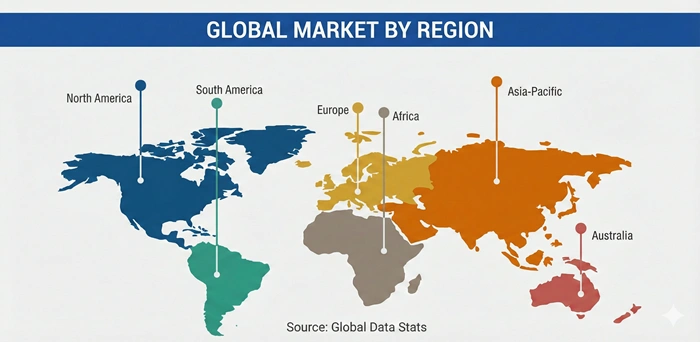
Regional Insights
North America
Advanced Technology Ecosystem and Enterprise Adoption Establish Regional Market Leadership
North America commands the largest regional share of 44% in the Software Defined Data Center market, supported by advanced technology infrastructure, substantial cloud computing investments, mature enterprise adoption, and strong presence of major vendors continuously innovating to maintain competitive positions. The region benefits from sophisticated enterprise customer base with organizations across financial services, technology, healthcare, retail, and government sectors that recognize SDDC benefits and possess budgets supporting substantial infrastructure modernization programs. The United States dominates regional activity accounting for approximately 90% of North American market value, driven by Fortune 500 companies implementing enterprise-grade automation, strategic vendor partnerships, and collaborative initiatives among technology providers, educational institutions, and public sector organizations. Major technology vendors including VMware, Microsoft, Cisco Systems, IBM, Dell Technologies, Hewlett Packard Enterprise, and Oracle maintain headquarters and primary development operations within North America, enabling rapid innovation cycles and close collaboration with enterprise customers.
The North American Software Defined Data Center market demonstrates robust growth as enterprises modernize legacy infrastructure to support digital transformation, hybrid cloud strategies, and emerging technology workloads including artificial intelligence and machine learning. Regional organizations show strong preference for comprehensive platforms providing unified management across on-premise data centers and multiple public cloud environments, reflecting the prevalence of multi-cloud strategies among North American enterprises. Government sector adoption accelerates as federal, state, and local agencies recognize SDDC benefits for improving service delivery, reducing costs, and meeting evolving cybersecurity requirements. Canada contributes significantly to regional market development with technology-forward enterprises and government organizations implementing software-defined architectures, though market size remains substantially smaller than United States. The region maintains leadership position through continuous platform innovation, substantial research and development investments, mature partner ecosystems, and sophisticated customer requirements that drive vendors to develop advanced capabilities.
Asia Pacific
Rapid Data Center Growth and Digital Infrastructure Initiatives Drive Exceptional Regional Expansion
Asia Pacific has emerged as the fastest-growing region in the Software Defined Data Center market driven by explosive data center construction, expanding cloud service provider operations, supportive government digital infrastructure programs, and increasing enterprise recognition of software-defined benefits. The region faces acute infrastructure challenges as rapid economic growth, urbanization, and digital service adoption create enormous demand for computing capacity across industries. Government initiatives across multiple countries channel substantial investment into digital infrastructure modernization through programs promoting cloud adoption, data center development, and technology skills training. China, India, Japan, Australia, and ASEAN nations demonstrate particularly strong growth as enterprises in these markets accelerate cloud migration and infrastructure modernization programs.
The Asia Pacific Software Defined Data Center market benefits from hyperscale cloud providers including Alibaba Cloud, Tencent Cloud, AWS, Microsoft Azure, and Google Cloud constructing massive data center facilities across the region to serve growing customer demand. The influence of emerging technologies including 5G, artificial intelligence, and Internet of Things drives infrastructure requirements as telecommunications operators and technology companies deploy edge computing capabilities supporting low-latency applications. Organizations across banking, retail, manufacturing, and government sectors increasingly adopt SDDC solutions to improve operational efficiency, support digital service delivery, and meet evolving customer expectations. The region shows strong momentum in both large enterprise and SME segments as improving economic conditions enable technology investments while vendor-driven training programs address skills shortages. Key players active across Asia Pacific including VMware, Cisco, Microsoft, Huawei, Dell, HPE, Nutanix, and numerous local providers tailor solutions to regional preferences, regulatory requirements, and price sensitivity within individual country markets.
Top Key Players
-
VMware Inc. (United States)
-
Microsoft Corporation (United States)
-
Cisco Systems Inc. (United States)
-
IBM Corporation (United States)
-
Dell Technologies Inc. (United States)
-
Hewlett Packard Enterprise (HPE) (United States)
-
Nutanix Inc. (United States)
-
Oracle Corporation (United States)
-
Citrix Systems Inc. (United States)
-
SAP SE (Germany)
-
NEC Corporation (Japan)
-
Huawei Technologies Co. Ltd. (China)
-
Juniper Networks Inc. (United States)
-
Red Hat Inc. (United States)
Recent Developments
-
VMware Inc. (2024-2025) continued expanding its SDDC portfolio through enhanced AI-powered automation capabilities in vSphere 8, improved hybrid cloud orchestration features, and strategic partnerships with major cloud providers enabling seamless workload mobility across on-premise and public cloud environments
-
Microsoft Corporation (2024-2025) advanced Azure Stack capabilities through integration with Azure Arc enabling consistent management across distributed edge locations, enhanced AI services for infrastructure optimization, and expanded hybrid cloud solutions serving enterprise customers managing complex multi-cloud environments
-
Cisco Systems (2024-2025) strengthened intent-based networking capabilities within its SDDC solutions through AI-driven automation, enhanced security features leveraging machine learning for threat detection, and strategic acquisitions expanding software-defined portfolio across compute, storage, and networking domains
-
Dell Technologies (2024-2025) expanded its integrated SDDC offerings combining VxRail hyper-converged infrastructure with VMware software, enhanced multi-cloud management capabilities, and industry-specific solutions tailored to banking, healthcare, and manufacturing sector requirements
-
Nutanix Inc. (2024-2025) advanced its cloud platform through enhanced Kubernetes integration supporting cloud-native applications, improved cost governance tools for multi-cloud deployments, and expanded partnerships with service providers enabling turnkey private cloud offerings
Market Trends
AI-Driven Automation and Cloud-Native Architectures Reshape Infrastructure Management
The Software Defined Data Center market continues evolving toward AI-driven autonomous operations where machine learning algorithms handle infrastructure management tasks including workload placement, capacity planning, performance optimization, and failure prediction without human intervention. Intent-based networking gains traction as organizations adopt platforms enabling administrators to define desired business outcomes rather than technical configurations, with intelligent systems automatically translating intentions into appropriate infrastructure policies and dynamically adjusting as conditions change. Observability platforms incorporating AI-powered analytics provide comprehensive visibility into application performance, infrastructure health, and user experience metrics, enabling proactive problem resolution before issues impact services. These autonomous capabilities address the skills shortage by embedding expertise into software platforms while improving operational consistency and reducing human errors.
Cloud-native architectures leveraging containerization technologies including Kubernetes fundamentally reshape how organizations deploy applications within the Software Defined Data Center market. Microservices-based applications distributed across containers enable superior flexibility, portability, and scalability compared to traditional monolithic architectures, driving infrastructure requirements for platforms optimized for container orchestration. Edge computing integration extends SDDC principles to distributed locations enabling consistent management, automated provisioning, and unified orchestration across thousands of sites supporting latency-sensitive applications. Sustainability initiatives gain prominence as enterprises seek to reduce carbon footprints through intelligent workload optimization that consolidates resources during low-demand periods, eliminates overprovisioned infrastructure, and leverages renewable energy sources. As-a-service consumption models proliferate as vendors offer SDDC capabilities through subscription pricing that aligns costs with usage while providing continuous platform updates, eliminating large upfront investments and lengthy depreciation cycles.
Segments Covered in the Report
By Component
-
Solution
-
Hardware
-
Services
By Type
-
Software-Defined Computing (SDC)
-
Software-Defined Networking (SDN)
-
Software-Defined Storage (SDS)
By Deployment Mode
-
Public
-
Private
-
Hybrid
By Organization Size
-
Large Enterprises
-
Small and Medium-Sized Enterprises (SMEs)
By End Use
-
BFSI (Banking, Financial Services, and Insurance)
-
IT and Telecom
-
Healthcare
-
Retail and E-Commerce
-
Government
-
Manufacturing
-
Others
By Region
-
North America
-
Europe
-
Asia Pacific
-
Latin America
-
Middle East and Africa
Frequently Asked Questions
Question 1: What is the projected Software Defined Data Center market size by 2033?
Answer: The global Software Defined Data Center market is expected to reach approximately USD 469.18 billion by 2033. The market demonstrates robust growth driven by multi-cloud adoption, digital transformation initiatives, infrastructure automation demands, and cost optimization pressures across enterprises globally.
Question 2: Which region dominates the Software Defined Data Center market currently?
Answer: North America holds the largest market share at 44% due to advanced technology infrastructure and mature enterprise adoption. The region benefits from substantial cloud investments, sophisticated customer requirements, and strong presence of major vendors including VMware, Microsoft, Cisco, IBM, and Dell in the Software Defined Data Center market.
Question 3: What factors drive growth in the Software Defined Data Center market?
Answer: Key drivers include widespread multi-cloud and hybrid cloud strategies, accelerating digital transformation requiring agile infrastructure, increasing demand for automation reducing operational overhead, and cost optimization pressures eliminating hardware-centric investments. The Software Defined Data Center market also benefits from emerging technology requirements including AI, big data, and edge computing.
Question 4: How is AI impacting the Software Defined Data Center market development?
Answer: Artificial intelligence enables autonomous infrastructure management through predictive optimization, automated workload placement, and intelligent problem resolution. Organizations implementing AI-enhanced operations experience 43% reduction in mean time to resolution while improving user satisfaction by 18 percentage points in the Software Defined Data Center market.
Question 5: Which component segment leads the Software Defined Data Center market?
Answer: The solution segment dominates with 65-66% market share as organizations prioritize software platforms providing unified management, automation capabilities, and integration across compute, storage, and networking. Software-defined networking shows fastest growth with 23% CAGR as enterprises require network agility and dynamic traffic management in the Software Defined Data Center market.