
Smart Helmet Market Overview
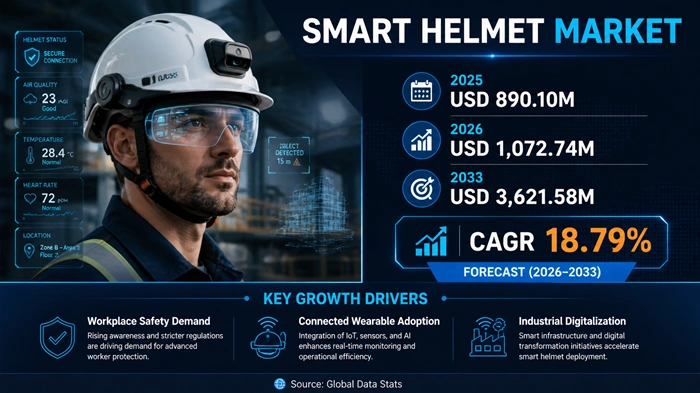
The global Smart Helmet market size is valued at USD 890.10 million in 2025 and is predicted to increase from USD 1072.74 million in 2026 to approximately USD 3621.58 million by 2033, growing at a CAGR of 18.79% from 2026 to 2033.
This innovative protective gear integrates advanced technologies including Internet of Things sensors, augmented reality displays, artificial intelligence processors, and wireless connectivity into traditional helmet structures to enhance safety, communication, and situational awareness for users across diverse applications. The Smart Helmet market has experienced remarkable expansion as safety regulations tighten globally and consumers increasingly demand connected devices that provide real-time information, emergency alerts, and seamless integration with smartphones and other digital ecosystems.
Transforming Personal Safety Equipment Through Connected Technologies and Intelligent Features
Traditional helmets serve the essential function of physical protection, but smart variants elevate this baseline by incorporating sensors, cameras, communication systems, and heads-up displays that fundamentally change the user experience. The Smart Helmet approach enables riders to access navigation guidance, receive incoming calls, monitor rear traffic, and share location data without removing hands from handlebars or diverting attention from the road. Industrial applications have proven equally transformative as construction workers, miners, firefighters, and manufacturing personnel utilize smart helmets equipped with environmental sensors that detect toxic gases, measure noise levels, monitor vital signs, and provide augmented reality overlays showing equipment status or procedural guidance. Technology providers have developed sophisticated platforms that combine crash detection algorithms with automatic emergency alert systems, dramatically reducing response times when accidents occur and potentially saving lives through immediate notification of emergency services and designated contacts.
AI Impact on the Smart Helmet Industry
Artificial Intelligence Enhances Safety Through Predictive Analytics and Real-Time Hazard Detection
Artificial intelligence has emerged as a transformative element within the Smart Helmet market, fundamentally reshaping how protective equipment anticipates risks and responds to dangerous situations. Machine learning algorithms analyze data from multiple sensors including accelerometers, gyroscopes, and biometric monitors to detect falls or collisions instantly, distinguishing between minor incidents and serious crashes that require emergency intervention. AI-powered systems can predict potential hazards based on behavioral patterns and environmental conditions, providing proactive warnings that help users avoid accidents before they occur. Voice recognition capabilities enhanced by natural language processing enable hands-free operation of helmet features, allowing workers and riders to control communication systems, access information, and trigger alerts without physical interaction that could compromise safety.
Computer vision algorithms process camera feeds from smart helmets to provide advanced capabilities including object detection, proximity warnings, and augmented reality overlays that highlight potential dangers in the user's field of view. In industrial settings, AI enhances the Smart Helmet market through features that monitor worker fatigue by analyzing head movements, voice patterns, and biometric data, alerting supervisors when personnel show signs of exhaustion that could lead to accidents. Predictive maintenance applications leverage AI to forecast equipment failures based on sensor data collected through smart helmets worn by technicians, enabling proactive repairs that prevent costly breakdowns. The integration of AI with IoT connectivity creates comprehensive safety ecosystems where smart helmets continuously communicate with other devices, sharing real-time analytics that improve situational awareness across entire work sites or riding groups. Advanced algorithms optimize battery consumption by intelligently managing power-intensive features like cameras and displays, extending operational time without sacrificing functionality.
Growth Factors
Rising Safety Regulations and Connected Device Adoption Drive Market Expansion
The increasing frequency of road accidents and workplace injuries has created urgent demand for the Smart Helmet market as governments and organizations seek advanced solutions that provide better protection than conventional equipment. Traffic fatalities involving two-wheeled vehicles represent a substantial portion of total road deaths globally, prompting regulatory authorities to mandate or incentivize adoption of enhanced protective gear with features that improve visibility, enable communication, and automatically alert emergency services during crashes. Workplace safety regulations have become increasingly stringent across construction, mining, manufacturing, and other industrial sectors, forcing companies to invest in smart helmets that monitor environmental hazards, track worker locations, and provide documented evidence of safety compliance. These regulatory pressures create sustained growth drivers particularly in developed markets where enforcement mechanisms ensure organizations face significant penalties for safety violations.
Technological advancements in IoT devices, sensors, batteries, and display technologies have made smart helmets more capable, affordable, and practical for mainstream adoption across consumer and industrial segments. The proliferation of smartphones and consumer comfort with connected devices has primed the market for smart helmets that integrate seamlessly with existing digital ecosystems through Bluetooth connectivity and companion mobile applications. Rising disposable incomes in emerging economies enable more consumers to purchase premium protective equipment with advanced features, expanding the addressable market beyond early adopters in wealthy countries. The growth of electric scooters, motorcycles, and micro-mobility solutions in urban areas creates new customer segments seeking tech-enabled safety gear that matches their modern, connected lifestyle preferences. Enterprise safety programs increasingly recognize that smart helmets deliver measurable returns through reduced accident rates, lower insurance premiums, improved compliance documentation, and enhanced operational efficiency from features like remote expert assistance via live video streaming.
Market Outlook
Strong Growth Projections and Technology Innovation Signal Robust Future Expansion
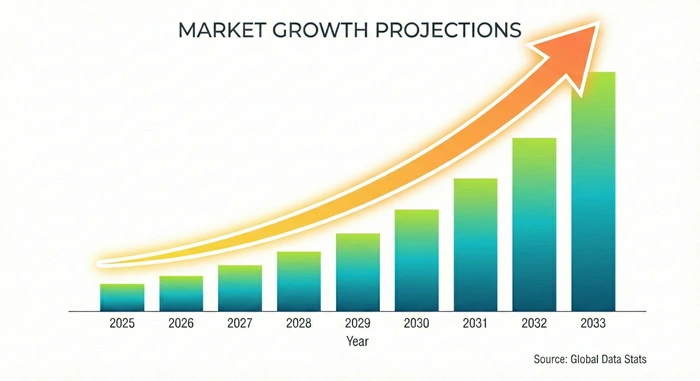
The Smart Helmet market demonstrates compelling long-term prospects as providers continuously enhance product capabilities through integration of emerging technologies including 5G connectivity, advanced augmented reality displays, and solar-powered batteries. Market analysts project sustained high growth rates extending through 2033 as both consumer and industrial segments expand, with particularly strong momentum in Asia Pacific where rapid urbanization, growing two-wheeler populations, and increasing industrial activity create massive addressable markets. North America maintains market leadership with the largest regional share driven by stringent safety regulations, high consumer awareness, advanced technology adoption, and strong presence of major helmet manufacturers and tech companies developing smart features. The consumer segment currently dominates with 76% market share as motorcycle riders, cyclists, and recreational users embrace connected helmets, while the industrial segment shows fastest growth potential as companies recognize productivity and safety benefits.
Investment in research and development remains robust as established helmet manufacturers including Bell, Shoei, and Arai partner with technology companies to integrate smart features into their premium product lines. Startups including Forcite, Jarvish, Livall, and Lumos continue innovating with purpose-built smart helmets designed from inception around digital capabilities rather than retrofitting technology into traditional designs. The convergence of multiple technology trends including augmented reality, artificial intelligence, 5G networks, and miniaturized sensors creates unprecedented opportunities for differentiated Smart Helmet products that deliver unique value propositions across specific use cases. Full face helmets command 59% market share due to their suitability for high-speed motorcycle riding where aerodynamics and comprehensive protection prove most important, though half-face designs show growth in urban commuting and industrial applications where visibility and comfort take precedence. The market benefits from declining component costs as IoT sensors, cameras, displays, and batteries achieve economies of scale, enabling manufacturers to offer feature-rich smart helmets at price points accessible to broader customer segments.
Expert Speaks
-
Honeywell International Leadership highlighted their commitment to advancing industrial safety through smart helmet technology with enhanced features including environmental sensors and real-time communication capabilities, noting that connected personal protective equipment represents the future of workplace safety management.
-
DAQRI Management discussed their focus on augmented reality integration for industrial workers, emphasizing that smart helmets with AR overlays deliver measurable productivity improvements by providing hands-free access to critical information and remote expert assistance in challenging work environments.
-
Guardhat Executives emphasized the importance of 5G connectivity in enabling real-time data transmission from smart helmets, allowing immediate response to safety incidents while supporting advanced features including live video streaming and continuous environmental monitoring across distributed work sites.
Key Report Takeaways
-
North America leads the Smart Helmet market with the largest regional market share of approximately 41% due to stringent safety regulations, high consumer awareness, advanced technology adoption, and strong presence of major manufacturers and tech innovators
-
Asia Pacific emerges as the fastest-growing region with a projected CAGR of 24.83% from 2026 to 2033, driven by rapid urbanization, high two-wheeler density, growing middle class populations, and increasing adoption of connected mobility solutions across China, India, Japan, and ASEAN countries
-
Consumer segment dominates by capturing 76% market share as motorcycle riders, cyclists, and recreational users embrace smart helmets with features including navigation, communication, crash detection, and rear-view cameras that enhance safety and convenience
-
Full face helmets represent the largest type segment accounting for 59% market share due to their popularity among high-speed motorcycle riders who prioritize comprehensive protection, aerodynamics, and integration of advanced features like heads-up displays
-
Industrial applications show highest growth potential with rapid expansion expected as construction, mining, manufacturing, and emergency services sectors increasingly adopt smart helmets equipped with environmental sensors, augmented reality guidance, and real-time communication capabilities
-
IoT technology leads the technology segment as connected sensors, GPS tracking, Bluetooth communication, and data analytics form the foundational infrastructure enabling smart helmet capabilities including crash detection, location sharing, and integration with mobile applications
Market Scope
| Report Coverage | Details |
|---|---|
| Market Size by 2033 | USD 3621.58 Million |
| Market Size by 2025 | USD 890.10 Million |
| Market Size by 2026 | USD 1072.74 Million |
| Market Growth Rate from 2026 to 2033 | CAGR of 18.79% |
| Dominating Region | North America |
| Fastest Growing Region | Asia Pacific |
| Base Year | 2025 |
| Forecast Period | 2026 to 2033 |
| Segments Covered | Technology, Type, End User, Application, Region |
| Regions Covered | North America, Europe, Asia Pacific, Latin America, Middle East and Africa |
Market Dynamics
Drivers Impact Analysis
Safety Mandates and Connected Lifestyle Preferences Accelerate Adoption
| Factor | (≈) % Impact on CAGR Forecast | Geographic Relevance | Impact Timeline |
|---|---|---|---|
| Safety Regulations and Compliance | High (3-4%) | Global | 2026-2033 |
| Road Accident Prevention Initiatives | High (3-4%) | Asia Pacific, Europe, North America | 2026-2033 |
| IoT and Connected Device Adoption | Medium-High (2-3%) | Global | 2026-2033 |
| Industrial Safety Program Expansion | Medium-High (2-3%) | North America, Europe, Asia Pacific | 2026-2033 |
The implementation of stringent safety regulations across transportation and industrial sectors has positioned the Smart Helmet market as an essential component of modern protective equipment strategies. Governments worldwide mandate or strongly encourage enhanced head protection for motorcycle riders, with some jurisdictions offering insurance premium reductions for users who adopt smart helmets equipped with crash detection and emergency alert capabilities. These regulatory frameworks create baseline demand that continues expanding as authorities recognize the measurable safety benefits delivered by connected helmets compared to traditional alternatives. Industrial safety standards have evolved substantially with regulatory bodies requiring employers to provide workers with equipment capable of monitoring environmental hazards including toxic gas exposure, excessive noise levels, and dangerous temperature conditions. The Smart Helmet market benefits from compliance documentation features that automatically record safety incidents, equipment inspections, and training certifications, helping organizations demonstrate regulatory adherence during audits.
Road accident prevention initiatives drive substantial growth within the Smart Helmet market as communities seek technological solutions to reduce traffic fatalities that disproportionately affect two-wheeled vehicle operators. Smart helmets with automatic crash detection reduce emergency response times by immediately alerting medical services and providing precise GPS coordinates, significantly improving survival rates for serious accidents. The rising adoption of connected devices creates favorable conditions for smart helmets as consumers accustomed to smartphones, fitness trackers, and smart home products naturally extend their expectations for connectivity and intelligence to protective equipment. Enterprise safety programs increasingly view smart helmets as strategic investments rather than simple protective gear, recognizing that features including real-time location tracking, environmental monitoring, and augmented reality guidance deliver measurable productivity improvements alongside safety enhancements. The growth of electric vehicles and micro-mobility solutions including e-scooters and e-bikes expands the addressable market as new rider demographics seek modern safety equipment that matches their technology-forward transportation choices.
Restraints Impact Analysis
High Costs and Technical Limitations Challenge Market Penetration
| Factor | (≈) % Impact on CAGR Forecast | Geographic Relevance | Impact Timeline |
|---|---|---|---|
| High Product Costs | Medium-High (-2 to -3%) | Developing Markets | 2026-2033 |
| Battery Life Limitations | Medium (-1.5 to -2%) | Global | 2026-2033 |
| Connectivity Dependencies | Medium (-1 to -1.5%) | Emerging Markets | 2026-2033 |
| Technology Integration Complexity | Low-Medium (-0.5 to -1%) | Global | 2026-2033 |
High purchase prices present significant barriers constraining Smart Helmet market adoption particularly among price-sensitive consumers in developing economies and budget-conscious commercial buyers. Smart helmets typically cost multiple times more than traditional helmets due to integrated electronics, sensors, displays, batteries, and connectivity modules that require sophisticated manufacturing processes. This premium pricing limits market penetration to affluent early adopters in consumer segments and restricts industrial adoption among smaller companies lacking capital budgets for advanced safety equipment. The cost differential becomes especially problematic in emerging markets where large populations of motorcycle riders and industrial workers could benefit from smart helmet features but cannot afford products priced at levels acceptable in wealthy countries. Consumer hesitation intensifies when users perceive smart features as unnecessary luxuries rather than essential safety enhancements, viewing traditional helmets as adequate for their requirements.
Battery life limitations create practical challenges within the Smart Helmet market as power-intensive features including cameras, displays, GPS tracking, and wireless connectivity drain batteries quickly, requiring frequent recharging that users find inconvenient. Smart helmets need constant internet connectivity and stable battery power to perform optimally, creating dependencies on infrastructure and energy sources that may not be reliably available in all usage scenarios. Users who forget to charge their smart helmets lose access to key features, potentially creating safety gaps if they've become dependent on capabilities like navigation or rear-view cameras. Connectivity requirements pose challenges in areas with poor cellular coverage or unreliable internet infrastructure, limiting the Smart Helmet market potential in rural regions and developing countries where network quality remains inconsistent. Integration complexity increases as manufacturers attempt to pack multiple technologies into confined helmet spaces while maintaining comfort, weight distribution, aerodynamics, and safety certifications that traditional helmets must meet. The shortage of standardized protocols for smart helmet features creates compatibility issues when users attempt to connect devices from different manufacturers or integrate with various smartphone platforms and ecosystem services.
Opportunities Impact Analysis
Emerging Technologies and Vertical Expansion Create Growth Pathways
| Factor | (≈) % Impact on CAGR Forecast | Geographic Relevance | Impact Timeline |
|---|---|---|---|
| 5G and Enhanced Connectivity | High (2-3%) | Global | 2026-2033 |
| Augmented Reality Advancement | Medium-High (2-2.5%) | North America, Europe, Asia Pacific | 2026-2033 |
| Electric Vehicle Integration | Medium (1.5-2%) | Global | 2026-2033 |
| Emergency Services Applications | Medium (1-2%) | Global | 2026-2033 |
The deployment of 5G networks creates substantial opportunities for the Smart Helmet market by enabling real-time data transmission, live video streaming, and cloud-based processing that overcome limitations of current connectivity technologies. Enhanced bandwidth and reduced latency allow smart helmets to support advanced features including high-definition video recording, augmented reality overlays with minimal delay, and instantaneous emergency alerts that leverage edge computing capabilities. Partnerships between helmet manufacturers and telecommunications providers can accelerate adoption through bundled offerings that include connectivity subscriptions with smart helmet purchases. Augmented reality technology continues advancing rapidly with lighter displays, wider fields of view, and improved brightness that make AR-equipped smart helmets practical for diverse lighting conditions and extended usage periods. Industrial applications benefit particularly from AR capabilities that overlay procedural guidance, equipment status information, and safety warnings directly into workers' fields of vision without requiring them to consult separate devices or documentation.
Electric vehicle adoption creates opportunities to integrate the Smart Helmet market with broader connected mobility ecosystems where helmets communicate directly with e-bikes, e-scooters, and electric motorcycles to share data about riding conditions, battery status, and navigation instructions. Vehicle-to-helmet communication enables advanced safety features including collision warnings when vehicles detect approaching hazards and automated emergency calls that provide more comprehensive accident data by combining information from both helmet and vehicle sensors. Emergency services represent an underserved vertical with significant growth potential as firefighters, paramedics, search and rescue teams, and disaster response personnel require ruggedized smart helmets with specialized features including thermal imaging, air quality monitoring, and team coordination capabilities. Solar-powered smart helmets eliminate battery recharging concerns while appealing to environmentally conscious consumers and workers in remote locations where reliable electricity access proves challenging. Subscription service models create opportunities for manufacturers to generate recurring revenue by offering premium features including cloud storage for video footage, advanced analytics, and concierge services accessed through ongoing monthly payments rather than one-time purchases.
Segment Analysis
By End User: Consumer Segment
Motorcycle Riders and Urban Commuters Drive Dominant Market Position
The consumer segment commands dominant market share of approximately 76% within the Smart Helmet market due to the large global population of motorcycle riders, cyclists, and recreational users who increasingly demand connected features that enhance safety and convenience. This segment encompasses individuals purchasing smart helmets for personal use across applications including motorcycle riding, cycling, snow sports, skateboarding, and other activities where head protection proves essential. Consumer smart helmets typically integrate features including Bluetooth communication systems for music and phone calls, GPS navigation with heads-up display projection, rear-view cameras showing traffic behind the rider, crash detection with automatic emergency alerts, and mobile application connectivity for ride tracking and social sharing. North America and Europe lead consumer adoption with mature markets characterized by high disposable incomes, strong safety awareness, and established cultures of motorcycle and cycling enthusiasts who embrace premium equipment. The segment benefits from declining component costs and improving battery technology that enable manufacturers to offer feature-rich smart helmets at price points increasingly accessible to mainstream consumers beyond early adopters.
Asia Pacific demonstrates the fastest growth within the consumer segment driven by massive populations of two-wheeler users in countries including India, China, Indonesia, Vietnam, and Thailand where motorcycles and scooters serve as primary transportation for hundreds of millions of commuters. Rising middle-class incomes across the region create expanding pools of consumers able to afford smart helmets as they upgrade from basic transportation to premium experiences. The growth of electric scooter sharing services and micro-mobility solutions in urban areas introduces new customer segments including younger riders who view smart helmets as natural complements to app-based, connected transportation options. Leading manufacturers serving the Smart Helmet market consumer segment including Forcite, Jarvish, Livall, Lumos, Sena Technologies, and established helmet brands incorporating smart features invest substantially in product development, marketing campaigns, and retail partnerships to capture growing demand. The segment shows particular momentum in full-face smart helmets designed for high-speed motorcycle riding where comprehensive protection combines with advanced features including integrated communication systems, entertainment options, and safety technologies.
By Application: Industrial Segment
Construction and Manufacturing Sectors Embrace Connected Safety Equipment
The industrial application segment represents the fastest-growing category within the Smart Helmet market as construction, mining, manufacturing, and other commercial sectors increasingly recognize that connected protective equipment delivers measurable safety and productivity benefits. This segment includes smart helmets deployed across worksites where employers provide equipment to personnel operating in hazardous environments requiring continuous monitoring of environmental conditions, worker locations, and potential safety threats. Industrial smart helmets typically feature environmental sensors detecting toxic gases, extreme temperatures, and dangerous noise levels, augmented reality displays providing procedural guidance and equipment status information, cameras enabling remote expert assistance through live video streaming, communication systems supporting team coordination, and comprehensive data logging for compliance documentation. North America leads industrial adoption with stringent workplace safety regulations, mature enterprise safety programs, and strong presence of construction, energy, and manufacturing companies committed to reducing workplace injuries through technology investments.
The segment demonstrates particularly strong growth potential as Industry 4.0 initiatives drive digital transformation across manufacturing and industrial sectors globally. Smart helmets integrate with broader industrial IoT ecosystems including building information modeling systems, equipment monitoring platforms, and workforce management applications that create comprehensive operational visibility. Asia Pacific shows rapid industrial adoption driven by massive construction activity supporting urbanization, expanding manufacturing capacity, and improving safety standards as regional economies develop. The Smart Helmet market benefits from industrial applications delivering relatively fast return on investment through reduced accident rates, lower insurance premiums, improved regulatory compliance, and enhanced productivity from features like remote troubleshooting that minimize equipment downtime. Major vendors serving industrial segments including DAQRI, Guardhat, RealWear, and traditional personal protective equipment manufacturers integrating smart capabilities develop ruggedized products meeting demanding durability requirements while providing specialized features for specific industries. The segment expansion includes growing adoption by emergency services including fire departments, hazardous materials response teams, and search and rescue organizations requiring advanced capabilities like thermal imaging, air quality monitoring, and team coordination in extreme conditions.
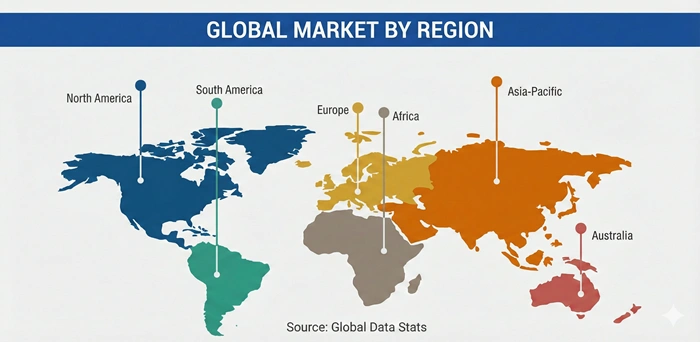
Regional Insights
North America
Advanced Safety Culture and Technology Leadership Establish Regional Market Dominance
North America commands the largest regional share of approximately 41% in the Smart Helmet market, supported by stringent safety regulations, high consumer awareness, strong technology adoption, and substantial presence of both established helmet manufacturers and innovative startups developing connected features. The region benefits from mature safety cultures across both consumer and industrial segments where individuals and organizations willingly invest in premium protective equipment that delivers measurable benefits. The United States dominates regional activity with projected market size reaching 357.11 million dollars in 2025 and growing to 1510.41 million dollars by 2034, driven by large populations of motorcycle riders, robust construction and manufacturing sectors, and technology-forward consumers comfortable with connected devices. Regulatory frameworks generally support innovation while maintaining consumer protections, creating favorable environments for smart helmet providers to develop and commercialize new capabilities.
The North American Smart Helmet market demonstrates strong momentum as industrial safety programs increasingly mandate or encourage connected protective equipment capable of monitoring environmental hazards and worker locations. Consumer adoption benefits from high disposable incomes, established motorcycle and cycling cultures, and marketing by major helmet brands incorporating smart features into premium product lines. The region shows particular strength in industrial applications with construction companies, energy producers, and manufacturers investing in smart helmets to reduce workplace injuries, improve compliance documentation, and enhance operational efficiency through remote expert assistance. Key players serving this market including DAQRI, Guardhat, Forcite, Jarvish, Sena Technologies, Bell Helmets, Shoei, and Arai maintain substantial North American operations through manufacturing facilities, research centers, and partnership networks. The United States and Canada both demonstrate strong government and industry commitment to workplace safety that creates sustained demand for advanced protective equipment across diverse industrial sectors.
Asia Pacific
Massive Two-Wheeler Populations and Rapid Industrialization Drive Exceptional Regional Growth
Asia Pacific has emerged as the fastest-growing region in the Smart Helmet market with projected CAGR of 24.83% from 2026 to 2033, driven by enormous populations of motorcycle and scooter riders, rapid urbanization, expanding manufacturing activity, and rising middle-class incomes enabling purchases of premium safety equipment. The region faces acute traffic safety challenges with two-wheeled vehicles representing primary transportation for hundreds of millions of commuters across countries including India, China, Indonesia, Vietnam, Thailand, and Philippines. High accident rates create urgent demand for enhanced protective equipment, prompting governments to implement safety campaigns, tighten helmet regulations, and sometimes mandate specific features including reflective materials or impact certification standards. These demographic and safety dynamics position Asia Pacific as the most important long-term growth market for smart helmet providers.
The Asia Pacific Smart Helmet market benefits from rapidly growing construction and manufacturing sectors that increasingly adopt international safety standards requiring advanced protective equipment for workers. China demonstrates particularly strong growth driven by the world's largest motorcycle population, massive construction activity supporting continued urbanization, and substantial manufacturing capacity producing both smart helmets for domestic consumption and export markets. India shows exceptional potential with the second-largest two-wheeler market globally, expanding middle class, growing safety awareness, and government smart city initiatives that promote connected devices across transportation infrastructure. Japan, South Korea, Australia, and Singapore represent high-value markets with sophisticated consumers demanding premium features and industrial sectors embracing Industry 4.0 technologies. Key players active across this diverse region include Livall, Jarvish, Forcite, Sena Technologies, and numerous local manufacturers developing affordable smart helmets tailored to regional preferences, price sensitivities, and regulatory requirements within individual countries.
Top Key Players
-
Forcite Helmet Systems (Australia)
-
JARVISH Inc. (Taiwan)
-
Livall Tech Co. Ltd. (China)
-
Sena Technologies Inc. (South Korea)
-
DAQRI LLC (United States)
-
Lumos Helmet World (United States)
-
Nand Logic Corp. (United States)
-
LifeBEAM Technologies Ltd. (Israel)
-
360fly Inc. (United States)
-
Fusar Technologies Inc. (United States)
-
Bell Helmets (United States)
-
Guardhat (Canada)
-
RealWear Inc. (United States)
-
CrossHelmet (Japan)
Recent Developments
-
Honeywell International Inc. (2024) unveiled a new smart helmet with advanced safety features specifically designed for industrial applications, incorporating environmental sensors, improved battery life, and enhanced communication capabilities to address growing demand for connected protective equipment in hazardous work environments
-
DAQRI LLC (2024) announced its latest smart helmet model featuring advanced augmented reality capabilities, extended battery performance, and ruggedized construction tailored to industrial workers requiring hands-free access to critical information in challenging conditions
-
Guardhat (2024) formed strategic partnership with AT&T to integrate 5G connectivity into its smart helmet platform, enabling real-time data transmission, live video streaming, and cloud-based analytics that enhance safety monitoring and emergency response capabilities for remote workers
-
Forcite Helmet Systems (2024-2025) expanded its product lineup with new models featuring enhanced crash detection algorithms, improved heads-up display technology, and integration with major motorcycle manufacturers' connected vehicle systems through strategic partnerships
-
Bell Helmets (2024) introduced smart features into several premium motorcycle helmet models, partnering with technology providers to incorporate Bluetooth communication, emergency alert systems, and mobile application connectivity while maintaining traditional quality and safety standards
Market Trends
Connected Safety Ecosystems and Advanced Features Reshape Product Expectations
The Smart Helmet market continues evolving beyond basic connectivity toward comprehensive safety ecosystems where helmets communicate with vehicles, infrastructure, other riders, and emergency services to create coordinated protective networks. Crash detection capabilities have advanced significantly with AI-powered algorithms that distinguish between minor bumps and serious accidents requiring emergency response, reducing false alarms while ensuring critical incidents trigger immediate assistance. Automatic emergency alert systems now provide emergency services with GPS coordinates, video footage from moments before crashes, and even biometric data indicating injury severity, substantially improving first responder effectiveness. Heads-up display technology has progressed dramatically with brighter, larger fields of view, and more sophisticated information presentation that overlays navigation instructions, speed warnings, and hazard alerts without obscuring the rider's vision or creating dangerous distractions.
Integration with broader connected mobility platforms represents a growing trend as the Smart Helmet market intersects with vehicle telematics, ride-sharing applications, and smart city infrastructure. Augmented reality capabilities extend beyond simple navigation to include advanced features like night vision enhancement, object detection and highlighting, and real-time translation of traffic signs in foreign languages for traveling riders. Solar-powered models address battery life concerns while appealing to environmentally conscious consumers and workers in remote locations where charging infrastructure proves unreliable. Industrial smart helmets increasingly incorporate team coordination features enabling supervisors to monitor multiple workers simultaneously, view live video streams from helmet cameras, provide real-time guidance through augmented reality overlays, and coordinate response when sensors detect hazardous conditions. Subscription services gain traction as manufacturers offer premium features including cloud video storage, advanced analytics, concierge services, and regular software updates through recurring payment models that generate ongoing revenue beyond initial hardware sales.
Segments Covered in the Report
By Technology
-
Internet of Things (IoT)
-
Artificial Intelligence
-
Augmented Reality
-
Bluetooth
-
GPS
-
Others
By Type
-
Full Face
-
Half Face
By End User
-
Consumer
-
Industrial
By Application
-
Motorcycle and Bike Riders
-
Industrial
-
Others
By Region
-
North America
-
Europe
-
Asia Pacific
-
Latin America
-
Middle East and Africa
Frequently Asked Questions
Question 1: What is the projected Smart Helmet market size by 2033?
Answer: The global Smart Helmet market is expected to reach approximately USD 3621.58 million by 2033. The market demonstrates robust growth driven by increasing safety regulations, rising road accident concerns, and growing adoption of connected devices across consumer and industrial segments.
Question 2: Which region dominates the Smart Helmet market currently?
Answer: North America holds the largest market share at approximately 41% due to stringent safety regulations and high technology adoption. The region benefits from strong consumer awareness, mature industrial safety programs, and substantial presence of both established manufacturers and innovative startups in the Smart Helmet market.
Question 3: What factors drive growth in the Smart Helmet market?
Answer: Key drivers include stringent safety regulations, rising road accident prevention initiatives, increasing IoT and connected device adoption, and expanding industrial safety programs. The Smart Helmet market also benefits from technological advancements making products more capable and affordable for mainstream adoption.
Question 4: How is AI impacting the Smart Helmet market development?
Answer: Artificial intelligence enhances smart helmets through predictive analytics for hazard detection, real-time crash detection algorithms, voice recognition for hands-free operation, and computer vision for proximity warnings. AI enables the Smart Helmet market to deliver proactive safety features that anticipate and prevent accidents before they occur.
Question 5: Which end user segment leads the Smart Helmet market?
Answer: The consumer segment dominates with 76% market share as motorcycle riders, cyclists, and recreational users embrace smart helmets with navigation, communication, and crash detection features. However, industrial applications show fastest growth potential as construction, mining, and manufacturing sectors increasingly adopt connected protective equipment in the Smart Helmet market.