
Smart Healthcare Market Overview
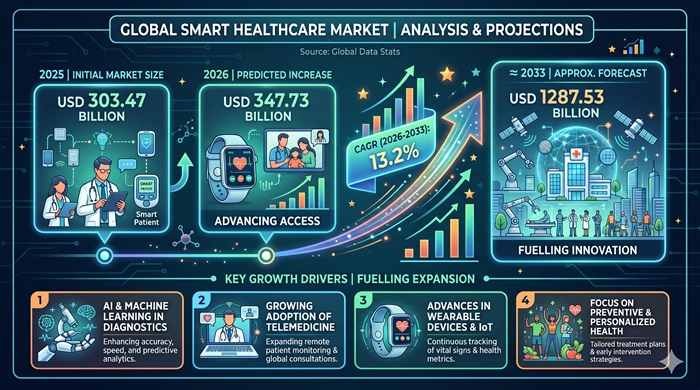
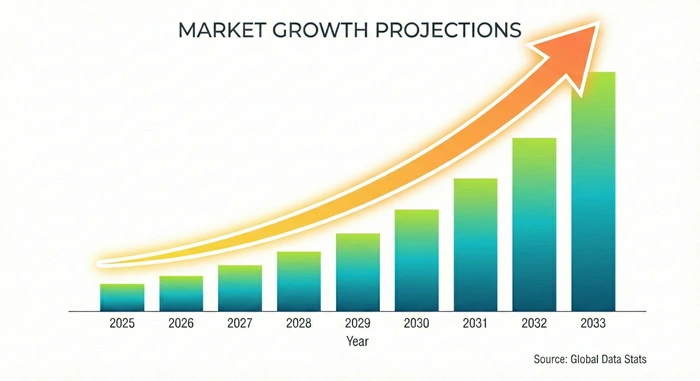
The global smart healthcare market size is valued at USD 303.47 billion in 2025 and is predicted to increase from USD 347.73 billion in 2026 to approximately USD 1287.53 billion by 2033, growing at a CAGR of 13.2% from 2026 to 2033.
The smart healthcare market is at the center of one of the most consequential transformations in the history of modern medicine — the convergence of advanced digital technologies, artificial intelligence, Internet of Things (IoT) connectivity, and data-driven clinical decision-making into a unified ecosystem that is redefining how care is delivered, monitored, and managed. From connected wearables and telehealth platforms to AI-powered diagnostic tools and smart hospital infrastructure, the breadth and depth of innovation in this market is extraordinary. Aging global populations, accelerating chronic disease burden, and intensifying pressure on healthcare systems to improve efficiency and patient outcomes are collectively driving this market toward exceptional long-term commercial growth.
AI Impact on the Smart Healthcare Industry
Artificial Intelligence Is Serving as the Central Technology Engine of the Smart Healthcare Market, Transforming Clinical Decision-Making, Predictive Analytics, Medical Imaging Interpretation, and Personalized Patient Management at Scale
Artificial intelligence is arguably the most powerful enabling force within the smart healthcare market today. AI-powered clinical decision support systems — capable of analyzing patient medical records, laboratory results, imaging data, and real-time monitoring streams simultaneously — are helping physicians detect disease earlier, select more effective treatments, and reduce diagnostic errors across a wide range of clinical specialties. In medical imaging, deep learning models have achieved diagnostic accuracy comparable to or exceeding specialist clinicians in identifying pathological findings on radiology scans, pathology slides, and retinal images — with significant implications for improving diagnostic throughput and reducing the burden on overburdened specialist radiologists and pathologists globally.
Beyond diagnostics, AI is transforming the operational management of healthcare institutions. Predictive analytics platforms are being deployed in hospital operations to forecast patient admissions, optimize staffing levels, manage supply chains, and reduce costly avoidable readmissions. Natural language processing tools are automating clinical documentation — freeing clinicians from administrative burden — while AI-driven chatbots and virtual health assistants are handling routine patient queries, appointment scheduling, and medication adherence monitoring at scale. The cumulative operational and clinical impact of AI integration across the smart healthcare ecosystem is substantial, creating a powerful commercial pull for AI-enabled solutions throughout the forecast period.
Growth Factors
Rising Chronic Disease Prevalence, Accelerating Digital Health Investment, and Post-Pandemic Telehealth Adoption Normalization Are the Primary Structural Drivers of the Smart Healthcare Market
The global rise in chronic disease burden is the most enduring structural driver of smart healthcare market growth. Conditions including diabetes, cardiovascular disease, chronic obstructive pulmonary disease, and obesity are becoming increasingly prevalent globally — driven by aging populations, sedentary lifestyles, and dietary changes — and collectively impose an enormous, growing cost burden on healthcare systems worldwide. Smart healthcare technologies — particularly remote patient monitoring (RPM) systems, connected glucose meters, cardiac event monitors, and chronic disease management platforms — are increasingly adopted as essential tools for managing this growing chronic patient cohort more effectively, reducing avoidable hospitalizations and improving long-term disease control. Each new chronic disease patient enrolled in a digital health management program represents a recurring revenue opportunity for smart healthcare solution providers.
The massive and sustained wave of investment flowing into digital health — from both public healthcare system modernization budgets and private venture capital — is the second major driver accelerating smart healthcare market expansion. Governments worldwide are investing heavily in electronic health record (EHR) systems, national health data infrastructure, and telehealth platforms as part of broader digital health strategies that position smart technology as foundational to future healthcare delivery. In parallel, the post-pandemic normalization of telehealth usage has permanently elevated patient acceptance of remote consultations and virtual care, creating a more receptive user base for the full spectrum of smart healthcare services. The combined momentum of public investment and private innovation is producing a virtuous cycle of infrastructure development, adoption, and further investment that is highly favorable to long-term smart healthcare market growth.
Market Outlook
The Smart Healthcare Market Is Positioned for Transformational Decade-Long Expansion Through 2033, Backed by Interconnected Health Ecosystems, Interoperability Advances, and Mainstream AI Clinical Integration
The outlook for the smart healthcare market through 2033 is among the most compelling of any global technology or healthcare sector. The gradual but accelerating development of interoperable, patient-centered digital health ecosystems — where data from wearables, hospital systems, pharmacy records, laboratory results, and genomic platforms flows seamlessly into unified patient health profiles — is creating a foundation for genuinely personalized, proactive, and predictive healthcare that was impossible in the fragmented analog health systems of previous decades. As interoperability standards mature and data-sharing regulations enable appropriate information exchange, the clinical and commercial value derived from connected health data will compound over time — creating expanding platform revenues for smart healthcare solution providers with large user bases.
The rapid integration of generative AI and large language models into clinical workflows represents the next major inflection point for smart healthcare market growth. Healthcare-specific foundation models are already being deployed for clinical documentation, care pathway optimization, drug interaction checking, and patient communication — and their capabilities are advancing at an extraordinary pace. As AI-generated clinical insights become embedded in routine care delivery across hospitals, primary care practices, and consumer health applications, the dependency of global healthcare on smart technology infrastructure will deepen, sustaining strong revenue growth and pricing power for leading smart healthcare platform and solution providers through the forecast period and well beyond.
Expert Speaks
-
Thibaut Mongon, CEO, Kenvue (Johnson & Johnson Consumer Health) — "Digital health and connected care technologies are fundamentally changing the relationship between patients and their healthcare providers. The smart healthcare market is creating a world where continuous monitoring, personalized recommendations, and proactive health management can be delivered at unprecedented scale — and that is a commercial and clinical opportunity we are committed to capturing."
-
Robert Ford, President & CEO, Abbott Laboratories — "We are at an extraordinary moment in healthcare where connected devices, AI, and real-time data are converging to create genuinely smart care delivery systems. Our investments in continuous glucose monitoring, cardiac diagnostics, and connected device platforms position us at the center of this smart healthcare transformation."
-
Peter Arduini, President & CEO, GE HealthCare — "The integration of AI and data intelligence into imaging, monitoring, and clinical workflow platforms is redefining what modern healthcare institutions can achieve. Smart healthcare technologies are not a future aspiration — they are being deployed in hospitals globally today, and their clinical and operational impact is already measurable and significant."
Key Report Takeaways
-
North America leads the smart healthcare market, accounting for approximately 38% of global revenue in 2025, driven by the most advanced healthcare digital infrastructure globally, strong government and private investment in EHR and telehealth platforms, high adoption of AI-powered clinical decision support systems, and the concentration of world-leading smart healthcare technology companies including Epic Systems, Cerner, Philips, and Siemens Healthineers
-
Asia-Pacific is the fastest-growing regional market, projected to expand at a CAGR of over 16.3% through 2033, driven by massive government digital health infrastructure investments in China, India, Japan, and South Korea, rapidly expanding internet and smartphone penetration enabling mHealth adoption at scale, and urgent need to improve healthcare access and efficiency across large and geographically dispersed populations
-
Telehealth and telemedicine is the dominant product type segment, accounting for approximately 33.3% of total product-type revenue in 2026, reflecting the post-pandemic normalization of virtual care delivery, strong patient and clinician acceptance of remote consultations, and the proven cost-effectiveness of telehealth in managing chronic diseases and reducing unnecessary emergency room visits
-
Software solutions hold the largest component segment share in the smart healthcare market, accounting for approximately 50.2% of total component revenue in 2026, driven by the widespread adoption of electronic health record systems, clinical analytics platforms, AI diagnostic tools, and telehealth application suites across hospitals and healthcare networks globally
-
On-premises deployment is the leading deployment mode, accounting for approximately 64.2% of deployment-based revenue in 2026, reflecting institutional preferences for data security and control among hospital systems managing sensitive patient data, though cloud-based deployment is growing rapidly as cybersecurity capabilities and regulatory frameworks for cloud health data mature
-
mHealth and connected wearable platforms are the fastest-growing future segment in the smart healthcare market, projected to grow at a CAGR of 21.8% through 2033 and reach approximately 24% of total product-type market share by 2033, driven by the explosion of consumer wearable devices with clinical-grade monitoring capabilities, rising health self-management awareness, and growing clinical integration of wearable data into formal care pathways
Market Scope
| Report Coverage | Details |
|---|---|
| Market Size by 2033 | USD 1287.53 Billion |
| Market Size by 2025 | USD 303.47 Billion |
| Market Size by 2026 | USD 347.73 Billion |
| Market Growth Rate (2026–2033) | CAGR of 13.2% |
| Dominating Region | North America |
| Fastest Growing Region | Asia-Pacific |
| Base Year | 2025 |
| Forecast Period | 2026 – 2033 |
| Segments Covered | Product Type, Component, Deployment Mode, End User |
| Regions Covered | North America, Europe, Asia-Pacific, Latin America, Middle East & Africa |
Market Dynamics
Drivers Impact Analysis
Chronic Disease Management Demand, Post-Pandemic Telehealth Normalization, Massive Digital Health Infrastructure Investment, and Mainstream AI Clinical Adoption Are the Core Engines Driving the Smart Healthcare Market
| Driver | ≈ % Impact on CAGR Forecast | Geographic Relevance | Impact Timeline |
|---|---|---|---|
| Rising chronic disease burden driving RPM and connected health platform adoption | ~28% | Global, especially North America and Asia-Pacific | Short to Long-term |
| Post-pandemic normalization of telehealth and virtual care services | ~24% | Global | Short to Medium-term |
| Government healthcare digitalization programs and EHR infrastructure investment | ~20% | North America, Europe, Asia-Pacific | Medium to Long-term |
| Mainstream AI and machine learning integration in clinical and operational workflows | ~18% | North America, Europe | Short to Long-term |
| Rising consumer health awareness driving mHealth and wearable device adoption | ~10% | Global | Short to Medium-term |
The chronic disease epidemic is the most structurally enduring commercial driver for the smart healthcare market. With more than 1.7 billion people worldwide living with one or more chronic conditions — and the number growing in direct proportion to aging demographics and lifestyle trends — healthcare systems face an unprecedented management challenge that traditional in-person episodic care models are structurally ill-equipped to address at scale. Smart healthcare technologies — particularly remote patient monitoring devices, chronic disease management apps, and AI-driven care coordination platforms — are being adopted as essential infrastructure for managing chronic patient cohorts more efficiently, reducing costly complications, and keeping patients engaged in their own health management between clinical encounters.
Government digital health investment is accelerating across all major global markets, creating favorable enabling conditions for smart healthcare market expansion. In the United States, the HITECH Act, 21st Century Cures Act, and ongoing CMS reimbursement policy updates supporting telehealth and remote monitoring have created strong financial incentives for healthcare providers to adopt digital health solutions. In Europe, the European Health Data Space regulation is building the infrastructure for cross-border health data sharing and digital health service delivery. In Asia-Pacific, China's "Healthy China 2030" initiative and India's National Digital Health Mission are directing billions of dollars of government investment toward digital healthcare infrastructure — creating enormous near-term and long-term commercial opportunity for smart healthcare solution providers across all product categories.
Restraints Impact Analysis
Data Privacy and Cybersecurity Vulnerabilities, Healthcare System Interoperability Challenges, High Implementation Costs, and Digital Health Literacy Gaps Are the Primary Constraints on Smart Healthcare Market Growth
| Restraint | ≈ % Impact on CAGR Forecast | Geographic Relevance | Impact Timeline |
|---|---|---|---|
| Patient data privacy concerns and healthcare cybersecurity threats | ~32% | Global | Ongoing |
| Lack of interoperability between legacy healthcare IT systems and new digital platforms | ~27% | Global | Ongoing |
| High implementation and integration costs limiting adoption in smaller healthcare settings | ~21% | Emerging markets, small-medium hospitals | Short to Medium-term |
| Physician resistance to technology adoption and workflow disruption | ~12% | Global | Short to Medium-term |
| Regulatory complexity across different national digital health frameworks | ~8% | Global | Ongoing |
Healthcare cybersecurity has become one of the most serious and commercially impactful restraints facing the smart healthcare market. As healthcare institutions collect, transmit, and store vast quantities of sensitive patient data across interconnected digital systems, they have become high-value targets for ransomware attacks, data breaches, and cyberextortion. Major healthcare system ransomware attacks — including incidents at major US hospital networks — have caused significant clinical disruptions, financial losses, and reputational damage, creating genuine risk aversion among healthcare IT decision-makers considering the adoption of new connected health systems. Addressing cybersecurity effectively is a prerequisite for sustained smart healthcare adoption, and the cost of robust cybersecurity infrastructure represents a meaningful additional investment burden for healthcare system technology budgets.
The persistent lack of healthcare IT interoperability remains a profound structural impediment to realizing the full potential of smart healthcare ecosystems. Most healthcare organizations operate a complex patchwork of legacy systems — including multiple electronic health record platforms, laboratory information systems, medical device data streams, pharmacy systems, and billing platforms — that were often built on incompatible data standards and designed without integration as a primary objective. Connecting these disparate systems into the unified, real-time data flows that are prerequisite for truly intelligent care coordination requires substantial technical integration work, vendor cooperation, and standardization that remains incomplete even in the most digitally advanced healthcare markets.
Opportunities Impact Analysis
Generative AI Clinical Application Integration, Value-Based Care Digital Infrastructure Buildout, and Emerging Market Healthcare Digitalization Are the Most Compelling Growth Opportunities in the Smart Healthcare Market
| Opportunity | ≈ % Impact on CAGR Forecast | Geographic Relevance | Impact Timeline |
|---|---|---|---|
| Generative AI and large language model integration into clinical workflow applications | ~33% | North America, Europe | Short to Long-term |
| Value-based care reimbursement model expansion driving digital health platform adoption | ~27% | North America, Europe | Short to Medium-term |
| Emerging market healthcare digitalization creating large new addressable markets | ~22% | Asia-Pacific, Latin America, MEA | Medium to Long-term |
| Smart hospital infrastructure investment in renovation and new construction | ~12% | Global | Medium to Long-term |
| Consumer wearable clinical-grade data integration into formal care pathways | ~6% | North America, Europe, Asia-Pacific | Short to Medium-term |
Generative AI and large language model integration represents the most commercially exciting near-term opportunity within the smart healthcare market. Healthcare-specific large language models trained on clinical notes, medical literature, diagnostic imaging reports, and patient interaction data are being deployed to automate clinical documentation, generate discharge summaries, power intelligent patient-facing chatbots, and support complex clinical reasoning in diagnosis and treatment planning. Companies including Microsoft (with Azure Health Bot and Nuance DAX), Google Health, Amazon Web Services, and numerous specialized health AI startups are investing heavily in healthcare generative AI applications — and the pace of adoption is accelerating rapidly as early adopters report measurable productivity gains and cost savings.
The global transition toward value-based and outcomes-based healthcare reimbursement models — where providers are compensated based on patient health outcomes and care efficiency rather than fee-for-service volume — is creating a powerful institutional incentive for healthcare organizations to invest in smart technologies that genuinely improve care quality and reduce unnecessary costs. Remote monitoring platforms, predictive readmission analytics, care coordination systems, and digital chronic disease management tools all directly support the value-based care model by enabling more proactive, personalized, and efficient patient management. As value-based contracts expand across North America and Europe, the financial case for smart healthcare investment strengthens considerably, accelerating technology adoption across health systems of all sizes.
Segment Analysis
By Product Type
Telehealth and Telemedicine Leads the Smart Healthcare Market as the Dominant Product Segment, Reflecting Post-Pandemic Structural Shifts in Healthcare Delivery Toward Remote and Virtual Care Models
The telehealth and telemedicine segment holds the dominant position in the smart healthcare market by product type, accounting for approximately 33.3% of total product-type revenue in 2026. This segment is projected to maintain a strong CAGR of 14.8% through 2033, driven by the permanent structural shift in patient and clinician attitudes toward virtual care that the COVID-19 pandemic accelerated from a fringe capability to a mainstream delivery channel. North America dominates this segment, where expanded and increasingly permanent telehealth reimbursement policies from CMS and commercial insurers have created a sustainable economic foundation for virtual care business models. Key companies leading the telehealth segment include Teladoc Health (United States), Amwell (United States), Philips (Netherlands), Cisco Systems (United States), and numerous specialized platform providers serving specific clinical specialties from behavioral health to dermatology and cardiology.
Europe is the second-largest geography for telehealth adoption, where national health service digital health strategies in the United Kingdom, Germany, and France are directing substantial public investment toward virtual care infrastructure. Asia-Pacific is the fastest-growing telehealth market, where the extraordinary geographic distribution challenges of delivering specialist care to rural populations in India, China, and Southeast Asia make telehealth not just a convenience but a clinical necessity — particularly for specialist consultations and chronic disease follow-up that would otherwise require prohibitively long-distance travel. The integration of AI-powered triage, symptom assessment, and clinical decision support into telehealth platforms is further expanding their clinical scope and commercial value across the global smart healthcare market.
By Component
Software Solutions Are the Dominant Component Segment in the Smart Healthcare Market, Powered by EHR Platform Adoption, Clinical Analytics Deployment, and AI-Enabled Health Application Proliferation
Software solutions are the dominant component segment in the smart healthcare market, accounting for approximately 50.2% of total component revenue in 2026. This segment is projected to grow at a CAGR of 15.3% through 2033, driven by the accelerating adoption of electronic health record systems, clinical analytics and business intelligence platforms, AI diagnostic applications, telehealth application suites, and patient engagement software across hospitals, ambulatory care centers, and consumer health settings. North America is the most significant regional market for healthcare software, where Epic Systems, Cerner (Oracle Health), Allscripts, and a large ecosystem of specialized clinical application vendors serve virtually every hospital system and large physician group in the country. The shift toward cloud-delivered software-as-a-service (SaaS) healthcare applications is improving affordability and scalability for smaller healthcare providers and driving software segment growth in mid-market and emerging market healthcare contexts.
Asia-Pacific is the fastest-growing region for healthcare software adoption within the smart healthcare market, driven by China's national electronic health record rollout program, India's Ayushman Bharat Digital Mission creating health ID infrastructure, and the rapid expansion of hospital management software across Southeast Asian healthcare systems. The growing demand for AI-powered clinical applications — including NLP-based clinical documentation tools, imaging AI platforms, and predictive analytics engines — is creating a high-value and rapidly expanding sub-segment of the healthcare software market globally. Key companies including Microsoft Health, Google Health, IBM Watson Health, and Oracle Health are actively competing with specialized clinical AI vendors including Meditech, Veeva Systems, and Inovalon for market leadership across the smart healthcare software segment.
Regional Insights
North America
North America Leads the Global Smart Healthcare Market With the Largest Revenue Share, Underpinned by World-Class Digital Health Infrastructure, Strong Regulatory Support, and Breakthrough AI Clinical Application Adoption
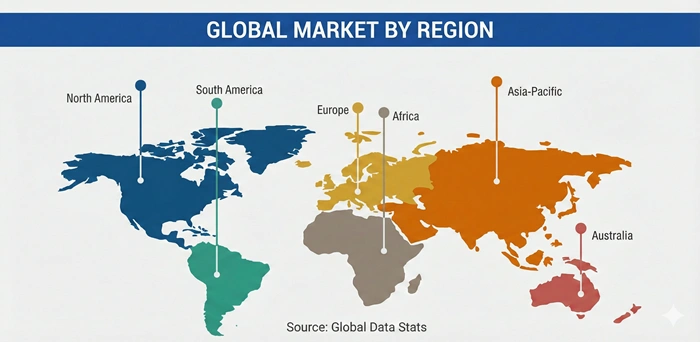
North America dominates the global smart healthcare market, accounting for approximately 38% of total global revenue in 2025 and projected to maintain a CAGR of 12.7% through 2033. The United States is the primary national market engine, supported by the world's most mature healthcare IT ecosystem — encompassing near-universal EHR adoption in hospital settings, sophisticated clinical analytics deployment, and the most active telehealth reimbursement environment globally. Major smart healthcare technology companies headquartered in the United States — including Microsoft Health, Google Health, Amazon AWS Health, Epic Systems, Cerner/Oracle Health, Teladoc Health, Philips North America, and GE HealthCare — collectively drive both the innovation agenda and the commercial expansion of smart healthcare solutions across North American and global markets. Federal investment programs, including the 21st Century Cures Act's interoperability mandates and ongoing CMS telehealth reimbursement policy evolution, continue to create powerful commercial tailwinds for the smart healthcare market in the region.
Canada is a growing and strategically important secondary market within North America, where provincial and federal digital health investments are modernizing healthcare IT infrastructure and expanding telehealth access across the country's large and geographically dispersed population. The United States' leadership in deploying generative AI healthcare applications — including ambient clinical documentation, AI-powered radiology, and intelligent care coordination platforms — is establishing a strong competitive advantage that positions North American companies as the leading exporters of smart healthcare technology and platforms to global markets, further reinforcing the region's central role in shaping the trajectory of the global smart healthcare market through 2033 and beyond.
Asia-Pacific
Asia-Pacific Is the Fastest-Growing Region in the Smart Healthcare Market, Driven by Massive Government Digital Health Investment, Rising Chronic Disease Burden, and Rapid Mobile Technology Penetration
Asia-Pacific is the most dynamic and rapidly expanding regional market in the global smart healthcare landscape, projected to grow at a CAGR of 16.3% from 2026 to 2033 — the highest rate of any global region. The region currently accounts for approximately 24% of global smart healthcare market revenue, with China, Japan, India, South Korea, and Australia representing the primary national markets. China is both the largest and fastest-growing national market within Asia-Pacific, where the government's "Healthy China 2030" national health strategy is directing billions of dollars of investment into telemedicine infrastructure, hospital information system modernization, AI diagnostic tool deployment, and national health data platform development. Japan maintains a sophisticated smart healthcare ecosystem characterized by high adoption of connected medical devices, advanced robotics in surgical and care settings, and a strong national commitment to leveraging technology for managing its extraordinary elderly care burden. Key companies active across the Asia-Pacific smart healthcare market include Alibaba Health, Tencent Health, Ping An Health, Samsung Electronics, and the regional operations of Siemens Healthineers, Philips, and GE HealthCare.
India represents one of the most compelling long-term growth markets within Asia-Pacific for the smart healthcare market. The Ayushman Bharat Digital Mission — creating a unified national digital health ID infrastructure and enabling interoperable health data exchange — is establishing the foundational data architecture for a national smart healthcare ecosystem that will progressively enable telehealth, remote monitoring, AI diagnostics, and connected care delivery at extraordinary scale. India's combination of a large young technology-savvy population, world-class domestic IT engineering talent, a rapidly growing private hospital sector, and strong government commitment to digital health creates a uniquely favorable environment for smart healthcare solution adoption that is expected to generate accelerating commercial growth over the forecast period.
Top Key Players
-
Siemens Healthineers AG (Germany)
-
Philips Healthcare (Netherlands)
-
GE HealthCare Technologies Inc. (United States)
-
Microsoft Corporation (United States)
-
Cisco Systems Inc. (United States)
-
IBM Corporation (United States)
-
Apple Inc. (United States)
-
Oracle Health / Cerner Corporation (United States)
-
Epic Systems Corporation (United States)
-
Teladoc Health Inc. (United States)
-
Medtronic plc (Ireland)
-
Honeywell Life Care Solutions (United States)
Recent Developments
-
Microsoft Corporation (2025) — Expanded its Azure AI Health platform with new generative AI-powered ambient clinical documentation capabilities through its Nuance DAX Copilot product, reporting commercial deployments at hundreds of US hospital systems with demonstrated reduction in physician documentation time and improvements in clinical note completeness, reinforcing Microsoft's position as the leading technology partner for smart healthcare AI integration
-
GE HealthCare (2025) — Launched new AI-powered imaging and monitoring platform updates across its radiology and patient care solutions portfolio, incorporating generative AI features for automated imaging report drafting and real-time patient deterioration alerts, and announced strategic partnerships with multiple health systems to expand its smart hospital infrastructure solutions across North American and European markets
-
Philips Healthcare (2025) — Completed a strategic restructuring that concentrated the company's commercial focus on its connected care and health informatics portfolio, launching a next-generation patient monitoring platform with improved AI early warning capabilities and enhanced cloud connectivity for remote patient monitoring — positioning the company more clearly as a core smart healthcare market platform provider
-
Siemens Healthineers (2025) — Announced a major expansion of its teamplay digital health platform with new AI-powered radiology workflow optimization tools and enhanced data analytics capabilities, while also reporting significant growth in its Atellica diagnostic platform sales driven by the expanding demand for smart, connected laboratory diagnostic solutions across hospital networks globally
-
Teladoc Health (2024–2025) — Restructured its commercial strategy to focus on deeper integration of its Primary360 virtual primary care offering with chronic disease management programs, reporting improved patient retention and clinical outcome metrics from its integrated telehealth and remote monitoring services, while also expanding international market operations in Europe and Asia-Pacific to capture growing global demand for virtual care platform solutions in the smart healthcare market
Market Trends
Generative AI Clinical Embedding, Smart Hospital Infrastructure Investment, and the Clinical Integration of Consumer Wearable Data Are the Most Transformative Trends Currently Shaping the Smart Healthcare Market
Generative AI's rapid integration into clinical applications is the most consequential current trend in the smart healthcare market. Tools built on large language model foundations — including ambient clinical documentation assistants (which listen to patient-physician conversations and automatically generate structured clinical notes), AI-powered care pathway recommendation engines, and intelligent patient communication platforms — are being deployed at scale by leading health systems across North America and Europe. The productivity, accuracy, and burnout-reduction benefits these tools deliver to clinical staff are driving an accelerating wave of institutional adoption, and the pace of generative AI capability advancement suggests that the clinical workflow transformation enabled by this technology has barely begun to reach its full commercial potential within the smart healthcare ecosystem.
The clinical integration of consumer wearable and continuous monitoring data into formal healthcare workflows represents a second major trend redefining what smart healthcare can deliver. Devices including the Apple Watch, Oura Ring, continuous glucose monitors, and implantable cardiac monitors are generating continuous, high-quality physiological data streams that are increasingly being used by physicians and care coordinators to guide clinical decisions between formal care encounters. Regulatory approvals for clinical-grade wearable functions — including FDA clearances for atrial fibrillation detection, blood oxygen monitoring, and irregular rhythm notifications — are progressively enabling wearable-derived data to enter the formal clinical record, creating a growing and commercially significant interface between the consumer health technology and regulated medical device segments of the broader smart healthcare market.
Segments Covered in the Report
By Product Type:
-
Telehealth and Telemedicine Platforms
-
mHealth Applications and Connected Wearables
-
Electronic Health Records (EHR) Systems
-
Smart Pill and Drug Delivery Systems
-
RFID-Based Asset and Inventory Management Systems
-
Smart Syringes and Connected Medication Devices
-
Others
By Component:
-
Software (Clinical Analytics, AI Diagnostic Tools, EHR Software, Telehealth Applications)
-
Hardware (Connected Medical Devices, Smart Wearables, Medical Imaging Equipment)
-
Services (Implementation, Managed Services, Consulting)
By Deployment Mode:
-
On-Premises
-
Cloud-Based
-
Hybrid
By End User:
-
Hospitals and Health Systems
-
Clinics and Ambulatory Care Centers
-
Home Healthcare Settings
-
Pharmacies
-
Others
By Region:
-
North America (United States, Canada, Mexico)
-
Europe (Germany, United Kingdom, France, Netherlands, Italy, Spain, Rest of Europe)
-
Asia-Pacific (China, Japan, India, South Korea, Australia, Rest of Asia-Pacific)
-
Latin America (Brazil, Argentina, Rest of Latin America)
-
Middle East & Africa (UAE, Saudi Arabia, South Africa, Rest of MEA)
Frequently Asked Questions
Question 1: What is the current size of the global smart healthcare market?
Answer: The global smart healthcare market is valued at USD 303.47 billion in 2025 and is projected to reach USD 1287.53 billion by 2033. The market is growing at a CAGR of 13.2% from 2026 to 2033, driven by rising chronic disease prevalence, post-pandemic telehealth adoption, massive digital health infrastructure investment, and mainstream AI clinical integration.
Question 2: Which product type leads the smart healthcare market?
Answer: Telehealth and telemedicine platforms hold the dominant product type position in the smart healthcare market, accounting for approximately 33.3% of total product-type revenue in 2026, driven by strong post-pandemic structural shifts in care delivery preferences among both patients and clinicians. The mHealth and connected wearable segment is the fastest-growing product type, projected to grow at a CAGR of 21.8% through 2033 as consumer devices achieve clinical-grade capabilities and integration with formal health records.
Question 3: Which region dominates the smart healthcare market globally?
Answer: North America leads the smart healthcare market with approximately 38% of global revenue in 2025, driven by the world's most mature healthcare digital infrastructure, comprehensive EHR adoption, robust telehealth reimbursement policies, and the concentration of leading smart healthcare technology companies. The United States is the primary national market, where companies including Microsoft, GE HealthCare, Epic Systems, and Teladoc Health collectively define the commercial and innovation landscape.
Question 4: How is AI transforming the smart healthcare market?
Answer: Artificial intelligence is transforming the smart healthcare market by enabling more accurate and faster clinical diagnostics, automating clinical documentation through ambient AI tools, powering predictive analytics for hospital operations, and facilitating personalized chronic disease management at scale. Generative AI applications including Nuance DAX Copilot and Google MedPaLM are being deployed in clinical settings today, delivering measurable productivity gains and reductions in physician administrative burden that are accelerating smart healthcare adoption across health systems.
Question 5: What are the key growth opportunities in the smart healthcare market through 2033?
Answer: The most compelling growth opportunities in the smart healthcare market through 2033 include the large-scale commercial deployment of generative AI clinical applications, the expansion of value-based care reimbursement models driving institutional digital health investment, and the healthcare digitalization of rapidly developing markets in Asia-Pacific and Latin America. Smart hospital infrastructure buildout, clinical wearable data integration, and next-generation remote patient monitoring platforms are also expected to generate substantial incremental market revenue across the forecast period.