
Sleep Trackers Market Overview
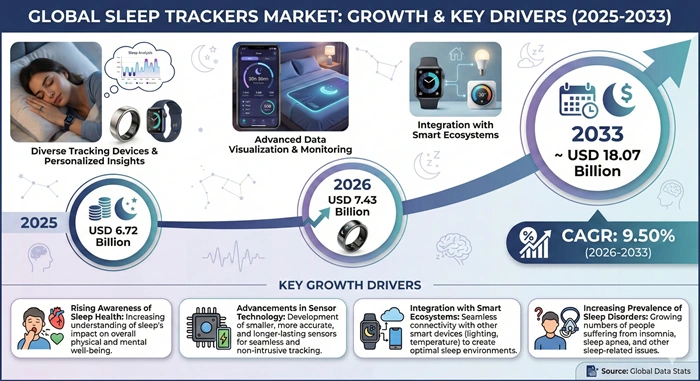
The global sleep trackers market size is valued at USD 6.72 billion in 2025 and is predicted to increase from USD 7.43 billion in 2026 to approximately USD 18.07 billion by 2033, growing at a CAGR of 9.50% from 2026 to 2033.
Sleep trackers represent sophisticated monitoring devices utilizing advanced sensors, algorithms, and wireless connectivity to measure sleep duration, quality, stages, and related physiological parameters including heart rate, respiratory patterns, body movement, and environmental factors affecting rest. These innovative health technology solutions empower individuals to understand their sleep patterns, identify potential disorders, optimize bedtime routines, and make informed lifestyle adjustments supporting overall wellness and daytime performance. Healthcare professionals increasingly recommend sleep tracking as preventive care tools addressing widespread sleep deprivation affecting billions globally, while clinical facilities integrate medical-grade monitoring systems diagnosing conditions including sleep apnea, insomnia, and circadian rhythm disorders requiring professional intervention and treatment strategies.
AI Impact on the Sleep Trackers Industry
Transforming Sleep Analysis and Personalized Recommendations Through Machine Learning and Predictive Health Insights
Artificial intelligence revolutionizes the sleep trackers market by introducing sophisticated analysis capabilities processing millions of data points from heart rate variability, respiratory patterns, movement sensors, and environmental conditions to accurately classify sleep stages including light sleep, deep sleep, REM cycles, and wake periods matching clinical polysomnography accuracy. Machine learning algorithms continuously improve detection precision by learning individual baseline patterns, adapting to unique physiological characteristics, and identifying subtle deviations indicating emerging health concerns before symptoms become apparent. AI-powered sleep coaching systems deliver personalized recommendations addressing specific issues including inconsistent sleep schedules, poor sleep hygiene practices, environmental disturbances, and lifestyle factors impacting rest quality through actionable insights tailored to individual circumstances rather than generic advice. These technological innovations enable consumer devices to provide clinical-grade insights previously requiring expensive laboratory sleep studies involving overnight hospital stays, specialized equipment, and expert technician interpretation limiting accessibility for most populations.
Predictive analytics within the sleep trackers market leverage artificial intelligence forecasting sleep quality based on daytime activities, exercise patterns, meal timing, caffeine consumption, stress indicators, and circadian rhythm alignment, enabling proactive interventions optimizing conditions for restorative rest. Natural language processing technologies analyze user journals, reported symptoms, and subjective sleep quality assessments correlating self-reported experiences with objective sensor data, identifying discrepancies between perceived and actual sleep patterns informing more accurate health assessments. Computer vision integration enables non-contact sleep monitoring analyzing subtle body movements, respiratory motions, and environmental factors through cameras and radar sensors eliminating wearable device requirements for users preferring contact-free monitoring approaches. Digital health platforms connect sleep data with comprehensive wellness ecosystems integrating nutrition tracking, fitness activities, mental health monitoring, and chronic disease management creating holistic health pictures supporting coordinated care delivery and personalized treatment optimization across multiple health dimensions simultaneously.
Growth Factors
Rising Sleep Disorder Prevalence and Health Awareness Drive Robust Sleep Trackers Market Expansion
The sleep trackers market experiences accelerated growth propelled by alarming increases in sleep disorder prevalence globally, with estimates indicating over 70 million Americans experiencing chronic sleep problems and billions worldwide suffering from insomnia, sleep apnea, restless leg syndrome, and circadian rhythm disruptions affecting health, productivity, and quality of life. Growing scientific evidence documenting sleep's critical role in physical health, mental wellbeing, cognitive function, immune system performance, metabolic regulation, and chronic disease prevention motivates health-conscious consumers prioritizing sleep optimization as fundamental wellness component. The market gains tremendous momentum from digital health transformation accelerating wearable technology adoption, with fitness tracker and smartwatch proliferation creating established user bases familiar with continuous health monitoring seamlessly extending to sleep tracking functionalities integrated within existing devices requiring minimal additional investment or behavior changes.
Corporate wellness programs increasingly incorporate sleep health initiatives recognizing that well-rested employees demonstrate higher productivity, fewer sick days, reduced accident risks, and better decision-making capabilities translating to substantial business value justifying sleep tracker subsidies and education campaigns. The sleep trackers market benefits from telemedicine expansion enabling remote patient monitoring for sleep disorders, with physicians prescribing home sleep testing using consumer-grade trackers supplementing or replacing expensive sleep laboratory studies for appropriate candidates reducing healthcare costs while improving access for rural populations lacking specialized facilities. Aging demographics worldwide create expanding populations susceptible to sleep disturbances associated with age-related physiological changes, chronic conditions, and medication side effects requiring monitoring supporting treatment effectiveness evaluation and quality of life maintenance. Technological advancement delivers improved sensor accuracy, extended battery life, comfortable form factors, seamless smartphone integration, and sophisticated analysis algorithms overcoming early generation limitations that frustrated users and limited clinical validity establishing current generation devices as reliable health monitoring tools worthy of investment and consistent usage supporting long-term behavior modification and health outcome improvement.
Market Outlook
Strategic Innovation and Healthcare Integration Shape Promising Sleep Trackers Market Trajectory
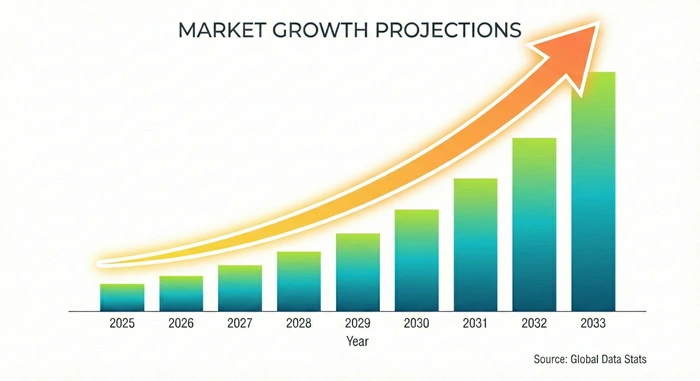
The sleep trackers market outlook reflects optimistic projections supported by continuing health awareness growth, advancing sensor technologies, and expanding recognition of sleep as critical health determinant requiring systematic monitoring and optimization. Manufacturers invest substantially in research activities developing next-generation sensors including electroencephalography capabilities enabling true brain wave monitoring approaching clinical diagnostic standards, advanced acoustic analysis detecting sleep-disordered breathing patterns, and bioimpedance measurements assessing hydration, body composition, and cardiovascular parameters providing comprehensive physiological insights beyond simple sleep duration tracking. Market dynamics increasingly favor medical-grade certification as companies pursue FDA clearance and CE marking positioning products as legitimate diagnostic tools reimbursable through insurance and prescribed by physicians rather than optional consumer wellness gadgets lacking clinical validation limiting adoption among serious health-focused users and healthcare professionals.
The industry witnesses consolidation trends as major technology corporations including Apple, Google, and Samsung strengthen sleep tracking capabilities across device ecosystems while acquiring specialized sleep tech startups integrating innovative algorithms, proprietary sensor technologies, and clinical expertise accelerating product development and market penetration. The sleep trackers market adapts to privacy concerns implementing on-device processing, encrypted data storage, transparent consent management, and user-controlled sharing permissions addressing sensitive health information protection requirements particularly relevant for sleep data revealing detailed behavioral patterns and potential health conditions requiring careful stewardship. Integration with smart home ecosystems enables environmental optimization automatically adjusting bedroom temperature, lighting, noise levels, and air quality based on detected sleep stages and personal preferences creating ideal conditions supporting restorative rest without requiring manual interventions or complex setup procedures. Subscription business models emerge providing ongoing value through advanced analytics, personalized coaching, telehealth consultations, and exclusive content supporting sustained engagement, recurring revenue streams, and differentiated offerings compared to one-time hardware purchase competitors lacking continuous improvement and support mechanisms.
Expert Speaks
-
James Park, Co-founder of Fitbit, emphasized through the launch of Luffu, a new AI-powered wellness platform, that technology should empower families to take control of their health by providing actionable insights rather than overwhelming data, noting that the vision centers on making health management accessible, personalized, and family-oriented through intelligent systems learning individual patterns and delivering meaningful recommendations supporting long-term wellness across all age groups and health conditions.
-
Tim Cook, CEO of Apple Inc., stated during multiple investor calls and interviews that Apple's greatest contribution to mankind will be related to health, highlighting the company's commitment to developing comprehensive health capabilities across its ecosystem including Apple Watch sleep tracking, health app integration, and research initiatives partnering with medical institutions, while emphasizing that healthcare represents complex challenges requiring sustained innovation, strong privacy protections, and collaborative partnerships with medical professionals advancing preventive care.
-
Clifton Pemble, President and CEO of Garmin, noted in financial reports that the company's focus on health and wellness continues driving growth across consumer segments, with advanced health monitoring features including sophisticated sleep tracking proving popular among users seeking comprehensive lifestyle insights, while Garmin's commitment to accuracy, battery life, and specialized use cases positions products favorably within competitive markets balancing mass appeal with specialized functionality serving dedicated user communities.
Key Report Takeaways
-
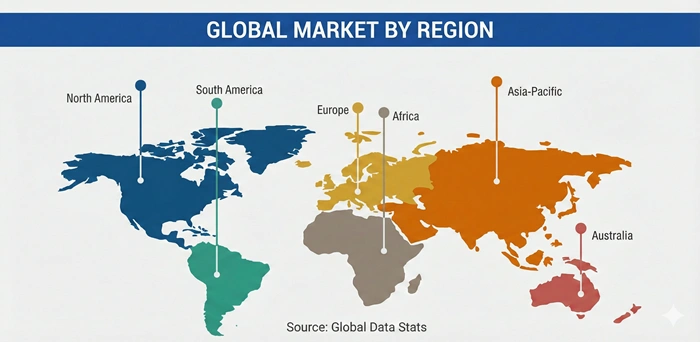
North America leads the sleep trackers market with approximately 43 percent regional share, driven by high consumer health awareness, widespread wearable device adoption, strong technology infrastructure, established e-commerce platforms, comprehensive healthcare systems recognizing sleep health importance, and presence of major manufacturers including Apple, Fitbit, and numerous startups supporting continuous innovation and competitive market dynamics.
-
Asia-Pacific demonstrates the fastest growth trajectory in the sleep trackers market, expanding at a CAGR of approximately 10.5 percent, propelled by massive populations experiencing rapid urbanization, rising disposable incomes, growing health consciousness, increasing smartphone penetration, expanding middle-class populations, and presence of major electronics manufacturers including Samsung, Huawei, and Xiaomi producing affordable devices supporting mass market adoption throughout developing economies.
-
Wearable sleep trackers represent the largest product segment consuming sleep trackers market with approximately 72 percent market share, as these convenient devices including smartwatches, fitness bands, and specialized sleep monitoring wearables provide continuous tracking without requiring dedicated bedroom installations, complex setups, or significant lifestyle modifications making them accessible and appealing to mainstream consumers seeking effortless health monitoring integration within existing routines.
-
Homecare and personal monitoring applications dominate usage categories at approximately 65 percent market share, driven by individual consumers seeking personal sleep optimization, wellness enthusiasts tracking comprehensive health metrics, individuals experiencing sleep difficulties attempting self-management approaches, and health-conscious populations pursuing preventive care strategies before problems escalate requiring professional medical intervention and expensive treatment protocols.
-
Online retail and e-commerce channels contribute the most substantial distribution share accounting for approximately 50 percent market consumption, based on convenient direct-to-consumer purchasing, competitive pricing, extensive product reviews and comparisons, detailed specifications and compatibility information, and global accessibility enabling customers researching and acquiring sleep tracking devices without visiting physical retail locations requiring travel time and limited selection options.
-
Clinical and healthcare monitoring applications will experience rapid future growth through 2033, expanding at a CAGR of approximately 8.8 percent and capturing increasing market share percentage as medical facilities integrate remote patient monitoring, physicians prescribe home sleep testing, insurance reimbursement expands covering validated devices, and evidence accumulates supporting clinical utility in diagnosis, treatment monitoring, and chronic disease management requiring systematic sleep assessment.
Market Scope
| Report Coverage Details | |
|---|---|
| Market Size by 2033 | USD 18.07 Billion |
| Market Size by 2025 | USD 6.72 Billion |
| Market Size by 2026 | USD 7.43 Billion |
| Market Growth Rate from 2026 to 2033 | CAGR of 9.50% |
| Dominating Region | North America |
| Fastest Growing Region | Asia-Pacific |
| Base Year | 2025 |
| Forecast Period | 2026 to 2033 |
| Segments Covered | By Product Type, By Application, By Distribution Channel, By End-User, By Region |
| Regions Covered | North America, Europe, Asia-Pacific, Latin America, Middle East & Africa |
Market Dynamics
Drivers Impact Analysis
Escalating Sleep Disorder Prevalence and Digital Health Transformation Propel Sustained Sleep Trackers Market Momentum
The sleep trackers market benefits tremendously from alarming increases in sleep disorder prevalence affecting all demographics, with CDC estimates indicating insufficient sleep affects one-third of American adults while global studies document billions experiencing chronic insomnia, sleep apnea, circadian rhythm disorders, and other conditions substantially impacting health outcomes, workplace productivity, accident risks, and healthcare costs totaling hundreds of billions annually. Growing scientific evidence establishing sleep as fundamental health pillar equal in importance to nutrition and exercise motivates consumers prioritizing sleep optimization, with research documenting connections between inadequate sleep and obesity, diabetes, cardiovascular disease, cognitive decline, mental health disorders, and immune dysfunction creating compelling rationales for systematic monitoring supporting improvement interventions. The market gains momentum from aging populations worldwide experiencing higher sleep disturbance rates associated with physiological changes, chronic medical conditions, medication side effects, and age-related sleep architecture alterations requiring monitoring supporting quality of life maintenance and health outcome optimization throughout later life stages.
Digital health transformation accelerates wearable technology adoption establishing familiar behavior patterns where continuous health monitoring through smartwatches and fitness trackers becomes normalized daily practice easily extending to sleep tracking capabilities integrated within existing devices. The sleep trackers market benefits from telemedicine proliferation enabling remote patient monitoring, with physicians increasingly prescribing home sleep tests using validated consumer devices reducing expensive sleep laboratory utilization while expanding access for rural populations, uninsured individuals, and patients preferring home-based testing over clinical facility overnight stays requiring schedule disruptions and unfamiliar environments potentially affecting natural sleep patterns compromising diagnostic accuracy. Corporate wellness program expansion recognizing employee sleep health impacts organizational performance through absenteeism reduction, productivity enhancement, safety improvement, and healthcare cost containment creates institutional demand for sleep tracking solutions offered as employee benefits supporting workforce wellbeing and business objectives simultaneously. Technology advancement delivers improved sensor accuracy approaching clinical diagnostic standards, extended battery life supporting multi-day continuous monitoring, comfortable form factors encouraging consistent nightly wear, and sophisticated AI-powered analysis providing actionable insights rather than overwhelming data dumps requiring expert interpretation making current generation devices genuinely useful tools worthy of sustained engagement rather than abandoned novelties gathering dust after initial enthusiasm fades.
| Driver Factor | ≈ Impact on CAGR Forecast | Geographic Relevance | Impact Timeline |
|---|---|---|---|
| Rising sleep disorder prevalence and health awareness | +2.6% to +3.2% | Global, particularly strong in developed markets | Immediate and ongoing |
| Digital health transformation and wearable adoption | +2.0% to +2.6% | Initially developed markets expanding globally | Immediate and ongoing |
| Aging demographics and chronic disease management | +1.4% to +1.8% | Developed markets with aging populations | Immediate to medium-term |
| Corporate wellness programs and remote monitoring | +1.0% to +1.4% | Primarily developed employment markets | Short to medium-term |
Restraints Impact Analysis
Accuracy Concerns and Privacy Issues Moderate Sleep Trackers Market Growth Expectations
The sleep trackers market confronts significant challenges from accuracy concerns and validation limitations, with consumer devices demonstrating variable performance compared to clinical polysomnography gold standard particularly in sleep stage classification where algorithms may misidentify REM, light, and deep sleep cycles creating misleading information potentially causing unnecessary anxiety or false reassurance missing genuine problems. Data overload and interpretation complexity challenge average users lacking medical training to understand sleep metrics, differentiate normal variations from concerning patterns, and implement appropriate responses without professional guidance, potentially leading to self-diagnosis errors, inappropriate interventions, or excessive worry about minor fluctuations within normal ranges. The market experiences headwinds from privacy and security concerns surrounding intimate health data collection, with sleep patterns revealing sensitive behavioral information including bedroom activities, work schedules, travel patterns, and health conditions requiring robust protection against unauthorized access, commercial exploitation, or data breach exposure creating reluctance among privacy-conscious individuals despite device utility.
Cost barriers affect mass market penetration particularly in price-sensitive regions and lower-income demographics where several hundred dollars for premium smartwatches or specialized sleep trackers represents substantial investment requiring careful budget consideration and value justification compared to competing priorities. The sleep trackers market faces challenges from user engagement attrition as initial enthusiasm frequently wanes after several weeks or months when novelty fades, behavior change proves difficult, or promised improvements fail to materialize quickly enough sustaining motivation, leading to device abandonment despite continued potential value if usage continued consistently. Healthcare provider skepticism limits clinical integration as physicians question consumer device reliability, express concerns about data quality, and resist incorporating unvalidated information into medical decision-making preferring established diagnostic methodologies over emerging technologies lacking comprehensive validation and standardization. Regulatory uncertainty creates development challenges as manufacturers navigate evolving frameworks determining which features constitute medical devices requiring rigorous approval processes versus general wellness products subject to minimal oversight, affecting product design decisions, marketing claims, and go-to-market strategies throughout complex international regulatory environments.
| Restraint Factor | ≈ Impact on CAGR Forecast | Geographic Relevance | Impact Timeline |
|---|---|---|---|
| Accuracy concerns and validation limitations | -1.2% to -1.6% | Global with particular scrutiny in medical markets | Immediate and ongoing |
| Privacy concerns and data security issues | -0.8% to -1.2% | Primarily privacy-conscious developed markets | Immediate and ongoing |
| Cost barriers and value perception challenges | -0.6% to -1.0% | Particularly relevant in price-sensitive markets | Immediate to medium-term |
| User engagement attrition and adoption barriers | -0.5% to -0.8% | Global challenge across all user segments | Ongoing |
Opportunities Impact Analysis
Medical Device Integration and AI-Powered Insights Create Substantial Sleep Trackers Market Growth Potential
The sleep trackers market presents compelling opportunities through medical device certification pursuing FDA clearance and international regulatory approvals positioning products as legitimate diagnostic tools prescribed by physicians, reimbursable through insurance, and integrated within electronic health records supporting clinical decision-making and treatment monitoring. Expanding sleep medicine recognition as distinct medical specialty creates growing physician populations trained in sleep disorder diagnosis and treatment requiring objective home monitoring tools supplementing clinical assessments, with medical societies developing guidelines incorporating validated consumer devices within diagnostic pathways and treatment effectiveness evaluation protocols. Partnership opportunities between device manufacturers, pharmaceutical companies, and healthcare systems create integrated solutions combining monitoring, medication management, cognitive behavioral therapy delivery, and outcomes tracking addressing sleep disorders through comprehensive approaches rather than isolated interventions.
Artificial intelligence advancement enables increasingly sophisticated analysis delivering personalized insights, predictive recommendations, and automated health coaching previously requiring human sleep specialists, democratizing expert guidance through scalable technology solutions accessible to mass markets. The sleep trackers market benefits from smart home integration automatically optimizing bedroom environments including temperature, lighting, air quality, and noise levels based on detected sleep stages and learned preferences creating ideal conditions supporting restorative rest without manual adjustments. Emerging market penetration represents substantial growth opportunity as smartphone adoption accelerates throughout Asia-Pacific, Latin America, Middle East, and African regions where growing middle classes, increasing health awareness, and expanding e-commerce infrastructure create favorable conditions for consumer health technology adoption. Enterprise wellness platform integration positions sleep tracking within comprehensive corporate health programs combining physical activity monitoring, nutrition support, mental health resources, and preventive care initiatives creating holistic employee wellness ecosystems where sleep represents critical component supporting overall health outcomes and organizational objectives simultaneously.
| Opportunity Factor | ≈ Impact on CAGR Forecast | Geographic Relevance | Impact Timeline |
|---|---|---|---|
| Medical device certification and healthcare integration | +1.6% to +2.2% | Developed markets with reimbursement infrastructure | Short to medium-term |
| AI-powered personalization and predictive insights | +1.2% to +1.6% | Technology-enabled markets globally | Short to medium-term |
| Smart home integration and environmental optimization | +0.9% to +1.3% | Developed markets with smart home adoption | Medium-term |
| Emerging market expansion and digital health growth | +0.7% to +1.1% | Asia-Pacific, Latin America, Middle East, Africa | Medium to long-term |
Segment Analysis
By Product Type - Wearable Sleep Trackers
Convenience and Continuous Monitoring Establish Wearable Devices as Dominant Sleep Trackers Market Segment
Wearable sleep trackers command approximately 72 percent of the sleep trackers market share, expanding at a CAGR of 9.3 percent throughout the forecast period as these convenient devices including smartwatches, fitness bands, and specialized sleep monitoring wearables provide effortless continuous tracking without requiring dedicated bedroom installations, complex setup procedures, or significant lifestyle modifications. Healthcare consumers appreciate wearable flexibility enabling devices serving dual purposes throughout day and night, tracking physical activity, heart rate, calories, and exercise during waking hours while automatically transitioning to sleep monitoring mode overnight capturing comprehensive health pictures through single device eliminating multiple product requirements. The segment benefits from established wearable technology adoption patterns, with hundreds of millions globally already owning smartwatches or fitness trackers creating familiar user experiences, existing smartphone app ecosystems, and normalized behavior patterns easily extending to sleep tracking functionality requiring minimal learning curves or adoption barriers. Manufacturers offer diverse wearable formats including wrist-based smartwatches and bands, finger rings, headbands, and clip-on devices accommodating different user preferences, comfort requirements, and aesthetic considerations supporting broad market appeal across demographic segments.
North America maintains dominant wearable sleep tracker consumption within the sleep trackers market, supported by high smartwatch and fitness band penetration exceeding 30 percent of population, established tech-savvy consumer bases comfortable with digital health tools, and strong preference for convenient integrated solutions over standalone specialized devices. Asia-Pacific demonstrates the fastest regional growth for wearable sleep trackers, driven by massive electronics manufacturing capabilities throughout China, South Korea, and Taiwan producing affordable devices, rapidly expanding middle-class populations with discretionary income for health investments, and increasing wellness awareness among urbanizing populations experiencing modern lifestyle stressors affecting sleep quality. Leading companies serving the wearable segment include Apple Inc. through comprehensive Apple Watch ecosystem with advanced sleep tracking capabilities, Fitbit (Google) maintaining specialized focus on health and fitness monitoring including sophisticated sleep analysis, Garmin Ltd. providing premium devices emphasizing accuracy and battery life, Samsung Electronics offering Galaxy Watch series with integrated health monitoring, Xiaomi Corporation delivering value-oriented fitness bands with basic sleep tracking, and Oura Health manufacturing unique ring form factor specializing in sleep and recovery analysis. The segment benefits from continuous innovation introducing advanced sensors including blood oxygen measurement, skin temperature monitoring, electrodermal activity detection, and improved heart rate variability analysis providing comprehensive physiological data supporting more accurate sleep stage classification, disorder detection, and personalized recommendation delivery approaching clinical diagnostic capabilities through consumer devices accessible to mainstream markets.
By Application - Homecare and Personal Sleep Monitoring
Individual Consumer Health Optimization and Self-Directed Wellness Position Personal Monitoring as Primary Sleep Trackers Market Application
Homecare and personal sleep monitoring accounts for approximately 65 percent of the sleep trackers market application consumption, growing at a CAGR of 9.6 percent as individual consumers seeking personal sleep optimization, wellness enthusiasts tracking comprehensive health metrics, and health-conscious populations pursuing preventive care strategies drive substantial demand for accessible monitoring solutions. Direct-to-consumer distribution through online retailers, electronics stores, and brand websites enables immediate access to sleep tracking devices without requiring physician prescriptions, insurance approvals, or healthcare system navigation, democratizing health monitoring capabilities previously restricted to clinical settings requiring expensive overnight sleep studies and specialist referrals. The segment encompasses diverse user motivations including fitness enthusiasts optimizing recovery and performance, individuals experiencing sleep difficulties attempting self-management interventions before seeking medical help, parents monitoring children's sleep patterns and establishing healthy routines, shift workers addressing circadian rhythm challenges, and general wellness seekers incorporating sleep tracking within comprehensive health optimization strategies.
North America maintains the largest homecare segment share for the sleep trackers market, supported by strong consumer health technology adoption, substantial discretionary spending on wellness products, established e-commerce infrastructure supporting convenient purchasing, and cultural emphasis on self-directed health management and personal responsibility for wellness outcomes. Europe demonstrates significant personal monitoring adoption with particularly strong engagement in Nordic countries, United Kingdom, and Germany where populations balance comprehensive healthcare systems with personal wellness investments pursuing optimal health outcomes beyond standard medical care. Major companies targeting personal consumers include Apple through consumer-friendly Apple Watch and Health app ecosystem, Fitbit providing accessible devices with intuitive sleep tracking features, Withings manufacturing hybrid smartwatches and sleep analyzers, Whoop offering subscription-based recovery optimization systems popular among athletes and fitness enthusiasts, and numerous emerging startups developing specialized sleep solutions addressing specific concerns including snoring detection, sleep apnea screening, and insomnia management. The segment benefits from social media influence, online communities sharing sleep optimization strategies, influencer marketing promoting devices and techniques, and growing cultural recognition that sleep represents critical wellness component worthy of systematic attention and investment comparable to nutrition and exercise supporting expanding market participation beyond early adopter technology enthusiasts to mainstream health-conscious populations seeking accessible tools supporting measurable quality of life improvements.
Regional Insights
North America
Advanced Technology Adoption and Health Consciousness Establish North America as Dominant Sleep Trackers Market Leader
North America commands approximately 43 percent of the global sleep trackers market share, expanding at a CAGR of 9.2 percent from 2026 to 2033, driven by high consumer health awareness, widespread smartphone and wearable device adoption exceeding 80 percent smartphone penetration and 30 percent smartwatch ownership, strong technology infrastructure supporting digital health solutions, established e-commerce platforms enabling convenient device purchasing, and comprehensive recognition of sleep health importance throughout medical community and general population. The region benefits from substantial healthcare expenditure exceeding 4 trillion USD annually in United States creating environment supporting health technology investment, insurance coverage expansion for validated sleep monitoring devices, and growing physician acceptance of consumer-generated health data informing clinical decisions. United States represents the dominant country market within North America, with approximately 330 million population including substantial segments experiencing sleep disorders, high disposable income supporting discretionary health product purchases, and leading technology companies including Apple, Fitbit, Whoop, and numerous startups headquartered domestically driving continuous innovation.
The North American sleep trackers market features leading manufacturers including Apple Inc. dominating through Apple Watch and comprehensive health ecosystem integration, Fitbit (Google) maintaining specialized health and fitness focus with established user base, Garmin Ltd. serving premium segment emphasizing accuracy and specialized applications, Whoop targeting athletic performance and recovery optimization through subscription model, and Oura Health offering unique ring form factor focused specifically on sleep and recovery metrics. Healthcare integration advances through partnerships between device manufacturers and sleep medicine clinics, hospital systems implementing remote patient monitoring programs, and insurance companies establishing reimbursement pathways for validated devices prescribed for specific medical indications. The region demonstrates strong adoption of advanced features including blood oxygen monitoring for sleep apnea detection, detailed sleep stage classification, personalized recommendations powered by artificial intelligence, and smart home integration automatically optimizing bedroom environments. Market dynamics reflect competitive intensity among established technology giants, emerging specialized startups, and traditional medical device companies entering consumer markets, creating innovation pressure benefiting consumers through improving accuracy, expanding features, and increasing accessibility supporting continued market growth throughout forecast period.
Asia-Pacific
Rapid Economic Development and Massive Population Scale Position Asia-Pacific as Fastest Growing Sleep Trackers Market
Asia-Pacific demonstrates the fastest sleep trackers market growth trajectory, expanding at a CAGR of 10.5 percent from 2026 to 2033, propelled by enormous population bases exceeding 4.5 billion people, rapidly developing economies throughout China, India, Southeast Asian nations supporting rising disposable incomes and middle-class expansion, increasing urbanization concentrating populations in cities experiencing modern lifestyle stressors affecting sleep quality, and growing health consciousness driven by rising chronic disease rates and wellness awareness campaigns. The region encompasses diverse market characteristics ranging from highly developed systems in Japan, South Korea, Singapore, and Australia to rapidly emerging capabilities throughout China, India, Indonesia, Vietnam, and developing economies experiencing accelerated technology adoption and infrastructure investment. China represents particularly substantial growth opportunity with 1.4 billion population, rapidly expanding consumer electronics market, domestic manufacturing capabilities from companies including Xiaomi, Huawei, and numerous smaller producers, and government healthcare initiatives promoting digital health technology deployment throughout national wellness programs.
The Asia-Pacific sleep trackers market features diverse competitive dynamics combining multinational corporations including Apple, Samsung Electronics, and Google establishing regional presence alongside dominant local players including Xiaomi Corporation offering value-oriented fitness bands with basic sleep tracking, Huawei Technologies providing smartwatches with health monitoring across device ecosystem, and numerous emerging startups developing localized solutions addressing regional preferences, language requirements, and price sensitivity. Healthcare infrastructure development throughout the region includes hospital modernization, sleep medicine specialty growth, medical device regulation strengthening, and digital health initiative implementation supporting appropriate technology utilization throughout public and private healthcare facilities. The region demonstrates strong smartphone penetration growth, with mobile internet users exceeding 2 billion creating technological foundation supporting wearable device adoption and health app engagement. Market outlook remains exceptionally favorable based on continuing economic development, rising healthcare expenditure as percentage of GDP, expanding insurance coverage enabling health technology purchases, cultural emphasis on health and wellness particularly throughout East Asian societies, and increasing recognition that sleep optimization supports productivity, academic performance, and overall wellbeing motivating individual and family investments in monitoring solutions supporting systematic improvement efforts throughout all age groups and socioeconomic segments.
Top Key Players
-
Apple Inc. (United States)
-
Fitbit Inc. / Google LLC (United States)
-
Garmin Ltd. (United States)
-
Samsung Electronics Co. Ltd. (South Korea)
-
Xiaomi Corporation (China)
-
Huawei Technologies Co. Ltd. (China)
-
Withings (France)
-
Oura Health Oy (Finland)
-
Whoop Inc. (United States)
-
Polar Electro Oy (Finland)
-
Amazfit / Zepp Health Corporation (China)
-
ResMed Inc. (United States)
-
Philips Healthcare (Netherlands)
-
Emfit Ltd. (Finland)
-
Beautyrest Sleeptracker (United States)
Recent Developments
-
Fitbit Co-founders / Luffu - 2026: James Park and Eric Friedman, co-founders of Fitbit, launched Luffu in February, an AI-powered family wellness platform integrating sleep tracking with comprehensive health monitoring, nutrition guidance, and personalized coaching, representing evolution beyond single-device focus toward holistic family health management systems leveraging artificial intelligence delivering actionable insights rather than overwhelming data supporting sustained engagement and measurable health outcome improvements across household members throughout all life stages.
-
Oura Health - 2023: Completed acquisition of Proxy, a digital identification startup, in May, broadening Oura's leadership position in health wearables while demonstrating strategic intention to incorporate digital identity technology into existing hardware and software products, enabling seamless authentication, personalized experiences, and secure data sharing supporting expanded use cases beyond sleep and recovery monitoring into comprehensive digital health ecosystem integration supporting diverse applications across healthcare, wellness, and personal identity management domains.
-
Apple Inc. - 2025: Continued expanding health capabilities across iOS and watchOS ecosystems through enhanced sleep tracking features, advanced respiratory monitoring, temperature sensing enabling detailed sleep analysis, medication management tools, and deeper healthcare system integration via HealthKit APIs enabling bidirectional data exchange with electronic health records, while maintaining industry-leading privacy protections and user control over health data sharing, reinforcing Apple's strategic commitment to health as central differentiation within competitive consumer technology landscape.
-
Garmin Ltd. - 2025: Advanced sleep tracking capabilities across device lineup through software updates introducing improved sleep stage classification, enhanced HRV analysis during sleep, morning readiness scores integrating sleep quality with recovery metrics, and expanded health insights connecting sleep patterns with daytime performance, stress levels, and training recommendations, demonstrating commitment to accuracy and comprehensive health monitoring supporting serious fitness enthusiasts and health-conscious consumers seeking reliable data informing training decisions and lifestyle optimization.
-
Samsung Electronics - 2024: Expanded Galaxy Watch health monitoring portfolio through strategic partnerships with sleep medicine organizations, enhanced sleep tracking algorithms incorporating advanced sensor fusion techniques, and Samsung Health platform improvements supporting comprehensive wellness management integrating sleep data with nutrition, fitness, mental health, and chronic condition tracking, positioning Samsung as integrated health technology provider addressing multiple wellness dimensions through connected device ecosystem and sophisticated software analytics supporting personalized health journeys.
Market Trends
AI-Powered Personalization and Medical Grade Certification Define Contemporary Sleep Trackers Market Evolution
The sleep trackers market increasingly emphasizes artificial intelligence-powered personalization delivering individualized insights, recommendations, and coaching adapted to unique user circumstances, physiological characteristics, lifestyle patterns, and health goals rather than generic guidance applied uniformly across all users regardless of individual differences. Advanced machine learning algorithms analyze months or years of accumulated personal data identifying subtle patterns, predicting sleep quality based on daytime activities, detecting early warning signs of emerging health issues, and suggesting optimal intervention timing when users prove most receptive to behavior change messages. The market witnesses growing adoption of medical-grade certification as manufacturers pursue regulatory clearances positioning devices as legitimate diagnostic tools prescribed by physicians, covered by insurance, and integrated within clinical care pathways addressing specific medical conditions including sleep apnea, insomnia, and circadian rhythm disorders requiring systematic monitoring supporting treatment effectiveness evaluation and adjustment.
Smart home integration expands as sleep trackers connect with environmental control systems automatically adjusting bedroom temperature, humidity, lighting, noise levels, and air quality based on detected sleep stages and learned preferences creating ideal conditions supporting restorative rest without requiring manual interventions. The sleep trackers market adapts to subscription business models providing ongoing value beyond hardware purchase through premium analytics, personalized coaching, telehealth consultations, educational content, and exclusive features supporting sustained engagement while generating recurring revenue streams enabling continuous product improvement and customer support investments. Non-contact monitoring technologies advance through radar sensors, cameras, and acoustic analysis enabling sleep tracking without wearing devices, addressing user segments preferring contact-free monitoring approaches including children, elderly individuals with sensitive skin, and users finding wearables uncomfortable during sleep despite tracking benefits. Clinical validation initiatives intensify as manufacturers partner with research institutions conducting rigorous comparison studies against polysomnography gold standard, publishing peer-reviewed evidence supporting accuracy claims, and establishing credibility among medical professionals skeptical of consumer device reliability influencing physician recommendations and insurance reimbursement decisions critical for mainstream healthcare integration supporting long-term sustainable market growth beyond consumer electronics novelty toward essential health monitoring category status.
Segments Covered in the Report
By Product Type
-
Wearable Sleep Trackers (Smartwatches, Fitness Bands, Smart Rings, Headbands)
-
Non-Wearable Sleep Trackers (Bedside Monitors, Under-Mattress Sensors, Smart Beds)
By Application
-
Homecare / Personal Sleep Monitoring
-
Clinical / Healthcare Monitoring
By Distribution Channel
-
Online Retail / E-commerce
-
Offline Retail (Electronics Stores, Specialty Stores)
-
Hospital & Clinic Sales
By End-User
-
Individual Consumers
-
Healthcare Providers / Clinics
-
Corporate Wellness Programs
By Region
-
North America (United States, Canada, Mexico)
-
Europe (Germany, United Kingdom, France, Italy, Spain, Rest of Europe)
-
Asia-Pacific (China, India, Japan, South Korea, Australia, Southeast Asia, Rest of Asia-Pacific)
-
Latin America (Brazil, Argentina, Rest of Latin America)
-
Middle East & Africa (Saudi Arabia, UAE, South Africa, Rest of MEA)
Frequently Asked Questions
Question 1: What is the expected sleep trackers market size by 2033?
Answer: The global sleep trackers market is projected to reach approximately USD 18.07 billion by 2033, growing from USD 7.43 billion in 2026. This substantial expansion reflects increasing sleep disorder prevalence, rising health awareness, wearable technology proliferation, AI-powered analysis advancement, and growing recognition of sleep as critical health determinant requiring systematic monitoring and optimization supporting overall wellness and disease prevention.
Question 2: Which region dominates the sleep trackers market currently?
Answer: North America dominates the sleep trackers market with approximately 43 percent share, driven by high consumer health awareness and widespread technology adoption. The region benefits from strong wearable device penetration, established e-commerce infrastructure, comprehensive healthcare systems recognizing sleep health importance, and presence of major manufacturers including Apple, Fitbit, and numerous innovative startups supporting continuous product evolution and competitive market dynamics.
Question 3: What factors drive sleep trackers market growth during the forecast period?
Answer: Rising sleep disorder prevalence, digital health transformation, aging demographics, and corporate wellness program expansion drive sleep trackers market growth. These factors collectively expand monitoring demand, support technology adoption, enhance clinical recognition, and demonstrate measurable value through health outcome improvements, productivity enhancement, and healthcare cost reduction justifying consumer investments and institutional support for systematic sleep optimization initiatives.
Question 4: Which product type segment holds the largest sleep trackers market share?
Answer: Wearable sleep trackers represent the largest segment with approximately 72 percent sleep trackers market share based on convenience and continuous monitoring capabilities. These devices including smartwatches, fitness bands, and specialized wearables provide effortless tracking without requiring dedicated bedroom installations, complex setups, or significant lifestyle modifications, making them accessible and appealing to mainstream consumers seeking integrated health monitoring solutions.
Question 5: How do individual consumers contribute to the sleep trackers market?
Answer: Individual consumers and homecare applications account for approximately 65 percent of sleep trackers market consumption through personal health optimization and self-directed wellness initiatives. This segment encompasses fitness enthusiasts, individuals experiencing sleep difficulties, wellness seekers, and health-conscious populations pursuing preventive care strategies through accessible monitoring solutions purchased directly without requiring physician prescriptions or insurance approvals.