
Sleep Monitoring Devices Market Overview
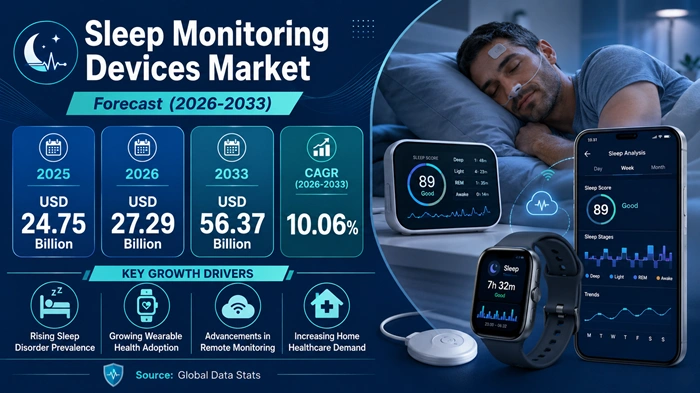
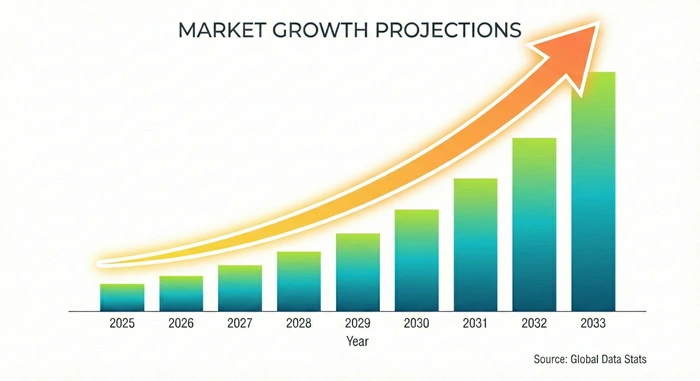
The global sleep monitoring devices market size is valued at USD 24.75 billion in 2025 and is predicted to increase from USD 27.29 billion in 2026 to approximately USD 56.37 billion by 2033, growing at a CAGR of 10.06% from 2026 to 2033.
This strong growth trajectory reflects a rapid shift in how people track and manage their sleep quality, moving from occasional clinical evaluations toward continuous, everyday monitoring through wearables and connected home devices. Rising rates of sleep apnea and insomnia diagnosis, growing consumer interest in wellness tracking, and the expanding capability of sensor-based technology are together fueling demand across both healthcare and consumer wellness segments.
AI Impact on the Sleep Monitoring Devices Industry
Smarter Algorithms Are Turning Raw Sleep Data Into Meaningful, Personalized Health Guidance
Artificial intelligence has become one of the most influential forces reshaping how sleep monitoring devices interpret the information they collect. Rather than simply logging hours slept, modern devices now use machine learning models trained on huge datasets of breathing patterns, heart rate variability, and movement to distinguish between light sleep, deep sleep, and disrupted rest with a level of accuracy that was previously only achievable in a clinical sleep lab. This has made it possible for a basic wrist-worn tracker or bedside sensor to flag early warning signs of sleep apnea or restless leg syndrome, prompting users to seek professional evaluation sooner than they otherwise might have.
AI is also changing how manufacturers design the user experience around these devices. Many platforms now generate personalized coaching tips, such as suggested bedtime adjustments or environmental changes, based on patterns detected across weeks or months of data rather than a single night's reading. On the clinical side, AI-assisted analysis is helping sleep specialists process overnight polysomnography results faster, cutting down the backlog that has historically delayed sleep apnea diagnosis in many healthcare systems. As algorithms continue to improve, the line between consumer wellness gadgets and clinical-grade diagnostic tools is becoming increasingly blurred within the broader sleep monitoring devices market.
Growth Factors
Rising Sleep Disorder Diagnosis and Everyday Wearable Adoption Are Fueling Sustained Demand
One of the strongest forces pushing the sleep monitoring devices market forward is the growing global recognition that poor sleep quality contributes directly to serious health problems, including heart disease, obesity, and mental health struggles. Physicians and public health bodies have become far more proactive in recommending sleep tracking as a first step before committing patients to expensive overnight sleep studies, which has widened the funnel of people who eventually purchase a dedicated monitoring device. This growing clinical acceptance works alongside consumer curiosity, since more people now want objective data about their own rest rather than relying on how tired they feel in the morning.
A second major growth factor is the sheer scale of adoption of everyday wearable technology, including smartwatches and fitness bands that already include sleep tracking as a built-in feature. Brands like Apple, Fitbit, Garmin, and Samsung have effectively normalized sleep tracking for millions of users who never intended to buy a dedicated medical device, creating a much larger addressable audience for the sleep monitoring devices market than existed even five years ago. This mainstream exposure is also driving demand for more specialized bedside monitors and clinical wearables among users who want deeper insight once a consumer-grade device flags a potential issue.
Market Outlook
Home-Based Testing and Deeper Wellness Integration Point Toward a Larger, More Connected Market
Looking ahead, the sleep monitoring devices industry is expected to benefit significantly from the continued shift away from hospital-based sleep labs toward home sleep testing kits that patients can use in their own bedroom. Insurance providers in several major markets are increasingly willing to reimburse home-based testing because it costs considerably less than an overnight lab stay, and this financial incentive is expected to keep pushing patients toward at-home devices through the remainder of the forecast period. As diagnostic accuracy for home devices continues improving, more of the overall sleep disorder screening market is likely to shift permanently toward these lower-cost, more convenient formats.
At the same time, the broader wellness technology ecosystem is becoming more interconnected, with sleep data increasingly feeding into apps that also track exercise, nutrition, and stress management. This integration is encouraging consumers to view sleep monitoring not as a standalone purchase but as part of a larger investment in personal health technology, which supports longer product lifecycles and stronger brand loyalty. Manufacturers that build devices capable of syncing seamlessly across multiple health platforms are positioned to capture a larger share of this increasingly connected sleep monitoring devices market as it matures over the coming years.
Expert Speaks
-
"Sleep has finally earned its place alongside diet and exercise as a pillar of health that people actively want to measure and improve. Our device roadmap reflects just how central this category has become to our overall health strategy." — CEO, Garmin Ltd.
-
"We are seeing a clear shift where consumers no longer wait for a doctor to tell them something is wrong with their sleep. They want the data first, and that is changing how we design our wearable products." — CEO, Apple Inc.
-
"Home sleep testing is removing barriers that kept millions of undiagnosed sleep apnea patients out of the healthcare system for years. This is one of the most meaningful shifts we have seen in respiratory care." — CEO, ResMed Inc.
Key Report Takeaways
-
North America leads the global sleep monitoring devices market, holding approximately 39% market share in 2025, supported by high consumer awareness, widespread wearable adoption, and strong insurance coverage for home sleep testing
-
Asia Pacific is the fastest-growing region, projected to expand at a CAGR near 13% through 2033, driven by rising disposable incomes, growing urban populations, and increasing smartphone-linked device adoption
-
Health-conscious working adults represent the dominant customer base, relying on sleep monitoring devices to manage stress-related sleep disruption alongside broader fitness and wellness goals
-
Wearable devices contribute the most to overall market revenue, reflecting strong consumer preference for convenient, multi-purpose tracking over single-function bedside monitors
-
Actigraphy and motion-sensor based tracking remains the most widely used monitoring method, prized for its low cost and ease of daily use compared to full polysomnography setups
-
Contactless and radar-based sleep sensors will grow the fastest among technology segments, holding close to 19% market share with a CAGR near 14% through the forecast period, driven by rising consumer preference for monitoring that requires no device to be worn at all
Market Scope
| Report Coverage | Details |
|---|---|
| Market Size by 2033 | USD 56.37 Billion |
| Market Size by 2025 | USD 24.75 Billion |
| Market Size by 2026 | USD 27.29 Billion |
| Market Growth Rate from 2026 to 2033 | CAGR of 10.06% |
| Dominating Region | North America |
| Fastest Growing Region | Asia Pacific |
| Base Year | 2025 |
| Forecast Period | 2026 to 2033 |
| Segments Covered | Product Type, Technology, Application, End User, Region |
| Regions Covered | North America, Europe, Asia Pacific, Latin America, Middle East & Africa |
Market Dynamics
Drivers Impact Analysis
Growing Diagnosis Rates and Wearable Saturation Are the Two Strongest Forces Behind Market Expansion
| Driver | (≈) % Impact on CAGR Forecast | Geographic Relevance | Impact Timeline |
|---|---|---|---|
| Rising diagnosis rates for sleep apnea and insomnia | ~34% | North America, Europe, growing in Asia Pacific | Short to long-term |
| Mainstream adoption of consumer wearables with sleep tracking | ~30% | Global | Short to medium-term |
| Expansion of home sleep testing reimbursement | ~19% | North America, parts of Europe | Medium-term |
| Growing integration with broader digital health platforms | ~17% | Global | Medium to long-term |
Rising diagnosis rates for common sleep disorders stand out as the single most powerful driver behind the expansion of the sleep monitoring devices market. As physicians grow more comfortable prescribing home-based monitoring as a first-line diagnostic step, a much larger population of patients is being introduced to these devices earlier in their care journey than would have been possible under older, lab-only diagnostic models. This has a compounding effect, since patients who receive a positive diagnosis often go on to purchase additional monitoring or therapy-support devices to manage their condition long term.
The second major driver is the sheer scale of consumer wearables already in circulation that include sleep tracking as a standard feature. Because so many people already own a smartwatch or fitness band for other reasons, the marginal cost of adding sleep tracking to their daily habits is essentially zero, which has created an enormous base of casual users who occasionally upgrade to more specialized devices once they become genuinely concerned about a detected issue. This layered adoption pattern, moving from casual tracking to focused monitoring, continues to expand the overall customer funnel feeding into the sleep monitoring devices market.
Restraints Impact Analysis
Accuracy Concerns and Data Privacy Worries Continue to Slow Full Consumer Trust
| Restraint | (≈) % Impact on CAGR Forecast | Geographic Relevance | Impact Timeline |
|---|---|---|---|
| Accuracy limitations of consumer-grade wearables compared to clinical devices | ~36% | Global | Short to medium-term |
| Data privacy concerns around continuous health monitoring | ~29% | North America, Europe | Ongoing |
| High cost of clinical-grade home testing kits | ~22% | Emerging markets | Medium-term |
| Low awareness of sleep disorders in certain developing regions | ~13% | Africa, parts of Latin America, South Asia | Long-term |
A persistent restraint facing the sleep monitoring devices market is the gap in accuracy between everyday consumer wearables and true clinical-grade polysomnography equipment. Many users have grown skeptical after noticing inconsistencies between what their tracker reports and how rested they actually feel, which can undermine confidence in the broader category even as clinical devices continue improving. This skepticism sometimes discourages people from following up on concerning readings, reducing the conversion rate from casual tracker owner to committed clinical device purchaser.
Data privacy concerns represent a second significant barrier, since continuous overnight monitoring generates deeply personal health information that many consumers are uneasy about sharing with technology companies or cloud-based platforms. Regulatory scrutiny around health data handling has intensified in several regions, adding compliance complexity for manufacturers and occasionally slowing product rollouts. Combined with the relatively high price point of clinical-grade home testing kits in cost-sensitive markets, these factors continue to moderate how quickly the sleep monitoring devices market can convert broad awareness into universal, sustained adoption.
Opportunities Impact Analysis
Contactless Sensing and Emerging Market Penetration Present the Clearest Paths to New Revenue
| Opportunity | (≈) % Impact on CAGR Forecast | Geographic Relevance | Impact Timeline |
|---|---|---|---|
| Growth of contactless, radar-based sleep sensing technology | ~38% | Global, led by North America, Asia Pacific | Medium to long-term |
| Expansion of affordable devices into underpenetrated emerging markets | ~34% | Asia Pacific, Latin America | Short to medium-term |
| Subscription-based sleep coaching and analytics services | ~28% | Global | Long-term |
The rise of contactless, radar-based sensors that can track breathing and movement without requiring a wearable device represents one of the most promising opportunities within this market. These devices remove the common complaint of discomfort associated with wearing a tracker to bed, appealing particularly to older adults and clinical patients who may find wearables cumbersome. Manufacturers that successfully commercialize this contactless approach at an accessible price point are likely to unlock an entirely new segment of previously reluctant users.
Expansion into emerging markets across Asia Pacific and Latin America is another substantial opportunity, as rising smartphone penetration and growing middle-class incomes make even basic sleep tracking devices newly affordable to millions of first-time buyers. Subscription-based coaching services that pair hardware with ongoing personalized analytics also present a durable revenue opportunity, since they transform a one-time device purchase into a recurring relationship. Companies willing to invest in both affordable hardware and compelling software experiences stand to capture meaningful share of this expanding sleep monitoring devices market over the coming years.
Segment Analysis
By Product Type: Wearable Sleep Trackers
Wearables Continue to Anchor the Market Thanks to Convenience and Everyday Multi-Use Appeal
Wearable sleep trackers hold the largest share of the sleep monitoring devices market, accounting for approximately 46% of total product segment revenue in 2025. Their dominance comes down to convenience, since a single wrist-worn device can track sleep alongside steps, heart rate, and exercise, making it far more appealing to casual users than a single-purpose bedside monitor. In the United States and other developed markets, wearables have essentially become the default entry point through which most consumers first encounter sleep tracking technology at all. Companies including Apple, Fitbit, Garmin, and Samsung dominate this space through strong brand recognition and tightly integrated software ecosystems that keep users engaged well beyond the initial purchase.
Growth in this segment remains particularly strong across Asia Pacific, where rising middle-class incomes and rapidly growing smartphone penetration are introducing millions of first-time buyers to wearable technology every year. Regional manufacturers, alongside established global brands, are increasingly offering lower-cost wearables specifically designed for price-sensitive markets in China, India, and Southeast Asia. This affordability push is helping wearables maintain their lead even as more specialized bedside and contactless monitoring devices gain attention. As battery life and sensor accuracy continue improving, wearables are expected to remain the primary gateway product for the broader sleep monitoring devices market well into the forecast period.
By Technology: Actigraphy and Motion-Based Sensing
Motion-Based Sensing Remains the Practical Backbone of Everyday Sleep Tracking
Actigraphy and motion-based sensing technology represent the most widely deployed monitoring method within the sleep monitoring devices market, supported by its low manufacturing cost and proven reliability for tracking general sleep and wake patterns. Unlike full polysomnography, which requires multiple sensors attached to the body and is typically reserved for clinical settings, actigraphy relies on simple accelerometers that can be built cheaply into almost any wearable or bedside device. This cost advantage has made it the default technology choice for consumer wearables, and it continues to hold a substantial share of overall device shipments worldwide.
North America remains a key market for actigraphy-based devices, supported by strong consumer familiarity with wearable technology and a mature retail distribution network spanning both electronics stores and pharmacy chains. Companies like Fitbit and Withings have built substantial market presence in the region by continuously refining their motion-sensing algorithms to better distinguish between sleep stages. While newer technologies like radar-based contactless sensing and advanced biometric sensors are gaining ground, actigraphy's affordability and proven track record ensure it will remain deeply embedded across the broader sleep monitoring devices market for the foreseeable future.
Regional Insights
North America
Strong Consumer Awareness and Insurance Support Keep North America Firmly in the Lead
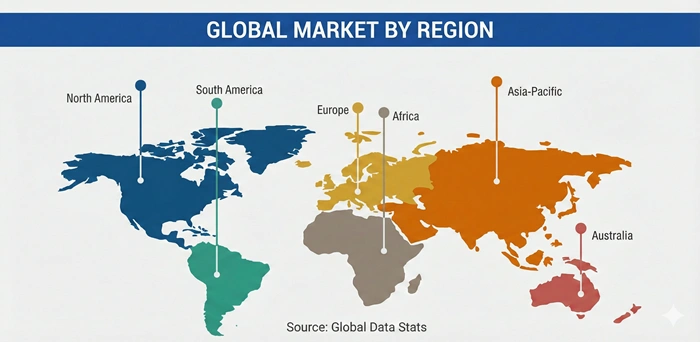
North America commands the leading position in the global sleep monitoring devices market, holding approximately 39% share in 2025 on the back of high consumer health awareness and one of the most developed insurance reimbursement systems for home sleep testing anywhere in the world. The United States accounts for the overwhelming majority of this regional demand, supported by widespread wearable ownership and a healthcare system that has grown increasingly comfortable directing patients toward at-home diagnostic pathways before committing to costly overnight lab stays. Major companies with a strong regional footprint include ResMed, Philips, Fitbit, and Apple, each maintaining deep retail and clinical distribution relationships across the country.
Canada also contributes meaningfully to the region's overall performance, with public health messaging around sleep health gradually catching up to the level of attention already common in the United States. Consumers across the region increasingly combine consumer wearables with clinician-recommended devices to build a fuller picture of their sleep health over time. This blend of strong retail infrastructure, favorable reimbursement policy, and high baseline consumer trust ensures North America will remain the anchor region for the sleep monitoring devices market throughout the forecast period.
Asia Pacific
Rising Incomes and Rapid Urbanization Position Asia Pacific as the Fastest-Growing Region
Asia Pacific is set to post the fastest growth rate within the global sleep monitoring devices market through 2033, with a CAGR estimated near 13% as expanding urban populations and rising disposable incomes bring millions of new consumers into contact with wearable and connected health technology for the first time. China and India lead this regional surge, supported by large domestic electronics manufacturing bases that allow local brands to offer sleep tracking features at price points considerably lower than many Western competitors. Companies such as Xiaomi and regional wearable specialists have expanded aggressively across these markets, often bundling sleep tracking into broader fitness band product lines.
Japan and South Korea add further depth to the region's growth story, both bringing well-established consumer electronics industries and aging populations increasingly interested in health monitoring technology. Government-backed digital health initiatives in several Asia Pacific countries are also beginning to support broader adoption of connected monitoring devices within public healthcare systems. As affordability improves and awareness of sleep-related health risks continues spreading, Asia Pacific's share of the global sleep monitoring devices market is expected to climb steadily through the remainder of the decade.
Customization Available for This Report
Every Region and Country Can Be Explored in Far Greater Depth Through a Tailored Version of This Report
This report can be customized on a region-by-region and country-by-country basis, giving clients a much sharper view of local market dynamics, competitive positioning, and growth opportunities than a global overview alone can provide.
Clients seeking a deeper, geography-specific breakdown can request a customized version covering any of the following regions and countries, complete with localized demand forecasting, regulatory context, and competitor mapping tied directly to the sleep monitoring devices keyword focus:
North America
-
U.S. — In-depth look at insurance-driven home testing adoption and wearable retail trends
-
Canada — Analysis of public health messaging impact and device adoption patterns
-
Mexico — Coverage of growing consumer electronics access and emerging distribution channels
Europe
-
U.K. — Review of NHS-linked diagnostic pathways and wearable adoption rates
-
Germany — Assessment of medical device regulatory standards and clinical monitoring uptake
-
France — Insights into consumer wellness spending and sleep disorder awareness trends
-
Italy — Coverage of expanding retail distribution and rising diagnostic rates
-
Rest of Europe — Country-level view of emerging demand across Scandinavia and Eastern Europe
Asia Pacific
-
China — Analysis of domestic wearable manufacturing scale and price-sensitive demand
-
India — Coverage of rising urban health awareness and affordable device penetration
-
Japan — Review of aging-population-driven demand and established electronics brands
-
South Korea — Assessment of smart device manufacturing strength and consumer adoption
-
Australia — Insights into healthcare-linked monitoring adoption and retail trends
-
Rest of Asia Pacific — Country-level breakdown covering Thailand, Vietnam, Indonesia, and Malaysia
Latin America
-
Brazil — Coverage of growing urban wellness spending and device accessibility
-
Argentina — Assessment of early-stage market development and awareness campaigns
-
Rest of Latin America — Country-level sizing across Colombia, Peru, and Chile
Middle East & Africa
-
UAE — Analysis of healthcare infrastructure investment and rising consumer awareness
-
Saudi Arabia — Coverage of expanding digital health initiatives and device accessibility
-
Rest of MEA — Country-level view of Sub-Saharan Africa healthcare access expansion
Top Key Players
-
ResMed Inc (United States)
-
Koninklijke Philips N.V (Netherlands)
-
Medtronic plc (Ireland)
-
Apple Inc (United States)
-
Fitbit LLC (United States)
-
Garmin Ltd (Switzerland)
-
Samsung Electronics Co Ltd (South Korea)
-
Withings SA (France)
-
Natus Medical Incorporated (United States)
-
Compumedics Limited (Australia)
-
Masimo Corporation (United States)
-
Omron Healthcare Inc (Japan)
Recent Developments
-
In 2025, ResMed expanded its consumer-facing sleep health app to integrate directly with data from third-party wearable devices, broadening its ecosystem reach
-
In 2026, Philips introduced an upgraded home sleep testing kit designed to improve diagnostic accuracy while reducing setup complexity for first-time users
-
In 2025, Apple enhanced its sleep tracking algorithms within its wearable operating system to better detect irregular breathing patterns during rest
-
In 2026, Garmin launched a new wearable line featuring improved sleep stage detection aimed at both fitness enthusiasts and health-conscious older adults
-
In 2025, Samsung expanded its sleep coaching software features, adding personalized recommendations based on long-term tracked sleep data trends
Market Trends
Contactless Sensing and Deeper Software Personalization Are Reshaping What Consumers Expect
One of the clearest trends unfolding across the sleep monitoring devices landscape is the rapid rise of contactless, radar and sonar-based sensors that can track breathing and movement from a nightstand or ceiling mount without requiring the user to wear anything at all. This approach is proving especially appealing to older adults and clinical patients who have historically found wearables uncomfortable, and as accuracy improves, contactless options are increasingly being positioned as legitimate alternatives rather than novelty gadgets. Manufacturers investing in this space are betting that removing the physical burden of wearing a device will meaningfully expand the addressable consumer base.
A second major trend is the deepening personalization of the software layer that sits on top of hardware sensors, with companies moving beyond simple sleep score reporting toward genuinely actionable coaching built on months of accumulated data. This shift reflects a broader recognition that raw data alone rarely changes behavior, whereas personalized, context-aware suggestions are far more likely to keep users engaged with their devices long term. Together, these two trends are pushing the sleep monitoring devices market toward a future where hardware and software are increasingly evaluated as a single, integrated health experience rather than separate purchasing decisions.
Segments Covered in the Report
By Product Type
-
Wearable Sleep Trackers
-
Bedside and Contactless Monitors
-
Home Sleep Testing Kits
-
Clinical Polysomnography Systems
By Technology
-
Actigraphy and Motion-Based Sensing
-
Radar and Contactless Sensing
-
Biometric and Physiological Sensing
By Application
-
Sleep Apnea Monitoring
-
Insomnia and General Sleep Quality Tracking
-
Wellness and Fitness Tracking
By End User
-
Individual Consumers
-
Hospitals and Sleep Clinics
-
Homecare Settings
By Region
-
North America (U.S., Canada, Mexico)
-
Europe (U.K., Germany, France, Italy, Rest of Europe)
-
Asia Pacific (China, India, Japan, South Korea, Australia, Rest of Asia Pacific)
-
Latin America (Brazil, Argentina, Rest of Latin America)
-
Middle East & Africa (UAE, Saudi Arabia, Rest of MEA)
❝ Built for Every Level — From Startups to Industry Giants ❞
Here Is Exactly How This Report Works for You
-
For tier 1 companies, investors, and established market leaders, this report delivers detailed competitor revenue analysis, supply-demand mapping, and geopolitical risk context that support confident decisions around acquisitions, capacity expansion, and long-term strategic positioning in the sleep monitoring devices space
-
For tier 2 and tier 3 companies, startups, and mid-sized businesses, this report highlights the most commercially promising segments and underpenetrated regional opportunities, giving you a practical framework to compete against larger established brands without spreading resources too thin
-
For every decision maker across the value chain, this report breaks down exactly how shifting reimbursement policy, evolving consumer privacy expectations, and competitor product launches are shaping the direction of the market through 2033, equipping you to act ahead of the curve rather than react after the fact
Frequently Asked Questions
Question 1: How large is the global sleep monitoring devices market expected to become by 2033?
Answer: The global sleep monitoring devices market was valued at USD 24.75 billion in 2025 and is projected to reach USD 56.37 billion by 2033. Growth is being driven largely by rising sleep disorder diagnosis rates and expanding wearable technology adoption.
Question 2: What is driving growth in the sleep monitoring devices market right now?
Answer: Growth in the sleep monitoring devices market is being driven by rising awareness of sleep-related health risks and the mainstream popularity of wearables with built-in tracking features. Expanding home sleep testing reimbursement is also encouraging more consumers to try monitoring devices.
Question 3: Which region currently dominates the sleep monitoring devices market?
Answer: North America currently leads the sleep monitoring devices market with roughly 39% share, supported by strong consumer awareness and insurance-backed home testing. Asia Pacific is growing the fastest, fueled by rising incomes and expanding wearable adoption.
Question 4: Which product type generates the most revenue in the sleep monitoring devices market?
Answer: Wearable sleep trackers generate the largest share of revenue in the sleep monitoring devices market, thanks to their multi-purpose convenience compared to single-function devices. Actigraphy-based motion sensing remains the most widely used underlying technology across these wearables.
Question 5: Who are the major companies competing in the sleep monitoring devices market?
Answer: Leading companies in the sleep monitoring devices market include ResMed, Philips, Apple, Fitbit, Garmin, and Samsung. These companies compete through continuous software innovation, strong retail distribution, and expanding integration with broader digital health ecosystems.