
Sickle Cell Disease Treatment Market Overview
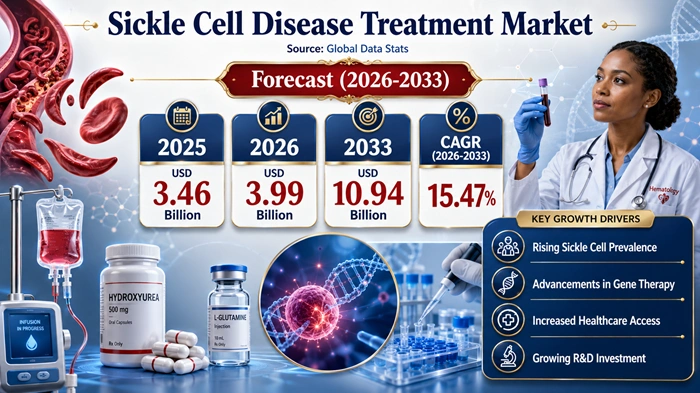
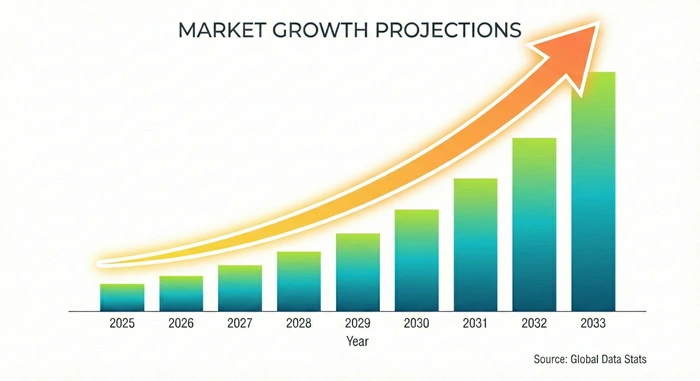
The global sickle cell disease treatment market size is valued at USD 3.46 billion in 2025 and is predicted to increase from USD 3.99 billion in 2026 to approximately USD 10.94 billion by 2033, growing at a CAGR of 15.47% from 2026 to 2033.
This strong growth reflects the rapid emergence of gene therapy and gene editing treatments alongside continued expansion of disease-modifying drug options, as patients and healthcare systems increasingly move away from symptom management toward treatments addressing the underlying genetic cause of the disease. As approved gene therapies gain broader adoption and pharmaceutical companies continue expanding their pipelines with novel oral therapeutics, demand for advanced sickle cell disease treatment options continues climbing across developed and emerging healthcare markets alike.
AI Impact on the Sickle Cell Disease Treatment Industry
Artificial Intelligence Is Accelerating Drug Discovery, Optimizing Clinical Trial Design, and Strengthening Patient Risk Stratification Across the Sickle Cell Disease Treatment Landscape — Fundamentally Changing How Researchers and Clinicians Approach This Genetic Disorder
Artificial intelligence has become an increasingly valuable tool in sickle cell disease drug discovery, with machine learning models now capable of screening vast chemical libraries and predicting which molecular compounds are most likely to effectively modify sickle hemoglobin polymerization, considerably shortening the early-stage research timelines that have historically slowed new treatment development. This computational screening approach allows pharmaceutical researchers to prioritize the most promising drug candidates before committing to expensive laboratory testing, an especially valuable capability in a disease area where the patient population, while significant, has historically attracted less research investment than more common conditions. Companies integrating AI-driven molecular screening into their sickle cell disease research programs are increasingly gaining an edge in bringing effective new therapies to clinical testing faster.
Beyond drug discovery, AI is also helping optimize clinical trial design and patient risk stratification, with predictive algorithms now able to analyze patient genetic profiles, disease severity markers, and treatment history to identify which patients are most likely to benefit from specific gene therapies or disease-modifying drugs. This capability matters considerably given the substantial cost and complexity associated with gene therapy administration, since better patient selection improves the likelihood of successful treatment outcomes while reducing unnecessary exposure to intensive procedures for patients unlikely to benefit. As these AI-driven discovery and patient stratification tools continue advancing, they are becoming an increasingly important factor shaping innovation across the broader sickle cell disease treatment market.
Growth Factors
Rising Gene Therapy Adoption and Expanding Disease Awareness Continue Driving Sustained Demand
The most significant growth factor supporting the sickle cell disease treatment market is the accelerating adoption of approved gene therapies, which offer the potential for functional cure by directly correcting the genetic mutation responsible for the disease rather than simply managing symptoms through traditional supportive care approaches. As more treatment centers gain certification to administer these complex therapies and payer coverage policies continue expanding, patient access to gene-based treatment options has grown substantially across major healthcare markets.
A second important growth factor is the growing global awareness of sickle cell disease and advocacy efforts pushing for improved diagnosis, research funding, and equitable treatment access, particularly in regions with historically underserved patient populations facing disproportionate disease burden. This growing awareness, combined with continued pharmaceutical investment in novel oral therapeutics that reduce painful vaso-occlusive crises, has broadened the addressable patient base for treatment providers considerably. This combination of rising gene therapy adoption and expanding disease awareness continues to strengthen demand across the sickle cell disease treatment market.
Market Outlook
Gene Editing Innovation and Expanding Emerging Market Access Point Toward Sustained Growth Through 2033
Looking ahead through the forecast period, the sickle cell disease treatment industry is expected to benefit substantially from continued advancement in gene editing technology, as researchers refine CRISPR-based and other gene correction approaches to improve safety profiles, reduce treatment complexity, and potentially expand eligibility to a broader range of patients including those in earlier disease stages. This technology evolution is likely to reshape the competitive treatment landscape considerably as newer, potentially more accessible gene editing approaches reach regulatory approval.
At the same time, growing efforts to expand treatment access across emerging markets with high sickle cell disease prevalence, particularly across parts of Africa and the Middle East, are expected to create substantial new demand as healthcare infrastructure investment and international health partnerships continue improving diagnosis rates and treatment availability. Companies that can deliver both cutting-edge gene therapies and affordable, accessible disease-modifying drugs are increasingly well positioned to capture this growth. Manufacturers combining strong clinical development capabilities with global access strategies are likely to lead growth within the broader sickle cell disease treatment market through 2033.
Expert Speaks
-
"Our continued investment in gene therapy innovation reflects our deep commitment to transforming outcomes for patients living with sickle cell disease around the world." — CEO, Vertex Pharmaceuticals Inc
-
"As treatment access continues expanding globally, our disease-modifying therapy portfolio remains focused on reducing the debilitating pain crises that define this condition for so many patients." — CEO, Pfizer Inc
-
"Gene editing represents a genuine paradigm shift in how we approach genetic blood disorders, and our research programs remain dedicated to making these breakthrough therapies more accessible." — CEO, Novartis AG
Key Report Takeaways
-
North America leads the global sickle cell disease treatment market, holding approximately 45% market share in 2025, supported by strong healthcare infrastructure and early gene therapy approval and adoption
-
Middle East and Africa is the fastest-growing region, projected to expand at a CAGR near 17.8% through 2033, driven by rising disease awareness and expanding healthcare access initiatives across high-prevalence countries
-
Hospital pharmacies represent the dominant distribution channel segment, accounting for roughly 48% share, given the specialized administration requirements associated with gene therapy and infusion-based treatments
-
Disease-modifying therapy applications contribute the most to overall demand, reflecting widespread use of hydroxyurea and newer oral agents for ongoing symptom management
-
Pharmacotherapy remains the most widely adopted treatment type, valued for its established safety profile and broad accessibility compared to gene-based alternatives
-
Gene therapy segments will grow the fastest among treatment type categories, holding close to 22% market share with a CAGR near 24% through the forecast period, driven by rising adoption of curative genetic treatment options
Market Scope
| Report Coverage | Details |
|---|---|
| Market Size by 2033 | USD 10.94 Billion |
| Market Size by 2025 | USD 3.46 Billion |
| Market Size by 2026 | USD 3.99 Billion |
| Market Growth Rate from 2026 to 2033 | CAGR of 15.47% |
| Dominating Region | North America |
| Fastest Growing Region | Middle East and Africa |
| Base Year | 2025 |
| Forecast Period | 2026 to 2033 |
| Segments Covered | Treatment Type, Distribution Channel, End User, Region |
| Regions Covered | North America, Europe, Asia Pacific, Latin America, Middle East & Africa |
Market Dynamics
Drivers Impact Analysis
Rising Gene Therapy Adoption and Expanding Global Disease Awareness Remain the Two Strongest Forces Behind Market Momentum
| Driver | (≈) % Impact on CAGR Forecast | Geographic Relevance | Impact Timeline |
|---|---|---|---|
| Rising adoption of approved gene therapies offering curative treatment potential | ~35% | North America, Europe | Short to long-term |
| Growing global awareness and advocacy for sickle cell disease diagnosis and treatment | ~28% | Global, strongest in MEA, emerging markets | Medium to long-term |
| Expanding pharmaceutical pipeline for novel oral disease-modifying therapies | ~23% | Global | Medium-term |
| Increasing payer coverage and reimbursement support for advanced treatment options | ~14% | North America, Europe | Short to medium-term |
Rising adoption of approved gene therapies continues to serve as the primary engine behind sustained growth in the sickle cell disease treatment market, as more treatment centers gain certification to administer these complex, potentially curative therapies and patient eligibility criteria continue evolving. This growing treatment center capacity has translated directly into rising patient access across major healthcare markets offering gene-based treatment options.
Growing global awareness and advocacy efforts represent the second major driver, as patient organizations and health authorities continue pushing for improved diagnosis rates and equitable treatment access, particularly in regions historically underserved despite carrying disproportionate disease burden. This awareness-driven demand, combined with an expanding pharmaceutical pipeline for novel oral therapies, continues reinforcing steady demand growth across the broader sickle cell disease treatment market.
Restraints Impact Analysis
High Treatment Costs and Limited Treatment Center Availability Continue to Moderate Broader Adoption
| Restraint | (≈) % Impact on CAGR Forecast | Geographic Relevance | Impact Timeline |
|---|---|---|---|
| Extremely high cost of gene therapy treatments limiting patient access | ~36% | Global, particularly emerging markets | Short to medium-term |
| Limited number of certified treatment centers capable of administering gene therapies | ~28% | Global | Medium to long-term |
| Complex, resource-intensive treatment administration process for gene-based therapies | ~22% | Global | Medium-term |
| Reimbursement and insurance coverage uncertainty across various healthcare systems | ~14% | Emerging markets | Short to medium-term |
The most persistent restraint facing the sickle cell disease treatment market is the extremely high cost associated with gene therapy treatments, which can reach into the millions of dollars per patient and significantly limits accessibility even in developed healthcare markets with more robust reimbursement infrastructure. This cost barrier remains particularly acute for patients in lower-income countries where the disease burden is often highest.
Limited availability of certified treatment centers capable of safely administering gene therapies represents a second significant restraint, since the complex, multi-step treatment process requires specialized facilities and expertise that many hospitals have not yet developed. Combined with ongoing reimbursement uncertainty across different healthcare systems, these restraints continue moderating how quickly broader gene therapy adoption spreads across the global sickle cell disease treatment market.
Opportunities Impact Analysis
Gene Editing Advancement and Expanding High-Prevalence Market Access Represent the Clearest Paths to Growth
| Opportunity | (≈) % Impact on CAGR Forecast | Geographic Relevance | Impact Timeline |
|---|---|---|---|
| Advancing next-generation gene editing technology with improved safety profiles | ~38% | North America, Europe | Short to medium-term |
| Expanding treatment access across high-prevalence regions including Africa and the Middle East | ~33% | Middle East and Africa | Medium to long-term |
| Growing investment in affordable oral disease-modifying therapy alternatives | ~29% | Global | Medium-term |
Advancing next-generation gene editing technology represents one of the most substantial opportunities within the sickle cell disease treatment market, as researchers developing safer, less resource-intensive correction approaches stand to capture significant share by potentially expanding treatment eligibility to a much broader patient population. This technology innovation is expected to meaningfully reshape competitive positioning among leading gene therapy developers over the coming years.
Expanding treatment access across high-prevalence regions including parts of Africa and the Middle East presents a second substantial opportunity, as international health partnerships and government initiatives continue investing in improved diagnosis infrastructure and treatment availability. Growing investment in affordable oral disease-modifying therapies further broadens the opportunity landscape, particularly for patients who cannot access or afford gene therapy treatment. Companies pursuing these parallel opportunities are well positioned to capture meaningful growth within the broader sickle cell disease treatment market through the forecast period.
Segment Analysis
By Treatment Type: Disease-Modifying Therapy
Disease-Modifying Therapies Continue to Anchor the Treatment Landscape, Reflecting Their Broad Accessibility and Established Clinical Use
Disease-modifying therapies hold the largest share within the treatment type segment of the sickle cell disease treatment market, accounting for approximately 52% of total segment revenue in 2025. This dominance reflects the widespread and long-established use of hydroxyurea and newer oral agents such as crizanlizumab and voxelotor, which help reduce the frequency of painful vaso-occlusive crises without requiring the intensive treatment infrastructure that gene therapies demand. In markets like the United States and the United Kingdom, physicians increasingly favor combination approaches that pair established oral therapies with emerging treatment options based on individual patient response and disease severity. Leading suppliers such as Novartis, Pfizer, and Global Blood Therapeutics continue to dominate this segment through continuous clinical development and expanded access programs.
Growth within this segment remains particularly strong in North America, where strong healthcare infrastructure and comprehensive insurance coverage continue driving broad patient access to both established and newer disease-modifying therapy options. The region's combination of strong reimbursement support and deep specialist hematology networks has helped disease-modifying therapies maintain their leading position despite growing enthusiasm for gene-based curative treatment alternatives. As disease-modifying drug options continue expanding globally, this treatment type is expected to remain the dominant category within the broader sickle cell disease treatment market throughout the forecast period.
By Treatment Type: Gene Therapy
Gene Therapy Represents the Fastest-Growing Treatment Category, Reflecting Its Curative Potential for This Genetic Disorder
Gene therapy represents the fastest-growing treatment type within the sickle cell disease treatment market, holding close to 22% share in 2025 with a projected CAGR near 24% through the forecast period as more patients gain access to these potentially curative treatment options. Unlike disease-modifying drugs that manage symptoms, gene therapies work by correcting the underlying genetic mutation responsible for abnormal hemoglobin production, offering patients the possibility of eliminating painful crises entirely following successful treatment. This curative potential has generated substantial patient and physician interest despite the treatment's complexity and cost, particularly among younger patients hoping to avoid decades of chronic disease management.
Growth in this segment remains especially strong in North America, where certified treatment centers and comprehensive payer support continue expanding patient access to approved gene therapies at leading academic medical centers. Companies like Vertex Pharmaceuticals and bluebird bio have expanded their treatment center networks significantly to serve this growing patient demand, often providing extensive logistical support to help patients navigate the complex, multi-month treatment process. As gene editing technology continues advancing and safety profiles improve, this treatment segment is expected to remain the fastest-growing category within the broader sickle cell disease treatment market.
Regional Insights
North America
Strong Healthcare Infrastructure and Early Gene Therapy Adoption Keep North America Firmly in the Lead
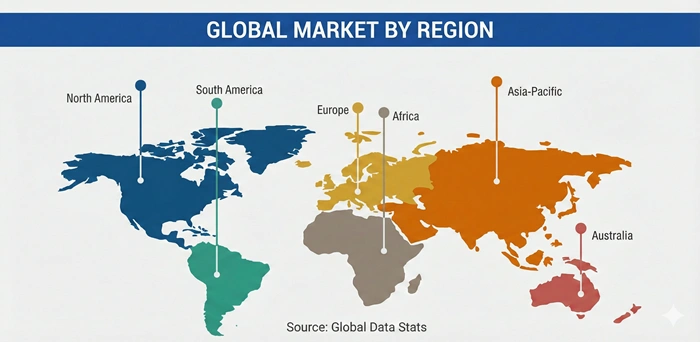
North America commands the leading position in the global sickle cell disease treatment market, holding approximately 45% share in 2025, supported by strong healthcare infrastructure, comprehensive insurance coverage, and early regulatory approval of gene therapy treatments. The United States drives the overwhelming majority of regional demand, backed by a dense concentration of certified treatment centers and leading pharmaceutical companies continuously expanding their sickle cell disease treatment portfolios. Companies with strong regional presence include Vertex Pharmaceuticals, Pfizer, Novartis, and bluebird bio, each maintaining deep relationships with academic medical centers and patient advocacy organizations across the country.
Canada also contributes meaningfully to regional demand, supported by growing government investment in genetic disease treatment infrastructure and expanding specialist hematology care networks. The region's combination of strong reimbursement support, deep clinical infrastructure, and continuous therapy innovation ensures North America's leadership position within the sickle cell disease treatment market remains firmly intact through the remainder of the forecast period.
Middle East and Africa
Rising Disease Awareness and Expanding Healthcare Access Initiatives Position Middle East and Africa as the Fastest-Growing Region
Middle East and Africa is projected to register the fastest CAGR within the global sickle cell disease treatment market through 2033, expanding at a rate near 17.8% as rising disease awareness and expanding healthcare access initiatives create substantial new demand across the region. Countries across Sub-Saharan Africa and the Gulf region lead much of this regional growth, supported by international health partnerships and government-backed screening programs aimed at improving early diagnosis rates in populations carrying the highest global disease burden. Regional and international pharmaceutical companies alike have expanded their presence to serve this growing patient population, often partnering with local health ministries to improve treatment affordability and access.
Nigeria and Saudi Arabia contribute further depth to regional growth, both bringing large affected populations that increasingly benefit from expanding hematology specialist training and improved access to essential disease-modifying medications. Growing government-backed health initiatives across several regional countries continue to accelerate treatment access among historically underserved patient populations alike. This combination of rising awareness, expanding healthcare partnerships, and growing government investment positions Middle East and Africa as the clear growth leader within the broader sickle cell disease treatment market through the forecast period.
Customization Available for This Report
Region-Specific and Country-Specific Versions of This Report Are Available to Deliver a Sharper, More Localized View of Market Dynamics
This report can be tailored on a region-by-region and country-by-country basis, providing localized market sizing, competitive mapping, and treatment access trend analysis that a global overview alone cannot fully capture.
Clients seeking a more focused breakdown can request a customized version covering any of the following regions and countries, complete with demand forecasting, competitor landscape review, and adoption trend analysis tied specifically to the sickle cell disease treatment keyword focus:
North America
-
U.S. — Detailed review of gene therapy adoption and reimbursement policy trends
-
Canada — Coverage of specialist hematology care network expansion
-
Mexico — Analysis of emerging genetic disease treatment infrastructure trends
Europe
-
U.K. — Review of gene therapy regulation and treatment access trends
-
Germany — Coverage of clinical investment among leading pharmaceutical manufacturers
-
France — Insights into disease-modifying therapy adoption and market patterns
-
Italy — Analysis of regional genetic disease treatment investment trends
-
Rest of Europe — Country-level view of emerging demand across Eastern Europe and the Nordics
Asia Pacific
-
China — Coverage of expanding genetic disease treatment infrastructure
-
India — Analysis of growing disease awareness and screening program expansion
-
Japan — Review of established healthcare infrastructure and treatment adoption trends
-
South Korea — Assessment of genetic disease treatment investment and adoption
-
Australia — Insights into treatment access and adoption trends
-
Rest of Asia Pacific — Country-level breakdown covering Thailand, Vietnam, Indonesia, and Malaysia
Latin America
-
Brazil — Coverage of expanding disease treatment access and adoption
-
Argentina — Analysis of early-stage healthcare infrastructure modernization trends
-
Rest of Latin America — Country-level sizing across Colombia, Peru, and Chile
Middle East & Africa
-
UAE — Review of healthcare infrastructure investment and treatment access trends
-
Saudi Arabia — Coverage of expanding genetic disease treatment modernization initiatives
-
Rest of MEA — Country-level view of Sub-Saharan Africa healthcare infrastructure expansion
Top Key Players
-
Vertex Pharmaceuticals Incorporated (United States)
-
Pfizer Inc (United States)
-
Novartis AG (Switzerland)
-
bluebird bio Inc (United States)
-
CRISPR Therapeutics AG (Switzerland)
-
Bristol Myers Squibb Company (United States)
-
Novo Nordisk A/S (Denmark)
-
Agios Pharmaceuticals Inc (United States)
-
Beam Therapeutics Inc (United States)
-
Emmaus Life Sciences Inc (United States)
-
Global Blood Therapeutics Inc (United States)
-
Sangamo Therapeutics Inc (United States)
Recent Developments
-
In 2025, Vertex Pharmaceuticals expanded its network of certified treatment centers administering its approved gene therapy across additional academic medical centers
-
In 2025, CRISPR Therapeutics advanced its gene editing platform with continued clinical development targeting improved safety profiles for broader patient eligibility
-
In 2026, Pfizer strengthened its disease-modifying therapy portfolio through continued investment in oral treatment options for reducing vaso-occlusive crises
-
In 2025, bluebird bio expanded its patient support programs to help navigate the complex logistics associated with gene therapy treatment administration
-
In 2025, Novartis deepened its investment in emerging markets access initiatives to improve sickle cell disease treatment availability across high-prevalence regions
Market Trends
Gene Editing Innovation and Rising Emerging Market Access Are Reshaping Treatment Development Priorities
One of the clearest trends shaping the sickle cell disease treatment market is the accelerating development of next-generation gene editing approaches, as researchers work to refine correction techniques that could eventually offer safer, less resource-intensive alternatives to current gene therapy protocols. Companies are investing heavily in clinical research, recognizing that gene editing innovation has become an increasingly important competitive differentiator as the treatment landscape continues shifting toward curative approaches.
A second significant trend is the growing focus on expanding treatment access across historically underserved, high-prevalence regions, as pharmaceutical companies and health organizations increasingly recognize the importance of equitable global access to both established and emerging therapies. This trend toward broader global access is particularly meaningful for patient populations in Africa and parts of Asia, continuing to support steady expansion across the broader sickle cell disease treatment market as awareness and healthcare infrastructure investment increase.
Segments Covered in the Report
By Treatment Type
-
Disease-Modifying Therapy
-
Gene Therapy
-
Blood Transfusion and Supportive Care
-
Other Treatment Types
By Distribution Channel
-
Hospital Pharmacies
-
Retail Pharmacies
-
Specialty Pharmacies
By End User
-
Hospitals and Treatment Centers
-
Specialty Clinics
-
Other End Users
By Region
-
North America (U.S., Canada, Mexico)
-
Europe (U.K., Germany, France, Italy, Rest of Europe)
-
Asia Pacific (China, India, Japan, South Korea, Australia, Rest of Asia Pacific)
-
Latin America (Brazil, Argentina, Rest of Latin America)
-
Middle East & Africa (UAE, Saudi Arabia, Rest of MEA)
❝ Built for Every Level — From Startups to Industry Giants ❞
Here Is Exactly How This Report Works for You
-
For tier 1 companies, investors, and established market leaders, this report delivers detailed competitor revenue analysis, gene therapy innovation trend mapping, and geopolitical risk context that support confident decisions around product expansion, pricing strategy, and long-term positioning within the sickle cell disease treatment space
-
For tier 2 and tier 3 companies, startups, and mid-sized suppliers, this report highlights the most commercially promising treatment categories and underserved regional opportunities, giving you a practical framework to compete against larger established players without overextending limited resources
-
For every decision maker across the value chain, this report explains exactly how gene therapy adoption trends, reimbursement developments, and competitor treatment launches are shaping market direction through 2033, equipping you to plan investment and go-to-market decisions with genuine confidence
Frequently Asked Questions
Question 1: How large is the global sickle cell disease treatment market expected to become by 2033?
Answer: The global sickle cell disease treatment market was valued at USD 3.46 billion in 2025 and is projected to reach USD 10.94 billion by 2033. This growth is driven largely by rising gene therapy adoption and expanding disease awareness worldwide.
Question 2: What is driving growth in the sickle cell disease treatment market right now?
Answer: Growth in the sickle cell disease treatment market is being driven by rising adoption of curative gene therapies and expanding global disease advocacy. Growing pharmaceutical investment in oral disease-modifying therapies is further reinforcing this expansion.
Question 3: Which region currently dominates the sickle cell disease treatment market?
Answer: North America currently leads the sickle cell disease treatment market with roughly 45% share, supported by strong healthcare infrastructure. Middle East and Africa is growing the fastest, driven by rising disease awareness and expanding access initiatives.
Question 4: Which treatment type generates the most revenue in the sickle cell disease treatment market?
Answer: Disease-modifying therapies generate the largest share of revenue in the sickle cell disease treatment market, reflecting their broad accessibility and established clinical use. Gene therapy remains the fastest-growing treatment category.
Question 5: Who are the leading companies competing in the sickle cell disease treatment market?
Answer: Leading companies in the sickle cell disease treatment market include Vertex Pharmaceuticals, Pfizer, Novartis, bluebird bio, and CRISPR Therapeutics. These companies compete through continuous innovation in gene therapy and disease-modifying drug development.