
Secure Web Gateway Market Overview
The global secure web gateway market size is valued at USD 16.14 billion in 2025 and is predicted to increase from USD 19.25 billion in 2026 to approximately USD 67.55 billion by 2033, growing at a CAGR of 18.99% from 2026 to 2033.
A secure web gateway is a network security solution that filters unwanted software and malware from user-initiated internet traffic, enforcing corporate acceptable-use policies while protecting employees from web-based threats. As organizations shift toward hybrid work and cloud-first infrastructure, traditional perimeter-based security models are giving way to cloud-delivered gateway solutions that protect users regardless of physical location. Rising ransomware attacks, growing adoption of remote and hybrid work models, and the broader shift toward Secure Access Service Edge architecture are together driving strong, sustained demand for gateway security solutions across enterprises of every size.
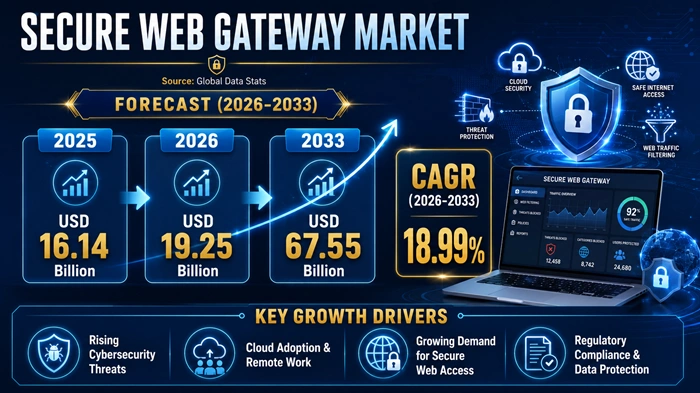
AI Impact on the Secure Web Gateway Industry
How Artificial Intelligence Is Strengthening Threat Detection, Automating Policy Enforcement, and Reducing False Positives Across Secure Web Gateway Deployments
Artificial intelligence has become a critical differentiator in how modern secure web gateway platforms detect and respond to web-based threats. Traditional signature-based filtering struggled to keep pace with rapidly evolving malware variants and zero-day threats, but AI-powered behavioral analysis can now identify malicious traffic patterns in real time, even when the specific threat has never been seen before. This capability is particularly valuable in defending against increasingly sophisticated phishing campaigns and command-and-control traffic that are specifically designed to evade conventional detection rules.
Beyond threat detection, machine learning models are helping security teams dramatically reduce false positive rates, a persistent pain point that historically caused alert fatigue among network security staff and led to legitimate business traffic being incorrectly blocked. AI-driven risk scoring also enables more granular, adaptive policy enforcement, allowing gateways to apply stricter controls to genuinely risky sessions while allowing low-risk traffic to pass through with minimal friction. Vendors in the secure web gateway market are increasingly bundling these AI capabilities as core platform features rather than premium add-ons, reflecting how central intelligent threat detection has become to competitive positioning in cloud security.
Growth Factors
Rising Ransomware Threats, Hybrid Work Adoption, and SASE Architecture Convergence Are the Three Most Influential Growth Drivers
The relentless rise in ransomware and web-based malware attacks targeting enterprises of every size is one of the most powerful growth factors behind sustained gateway security investment. Attackers increasingly use compromised or malicious websites as an initial entry point into corporate networks, making web traffic inspection a critical control point that security teams cannot afford to overlook. This persistent and escalating threat landscape ensures that gateway security spending remains a budget priority even during periods of broader IT cost tightening, making it one of the most resilient growth factors within the secure web gateway market.
The permanent shift toward hybrid and remote work models is a second major driver reshaping enterprise security architecture, as organizations can no longer rely on traditional network perimeters to protect users working from home, coffee shops, or shared office spaces. Cloud-delivered secure web gateways solve this challenge by extending consistent policy enforcement and threat protection to users regardless of their physical location, without requiring traffic to be routed back through a central corporate data center. Combined with the broader industry convergence toward Secure Access Service Edge architecture, which bundles gateway security with other cloud-delivered security services into a single platform, these factors are creating durable, multi-year demand for both standalone and integrated gateway solutions.
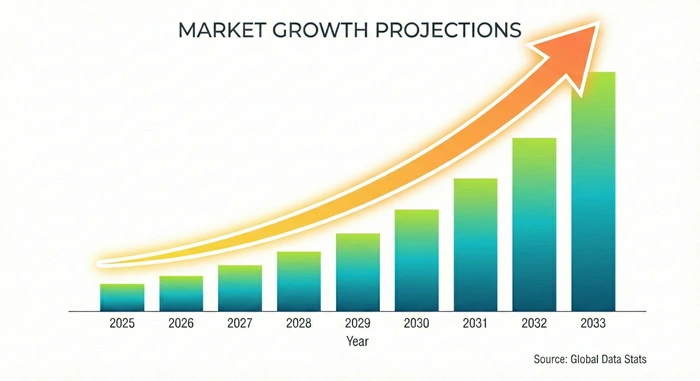
Market Outlook
The Secure Web Gateway Market Is Positioned for Sustained High-Growth Through 2033 as Cloud-Delivered Security Becomes the Default Standard
The long-term outlook for gateway security remains strongly positive as enterprises complete their transition away from legacy hardware-based appliances toward fully cloud-native, subscription-based security platforms. As more organizations adopt zero trust network access principles, secure web gateways are increasingly being positioned as one component within a broader, unified security service edge platform rather than a standalone point solution. This architectural shift is expected to favor vendors capable of delivering integrated, multi-function security platforms over those offering narrow, single-purpose gateway products.
Looking further ahead, continued consolidation is likely across the cybersecurity industry as larger platform vendors acquire specialized gateway and cloud security startups to build comprehensive, unified security portfolios. Growing regulatory pressure around data protection and privacy compliance will also push organizations to adopt gateways with stronger data loss prevention capabilities built directly into the traffic inspection layer. These dynamics point toward a secure web gateway market that will remain one of the fastest-growing segments within the broader network security industry through 2033.
Expert Speaks
-
"Web-based threats continue to be one of the most common ways attackers gain initial access to corporate networks, and our cloud security platform is built specifically to close that gap for organizations of every size." — CEO, Zscaler Inc.
-
"As hybrid work becomes permanent, enterprises need security that follows the user rather than being tied to a physical office network. This is exactly the shift driving demand for our cloud-delivered security architecture." — CEO, Cisco Systems Inc.
-
"We continue to see strong enterprise demand for converged security platforms that bring web gateway protection together with broader zero trust capabilities in a single, unified solution." — CEO, Fortinet Inc.
Key Report Takeaways
-
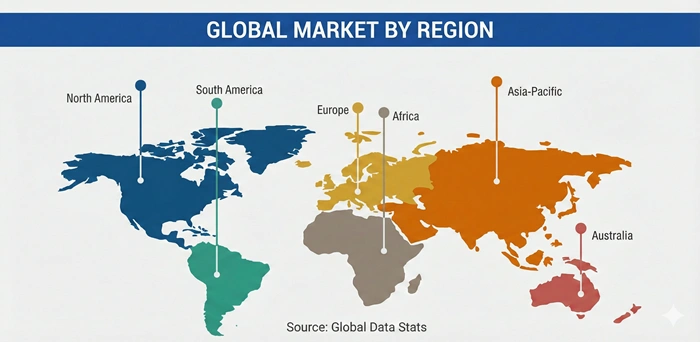
North America leads the secure web gateway market with an estimated 37% revenue share in 2025, supported by high enterprise cybersecurity spending, early cloud adoption, and stringent data protection regulations.
-
Asia Pacific is the fastest-growing region, projected to expand at a CAGR near 23% through 2033, driven by rapid digital transformation, rising cyberattack incidents, and growing cloud infrastructure investment across China and India.
-
Large enterprises represent the largest customer base, deploying comprehensive gateway security solutions to protect complex, geographically distributed workforces.
-
BFSI and IT and telecom sectors contribute the most to overall demand, as these industries handle highly sensitive data and face frequent targeted cyberattacks.
-
Cloud-based deployment remains the most widely adopted process, valued for its scalability and ability to protect remote and hybrid workers without on-premises infrastructure.
-
The small and medium enterprise segment is projected to grow fastest going forward, expected to hold close to 30% market share by 2033 while expanding at a CAGR near 21% during the forecast period.
Market Scope
| Report Coverage Details | Details |
|---|---|
| Dominating Region | North America |
| Fastest Growing Region | Asia Pacific |
| Base Year | 2025 |
| Forecast Period | 2026 to 2033 |
| Segments Covered | By Component, By Deployment Mode, By Organization Size, By Industry Vertical, By Region |
| Regions Covered | North America, Europe, Asia Pacific, Latin America, Middle East & Africa |
Market Dynamics
Drivers Impact Analysis
Rising Ransomware Threats and Hybrid Work Adoption Are the Most Commercially Significant Drivers of Market Growth
| Driver | (≈) % Impact on CAGR Forecast | Geographic Relevance | Impact Timeline |
|---|---|---|---|
| Escalating ransomware and web-based malware attacks | ~35% | Global, led by North America and Europe | Short to long-term |
| Permanent shift toward hybrid and remote work models | ~28% | North America, Europe | Short to medium-term |
| Industry convergence toward SASE and zero trust architecture | ~22% | Global | Medium to long-term |
| Rising regulatory pressure around data protection compliance | ~15% | Europe, North America | Ongoing |
The relentless rise in ransomware and web-based malware attacks remains the most powerful driver behind sustained investment in the secure web gateway market, as attackers increasingly exploit compromised websites and malicious links as an entry point into corporate networks. This persistent threat landscape ensures that gateway security spending remains a protected budget priority for most enterprises regardless of broader economic conditions.
The permanent shift toward hybrid and remote work is a second significant driver, as organizations require consistent security enforcement for users connecting from outside traditional office networks. Combined with the broader industry convergence toward Secure Access Service Edge architecture that bundles gateway protection with other cloud security services, these drivers together sustain strong, multi-year demand across both large enterprises and increasingly, smaller organizations adopting cloud-delivered security for the first time.
Restraints Impact Analysis
Integration Complexity and Latency Concerns Are the Two Primary Constraints Limiting Faster Market Growth
| Restraint | (≈) % Impact on CAGR Forecast | Geographic Relevance | Impact Timeline |
|---|---|---|---|
| Integration complexity with existing legacy network infrastructure | ~34% | Global | Short to medium-term |
| Latency concerns affecting user experience with cloud-routed traffic | ~30% | Global | Short-term |
| Budget constraints among small and mid-sized organizations | ~22% | Latin America, MEA, parts of Asia Pacific | Medium-term |
| Shortage of skilled network security professionals | ~14% | North America, Europe | Ongoing |
Integrating cloud-delivered secure web gateways with existing legacy network infrastructure remains a meaningful challenge for many organizations, particularly those with complex, multi-vendor security environments built up over many years. This integration complexity can slow deployment timelines and increase the total cost of ownership for enterprises transitioning away from traditional hardware-based appliances.
Latency concerns associated with routing all internet traffic through cloud-based inspection points also create friction, particularly for organizations with performance-sensitive applications or users in regions with limited cloud infrastructure proximity. Budget constraints among smaller organizations further limit adoption of more advanced, fully-featured gateway platforms in cost-sensitive markets. These restraints do not reverse the underlying growth trend but do moderate the near-term pace at which the secure web gateway market can scale in resource-constrained environments.
Opportunities Impact Analysis
AI-Driven Threat Intelligence and SASE Platform Consolidation Represent the Most Significant Untapped Growth Opportunities
| Opportunity | (≈) % Impact on CAGR Forecast | Geographic Relevance | Impact Timeline |
|---|---|---|---|
| AI-driven threat intelligence and adaptive policy enforcement | ~37% | Global | Short to medium-term |
| Consolidation of gateway security into unified SASE platforms | ~34% | North America, Europe | Medium to long-term |
| Expansion of cloud security adoption in emerging economies | ~29% | Asia Pacific, Latin America, MEA | Medium to long-term |
Integrating advanced AI-driven threat intelligence into gateway platforms presents a major opportunity for vendors to differentiate their offerings and reduce false positive rates that have historically burdened security teams. Companies that can demonstrate measurably superior detection accuracy through machine learning are increasingly winning competitive evaluations against legacy signature-based providers.
Consolidation of secure web gateway capabilities into unified Secure Access Service Edge platforms represents a second major growth avenue, as enterprises increasingly prefer single-vendor security stacks over managing multiple point solutions. Vendors that successfully build or acquire complementary capabilities such as cloud access security brokers and zero trust network access stand to capture a growing share of enterprise security budgets. Emerging economies across Asia Pacific and Latin America also represent significant expansion opportunities as cloud infrastructure investment accelerates and local enterprises increasingly prioritize cybersecurity modernization within the broader secure web gateway market.
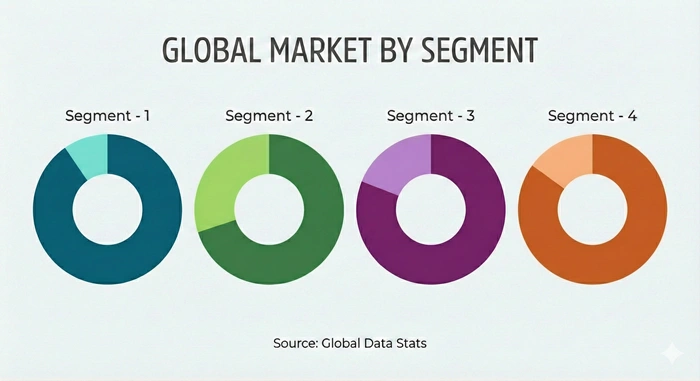
Segment Analysis
By Deployment Mode
Cloud-Based Deployment Commands the Largest Share Within Secure Web Gateway Solutions
Cloud-based deployment holds the largest share of the secure web gateway market, accounting for roughly 68% of total deployment revenue with a CAGR near 21% through 2033. Enterprises increasingly favor cloud-delivered gateways because they extend consistent security policy enforcement to remote and hybrid workers without requiring traffic to be routed through a central data center. North America leads this segment because of its high concentration of cloud-native enterprises and early adoption of Secure Access Service Edge architecture. Leading companies operating in this space include Zscaler, Netskope, and Cisco, each holding substantial market share through established cloud security platforms serving large global enterprises.
On-premises deployment remains a smaller but still meaningful segment, particularly among highly regulated industries and government agencies that require strict control over data residency and network traffic inspection. This segment continues to see steady demand across Europe, where data sovereignty regulations often require sensitive traffic to remain within specific jurisdictional boundaries. Companies such as Broadcom, through its Symantec enterprise security division, and Forcepoint maintain strong positions serving these compliance-driven on-premises requirements. Growing enterprise preference for hybrid deployment models that combine cloud scalability with selective on-premises control continues to reinforce demand across both segments within the secure web gateway market.
By Organization Size
Large Enterprises Lead Adoption While Small and Medium Enterprises Represent the Fastest-Growing Customer Segment
Large enterprises account for the largest share of secure web gateway market revenue, supported by their complex, geographically distributed workforces and substantial dedicated cybersecurity budgets that allow comprehensive gateway deployment across every business unit. These organizations typically require advanced customization, granular policy controls, and integration with broader security operations infrastructure, favoring established vendors capable of supporting enterprise-scale deployments. Companies including Palo Alto Networks and Fortinet have built strong positions serving large enterprise customers through comprehensive, feature-rich platform offerings.
Small and medium enterprises represent the fastest-growing organization-size segment, expected to expand at a CAGR near 21% as cloud-delivered gateway solutions become increasingly affordable and easier to deploy without dedicated IT security staff. Asia Pacific is showing particularly strong growth in this segment, driven by rapidly expanding small business digitalization and growing cyberattack awareness across the region. Vendors offering simplified, subscription-based gateway packages tailored to smaller organizations are well positioned to capture this expanding customer base as cybersecurity adoption broadens beyond large enterprises within the secure web gateway market.
Regional Insights
North America
High Cybersecurity Spending and Early Cloud Adoption Keep North America at the Top of the Secure Web Gateway Market
North America commands the largest share of the global secure web gateway market, holding close to 37% of total revenue in 2025 with a regional CAGR near 17% through 2033. High enterprise cybersecurity spending, stringent data protection regulations, and early adoption of cloud-native security architecture keep demand consistently strong throughout the region. Leading companies such as Zscaler and Cisco Systems, both headquartered in the United States, dominate cloud gateway and security platform contracts across major enterprise and government customers.
The region's mature regulatory environment, combined with a dense concentration of technology companies driving early adoption of Secure Access Service Edge architecture, further reinforces this leadership position within the gateway security landscape. Large financial institutions and technology companies routinely integrate advanced gateway security into broader zero trust network access strategies. This combination of spending capacity, regulatory rigor, and technology maturity ensures North America remains the anchor region for secure web gateway revenue generation over the coming years.
Asia Pacific
Rapid Digital Transformation and Rising Cyberattack Incidents Make Asia Pacific the Fastest-Growing Region
Asia Pacific is the fastest-growing region in the secure web gateway market, projected to expand at a CAGR near 23% through 2033 while currently holding around 21% of global revenue share. Rapid digital transformation, rising cyberattack incidents, and growing cloud infrastructure investment across China and India are together driving this accelerated regional growth. Companies such as Trend Micro in Japan and various regional cloud security providers are scaling operations rapidly to meet surging demand for gateway security solutions across the region.
Growing government emphasis on national cybersecurity frameworks, combined with expanding enterprise cloud migration across emerging Asia Pacific economies, continues to widen the region's addressable opportunity for gateway security vendors. Japan, South Korea, and Australia are also contributing meaningfully through mature enterprise IT security spending and growing regulatory focus on data protection. As cloud infrastructure expands further and local enterprise cybersecurity awareness increases, Asia Pacific is expected to narrow its overall revenue gap with North America over the coming several years within the broader secure web gateway market.
Customization Available for This Report
Region-wise and country-wise customized reports are available for organizations seeking deeper geographic insight into the secure web gateway market. Our research team can tailor market analysis, competitive intelligence, trends, and growth opportunities specifically for any of the regions and countries listed below, offering detailed information aligned to your selected market and keyword combination.
North America
-
U.S., Canada, Mexico — detailed enterprise cybersecurity spending trends and competitive positioning
Europe
-
U.K., Germany, France, Italy, Rest of Europe — data sovereignty regulations, compliance trends, and key player analysis
Asia Pacific
-
China, India, Japan, South Korea, Australia, Rest of Asia Pacific — cloud infrastructure investment, cyberattack trends, and local vendor capacity
Latin America
-
Brazil, Argentina, Rest of Latin America — emerging cloud security adoption and market entry opportunities
Middle East & Africa
-
UAE, Saudi Arabia, Rest of MEA — national cybersecurity initiatives and regional vendor partnerships
Top Key Players
-
Zscaler Inc. (United States)
-
Cisco Systems Inc. (United States)
-
Broadcom Inc. (United States)
-
Netskope Inc. (United States)
-
Fortinet Inc. (United States)
-
Palo Alto Networks Inc. (United States)
-
Forcepoint LLC (United States)
-
Trend Micro Incorporated (Japan)
-
McAfee Corp. (United States)
-
Barracuda Networks Inc. (United States)
-
Check Point Software Technologies Ltd. (Israel)
-
Cloudflare Inc. (United States)
-
Skyhigh Security LLC (United States)
-
Iboss Inc. (United States)
Recent Developments
-
In 2025, Zscaler expanded its AI-powered threat detection capabilities across its cloud security platform, aiming to reduce false positive rates and improve real-time malware identification for enterprise customers.
-
In 2025, Netskope completed a strategic acquisition to strengthen its data loss prevention capabilities within its Secure Access Service Edge platform.
-
In 2025, Cisco Systems deepened integration between its Umbrella cloud security platform and its broader zero trust network access portfolio, simplifying deployment for enterprise customers.
-
In 2026, Fortinet launched enhanced gateway security features designed to improve visibility and policy enforcement across hybrid cloud environments.
-
In 2026, Palo Alto Networks expanded its Prisma Access platform capabilities, strengthening its competitive position in the converged SASE and gateway security market.
Market Trends
Convergence of AI Threat Intelligence, SASE Architecture, and Zero Trust Principles Is Reshaping the Secure Web Gateway Landscape
One of the clearest trends shaping the industry is the accelerating shift toward Secure Access Service Edge architecture, which bundles secure web gateway functionality with cloud access security brokers, zero trust network access, and firewall-as-a-service into a single, unified cloud platform. This is replacing the earlier approach of deploying multiple standalone point security products, pushing enterprises to favor vendors capable of delivering comprehensive, integrated security stacks.
A second notable trend is the growing reliance on AI-driven behavioral analysis to detect previously unknown threats that traditional signature-based filtering cannot catch, particularly sophisticated phishing and command-and-control traffic designed to evade conventional detection rules. As AI threat intelligence capabilities mature and become standard across gateway platforms, adoption is expanding beyond large enterprises into small and mid-sized organizations, reinforcing sustained long-term demand growth across the secure web gateway market.
Segments Covered in the Report
By Component
-
Solutions
-
Services
By Deployment Mode
-
Cloud
-
On-Premises
By Organization Size
-
Large Enterprises
-
Small and Medium Enterprises
By Industry Vertical
-
BFSI
-
Healthcare
-
IT and Telecom
-
Retail
-
Government
-
Others
By Region
-
North America (U.S., Canada, Mexico)
-
Europe (U.K., Germany, France, Italy, Rest of Europe)
-
Asia Pacific (China, India, Japan, South Korea, Australia, Rest of Asia Pacific)
-
Latin America (Brazil, Argentina, Rest of Latin America)
-
Middle East and Africa (UAE, Saudi Arabia, Rest of MEA)
❝ Built for Every Level — From Startups to Industry Giants ❞
Here Is Exactly How This Report Works for You
-
For tier 1 cybersecurity vendors and institutional investors, this report delivers granular competitor revenue analysis across Zscaler, Cisco Systems, and Netskope, alongside geopolitical and regulatory risk assessment supporting confident investment and acquisition decisions.
-
For tier 2, tier 3 companies, cybersecurity startups, and mid-level vendors, this report identifies the highest-growth deployment models and most commercially accessible regional markets, offering an evidence-based roadmap for entering or expanding within the secure web gateway market.
-
For all decision-makers across the network security value chain, this report translates complex supply-demand shifts and evolving compliance requirements into clear, actionable strategic intelligence supporting stronger product development and go-to-market decisions through 2033.
Frequently Asked Questions
Question 1: What is the current size of the secure web gateway market and how large will it grow by 2033?
Answer: The secure web gateway market was valued at USD 16.14 billion in 2025. It is projected to reach approximately USD 67.55 billion by 2033 at a CAGR of 18.99%.
Question 2: Which region leads the secure web gateway market today?
Answer: North America leads the secure web gateway market with roughly 37% revenue share. High cybersecurity spending and early cloud adoption support this position.
Question 3: Which region is growing the fastest in the secure web gateway market?
Answer: Asia Pacific is the fastest-growing region in the secure web gateway market. Rapid digital transformation and rising cyberattack incidents are driving this expansion.
Question 4: Who are the leading companies in the secure web gateway market?
Answer: Zscaler, Cisco Systems, and Netskope are top companies in the secure web gateway market. They lead through strong cloud security and SASE platform capabilities.
Question 5: Which deployment mode is most popular in the secure web gateway market?
Answer: Cloud-based deployment is the most widely adopted mode in the secure web gateway market. It offers scalability and consistent protection for remote and hybrid workers.