
Scaffold Technology Market Overview
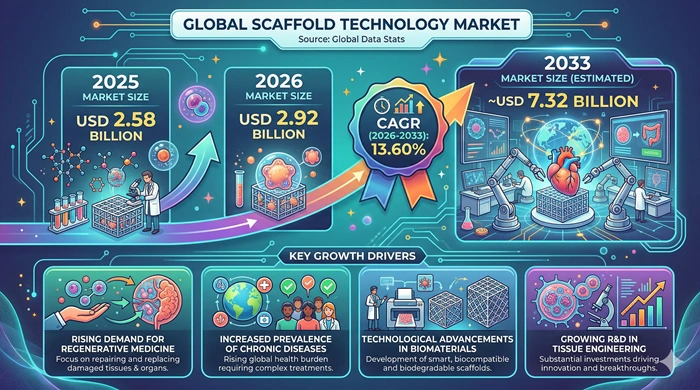
The global Scaffold Technology market size is valued at USD 2.58 billion in 2025 and is predicted to increase from USD 2.92 billion in 2026 to approximately USD 7.32 billion by 2033, growing at a CAGR of 13.60% from 2026 to 2033.
Scaffold technology refers to the design, engineering, and application of three-dimensional structural frameworks — constructed from natural biomaterials, synthetic polymers, bioceramics, or composite combinations — that serve as temporary or permanent physical substrates to support cell attachment, proliferation, differentiation, and organized tissue formation in regenerative medicine, tissue engineering, drug discovery, and biomedical research applications. Once a highly specialized academic research discipline, scaffold technology has progressively matured into a commercially significant and clinically relevant biomedical engineering field — with scaffold-based tissue constructs advancing through clinical development pipelines for bone repair, cartilage regeneration, skin wound healing, cardiovascular tissue engineering, and nerve repair. The Scaffold Technology market is experiencing exceptional and accelerating growth driven by the expanding regenerative medicine industry, rising prevalence of chronic tissue and organ failure conditions, rapid advances in biomaterial science and 3D bioprinting manufacturing technology, and the growing adoption of scaffold platforms in pharmaceutical drug testing and organ-on-a-chip research.
AI Impact on the Scaffold Technology Industry
Artificial Intelligence Is Transforming Scaffold Design Optimization, Biomaterial Formulation Discovery, Cell-Scaffold Interaction Modeling, and Personalized Tissue Engineering Construct Development in Ways That Are Meaningfully Accelerating Research Progress and Clinical Translation*
Artificial intelligence is making a profound and rapidly accelerating impact across the Scaffold Technology market, most transformatively through the application of machine learning and generative design algorithms to scaffold architecture optimization — where AI platforms analyze vast computational datasets of structural geometry parameters, mechanical property outcomes, porosity characteristics, and biological cell response data to identify optimal scaffold design configurations that maximize cell infiltration, nutrient diffusion, vascularization support, and tissue formation outcomes for specific clinical target applications. Traditional scaffold design has historically relied on iterative empirical experimentation — a slow, resource-intensive process that explores only a fraction of the possible design space — while AI-assisted computational design tools can rapidly screen millions of virtual scaffold configurations to identify promising candidates for physical prototyping and experimental validation, dramatically compressing the design cycle and improving the quality of scaffold constructs that advance through experimental pipelines. Leading academic research groups and commercial scaffold companies are increasingly deploying these AI-assisted design tools to develop next-generation scaffold architectures with superior biological performance for demanding tissue engineering applications.
AI is also accelerating the discovery and optimization of novel biomaterial formulations for scaffold construction — with machine learning models trained on large materials property and biocompatibility datasets being applied to predict the biological response characteristics, degradation kinetics, mechanical properties, and cell adhesion performance of new polymer formulations and natural biomaterial combinations before physical synthesis and laboratory testing. These predictive AI capabilities are particularly valuable for identifying promising composite scaffold material combinations — where the interaction effects between multiple material components are complex and difficult to predict from first principles — enabling biomaterials researchers to focus their experimental resources on the most promising candidate formulations identified by AI screening rather than conducting exhaustive combinatorial experimental campaigns. The integration of AI tools into scaffold technology research and product development workflows is progressively becoming a competitive necessity for organizations seeking to maintain research productivity and commercial innovation speed in an increasingly competitive global scaffold technology landscape.
Growth Factors
Expanding Regenerative Medicine Clinical Pipeline, Rising Chronic Tissue Failure Disease Burden, 3D Bioprinting Manufacturing Advances, and Growing Pharmaceutical Drug Discovery Scaffold Platform Adoption Are the Core Growth Drivers*
The most foundational driver of the Scaffold Technology market is the extraordinary and sustained global investment in regenerative medicine and tissue engineering research — encompassing both academic basic science programs and clinical-stage product development pipelines that are progressively advancing scaffold-based tissue constructs from laboratory concepts through preclinical validation, clinical trials, and regulatory approval toward commercial therapeutic application. The global regenerative medicine investment landscape is exceptionally vibrant — with government research funding agencies, venture capital firms, pharmaceutical and medical device companies, and academic medical centers collectively investing billions of dollars annually in tissue engineering and scaffold technology R&D programs that are generating a rich and maturing pipeline of scaffold-based therapeutic products across musculoskeletal, cardiovascular, dermal, neural, and organ regeneration application categories. This investment intensity is translating into accelerating research publication output, growing clinical trial activity, and increasing numbers of scaffold-based products advancing toward regulatory approval — all of which drive demand for research-grade and clinical-grade scaffold materials, tools, and services that generate commercial revenue in the Scaffold Technology market.
The rapidly advancing capabilities of 3D bioprinting and additive manufacturing technology represent a particularly transformative enabling force for scaffold technology commercialization — as these platforms enable the fabrication of anatomically precise, patient-specific scaffold architectures with complex internal geometries, gradient porosity structures, and multi-material compositions that are impossible to achieve through conventional scaffold manufacturing methods including freeze-drying, electrospinning, and particulate leaching. The convergence of 3D bioprinting hardware advances — including improved printer resolution, multi-material printing capability, and cell-compatible bioink processing — with sophisticated scaffold design software and an expanding library of printable biomaterial formulations is enabling scaffold manufacturers to produce highly customized constructs for both research and clinical applications with unprecedented speed, reproducibility, and geometric precision. This 3D bioprinting technology revolution is simultaneously expanding the application range of scaffold technology into new clinical and research domains and improving the commercial scalability of scaffold product manufacturing in ways that are critically important for the transition from research use to high-volume clinical supply.
Market Outlook
With Regenerative Medicine Clinical Approvals Accelerating, 3D Bioprinting Scaffold Manufacturing Maturing, Organ-on-a-Chip Drug Discovery Platform Adoption Growing, and Emerging Market Research Investment Expanding, the Scaffold Technology Market Outlook Is Exceptionally Positive Through 2033*
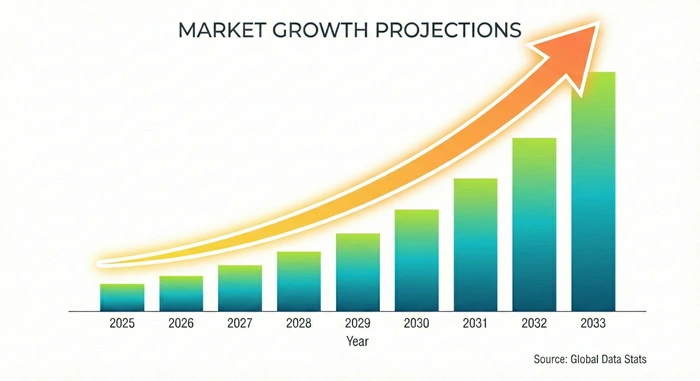
The long-term outlook for the Scaffold Technology market is exceptionally positive and supported by a powerful combination of scientific, clinical, and commercial progress indicators that collectively point toward sustained strong growth throughout the 2026–2033 forecast period. The advancing clinical approval landscape for scaffold-based regenerative medicine products — with multiple bone repair, skin regeneration, and cartilage tissue engineering products receiving regulatory authorization in the United States, European Union, Japan, and South Korea in recent years — is generating increasing clinical revenue streams for scaffold product manufacturers and providing powerful evidence of commercial viability that is attracting further investment into scaffold technology development programs. As additional scaffold-based products complete clinical development and receive regulatory approval during the forecast period — particularly in the high-value cardiovascular, neural, and solid organ regeneration application categories — the commercial revenue base of the Scaffold Technology market will expand significantly beyond its current predominance in research and early clinical application revenue.
The extraordinary and rapidly growing adoption of scaffold platforms in pharmaceutical drug discovery and preclinical drug testing represents an increasingly important commercial growth dimension of the Scaffold Technology market that extends well beyond the regenerative medicine therapeutic application focus. Three-dimensional cell culture scaffold systems — which enable pharmaceutical researchers to culture primary human cells and disease-relevant cell lines in physiologically realistic three-dimensional environments that more accurately replicate in vivo drug response behavior than conventional two-dimensional cell culture models — are progressively being adopted as standard research platforms by pharmaceutical and biotechnology companies seeking to improve the predictive validity of preclinical drug efficacy and toxicity testing. As the pharmaceutical industry's recognition of the superiority of 3D scaffold culture platforms over 2D models for drug response prediction translates into progressively broader adoption of scaffold-based drug testing systems, this pharmaceutical research application segment will become an increasingly significant and commercially stable revenue source for scaffold technology suppliers throughout the forecast period.
Expert Speaks
-
Leonard Schleifer, CEO, Regeneron Pharmaceuticals — "The intersection of regenerative biology, advanced biomaterials, and precision manufacturing technology represented by scaffold-based tissue engineering is one of the most scientifically exciting and clinically important frontiers in biomedical research today — with the potential to fundamentally transform how we repair and replace damaged tissues and organs. Regeneron is actively monitoring and investing in areas where scaffold technology intersects with our biologics platform and gene therapy programs to address unmet clinical needs in tissue repair and regeneration."
-
Giovanni Caforio, CEO, Bristol Myers Squibb — "Three-dimensional scaffold culture platforms are increasingly recognized within the pharmaceutical industry as essential tools for improving the physiological relevance and predictive accuracy of preclinical drug testing programs — particularly for oncology drug candidates where tumor microenvironment modeling accuracy has historically been a major limitation of conventional 2D cell culture screening approaches. BMS is actively integrating advanced 3D culture and scaffold platforms into our drug discovery workflows to improve the quality of our preclinical research data and the efficiency of our development pipelines."
-
Paul Stoffels, CEO, UCB — "The scaffold technology and tissue engineering field is generating extraordinary scientific progress that is translating into real clinical products capable of addressing some of the most challenging and high-burden tissue repair conditions for which conventional pharmacological therapies remain inadequate. We see significant long-term strategic opportunity in the convergence of scaffold-based tissue engineering with biological and genetic medicine approaches to create next-generation combination products for complex tissue repair applications."
Key Report Takeaways
-
North America dominates the Scaffold Technology market, holding approximately 41.80% of global market share in 2025, driven by the world's largest regenerative medicine and tissue engineering research investment base, the most advanced clinical scaffold product development pipelines, the highest concentration of scaffold technology companies and research institutions, strong NIH and DARPA government research funding programs, and the most commercially developed pharmaceutical drug discovery market with strong 3D scaffold platform adoption.
-
Asia Pacific is the fastest-growing regional market for scaffold technology, projected to expand at a CAGR of approximately 15.40% from 2026 to 2033, driven by rapidly expanding biomedical research investment across China, Japan, South Korea, and India, growing domestic regenerative medicine industry development, government-sponsored stem cell and tissue engineering research programs, and the expanding pharmaceutical and biotechnology sectors generating growing demand for advanced 3D scaffold drug testing platforms.
-
Synthetic polymers are the dominant material segment, accounting for approximately 38.20% of total market revenue in 2025, reflecting their broad application versatility, precisely tunable mechanical and degradation properties, consistent manufacturing quality, and scalable production economics — with materials including poly(lactic acid), poly(glycolic acid), PLGA copolymers, and polycaprolactone forming the backbone of the most widely used research and clinical scaffold products globally.
-
Bone and cartilage repair is the largest application segment, contributing approximately 34.60% of total market revenue in 2025, driven by the enormous global prevalence of bone fractures, osteoporotic bone loss, osteoarthritis cartilage defects, and orthopedic reconstruction needs — generating the largest and most commercially developed clinical demand for scaffold-based tissue engineering solutions across all application categories.
-
3D scaffolds are the fastest-growing type segment, projected to expand at a CAGR of approximately 16.20% through 2033, driven by the accelerating adoption of 3D bioprinting manufacturing technology, growing recognition of 3D scaffold platforms' superior biological performance over conventional 2D systems, and expanding clinical application of 3D-printed patient-specific scaffold constructs for bone reconstruction, craniofacial repair, and complex tissue defect management.
-
Biotechnology and pharmaceutical companies are the fastest-growing end-user segment, expected to expand at a CAGR of approximately 17.80% through 2033, driven by the rapidly growing industry adoption of 3D scaffold cell culture systems for drug discovery screening, toxicology testing, disease modeling, and cancer biology research — representing one of the most commercially compelling and rapidly growing application areas in the scaffold technology industry.
Market Scope
| Report Coverage | Details |
|---|---|
| Market Size by 2033 | USD 7.32 Billion |
| Market Size by 2025 | USD 2.58 Billion |
| Market Size by 2026 | USD 2.92 Billion |
| Market Growth Rate (2026–2033) | CAGR of 13.60% |
| Dominating Region | North America |
| Fastest Growing Region | Asia Pacific |
| Base Year | 2025 |
| Forecast Period | 2026–2033 |
| Segments Covered | Material, Type, Application, End User |
| Regions Covered | North America, Europe, Asia Pacific, Latin America, Middle East & Africa |
Market Dynamics
Drivers Impact Analysis
Regenerative Medicine Investment Expansion, 3D Bioprinting Advances, Rising Tissue Failure Disease Burden, and Pharmaceutical Drug Discovery Scaffold Adoption Are the Four Pillars of Scaffold Technology Market Growth*
| Driver | ≈ % Impact on CAGR Forecast | Geographic Relevance | Impact Timeline |
|---|---|---|---|
| Expanding regenerative medicine research investment and clinical pipeline advancement | ~36% | North America, Europe, Asia Pacific | Short to Long-term |
| 3D bioprinting technology advances enabling complex scaffold fabrication | ~28% | North America, Europe | Short to Long-term |
| Rising chronic disease burden driving tissue repair and organ regeneration demand | ~24% | Global | Short to Long-term |
| Pharmaceutical drug discovery adoption of 3D scaffold culture platforms | ~12% | North America, Europe | Short to Medium-term |
The most enduring and commercially significant driver of the Scaffold Technology market is the extraordinary and globally expanding investment in regenerative medicine research and clinical product development — where the convergence of stem cell biology advances, biomaterial science innovation, gene editing tools, and precision manufacturing technology is progressively translating decades of academic tissue engineering research into clinically validated and commercially viable scaffold-based therapeutic products. Government health research agencies in the United States (NIH, DARPA), European Union (Horizon Europe), Japan (AMED), South Korea, and China are collectively funding tissue engineering research at unprecedented levels — reflecting a broad scientific and policy consensus that scaffold-based regenerative medicine represents one of the most promising long-term strategies for addressing the enormous unmet clinical need for tissue and organ repair solutions that conventional pharmaceutical approaches cannot adequately address. This government research funding sustains an exceptionally rich academic research pipeline that continuously generates new scaffold technology innovations, trained researchers, and startup company formation activity that collectively feed the commercial development of the Scaffold Technology market.
The rapid commercial maturation of 3D bioprinting technology — and its progressive application to scaffold fabrication across both research and clinical contexts — is simultaneously expanding the application range of scaffold technology, improving the performance of scaffold constructs, and enhancing the manufacturing scalability of scaffold products in ways that are critically enabling for commercial market growth. Desktop and industrial 3D bioprinters from companies including Organovo, CELLINK (Biotechnik), Stratasys, and 3D Systems are enabling researchers and clinical manufacturers to produce scaffold architectures with precisely controlled pore geometry, gradient structural properties, and multi-material compositions that more accurately replicate the complex architectural features of native tissue extracellular matrix — improving cell behavior, vascularization capacity, and ultimately the functional tissue formation outcomes of scaffold constructs. As 3D bioprinting hardware costs continue to decline, print resolution improves, and the library of printable biomaterial formulations expands, the technology is expected to become increasingly standard in both research and clinical scaffold production workflows throughout the 2026–2033 forecast period.
Restraints Impact Analysis
High Regulatory Approval Complexity for Clinical Scaffold Products, Vascularization and Scale-Up Technical Challenges, High Manufacturing Costs, and Reimbursement Uncertainty Restrain Faster Clinical Market Growth*
| Restraint | ≈ % Impact on CAGR Forecast | Geographic Relevance | Impact Timeline |
|---|---|---|---|
| Complex and lengthy regulatory approval pathway for clinical scaffold-based products | ~35% | North America, Europe | Short to Long-term |
| Persistent vascularization and scale-up technical challenges for thick tissue constructs | ~30% | Global | Short to Long-term |
| High manufacturing cost of research-grade and clinical-grade scaffold products | ~22% | Global | Short to Medium-term |
| Reimbursement uncertainty for novel scaffold-based regenerative medicine treatments | ~13% | North America, Europe | Short to Medium-term |
The most significant commercial constraint on the clinical translation and revenue scaling of the Scaffold Technology market is the extraordinary complexity and length of the regulatory approval pathway for scaffold-based tissue engineering products — which are typically regulated as combination products or advanced therapy medicinal products (ATMPs) in the EU and as biologics or medical devices in the United States, requiring extensive preclinical safety and efficacy data packages, complex manufacturing quality documentation, and time-consuming clinical trial programs before regulatory authorization for clinical use. The regulatory uncertainty and cost associated with bringing scaffold-based therapeutic products to market is substantially greater than for conventional pharmaceutical or medical device products — creating a high-investment, high-risk commercial development environment that requires deep capital resources and long development timelines that many small scaffold technology companies struggle to sustain. This regulatory complexity restrains the pace of clinical scaffold product approvals and consequently limits the growth of the highest-value clinical application segment of the Scaffold Technology market relative to its scientific potential.
The fundamental biological engineering challenge of achieving adequate vascularization within thick three-dimensional scaffold constructs — enabling oxygen and nutrient delivery to cells throughout the full depth of the scaffold structure — remains an important and not yet fully resolved technical barrier to the clinical application of large-volume scaffold-based tissue constructs for solid organ repair and reconstruction. Cells more than a few hundred micrometers from the nearest vascular supply face hypoxic and nutrient-depleted conditions that impair their survival, function, and tissue formation capacity — a limitation that constrains the clinical practicality of scaffold-based approaches for applications requiring large-volume vascularized tissue constructs such as heart muscle repair, liver tissue engineering, and kidney reconstruction. Research groups worldwide are actively pursuing vascularization solutions including pre-formed vascular channel architectures, angiogenic growth factor delivery from scaffolds, and in vitro prevascularization strategies — but fully effective and clinically scalable vascularization approaches for thick scaffold constructs have not yet been broadly demonstrated, representing a persistent technical restraint on the expansion of scaffold technology into the largest-volume regenerative medicine clinical applications.
Opportunities Impact Analysis
Organ-on-a-Chip Pharmaceutical Research Platform Growth, Personalized Patient-Specific Scaffold Manufacturing, Emerging Market Research Infrastructure Expansion, and Scaffold-Biologic Combination Product Development Create Major Opportunities*
| Opportunity | ≈ % Impact on CAGR Forecast | Geographic Relevance | Impact Timeline |
|---|---|---|---|
| Organ-on-a-chip and microphysiological system platform commercial adoption | ~34% | North America, Europe | Short to Medium-term |
| Patient-specific personalized scaffold manufacturing via 3D bioprinting | ~28% | North America, Europe, Asia Pacific | Short to Long-term |
| Emerging market biomedical research infrastructure driving scaffold product first adoption | ~26% | Asia Pacific, Latin America | Medium to Long-term |
| Scaffold-biologic and scaffold-gene therapy combination product development | ~12% | North America, Europe | Medium to Long-term |
The organ-on-a-chip and microphysiological system platform market — where scaffold technology provides the three-dimensional structural architecture supporting the culture of organ-representative cell assemblies in microfluidic device environments — represents one of the most commercially compelling and rapidly growing application opportunities in the broader Scaffold Technology market. Pharmaceutical companies are under strong commercial and regulatory pressure to improve the human-predictive accuracy of their preclinical drug testing programs — reducing the high late-stage clinical trial failure rates that result from inadequate preclinical pharmacology and toxicology data — and organ-on-a-chip platforms incorporating advanced scaffold-supported 3D cell culture systems are demonstrating progressively stronger evidence of human-relevant drug response prediction in cardiovascular, hepatic, renal, pulmonary, and intestinal model applications. Companies including Emulate, CN Bio, Mimetas, and Hesperos are building commercially significant organ-on-a-chip businesses that generate growing and recurring demand for specialized scaffold materials and microarchitectural components — creating a high-growth B2B commercial opportunity for scaffold technology suppliers with expertise in microfluidic-compatible biomaterial products.
The progressive realization of truly patient-specific scaffold manufacturing — combining medical imaging data from CT or MRI scans of individual patient anatomy with CAD design tools and 3D bioprinting fabrication systems to produce scaffold constructs precisely matched to each patient's defect geometry and anatomical requirements — represents a transformative clinical opportunity that is expected to become progressively more accessible and commercially relevant during the forecast period. Patient-specific scaffold constructs offer potential clinical advantages over standard off-the-shelf scaffold products — including superior defect fill geometry, improved mechanical fit with surrounding native tissue, and the ability to incorporate patient-derived cells for autologous tissue engineering approaches — that are expected to justify premium pricing and generate strong clinical adoption in high-complexity orthopedic reconstruction, craniofacial repair, and soft tissue defect management applications. As 3D bioprinting manufacturing platforms become faster, more accessible, and better integrated with clinical imaging and design workflows, the commercial viability of patient-specific scaffold manufacturing will improve substantially — expanding the addressable clinical market for scaffold technology beyond standardized product categories.
Segment Analysis
By Material
Synthetic Polymers Dominate the Scaffold Technology Market Material Segment While Natural Biomaterials Register Strong Growth Driven by Superior Biocompatibility Advantages*
Synthetic polymers hold the dominant material position in the Scaffold Technology market, accounting for approximately 38.20% of total global market revenue in 2025, reflecting their unmatched versatility in terms of mechanical property tunability, degradation rate control, manufacturing scalability, and chemical modification capability that collectively make them the most broadly applicable scaffold material category across the full spectrum of tissue engineering research and clinical application contexts. Biodegradable synthetic polymers — particularly poly(lactic acid) (PLA), poly(glycolic acid) (PGA), PLGA copolymers, and polycaprolactone (PCL) — represent the dominant scaffold material choices for bone and cartilage tissue engineering, drug delivery scaffold applications, and 3D-printed surgical scaffold constructs, where their well-characterized degradation kinetics, processability into complex architectures, and extensive regulatory approval histories provide important commercial and clinical advantages. North America is the largest regional market for synthetic polymer scaffold materials — driven by the concentration of academic tissue engineering research and clinical scaffold product development — while Asia Pacific is the fastest-growing region as domestic biomaterial science research and manufacturing capability expands. Leading companies including Evonik Industries, Corbion, and Sigma-Aldrich (Merck) are major suppliers of medical-grade biodegradable polymer raw materials for scaffold fabrication.
Natural biomaterials — including collagen, gelatin, hyaluronic acid, fibrin, chitosan, alginate, and decellularized extracellular matrix — represent the second-largest and rapidly growing material segment in the Scaffold Technology market, projected to expand at a CAGR of approximately 14.80% from 2026 to 2033, driven by their superior inherent biocompatibility, native cell recognition properties, and ability to present physiologically relevant biochemical signals to cultured cells that more closely replicate the native tissue microenvironment than synthetic alternatives. Natural biomaterial scaffolds are experiencing particularly strong growth in advanced drug discovery applications — including organ-on-a-chip platforms and three-dimensional tumor models — where the biological authenticity of the cell culture environment is critical for achieving human-relevant drug response behavior, and in dermal wound healing and soft tissue repair clinical applications where collagen and hyaluronic acid scaffold products have a well-established regulatory and clinical track record. Europe is the fastest-growing region for natural biomaterial scaffold adoption — driven by strong academic research excellence in biomaterials science, active clinical translation programs, and the region's early leadership in decellularized matrix scaffold product development for clinical tissue engineering applications.
By Application
Bone and Cartilage Repair Leads the Scaffold Technology Market Application Revenue While Drug Testing and Discovery Platforms Register the Fastest Commercial Growth*
Bone and cartilage repair represents the dominant application segment in the Scaffold Technology market, accounting for approximately 34.60% of total global market revenue in 2025, reflecting both the enormous clinical prevalence of skeletal tissue injuries and degenerative conditions and the relative maturity of scaffold-based approaches for musculoskeletal tissue repair compared to other tissue engineering application categories. The global burden of osteoporotic fractures, large bone defects requiring reconstruction, osteoarthritis cartilage loss, osteonecrosis, and craniofacial bone deficiency creates an exceptionally large and commercially compelling patient population with genuine unmet clinical needs for effective tissue engineering solutions that scaffold technology is progressively well-positioned to address. North America dominates bone and cartilage scaffold application revenue globally — driven by the highest per-capita orthopedic and reconstructive surgery volumes and the most advanced clinical scaffold product regulatory environment — while Asia Pacific is experiencing the fastest regional growth as the region's rapidly aging population and expanding orthopedic surgery infrastructure create growing demand for scaffold-based bone repair solutions. Leading commercial participants in the bone and cartilage scaffold application space include Stryker, Medtronic Biologics, DePuy Synthes (Johnson & Johnson), and Integra LifeSciences — all of which offer commercially approved scaffold products for clinical bone repair applications.
Drug testing and discovery represents the fastest-growing application segment in the Scaffold Technology market, projected to expand at a CAGR of approximately 17.40% from 2026 to 2033, driven by the pharmaceutical industry's rapidly growing adoption of three-dimensional scaffold cell culture platforms as superior alternatives to conventional two-dimensional cell culture for preclinical drug efficacy, toxicology, and disease mechanism research. The scientific evidence base demonstrating that cells cultured on 3D scaffold substrates exhibit gene expression patterns, drug sensitivity responses, and disease phenotype characteristics far more representative of in vivo biology than cells grown on conventional flat tissue culture plastic has become sufficiently strong and broadly recognized to motivate pharmaceutical companies to invest in systematic adoption of 3D scaffold platforms across their drug discovery and preclinical testing operations. The commercial scaffold products serving this application category — including standardized 3D collagen gel scaffolds, porous polymer scaffold inserts, and hydrogel scaffold systems from suppliers including Corning Life Sciences, Trevigen, and Advanced BioMatrix — are experiencing exceptional demand growth as pharmaceutical industry 3D culture platform adoption accelerates during the forecast period.
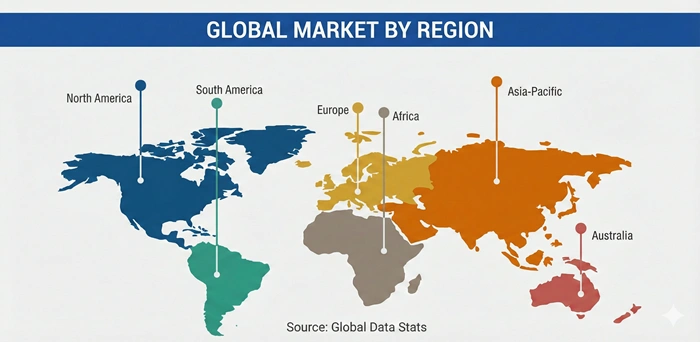
Regional Insights
North America
North America Leads the Global Scaffold Technology Market With the Largest Regenerative Medicine Research Investment, Most Advanced Clinical Product Pipeline, and Strongest Pharmaceutical Drug Discovery Industry Adoption*
North America holds the dominant position in the global Scaffold Technology market, accounting for approximately 41.80% of total global market revenue in 2025, and is projected to maintain steady leadership at a CAGR of approximately 13.20% from 2026 to 2033. The United States is overwhelmingly the primary commercial driver — home to the world's largest and most productive tissue engineering and regenerative medicine research ecosystem, the highest concentration of scaffold technology startup companies and established commercial players, the most active regulatory engagement pathway for advanced therapy products, and the strongest pharmaceutical drug discovery industry that is the leading driver of commercial 3D scaffold culture platform adoption. Leading companies dominating the North American Scaffold Technology market include Corning Life Sciences, Integra LifeSciences, Stryker Biologics, Organogenesis, Axogen, and a growing ecosystem of venture-backed scaffold technology startups developing next-generation scaffold platforms for clinical tissue engineering and drug discovery applications.
Canada contributes meaningfully to North American scaffold technology activity through its strong academic biomedical engineering research programs — particularly at institutions including the University of Toronto, McGill University, and the University of British Columbia — and its growing cluster of scaffold technology companies supported by government innovation funding programs. The North American Scaffold Technology market outlook for 2026–2033 is strongly positive — reinforced by the rich clinical development pipeline, the accelerating pharmaceutical 3D scaffold platform adoption, and continuous government and private sector investment in regenerative medicine research and commercial product development that collectively sustain North America's leadership in the global scaffold technology industry.
Asia Pacific
Asia Pacific Is the Fastest-Growing Scaffold Technology Market, Powered by Expanding Research Investment, Growing Domestic Biomedical Industry Development, and Government-Supported Regenerative Medicine Programs Across China, Japan, South Korea, and India*
Asia Pacific is the fastest-growing regional segment in the Scaffold Technology market, projected to expand at a CAGR of approximately 15.40% from 2026 to 2033 — the highest of any region globally. Japan is the most commercially sophisticated Asia Pacific scaffold technology market — where the government's pioneering conditional early approval regulatory framework for regenerative medicine products has enabled faster clinical translation of scaffold-based tissue engineering therapies and created a commercially active market for advanced therapy products including scaffold-based skin, cartilage, and cardiac tissue constructs. South Korea and China are experiencing exceptional growth in scaffold technology research investment and commercial development — with both governments providing substantial funding for domestic regenerative medicine industry development and stem cell and tissue engineering research programs that are generating growing academic and commercial scaffold product activity. Key companies active in the Asia Pacific Scaffold Technology market include Japan Tissue Engineering Co. Ltd. (J-TEC), CellSeed Inc., Orthofix Medical, and a rapidly growing number of Chinese and South Korean domestic scaffold technology companies supported by government biomedical innovation programs.
India represents a high-potential emerging market for scaffold technology adoption — where rapidly expanding biomedical engineering academic programs, growing biotechnology and pharmaceutical industry investment, and government initiatives supporting domestic regenerative medicine research are building the scientific talent and institutional infrastructure base for meaningful scaffold technology commercial development during the forecast period. Southeast Asian markets including Singapore — which has developed a sophisticated biomedical sciences hub with significant tissue engineering research activity — and Australia — with strong academic regenerative medicine programs and a growing clinical scaffold product market — are additional important contributors to Asia Pacific's scaffold technology growth trajectory. The combination of Japan's commercial maturity, China and South Korea's research investment momentum, and India's emerging potential positions Asia Pacific as the most commercially dynamic regional opportunity in global scaffold technology through 2033.
Top Key Players
-
Corning Incorporated — Corning Life Sciences (United States)
-
Integra LifeSciences Holdings Corporation (United States)
-
Stryker Corporation — Stryker Biologics (United States)
-
Organogenesis Holdings Inc. (United States)
-
Axogen Inc. (United States)
-
CELLINK — Biotechnik AB (Sweden)
-
Collagen Matrix Inc. (United States)
-
Advanced BioMatrix Inc. (United States)
-
Japan Tissue Engineering Co. Ltd. — J-TEC (Japan)
-
CellSeed Inc. (Japan)
-
Nanofiber Solutions LLC (United States)
-
Matricel GmbH (Germany)
Recent Developments
-
Corning Life Sciences (2025) — Expanded its portfolio of three-dimensional scaffold cell culture products with the commercial launch of a new high-throughput Matrigel scaffold microplate platform specifically designed for pharmaceutical drug screening applications — featuring optimized gel concentration formulations for tumor spheroid formation, standardized growth factor profiles for reproducible 3D culture conditions, and compatibility with automated liquid handling and high-content imaging systems — enabling pharmaceutical company customers to implement scalable 3D scaffold drug screening workflows more efficiently and reproducibly than previously possible.
-
Integra LifeSciences (2024) — Received expanded FDA clearance for its next-generation collagen-glycosaminoglycan regenerative scaffold product for complex soft tissue reconstruction — incorporating enhanced scaffold microarchitecture optimized for improved fibroblast and keratinocyte ingrowth, vascularization support, and dermal regeneration outcomes in large-area wound and defect reconstruction applications — reinforcing Integra's position as the global leader in scaffold-based dermal regeneration products with the most comprehensive regulatory approval portfolio in the commercial wound care and reconstructive surgery scaffold market.
-
CELLINK — Biotechnik (2025) — Launched its CELLINK NOVA multi-material bioprinter system featuring significantly enhanced print resolution, expanded biomaterial compatibility, and integrated temperature control for cell-laden bioink processing — enabling research customers to fabricate complex multi-material scaffold constructs with living cells incorporated during the printing process — representing a major product advancement that positions CELLINK as the leading supplier of accessible and versatile bioprinting platforms for the academic and pharmaceutical research scaffold fabrication market globally.
-
Organogenesis (2024) — Reported strong commercial growth for its Apligraf and Dermagraft bilayer scaffold-based skin substitutes in the diabetic foot ulcer and venous leg ulcer treatment markets — driven by expanding prescriber base growth, new hospital and wound care center account additions, and improved third-party reimbursement rates in the United States — reinforcing the commercial viability of scaffold-based skin tissue engineering products in the growing advanced wound care market and demonstrating the durable competitive positioning of well-established clinical scaffold products with strong real-world outcome evidence.
-
Stryker Biologics (2025) — Advanced its portfolio of bone scaffold and bone graft substitute products through the commercial launch of a new synthetic calcium phosphate scaffold optimized for craniofacial bone defect reconstruction — incorporating macroporous architecture designed for enhanced osteoblast ingrowth and bone formation, combined with resorbable scaffold degradation kinetics matched to new bone formation rates — expanding Stryker's addressable market in specialty orthopedic and maxillofacial scaffold reconstruction and strengthening its competitive positioning against demineralized bone matrix and allograft bone alternatives in the surgical bone repair market.
Market Trends
The Rapid Commercial Adoption of 3D Bioprinted Patient-Specific Scaffold Constructs and the Extraordinary Growth of Three-Dimensional Scaffold Culture Platforms in Pharmaceutical Drug Discovery Are the Two Most Defining Trends Reshaping the Scaffold Technology Market*
The most transformative manufacturing and clinical trend reshaping the Scaffold Technology market is the progressive mainstream adoption of 3D bioprinting as the preferred fabrication platform for complex, precision scaffold constructs — enabling the production of patient-specific scaffold architectures with anatomically accurate geometries, gradient porosity structures, and multi-material compositions that were previously impossible to achieve through conventional scaffold manufacturing methods. The falling cost of 3D bioprinting hardware, the expanding library of medical-grade printable biomaterial formulations, and the improving integration of bioprinting workflows with clinical imaging data and CAD design tools are collectively making patient-specific scaffold manufacturing increasingly accessible and commercially practical — with leading hospitals and scaffold manufacturers progressively building in-house or networked bioprinting capabilities for clinical scaffold production. This 3D bioprinting trend is expected to progressively shift the clinical scaffold market toward customized and semi-customized products that command premium pricing and deliver superior clinical outcomes in complex reconstruction applications.
The extraordinary commercial momentum of three-dimensional scaffold cell culture platforms in the pharmaceutical and biotechnology drug discovery industry represents the second defining trend — and arguably the most commercially significant near-term revenue growth driver — in the current Scaffold Technology market evolution. The pharmaceutical industry's well-documented problem of high late-stage clinical trial failure rates — frequently attributed to the poor human-predictive accuracy of conventional 2D cell culture preclinical models — is creating powerful commercial demand for validated 3D scaffold platforms that deliver more physiologically relevant in vitro biology. As organ-on-a-chip systems, 3D tumor models, and tissue-engineered disease models incorporating advanced scaffold components demonstrate improved drug response prediction accuracy in validation studies comparing their performance to conventional 2D culture results, pharmaceutical company adoption of these platforms is expected to accelerate substantially — making the drug discovery and testing scaffold application category one of the most commercially important and rapidly growing segments of the overall scaffold technology industry during the forecast period.
Segments Covered in the Report
By Material:
-
Natural Biomaterials
-
Synthetic Polymers
-
Composite Materials
-
Bioceramics
By Type:
-
2D Scaffold
-
3D Scaffold
-
Hydrogel Scaffold
-
Fiber-Based Scaffold
-
Porous Scaffold
By Application:
-
Bone and Cartilage Repair
-
Skin and Soft Tissue Regeneration
-
Cardiovascular Tissue Engineering
-
Nerve Tissue Engineering
-
Organ-on-a-Chip Research
-
Drug Testing and Discovery
By End User:
-
Hospitals and Clinics
-
Research Institutes and Universities
-
Biotechnology and Pharmaceutical Companies
-
Forensic Laboratories
By Region:
-
North America
-
Europe
-
Asia Pacific
-
Latin America
-
Middle East & Africa
Frequently Asked Questions
Question 1: What is the current size of the Scaffold Technology market and what is its projected value by 2033?
Answer: The Scaffold Technology market was valued at USD 2.58 billion in 2025 and is projected to reach USD 7.32 billion by 2033. It is expected to grow at a CAGR of 13.60% from 2026 to 2033, driven by expanding regenerative medicine research investment, 3D bioprinting advances, rising chronic tissue repair demand, and growing pharmaceutical drug discovery adoption of 3D scaffold platforms.
Question 2: What are the main materials used in scaffold technology for tissue engineering?
Answer: The Scaffold Technology market utilizes a broad spectrum of materials — with synthetic biodegradable polymers including PLGA, PCL, and PLA dominating at approximately 38.20% of market revenue due to their tunable mechanical properties and manufacturing scalability. Natural biomaterials including collagen, gelatin, hyaluronic acid, fibrin, and decellularized extracellular matrix are the fastest-growing material category — driven by their superior biocompatibility and native cell recognition properties that make them particularly valuable for physiologically authentic drug discovery and clinical tissue engineering scaffold applications.
Question 3: Which region dominates the Scaffold Technology market and which is growing fastest?
Answer: North America leads the Scaffold Technology market with approximately 41.80% of global revenue in 2025, driven by the largest regenerative medicine research investment base, most advanced clinical scaffold product pipeline, and strongest pharmaceutical drug discovery industry adoption of 3D scaffold platforms. Asia Pacific is the fastest-growing region at approximately 15.40% CAGR through 2033, driven by Japan's commercial regenerative medicine regulatory framework, China and South Korea's research investment momentum, and expanding domestic biomedical industry development across the region.
Question 4: What role does 3D bioprinting play in advancing the Scaffold Technology market?
Answer: 3D bioprinting is transforming the Scaffold Technology market by enabling the fabrication of anatomically precise, patient-specific scaffold architectures with complex internal geometries, gradient porosity structures, and multi-material compositions that conventional manufacturing methods cannot achieve — dramatically expanding the application range and clinical performance potential of scaffold constructs. As bioprinting hardware costs decline, print resolution improves, and the library of printable biomaterial formulations expands, 3D-printed scaffold manufacturing is expected to become progressively standard in both research and clinical scaffold production workflows — driving the fastest-growing type segment at approximately 16.20% CAGR through 2033.
Question 5: How is the pharmaceutical industry driving growth in the Scaffold Technology market?
Answer: Pharmaceutical and biotechnology companies are increasingly adopting three-dimensional scaffold cell culture platforms — including 3D tumor models, organ-on-a-chip systems, and tissue-engineered disease models — as superior alternatives to conventional 2D cell culture for preclinical drug efficacy, toxicology, and disease mechanism research, making them the fastest-growing end-user segment in the Scaffold Technology market at approximately 17.80% CAGR through 2033. The growing scientific evidence that 3D scaffold culture environments deliver more physiologically relevant and human-predictive drug response data than 2D models is progressively motivating broader pharmaceutical industry adoption of scaffold-based research platforms across global drug discovery operations.