
Respiratory Anesthesia Consumables Market Overview
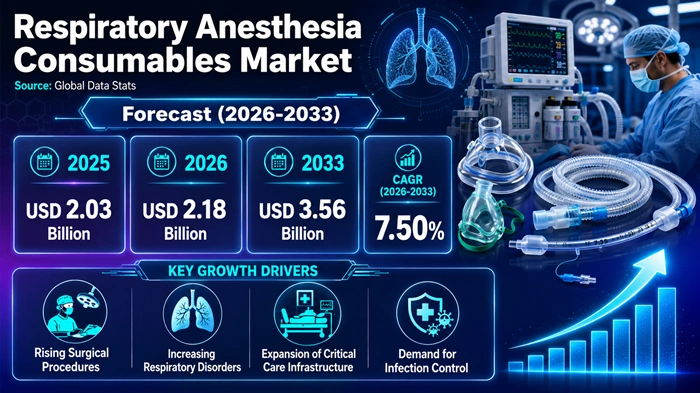
The global respiratory anesthesia consumables market size is valued at USD 2.03 billion in 2025 and is predicted to increase from USD 2.18 billion in 2026 to approximately USD 3.56 billion by 2033, growing at a CAGR of 7.50% from 2026 to 2033. This steady expansion is driven by a rising global volume of surgical procedures, a growing prevalence of chronic respiratory conditions such as COPD and asthma, and an aging global population that demands more frequent anesthesia-related interventions. From hospitals and ambulatory surgical centers to home care settings, the need for reliable, high-quality anesthesia consumables continues to grow across every major healthcare geography.
AI Impact on the Respiratory Anesthesia Consumables Industry
Smart Technology Integration and AI-Driven Patient Monitoring Are Redefining Quality, Safety, and Efficiency Standards Across the Anesthesia Consumables Landscape
Artificial intelligence is beginning to leave a meaningful footprint across the respiratory anesthesia consumables sector, particularly in how products interact with broader clinical monitoring and patient safety infrastructure. AI-powered anesthesia workstations are increasingly connected to smart breathing circuits and mask systems equipped with embedded sensors that continuously monitor patient respiratory parameters — including tidal volume, airway pressure, and carbon dioxide levels — and feed that data into machine learning algorithms for real-time clinical decision support. This shift from passive consumables to intelligent, data-generating components is elevating the clinical value of products historically viewed as commodity items.
Beyond monitoring, AI is being applied to manufacturing quality control in consumable production, enabling defect detection with greater speed and accuracy than manual inspection allows. Predictive analytics tools are also improving hospital inventory management, using historical surgical case data to forecast consumable demand and prevent both stockouts and over-ordering. For healthcare facilities managing thousands of SKUs across multiple procedure types, AI-driven supply chain optimization directly reduces waste and ensures that the right anesthesia consumables are available at the right time. These operational improvements, while less visible than clinical AI applications, are generating measurable cost savings that support broader adoption of premium product lines within the respiratory anesthesia consumables market.
Growth Factors
Increasing Surgical Volumes, Rising Chronic Respiratory Disease Burden, and a Growing Global Elderly Population Are the Three Foundational Pillars Driving Consistent Market Expansion
The most fundamental driver of demand in the respiratory anesthesia consumables sector is the sustained global increase in surgical procedure volumes. Across both developed and emerging healthcare systems, rising rates of elective surgery — including orthopedic, cardiovascular, gastrointestinal, and oncological procedures — are directly increasing the per-hospital consumption of breathing circuits, face masks, laryngeal mask airways, endotracheal tubes, and associated disposables. Each surgical case under general anesthesia requires a defined set of single-use consumables, meaning that surgical volume growth translates directly and predictably into consumable demand growth. This structural linkage between surgical activity and consumable consumption ensures a durable, recurring revenue base for manufacturers in this market.
Simultaneously, the global rise in chronic respiratory diseases is creating additional demand pathways beyond the operating room. COPD, asthma, respiratory infections, and sleep-disordered breathing collectively affect hundreds of millions of patients worldwide, many of whom require respiratory support consumables in ICU, clinical, and home care settings. The aging of the global population — particularly in North America, Europe, Japan, and China — amplifies this demand further, as elderly patients have significantly higher rates of respiratory complications, longer hospital stays, and greater anesthesia management complexity. Healthcare systems investing in surgical capacity expansion and critical care infrastructure in emerging markets are adding additional structural volume to the market, broadening the geographic base of demand in a way that supports sustained CAGR through 2033.
Market Outlook
Healthcare Infrastructure Expansion in Emerging Markets, Disposable Product Adoption, and Product Innovation Are Positioning This Market for Sustained Long-Term Growth
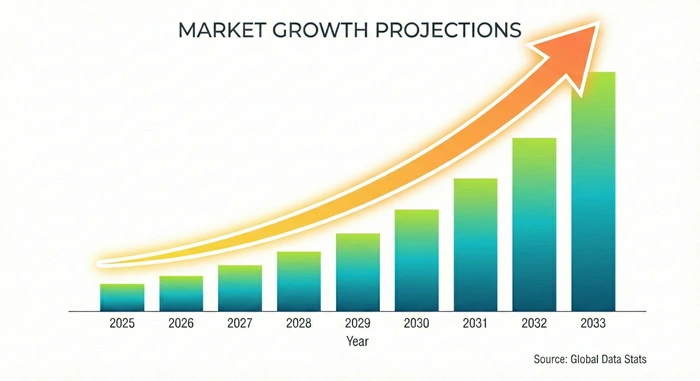
The long-term outlook for the respiratory anesthesia consumables market is anchored in several durable structural forces. The global expansion of healthcare infrastructure — particularly the construction of new hospitals, surgical centers, and critical care facilities in Asia Pacific, Latin America, the Middle East, and Africa — is continuously expanding the installed base of healthcare facilities that require regular resupply of anesthesia consumables. Unlike medical devices with long replacement cycles, consumables are single-use or short-cycle products, generating predictable, recurring procurement volumes that scale directly with facility capacity and surgical throughput.
Product innovation is a second important driver of both value growth and market differentiation. Manufacturers are developing next-generation breathing circuits with improved biocompatibility, reduced dead space, and enhanced filtration performance, as well as laryngeal mask airways and endotracheal tubes that incorporate cuff pressure monitoring technologies and antimicrobial coatings to reduce intubation-related complications. These premium products command higher price points than standard consumables and are gaining traction in markets with strong patient safety programs and hospital accreditation requirements. As regulatory standards for anesthesia safety rise globally and healthcare facilities compete on clinical outcome metrics, the adoption of premium and technologically advanced respiratory anesthesia consumables is expected to accelerate through the forecast period.
Expert Speaks
-
"The growing complexity of surgical procedures and the increasing focus on patient safety standards globally are driving consistent demand for high-performance anesthesia consumables. We see the respiratory anesthesia consumables sector as one of the most resilient and strategically important segments within the broader medical consumables landscape." — CEO, Medtronic plc
-
"Innovation in single-use respiratory and anesthesia products is no longer just about cost control — it is about clinical performance, infection prevention, and real-time patient monitoring integration. The companies that invest in smart consumable technology will shape the next generation of anesthesia care delivery." — CEO, Becton, Dickinson and Company (BD)
-
"As surgical volumes rebound and continue to grow globally, particularly in Asia Pacific and Latin America, the demand for dependable, high-quality respiratory anesthesia consumables is expanding into markets that were previously underserved. Accessibility, affordability, and clinical reliability are the three dimensions we focus on most intently." — CEO, Teleflex Incorporated
Key Report Takeaways
-
North America leads the global respiratory anesthesia consumables market with approximately 37% market share in 2025, supported by a high volume of surgical procedures, world-class hospital infrastructure, stringent infection control standards driving single-use product adoption, and the strong presence of leading global manufacturers including Medtronic, Teleflex, and BD
-
Asia Pacific is the fastest-growing regional market, projected to expand at approximately 8.4% CAGR through 2033, driven by rapid healthcare infrastructure development, rising surgical volumes, growing medical device investment in China, India, Japan, and Southeast Asia, and increasing government spending on hospital capacity expansion
-
Hospitals are the dominant end-user segment, commanding approximately 55% of total end-user market share in 2025, owing to their high surgical throughput, large consumable procurement volumes, critical care infrastructure, and the requirement for single-use, sterile anesthesia products in every general anesthesia procedure
-
Breathing circuits are the leading product type segment, contributing the largest share of the respiratory anesthesia consumables market in 2026, reflecting their essential role in every general anesthesia procedure and the mandatory single-use nature of circuit systems in modern hospital infection control protocols
-
Disposable products dominate the material segment with approximately 71% market share in 2025, driven by rigorous hospital-acquired infection prevention protocols, regulatory guidelines mandating single-use standards for many anesthesia contact products, and growing clinical recognition that disposable consumables reduce cross-contamination risk significantly
-
Ambulatory surgical centers represent the fastest-growing end-user segment, expected to expand at an above-average CAGR through 2033 as healthcare systems globally redirect elective surgical volumes from hospitals to lower-cost, high-efficiency outpatient settings, increasing per-facility respiratory anesthesia consumable procurement
Market Scope
| Report Coverage | Details |
|---|---|
| Market Size by 2033 | USD 3.56 Billion |
| Market Size by 2025 | USD 2.03 Billion |
| Market Size by 2026 | USD 2.18 Billion |
| Market Growth Rate from 2026 to 2033 | CAGR of 7.50% |
| Dominating Region | North America |
| Fastest Growing Region | Asia Pacific |
| Base Year | 2025 |
| Forecast Period | 2026 to 2033 |
| Segments Covered | Product Type, End User, Material, Distribution Channel, Region |
| Regions Covered | North America, Europe, Asia Pacific, Latin America, Middle East & Africa |
Market Dynamics
Drivers Impact Analysis
Surging Surgical Procedure Volumes and Rising Chronic Respiratory Disease Prevalence Are the Two Most Consistent and Commercially Significant Demand Catalysts in This Market
| Driver | ≈ % Impact on CAGR Forecast | Geographic Relevance | Impact Timeline |
|---|---|---|---|
| Increasing global surgical procedure volumes | ~38% | Global, led by North America, Europe, Asia Pacific | Short to long-term |
| Rising prevalence of COPD, asthma, and respiratory disorders | ~27% | Global, especially Asia Pacific and MEA | Medium to long-term |
| Aging population requiring more frequent anesthesia procedures | ~20% | North America, Europe, Japan | Medium to long-term |
| Healthcare infrastructure expansion in emerging markets | ~15% | Asia Pacific, Latin America, MEA | Medium to long-term |
The sustained rise in global surgical volumes is the most direct and quantifiable driver of the respiratory anesthesia consumables market. With elective surgical backlogs still being addressed in many healthcare systems following pandemic-era disruptions, and population growth driving new surgical demand in developing regions, the total annual volume of general anesthesia procedures worldwide is increasing year over year. Every general anesthesia case consumes a defined set of respiratory consumables — including a breathing circuit, face mask or airway device, and associated filters and connectors — meaning that surgical volume growth translates directly into proportionate consumable demand. Hospitals with high surgical throughput represent the most significant institutional buyers, and the trend toward expanding surgical suite capacity in both public and private healthcare settings across Asia, the Middle East, and Latin America is creating strong new demand channels.
The global burden of chronic respiratory disease adds a second distinct demand stream that complements operating room consumption. Patients with severe COPD, asthma, or post-operative respiratory complications require respiratory support in intensive care units and step-down wards, consuming breathing circuits, oxygen masks, nebulizer assemblies, and airway management devices outside the surgical setting. As populations age and air quality challenges in rapidly urbanizing regions of Asia and Africa drive higher rates of respiratory illness, this demand stream is growing independently of surgical volumes — providing the respiratory anesthesia consumables market with a diversified and resilient demand base that is not solely dependent on elective surgery trends.
Restraints Impact Analysis
Stringent Regulatory Approval Processes, Raw Material Price Volatility, and Supply Chain Vulnerabilities Remain the Primary Structural Constraints on Market Growth
| Restraint | ≈ % Impact on CAGR Forecast | Geographic Relevance | Impact Timeline |
|---|---|---|---|
| Stringent regulatory approval requirements for new consumable products | ~38% | Global, especially Europe and North America | Short to medium-term |
| Raw material price volatility affecting manufacturing margins | ~30% | Global | Ongoing, cyclical |
| Supply chain disruptions impacting consumable availability | ~20% | Global, especially emerging markets | Short to medium-term |
| Price pressure from low-cost regional manufacturers | ~12% | Asia Pacific, Latin America | Medium to long-term |
Regulatory complexity is the most significant structural barrier to market expansion in the respiratory anesthesia consumables sector. In major markets including the U.S., European Union, Japan, and increasingly India and China, respiratory anesthesia consumables are classified as medical devices and are subject to stringent pre-market approval, quality management system certification, and post-market surveillance requirements. For new entrants or established players seeking to launch innovative product categories, obtaining regulatory clearance — particularly CE marking under the EU MDR or FDA 510(k) clearance — involves substantial time, cost, and technical documentation investment. This regulatory burden creates high barriers to entry that protect established players but also slow the pace of new product innovation reaching clinical practice.
Raw material price volatility represents a closely related operational challenge. The majority of respiratory anesthesia consumables are manufactured from medical-grade polymers, silicone, and plastics — commodity materials whose pricing is sensitive to petrochemical market conditions, energy costs, and global supply-demand dynamics. Significant fluctuations in polymer costs can compress gross margins for manufacturers operating in a market where long-term supply contracts with hospitals and group purchasing organizations constrain the ability to pass cost increases to customers quickly. Companies that have invested in supply chain diversification, dual-sourcing strategies, and lean manufacturing programs are better positioned to absorb these fluctuations without sacrificing profitability or product quality.
Opportunities Impact Analysis
Smart Consumable Technology Development, Emerging Market Penetration, and Ambulatory Surgical Center Growth Are the Three Most Commercially Attractive Opportunity Vectors
| Opportunity | ≈ % Impact on CAGR Forecast | Geographic Relevance | Impact Timeline |
|---|---|---|---|
| Development of smart, sensor-integrated anesthesia consumables | ~40% | North America, Europe, Asia Pacific | Medium to long-term |
| Healthcare infrastructure expansion driving emerging market demand | ~35% | Asia Pacific, Latin America, MEA | Medium to long-term |
| Growth of ambulatory surgical centers creating new procurement channels | ~25% | North America, Europe, Asia Pacific | Short to medium-term |
The development of smart, sensor-integrated respiratory anesthesia consumables represents the highest-value innovation opportunity in the market through 2033. Next-generation breathing circuits and airway management devices embedded with miniaturized pressure, flow, and CO₂ monitoring sensors are enabling real-time data transmission to anesthesia workstations and EMR systems, improving both clinical safety and documentation accuracy. Manufacturers that invest in the R&D required to bring validated, regulatory-cleared smart consumables to market — particularly those that integrate seamlessly with hospital digital health infrastructure — are positioned to command premium pricing and build sustainable competitive differentiation in markets where clinical outcome optimization is a procurement priority.
The rapid global expansion of ambulatory surgical centers (ASCs) is a second high-priority opportunity. ASCs are fundamentally changing the economics of elective surgery by delivering procedures at lower cost per episode than hospital operating rooms, driving healthcare systems globally to shift an increasing volume of general anesthesia cases to outpatient settings. For consumable manufacturers, the ASC channel represents a distinct procurement profile — smaller order sizes, greater price sensitivity, but high procedure density relative to facility footprint — that rewards manufacturers with flexible distribution models and streamlined product portfolios designed for high-efficiency outpatient anesthesia workflows. Building strong ASC distribution partnerships in North America, Western Europe, and high-growth Asia Pacific markets is expected to deliver significant revenue upside through the forecast period.
Segment Analysis
By Product Type
Breathing Circuits Lead Product Revenue, Driven by Their Indispensable Role in Every General Anesthesia Procedure and the Mandatory Single-Use Standard in Modern Hospital Settings
Breathing circuits hold the dominant position in the respiratory anesthesia consumables market, accounting for approximately 34% of the total product type segment share in 2026 and growing at a steady CAGR through 2033. Their dominance reflects a simple clinical reality: every patient undergoing general anesthesia requires a breathing circuit to deliver anesthetic gases and maintain controlled ventilation throughout the procedure. Hospitals in North America and Europe have largely standardized on disposable single-use circuits — driven by infection control guidelines and accreditation requirements — creating large, recurring procurement volumes that represent a predictable and sticky revenue stream for manufacturers. Key companies including Teleflex, Smiths Medical, and Vyaire Medical have built strong positions in this product category through a combination of broad SKU portfolios, group purchasing organization contracts, and established hospital relationships.
Asia Pacific is emerging as the most dynamic growth region for breathing circuit adoption, expanding at approximately 8.6% CAGR, driven by the rapid expansion of hospital surgical infrastructure in China, India, and Southeast Asian countries. As newly built hospitals in these markets adopt international infection control standards, the transition from reusable to disposable single-use circuits is accelerating — significantly increasing per-procedure consumable spend. Medtronic and BD have strengthened their Asia Pacific distribution capabilities through regional manufacturing investments and distributor partnerships that enable competitive pricing while maintaining product quality. The laryngeal mask airway segment is also growing rapidly as a premium product category, with adoption increasing in markets where supraglottic airway devices are replacing endotracheal intubation for lower-risk procedures, offering both clinical advantages and reduced intubation-related complications.
By End User
Hospitals Dominate End-User Revenue, While Ambulatory Surgical Centers Are the Fastest-Growing Customer Segment in the Respiratory Anesthesia Consumables Ecosystem
Hospitals account for approximately 55% of total end-user segment revenue in the respiratory anesthesia consumables market in 2025, a position rooted in their role as the primary setting for general anesthesia procedures across virtually every healthcare system globally. Large tertiary care hospitals and academic medical centers maintain the highest per-facility consumption of respiratory anesthesia consumables, procuring through central supply chains, group purchasing organizations, and direct manufacturer agreements that provide volume-based pricing advantages. North America dominates hospital-channel procurement, with integrated hospital systems and GPO contracts driving standardized product adoption across large networks of facilities. Medtronic, Teleflex, and ResMed have established deep institutional relationships with leading hospital networks through clinical evidence, product quality, and service differentiation.
Ambulatory surgical centers represent the fastest-growing end-user segment in the respiratory anesthesia consumables market, expected to expand at a CAGR of approximately 9.1% through 2033 — the highest among all end-user categories. The structural shift of elective surgical volumes from hospital inpatient to outpatient settings is fundamentally altering the demand geography of consumable procurement, creating large new customer segments for manufacturers that have historically focused on hospital accounts. Asia Pacific is the most dynamic region for ASC-driven consumable demand growth, with China, India, and South Korea investing heavily in regulated outpatient surgical center networks. Companies like Ambu and SunMed have positioned their product portfolios to serve the specific needs of high-efficiency ASC workflows, offering standardized, cost-effective consumable bundles that reduce per-case procurement complexity for ASC administrators.
Regional Insights
North America
North America's Advanced Surgical Infrastructure, Strong Single-Use Product Mandates, and Industry-Leading Manufacturer Presence Make It the Global Market Leader in Anesthesia Consumables
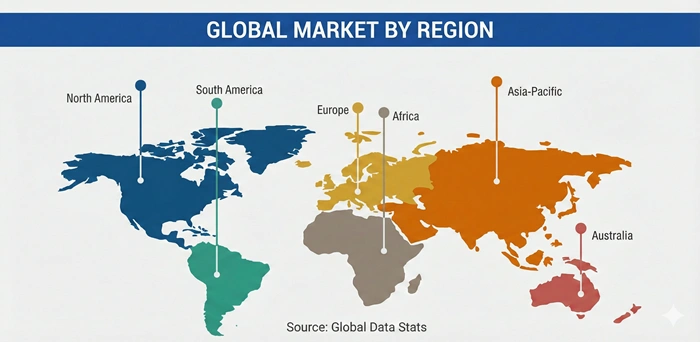
North America holds the dominant position in the global respiratory anesthesia consumables market, commanding approximately 37% market share in 2025 and expanding at a steady CAGR of around 7.1% through 2033. The United States drives the vast majority of regional demand, supported by one of the world's highest per-capita surgical rates, a deeply embedded single-use medical product culture driven by CDC and AORN infection prevention guidelines, and an advanced hospital procurement infrastructure dominated by large GPOs such as Premier and Vizient. Key players with a dominant North American presence include Medtronic, Teleflex, BD, and Smiths Medical, all of which maintain extensive direct sales forces, GPO contracts, and clinical education programs that support product adoption across hospitals and ambulatory surgical centers.
The U.S. market's regulatory environment — managed by FDA's Center for Devices and Radiological Health — provides strong quality assurance for cleared products and supports a premium product market where clinical performance and safety credentials command meaningful price premiums over commodity alternatives. Canada contributes to regional growth through its publicly funded universal healthcare system's ongoing capital investment in surgical and critical care infrastructure. Mexico is an emerging growth market within the region, where expanding private hospital investment and government public health infrastructure programs are increasing surgical throughput and creating new procurement demand for quality respiratory anesthesia consumables from both international and domestically distributed suppliers.
Asia Pacific
Asia Pacific Is the World's Fastest-Growing Region for Respiratory Anesthesia Consumables, Fueled by Healthcare Infrastructure Investment, Rising Surgical Volumes, and Transition to Single-Use Products
Asia Pacific is expected to register the fastest CAGR in the global respiratory anesthesia consumables market through 2033 at approximately 8.4%, driven primarily by China, India, Japan, South Korea, and a cluster of rapidly developing Southeast Asian healthcare markets. China's enormous and expanding hospital network — supported by sustained government healthcare infrastructure investment under national health planning programs — generates massive procurement volumes for respiratory anesthesia consumables and is transitioning rapidly from reusable to disposable product standards as hospital accreditation requirements tighten. Philips, Medtronic, and local Chinese manufacturers such as Mindray Bio-Medical Electronics are competing actively in the Chinese market, with domestic manufacturers gaining share in standard-specification product categories while international players maintain advantage in premium and technology-differentiated segments.
India is emerging as one of the highest-growth individual country markets within the region, supported by government healthcare access programs, rapid expansion of private hospital chains, and rising per-capita surgical rates as economic growth expands access to elective procedures. The Indian market is characterized by strong price sensitivity, making it a key target for mid-tier product lines from manufacturers seeking to balance volume growth with margin sustainability. Japan and South Korea represent premium market segments within Asia Pacific, where advanced hospital infrastructure, high single-use adoption rates, and sophisticated clinical procurement practices support the sale of premium respiratory anesthesia consumable products at favorable price points. Companies like Ambu and Armstrong Medical have established distribution partnerships in these markets to capitalize on demand for high-quality specialty airway management consumables.
Customization Available for This Report
This report offers comprehensive region-wise and country-wise customization, delivering in-depth market sizing, competitive analysis, regulatory insights, and segment-specific demand assessments tailored to your selected geography and the respiratory anesthesia consumables keyword combination.
A fully customized version of this report can be developed for any of the following regions and countries, providing detailed analysis of market growth dynamics, key player positioning, procurement trends, regulatory environment, and product adoption patterns specific to each market:
North America
-
U.S. — GPO contract dynamics, FDA regulatory landscape, hospital and ASC procurement trends, and single-use product adoption standards
-
Canada — Public healthcare system procurement, provincial capital investment in surgical infrastructure, and key distributor landscape
-
Mexico — Private hospital expansion, government health programs, and growing demand for quality anesthesia consumables
Europe
-
U.K. — NHS procurement frameworks, CE MDR compliance requirements, and hospital and ASC market dynamics
-
Germany — Advanced hospital infrastructure, regulatory quality standards, and premium product market analysis
-
France — Public hospital procurement systems, clinical adoption of smart consumable technologies, and key distributor analysis
-
Italy — Regional healthcare system procurement, infection control standards, and growing ASC market
-
Rest of Europe — Eastern European healthcare infrastructure investment and emerging product adoption markets
Asia Pacific
-
China — National health planning programs, domestic vs. international manufacturer competition, and single-use transition analysis
-
India — Private hospital chain expansion, government surgical capacity programs, price-sensitive market dynamics, and key distributor landscape
-
Japan — Premium market analysis, advanced clinical standards, and regulatory pathway for anesthesia consumables
-
South Korea — K-healthcare market dynamics, advanced hospital procurement, and surgical volume growth analysis
-
Australia — Hospital accreditation-driven consumable standards, private hospital market, and distributor landscape
-
Rest of Asia Pacific — Country-level analysis for Vietnam, Indonesia, Thailand, Philippines, and Malaysia
Latin America
-
Brazil — Public and private hospital procurement, SUS program consumable demand, and market sizing by product type
-
Argentina — Healthcare infrastructure investment trends and anesthesia consumable market development
-
Rest of Latin America — Colombia, Peru, Chile, and Mexico country-level respiratory anesthesia consumable market analysis
Middle East & Africa
-
UAE — Advanced private hospital market, medical tourism-driven demand, and international product adoption
-
Saudi Arabia — Vision 2030 healthcare investment, hospital construction programs, and consumable procurement patterns
-
Rest of MEA — Sub-Saharan Africa healthcare infrastructure growth, NGO and public health procurement, and emerging market entry analysis
Top Key Players
-
Medtronic plc (Ireland / United States)
-
Becton, Dickinson and Company (BD) (United States)
-
Teleflex Incorporated (United States)
-
Koninklijke Philips N.V. (Netherlands)
-
Smiths Medical (United States / United Kingdom)
-
Ambu A/S (Denmark)
-
ResMed Inc. (United States)
-
Vyaire Medical Inc. (United States)
-
Armstrong Medical Ltd (United Kingdom)
-
SunMed Group Holdings LLC (United States)
-
Westmed Medical Group (United States)
-
Intersurgical Ltd (United Kingdom)
-
Fisher & Paykel Healthcare Corporation Limited (New Zealand)
-
Mindray Bio-Medical Electronics Co. Ltd (China)
-
Allied Healthcare Products Inc. (United States)
Recent Developments
-
In February 2025, Medtronic announced the launch of its next-generation McGRATH MAC video laryngoscope with an updated single-use blade system, designed to improve intubation success rates while maintaining the infection control advantages of disposable airway management consumables, further reinforcing its leadership position in the advanced airway segment
-
In October 2024, Teleflex completed its acquisition of Palette Life Sciences, a specialist in medical device innovation, strengthening its product development pipeline with new technologies applicable to airway management and respiratory care — areas directly relevant to its respiratory anesthesia consumables portfolio
-
In March 2025, Ambu A/S expanded its single-use anesthesia product line with the commercial launch of updated aScope series products in Asia Pacific markets, targeting growing hospital demand for single-use flexible bronchoscopes and airway visualization tools in China, Japan, and Southeast Asian healthcare systems
-
In November 2024, Intersurgical announced a major expansion of its manufacturing facility in the United Kingdom, increasing production capacity for breathing circuits, respiratory filters, and anesthesia circuit components — a strategic move to address rising global demand and reduce lead times for hospital customers across Europe, the Middle East, and Asia Pacific
-
In January 2025, Fisher & Paykel Healthcare introduced its updated Optiflow surgical nasal high flow product range for use in anesthesia and perioperative respiratory support, receiving FDA clearance and CE marking for the new system and positioning the company for expanded adoption in North American and European hospital operating room settings
Market Trends
Two Defining Trends Are Reshaping the Respiratory Anesthesia Consumables Market: The Rapid Shift to Single-Use Disposable Standards and the Advancement of Smart, Connected Airway Management Products
The most significant ongoing structural trend in the respiratory anesthesia consumables market is the accelerating global transition from reusable to single-use disposable product standards. Driven by WHO infection control guidelines, national regulatory mandates, hospital accreditation standards, and clinical evidence demonstrating reduced healthcare-associated infection risk, healthcare facilities across every major market are progressively replacing reusable breathing circuits, masks, and airway management devices with single-use equivalents. This shift expands per-procedure consumable spend, increases procurement volume for disposable product manufacturers, and rewards companies with strong regulatory compliance capabilities and scalable manufacturing infrastructure. Markets like China, India, and Southeast Asia — where reusable products have historically been more prevalent — are now transitioning rapidly, representing a significant structural demand expansion for single-use product lines.
The second major trend is the advancement of smart, sensor-integrated respiratory consumables that bridge the gap between passive product delivery and active clinical monitoring. Manufacturers are embedding pressure, flow, and CO₂ measurement capabilities directly into breathing circuits and mask systems, transforming them from inert delivery components into active data sources that contribute to real-time anesthesia management. As hospital digital health infrastructure matures and interoperability standards enable seamless data exchange between consumable sensors, anesthesia workstations, and EMR systems, the clinical and commercial value of smart consumable technology will continue to expand. This innovation trend is expected to gradually create a tiered market structure — with premium smart consumables commanding significant price premiums over standard disposable equivalents — and will be a key driver of revenue per-unit growth in the respiratory anesthesia consumables market through 2033.
Segments Covered in the Report
By Product Type
-
Face Masks
-
Disposable Anesthesia Face Masks
-
Reusable Anesthesia Face Masks
-
-
Breathing Circuits
-
Single-Use Breathing Circuits
-
Coaxial and Parallel-Style Circuits
-
Pediatric Breathing Circuits
-
-
Nasal Cannulas
-
Standard Flow Nasal Cannulas
-
High Flow Nasal Cannulas
-
-
Breathing Bags
-
Reservoir Breathing Bags
-
Self-Inflating Bags
-
-
Laryngeal Mask Airways
-
Disposable LMA Devices
-
Reusable LMA Devices
-
Intubating LMA
-
-
Endotracheal Tubes
-
Standard Endotracheal Tubes
-
Cuffed and Uncuffed Tubes
-
Reinforced Endotracheal Tubes
-
-
Resuscitators
-
Manual Resuscitators
-
Disposable Resuscitator Kits
-
-
Others
-
Respiratory Filters
-
Heat and Moisture Exchangers
-
By End User
-
Hospitals
-
General Surgery Departments
-
Intensive Care Units
-
Emergency Departments
-
-
Ambulatory Surgical Centers
-
Outpatient Surgery Centers
-
Day Surgery Units
-
-
Clinics
-
Specialty Respiratory Clinics
-
Outpatient Anesthesia Clinics
-
-
Home Care Settings
-
Home Ventilation Support
-
Long-Term Respiratory Care
-
-
Trauma Centers
-
Emergency Anesthesia Settings
-
Pre-Hospital Airway Management
-
By Material
-
Disposable Products
-
Single-Use PVC Products
-
Single-Use Silicone Products
-
-
Reusable Products
-
Autoclavable Silicone Products
-
Multi-Use Polymer Products
-
By Distribution Channel
-
Direct Tenders
-
Hospital Group Purchasing Organizations
-
Government Health System Procurement
-
-
Retail Sales
-
Medical Distributor Networks
-
Specialist Medical Supply Retailers
-
-
Online Sales
-
B2B Medical E-Commerce Platforms
-
Direct Manufacturer Online Channels
-
By Region
-
North America (U.S., Canada, Mexico)
-
Europe (U.K., Germany, France, Italy, Rest of Europe)
-
Asia Pacific (China, India, Japan, South Korea, Australia, Rest of Asia Pacific)
-
Latin America (Brazil, Argentina, Rest of Latin America)
-
Middle East and Africa (UAE, Saudi Arabia, Rest of MEA)
❝ Built for Every Level — From Startups to Industry Giants ❞
Here Is Exactly How This Report Works for You
-
For tier 1 medical device corporations, institutional investors, and senior procurement executives, this report delivers detailed competitor revenue analysis, segment-level revenue breakdowns, geopolitical supply chain risk frameworks, and demand-supply dynamics — equipping you to make confident decisions around product portfolio investment, market entry, manufacturing capacity planning, and acquisition targeting in the respiratory anesthesia consumables sector
-
For tier 2, tier 3 companies, healthcare distributors, and startups developing next-generation anesthesia products, this report maps the most commercially viable product categories, identifies underserved geographic markets, and benchmarks competitive positioning — providing a clear strategic roadmap to compete effectively against established players and maximize ROI on innovation investment
-
For all decision-makers across the anesthesia consumables value chain, this report explains precisely how regulatory shifts, single-use product mandates, hospital procurement consolidation, healthcare infrastructure investment trends, and emerging market dynamics are reshaping the competitive landscape through 2033 — giving you the intelligence to move confidently from market insight to business growth
Frequently Asked Questions
Question 1: What is the current size of the global respiratory anesthesia consumables market and what growth is expected by 2033?
Answer: The global respiratory anesthesia consumables market was valued at USD 2.03 billion in 2025 and is projected to reach USD 3.56 billion by 2033. This growth is driven by rising global surgical volumes, increasing chronic respiratory disease prevalence, and the accelerating transition to single-use disposable product standards in healthcare facilities worldwide.
Question 2: What are the key growth drivers in the respiratory anesthesia consumables market?
Answer: The primary drivers of the respiratory anesthesia consumables market include increasing global surgical procedure volumes, a growing aging population requiring more frequent anesthesia interventions, and rising prevalence of chronic respiratory conditions such as COPD and asthma. Healthcare infrastructure expansion in emerging markets and regulatory mandates promoting single-use product adoption are additional high-impact accelerators.
Question 3: Which region leads the respiratory anesthesia consumables market and which is growing the fastest?
Answer: North America holds the dominant position in the respiratory anesthesia consumables market with approximately 37% market share in 2025, driven by advanced hospital infrastructure and strong single-use adoption mandates. Asia Pacific is the fastest-growing region, expanding at approximately 8.4% CAGR through 2033, powered by rapid healthcare infrastructure investment in China, India, and Southeast Asia.
Question 4: What are the most widely used product types in the respiratory anesthesia consumables market?
Answer: Breathing circuits are the leading product type in the respiratory anesthesia consumables market, accounting for approximately 34% of the product segment share in 2026, driven by their mandatory use in every general anesthesia procedure. Laryngeal mask airways and endotracheal tubes are also significant product categories, with growing adoption of disposable premium variants in high-acuity clinical settings.
Question 5: Who are the leading companies operating in the respiratory anesthesia consumables market?
Answer: The leading global players in the respiratory anesthesia consumables market include Medtronic, Teleflex, BD, Philips, Smiths Medical, Ambu, and Intersurgical, among others. These companies compete through broad product portfolios, GPO distribution contracts, regulatory compliance strength, and ongoing investment in smart consumable technology innovation.