
Radio-Fluoroscopy Systems Market Overview
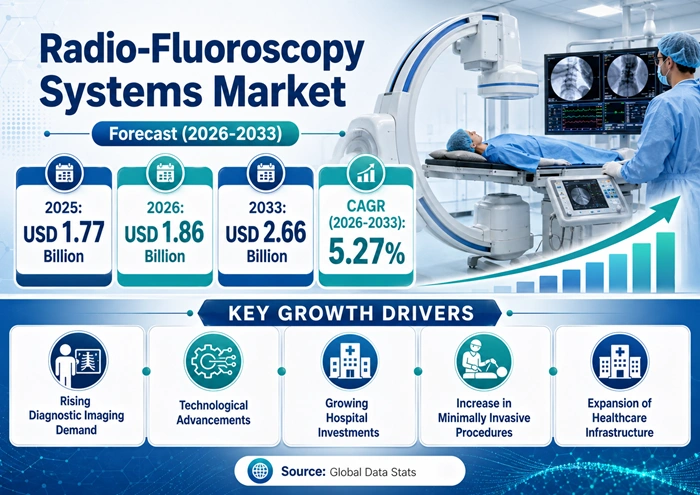
The global radio-fluoroscopy systems market size is valued at USD 1.77 billion in 2025 and is predicted to increase from USD 1.86 billion in 2026 to approximately USD 2.66 billion by 2033, growing at a CAGR of 5.27% from 2026 to 2033. This steady growth reflects rising clinical demand for real-time, dynamic X-ray imaging across interventional radiology, gastrointestinal diagnostics, and cardiovascular procedures, supported by an aging global population and ongoing technological advancements in flat-panel detector systems and AI-assisted imaging platforms.
The fluoroscopy imaging landscape is evolving rapidly. As hospitals modernize their diagnostic and procedural infrastructure, radio-fluoroscopy systems are becoming increasingly central to minimally invasive surgery guidance, offering clinicians live visualization with significantly reduced patient trauma and procedure times.
AI Impact on the Radio-Fluoroscopy Systems Industry
Artificial Intelligence Is Transforming Real-Time Imaging Quality, Radiation Dose Optimization, and Workflow Efficiency Across Modern Radio-Fluoroscopy Platforms Globally
Artificial intelligence is fundamentally changing how radio-fluoroscopy systems perform in clinical environments. AI-powered image processing algorithms are now capable of enhancing real-time fluoroscopic image quality — sharpening anatomical detail, reducing noise, and improving contrast — without increasing radiation dose levels. These capabilities are especially valuable during complex interventional procedures such as ERCP, cardiac catheterization, and orthopedic fixation, where precise real-time visualization directly impacts clinical outcomes. Hospitals that have integrated AI-assisted fluoroscopy platforms are reporting measurable improvements in both procedural speed and diagnostic accuracy, creating a compelling value proposition for system upgrades.
Radiation dose management is another critical area where AI is delivering transformative impact. Advanced AI algorithms can dynamically assess patient anatomy and procedure complexity in real time, automatically adjusting imaging parameters to minimize cumulative radiation exposure for both the patient and the clinical team. This capability addresses one of the most persistent concerns in fluoroscopy-intensive departments and is helping institutions meet increasingly stringent radiation safety standards. As AI integration becomes standard in new system releases from leading manufacturers, its influence on procurement decisions and clinical adoption patterns within the radio-fluoroscopy systems market is expected to grow considerably through the forecast period.
Growth Factors
The Rising Prevalence of Chronic Diseases, Rapid Growth of Minimally Invasive Procedures, and Increasing Deployment of Digital Fluoroscopy Technology Are Collectively Fueling Market Expansion
The single most powerful driver behind growth in the radio-fluoroscopy systems market is the accelerating adoption of minimally invasive surgical and diagnostic procedures across hospitals and ambulatory surgical centers worldwide. Procedures such as coronary angioplasty, endoscopy-assisted interventions, ureteral stent placement, and image-guided joint injections all rely on fluoroscopic visualization for precise catheter or instrument guidance. As patient preference increasingly favors less invasive approaches — and as clinical evidence consistently demonstrates better outcomes, shorter recovery times, and lower complication rates — the procedural volumes that drive demand for fluoroscopy systems continue to expand significantly each year.
The global burden of gastrointestinal disorders, cardiovascular disease, and musculoskeletal conditions is also rising steadily, particularly among populations over the age of 65 in North America, Europe, and increasingly in Asia Pacific. An aging demographic profile means higher per-capita rates of the chronic conditions that require fluoroscopy-guided diagnosis and treatment — from swallowing disorders and bowel obstruction studies to cardiac catheterization and joint arthrography. Healthcare systems in both developed and developing markets are responding by investing in imaging infrastructure, creating sustained long-term demand for modern fluoroscopy systems with enhanced capabilities in digital detection, remote operation, and integrated PACS connectivity.
Market Outlook
Technological Innovation in Flat-Panel Detector Systems, Combined With Expanding Healthcare Infrastructure in Emerging Markets, Positions the Radio-Fluoroscopy Systems Market for Reliable Long-Term Growth Through 2033
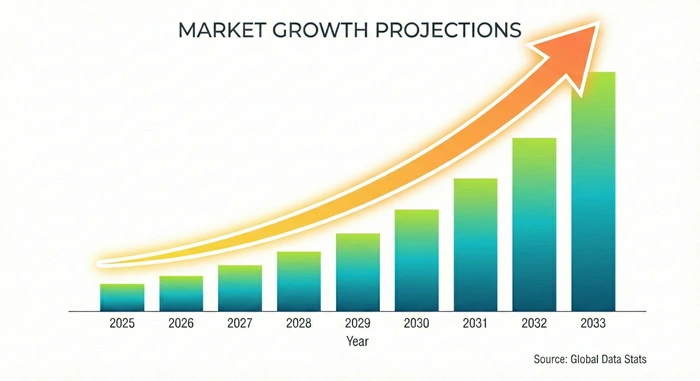
Looking ahead to 2033, the radio-fluoroscopy systems market is expected to benefit from two converging tailwinds: continued technological improvement in existing markets and rapid healthcare infrastructure expansion in emerging economies. In North America and Europe, market growth will be driven primarily by upgrade cycles — as hospitals replace aging analog and image-intensifier-based systems with modern digital flat-panel detector platforms that offer superior image resolution, lower dose profiles, and seamless integration with digital health ecosystems. These upgrade decisions are increasingly supported by favorable reimbursement structures for fluoroscopy-guided interventional procedures, which reduce the financial barrier to capital equipment investment for hospital systems.
In Asia Pacific, Latin America, and the Middle East, market growth is being driven by greenfield hospital construction, government-funded healthcare modernization programs, and expanding specialist clinical capacity in interventional radiology and cardiology. Countries including China, India, Brazil, and Saudi Arabia are making substantial investments in tertiary and quaternary care infrastructure, creating direct demand for comprehensive imaging suites that include advanced fluoroscopy systems. As pricing competition intensifies among global manufacturers seeking to serve these cost-sensitive emerging markets, the accessibility of high-quality fluoroscopy technology is expected to improve, further accelerating adoption rates across the forecast period.
Expert Speaks
-
"The shift toward digital fluoroscopy and AI-enhanced real-time imaging is fundamentally changing how our interventional radiology and cardiology teams operate. At GE HealthCare, we believe that intelligent imaging technology — that minimizes dose while maximizing diagnostic clarity — will define the next decade of clinical imaging innovation." — CEO, GE HealthCare
-
"Siemens Healthineers is committed to leading the transformation of fluoroscopy-guided care. The integration of advanced automation and AI-driven dose management into our fluoroscopy platforms is not just a product improvement — it represents a fundamental step toward safer, more efficient interventional medicine for patients globally." — CEO, Siemens Healthineers
-
"At Philips, we recognize that minimally invasive procedures depend entirely on the quality and reliability of real-time imaging. Our fluoroscopy and hybrid imaging solutions are designed to give clinicians the precision and confidence they need in the most challenging interventional environments, backed by intelligent software that adapts to every patient." — CEO, Philips Healthcare
Key Report Takeaways
-
North America leads the radio-fluoroscopy systems market with approximately 35% of global revenue share in 2025, supported by high-volume interventional radiology and cardiology procedures, advanced hospital infrastructure, and early adoption of AI-integrated digital fluoroscopy platforms by major health systems
-
Asia Pacific is the fastest-growing region, projected to expand at a CAGR of approximately 6.7% from 2026 to 2033, driven by rapid hospital construction programs, government-funded healthcare modernization in China and India, and rising cardiovascular and gastrointestinal disease burden across the region
-
Hospitals are the dominant end-user segment, accounting for approximately 56% of market revenue in 2025, driven by high patient throughput, multi-specialty imaging requirements, and consistent investment in advanced fixed and digital fluoroscopy platforms across tertiary care and academic medical centers
-
Gastrointestinal imaging is the leading application segment, contributing approximately 38% of total market share in 2025, sustained by high procedural volumes for upper GI studies, ERCP, and bowel follow-through examinations that rely on dynamic fluoroscopic visualization
-
Digital fluoroscopy is the most widely adopted technology, accounting for approximately 72% of market share in 2025, preferred for its superior image quality, lower radiation exposure, real-time processing capabilities, and seamless integration with existing hospital imaging and PACS infrastructure
-
Ambulatory surgical centers (ASCs) represent the fastest-growing end-user segment, expected to grow at a CAGR of approximately 6.9% through 2033, as compact and mobile fluoroscopy systems increasingly support outpatient orthopedic, gastroenterology, and cardiology procedures in space-efficient clinical environments
Market Scope
| Report Coverage | Details |
|---|---|
| Market Size by 2033 | USD 2.66 Billion |
| Market Size by 2025 | USD 1.77 Billion |
| Market Size by 2026 | USD 1.86 Billion |
| Market Growth Rate from 2026 to 2033 | CAGR of 5.27% |
| Dominating Region | North America |
| Fastest Growing Region | Asia Pacific |
| Base Year | 2025 |
| Forecast Period | 2026 – 2033 |
| Segments Covered | Product Type, Technology, Application, End User, Configuration, Region |
| Regions Covered | North America, Europe, Asia Pacific, Latin America, Middle East & Africa |
Market Dynamics
Drivers Impact Analysis
Rising Demand for Minimally Invasive Procedures, Expanding Interventional Radiology Infrastructure, and Digital Upgrade Cycles Are the Primary Engines Powering Growth in the Radio-Fluoroscopy Systems Market
| Driver | ≈ % Impact on CAGR Forecast | Geographic Relevance | Impact Timeline |
|---|---|---|---|
| Growth in minimally invasive surgical procedures | ~30% | Global, strongest in North America & Europe | Short to Long Term |
| Aging population and rising chronic disease burden | ~25% | North America, Europe, Asia Pacific | Medium to Long Term |
| Transition from analog to digital fluoroscopy systems | ~22% | Global | Short to Medium Term |
| Expansion of hybrid operating rooms | ~14% | North America, Europe | Medium Term |
| Government healthcare infrastructure investment in emerging markets | ~9% | Asia Pacific, MEA, Latin America | Long Term |
The radio-fluoroscopy systems market is experiencing consistent demand growth primarily because the clinical procedures it enables — real-time guided catheter placement, endoscopic interventions, and image-directed orthopedic procedures — are growing rapidly in volume across all major healthcare markets. The combination of an aging population that develops chronic cardiovascular, gastrointestinal, and musculoskeletal conditions at increasing rates, together with the clinical community's clear preference for fluoroscopy-guided minimally invasive approaches over open surgery, creates a demand dynamic that is both broad-based and durable. Hospitals with high interventional volumes are prioritizing fluoroscopy as a core imaging modality, and procurement cycles are shortening as the clinical case for digital upgrades becomes increasingly compelling.
The infrastructure transition from aging image-intensifier-based systems to modern flat-panel digital fluoroscopy platforms represents an additional and substantial growth layer. Many hospital radiology and interventional departments globally are still operating systems that are five to fifteen years old, with image quality and dose management capabilities that fall short of current clinical and regulatory expectations. Manufacturers are actively supporting this upgrade cycle with trade-in programs, modular upgrade pathways, and competitive financing options that reduce the upfront capital burden on healthcare institutions. This replacement demand, layered on top of new system deployments in emerging markets, is creating a sustained multi-year tailwind for the market through the 2033 forecast horizon.
Restraints Impact Analysis
High Equipment Costs, Radiation Safety Concerns, and Stringent Regulatory Approval Pathways Continue to Moderate the Growth Pace of the Global Radio-Fluoroscopy Systems Market
| Restraint | ≈ % Impact on CAGR Forecast | Geographic Relevance | Impact Timeline |
|---|---|---|---|
| High capital cost of advanced digital fluoroscopy systems | ~-28% | Emerging markets, small hospitals | Ongoing |
| Radiation exposure concerns and safety regulations | ~-24% | Global | Ongoing |
| Lengthy regulatory approval and procurement cycles | ~-20% | Europe, North America, Emerging Markets | Medium to Long Term |
| Competition from alternative imaging modalities (CT, MRI) | ~-16% | North America, Europe | Medium Term |
| Limited specialist clinical workforce in emerging markets | ~-12% | Africa, South Asia, Latin America | Long Term |
The primary restraint facing the radio-fluoroscopy systems market is the significant capital investment required for advanced digital fluoroscopy systems, particularly flat-panel detector-based platforms with integrated AI and remote-control capabilities. For smaller community hospitals, rural healthcare facilities, and institutions in cost-sensitive emerging markets, the total cost of ownership — including installation, training, maintenance contracts, and periodic software upgrades — can be prohibitively high. This financial barrier creates a meaningful adoption gap between well-resourced urban tertiary care centers and smaller facilities that often have the highest unmet need for modernized imaging infrastructure.
Radiation exposure concerns also represent a persistent challenge, both in terms of patient protection and occupational safety for clinical staff who perform high-volume fluoroscopy-guided procedures. Regulatory bodies in the United States, European Union, and other major markets have steadily tightened dose limits and documentation requirements, placing compliance obligations on healthcare facilities that operate fluoroscopy equipment. While these regulations ultimately improve patient and staff safety, they also increase the operational complexity associated with maintaining fluoroscopy programs and can slow procurement decisions as facilities carefully evaluate dose performance specifications before committing to new systems.
Opportunities Impact Analysis
Hybrid Operating Room Expansion, Emerging Market Healthcare Investment, and Mobile Fluoroscopy Platform Growth Represent the Most Compelling Strategic Opportunities in the Radio-Fluoroscopy Systems Market
| Opportunity | ≈ % Impact on CAGR Forecast | Geographic Relevance | Impact Timeline |
|---|---|---|---|
| Hybrid OR fluoroscopy integration | ~+28% | North America, Europe | Short to Medium Term |
| Mobile fluoroscopy system demand in ASCs and rural hospitals | ~+24% | Global | Short to Medium Term |
| Digital health and PACS integration upgrades | ~+20% | Global | Medium Term |
| Emerging market healthcare infrastructure investment | ~+18% | Asia Pacific, MEA, Latin America | Long Term |
| AI-assisted dose optimization and image enhancement | ~+10% | Global | Medium to Long Term |
The accelerating construction and equipping of hybrid operating rooms — advanced surgical suites designed to support both conventional open surgery and minimally invasive image-guided procedures within the same space — represents one of the most significant near-term growth opportunities for the radio-fluoroscopy systems market. Hybrid ORs require integrated fluoroscopy systems with advanced remote-control capabilities, ceiling-mounted detectors, and sophisticated dose management software. As health systems in North America, Western Europe, and increasingly in the Middle East invest in hybrid OR capacity to support expanding cardiovascular and vascular surgery programs, demand for premium fluoroscopy systems configured for hybrid environments is growing at a notably faster rate than the broader market.
The expansion of mobile radio-fluoroscopy systems presents an equally compelling opportunity, particularly for ambulatory surgical centers and community hospitals seeking to extend imaging capabilities without the facility footprint and installation complexity associated with fixed systems. Mobile fluoroscopy units allow flexible deployment across operating rooms, emergency departments, and bedside locations, enabling point-of-care imaging for trauma patients, bedside orthopedic procedures, and intraoperative guidance in facilities where permanent installation is impractical. This market segment is growing at a CAGR of approximately 6.8%, outpacing the broader market, and is expected to attract continued innovation investment from manufacturers developing lighter, more maneuverable, and digitally capable mobile platforms.
Segment Analysis
By Technology
Digital Fluoroscopy Systems Command the Market With Superior Image Quality and Dose Efficiency, While Analog Fluoroscopy Holds a Declining but Economically Significant Share in Cost-Sensitive Markets
Digital fluoroscopy is the dominant technology segment in the radio-fluoroscopy systems market, holding approximately 72% of global market share in 2025 and projected to maintain leadership at a CAGR of approximately 6.1% through 2033. The clinical preference for digital systems is driven by their substantially superior image quality relative to legacy image-intensifier-based analog platforms — flat-panel digital detectors deliver higher spatial resolution, better contrast-to-noise ratios, and real-time frame rates that give interventional clinicians the visual clarity they need to perform complex guided procedures with confidence. Digital systems also offer significant advantages in dose management, with automatic exposure control features that dynamically optimize imaging parameters to minimize radiation delivery. North America and Europe are the primary regions driving digital fluoroscopy growth, supported by hospital upgrade investment cycles and regulatory pressure to adopt dose-optimized technology; leading manufacturers in these regions include Siemens Healthineers (Germany), GE HealthCare (USA), and Philips Healthcare (Netherlands).
Analog fluoroscopy systems retain approximately 28% of market share in 2025, primarily in cost-sensitive emerging markets where the total cost of digital systems remains a barrier and where existing analog infrastructure still delivers acceptable diagnostic performance for standard gastrointestinal and orthopedic applications. However, the segment is on a secular decline as awareness of digital advantages grows and as manufacturers increasingly withdraw analog systems from their active portfolios. Asia Pacific and Latin America are the geographies where analog systems maintain their strongest residual presence, though even in these markets the transition to digital is accelerating. Companies such as Shimadzu Corporation (Japan) and Fujifilm Corporation (Japan) have been particularly active in offering competitively priced digital fluoroscopy solutions designed specifically for the price-sensitive clinical environments of South and Southeast Asian markets, helping to accelerate the analog-to-digital transition across this high-potential region.
By Application
Gastrointestinal Imaging Leads Global Fluoroscopy Utilization, While Cardiovascular Imaging Emerges as the Fastest-Growing Application Driven by Rising Interventional Cardiology Volumes
Gastrointestinal imaging holds the leading position by application within the radio-fluoroscopy systems market, contributing approximately 38% of total market revenue in 2025, supported by consistently high procedural volumes across upper GI studies, barium swallow examinations, small bowel follow-through, and therapeutic interventions such as ERCP and percutaneous drainage procedures. The GI application segment benefits from the fundamental diagnostic irreplaceability of fluoroscopy — unlike CT or MRI, dynamic fluoroscopy captures real-time motility, contrast flow, and anatomical relationships that static imaging modalities simply cannot replicate. Asia Pacific and North America together account for the majority of GI fluoroscopy volume, with high procedure rates in Japan, China, and the United States reflecting both the prevalence of GI disease and the maturity of endoscopy and interventional GI practice. Key companies in this segment include Canon Medical Systems (Japan), Fujifilm (Japan), and GE HealthCare (USA), all of which have developed specialized GI fluoroscopy configurations optimized for high-throughput diagnostic workflows.
Cardiovascular imaging is the fastest-growing application segment within the market, expected to expand at a CAGR of approximately 6.5% through 2033, fueled by the rising global incidence of coronary artery disease, peripheral vascular disease, and structural heart conditions that require image-guided interventional treatment. Cardiac catheterization laboratories, vascular surgery suites, and hybrid operating rooms all depend on real-time fluoroscopic guidance for procedures including coronary angioplasty, TAVR, peripheral artery stenting, and electrophysiology mapping. North America and Europe currently lead in cardiovascular fluoroscopy utilization, but Asia Pacific — particularly China and India — is experiencing the highest growth rates as these markets rapidly expand their interventional cardiology capacity and hybrid OR infrastructure. Siemens Healthineers (Germany) and Philips Healthcare (Netherlands) are the dominant suppliers for cardiovascular fluoroscopy systems in these high-growth markets, offering highly integrated platforms that combine flat-panel imaging with hemodynamic monitoring and advanced visualization software.
Regional Insights
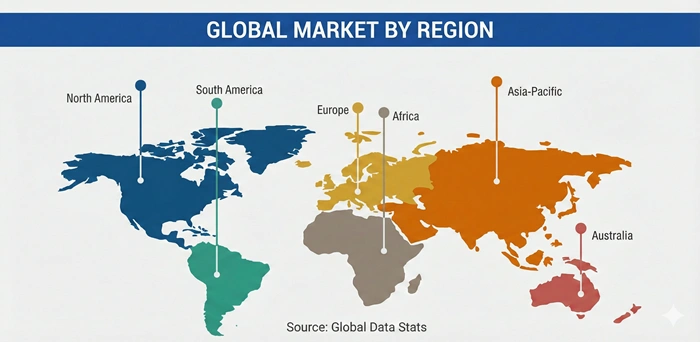
North America's Clinical Leadership and Asia Pacific's Infrastructure-Driven Acceleration Define the Two Most Critical Geographical Dynamics Within the Global Radio-Fluoroscopy Systems Market
North America
North America's Advanced Interventional Radiology Ecosystem, High Procedural Volumes, and Sustained Investment in Digital Fluoroscopy Platforms Make It the Undisputed Leader in the Radio-Fluoroscopy Systems Market
North America holds the dominant position in the radio-fluoroscopy systems market, accounting for approximately 35% of global revenue in 2025, with the United States contributing the substantial majority of regional demand. The U.S. market is characterized by high interventional procedure volumes in cardiology, gastroenterology, and orthopedics, combined with strong institutional investment in imaging infrastructure upgrades. Regional growth is supported by a CAGR of approximately 4.8% from 2026 to 2033, driven primarily by the continued transition from legacy image-intensifier systems to advanced digital flat-panel platforms and the ongoing expansion of hybrid operating room capacity at major academic medical centers and specialty hospitals. Professional organizations including the American College of Radiology (ACR), the Society of Interventional Radiology (SIR), and the American Society of Radiologic Technologists (ASRT) play important roles in shaping clinical standards and driving adoption of advanced fluoroscopy technology across the region.
Key players with significant North American operations include GE HealthCare (USA), Siemens Healthineers (Germany), Philips Healthcare (Netherlands), Hologic Inc. (USA), and Canon Medical Systems (Japan). These companies compete intensely on image quality, dose management performance, software integration capabilities, and service infrastructure, collectively raising the standard of fluoroscopy technology available to U.S. and Canadian healthcare institutions. Canada's public healthcare system is also investing in imaging infrastructure modernization, particularly in urban tertiary care centers, creating incremental but consistent demand for advanced radio-fluoroscopy systems. Mexico's market is growing as private hospital construction accelerates in major metropolitan areas and as the country's healthcare system expands diagnostic imaging capacity to meet rising chronic disease demands.
Asia Pacific
Asia Pacific's Explosive Hospital Construction Activity, Government-Funded Imaging Modernization, and Rising Disease Burden Are Driving the Fastest Regional Growth Rate in the Radio-Fluoroscopy Systems Market
Asia Pacific is the fastest-growing region in the radio-fluoroscopy systems market, projected to expand at a CAGR of approximately 6.7% from 2026 to 2033, significantly outpacing the global average. China is the region's largest and most dynamic individual market, driven by massive government investment in hospital construction and medical equipment procurement through national five-year healthcare development plans. The sheer scale of China's healthcare infrastructure expansion — including thousands of new secondary and tertiary hospitals in tier-2 and tier-3 cities — is creating sustained demand for diagnostic and interventional imaging systems including both fixed and mobile fluoroscopy platforms. Shimadzu Corporation (Japan), GE HealthCare (USA), and Neusoft Medical Systems (China) are among the leading suppliers serving the Chinese market, competing across a broad quality and price spectrum to serve hospitals ranging from community-level to advanced academic centers.
India represents the region's second-largest growth opportunity, where a combination of rising cardiovascular disease prevalence, growing private hospital investment, and expanding medical device manufacturing capacity is rapidly accelerating fluoroscopy system adoption. Japan, South Korea, and Australia contribute significant volumes in the premium digital fluoroscopy segment, with highly sophisticated clinical environments that favor integrated systems with advanced remote-control, AI imaging, and dose optimization capabilities. Key players including Canon Medical Systems (Japan), Fujifilm (Japan), Samsung Medison (South Korea), and Hitachi (Japan) have established strong regional positions by offering locally relevant system configurations and responsive clinical support networks across this diverse and high-growth geography.
Report Customization Available by Region and Country
This report can be fully customized to deliver focused radio-fluoroscopy systems market intelligence for specific regions, countries, and geographies, providing localized market sizing, competitive analysis, regulatory insights, clinical adoption trends, and growth opportunity assessments tailored to your exact target market.
Whether your organization requires a single-country deep-dive or a multi-region strategic overview, customized versions of this report provide granular data specific to the selected geography — covering demand drivers, key player market share, reimbursement environment, and procurement trends relevant to each individual market. This ensures that investment, market entry, and growth strategy decisions are based on highly targeted, locally relevant intelligence rather than broad global estimates.
North America
-
United States — Largest single-country market for radio-fluoroscopy systems, driven by high interventional procedure volumes and strong digital upgrade investment in hospital systems
-
Canada — Growing institutional demand for digital fluoroscopy platforms supported by public health system modernization in major urban centers
-
Mexico — Expanding market driven by private hospital construction and rising diagnostic imaging capacity in metropolitan areas
Europe
-
United Kingdom — NHS-driven procurement of digital fluoroscopy systems for hospital modernization and interventional radiology expansion
-
Germany — Leading European market with strong public hospital funding, advanced cardiovascular imaging programs, and early adoption of AI-integrated fluoroscopy platforms
-
France — Growing demand for fluoroscopy systems in interventional and GI imaging, supported by national healthcare investment plans
-
Italy — Increasing hospital adoption of digital fluoroscopy driven by government imaging infrastructure upgrades
-
Rest of Europe — Includes Poland, Spain, and Netherlands as growing secondary markets for fluoroscopy system deployment in specialist clinical centers
Asia Pacific
-
China — Largest regional market, with government-funded hospital construction driving high-volume fluoroscopy system procurement across urban and semi-urban locations
-
India — Fast-growing market fueled by private hospital expansion, rising chronic disease burden, and increasing adoption of minimally invasive interventional procedures
-
Japan — Premium digital fluoroscopy market with high technology adoption and strong clinical demand from aging population
-
South Korea — Advanced medical imaging market with growing hybrid OR and interventional radiology system deployments
-
Australia — Established digital fluoroscopy market with strong reimbursement support and investment in hospital imaging infrastructure
-
Rest of Asia Pacific — Includes Indonesia, Thailand, and Vietnam as emerging markets with rapidly expanding hospital imaging capacity
Latin America
-
Brazil — Largest Latin American market for medical imaging systems, with growing demand for digital fluoroscopy in private hospitals and specialist clinics
-
Argentina — Growing medical device market with increasing interest in modern fluoroscopy systems for GI and cardiovascular applications
-
Rest of Latin America — Includes Colombia, Chile, and Mexico as developing medical imaging markets with expanding specialist care capacity
Middle East & Africa
-
UAE — Premium medical technology market with strong investment in advanced hospital imaging systems aligned with national healthcare vision initiatives
-
Saudi Arabia — Rapidly growing medical imaging market supported by Vision 2030 healthcare investment and expansion of tertiary care hospital capacity
-
Rest of MEA — Includes South Africa, Egypt, and Turkey as emerging markets with increasing demand for diagnostic imaging infrastructure in major urban healthcare centers
Top Key Players
-
Siemens Healthineers AG (Germany)
-
GE HealthCare Technologies Inc. (United States)
-
Koninklijke Philips N.V. (Netherlands)
-
Canon Medical Systems Corporation (Japan)
-
Fujifilm Holdings Corporation (Japan)
-
Shimadzu Corporation (Japan)
-
Hologic Inc. (United States)
-
Carestream Health Inc. (United States)
-
Agfa-Gevaert N.V. (Belgium)
-
Hitachi Ltd. (Japan)
-
Samsung Medison Co. Ltd. (South Korea)
-
Neusoft Medical Systems Co. Ltd. (China)
-
Lepu Medical Technology (Beijing) Co. Ltd. (China)
-
EMD Medical Technologies (France)
-
Varex Imaging Corporation (United States)
Recent Developments
-
In 2025, Siemens Healthineers launched an upgraded version of its LUMINOS dRF MAX digital radio-fluoroscopy system, incorporating next-generation AI-assisted image optimization and real-time dose tracking tools designed for high-volume GI and interventional radiology departments in large hospital systems
-
In 2024, GE HealthCare entered into a strategic partnership with RadNet to integrate AI-powered imaging analytics into its fluoroscopy platform portfolio, with an initial focus on improving procedural accuracy and clinical workflow efficiency in GI and cardiovascular imaging applications
-
In 2025, Philips Healthcare announced enhancements to its digital fluoroscopy portfolio through the integration of advanced remote-control capabilities and automated dose management software, targeting the rapidly expanding hybrid operating room segment in North America and Europe
-
In 2024, Canon Medical Systems completed the acquisition of a European digital imaging software company to strengthen its AI-powered image processing capabilities across its fluoroscopy and interventional imaging product lines, accelerating its competitive positioning in Western European and North American clinical markets
-
In 2025, Fujifilm Corporation expanded its FluoroNavigator digital fluoroscopy product line with new compact configurations designed specifically for ambulatory surgical centers and smaller community hospitals, broadening its addressable market beyond the large-scale hospital segment where it has traditionally focused
Market Trends
The Integration of AI-Powered Image Processing, the Rapid Adoption of Remote-Controlled Fluoroscopy Systems, and Sustainability-Focused Equipment Design Are Defining the Leading Trends Shaping the Radio-Fluoroscopy Systems Market
The most transformative trend in the radio-fluoroscopy systems market is the accelerating integration of artificial intelligence and advanced automation into fluoroscopy platforms at every price point. AI capabilities that were previously available only in premium high-end systems — including real-time noise reduction, automated anatomical landmark detection, and intelligent dose optimization — are now being embedded into mid-range and even entry-level digital fluoroscopy configurations by manufacturers competing for share in cost-sensitive healthcare markets. This democratization of AI imaging capabilities is raising clinical standards across the board and making digital fluoroscopy systems increasingly accessible to the full spectrum of healthcare institutions, from academic medical centers to community hospitals and outpatient surgical facilities.
Remote-controlled fluoroscopy systems represent the second major trend reshaping the market. Growing awareness of occupational radiation exposure risks for clinical staff who perform high-volume fluoroscopy-guided procedures is driving significant interest in remote-controlled platforms that allow the operator to initiate and control fluoroscopic imaging from a shielded console outside the primary radiation field. These systems are growing at a CAGR of approximately 6.3%, fueled by expanding hybrid OR adoption, tightening occupational safety regulations in multiple jurisdictions, and a clinical community that is increasingly prioritizing long-term staff health and safety as a core institutional value. Manufacturers are investing heavily in improving the ergonomics, imaging performance, and software integration of remote-controlled systems to meet this rising demand.
Segments Covered in the Report
-
By Product Type
-
Fixed Radio-Fluoroscopy Systems
-
Mobile Radio-Fluoroscopy Systems
-
-
By Technology
-
Digital Fluoroscopy
-
Analog Fluoroscopy
-
-
By Application
-
Gastrointestinal Imaging
-
Cardiovascular Imaging
-
Orthopedic Imaging
-
Urological Imaging
-
Others
-
-
By End User
-
Hospitals
-
Ambulatory Surgical Centers
-
Diagnostic Imaging Centers
-
Others
-
-
By Configuration
-
Table-Based Systems
-
Remote-Controlled Systems
-
Others
-
-
By Region
-
North America
-
U.S.
-
Canada
-
Mexico
-
-
Europe
-
U.K.
-
Germany
-
France
-
Italy
-
Rest of Europe
-
-
Asia Pacific
-
China
-
India
-
Japan
-
South Korea
-
Australia
-
Rest of Asia Pacific
-
-
Latin America
-
Brazil
-
Argentina
-
Rest of Latin America
-
-
Middle East & Africa
-
UAE
-
Saudi Arabia
-
Rest of MEA
-
-
❝ Built for Every Level — From Startups to Industry Giants ❞
Here Is Exactly How This Report Works for You
-
For tier-1 medical imaging companies, hospital networks, and institutional investors, this report provides precise market sizing, competitor revenue analysis, competitor revenue source breakdowns by product type and region, and geopolitical risk impact assessments — giving strategic leadership teams the data-driven clarity needed to evaluate M&A targets, capital expenditure timing, and market entry or expansion sequencing in the global radio-fluoroscopy systems market with measurable confidence
-
For mid-market device manufacturers, tier-2 and tier-3 healthcare suppliers, and growing medical technology firms, the report delivers segment-level CAGR projections, supply-demand dynamics by geography, and top player strategy analysis — identifying exactly where clinical demand is growing fastest, which product configurations are gaining institutional preference, and how shifts in reimbursement policy and regulatory frameworks across key markets are creating both risks and actionable growth opportunities for agile competitors
-
Startups developing next-generation fluoroscopy-adjacent technologies, digital health platforms, and medical imaging AI tools will gain critical intelligence from the report's technology adoption curves, hospital procurement decision criteria, and partnership and distribution model analysis — providing a clear, evidence-based roadmap for positioning differentiated offerings, approaching the right buyer segments, and building sustainable competitive advantages in a specialized but consistently growing global market
Frequently Asked Questions
Question 1: What is the current market size and forecast for the radio-fluoroscopy systems market?
Answer: The radio-fluoroscopy systems market was valued at USD 1.77 billion in 2025 and is expected to reach approximately USD 2.66 billion by 2033. It is projected to grow at a CAGR of 5.27% from 2026 to 2033.
Question 2: Which technology dominates the radio-fluoroscopy systems market today?
Answer: Digital fluoroscopy technology holds the leading share in the radio-fluoroscopy systems market, accounting for approximately 72% of global revenue in 2025. Its superiority in image quality, dose management, and workflow integration makes it the preferred choice for hospitals and interventional centers worldwide.
Question 3: Which region is growing fastest in the radio-fluoroscopy systems market?
Answer: Asia Pacific is the fastest-growing region in the radio-fluoroscopy systems market, projected to grow at a CAGR of approximately 6.7% from 2026 to 2033. Rapid hospital construction in China and India, combined with rising procedural volumes in GI and cardiovascular imaging, are the primary growth drivers.
Question 4: What are the key applications driving demand in the radio-fluoroscopy systems market?
Answer: Gastrointestinal imaging leads with approximately 38% market share, while cardiovascular imaging is growing at the fastest rate within the radio-fluoroscopy systems market. Orthopedic and urological imaging applications also contribute meaningfully to overall demand as minimally invasive procedure adoption expands.
Question 5: Who are the leading companies competing in the radio-fluoroscopy systems market?
Answer: The radio-fluoroscopy systems market is led by global medical imaging companies including Siemens Healthineers, GE HealthCare, Philips Healthcare, Canon Medical Systems, and Fujifilm. Regional players such as Shimadzu, Samsung Medison, and Neusoft Medical Systems also hold significant positions in their respective geographies.