
PVC Cling Films Market Overview
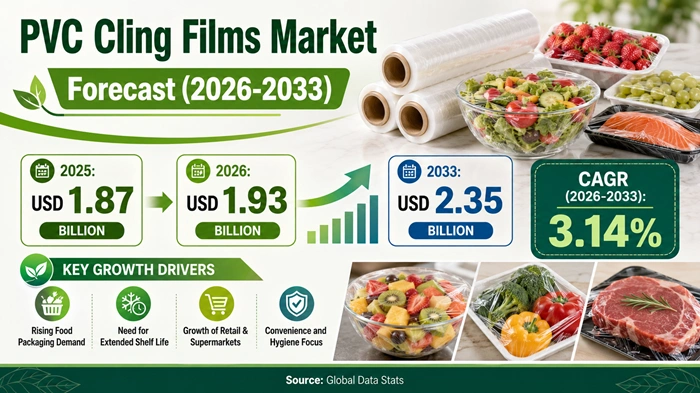
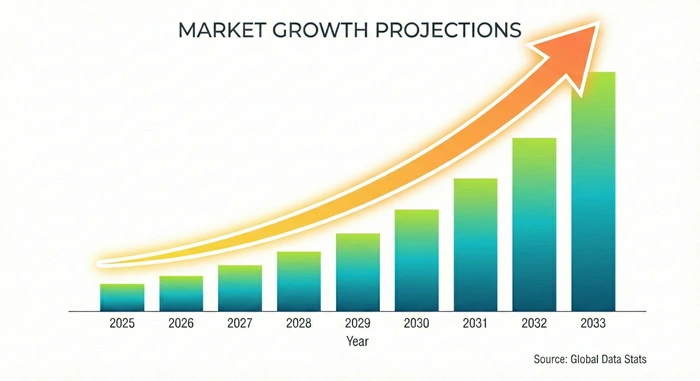
The global PVC cling films market size is valued at USD 1.87 billion in 2025 and is predicted to increase from USD 1.93 billion in 2026 to approximately USD 2.35 billion by 2033, growing at a CAGR of 3.14% from 2026 to 2033.
The PVC cling films market represents a vital segment of the global packaging industry, delivering essential protective solutions for food preservation and non-food applications across residential and commercial sectors. These transparent films manufactured from polyvinyl chloride polymer offer exceptional cling properties that create protective barriers against moisture, contaminants, and external elements without requiring adhesives. The unique self-sealing characteristics combined with clarity, flexibility, and cost-effectiveness make these films indispensable for wrapping perishable foods, securing containers, and protecting various products during storage and transportation.
Market expansion is fueled by changing consumer lifestyles characterized by increasing demand for convenient food storage solutions, rising adoption of ready-to-eat meals, and growing awareness about food safety and hygiene standards. The surge in e-commerce food delivery services alongside expanding retail infrastructure in developing economies continues to drive substantial demand for reliable packaging materials that extend shelf life while maintaining product freshness and visual appeal throughout distribution channels.
AI Impact on the PVC Cling Films Industry
Revolutionizing Production Efficiency and Quality Control Through Intelligent Automation
Artificial intelligence is transforming the PVC cling films market by introducing advanced algorithms that optimize production parameters and enhance quality assurance across manufacturing operations. Machine learning systems analyze real-time production data to identify optimal temperature settings, extrusion speeds, and material compositions that maximize film clarity while minimizing defects and material waste. AI-powered sensors detect microscopic inconsistencies in film thickness, surface quality, and cling properties during production runs, enabling immediate corrective adjustments that ensure consistent product performance and reduce rejection rates across high-volume manufacturing facilities.
Predictive analytics platforms are revolutionizing supply chain management and demand forecasting by processing historical sales patterns, seasonal variations, and market trends to anticipate fluctuations in the PVC cling films market requirements. These intelligent systems help manufacturers optimize inventory levels, reduce storage costs, and ensure timely product availability to meet customer demands across diverse geographic markets. AI-enabled research and development tools accelerate innovation by simulating various polymer formulations and testing virtual prototypes, significantly reducing the time and expense associated with developing next-generation films featuring enhanced barrier properties, improved sustainability credentials, and specialized functionalities for specific application requirements.
Growth Factors
Rising Demand for Convenient Food Packaging Driving Market Expansion
The accelerating pace of modern lifestyles characterized by increasing urbanization and dual-income households is fundamentally reshaping consumption patterns and driving robust growth in the PVC cling films market. Consumers increasingly prioritize convenience and time-saving solutions, leading to heightened demand for pre-packaged foods, meal preparation services, and home food storage products that rely on effective wrapping materials. The growing trend of meal prepping and batch cooking among health-conscious consumers requires reliable films that maintain freshness across extended storage periods while providing clear visibility of wrapped contents for easy identification in refrigerators and freezers.
E-commerce expansion and online food delivery platforms have created unprecedented opportunities for growth in the PVC cling films market as restaurants, cloud kitchens, and food aggregators require dependable packaging solutions that protect products during transportation. The proliferation of grocery delivery services and direct-to-consumer food businesses demands films that combine excellent cling properties with durability to withstand handling throughout complex logistics networks. Rising consumer expectations for food safety and hygiene have elevated packaging standards, with PVC cling films providing cost-effective solutions that meet regulatory requirements while delivering the protective performance necessary to prevent contamination and preserve product quality from preparation through final consumption.
Market Outlook
Sustainability Initiatives Reshaping Material Development and Market Strategies
The PVC cling films market is experiencing significant transformation as environmental concerns and regulatory pressures drive innovation toward more sustainable formulations and production methods. Manufacturers are investing heavily in research programs focused on developing bio-based additives, recycled content integration, and thinner gauge films that reduce material consumption without compromising protective performance. Industry leaders are collaborating with recycling infrastructure providers to establish collection and recovery systems that address end-of-life disposal challenges while demonstrating corporate environmental responsibility to increasingly eco-conscious consumers and retailers demanding sustainable packaging alternatives.
Technological advancement in film production is opening new application possibilities and market segments for specialized PVC cling films products. Innovations including anti-fog coatings that maintain clarity on chilled products, high-barrier formulations that extend shelf life for oxygen-sensitive foods, and enhanced puncture resistance for heavy-duty applications are creating differentiation opportunities in competitive markets. The integration of smart packaging features such as freshness indicators, temperature-sensitive elements, and tamper-evident properties is transforming traditional passive packaging into active systems that provide value-added functionality, positioning the PVC cling films market for continued evolution and expansion across diverse end-use applications throughout the forecast period.
Expert Speaks
-
Peter Konieczny, CEO of Amcor, emphasized that the company is uniquely positioned to meet evolving customer and consumer needs through enhanced innovation and research capabilities, stating that their combination delivers a broader, more complete offering for customers with material science capabilities required to revolutionize product development.
-
Industry executives from Graphic Packaging International highlighted the shift toward sustainable packaging solutions, noting that consumers are increasingly demanding eco-friendly alternatives while food prices and economic factors influence purchasing decisions across different income segments in the packaging market.
-
Leadership from Berry Global (now merged with Amcor) expressed excitement about transforming the future of packaging through combined capabilities, emphasizing that their integrated operations enable faster growth and more comprehensive global service that neither company could accomplish independently.
Key Report Takeaways
-
Asia Pacific dominates the PVC cling films market with the largest regional share driven by rapid urbanization, expanding middle-class populations, growing disposable incomes, and increasing adoption of packaged food products across major economies including China, India, and Southeast Asian nations, accounting for approximately 38% of global market value in 2025.
-
North America represents the fastest-growing regional market with projected CAGR exceeding 3.8% during the forecast period, fueled by advanced film technology innovations improving clarity and durability, expanding e-commerce food delivery infrastructure, and heightened focus on maintaining product quality during transit across extensive distribution networks.
-
Manual or handheld films segment commands the dominant market position holding approximately 56% share in 2025, preferred for household applications due to ease of use, affordability, and versatility in wrapping various food items for preservation and storage, with growing demand driven by increasing consumer awareness about food safety and home cooking trends.
-
Food packaging applications account for the largest end-use segment representing over 62% of total market consumption, driven by extensive utilization in wrapping perishable items including meat, poultry, seafood, fresh produce, dairy products, and bakery goods where films provide essential moisture barriers and contamination protection.
-
Films with 10 to 15 microns thickness dominate the market share at approximately 44% in 2025, offering optimal balance between protective performance and material efficiency for diverse applications across food industry, healthcare, and consumer goods sectors requiring reliable barrier properties with cost-effective material usage.
-
Machine films segment is positioned as the fastest-growing product category with anticipated CAGR of 3.6% through 2033, driven by increasing automation in food processing facilities, packaging operations requiring high-volume consistent wrapping, and industrial applications where efficiency and labor reduction deliver significant operational advantages.
Market Scope
| Report Coverage | Details |
|---|---|
| Market Size by 2033 | USD 2.35 Billion |
| Market Size by 2025 | USD 1.87 Billion |
| Market Size by 2026 | USD 1.93 Billion |
| Market Growth Rate from 2026 to 2033 | CAGR of 3.14% |
| Dominating Region | Asia Pacific |
| Fastest Growing Region | North America |
| Base Year | 2025 |
| Forecast Period | 2026 to 2033 |
| Segments Covered | By Product Type, By Thickness, By End Use, and By Region |
| Regions Covered | North America, Europe, Asia Pacific, Latin America, and Middle East & Africa |
Market Dynamics
Drivers Impact Analysis
Surging Popularity of Ready-Made Diets and Convenience Foods Accelerating Demand
| Factor | (≈) % Impact on CAGR Forecast | Geographic Relevance | Impact Timeline |
|---|---|---|---|
| Convenience Food Growth | +0.9% | Global, strongest in North America and Asia Pacific | 2026-2033 |
| E-commerce Expansion | +0.7% | Asia Pacific, North America | 2026-2032 |
| Food Safety Awareness | +0.6% | Global | 2025-2033 |
The explosive growth in popularity of convenient food items and ready-made meal solutions driven by increasingly busy lifestyles and time constraints is creating substantial expansion opportunities in the PVC cling films market. Modern consumers juggling professional responsibilities and personal commitments are gravitating toward packaged foods, pre-portioned meals, and quick-preparation options that minimize cooking time while maintaining nutritional quality and taste preferences. This fundamental shift in dietary habits requires reliable packaging solutions that preserve freshness, prevent contamination, and maintain product appeal throughout distribution and storage periods, directly boosting demand for high-performance cling films across retail and food service channels.
Food industry companies are actively seeking packaging producers capable of delivering effective, high-quality wrapping solutions at competitive price points to maintain profitability while meeting consumer expectations for product presentation and safety. The unique ability of polyvinyl chloride cling films to form secure seals by adhering to containers and themselves without adhesives represents a major benefit that simplifies application and reduces packaging complexity. Cost-effectiveness combined with reliable performance positions PVC cling films as preferred choices for businesses ranging from small food vendors to large-scale commercial operations, supporting sustained market growth throughout the forecast period as convenience food consumption continues its upward trajectory across diverse consumer demographics and geographic markets.
Restraints Impact Analysis
Stringent Food Safety Regulations Creating Compliance Challenges
| Factor | (≈) % Impact on CAGR Forecast | Geographic Relevance | Impact Timeline |
|---|---|---|---|
| Regulatory Restrictions | -0.6% | Europe, North America | 2026-2033 |
| Environmental Concerns | -0.5% | Europe, Asia Pacific | 2025-2030 |
| Alternative Materials Competition | -0.4% | Global | 2027-2033 |
The increasingly stringent regulatory landscape governing food safety and plastic packaging materials represents a significant restraint factor impacting the PVC cling films market expansion. Food safety organizations and regulatory authorities across major markets have implemented comprehensive guidelines addressing packaging material composition, migration limits for chemical substances, and labeling requirements that create compliance burdens for manufacturers. These regulations require extensive testing protocols, documentation systems, and quality assurance processes that increase operational costs and extend product development timelines, potentially limiting market entry for smaller producers while challenging established companies to maintain compliance across diverse regional regulatory frameworks.
Growing environmental scrutiny focused on plastic packaging waste and concerns about PVC polymer recycling challenges are creating headwinds for market growth as consumers and advocacy groups pressure brands to adopt alternative materials. Legislative initiatives in European Union countries and other developed markets targeting single-use plastics and promoting circular economy principles have introduced uncertainty regarding long-term viability of conventional PVC cling films in certain applications. The availability of substitute materials including polyethylene-based films, biodegradable options, and reusable container systems provides alternatives that may capture market share in environmentally sensitive segments, requiring the PVC cling films market to adapt through innovation in recyclability, sustainable sourcing, and transparent communication about product lifecycle impacts to maintain competitive positioning.
Opportunities Impact Analysis
Advanced Packaging Technologies Creating Innovation Pathways
| Factor | (≈) % Impact on CAGR Forecast | Geographic Relevance | Impact Timeline |
|---|---|---|---|
| Technology Integration | +0.8% | North America, Europe | 2027-2033 |
| Emerging Markets Growth | +0.9% | Asia Pacific, Latin America | 2025-2032 |
| Specialized Formulations | +0.6% | Global | 2026-2033 |
The rising integration of advanced packaging technologies presents substantial opportunities for differentiation and value creation in the PVC cling films market. Manufacturers are focusing on enhancing machinability characteristics that ensure smoother operations on automated packaging lines, improving sealing properties that reduce product waste, and developing specialized formulations that address specific performance requirements across diverse applications. These technological improvements contribute to increased operational efficiency, reduced downtime, and higher throughput in packaging processes, delivering measurable benefits for both producers and end users while creating competitive advantages for innovative companies capable of translating technical capabilities into market-leading products.
Growing demand for specialized performance attributes including condensation resistance and superior anti-fog properties is opening new market segments in the PVC cling films market. Fresh food packaging applications particularly benefit from films that maintain clarity when exposed to temperature differentials, enhancing product visibility and consumer appeal in refrigerated display cases and cold storage environments. The development of high-barrier formulations offering enhanced protection against oxygen and moisture transmission enables extended shelf life for sensitive products, creating value for retailers and consumers while reducing food waste throughout supply chains. These technological advancements play crucial roles in enhancing overall product performance and quality, addressing both aesthetic presentation needs and functional requirements that drive purchasing decisions across evolving market landscapes.
Segment Analysis
By Product Type
Manual or Handheld Films Commanding Dominant Market Position Through Versatility
Manual or handheld films secured the leading position in the PVC cling films market in 2025 with approximately 56% market share, growing at a projected CAGR of 2.9% through 2033. This segment's dominance stems from widespread adoption across household applications where consumers value the ease of use, immediate availability, and versatility for wrapping diverse food items ranging from leftovers to fresh produce. The growing preference for meal prepping and home cooking trends fueled by health consciousness and economic considerations has elevated demand for convenient packaging solutions that preserve food freshness without requiring specialized equipment or training. Asia Pacific and North America represent the strongest regional markets for handheld films, driven by large residential populations, high food consumption rates, and established retail distribution channels making products readily accessible to consumers through supermarkets, convenience stores, and e-commerce platforms.
The segment benefits from ongoing product innovations by leading manufacturers including Berry Global, Sealed Air Corporation, and Pactiv Evergreen who continuously enhance film properties such as improved cling characteristics, better tear resistance, and enhanced clarity that appeals to quality-conscious consumers. Affordability remains a critical factor driving handheld film adoption as budget-conscious households seek cost-effective solutions for food storage and preservation compared to more expensive alternatives like specialized containers or premium wrapping materials. The practical solution provided by manual films for preserving freshness of perishable goods including meats, vegetables, fruits, and prepared meals addresses fundamental consumer needs that transcend economic cycles and demographic variations. Developing markets particularly in Asia Pacific regions show robust growth trajectories as rising disposable incomes enable increased spending on convenience products while urbanization drives demand for practical food storage solutions in smaller living spaces characteristic of metropolitan areas experiencing rapid population growth and lifestyle transformation.
Machine Films Emerging as Fastest-Growing Segment Through Industrial Automation
Machine films represent the fastest-growing product segment in the PVC cling films market with anticipated CAGR of 3.6% from 2026 through 2033, driven by increasing automation trends across food processing and packaging industries. This segment's acceleration reflects the suitability and efficiency advantages these films provide for high-volume packaging operations where speed, consistency, and labor cost reduction deliver significant competitive benefits to commercial users. Industries requiring fast-paced packaging lines including large-scale food manufacturing, meat processing facilities, and centralized distribution centers are investing heavily in automated wrapping systems that utilize machine films to secure products, improve presentation quality, and maintain hygiene standards throughout production environments where manual handling would be impractical or economically inefficient.
The consistent stretchability and uniform thickness characteristics of machine films make them ideal for securing bulk goods, large shipments, and standardized product configurations where automated equipment requires predictable material performance. North America and Europe lead adoption in this segment, with major food processors and logistics companies implementing sophisticated packaging automation to address labor shortages, maintain quality consistency, and optimize operational throughput in competitive market environments. Companies such as Berry Global, Mondi Group, and Constantia Flexibles are developing specialized machine film formulations engineered for specific automated packaging equipment, offering enhanced compatibility with various wrapping machines, improved seal strength, and better performance at high processing speeds. The ongoing industrial trend toward automation driven by labor cost pressures, quality control requirements, and efficiency mandates positions machine films for sustained rapid growth as more facilities upgrade legacy manual processes with modern automated systems that rely on these specialized film products to achieve operational objectives.
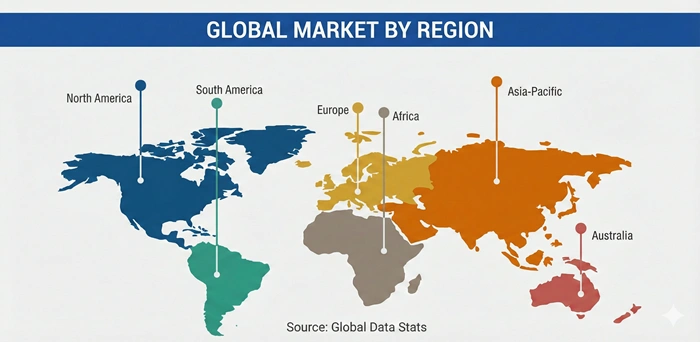
Regional Insights
Asia Pacific
Regional Dominance Through Population Scale and Economic Development
Asia Pacific dominates the global PVC cling films market with approximately 38% market share in 2025, growing at a projected CAGR of 3.2% through the forecast period. This leadership position reflects the region's massive population base, rapid urbanization patterns, and rising disposable incomes that fuel increasing demand for packaged food products and modern retail experiences. Countries including China, India, Japan, South Korea, and Southeast Asian nations are experiencing fundamental transformations in consumer behavior characterized by growing middle-class populations adopting Western-style convenience foods, expanding supermarket and hypermarket infrastructure replacing traditional wet markets, and increasing awareness about food safety and hygiene standards that elevate packaging quality expectations across diverse product categories.
Regional market strength is supported by robust manufacturing capabilities and established supply chains serving both domestic consumption and export markets. Leading companies operating in Asia Pacific include Nan Ya Plastics (Taiwan), Rengo Co., Ltd. (Japan), Changzhou Plastics Researching and Manufacturing (China), and Jiashan Hengyu Plastic (China) who leverage local production advantages including proximity to raw material sources, lower manufacturing costs, and deep understanding of regional consumer preferences to maintain competitive positions. India shows particularly strong growth trajectories driven by expanding retail sectors, increasing consumer awareness about product hygiene and quality, and rising demand for packaged foods in urban areas where modern lifestyles necessitate convenient storage solutions. The growing trend of online shopping and e-commerce platforms throughout Asia Pacific further accelerates demand for reliable packaging materials that protect products during last-mile delivery, positioning the region for continued market leadership as economic development and consumer sophistication advance across diverse national markets.
North America
Fastest Regional Growth Through Technology Leadership and E-Commerce Expansion
North America represents the fastest-growing regional market in the PVC cling films sector with anticipated CAGR exceeding 3.8% during the forecast period. This exceptional growth rate is driven by continuous advancements in film technology that improve clarity, durability, and specialized performance characteristics demanded by sophisticated consumers and commercial users seeking premium packaging solutions. The region's mature retail infrastructure, well-established food safety regulatory frameworks, and high consumer expectations for product quality create market conditions favoring innovation and premium positioning that support higher value capture compared to price-sensitive emerging markets where commodity competition dominates purchasing decisions.
The explosive expansion of e-commerce food delivery services and direct-to-consumer fresh food businesses throughout the United States and Canada is creating unprecedented demand for the PVC cling films market products that maintain quality during complex distribution networks. Major food retailers, meal kit providers, and online grocery platforms require dependable films that preserve freshness across extended transit times while meeting stringent safety standards for food contact materials. Leading companies serving North American markets include Sealed Air Corporation (United States), Berry Global (United States), Pactiv Evergreen (United States), and US Packaging and Wrapping (United States) who continuously invest in research and development to deliver innovative solutions addressing evolving customer requirements. The focus on maintaining product quality during transit reflects broader supply chain priorities in a geographically expansive market where products often travel significant distances between production facilities and final consumers. Regional growth dynamics indicate sustained momentum throughout the forecast period as technological innovation, e-commerce penetration, and premium product positioning converge to drive market expansion across diverse commercial and residential applications.
Top Key Players
-
Berry Global Group, Inc. (United States)
-
Sealed Air Corporation (United States)
-
Pactiv Evergreen (United States)
-
Amcor plc (Australia)
-
Mondi Group (Austria)
-
Nan Ya Plastics Corporation (Taiwan)
-
Constantia Flexibles Group GmbH (Austria)
-
Uflex Limited (India)
-
Jindal Poly Films Limited (India)
-
Rengo Co., Ltd. (Japan)
-
Huhtamaki Oyj (Finland)
-
CCL Industries Inc. (Canada)
Recent Developments
-
In February 2025, IPG, a global provider of packaging and protective solutions, announced the launch of its new American brand Plastic Sheeting available in both Performance and Ultra films, designed to provide superior surface protection across various applications including food packaging and industrial uses.
-
In April 2025, Amcor completed its transformational all-stock combination with Berry Global ahead of schedule, creating a broader consumer and healthcare packaging leader with enhanced material science capabilities and anticipated synergy benefits of approximately USD 650 million by the end of fiscal year 2028.
-
In April 2024, Berry Global launched a new version of its Omni Xtra polyethylene cling film specifically engineered for fresh food applications, offering a high-performance alternative to traditional polyvinyl chloride films with improved elasticity, uniform stretching behavior, and enhanced impact resistance characteristics.
-
In March 2024, Mondi Group announced strategic investments in sustainable packaging technologies including development of recyclable film solutions and bio-based material alternatives aimed at addressing growing environmental concerns while maintaining performance standards required for food packaging applications across European and North American markets.
-
In January 2024, Sealed Air Corporation expanded its automated packaging systems portfolio with next-generation wrapping equipment optimized for machine films, delivering improved operational efficiency and reduced material consumption for high-volume food processing and distribution facilities in industrial applications.
Market Trends
Sustainability Transformation Driving Material Innovation and Circular Economy Initiatives
The PVC cling films market is undergoing fundamental transformation as sustainability concerns reshape material development priorities and corporate strategies across the packaging industry. Manufacturers are responding to consumer demands and regulatory pressures by investing in research programs focused on developing alternative materials that align with recycling guidelines, reduce carbon footprints, and meet preferences for eco-friendly products without compromising the protective performance and cost advantages that have historically defined PVC films. Leading companies are exploring bio-based additives derived from renewable resources, integrating recycled content into film formulations, and engineering thinner gauge products that reduce material consumption while maintaining adequate strength and barrier properties for intended applications.
Industry collaboration with waste management infrastructure providers and recycling technology developers is accelerating as companies recognize that addressing end-of-life disposal challenges requires systemic solutions extending beyond individual corporate capabilities. Forward-thinking manufacturers are participating in industry consortiums developing closed-loop recycling systems, supporting legislative frameworks that incentivize material recovery, and implementing take-back programs that demonstrate corporate environmental responsibility to increasingly eco-conscious consumers. This sustainability transformation reflects broader societal shifts where environmental credentials have become essential components of brand reputation and competitive positioning, particularly in European and North American markets where regulatory frameworks are advancing circular economy principles and consumers actively consider packaging sustainability in purchasing decisions affecting the PVC cling films market trajectory.
Digital Integration and Smart Packaging Creating New Functionality Dimensions
Technological convergence is introducing smart packaging capabilities into the PVC cling films market as manufacturers integrate digital features that transform passive wrapping materials into active information systems. Innovations including printed QR codes enabling product traceability, temperature-sensitive indicators providing visual freshness cues, and embedded sensors detecting environmental conditions are creating new value propositions that extend beyond traditional protective functions. These intelligent packaging elements address growing consumer demands for transparency regarding product origins, handling conditions, and storage appropriateness while providing manufacturers and retailers with valuable supply chain data that informs inventory management, quality assurance protocols, and customer engagement strategies throughout distribution networks from production facilities to final consumers.
Segments Covered in the Report
By Product Type
-
Manual or Handheld Films
-
Machine Films
By Thickness
-
Up to 10 Microns
-
10 to 15 Microns
-
15 to 20 Microns
-
Above 20 Microns
By End Use
-
Food Packaging
-
Meat, Poultry, and Seafood
-
Fresh Produce
-
Frozen Food
-
Bakery and Confectionery
-
Others
-
-
Non-Food Packaging
-
Industrial Goods
-
Electronics
-
Medical and Pharmaceutical
-
Others
-
By Region
-
North America
-
United States
-
Canada
-
Mexico
-
-
Europe
-
Germany
-
United Kingdom
-
France
-
Italy
-
Spain
-
Rest of Europe
-
-
Asia Pacific
-
China
-
India
-
Japan
-
South Korea
-
Australia
-
Southeast Asia
-
Rest of Asia Pacific
-
-
Latin America
-
Brazil
-
Argentina
-
Rest of Latin America
-
-
Middle East and Africa
-
GCC Countries
-
South Africa
-
Rest of Middle East and Africa
-
Frequently Asked Questions
Question 1: What is the expected size of the PVC cling films market by 2033?
Answer: The global PVC cling films market is projected to reach USD 2.35 billion by 2033, growing from USD 1.87 billion in 2025. This growth is driven by increasing demand for convenient food packaging and expanding e-commerce delivery services.
Question 2: Which region dominates the global PVC cling films market currently?
Answer: Asia Pacific dominates the PVC cling films market with approximately 38% market share in 2025, driven by rapid urbanization and rising disposable incomes. The region benefits from large population bases and growing adoption of packaged food products.
Question 3: What is the growth rate forecast for the PVC cling films market from 2026 to 2033?
Answer: The PVC cling films market is anticipated to grow at a CAGR of 3.14% from 2026 to 2033. This steady growth reflects increasing food safety awareness and expanding convenience food consumption patterns globally.
Question 4: Which application segment leads the PVC cling films market consumption?
Answer: Food packaging applications dominate the PVC cling films market with over 62% of total consumption in 2025. This segment includes wrapping for meat, poultry, seafood, fresh produce, and dairy products requiring moisture protection.
Question 5: What are the primary drivers of growth in the PVC cling films market?
Answer: Key growth drivers in the PVC cling films market include rising demand for ready-made diets, expanding e-commerce food delivery services, and increasing consumer awareness about food safety. Busy lifestyles and urbanization also contribute to market expansion.