
Pulmonary Embolism Market Overview
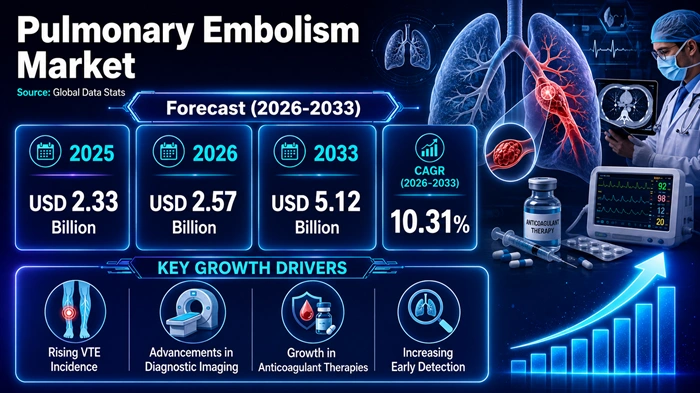
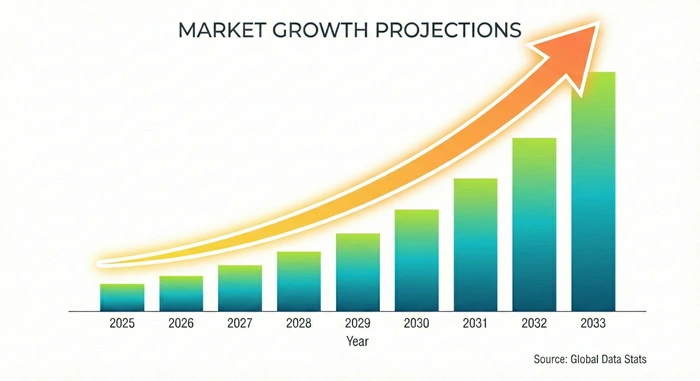
The global pulmonary embolism market size is valued at USD 2.33 billion in 2025 and is predicted to increase from USD 2.57 billion in 2026 to approximately USD 5.12 billion by 2033, growing at a CAGR of 10.31% from 2026 to 2033.
Pulmonary embolism (PE) — a serious and often life-threatening condition in which one or more arteries in the lungs become blocked by blood clots — affects nearly 900,000 people annually in the United States alone and is a leading cause of preventable hospital mortality worldwide. The market encompasses anticoagulant and thrombolytic medications, advanced catheter-based mechanical therapies, diagnostic imaging systems, and associated patient monitoring solutions. Expanding disease incidence linked to aging populations, rising obesity rates, sedentary lifestyles, and cancer-related hypercoagulability, combined with strong innovation in minimally invasive treatment technology, is driving robust and sustained commercial growth across all major geographies.
AI Impact on the Pulmonary Embolism Industry
AI-Powered Diagnostic Imaging Analysis, Predictive Risk Stratification, and Clinical Decision Support Tools Are Transforming Early Detection and Treatment Optimization in Pulmonary Embolism Management
Artificial intelligence is making meaningful inroads into the pulmonary embolism diagnostic and treatment pathway. AI-assisted computed tomography pulmonary angiography (CTPA) analysis platforms are now capable of automatically detecting pulmonary emboli in CT chest images, flagging the precise anatomical location, size, and burden of clot with accuracy comparable to experienced radiologists — while processing images within seconds of scan completion. In high-volume emergency radiology environments, this capability is reducing time-to-diagnosis for critically ill PE patients, enabling faster triage decisions and earlier treatment initiation at the points where clinical outcome is most strongly influenced by treatment speed. Several AI imaging platforms have received FDA clearance for PE detection assistance, and their adoption is growing among emergency radiology departments and pulmonary embolism response teams (PERT) in North American and European academic medical centers.
Beyond imaging, AI is enabling a new generation of PE risk stratification tools that synthesize clinical variables — including patient age, vital signs, biomarker data, coagulation parameters, right heart function imaging, and comorbidities — into composite risk scores that guide treatment intensity decisions with greater accuracy than conventional validated scoring systems. AI-driven models are demonstrating superior discrimination between low-, intermediate-, and high-risk PE presentations, informing choices between outpatient anticoagulation, systemic thrombolysis, and catheter-directed intervention with a precision that reduces both under-treatment in high-risk cases and over-treatment complications in lower-risk presentations. For the pulmonary embolism market, this AI-enhanced clinical decision support capability is directly influencing treatment guideline development and is expected to support expansion of advanced therapeutic options — including catheter-directed thrombectomy — by enabling better patient selection for these higher-margin intervention procedures.
Growth Factors
Rising VTE Incidence, Aging Demographics, and the Broad Clinical Adoption of Safer Direct Oral Anticoagulants Are the Three Most Powerful Commercial Drivers Sustaining Market Expansion
The escalating global burden of venous thromboembolism (VTE) — of which pulmonary embolism is the most clinically serious manifestation — is the primary structural demand driver in the pulmonary embolism market. PE affects an estimated 600,000 to 1 million people annually in the U.S. and represents one of the most significant preventable causes of hospital deaths globally. The incidence of PE is rising in parallel with several established risk factor populations that are themselves expanding globally — including older adults (where PE incidence increases sharply with age, approximately doubling every decade after age 55), cancer patients (in whom hypercoagulability significantly elevates PE risk), obese individuals, surgical patients, and patients with prolonged immobility from medical illness or long-haul travel. Each of these populations is growing, making the underlying PE disease burden an expanding and commercially reliable demand base for both preventive and acute-treatment products.
The widespread adoption of direct oral anticoagulants (DOACs) — specifically apixaban, rivaroxaban, dabigatran, and edoxaban — has been one of the most commercially impactful developments in the PE treatment landscape over the past decade. DOACs offer superior convenience compared to vitamin K antagonists like warfarin, requiring no routine INR monitoring, providing predictable pharmacokinetics, and demonstrating comparable or superior efficacy with a more favorable bleeding risk profile in clinical trials. These attributes have supported rapid guideline uptake, with the American Heart Association, European Society of Cardiology, and European Respiratory Society all endorsing DOACs as the preferred first-line anticoagulants for non-massive PE in the absence of contraindications. DOAC market penetration in PE management now exceeds 70% of appropriate cases in developed markets, and growing adoption in Asia Pacific, Latin America, and the Middle East is creating significant incremental volume for leading manufacturers including Pfizer, Bristol-Myers Squibb (apixaban/Eliquis), Bayer, and Janssen Pharmaceuticals (rivaroxaban/Xarelto).
Market Outlook
The Pulmonary Embolism Market Is Positioned for High-Growth Through 2033, Driven by Catheter-Directed Therapy Expansion, PERT Program Development, and Emerging Market Penetration
The market outlook for the pulmonary embolism market through 2033 is defined by a transition from predominantly medication-based management toward a more clinically stratified treatment ecosystem that integrates advanced catheter-directed interventions alongside pharmaceutical therapy. Catheter-directed thrombectomy and thrombolysis — which reduce clot burden mechanically while minimizing the systemic bleeding risk associated with full-dose systemic thrombolysis — are gaining strong clinical endorsement for intermediate- and high-risk PE patients who previously had limited treatment options between anticoagulation alone and high-risk systemic thrombolysis. Meta-analyses and registry data from large PERT programs are demonstrating significantly lower mortality rates, improved hemodynamic recovery, and acceptable complication profiles for catheter-directed approaches in appropriately selected patients, building the evidence base that translates into expanded clinical use and insurance reimbursement in North American and European markets.
The institutional development of pulmonary embolism response teams (PERTs) — multidisciplinary hospital teams involving pulmonology, cardiology, hematology, interventional radiology, and cardiac surgery specialists who collaborate in real time to make treatment decisions for complex PE cases — is reshaping the clinical care pathway in ways that directly benefit the pulmonary embolism therapeutics and devices market. PERT programs correlate with increased utilization of advanced therapies, higher catheter-based intervention rates, lower in-hospital mortality, and reduced 30-day readmission. As PERT programs expand from large academic medical centers into community hospitals across North America and Europe, and as similar models are piloted in Japan, Australia, and the Gulf states, the organizational infrastructure for advanced PE management technology adoption is progressively maturing across a much broader hospital base than previously accessible.
Expert Speaks
-
"Pulmonary embolism remains one of the most significant preventable causes of hospital mortality, and the advancement of catheter-directed therapies alongside more precise diagnostic tools is fundamentally changing outcomes for patients. Our commitment to developing next-generation PE treatment solutions reflects the enormous unmet need that remains in both acute management and long-term anticoagulation for this challenging condition." — CEO, Medtronic plc
-
"The adoption of direct oral anticoagulants has transformed the PE treatment landscape by making effective anticoagulation accessible, convenient, and safer for patients across a much wider range of clinical settings — from emergency department discharge to primary care follow-up. We continue to invest in expanding the evidence base for our anticoagulation portfolio in VTE management globally." — CEO, Pfizer Inc.
-
"Pulmonary embolism response teams and catheter-based intervention platforms are proving their value in clinical outcomes data, and we are seeing growing hospital investment in the infrastructure and devices needed to deliver these advanced therapies. The pulmonary embolism market is entering a period of accelerated innovation that will benefit patients, providers, and shareholders significantly." — CEO, Inari Medical Inc.
Key Report Takeaways
-
North America leads the global pulmonary embolism market with approximately 38% revenue share in 2025, anchored by the high annual PE incidence affecting nearly 900,000 patients in the U.S., advanced diagnostic imaging infrastructure, widespread CTPA utilization in emergency departments, rapid adoption of DOACs and catheter-directed therapies, and strong insurance reimbursement for both pharmacological and interventional PE treatments
-
Asia Pacific is the fastest-growing regional market, projected to expand at approximately 11.5% CAGR through 2033, driven by rapidly aging populations across China, Japan, and South Korea, rising PE incidence linked to growing obesity and metabolic disease rates, expanding diagnostic imaging infrastructure and CT scanning capacity, and increasing physician awareness of evidence-based PE treatment protocols
-
Medications dominate the treatment segment, accounting for approximately 68% of total treatment segment revenue in 2025, with anticoagulants — particularly DOACs — representing the overwhelming majority of first-line PE management across both inpatient and outpatient settings globally, supported by their clinical guideline endorsement, favorable safety profiles, and established commercial manufacturing infrastructure
-
CT scan/CTPA is the leading diagnostic segment, holding approximately 52% of total diagnostic revenue in 2026, as computed tomography pulmonary angiography remains the gold standard for rapid, highly sensitive PE detection in emergency settings, achieving sensitivity and specificity exceeding 95% and enabling concurrent evaluation of alternative diagnoses alongside PE confirmation
-
Hospitals represent the dominant end-user segment with approximately 62% of total end-user revenue in 2025, as the acute and life-threatening nature of PE diagnosis and treatment requires comprehensive inpatient infrastructure including emergency imaging, anticoagulation monitoring, interventional radiology capabilities, and intensive care facilities
-
Mechanical devices (catheter-directed thrombectomy and thrombolysis systems) represent the fastest-growing treatment segment, expected to expand at the highest CAGR through 2033 as PERT program development, improving evidence bases, and new-generation large-bore thrombectomy device approvals drive utilization expansion among intermediate- and high-risk PE patient populations globally
Market Scope
| Report Coverage | Details |
|---|---|
| Market Size by 2033 | USD 5.12 Billion |
| Market Size by 2025 | USD 2.33 Billion |
| Market Size by 2026 | USD 2.57 Billion |
| Market Growth Rate from 2026 to 2033 | CAGR of 10.31% |
| Dominating Region | North America |
| Fastest Growing Region | Asia Pacific |
| Base Year | 2025 |
| Forecast Period | 2026 to 2033 |
| Segments Covered | Treatment, Drug Class, Diagnosis, End User, Region |
| Regions Covered | North America, Europe, Asia Pacific, Latin America, Middle East & Africa |
Market Dynamics
Drivers Impact Analysis
Rising VTE Disease Burden Combined with the Clinical Transition from Vitamin K Antagonists to Next-Generation Direct Oral Anticoagulants Are the Two Most Commercially Significant Market Growth Drivers
| Driver | ≈ % Impact on CAGR Forecast | Geographic Relevance | Impact Timeline |
|---|---|---|---|
| Rising global incidence of VTE linked to aging, obesity, and cancer | ~36% | Global, led by North America, Europe | Short to long-term |
| Broad clinical adoption of DOACs replacing warfarin in PE management | ~27% | Global | Short to medium-term |
| Expanding catheter-directed thrombectomy and PERT program development | ~24% | North America, Europe, Asia Pacific | Medium to long-term |
| Growing diagnostic infrastructure and CTPA adoption in emerging markets | ~13% | Asia Pacific, Latin America, MEA | Medium to long-term |
The rising global incidence of pulmonary embolism — directly tied to the expanding populations of its primary risk factor groups — is the most consistent and commercially reliable driver of the pulmonary embolism market. Adults over 65 experience PE at a rate of approximately 1.3–2.8 per 1,000 person-years, and this rate is rising as the over-65 population grows in virtually every geography. Cancer-associated thrombosis, which accounts for approximately 20% of all VTE events and correlates with the rising global cancer burden, is a second major risk population expanding independently of age-related trends. Obesity — itself a strong and independent PE risk factor with a dose-response relationship to VTE incidence — is growing in prevalence across North America, Europe, and increasingly Asia Pacific and Latin America, compounding the age and cancer-related demand expansion. Each of these risk factor populations is growing on its own multi-decade demographic trajectory, creating a durable and structurally expanding patient base for PE diagnosis and treatment products.
The transition from warfarin-based anticoagulation to DOACs is the most commercially impactful single therapeutic shift in the recent history of the pulmonary embolism market. Warfarin's requirements for regular INR monitoring, numerous drug and dietary interactions, unpredictable dose-response curves, and higher intracranial bleeding risk made it clinically inconvenient for both patients and prescribers. DOACs eliminate these limitations while delivering comparable or superior clinical outcomes across PE treatment indications, enabling outpatient management of selected low-risk PE patients that was previously only safely achievable with low-molecular-weight heparin in monitored inpatient settings. This capability has both improved patient convenience and reduced per-episode healthcare costs by avoiding hospitalization for appropriately selected patients, making DOACs simultaneously a clinical and economic improvement — a combination that invariably accelerates adoption through payer and prescriber incentives aligned.
Restraints Impact Analysis
Bleeding Risks Associated with Anticoagulant and Thrombolytic Therapies and High Treatment Costs in Emerging Markets Are the Two Primary Constraints on Faster Market Growth
| Restraint | ≈ % Impact on CAGR Forecast | Geographic Relevance | Impact Timeline |
|---|---|---|---|
| Significant bleeding risk limiting anticoagulant and thrombolytic use in high-risk patients | ~40% | Global | Short to long-term |
| High cost of catheter-based interventions limiting adoption in lower-income markets | ~29% | Latin America, MEA, parts of Asia Pacific | Medium to long-term |
| Complex diagnosis and risk stratification challenges in emergency settings | ~19% | Global, especially emerging markets | Short to medium-term |
| Competition from generic anticoagulants compressing pharmaceutical segment margins | ~12% | Global | Ongoing |
The bleeding risk associated with anticoagulant and thrombolytic PE therapies remains the most clinically significant and commercially consequential barrier in the pulmonary embolism market. Systemic thrombolytic therapy — used for hemodynamically unstable massive PE — carries major bleeding rates of 13–20% and a 2–3% risk of catastrophic intracranial hemorrhage, which significantly limits its use to only the highest-risk patient presentations where the mortality benefit clearly outweighs the bleeding risk. Even DOACs, which have substantially better safety profiles than vitamin K antagonists, carry annual major bleeding rates that require careful patient selection and prescribing caution, particularly in elderly patients with falls risk, renal impairment, or gastrointestinal vulnerability. These safety considerations constrain treatment choices in a meaningful proportion of PE patients and create ongoing clinical demand for safer next-generation anticoagulation and thrombolysis options that can extend effective therapy to currently excluded populations.
The high cost of advanced catheter-directed thrombectomy systems and the specialized interventional radiology infrastructure required to support them creates a significant access barrier that limits these therapies to well-resourced hospitals in high-income markets. A single catheter-directed thrombectomy procedure can cost $15,000–$40,000 in hospital resource terms, making it economically inaccessible in healthcare systems where public reimbursement levels are low or where most patients fund treatment out of pocket. In the context of emerging markets in Southeast Asia, South Asia, Latin America, and sub-Saharan Africa — where the largest absolute incidence growth in PE is projected over the coming decade — treatment access for many patients will remain limited to oral anticoagulation due to cost constraints, which means that while these regions will contribute meaningfully to pharmaceutical market growth, their contribution to the higher-value devices segment will develop more slowly.
Opportunities Impact Analysis
Next-Generation Anticoagulants with Reversal Agents, Advanced Mechanical Thrombectomy Device Innovation, and Emerging Market DOAC Penetration Are the Three Most Commercially Significant Growth Opportunities
| Opportunity | ≈ % Impact on CAGR Forecast | Geographic Relevance | Impact Timeline |
|---|---|---|---|
| Next-generation anticoagulants with improved safety profiles and reversal agents | ~40% | Global, led by North America, Europe | Short to medium-term |
| Advanced mechanical thrombectomy device innovation and PERT program expansion | ~36% | North America, Europe, Japan | Medium to long-term |
| DOAC penetration growth in emerging markets | ~24% | Asia Pacific, Latin America, MEA | Medium to long-term |
The development of next-generation anticoagulants with superior safety profiles — specifically, agents that provide effective PE treatment with significantly lower bleeding risk than current DOACs — represents the highest-value pharmaceutical pipeline opportunity in the pulmonary embolism market. Factor XI inhibitors are the most clinically advanced next-generation anticoagulant class, with several compounds (including osocimab, milvexian, abelacimab, and others) in Phase II and Phase III clinical development for VTE prevention and treatment. Factor XI sits at a critical junction in the coagulation cascade where thrombosis amplification occurs but hemostasis appears relatively independent — meaning that inhibiting Factor XI may provide effective anticoagulation with substantially lower bleeding risk than inhibiting the downstream coagulants targeted by current DOACs. Positive Phase III data from even one agent in this class could generate a significant commercial launch opportunity within the PE market and trigger a therapeutic transition analogous to the DOAC displacement of warfarin.
Catheter-directed mechanical thrombectomy device innovation is a parallel opportunity that is already generating commercial momentum. New-generation large-bore aspiration thrombectomy systems — including FlowTriever (Inari Medical), Penumbra Lightning, and AngioVac (AngioDynamics) — are demonstrating clinical outcomes that support their use in a broader range of intermediate-risk PE patients than early-generation catheter systems could effectively treat. As these devices achieve broader reimbursement coverage, as supporting clinical trial evidence accumulates, and as hospital PERT programs create the institutional infrastructure and specialist training pipelines needed for systematic utilization, the catheter-directed thrombectomy segment is expected to be among the fastest-growing revenue contributors within the PE market through 2033. Device manufacturers investing in next-generation product development, physician training programs, and health economic evidence generation will be best positioned to capture this expanding commercial opportunity.
Segment Analysis
By Treatment
Medications Dominate the Pulmonary Embolism Treatment Segment with Nearly Two-Thirds of Revenue, While Mechanical Devices Are the Fastest-Growing and Most Innovation-Rich Subsegment
The medications segment leads the pulmonary embolism market by treatment category, accounting for approximately 68% of total treatment revenue in 2025 — a dominance that reflects the near-universal first-line use of anticoagulant therapy for all PE patients not requiring immediate life-saving mechanical intervention. DOACs have become the cornerstone of this segment, with apixaban and rivaroxaban accounting for the majority of new PE prescriptions in North America and Europe, displacing both warfarin and low-molecular-weight heparin in the vast majority of treatment-eligible patients. Pfizer and Bristol-Myers Squibb (Eliquis), Bayer and Janssen (Xarelto), Boehringer Ingelheim (Pradaxa), and Daiichi Sankyo (Savaysa/Lixiana) maintain dominant pharmaceutical positions through established market relationships, strong evidence packages from landmark clinical trials, and active lifecycle management strategies. North America leads medication segment revenue with the deepest DOAC market penetration globally, while Europe maintains strong adoption through ESC and ERS guideline-aligned prescribing.
Asia Pacific is the fastest-growing region for the medication segment at approximately 11.8% CAGR through 2033, driven by DOAC penetration expanding from currently low levels across China, India, and Southeast Asia as reimbursement frameworks improve, physician prescribing awareness increases, and generic DOAC availability reduces cost barriers. The mechanical devices segment — while currently holding approximately 22–25% of treatment revenue — is the most strategically important growth segment, expanding at significantly above-market CAGR as FlowTriever, Penumbra Lightning, and other next-generation large-bore aspiration systems achieve broader clinical adoption. Inari Medical, Penumbra Inc., and AngioDynamics are the primary commercial competitors in this segment, competing through clinical evidence differentiation, physician training programs, and hospital contracting strategies in the North American market where catheter-directed PE intervention adoption is most advanced.
By Diagnosis
CT Scan/CTPA Leads the Diagnostic Segment with Dominant Share as the Universally Recognized Gold Standard for Rapid, Definitive Pulmonary Embolism Confirmation in Emergency Settings
CT scan and computed tomography pulmonary angiography (CTPA) commands the leading position in the diagnostic segment of the pulmonary embolism market, accounting for approximately 52% of total diagnostic revenue in 2026 and maintaining leadership across the forecast period. CTPA's sensitivity exceeding 95% for segmental or larger PE, combined with its ability to visualize clot distribution, assess clot burden, evaluate right ventricular strain, and simultaneously diagnose alternative thoracic pathology, makes it indispensable in the emergency evaluation of suspected PE presentations. The shift from ventilation-perfusion nuclear scanning as the primary PE diagnostic modality to CTPA over the past two decades reflects the clinical community's preference for its speed, accessibility, and diagnostic comprehensiveness. Siemens Healthineers, GE HealthCare, Philips Healthcare, and Canon Medical Systems are the dominant providers of CT imaging platforms used in PE diagnosis, competing through image resolution, AI-assisted detection software integration, and workflow efficiency improvements.
The D-dimer test segment — while lower in absolute revenue — plays a critically important clinical gating role, with negative D-dimer results safely ruling out PE in low-to-moderate pretest probability patients and avoiding unnecessary CTPA and associated radiation exposure in a substantial proportion of suspected cases. This cost-effective diagnostic triage function supports considerable procedural volume reduction and makes D-dimer testing a standard clinical practice in emergency department PE workup protocols globally. The echocardiography and MRI diagnostic subsegments are growing in importance for risk stratification of confirmed PE cases — particularly in assessing right ventricular dysfunction severity that informs treatment intensity decisions — and are expected to show above-average CAGR growth through 2033 as PERT programs standardize advanced imaging evaluation into their multidisciplinary PE assessment protocols.
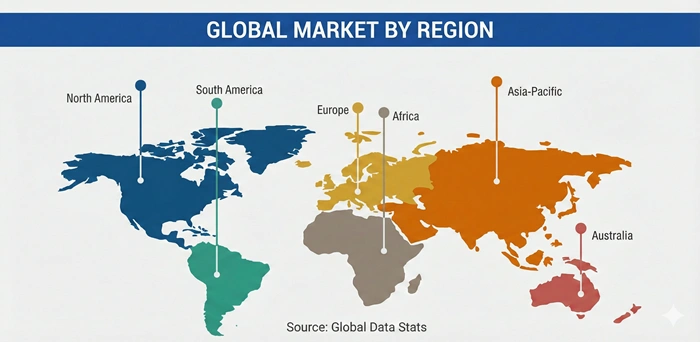
Regional Insights
North America
North America Commands the Largest Share of the Global Pulmonary Embolism Market, Built on the Highest Disease Burden, the Most Advanced Diagnostic and Therapeutic Infrastructure, and Favorable Insurance Reimbursement
North America holds approximately 38% of global pulmonary embolism market revenue in 2025, growing at a regional CAGR of approximately 9.6% through 2033. The United States accounts for the substantial majority of regional revenue, shaped by the highest absolute PE incidence of any individual country globally, a mature emergency medicine infrastructure with near-universal CTPA access, deeply established prescribing culture for DOACs in PE management, and a growing network of dedicated PERT programs at hospitals that drive advanced catheter-based intervention utilization. Leading pharmaceutical companies dominating U.S. PE management include Pfizer and Bristol-Myers Squibb (apixaban), Bayer and Janssen (rivaroxaban), and Boehringer Ingelheim (dabigatran), while Inari Medical, Penumbra, and AngioDynamics lead the catheter-directed intervention device segment through FDA-cleared product portfolios and aggressive hospital outreach programs.
Medicare and commercial insurance reimbursement for both pharmacological and catheter-directed PE treatment is well-established in the U.S., providing the financial framework that supports premium DOAC adoption and growing catheter thrombectomy utilization. The PERT Consortium — a North American academic collaborative that develops PERT program standards and clinical outcome registries — is accelerating PERT adoption at community hospitals, expanding the institutional infrastructure for advanced PE management well beyond the academic medical center context. Canada contributes meaningfully through provincial health system investments in PE diagnostic and treatment capacity, while the FDA's active approval pipeline for next-generation anticoagulants and mechanical thrombectomy systems will continue to introduce commercially significant new products into the North American market across the forecast period.
Asia Pacific
Asia Pacific Is the Fastest-Growing Region in the Pulmonary Embolism Market, Driven by Rapidly Rising PE Incidence, Expanding CT Imaging Infrastructure, and Growing DOAC Adoption Across the Region
Asia Pacific is projected to register the highest regional CAGR globally at approximately 11.5% through 2033, driven by a powerful combination of demographic, epidemiological, and infrastructure factors that are progressively converging to create a rapidly expanding PE treatment market. Japan and South Korea represent the most mature individual country markets within the region, with advanced diagnostic imaging infrastructure, high per-capita CT utilization in emergency medicine, well-developed hospital cardiology and pulmonology services, and established DOAC prescribing cultures supported by PMDA and KFDA regulatory approvals and local clinical guideline endorsements. Companies including Bayer (Japan subsidiary), Daiichi Sankyo, and Sanofi maintain strong commercial positions in the Japanese anticoagulation market through long-standing physician relationships and clinical evidence generated from Japanese patient population substudies.
China represents the largest absolute growth opportunity within the region, with a massive aging population, rising obesity and metabolic syndrome rates sharply increasing VTE risk, rapidly expanding urban hospital infrastructure with growing CT scanner density, and a pharmaceutical market where DOAC penetration remains substantially below developed market levels — representing a large and commercially attractive addressable opportunity for both international originators and domestic generic manufacturers. India is an emerging growth market where expanding private hospital investment, improving emergency medicine infrastructure, and growing physician awareness of international VTE management guidelines are creating increasing demand for both diagnostic imaging resources and evidence-based anticoagulation therapy. In the pulmonary embolism market, Asia Pacific's combination of disease burden growth, healthcare infrastructure expansion, and rising DOAC affordability through generic market development makes it the most strategically important long-term growth region for market participants through 2033 and beyond.
Customization Available for This Report
This report offers comprehensive region-wise and country-wise customization, delivering tailored market intelligence on disease incidence trends, diagnostic technology adoption, treatment protocol evolution, competitive landscape analysis, and growth opportunities specifically aligned to your selected geography and the pulmonary embolism market keyword combination.
A fully customized version of this report can be prepared for any region or country below, ensuring actionable and geographically specific insights for pharmaceutical companies, medical device manufacturers, healthcare investors, and clinical operations leaders:
North America
-
U.S. — FDA approval pipeline, PERT program development, DOAC prescribing landscape, Medicare reimbursement for catheter-directed intervention, and competitive pharmaceutical and device landscape
-
Canada — Provincial health investment in PE diagnostics and treatment, DOAC formulary coverage, physician adoption of advanced therapies, and key market player analysis
-
Mexico — IMSS and private hospital PE diagnostic and treatment capacity, DOAC market penetration, and emerging market growth opportunity analysis
Europe
-
U.K. — NICE guideline-driven PE management, NHS diagnostic infrastructure, DOAC formulary coverage, and ESC guideline adoption trends
-
Germany — G-BA reimbursement for advanced PE therapies, catheter-directed intervention adoption, hospital PERT program development, and pharmaceutical competitive landscape
-
France — HAS reimbursement for PE diagnostics and treatment, DOAC market share analysis, and key hospital and pharmaceutical competitive dynamics
-
Italy — AIFA regulatory framework, regional hospital PE diagnostic capacity, and DOAC and catheter therapy adoption analysis
-
Rest of Europe — Eastern European PE diagnostic infrastructure, DOAC penetration levels, and emerging market growth opportunities
Asia Pacific
-
China — NMPA regulatory approvals, DOAC market penetration vs. traditional anticoagulants, hospital CT infrastructure development, and domestic vs. international pharma competition
-
India — Private hospital PE diagnostic investment, DOAC affordability and generic market dynamics, and VTE awareness program impact analysis
-
Japan — PMDA regulatory framework, Daiichi Sankyo and domestic pharmaceutical competitive landscape, advanced aging society PE demand
-
South Korea — KFDA regulatory environment, hospital PERT program development, and advanced PE diagnostics and therapeutics market analysis
-
Australia — TGA regulatory framework, hospital emergency PE diagnostic infrastructure, DOAC market share, and key player competitive analysis
-
Rest of Asia Pacific — Country-level PE market analysis for Vietnam, Indonesia, Thailand, Philippines, and Malaysia
Latin America
-
Brazil — ANVISA regulatory framework, public and private hospital PE treatment capacity, DOAC market development, and key pharmaceutical competitive landscape
-
Argentina — PE treatment access, DOAC affordability and availability, and emerging market opportunity analysis
-
Rest of Latin America — Colombia, Peru, Chile PE market sizing and growth opportunity analysis
Middle East & Africa
-
UAE — Premium private hospital PE diagnostic and treatment market, international pharmaceutical brand penetration, and medical tourism-driven demand
-
Saudi Arabia — Vision 2030 hospital infrastructure investment, VTE awareness programs, and PE diagnostics and treatment market development
-
Rest of MEA — Sub-Saharan Africa healthcare infrastructure development, DOAC accessibility, and emerging PE treatment market analysis
Top Key Players
-
Pfizer Inc. / Bristol-Myers Squibb Company (United States)
-
Bayer AG (Germany)
-
Boehringer Ingelheim International GmbH (Germany)
-
Johnson & Johnson (Janssen Pharmaceuticals) (United States)
-
Daiichi Sankyo Co. Ltd (Japan)
-
Sanofi SA (France)
-
Inari Medical Inc. (United States)
-
Penumbra Inc. (United States)
-
AngioDynamics Inc. (United States)
-
Medtronic plc (Ireland / United States)
-
AbbVie Inc. (United States)
-
Viatris Inc. (United States)
-
Boston Scientific Corporation (United States)
-
Siemens Healthineers AG (Germany)
-
GE HealthCare Technologies Inc. (United States)
Recent Developments
-
In February 2026, Bristol-Myers Squibb and Johnson & Johnson jointly launched a coordinated physician education and awareness initiative in the United States targeting emergency medicine physicians, hospitalists, and cardiologists on best practices in thromboembolic disease recognition, risk stratification, and timely treatment initiation — reflecting both companies' commercial interest in deepening DOAC prescriber engagement across the PE acute care pathway
-
In January 2025, Bayer AG's investigational antibody BAY-3018250 — a novel Factor XIa inhibitor designed to provide effective anticoagulation with substantially reduced bleeding risk compared to current DOACs — entered Phase II clinical trials for VTE prevention, representing one of the most closely watched next-generation anticoagulant pipeline programs in the PE and broader VTE market
-
In March 2025, Inari Medical Inc. announced positive real-world clinical registry data from over 2,500 intermediate- and high-risk PE patients treated with its FlowTriever large-bore aspiration thrombectomy system, demonstrating significantly lower in-hospital mortality and hemodynamic improvement rates versus historical control data for the same risk category — data presented at the Society of Interventional Radiology annual meeting and widely cited in PERT community discussions
-
In October 2024, Penumbra Inc. received FDA clearance for its Lightning Flash large-bore aspiration system for pulmonary embolism thrombectomy, expanding its PE-specific product portfolio beyond the Lightning 12 system and positioning Penumbra as a direct competitor to Inari Medical in the rapidly growing large-bore mechanical thrombectomy segment of the PE devices market
-
In November 2024, AbbVie Inc. presented Phase III data from its VTE prevention program featuring navitoclax adjunct anticoagulation studies at the American Heart Association Scientific Sessions, underscoring the competitive intensity in next-generation PE and VTE pharmacological management and the active clinical development pipeline that will deliver new commercial options to the pulmonary embolism market through the late 2020s
Market Trends
Two Transformative Trends Are Reshaping the Pulmonary Embolism Market: The Rapid Institutionalization of Pulmonary Embolism Response Teams and the Clinical Advancement of Next-Generation Factor XI Inhibitors
The most structurally significant organizational trend reshaping PE care — and directly driving advanced therapy adoption in the pulmonary embolism market — is the rapid institutionalization of pulmonary embolism response teams (PERTs) across North American and European hospital systems. PERT programs bring together emergency medicine physicians, pulmonologists, cardiologists, hematologists, interventional radiologists, and cardiac surgeons in structured multidisciplinary rapid-response teams that collaborate in real time to make treatment decisions for high-acuity PE cases. Hospitals with established PERT programs consistently demonstrate higher rates of catheter-directed intervention for appropriate patient subgroups, lower in-hospital mortality for massive and submassive PE, more consistent application of validated risk stratification protocols, and reduced time from presentation to definitive treatment. As PERT program implementation expands from academic medical centers into larger community hospitals across North America and is adopted in modified forms in Europe, Japan, and Australia, the clinical infrastructure supporting advanced PE therapy utilization is maturing across an ever-broader institutional base.
The clinical development progress of Factor XI inhibitors represents the most commercially significant pharmaceutical pipeline trend in the pulmonary embolism market heading toward the late 2020s. Unlike current DOACs — which target Factor Xa or thrombin in the common coagulation pathway and thereby simultaneously affect both thrombosis and hemostasis — Factor XI inhibitors target a point in the coagulation cascade where thrombosis amplification is theoretically separable from primary hemostasis. This mechanistic hypothesis predicts that Factor XI inhibition can provide effective VTE prevention and treatment with a substantially lower bleeding risk — potentially opening anticoagulation access to patient populations currently excluded from DOAC therapy due to high bleeding risk, including those with severe renal impairment, recent surgery, or prior major bleeding events. Positive Phase II data for multiple Factor XI inhibitor candidates has generated strong pharmaceutical industry investment, with Phase III PE and VTE treatment trials underway or planned by several major companies — creating potential for a significant new commercial cycle within the PE market before 2033.
Segments Covered in the Report
By Treatment
-
Medications
-
Anticoagulants (DOACs, LMWH, Vitamin K Antagonists)
-
Thrombolytics (Systemic and Catheter-Directed)
-
-
Surgery
-
Surgical Pulmonary Embolectomy
-
Surgical Thrombectomy
-
-
Mechanical Devices
-
Catheter-Directed Thrombectomy Systems
-
Large-Bore Aspiration Thrombectomy
-
Catheter-Directed Thrombolysis Devices
-
Inferior Vena Cava (IVC) Filters
-
-
Others
By Drug Class
-
Anticoagulants
-
Factor Xa Inhibitors (Apixaban, Rivaroxaban, Edoxaban)
-
Direct Thrombin Inhibitors (Dabigatran)
-
Low Molecular Weight Heparin (LMWH)
-
Vitamin K Antagonists (Warfarin)
-
Unfractionated Heparin
-
-
Thrombolytics
-
Alteplase (tPA)
-
Tenecteplase
-
-
Others
-
Investigational Next-Generation Anticoagulants (Factor XI Inhibitors)
-
By Diagnosis
-
CT Scan / CTPA (Computed Tomography Pulmonary Angiography)
-
MRI (Magnetic Resonance Imaging)
-
ECG (Electrocardiography)
-
Chest X-Ray
-
Pulmonary Angiography
-
Venous Ultrasound (Doppler)
-
D-Dimer Test
-
Echocardiography
-
Others
By End User
-
Hospitals
-
Academic Medical Centers with PERT Programs
-
Community Hospitals with Emergency Medicine Units
-
-
Specialty Clinics
-
Pulmonology and Cardiology Specialty Centers
-
Thrombosis and Anticoagulation Clinics
-
-
Homecare Settings
-
Outpatient DOAC Anticoagulation Management
-
-
Others
By Region
-
North America (U.S., Canada, Mexico)
-
Europe (U.K., Germany, France, Italy, Rest of Europe)
-
Asia Pacific (China, India, Japan, South Korea, Australia, Rest of Asia Pacific)
-
Latin America (Brazil, Argentina, Rest of Latin America)
-
Middle East and Africa (UAE, Saudi Arabia, Rest of MEA)
❝ Built for Every Level — From Startups to Industry Giants ❞
Here Is Exactly How This Report Works for You
-
For tier 1 pharmaceutical corporations, medical device companies, and institutional healthcare investors, this report delivers granular competitor revenue analysis — including product-level and geography-level revenue breakdowns for Pfizer, Bayer, Inari Medical, Medtronic, and other key PE market players — alongside a structured assessment of geopolitical supply chain risks, regulatory pipeline dynamics, and reimbursement policy evolution that is shaping the commercial landscape for both pharmacological and device-based PE management globally, enabling confident strategic investment, portfolio prioritization, and M&A targeting decisions
-
For tier 2, tier 3 pharmaceutical companies, medical device startups, hospital supply chain managers, and regional distributors, this report identifies the highest-growth therapeutic subsegments — including catheter-directed thrombectomy, next-generation anticoagulation, and AI-assisted CTPA diagnostics — and the most commercially accessible regional markets, providing an evidence-based strategic roadmap for entering or expanding position in one of cardiovascular medicine's most commercially dynamic and innovation-driven specialty segments
-
For all decision-makers in the pulmonary embolism value chain — from clinical affairs directors and regulatory strategists to commercial heads and CFOs — this report translates complex market intelligence including Factor XI inhibitor Phase III timelines, PERT program adoption curves, emerging market DOAC penetration trajectories, and large-bore thrombectomy market penetration milestones into clear, actionable strategic intelligence that supports better product development, commercialization, and partnership decisions through 2033 and beyond
Frequently Asked Questions
Question 1: What is the current market size of the global pulmonary embolism market and how large will it be by 2033?
Answer: The global pulmonary embolism market was valued at USD 2.33 billion in 2025 and is projected to reach approximately USD 5.12 billion by 2033, growing at a CAGR of 10.31% from 2026 to 2033. This strong growth reflects rising PE incidence, aging demographics, expanding DOAC adoption, and growing utilization of catheter-directed thrombectomy procedures for intermediate- and high-risk presentations globally.
Question 2: What are the primary treatment options driving revenue in the pulmonary embolism market?
Answer: Medications — primarily direct oral anticoagulants including apixaban and rivaroxaban — dominate the pulmonary embolism market with approximately 68% treatment segment revenue, reflecting their first-line guideline endorsement for the vast majority of PE patients. Catheter-directed mechanical thrombectomy and thrombolysis represent the fastest-growing treatment segment as PERT program development and new-generation large-bore device approvals expand utilization for intermediate- and high-risk PE presentations.
Question 3: Which region leads the pulmonary embolism market and which is growing fastest?
Answer: North America leads the pulmonary embolism market with approximately 38% revenue share in 2025, driven by the highest per-capita PE incidence globally, advanced diagnostic infrastructure, widespread DOAC adoption, and growing catheter-directed intervention utilization through PERT programs. Asia Pacific is the fastest-growing region at approximately 11.5% CAGR through 2033, driven by aging demographics, expanding CT imaging capacity, and rising DOAC penetration across China, India, Japan, and Southeast Asia.
Question 4: What challenges are limiting growth in the pulmonary embolism market?
Answer: The most significant restraint in the pulmonary embolism market is the bleeding risk associated with anticoagulant and thrombolytic therapy, which limits treatment intensity for a meaningful subset of patients and restricts broader systemic thrombolysis use to only the highest-risk PE presentations. High costs of advanced catheter-directed thrombectomy procedures also constrain device segment adoption in lower-income markets and community hospitals without the infrastructure or reimbursement levels needed to routinely support interventional PE programs.
Question 5: How is the development of next-generation anticoagulants expected to impact the pulmonary embolism market?
Answer: Next-generation Factor XI inhibitors currently in clinical trials are expected to significantly expand the treatable patient population in the pulmonary embolism market by providing effective anticoagulation with substantially lower bleeding risk than current DOACs — potentially enabling PE treatment in high-bleeding-risk patients currently excluded from anticoagulation therapy. Positive Phase III data from even one leading Factor XI inhibitor candidate could trigger a new commercial wave comparable to the DOAC displacement of warfarin, representing a major revenue growth catalyst within the PE pharmaceutical market before 2033.