
Psychological Distress Market Overview
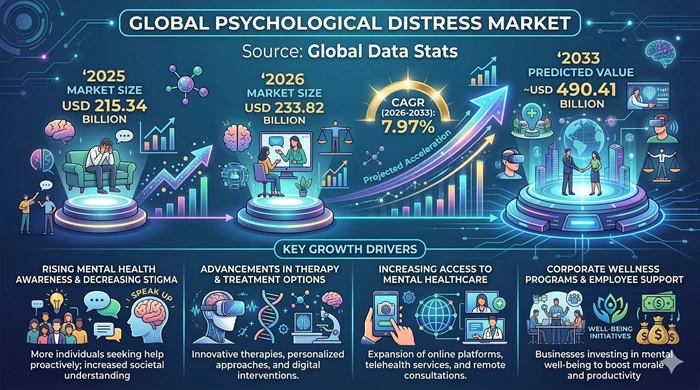
The global Psychological Distress market size is valued at USD 215.34 billion in 2025 and is predicted to increase from USD 233.82 billion in 2026 to approximately USD 490.41 billion by 2033, growing at a CAGR of 7.97% from 2026 to 2033.
Psychological distress — a broad and clinically significant category encompassing anxiety, depression, trauma responses, stress-related disorders, and emotional burnout — has emerged as one of the most pressing and fastest-growing challenges facing global healthcare systems today. Accelerating urbanization, economic instability, workplace stress, social isolation, and the lasting mental health consequences of the COVID-19 pandemic have driven the prevalence of emotional and psychological disorders to record levels across all demographics. The Psychological Distress market is expanding rapidly as healthcare systems, employers, governments, and digital health innovators all intensify their investment in identifying, diagnosing, and treating these conditions at scale.
AI Impact on the Psychological Distress Industry
Artificial Intelligence Is Reshaping Psychological Distress Identification, Therapy Delivery, and Population-Level Mental Health Monitoring in Ways That Are Fundamentally Expanding the Reach and Effectiveness of Mental Healthcare Globally
Artificial intelligence is transforming how psychological distress is detected, assessed, and managed across both clinical and digital care settings. AI-powered screening tools — using natural language processing, voice tone analysis, and behavioral pattern recognition — are now capable of identifying early warning signs of anxiety, depression, and stress-related disorders before they escalate to clinical severity, enabling earlier and more targeted interventions. These tools are already being deployed in digital triage platforms, mental health apps, and corporate wellness programs, helping route individuals to the most appropriate level of care while reducing the burden on already overstretched mental health workforces.
Beyond screening, AI is enabling a shift from episodic, clinic-based psychological distress treatment toward continuous, data-driven mental health management. Wearables and smartphone apps equipped with mood tracking and behavioral sensing capabilities are providing clinicians and digital care platforms with real-time mental health data streams that allow interventions to be dynamically adjusted as individual conditions evolve. This continuous care model is improving treatment adherence and clinical outcomes for patients managing chronic forms of psychological distress, while simultaneously generating the large datasets needed to train increasingly accurate predictive models. However, questions around clinical validation, data privacy, and the ethical boundaries of AI in mental health care continue to shape how these innovations are regulated and adopted.
Growth Factors
Rising Global Mental Health Burden, Post-Pandemic Psychological Aftereffects, Rapid Digital Therapy Adoption, and Growing Workplace Wellness Investment Are the Four Core Forces Driving Psychological Distress Market Expansion
The foundational driver of the Psychological Distress market is the relentlessly rising global burden of anxiety, depression, stress-related conditions, and emotional disorders. The WHO estimates that one in eight people worldwide lives with a diagnosable mental health condition, with anxiety and depressive disorders — the most prevalent forms of psychological distress — affecting hundreds of millions. Economic pressures, social isolation, information overload, and the psychological toll of geopolitical uncertainty are amplifying this burden across all age groups and income levels. Critically, awareness of these conditions has never been higher — more people recognize that what they experience constitutes psychological distress and more are willing to seek help than in previous generations, directly expanding the active treatment-seeking population and the addressable market.
The COVID-19 pandemic created a lasting step-change in global psychological distress prevalence that continues to ripple through healthcare systems. Studies tracking mental health outcomes post-pandemic have consistently documented elevated rates of anxiety, depression, PTSD, and burnout across all major geographies. Healthcare workers, young adults, and socioeconomically disadvantaged groups have been particularly affected. This pandemic-driven amplification of baseline psychological distress burden has significantly enlarged the patient population requiring professional care and has catalyzed unprecedented government and private sector investment in expanding mental health treatment infrastructure — investment that is now flowing through the Psychological Distress market in the form of expanded clinic networks, new digital platform funding, and higher mental health spending per capita.
Market Outlook
With Mental Health Need at Historic Highs, Digital Therapy Platforms Scaling Globally, and Employers and Governments Committing to Mental Health Investment, the Psychological Distress Market Outlook Is Exceptionally Strong Through 2033
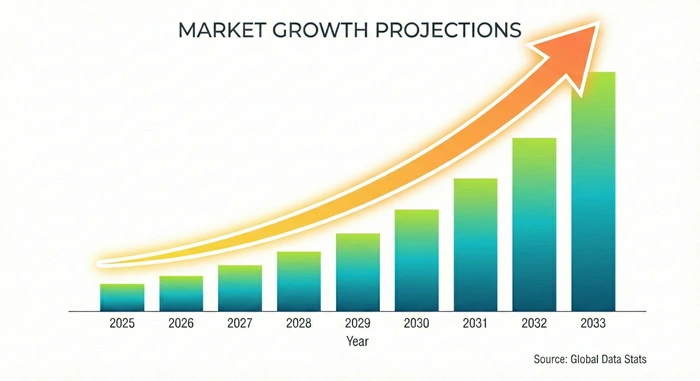
The long-term outlook for the Psychological Distress market is robustly positive on multiple dimensions. From 2026 to 2033, the market will be driven by the convergence of growing clinical need, expanding insurance coverage for mental health services, maturing regulatory frameworks for digital therapeutics, and an increasingly rich pipeline of both pharmacological and non-pharmacological psychological distress treatment innovations. Telepsychiatry, AI-assisted therapy apps, and employer-integrated mental wellness platforms are scaling rapidly — extending the reach of psychological distress treatment to populations that have historically lacked access due to geography, cost, or social stigma. As these platforms demonstrate clinical outcomes data sufficient for insurance reimbursement acceptance, their commercial growth trajectory will accelerate meaningfully.
Governments across North America, Europe, and Asia Pacific are recognizing psychological distress as a genuine public health, economic, and national security priority. In the United States, the United Kingdom, Australia, and several EU nations, major new funding commitments to mental health services — spanning community mental health center expansion, school-based counseling programs, and national digital mental health initiatives — are both building clinical capacity and driving greater public willingness to engage with Psychological Distress market products and services. The private sector is mirroring this trend with growing employer investment in employee mental wellness, recognizing that untreated psychological distress carries significant productivity, absenteeism, and healthcare cost consequences. Together, these public and private investment streams create a deeply supportive structural environment for strong and sustained market growth through 2033.
Expert Speaks
-
Karen Lynch, CEO, CVS Health — "Mental health represents one of the most urgent healthcare challenges of our time, and CVS Health is deeply committed to making psychological distress treatment more accessible through our MinuteClinic network, digital platforms, and community health programs. We believe that addressing emotional and mental wellbeing is as fundamental to health outcomes as managing any physical condition."
-
Andrew Witty, CEO, UnitedHealth Group — "The scale of psychological distress globally — and the enormous treatment gap that exists between those who need care and those who access it — is both a healthcare crisis and a profound commercial opportunity for organizations that can deliver high-quality, accessible, and affordable mental health support at scale. UnitedHealth Group is investing significantly in technology-enabled mental health solutions to close this gap."
-
Emma Walmsley, CEO, GSK — "The link between mental and physical health is undeniable, and tackling psychological distress is central to our broader mission of improving health outcomes for patients globally. GSK is committed to both pharmaceutical innovation for mental health conditions and to supporting broader access to evidence-based psychological distress treatment through our public health partnerships."
Key Report Takeaways
-
North America dominates the Psychological Distress market, holding the largest global revenue share in 2025, driven by high per-capita mental health treatment expenditure, a well-developed psychiatric services and psychotherapy infrastructure, strong insurance coverage mandates for mental health conditions, and the presence of leading pharmaceutical companies, telepsychiatry platforms, and digital mental health solution providers concentrated in the U.S. and Canada.
-
Asia Pacific is the fastest-growing regional market, driven by rapid socioeconomic change, rising mental health awareness, explosive smartphone penetration enabling digital therapy access, and growing government and private sector investment in mental health infrastructure across China, India, South Korea, and Southeast Asian nations — where an enormous and deeply underserved population experiencing psychological distress is progressively engaging with mental health services.
-
Pharmacological treatment is the dominant treatment type segment, accounting for the largest revenue share in 2025, reflecting the widespread clinical prescription of antidepressants, anxiolytics, and mood stabilizers as first-line and combination treatments for moderate-to-severe psychological distress — supported by clear reimbursement pathways, established clinical guidelines, and strong prescriber familiarity with established drug classes.
-
Digital mental health solutions are the fastest-growing treatment type segment, projected to expand at the highest CAGR through 2033, as AI-powered therapy apps, telepsychiatry platforms, employer-integrated mental wellness programs, and mobile CBT modules dramatically expand the reach of psychological distress support to populations that cannot access or prefer not to use traditional clinical care settings.
-
Anxiety disorders are the leading disorder type segment, contributing the largest market revenue share in 2025, reflecting the extremely high global prevalence of anxiety conditions, their early onset patterns, strong clinical recognition in primary care settings, and consistent demand for both pharmaceutical and behavioral therapeutic interventions across all major healthcare markets.
-
Stress-related disorders are the fastest-growing disorder segment, projected to expand at the highest CAGR through 2033, driven by escalating workplace pressure, economic uncertainty, digital overload, and the increasing recognition of stress-related presentations as primary healthcare concerns amenable to early, app-based, and workplace wellness-delivered interventions.
Market Scope
| Report Coverage | Details |
|---|---|
| Market Size by 2033 | USD 490.41 Billion |
| Market Size by 2025 | USD 215.34 Billion |
| Market Size by 2026 | USD 233.82 Billion |
| Market Growth Rate (2026–2033) | CAGR of 7.97% |
| Dominating Region | North America |
| Fastest Growing Region | Asia Pacific |
| Base Year | 2025 |
| Forecast Period | 2026–2033 |
| Segments Covered | Disorder Type, Treatment Type, Therapy Type |
| Regions Covered | North America, Europe, Asia Pacific, Latin America, Middle East & Africa |
Market Dynamics
Drivers Impact Analysis
Rapidly Rising Global Psychological Distress Prevalence, Post-Pandemic Mental Health Consequences, and Digital Health Platform Expansion Are Together Creating an Unprecedented Commercial Growth Environment
| Driver | ≈ % Impact on CAGR Forecast | Geographic Relevance | Impact Timeline |
|---|---|---|---|
| Escalating global prevalence of anxiety, depression, and stress disorders | ~34% | Global — especially North America, Europe, Asia Pacific | Short to Long-term |
| Lasting post-pandemic mental health burden across all demographics | ~27% | Global | Short to Medium-term |
| Rapid adoption of digital mental health and teletherapy platforms | ~26% | North America, Asia Pacific, Europe | Short to Long-term |
| Growing employer and government mental health investment | ~13% | North America, Europe, Asia Pacific | Medium to Long-term |
The persistently rising global prevalence of anxiety disorders, major depression, stress-related conditions, and PTSD creates the most durable and structurally embedded demand foundation for the Psychological Distress market. As modern life increasingly generates the conditions that trigger and sustain psychological distress — economic insecurity, social disconnection, information overload, and a pervasive culture of comparison — the proportion of the global population experiencing clinically significant mental health symptoms grows year after year. The progressive reduction of social stigma around mental health, particularly among younger generations, is simultaneously converting a previously hidden and undertreated disease burden into an actively treatment-seeking patient population that generates tangible market demand for pharmaceutical, clinical, and digital mental health products and services.
The digital transformation of mental health care is accelerating market growth by breaking down the structural access barriers that have historically kept the gap between psychological distress prevalence and active treatment engagement extremely wide. AI-powered therapy apps, on-demand telepsychiatry services, and employer-integrated digital wellness platforms are reaching psychologically distressed individuals who would never visit a psychiatrist's office — whether due to cost, geography, stigma, or time constraints. This digitally driven expansion of the actively treated patient population is one of the most powerful structural growth forces in the Psychological Distress market today and is expected to remain a primary driver throughout the 2026–2033 forecast period.
Restraints Impact Analysis
Persistent Mental Health Stigma, Severe Mental Health Workforce Shortages, Affordability Gaps, and Regulatory Uncertainty Around Digital Therapeutics Create Meaningful Barriers to Full Market Potential Realization
| Restraint | ≈ % Impact on CAGR Forecast | Geographic Relevance | Impact Timeline |
|---|
| Restraint | ≈ % Impact on CAGR Forecast | Geographic Relevance | Impact Timeline |
|---|---|---|---|
| Persistent cultural stigma limiting treatment-seeking behavior | ~32% | Asia Pacific, Latin America, MEA | Short to Medium-term |
| Severe shortage of trained psychiatrists and psychotherapists globally | ~30% | Global — most acute in emerging markets | Medium to Long-term |
| Affordability and insurance coverage gaps for mental health services | ~26% | Global — especially lower-income markets | Short to Medium-term |
| Regulatory uncertainty and clinical validation gaps for digital therapeutics | ~12% | North America, Europe | Medium-term |
Despite growing public awareness, cultural stigma around seeking help for psychological distress remains a powerful barrier in many key markets — particularly across Asia Pacific, the Middle East, Latin America, and sub-Saharan Africa. Cultural norms that associate mental health struggles with personal weakness or family shame continue to discourage large proportions of psychologically distressed individuals from accessing care, keeping the gap between true prevalence and active treatment rates extremely wide in high-population markets. While this stigma is gradually reducing — driven by social media advocacy, public health campaigns, and increasing mental health representation in mainstream culture — the pace of change remains uneven across geographies, continuing to suppress market penetration in some of the most populous regions globally.
The global shortage of trained mental health professionals represents a fundamental structural constraint on the Psychological Distress market's ability to meet rapidly growing demand. The WHO estimates that most low- and middle-income countries have fewer than one psychiatrist per 100000 people — a staggering undersupply that leaves enormous proportions of psychologically distressed populations without access to evidence-based care. Even in high-income markets, psychotherapy waitlists stretching months are increasingly common as patient demand dramatically outpaces practitioner supply. This workforce gap both limits current market revenue and underscores the critical commercial importance of scalable digital and AI-powered solutions that can supplement professional care at population scale.
Opportunities Impact Analysis
AI-Powered Digital Therapy Platforms, Employer Mental Health Program Expansion, Emerging Market Infrastructure Growth, and Novel Neuropsychiatric Drug Development Represent the Most Significant Untapped Growth Opportunities
| Opportunity | ≈ % Impact on CAGR Forecast | Geographic Relevance | Impact Timeline |
|---|---|---|---|
| Scaling of AI-powered digital therapy and telepsychiatry platforms | ~36% | North America, Europe, Asia Pacific | Short to Long-term |
| Rapid growth of employer-sponsored mental health and wellness programs | ~26% | North America, Europe | Short to Medium-term |
| Mental health infrastructure expansion in emerging markets | ~26% | Asia Pacific, Latin America, MEA | Medium-term |
| Novel drug development for treatment-resistant psychological distress | ~12% | North America, Europe | Medium to Long-term |
The explosive growth of AI-powered digital mental health platforms represents the single most commercially significant near-term growth opportunity in the Psychological Distress market. Companies building scalable teletherapy services, AI-assisted CBT apps, and employer-integrated mental wellness programs are capturing enormous user bases among the previously underserved psychologically distressed population — particularly among younger demographics who prefer digital-first care models. As these platforms build clinical evidence bases sufficient for insurance reimbursement and institutional adoption, their commercial scale will increase dramatically — potentially making digital mental health the single largest revenue segment in the Psychological Distress market before the end of the forecast period.
The growing body of research linking untreated psychological distress to measurable reductions in workforce productivity, higher absenteeism, and elevated healthcare utilization costs is driving a major and sustained wave of corporate investment in employee mental wellness programs. Large employers across North America and Europe are embedding digital mental health platforms, expanded employee assistance programs, and workplace psychological safety initiatives into standard benefits packages — creating a large, well-funded, and rapidly growing B2B demand channel for psychological distress intervention solutions. As employer-sponsored mental health investment normalizes and as insurance reimbursement for digital psychological distress interventions expands, the addressable commercial market will grow substantially throughout the 2026–2033 forecast period.
Segment Analysis
By Disorder Type
Anxiety Disorders Lead the Psychological Distress Market With the Highest Global Prevalence and Treatment Volume, While Stress-Related Disorders Emerge as the Fastest-Growing Segment Driven by Modern Lifestyle Pressures
Anxiety disorders hold the dominant position within the disorder type segment of the Psychological Distress market, accounting for approximately 29.80% of total global market revenue in 2025. Their market leadership reflects the extraordinary global prevalence of generalized anxiety disorder, social anxiety disorder, panic disorder, and phobia-related conditions — collectively affecting an estimated 284 million people worldwide and generating the highest volumes of anxiolytic prescriptions, CBT referrals, and digital mental health app engagement of any psychological distress category. North America is the largest regional contributor to anxiety disorder treatment revenue, where clinical guidelines firmly establish pharmacotherapy with SSRIs or SNRIs combined with cognitive behavioral therapy as the evidence-based treatment standard — generating substantial per-patient pharmaceutical and therapeutic services revenue. Major companies driving anxiety disorder treatment revenues include Pfizer, Eli Lilly, AstraZeneca, and a rapidly growing cohort of digital mental health platform providers including Calm, Headspace Health, and Woebot Health.
Stress-related disorders represent the fastest-growing disorder segment in the Psychological Distress market, projected to expand at a CAGR of approximately 9.20% from 2026 to 2033, driven by the relentlessly escalating pressures of modern working life — including digital overload, economic insecurity, workplace burnout, and the blurring of work-life boundaries accelerated by the shift to hybrid and remote working models. The corporate wellness market's rapid growth is directly fueling demand for stress management programs, mindfulness applications, and digital psychological distress interventions targeting workplace stress and burnout specifically. Asia Pacific is the fastest-growing region for stress-related disorder treatment demand, where extraordinary work culture pressures — particularly in Japan, South Korea, and China — combine with growing awareness of burnout and stress as medical conditions to create an enormous and rapidly commercializing market for stress-targeted psychological distress interventions.
By Treatment Type
Pharmacological Treatment Dominates the Psychological Distress Market by Revenue While Digital Mental Health Solutions Record the Fastest Growth as They Extend Care Access to Millions of Underserved Patients Globally
Pharmacological treatment holds the dominant position in the treatment type segment, accounting for approximately 42.30% of total Psychological Distress market revenue in 2025. The widespread prescription of antidepressants, anxiolytics, mood stabilizers, and antipsychotics as primary or adjunctive treatments for anxiety, depression, PTSD, and stress-related psychological distress generates the largest and most consistently recurring revenue stream across the market globally. The pharmacological treatment segment benefits from well-established clinical prescribing guidelines, strong reimbursement pathways across developed healthcare markets, broad physician familiarity with established drug classes, and a pipeline of novel agents — including esketamine formulations, serotonin modulators, and neurosteroid compounds — that are progressively expanding the pharmacological toolkit available for complex or treatment-resistant presentations. North America is the dominant regional market for psychological distress pharmacotherapy, with the U.S. accounting for the largest global antidepressant and anxiolytic prescription volumes. Key companies include Pfizer, Eli Lilly, AstraZeneca, Johnson & Johnson (Janssen), and Lundbeck.
Digital mental health solutions are the fastest-growing treatment type segment in the Psychological Distress market, projected to expand at a CAGR of approximately 10.40% from 2026 to 2033 — the highest of any treatment category. This growth is driven by the explosive adoption of AI-powered therapy apps, telepsychiatry platforms, and employer-integrated digital mental wellness programs that are extending evidence-based psychological distress support to vastly larger populations than traditional clinical channels can serve. Asia Pacific is the fastest-growing region for digital mental health solution adoption, where smartphone penetration is high, professional mental health services are severely limited in availability, and a large young adult population is highly receptive to digital-first care models for managing psychological distress. Leading companies in this space include Calm, Headspace Health, Spring Health, Lyra Health, Talkspace, and a rapidly growing ecosystem of regional digital mental health startups across China, India, and Southeast Asia.
Regional Insights
North America
North America Leads the Global Psychological Distress Market With the Highest Per-Capita Mental Health Spending, Most Advanced Treatment Infrastructure, and Largest Concentration of Digital Mental Health Innovation
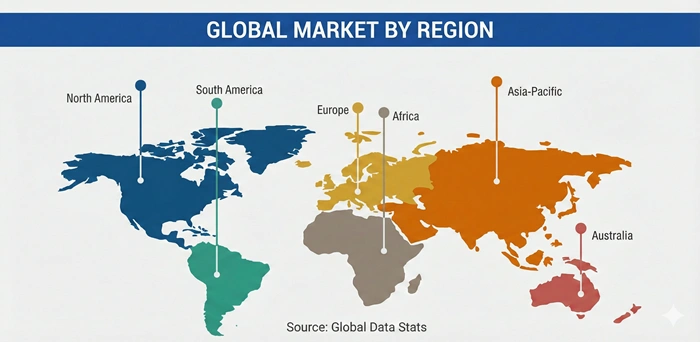
North America holds the dominant position in the global Psychological Distress market, accounting for approximately 37.60% of total global market revenue in 2025, and is projected to maintain its regional leadership at a CAGR of approximately 7.50% from 2026 to 2033. The United States is the primary revenue driver, where the highest per-capita mental health expenditure globally, a well-developed network of outpatient mental health clinics, strong insurance mandate coverage for mental health services under the Mental Health Parity and Addiction Equity Act, and the world's most commercially active digital mental health platform ecosystem collectively create an unrivaled psychological distress treatment market. Key companies with dominant North American presence in the Psychological Distress market include Pfizer, Eli Lilly, Johnson & Johnson, Lyra Health, Spring Health, Talkspace, and Headspace Health — spanning pharmaceutical treatment and the rapidly growing digital mental health intervention segments.
Canada contributes meaningfully to North American market revenue through its publicly funded provincial healthcare systems that cover psychiatric medications and an expanding range of mental health services, alongside a growing private sector mental health market driven by employer benefits and direct-pay consumers. The region's well-established mental health advocacy infrastructure — including the National Alliance on Mental Illness in the U.S. and the Canadian Mental Health Association — continues to reduce stigma, drive awareness, and expand treatment engagement. North America's market dominance is expected to remain secure through 2033, reinforced by continuous digital mental health innovation and sustained pharmaceutical R&D investment in novel psychological distress treatment agents.
Asia Pacific
Asia Pacific Is the Fastest-Growing Psychological Distress Market, Powered by a Massive Underserved Patient Population, Rising Mental Health Awareness, and Explosive Digital Mental Health Platform Adoption Across the Region
Asia Pacific is the fastest-growing regional segment in the Psychological Distress market, projected to expand at a CAGR of approximately 9.10% from 2026 to 2033 — the highest of any region globally. The region carries an enormous and deeply underserved psychological distress burden, with China, India, Japan, and South Korea collectively home to hundreds of millions of people experiencing clinically significant anxiety, depression, and stress-related conditions. The vast majority of these individuals currently receive no professional treatment, due to severe mental health workforce shortages, persistent cultural stigma, and limited insurance coverage for mental health services in most national markets. However, rapidly rising mental health awareness — driven by social media advocacy, government awareness campaigns, and increasing cultural openness about emotional wellbeing — is progressively shifting public attitudes toward treatment-seeking. Key companies with growing Asia Pacific presence include Otsuka Pharmaceutical, Lundbeck, Pfizer, and a rapidly expanding ecosystem of regional digital mental health platform providers.
Japan and South Korea represent the most mature psychological distress treatment sub-markets within Asia Pacific, where established healthcare systems, high psychiatric medication prescription rates, and growing acceptance of psychotherapy and digital wellness services generate strong per-capita treatment revenues. China and India represent the most strategically significant growth frontiers, where government investment in community mental health centers, school counseling infrastructure, and digital mental health platform development is beginning to meaningfully expand formal care access for the hundreds of millions experiencing psychological distress. The combination of enormous unmet need, growing government commitment, and rapid digital health adoption makes Asia Pacific the most dynamically growing and commercially compelling region in the global Psychological Distress market through 2033.
Top Key Players
-
Pfizer Inc. (United States)
-
Eli Lilly and Company (United States)
-
AstraZeneca plc (United Kingdom)
-
Johnson & Johnson — Janssen Pharmaceuticals (United States)
-
Lundbeck A/S (Denmark)
-
Otsuka Pharmaceutical Co., Ltd. (Japan)
-
Lyra Health, Inc. (United States)
-
Spring Health (United States)
-
Talkspace (United States)
-
Headspace Health (United States)
-
Calm (United States)
-
Woebot Health (United States)
-
Lykos Therapeutics (United States)
Recent Developments
-
Eli Lilly (2025) — Reported positive Phase III clinical trial outcomes for a novel oral drug candidate targeting treatment-resistant depression, representing a potentially landmark pharmacological advancement for the most clinically challenging subset of the psychological distress patient population and reinforcing Eli Lilly's strategic investment in next-generation neuropsychiatric treatments.
-
Johnson & Johnson — Janssen (2025) — Expanded approved indications for Spravato (esketamine nasal spray) to include long-term maintenance therapy for treatment-resistant depression following strong long-term outcomes data, reinforcing its position as the leading premium pharmacotherapy for severe psychological distress presentations and generating growing high-value prescription revenues globally.
-
Spring Health (2024) — Secured a USD 100 million Series E funding round, reaching a valuation exceeding USD 3.3 billion, and expanded its AI-powered precision mental health platform to over 10000 employer clients globally — marking one of the most significant commercial milestones in the employer-sponsored digital psychological distress intervention market to date.
-
Lyra Health (2024) — Announced international market expansion into the United Kingdom, Canada, and Australia, extending its employer-integrated psychological distress support platform to a substantially larger global workforce population and solidifying its position as a leading multinational digital mental health solution provider for large enterprise clients.
-
Lykos Therapeutics (2025) — Continued advancing its MDMA-assisted psychotherapy program for PTSD, initiating additional clinical studies to address FDA requirements following the 2024 Complete Response Letter, targeting what would be a transformative regulatory approval for a novel non-pharmacological approach to trauma-related psychological distress treatment.
Market Trends
AI-Driven Precision Mental Healthcare and the Mainstreaming of Digital-First Psychological Distress Treatment Are Redefining the Global Mental Health Industry's Commercial and Clinical Landscape
The most consequential trend reshaping the Psychological Distress market is the rapid advancement and growing institutional adoption of AI-driven precision mental health platforms that deliver personalized, evidence-based psychological distress care at scale. These platforms use machine learning to analyze individual symptom patterns, therapy engagement data, mood tracking inputs, and behavioral markers to dynamically customize treatment plans — moving the field decisively from one-size-fits-all protocols toward genuinely individualized care. The commercial success of companies like Lyra Health, Spring Health, and Woebot Health in deploying these AI-powered approaches across large employer populations is providing real-world evidence of their clinical value and cost-effectiveness, building the evidence base required for broader insurance reimbursement acceptance and accelerating their adoption across healthcare systems.
The normalization of digital-first psychological distress treatment — deeply embedded in consumer and employer behavior since the COVID-19 pandemic — is the second defining trend of this market cycle. Telepsychiatry, AI chatbot therapy, app-based CBT and mindfulness programs, and digital employee assistance platforms are no longer considered fringe alternatives; they are becoming mainstream, reimbursed components of integrated mental healthcare. As regulatory frameworks for digital therapeutics mature in the U.S., EU, and key Asian markets, and as clinical outcome standards for digital psychological distress interventions become more clearly defined, the commercial opportunity for platform providers will expand substantially — making the digital segment the most dynamic and fastest-growing commercial frontier in the Psychological Distress market through 2033.
Segments Covered in the Report
By Disorder Type:
-
Anxiety Disorders
-
Depression
-
Stress-Related Disorders
-
Post-Traumatic Stress Disorder (PTSD)
-
Adjustment Disorders
By Treatment Type:
-
Pharmacological Treatment
-
Psychotherapy
-
Digital Mental Health Solutions
-
Lifestyle and Wellness Programs
By Therapy Type:
-
Cognitive Behavioral Therapy (CBT)
-
Counseling and Talk Therapy
-
Mindfulness-Based Therapy
-
Group Therapy
By Region:
-
North America
-
Europe
-
Asia Pacific
-
Latin America
-
Middle East & Africa
Frequently Asked Questions
Question 1: What is the current size of the Psychological Distress market and what is its projected value by 2033?
Answer: The Psychological Distress market was valued at USD 215.34 billion in 2025 and is projected to reach USD 490.41 billion by 2033. It is expected to grow at a CAGR of 7.97% from 2026 to 2033, driven by rising global mental health burden, expanding digital therapy adoption, and growing government and employer investment in mental wellness.
Question 2: What are the key growth drivers of the Psychological Distress market?
Answer: Escalating global prevalence of anxiety, depression, and stress-related disorders and the rapid adoption of digital mental health and telepsychiatry platforms are the two most powerful drivers of the Psychological Distress market. Growing employer-sponsored mental health investment and government commitment to mental health infrastructure expansion are also meaningfully accelerating market growth worldwide.
Question 3: Which region leads the Psychological Distress market and which is the fastest growing?
Answer: North America holds the dominant position in the Psychological Distress market with approximately 37.60% of global revenue in 2025. Asia Pacific is the fastest-growing region, expanding at approximately 9.10% CAGR from 2026 to 2033, driven by a massive underserved patient population and explosive digital mental health platform adoption.
Question 4: Which treatment type and disorder segment lead the Psychological Distress market?
Answer: Pharmacological treatment leads the treatment type segment with approximately 42.30% of total Psychological Distress market revenue in 2025, while digital mental health solutions are the fastest-growing segment. Anxiety disorders contribute the largest disorder segment share at approximately 29.80%, while stress-related disorders are projected to grow at the highest CAGR through 2033.
Question 5: What innovations are shaping the future of the Psychological Distress market?
Answer: AI-powered precision mental health platforms delivering personalized psychological distress care at scale represent the most transformative innovation driving market evolution. Novel pharmacological treatments — including esketamine for treatment-resistant depression and MDMA-assisted psychotherapy for PTSD — are simultaneously expanding the clinical toolkit for the most severe and complex psychological distress presentations.