
Premium Cosmetics Market Overview
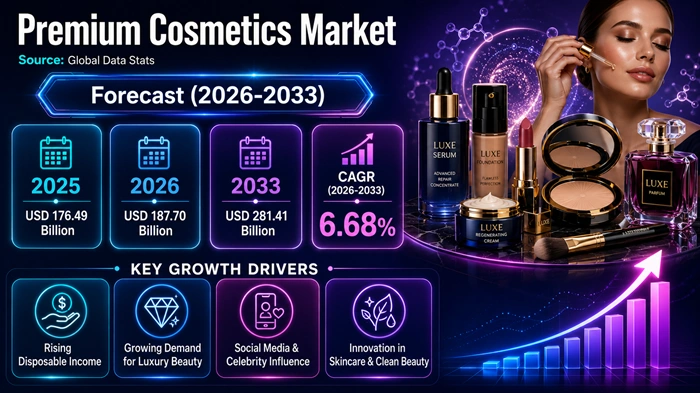
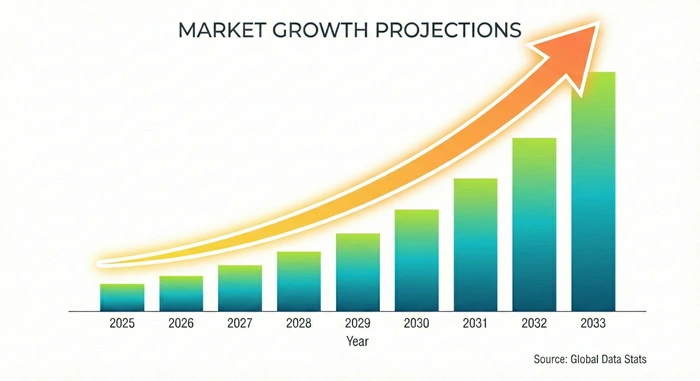
The global premium cosmetics market size is valued at USD 176.49 billion in 2025 and is predicted to increase from USD 187.70 billion in 2026 to approximately USD 281.41 billion by 2033, growing at a CAGR of 6.68% from 2026 to 2033.
Premium cosmetics represent high-end beauty and personal care products distinguished by superior quality formulations, luxury packaging, exclusive brand positioning, and elevated price points. This dynamic market encompasses facial cosmetics, eye and lip makeup, skincare, haircare, and fragrances marketed through prestigious retail channels. The luxury beauty segment is witnessing unprecedented expansion fueled by rising consumer affluence, growing social media influence, increasing demand for clean and sustainable beauty products, and the aspirational appeal of premium brands across both mature and emerging markets worldwide.
Leveraging Brand Heritage and Innovation to Capture Discerning Global Beauty Consumers
The premium cosmetics market has evolved from traditional luxury positioning into a sophisticated ecosystem where heritage brands compete alongside innovative indie players for the attention of increasingly informed consumers. Digital transformation has fundamentally reshaped how luxury beauty products reach consumers, with e-commerce platforms and social media influencers becoming critical channels for brand discovery and purchase decisions. Brands successfully integrating sustainability credentials with luxury positioning are capturing market share among millennial and Gen Z consumers who demand both performance and ethical responsibility from their beauty investments.
The sector is experiencing remarkable technological integration, with artificial intelligence enabling personalized skincare diagnostics, augmented reality powering virtual try-on experiences, and blockchain technology authenticating product provenance. Leading manufacturers are investing heavily in research and development to create hybrid products that blur the lines between skincare and makeup, delivering both immediate aesthetic benefits and long-term skin health improvements. This innovation-driven approach, combined with the emotional connection consumers maintain with luxury beauty brands, continues to support premium pricing and robust margin profiles across the industry.
Capitalizing on Emerging Market Growth and Clean Beauty Movement Momentum
Market outlook for the premium cosmetics industry through 2033 remains highly favorable, supported by expanding middle-class populations in Asia Pacific, Latin America, and the Middle East seeking to access aspirational luxury beauty products. The clean beauty movement has transitioned from niche trend to mainstream expectation, with consumers actively seeking products formulated with natural ingredients, sustainable packaging, and transparent ingredient labeling. This shift is creating opportunities for brands that successfully combine luxury positioning with environmental stewardship and ethical sourcing practices.
The premium cosmetics market is benefiting from structural changes in consumer behavior that extend beyond pandemic-driven acceleration of online shopping. The permanence of digital-first beauty discovery through social platforms, combined with the return of experiential retail in flagship boutiques and luxury department stores, creates a powerful omnichannel ecosystem. Brands investing in seamless integration across physical and digital touchpoints are capturing disproportionate market share, while those relying solely on traditional retail models face increasing pressure to adapt their go-to-market strategies.
AI Impact on the Premium Cosmetics Industry
Transforming Personalization and Consumer Engagement Through Advanced Technology Integration
Artificial intelligence is revolutionizing the premium cosmetics market by enabling unprecedented levels of personalization that were previously impossible at scale. Leading brands are deploying AI-powered skin diagnostic tools that analyze individual skin conditions, environmental factors, and lifestyle patterns to recommend customized product regimens tailored to specific consumer needs. These intelligent systems process vast amounts of data from dermatological research, ingredient efficacy studies, and real-world user feedback to continuously refine their recommendations, creating highly personalized beauty experiences that strengthen brand loyalty and increase customer lifetime value.
Virtual try-on technology powered by augmented reality and machine learning algorithms is transforming how consumers discover and purchase premium cosmetics online, addressing the traditional barrier of not being able to test products before buying. These AI-driven platforms allow shoppers to virtually apply makeup products, experiment with different shades and textures, and visualize results in real-time through their smartphone cameras or computer screens. The technology has become particularly crucial for the premium cosmetics market as it enables brands to maintain the experiential element of luxury beauty shopping in digital channels while reducing return rates and improving customer satisfaction across e-commerce platforms.
Growth Factors
Rising Consumer Affluence and Social Media Influence Drive Premium Beauty Adoption
The premium cosmetics market is experiencing robust growth propelled by increasing disposable incomes across emerging economies, enabling broader consumer access to luxury beauty products previously limited to wealthy demographics. Middle-class expansion in countries throughout Asia Pacific, Latin America, and the Middle East is creating millions of new potential customers for premium brands seeking aspirational products that signify social status and personal success. This economic empowerment coincides with changing lifestyle patterns where personal grooming and appearance enhancement have become priorities for both female and male consumers, driving consistent demand for high-quality cosmetics that deliver superior performance and prestigious brand association.
Social media platforms have fundamentally transformed beauty marketing and consumer behavior, with influencers and celebrity endorsements making premium cosmetics more aspirational and accessible to global audiences. The premium cosmetics market benefits enormously from viral beauty tutorials, product reviews, and before-after demonstrations that reach hundreds of millions of consumers daily through Instagram, TikTok, YouTube, and emerging platforms. This digital influence is particularly powerful among younger demographics who discover new products through social channels, rely on peer recommendations over traditional advertising, and actively seek brands that align with their values regarding sustainability, inclusivity, and innovation.
Market Outlook
Sustainable Luxury and Experiential Retail Reshape Industry Dynamics
The premium cosmetics market outlook through 2033 is characterized by the convergence of sustainability imperatives with luxury positioning, as brands recognize that environmental responsibility enhances rather than compromises premium appeal. Consumers increasingly expect luxury beauty brands to demonstrate commitment to ethical sourcing, recyclable or refillable packaging, cruelty-free testing practices, and transparent supply chains. Brands successfully integrating these sustainability credentials into their core value propositions are capturing market share among environmentally conscious affluent consumers who refuse to compromise between luxury and responsibility. Major players are investing significantly in green chemistry, biotechnology, and circular economy principles to develop products that deliver premium performance while minimizing environmental impact.
Experiential retail is emerging as a critical differentiator in the premium cosmetics market, with flagship boutiques and luxury department store counters evolving into immersive brand destinations offering personalized consultations, exclusive product launches, and beauty education services. These physical spaces serve as crucial touchpoints where consumers can experience brand heritage, test products, receive professional advice, and participate in community-building events that strengthen emotional connections with luxury brands. The integration of technology into these physical experiences, including digital skin analysis, virtual reality demonstrations, and seamless connectivity with mobile apps, creates powerful omnichannel journeys that blend the convenience of online shopping with the sensory richness of in-person interactions.
Expert Speaks
-
Fabrizio Freda, Former President and CEO of The Estée Lauder Companies, emphasized that the company has transformed the business in beautiful ways during his sixteen-year tenure, building the most talented and dedicated team in the industry while setting new standards for excellence in premium beauty. He highlighted the importance of managing for the long term and positioning the company for the next generation of leadership to continue its legacy in the premium cosmetics market.
-
Nicolas Hieronimus, CEO of L'Oréal Group, stated that the global beauty market remains dynamic with progressive improvement in luxury segments, and expressed confidence that the beauty market will continue to improve despite geopolitical uncertainty. He emphasized L'Oréal's ability to outperform the global beauty market and increase profitability through promising launches and strategic brand positioning in the premium cosmetics market.
-
Stéphane de La Faverie, President and CEO of The Estée Lauder Companies, announced the launch of Beauty Reimagined, described as a bold strategic vision to restore sustainable sales growth and achieve solid double-digit adjusted operating margin over the next few years. He outlined the company's aim to become the best consumer-centric prestige beauty company through innovation and strategic transformation in the premium cosmetics market.
Key Report Takeaways
-
Europe leads the premium cosmetics market with the largest regional share of approximately 30.85% in 2025, supported by mature luxury retail networks, strong heritage brand presence, robust tourism inflows, and a deeply ingrained cultural appreciation for high-end beauty craftsmanship across major markets including France, Italy, Germany, and the United Kingdom.
-
Asia Pacific represents the fastest-growing region with an expected CAGR of 7.62% during the forecast period 2026 to 2033, driven by rising middle-class spending power, youthful demographics, widespread digital engagement, K-beauty influence, growing male grooming acceptance, and favorable regulatory reforms that facilitate market entry for international premium brands.
-
Facial cosmetics dominate the product type segment with approximately 41.98% market share in 2025, reflecting consumer prioritization of complexion products and the successful convergence of color cosmetics with skincare benefits in hybrid formulations that deliver both immediate aesthetic improvements and long-term skin health advantages.
-
Female consumers maintain the largest end-user segment with 88.74% market share in 2025, though the male segment is experiencing rapid acceleration at 8.32% CAGR through 2031, indicating fundamental shifts in gender-based beauty consumption patterns and significant market expansion opportunities as social acceptance of men's grooming and cosmetics products increases globally.
-
Multi-brand stores hold the largest distribution channel share at 43.12% in 2025, valued by consumers for offering comprehensive brand portfolios, expert beauty advisors, product testing opportunities, and immersive shopping experiences, while online retail stores represent the fastest-growing channel at 6.77% CAGR driven by e-commerce adoption and digital consumer behavior.
-
The natural and organic segment is experiencing robust growth at 7.46% CAGR through 2031, significantly outpacing conventional/synthetic formulations, as consumer awareness of ingredient safety and environmental sustainability drives demand for clean beauty products with transparent sourcing and eco-friendly packaging across premium price points.
Market Scope
| Report Coverage | Details |
|---|---|
| Market Size by 2033 | USD 281.41 Billion |
| Market Size by 2025 | USD 176.49 Billion |
| Market Size by 2026 | USD 187.70 Billion |
| Market Growth Rate from 2026 to 2033 | CAGR of 6.68% |
| Dominating Region | Europe |
| Fastest Growing Region | Asia Pacific |
| Base Year | 2025 |
| Forecast Period | 2026 to 2033 |
| Segments Covered | Product Type, Gender, Category, Distribution Channel, End-User, and Region |
| Regions Covered | North America, Europe, Asia-Pacific, Latin America, and Middle East & Africa |
Market Dynamics
Drivers Impact Analysis
Brand Prestige and Exclusivity Reinforce Premium Positioning Across Global Markets
The premium cosmetics market derives fundamental value from brand prestige and exclusivity, with luxury beauty brands leveraging heritage, scarcity marketing, and limited-edition releases to maintain elevated positioning and command premium pricing. Affluent consumers actively prioritize brand consciousness and distinctiveness when making luxury beauty purchases, with these psychological factors significantly influencing buying decisions even during periods of economic uncertainty. The aspirational appeal of owning products from iconic houses like Chanel, Dior, and La Mer creates emotional connections that transcend functional product benefits, enabling brands to sustain premium pricing that reflects intangible brand equity rather than solely ingredient costs or performance differentiation.
Luxury fashion houses are strategically expanding into the premium cosmetics market to leverage their existing brand equity and capture aspirational shoppers seeking cohesive luxury lifestyle experiences. This trend is exemplified by Louis Vuitton's entry into prestige cosmetics under the creative direction of renowned makeup artist Pat McGrath, following successful strategies employed by competitors including Chanel, Dior, Hermès, and Gucci. The premium cosmetics market benefits as these fashion-beauty convergences create compelling brand narratives that resonate with consumers seeking authentic luxury experiences. Established beauty conglomerates maintain competitive advantages through extensive distribution networks, substantial marketing budgets, and deep expertise in formulation and regulatory compliance that newer entrants struggle to replicate.
| Driver | ≈ % Impact on CAGR Forecast | Geographic Relevance | Impact Timeline |
|---|---|---|---|
| Brand prestige and exclusivity | 30-35% | Global, strongest in Europe and North America | Long term (≥ 4 years) |
| Rising disposable income | 25-30% | Asia Pacific, Latin America, Middle East | 2026-2033 |
| Social media and influencer marketing | 20-25% | Global, highest impact in Asia Pacific and North America | Short term (≤ 2 years) |
| Clean beauty and natural ingredients demand | 15-20% | North America, Europe, expanding to Asia Pacific | Medium term (2-4 years) |
Restraints Impact Analysis
Counterfeit Products and Consumer Skepticism Challenge Brand Integrity
The premium cosmetics market faces significant challenges from the proliferation of counterfeit luxury beauty products that undermine brand integrity, consumer safety, and legitimate revenue streams. A substantial portion of cosmetics sold through unofficial channels, particularly online marketplaces and social media platforms, are counterfeit products containing dangerous chemicals that pose serious health risks to unsuspecting consumers. These fake products often feature sophisticated packaging that closely mimics authentic items, making it difficult for consumers to distinguish between genuine and counterfeit goods. The economic impact extends far beyond immediate sales losses, as counterfeit products damage hard-earned brand reputations and erode consumer trust when users experience inferior performance or adverse reactions from fake products they believe to be genuine.
Consumer skepticism toward overhyped marketing claims is increasingly restraining growth in the premium cosmetics market as educated buyers demand substantiation for bold performance promises. Claims such as "24-hour wear," "instant wrinkle reduction," or "clinical-grade results" often fail to deliver expected outcomes, leading to growing mistrust among consumers who question whether premium pricing truly reflects superior value. The viral rise of affordable "dupe" products promoted through TikTok and YouTube has accelerated skepticism, as budget brands like e.l.f. Cosmetics, Milani, and ColourPop receive widespread praise for matching or exceeding the performance of high-end counterparts at fraction of the cost. This phenomenon forces premium brands to justify substantial price premiums through verified clinical testing, transparent ingredient disclosure, and authentic influencer partnerships rather than relying solely on aspirational marketing and brand heritage.
| Restraint | ≈ % Impact on CAGR Forecast | Geographic Relevance | Impact Timeline |
|---|---|---|---|
| Counterfeit and low-quality products | -12 to -15% | Global, highest impact in emerging markets | Short term (≤ 2 years) |
| Consumer skepticism toward claims | -10 to -12% | Global, particularly mature markets | Medium term (2-4 years) |
| Stringent regulatory requirements | -8 to -10% | Europe, North America, expanding globally | Long term (≥ 4 years) |
| High price sensitivity in economic downturns | -6 to -8% | Emerging markets, economically challenged regions | Medium term (2-4 years) |
Opportunities Impact Analysis
Emerging Markets and Male Grooming Create Substantial Growth Avenues
The premium cosmetics market is positioned to capitalize on massive opportunities in emerging economies across Asia Pacific, Latin America, the Middle East, and Africa where expanding middle-class populations are gaining purchasing power to access aspirational luxury beauty products. Countries including China, India, Indonesia, Brazil, Mexico, UAE, and Saudi Arabia are experiencing rapid urbanization, rising disposable incomes, and increasing exposure to global beauty trends through digital media, creating millions of potential new customers for premium brands. Strategic market entry through localized product offerings, culturally relevant marketing campaigns, and partnerships with regional distributors enables international luxury brands to establish strong footholds in these high-growth markets before competitors saturate the opportunity.
The male grooming segment represents an exceptionally high-growth opportunity within the premium cosmetics market, projected to expand at 8.32% CAGR through 2031 as social attitudes toward masculinity and self-care continue evolving globally. Younger male demographics are increasingly embracing skincare, grooming, and even cosmetics products previously considered exclusively feminine, creating entirely new product categories and marketing approaches for luxury brands. The premium cosmetics market benefits as brands develop male-specific product lines featuring masculine packaging, tailored formulations addressing men's skin concerns, and marketing campaigns that resonate with evolving definitions of modern masculinity. Markets including South Korea, Japan, China, the United States, and United Kingdom are leading this trend, with male consumers showing willingness to invest in premium grooming products that deliver visible results and carry prestigious brand associations.
| Opportunity | ≈ % Impact on CAGR Forecast | Geographic Relevance | Impact Timeline |
|---|---|---|---|
| Emerging market expansion | 35-40% | Asia Pacific, Latin America, Middle East & Africa | 2026-2033 |
| Male grooming and cosmetics growth | 25-30% | Global, strongest in Asia Pacific and North America | 2027-2033 |
| Sustainable and refillable packaging | 20-25% | Europe, North America, developed urban centers | 2026-2033 |
| AI-powered personalization | 15-20% | North America, Europe, Asia Pacific urban markets | 2027-2033 |
Segment Analysis
Facial Cosmetics Segment
Hybrid Formulations and Innovation Leadership Drive Dominant Market Position
The facial cosmetics segment commands the largest share in the premium cosmetics market at approximately 41.98% in 2025, reflecting consumer prioritization of complexion products and the successful convergence of color cosmetics with skincare benefits. This dominance stems from the development of sophisticated hybrid products that deliver immediate cosmetic coverage while providing long-term skin health improvements through active skincare ingredients. Nearly half of U.S. consumers express strong preference for makeup products that incorporate skincare benefits, validating the industry's investment in formulations combining pigments with ingredients like hyaluronic acid, niacinamide, peptides, and antioxidants that improve skin condition with continued use. The premium cosmetics market benefits as consumers willingly pay elevated prices for products delivering both aesthetic and therapeutic value.
Innovation intensity in facial cosmetics centers on personalization technologies that enable customized product recommendations based on individual skin assessments. Leading manufacturers including L'Oréal have developed proprietary diagnostic technologies like Cell BioPrint that analyze skin's biological age and ingredient responsiveness, enabling truly personalized beauty regimens that maximize efficacy. The segment is experiencing robust growth at approximately 6.5% CAGR through 2033, with particularly strong performance in Asia Pacific markets where consumers demonstrate sophisticated understanding of skincare science and willingness to invest in premium complexion products. Europe and North America maintain strong market positions driven by heritage brands including Estée Lauder, Lancôme, Clinique, and La Mer that continue setting industry standards for facial cosmetics innovation. The segment's growth trajectory reflects successful premiumization strategies where brands justify higher pricing through proprietary ingredients, clinical testing, and visible performance superiority.
Multi-Brand Stores Distribution Channel Segment
Experiential Shopping and Brand Portfolio Breadth Sustain Channel Leadership
Multi-brand stores maintain the largest distribution channel share in the premium cosmetics market at 43.12% in 2025, reflecting consumer preference for comprehensive shopping experiences where they can explore, compare, and purchase products from multiple premium brands in a single destination. This retail format provides significant value through access to expert beauty advisors who offer professional guidance, personalized consultations, and product recommendations tailored to individual needs and preferences. The tactile experience of testing products, sampling fragrances, and receiving complimentary mini-makeovers creates emotional engagement that online channels struggle to replicate, making multi-brand stores particularly important for the premium cosmetics market where experiential luxury is central to brand positioning.
Leading multi-brand retailers including Sephora, Ulta Beauty, Nordstrom, Selfridges, and Galeries Lafayette have evolved their stores into immersive beauty destinations featuring dedicated brand boutiques, innovative technology integrations, exclusive product launches, and community-building events that strengthen customer loyalty. These retailers are expanding their premium beauty offerings to capture growing consumer demand for luxury products, with strategic partnerships enabling exclusive access to coveted brands and limited-edition collections. The premium cosmetics market benefits from multi-brand stores' substantial marketing reach, prime retail locations in luxury shopping districts, and ability to introduce new brands to established customer bases. North America and Europe lead this distribution channel with combined share exceeding 65%, though Asia Pacific markets including China, South Korea, Japan, and Singapore are experiencing rapid growth in luxury multi-brand beauty retail. The segment is projected to maintain steady growth at approximately 6.2% CAGR through 2033, supported by ongoing investments in experiential retail concepts and omnichannel integration that seamlessly connects physical stores with digital platforms.
Regional Insights
Europe
Heritage Brands and Luxury Retail Infrastructure Sustain Regional Dominance
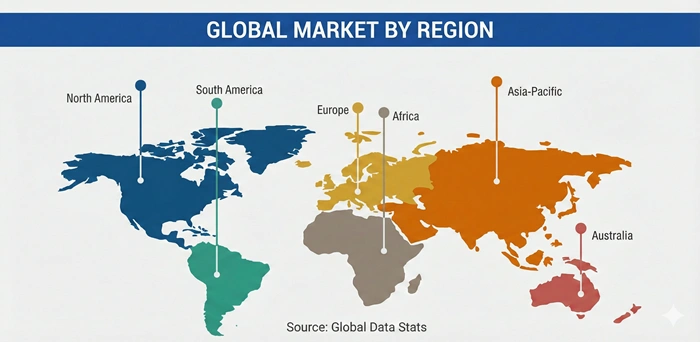
Europe dominates the premium cosmetics market with approximately 30.85% regional share in 2025, representing over USD 54 billion in market value, driven fundamentally by the region's deep heritage in luxury beauty craftsmanship and sophisticated consumer appreciation for premium quality. The region serves as the birthplace and headquarters for many of the world's most prestigious cosmetics houses including Chanel, Dior, Lancôme, Guerlain, Clarins, and La Prairie, which leverage centuries of perfume-making tradition and skincare expertise to command premium positioning globally. European consumers demonstrate strong brand loyalty to heritage luxury labels and willingness to invest substantially in beauty products that represent quality, artistry, and exclusivity. The premium cosmetics market in Europe benefits from harmonized cosmetics regulations under EC 1223/2009 that foster consumer confidence in product safety while enabling efficient cross-border commerce across the European Union.
Tourism plays a critical role in sustaining Europe's leadership position in the premium cosmetics market, with millions of international visitors purchasing luxury beauty products in flagship boutiques, department stores, and duty-free shops across major cities including Paris, London, Milan, Rome, and Frankfurt. The region's extensive luxury retail infrastructure, characterized by prestigious shopping districts, world-renowned department stores, and brand-owned boutiques offering immersive experiences, provides optimal environments for premium beauty commerce. Leading companies in the European premium cosmetics market include L'Oréal Groupe, LVMH (Dior, Guerlain, Givenchy), Chanel, Clarins, Coty, Beiersdorf, and Shiseido Europe. The region is expected to maintain steady growth at approximately 6.1% CAGR through 2033, supported by continuous product innovation, expanding sustainable beauty offerings, and resilience among wealthy consumers who demonstrate inelastic demand for luxury cosmetics even during periods of economic uncertainty. France, Italy, Germany, and the United Kingdom represent the largest national markets, accounting for over 70% of European premium cosmetics revenue.
Asia Pacific
Rising Affluence and Digital Commerce Acceleration Drive Fastest Regional Growth
Asia Pacific represents the fastest-growing region in the premium cosmetics market with a projected CAGR of 7.62% during the forecast period 2026 to 2033, propelled by rapid economic development, expanding middle-class populations, and youthful demographics increasingly exposed to global beauty trends through digital media. The region is experiencing fundamental transformation in beauty consumption patterns as rising disposable incomes enable broader consumer access to luxury cosmetics previously affordable only to elite demographics. Social media platforms including Instagram, TikTok, Xiaohongshu, and YouTube have become primary channels for beauty discovery among younger Asian consumers who rely heavily on influencer recommendations, peer reviews, and viral product demonstrations when making purchase decisions in the premium cosmetics market.
China, South Korea, and Japan dominate Asia Pacific's premium cosmetics market, collectively accounting for over 65% of regional revenue, while Southeast Asian countries including Singapore, Thailand, Indonesia, Malaysia, and the Philippines represent high-growth frontiers experiencing triple-digit absolute growth rates. The region is characterized by sophisticated beauty consumers who demonstrate deep knowledge of skincare science, ingredient efficacy, and product formulation, creating demand for technologically advanced premium cosmetics with clinically proven results. Leading companies operating in the Asia Pacific premium cosmetics market include Shiseido, KOSÉ, Kao, L'Oréal Asia, Estée Lauder Companies Asia Pacific, LVMH Asia, Amorepacific, and LG Household & Health Care. The region's market growth is further accelerated by livestream commerce phenomena, with beauty influencers and brand representatives conducting real-time product demonstrations and interactive sales sessions that generate millions in revenue. The premium cosmetics market in Asia Pacific is expected to surpass USD 105 billion by 2033, supported by favorable regulatory reforms, expanding retail infrastructure, growing male grooming acceptance, and continued digital innovation in beauty commerce.
Top Key Players
-
The Estée Lauder Companies Inc. (United States)
-
L'Oréal Groupe (France)
-
LVMH Moët Hennessy Louis Vuitton SE (France)
-
Shiseido Co., Ltd. (Japan)
-
Chanel Limited (France)
-
Coty Inc. (United States)
-
Christian Dior SE (France)
-
Kao Corporation (Japan)
-
The Procter & Gamble Company (United States)
-
Revlon Inc. (United States)
-
Yves Saint Laurent Beauty (France)
-
Elizabeth Arden Inc. (United States)
-
Clarins Group (France)
-
Beiersdorf AG (Germany)
-
KOSÉ Corporation (Japan)
-
Oriflame Cosmetics SA (Switzerland)
-
Avon Products Inc. (United Kingdom)
-
Amorepacific Corporation (South Korea)
-
LG Household & Health Care Ltd. (South Korea)
-
Puig (Spain)
Recent Developments
-
The Estée Lauder Companies announced the official launch of The Ordinary brand on the U.S. Amazon Premium Beauty Store in January 2025, expanding consumer access to bestselling products with fast, free shipping for Prime members. This strategic partnership reinforces the company's omnichannel distribution strategy and commitment to meeting consumers where they prefer to shop in the premium cosmetics market.
-
Chanel launched its Beauty products on Nykaa in May 2025, India's leading beauty and lifestyle destination and digital-first consumer tech company, with products also made available at select Nykaa Luxe stores spread across the country. This market entry represents a significant expansion of Chanel's presence in the rapidly growing Indian premium cosmetics market.
-
Dior Beauty opened a new boutique at Brickell City Centre in Miami in May 2025, featuring the brand's fragrance, makeup, and skincare offerings as the latest brick-and-mortar expansion for the LVMH-owned brand. This investment in physical retail demonstrates continued confidence in experiential luxury beauty shopping despite e-commerce growth.
-
L'Oréal Groupe launched the #JoinTheRefillMovement global multi-brand initiative in June 2025, coinciding with World Refill Day, bringing together brands including Lancôme, Armani Beauty, and Kiehl's to highlight environmental and economic advantages of refillable products. This campaign reflects the industry's strategic pivot toward sustainable luxury in the premium cosmetics market.
-
Estée Lauder unveiled its availability on Amazon.ca's Premium Beauty store in June 2025, expanding access to its high-performance skincare, makeup, and iconic fragrances to customers across Canada. This launch enables broader reach to Canadian consumers with the ease and convenience of Amazon's logistics infrastructure.
Market Trends
Sustainable Luxury and Refillable Packaging Transform Premium Beauty Standards
The premium cosmetics market is experiencing fundamental transformation as sustainability evolves from niche trend to mainstream expectation among luxury beauty consumers who increasingly refuse to compromise between environmental responsibility and premium quality. Major brands are investing substantially in developing refillable packaging systems, recyclable materials, and circular economy principles that reduce environmental impact while maintaining the elevated aesthetic standards expected in luxury beauty. Estée Lauder achieved 71% of packaging meeting recyclable, refillable, reusable, recycled, or recoverable criteria by 2023, while L'Oréal has increased refillable packaging options by 17-fold across its brand portfolio over five years. This transition reflects recognition that sustainable practices enhance rather than diminish luxury appeal, with consumers demonstrating willingness to pay premium prices for products that align with their environmental values. The premium cosmetics market is witnessing proliferation of innovative refill systems featuring magnetic closures, modular components, and beautifully designed permanent cases that transform sustainability from functional necessity into desirable luxury feature.
Clean beauty formulations emphasizing natural ingredients, transparency, and ingredient safety are reshaping product development priorities across the premium cosmetics market as consumers demand detailed information about what they apply to their skin. The natural and organic segment is experiencing robust growth at 7.46% CAGR through 2031, significantly outpacing conventional formulations, as awareness of ingredient toxicity and long-term health impacts influences purchase decisions. Brands are responding by reformulating flagship products to eliminate controversial ingredients including parabens, sulfates, phthalates, and synthetic fragrances while maintaining the performance standards expected at premium price points. Regulatory frameworks supporting clean beauty through certification programs including NATRUE, COSMOS-standard, and Ecocert are providing credibility and standardization that helps consumers navigate claims. The trend extends beyond ingredients to encompass cruelty-free testing practices, vegan formulations, and ethical sourcing of botanical materials, creating comprehensive sustainability narratives that differentiate brands in the increasingly competitive premium cosmetics market.
Segments Covered in the Report
By Product Type
-
Facial Cosmetics
-
Eye Cosmetics
-
Lip and Nail Makeup Cosmetics
-
Hair Care Products
-
Fragrances
By Gender
-
Female
-
Male
By Category
-
Natural/Organic
-
Conventional/Synthetic
By Distribution Channel
-
Single Brand Stores
-
Multi-Brand Stores
-
Online Retail Stores
-
D2C (Direct-to-Consumer)
-
Third-party E-retailers
-
-
Other Distribution Channels
By End-User
-
Men
-
Women
By Region
-
North America
-
United States
-
Canada
-
Mexico
-
-
Europe
-
Germany
-
United Kingdom
-
France
-
Italy
-
Spain
-
Netherlands
-
Poland
-
Belgium
-
Sweden
-
Rest of Europe
-
-
Asia-Pacific
-
China
-
Japan
-
South Korea
-
India
-
Singapore
-
Thailand
-
Indonesia
-
Australia
-
New Zealand
-
Rest of Asia-Pacific
-
-
Latin America
-
Brazil
-
Argentina
-
Colombia
-
Chile
-
Peru
-
Rest of Latin America
-
-
Middle East & Africa
-
United Arab Emirates
-
Saudi Arabia
-
South Africa
-
Turkey
-
Egypt
-
Morocco
-
Nigeria
-
Rest of Middle East & Africa
-
Frequently Asked Questions
Question 1: What is the premium cosmetics market size expected to reach by 2033?
Answer: The premium cosmetics market is projected to reach approximately USD 281.41 billion by 2033, growing from USD 187.70 billion in 2026 at a CAGR of 6.68% during the forecast period.
Question 2: Which region dominates the premium cosmetics market currently?
Answer: Europe dominates the premium cosmetics market with approximately 30.85% market share in 2025, driven by heritage luxury brands, sophisticated retail infrastructure, and strong consumer appreciation for high-end beauty products.
Question 3: What are the key growth drivers in the premium cosmetics market?
Answer: Key drivers include rising disposable incomes in emerging markets, powerful social media and influencer marketing, increasing demand for clean and natural beauty products, and brand prestige with exclusivity positioning. Male grooming segment growth represents a significant new opportunity expanding at 8.32% CAGR.
Question 4: Which product type holds the largest share in the premium cosmetics market?
Answer: Facial cosmetics dominate with approximately 41.98% market share in the premium cosmetics market, driven by consumer prioritization of complexion products and successful hybrid formulations combining cosmetic coverage with skincare benefits.
Question 5: How is sustainability impacting the premium cosmetics market?
Answer: Sustainability has become central to premium cosmetics market growth, with brands investing in refillable packaging, natural ingredients, and transparent sourcing. The natural/organic segment is growing at 7.46% CAGR, significantly outpacing conventional products as consumers increasingly demand eco-friendly luxury beauty options.