
Predictive Maintenance Market Overview
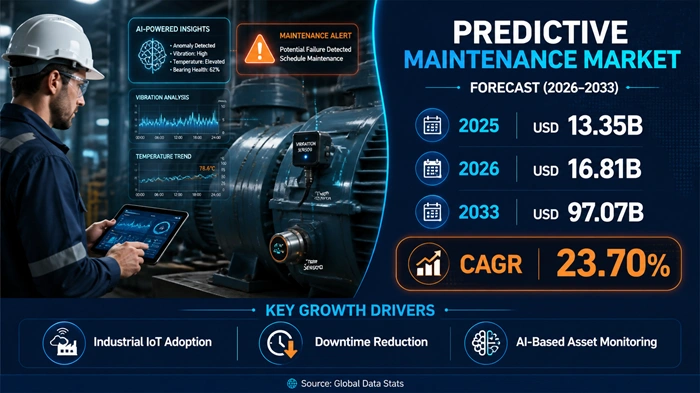
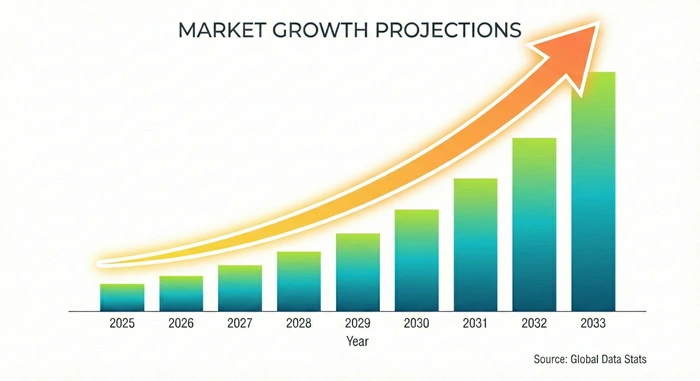
The global predictive maintenance market size is valued at USD 13.35 billion in 2025 and is predicted to increase from USD 16.81 billion in 2026 to approximately USD 97.07 billion by 2033, growing at a CAGR of 23.70% from 2026 to 2033.
Predictive maintenance represents a transformative approach in industrial operations that leverages advanced technologies to forecast equipment failures before they occur. This proactive maintenance strategy combines sensor-based monitoring, data analytics, and machine learning algorithms to optimize asset performance and minimize costly downtime. Organizations across manufacturing, energy, healthcare, and transportation sectors are rapidly adopting predictive maintenance solutions to transition from reactive maintenance approaches to intelligence-driven operations.
AI Impact on the Predictive Maintenance Industry
Revolutionizing Failure Prediction and Operational Intelligence Through Advanced Machine Learning
Artificial intelligence is fundamentally reshaping how organizations approach equipment maintenance and asset management across global industries. AI-driven predictive analytics can increase failure prediction accuracy up to 90% while reducing maintenance costs by approximately 12%, making it one of the most impactful technological advancements in industrial operations. Modern machine learning algorithms analyze massive quantities of sensor data, historical maintenance records, and operational parameters to identify patterns that remain invisible to human operators, enabling businesses to forecast equipment failures with unprecedented precision.
The integration of generative AI into predictive maintenance systems has introduced a new era of maintenance excellence by allowing machine failures to be anticipated, repair plans to be auto-generated, and personalized repair guidance to be provided to technicians. Leading automotive manufacturers adopting AI-powered predictive maintenance systems have reported a 30% reduction in downtime and 20% lower maintenance costs, demonstrating the tangible economic benefits of AI integration. AI-powered predictive maintenance solutions can decrease equipment stoppages by 30% to 50%, with automation capabilities enabling service technicians to take preventive actions before potential downtime occurs.
Growth Factors
Driving Market Expansion Through Cost Reduction and Digital Transformation Initiatives
The predictive maintenance market is experiencing robust growth driven by the critical imperative to minimize operational costs and reduce unplanned downtime across industrial sectors. Unplanned equipment failures lead to significant production losses, with industrial manufacturers facing close to USD 50 billion in annual costs from unexpected downtime. Businesses across various sectors seek methods to enhance equipment reliability and sustain production continuity, which directly translates into tangible economic benefits through proactive interventions rather than reactive responses.
The rising adoption of emerging technologies including Internet of Things sensors, cloud computing platforms, and artificial intelligence capabilities is accelerating predictive maintenance market growth globally. Organizations are increasingly integrating predictive maintenance solutions as part of broader digital transformation strategies, with approximately 75% of organizations using AI reporting increases in revenues and productivity. The emergence of machine learning and artificial intelligence technologies, combined with the increasing demand to minimize maintenance costs and equipment failures, creates a powerful ecosystem that propels sustained market expansion.
Market Outlook
Sustained Growth Trajectory Fueled by Industry 4.0 Adoption and Technological Advancements
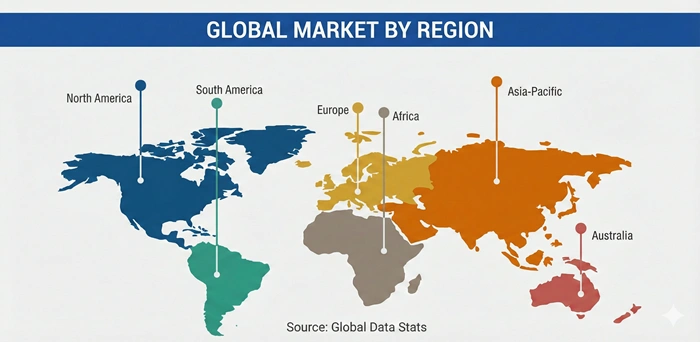
The predictive maintenance market demonstrates a promising outlook with substantial growth projections across all geographic regions and industry verticals through 2033. North America dominates the market landscape with a share of 33.30% in 2025, driven by heavy investments in research and development activities and the presence of technology giants including IBM, Microsoft, and General Electric. The region's well-established economy enables predictive maintenance vendors to invest aggressively in technological advancements and innovation initiatives.
Asia Pacific is expected to grow at the highest compound annual growth rate during the forecast period, propelled by rapid industrialization across manufacturing, energy, automotive, and aerospace sectors. Governments throughout the region are promoting Industry 4.0 technology integration through sector-specific planning, incentives, research and development investments, international collaborations, and infrastructure enhancements. The growing significance of the manufacturing sector in economic advancement drives demand for predictive maintenance solutions, as regular condition monitoring can reduce sudden machine failures by more than 50%.
Expert Speaks
-
Arvind Krishna, CEO of IBM Corporation: "AI and hybrid cloud technologies are transforming how organizations approach predictive maintenance, enabling them to unlock new levels of operational efficiency and minimize costly equipment failures through intelligent automation."
-
H. Lawrence Culp Jr., CEO of General Electric: "Predictive maintenance solutions powered by industrial IoT and advanced analytics are essential for our customers to improve asset performance, reduce unplanned downtime, and drive sustainability across their operations."
-
Roland Busch, CEO of Siemens AG: "Digital transformation in industrial automation requires predictive maintenance capabilities that combine edge computing, AI-driven insights, and real-time monitoring to help our customers achieve operational excellence and competitive advantages."
Key Report Takeaways
-
North America leads the predictive maintenance market with the largest market share of 33.30% in 2025, driven by technology innovation and the presence of major solution providers across the United States and Canada
-
Asia Pacific represents the fastest-growing region for predictive maintenance adoption, experiencing accelerated growth due to rapid industrialization, government-led digital initiatives, and expanding manufacturing sectors across China, India, Japan, and Southeast Asian nations
-
Software components capture the largest market share among predictive maintenance solutions, with cloud-based platforms gaining rapid adoption due to scalability, remote accessibility, and seamless integration capabilities with enterprise systems
-
Condition monitoring applications contribute the most to market revenue, utilizing AI and machine learning algorithms to detect unusual patterns in sensor data and identify early stages of equipment failure across industrial assets
-
IoT technology dominates the technology segment with the largest market share, enabling continuous data collection from connected assets and real-time transmission of equipment performance data for predictive analysis
-
Manufacturing sector will experience the fastest growth during the forecast period with a market share of 35.8% and the highest CAGR, as unplanned downtime costs industrial manufacturers billions annually and predictive maintenance solutions optimize asset performance
Market Scope
| Report Coverage Details | |
|---|---|
| Market Size by 2033 | USD 97.07 Billion |
| Market Size by 2025 | USD 13.35 Billion |
| Market Size by 2026 | USD 16.81 Billion |
| Market Growth Rate from 2026 to 2033 | CAGR of 23.70% |
| Dominating Region | North America |
| Fastest Growing Region | Asia Pacific |
| Base Year | 2025 |
| Forecast Period | 2026 to 2033 |
| Segments Covered | Component, Deployment, Enterprise Type, Technology, Application, End-Use, Region |
| Regions Covered | North America, Europe, Asia Pacific, South America, Middle East & Africa |
Market Dynamics
Drivers Impact Analysis
Operational Cost Reduction and Digital Transformation Creating Unprecedented Demand
| Aspect | Details |
|---|---|
| ≈ % Impact on CAGR Forecast | High Impact (35-40%) |
| Geographic Relevance | Global, with strongest impact in North America and Asia Pacific |
| Impact Timeline | Immediate to Long-term (2026-2033) |
Operational optimization is increasingly driving demand for cost-effective predictive maintenance solutions as businesses universally seek to enhance efficiency and reduce operational expenditures. Predictive maintenance employs advanced technologies including IoT sensors and AI algorithms to gather real-time data, enabling precise predictions of maintenance needs and ensuring that resources such as materials, labor, and equipment are allocated efficiently. This approach minimizes unplanned downtime, which represents a common disruptor of productivity and profitability across industrial sectors, with manufacturers losing close to USD 50 billion annually from unexpected equipment failures.
The advancement of technology has significantly transformed how products are designed, developed, and managed across rapidly evolving industries worldwide. The integration of generative AI into predictive maintenance takes traditional systems to new levels, enhancing productivity, reliability, and efficiency for companies by simplifying the development of predictive models and reducing the need for large teams of data scientists. Organizations implementing AI-powered predictive maintenance systems report a 30% reduction in downtime and 20% lower maintenance costs, demonstrating the substantial economic value of digital transformation initiatives.
Restraints Impact Analysis
Skilled Workforce Shortage and Implementation Complexity Limiting Adoption
| Aspect | Details |
|---|---|
| ≈ % Impact on CAGR Forecast | Moderate Impact (15-20%) |
| Geographic Relevance | Global, particularly affecting emerging markets and SMEs |
| Impact Timeline | Short to Medium-term (2026-2030) |
To implement AI-based IoT technologies for predictive analytics, businesses require workforces that are skilled and trained to manage advanced software systems effectively. As these technologies evolve rapidly, employees often need to undergo extensive training to use new and improved predictive maintenance systems efficiently, creating significant organizational challenges. Companies face substantial shortages of highly qualified personnel, with the increased demand for predictive maintenance initiatives globally driving needs for skilled professionals in cybersecurity, networking, and application development areas.
Organizations aim to harness IoT data to forecast outcomes, prevent errors, optimize operations, and innovate new products, requiring expertise in advanced analytics including artificial intelligence and machine learning technologies. The ability to interpret data insights and apply them to predictive models remains critical for businesses looking to stay competitive in evolving market landscapes. Managing and upgrading AI-based IoT systems poses significant challenges for companies aiming to provide uninterrupted solutions to clients, as the number of systems grows alongside maintenance costs.
Opportunities Impact Analysis
Industry 4.0 Integration and IoT Expansion Opening New Growth Avenues
| Aspect | Details |
|---|---|
| ≈ % Impact on CAGR Forecast | High Impact (30-35%) |
| Geographic Relevance | Global, with exceptional opportunities in Asia Pacific and Europe |
| Impact Timeline | Medium to Long-term (2027-2033) |
Predictive maintenance represents a crucial component of Industry 4.0, emphasizing integration of advanced technologies including IoT, AI, and extensive data analytics projects to enhance manufacturing processes globally. The predictive maintenance market is experiencing rapid growth driven by technological advancements and increasing adoption of Industry 4.0 methodologies across manufacturing, energy, healthcare, and transportation sectors. One major opportunity lies in the integration of artificial intelligence and machine learning algorithms, which enhance the accuracy of equipment failure predictions by analyzing extensive sensor data from connected industrial assets.
The Internet of Things presents another significant opportunity, enabling real-time monitoring and data collection from machines, which bolsters the predictive capabilities of maintenance systems substantially. IoT sensors and connectivity solutions allow for continuous monitoring of equipment health and performance, with edge computing hardware enabling data processing close to the source and providing immediate insights to maintenance teams. These factors collectively create significant opportunities for growth in the predictive maintenance market, particularly as organizations transition from reactive to proactive maintenance strategies that reduce costs and improve operational efficiency.
Segment Analysis
Software Component
Cloud-Based Solutions Driving Digital Transformation in Predictive Maintenance Operations
Software captured the largest predictive maintenance market share in 2024 and is expected to continue its dominance by growing at the highest compound annual growth rate during the forecast period through 2033. There has been a strong shift toward cloud-based predictive maintenance solutions, which offer scalability, remote accessibility, and seamless integration with other enterprise systems across industries. These platforms allow companies to collect data from IoT sensors and analyze it without the need for on-premise infrastructure, reducing capital expenditure requirements and enabling rapid deployment. Among software solutions, standalone software dominated the market in 2024, with adoption increasing to meet the need for advanced capabilities by employing vertical-focused and automated maintenance techniques that offer flexibility and optional features.
The predictive maintenance software segment is growing rapidly across North America and Europe, where large enterprises including Siemens, General Electric, and IBM have integrated these solutions as part of broader digital transformation strategies. Cloud-based deployment is anticipated to grow at the highest CAGR in coming years, with a market share exceeding 45%, owing to factors including reduced costs, easy access to data, remote accessibility, unification of information, and automatic updates. Leading companies such as IBM Corporation, Microsoft Azure, PTC, and C3.ai are investing heavily in developing advanced software platforms that combine artificial intelligence, machine learning, and predictive analytics capabilities to enhance accuracy and provide actionable insights for maintenance teams globally.
Manufacturing End-Use
Unplanned Downtime Costs Accelerating Predictive Maintenance Adoption in Industrial Operations
Manufacturing captured the largest market share in 2024 with 35.8% and is expected to continue its dominance by growing at the highest compound annual growth rate during the forecast period from 2026 to 2033. The manufacturing industry is increasingly adopting predictive maintenance solutions as unplanned downtime is expensive and costs industrial manufacturers close to USD 50 billion annually globally. Predictive maintenance minimizes unplanned downtime by optimizing asset performance and identifying faults before they manifest or escalate into costly equipment failures that disrupt production schedules. Manufacturing facilities across automotive, aerospace, electronics, and industrial equipment sectors are deploying IoT sensors, vibration monitoring systems, and AI-powered analytics platforms to monitor machinery health continuously.
The manufacturing sector shows particularly strong growth in Asia Pacific, where rapid industrialization and government-led Industry 4.0 initiatives are driving adoption rates above 30% annually. North America remains the dominant region for manufacturing predictive maintenance implementations, with the United States accounting for significant market share due to the presence of technology leaders including Rockwell Automation, General Electric, and Honeywell. These companies are developing industry-specific predictive maintenance solutions that address unique challenges in discrete and process manufacturing environments, helping manufacturers achieve 30% to 50% reductions in equipment stoppages and significant improvements in overall equipment effectiveness metrics.
Regional Insights
North America
Technology Leadership and Enterprise Adoption Establishing Market Dominance
North America holds the largest predictive maintenance market share in 2024 with 33.30%, valued at approximately USD 4.45 billion in 2025, and is projected to maintain leadership through 2033 with a CAGR of 22.80%. The region's dominance stems from increasing adoption of predictive maintenance solutions leveraging advanced technologies including IoT, cloud computing, machine learning, and artificial intelligence across industrial sectors. The rising demand for advanced AI and cloud computing-based platforms, combined with rapid adoption of AI technology across the United States and Canada, drives substantial market growth throughout North America.
Companies across the region are employing predictive maintenance systems to pinpoint operational performance factors and enhance maintenance procedures and reliability standards. According to the U.S. Bureau of Economic Analysis, manufacturing in the United States accounted for 10.3% of value-added output in the economy in 2023, with real value-added output in the manufacturing sector increasing from USD 2.313 trillion in Q3 to USD 2.360 trillion in Q4. The presence of major technology giants including IBM Corporation, Microsoft, General Electric, Siemens, and Rockwell Automation plays a vital role in accelerating adoption, as these companies invest heavily in research and development activities to launch innovative solutions. The well-established economy enables predictive maintenance vendors to invest aggressively in technological advancements and innovation, positioning North America as the center of predictive maintenance innovation globally.
Asia Pacific
Rapid Industrialization and Government Initiatives Fueling Fastest Regional Growth
Asia Pacific is expected to grow at the highest compound annual growth rate during the forecast period from 2026 to 2033, with a projected CAGR exceeding 26.50% as the region experiences unprecedented industrial expansion. Governments throughout Asia Pacific are at the forefront of promoting integration of Industry 4.0 technologies, utilizing sector-specific planning, incentives, research and development investments, international collaborations, and infrastructure enhancements to accelerate digital transformation. The growing significance of the manufacturing sector in economic advancement is driving demand for predictive maintenance solutions across China, India, Japan, South Korea, and Southeast Asian nations.
Asia Pacific is experiencing rapid industrialization across sectors including manufacturing, energy, automotive, and aerospace, leading to increased demand for predictive maintenance solutions that reduce operational costs and improve asset reliability. Regular condition monitoring of equipment and systems through predictive maintenance can lead to reduction of sudden machine failures by more than 50%, making it an attractive investment for industrial operators. Key players operating in the region including Hitachi Ltd., Siemens, General Electric, and emerging local providers are increasingly engaging in strategic partnerships to address growing demand for predictive maintenance solutions across diverse industries. The widespread adoption of IoT sensors and connectivity solutions throughout Asia Pacific allows for real-time monitoring of equipment health and performance, creating a robust foundation for predictive maintenance market expansion.
Top Key Players
-
IBM Corporation (United States)
-
General Electric (United States)
-
Siemens (Germany)
-
C3.ai Inc. (United States)
-
PTC (United States)
-
Rockwell Automation (United States)
-
Hitachi Ltd. (Japan)
-
Microsoft Corporation (United States)
-
UpKeep (United States)
-
Augury Ltd. (United States)
-
The Soothsayer P-Dictor (Thailand)
-
SAP SE (Germany)
-
Oracle Corporation (United States)
-
Honeywell International Inc. (United States)
-
Schneider Electric (France)
Recent Developments
-
IBM Corporation (2024): IBM announced strategic partnership with leading industrial manufacturers to deploy Watson AI-powered predictive maintenance solutions across manufacturing facilities, enabling real-time equipment monitoring and failure prediction capabilities that reduce downtime by up to 35%
-
General Electric (2024): GE Digital launched enhanced Predix Asset Performance Management platform with advanced machine learning algorithms, expanding its predictive maintenance capabilities for energy and utilities sector customers across North America and Europe
-
Siemens (2025): Siemens completed acquisition of predictive maintenance technology assets to strengthen its digital industries portfolio, integrating AI-driven analytics and IoT sensor capabilities into its comprehensive industrial automation solutions
-
C3.ai Inc. (2024): C3.ai unveiled next-generation enterprise AI suite for predictive maintenance applications, featuring generative AI capabilities that auto-generate repair plans and provide personalized guidance to maintenance technicians across manufacturing operations
-
Rockwell Automation (2025): Rockwell Automation announced collaboration with Microsoft to integrate Azure cloud services with FactoryTalk predictive maintenance platform, enabling customers to leverage cloud-based analytics and machine learning models for industrial equipment monitoring
Market Trends
Edge Computing and Digital Twin Technologies Reshaping Predictive Maintenance Landscape
The predictive maintenance market is witnessing transformative trends as edge computing technologies enable real-time analytics and data processing capabilities close to equipment sources. Edge computing hardware allows for immediate analysis of equipment conditions and reduces latency compared to cloud-only solutions, with edge devices helping manage large volumes of data generated by IoT sensors. These devices prove particularly useful in remote or resource-constrained environments where constant cloud connectivity is not possible, enabling maintenance teams to receive immediate insights without network dependencies.
Digital twin technology is gaining significant traction across industrial sectors, creating virtual replicas of physical assets that enable predictive modeling and simulation capabilities. Organizations are increasingly adopting digital twin solutions combined with predictive maintenance systems to optimize maintenance scheduling, test scenarios, and predict equipment behavior under various operating conditions. The convergence of predictive maintenance with other Industry 4.0 technologies is fostering innovative business models including servitization and outcome-based contracts, where equipment manufacturers offer maintenance-as-a-service packages that guarantee uptime and performance levels. Cybersecurity for connected assets is emerging as a critical focus area, with companies investing in secure IoT architectures and data protection measures to safeguard sensitive operational information transmitted through predictive maintenance systems.
Segments Covered in the Report
By Component
-
Hardware
-
Software
-
Integrated Software
-
Standalone Software
-
By Deployment
-
On-Premise
-
Cloud-Based
By Enterprise Type
-
Large Enterprises
-
Small and Mid-Sized Enterprises (SMEs)
By Technology
-
Internet of Things (IoT)
-
Artificial Intelligence and Machine Learning
-
Digital Twin
-
Advanced Analytics
-
Others (Modern Database, ERP)
By Application
-
Condition Monitoring
-
Predictive Analytics
-
Remote Monitoring
-
Asset Tracking
-
Maintenance Scheduling
By End-Use
-
Manufacturing
-
Military and Defense
-
Energy and Utilities
-
Healthcare
-
IT and Telecom
-
Logistics and Transportation
-
Others (Chemicals, Paper and Printing, Agriculture)
By Region
-
North America
-
United States
-
Canada
-
-
Europe
-
Germany
-
United Kingdom
-
France
-
Italy
-
Spain
-
Rest of Europe
-
-
Asia Pacific
-
China
-
India
-
Japan
-
South Korea
-
Southeast Asia
-
Rest of Asia Pacific
-
-
South America
-
Brazil
-
Argentina
-
Rest of South America
-
-
Middle East & Africa
-
Saudi Arabia
-
UAE
-
South Africa
-
Rest of Middle East & Africa
-
Frequently Asked Questions
Question 1: What is the predictive maintenance market size expected to reach by 2033?
Answer: The global predictive maintenance market is projected to reach approximately USD 97.07 billion by 2033, growing from USD 16.81 billion in 2026 at a compound annual growth rate of 23.70% during the forecast period.
Question 2: Which region dominates the predictive maintenance market currently?
Answer: North America dominates the predictive maintenance market with the largest share of 33.30% in 2025, driven by technology innovation and presence of major solution providers including IBM, Microsoft, and General Electric.
Question 3: What are the primary drivers of predictive maintenance market growth?
Answer: The primary drivers include reducing operational costs and unplanned downtime, adoption of AI and IoT technologies, digital transformation initiatives, and increasing Industry 4.0 implementation across manufacturing and industrial sectors.
Question 4: Which end-use industry shows the highest adoption of predictive maintenance solutions?
Answer: Manufacturing industry shows the highest adoption with a market share of 35.8% and the fastest growth rate, as unplanned downtime costs industrial manufacturers approximately USD 50 billion annually.
Question 5: What is the fastest-growing technology segment in the predictive maintenance market?
Answer: Artificial intelligence and machine learning technology segment is anticipated to grow at the highest CAGR, as AI-powered solutions can decrease equipment stoppages by 30% to 50% through automated predictive analytics.