
Power Quality Equipment Market Overview
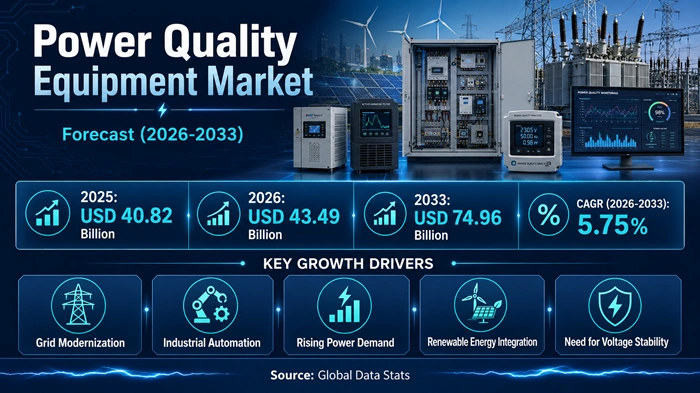
The global power quality equipment market size is valued at USD 40.82 billion in 2025 and is predicted to increase from USD 43.49 billion in 2026 to approximately USD 74.96 billion by 2033, growing at a CAGR of 5.75% from 2026 to 2033. This substantial expansion underscores the critical importance of maintaining clean, stable, and reliable electrical power in an increasingly digitalized world where sensitive electronic equipment and automated systems demand consistent power quality for optimal performance. Power quality equipment encompasses a comprehensive range of devices designed to protect electrical systems and sensitive equipment from power disturbances including voltage sags, surges, harmonic distortion, transients, and interruptions that can cause equipment malfunction, data loss, production downtime, and substantial financial losses.
The power quality equipment market represents essential infrastructure protecting modern electrical systems from diverse power quality issues that threaten operational continuity across industrial, commercial, and residential applications. These sophisticated devices including uninterruptible power supply systems, surge protection devices, voltage regulators, harmonic filters, and power quality monitoring instruments work collectively to ensure electrical supply meets stringent quality standards required by today's microprocessor-based equipment and automation systems. Growing integration of renewable energy sources introducing grid instability, accelerating industrial automation relying on precision control systems, expanding data center infrastructure demanding highest power reliability, and increasing awareness about costly consequences of poor power quality are driving unprecedented investment in advanced power quality management solutions worldwide.
AI Impact on the Power Quality Equipment Industry
Transforming Power Management Through Intelligent Monitoring and Predictive Maintenance Capabilities
Artificial intelligence is revolutionizing the power quality equipment market by enabling unprecedented levels of monitoring accuracy, predictive maintenance, and automated response capabilities that maximize equipment protection while minimizing operational disruptions. AI-powered power quality monitoring systems continuously analyze vast datasets collected from sensors throughout electrical distribution networks, detecting subtle anomalies and patterns indicating potential power quality issues before they cause equipment damage or system failures. Machine learning algorithms process historical power quality data alongside real-time measurements to predict when disturbances are likely to occur, enabling proactive interventions that prevent problems rather than simply reacting to events after damage occurs. Neural networks can identify complex relationships between external factors including weather conditions, grid load patterns, and renewable energy generation fluctuations that influence power quality, allowing intelligent systems to anticipate challenges and automatically adjust protection parameters optimizing equipment performance.
The integration of AI extends throughout the entire power quality management ecosystem from monitoring and diagnosis through automated response and maintenance optimization, creating comprehensive intelligent power infrastructure that enhances reliability while reducing operational costs. Computer vision technologies integrated with thermal imaging cameras detect overheating conditions in electrical components that often precede power quality problems, enabling early replacement of failing equipment before failures occur. Predictive analytics models forecast equipment maintenance requirements based on operating conditions, usage patterns, and environmental factors, allowing facilities to schedule maintenance during planned downtime rather than experiencing unexpected failures during critical operations. AI-driven coordination systems manage complex interactions between multiple power quality devices deployed throughout facilities, optimizing their collective performance and ensuring seamless handoffs when primary protection systems require maintenance or encounter faults. This technological transformation is democratizing access to sophisticated power quality management capabilities previously available only to the largest industrial facilities with dedicated electrical engineering teams.
Growth Factors
Rising Dependence on Sensitive Electronics and Renewable Energy Integration Drive Market Expansion
The explosive growth of digitalization across all industry sectors represents the fundamental driver propelling power quality equipment market expansion as modern facilities increasingly depend on microprocessor-based equipment and automated systems that are highly vulnerable to power quality disturbances. Manufacturing plants utilizing precision robotics, computer numerical control machines, and programmable logic controllers require clean, stable electrical power to maintain production quality and avoid costly downtime, with even brief voltage sags causing production line shutdowns lasting hours while systems reset and recalibrate. Data centers hosting cloud services, financial trading platforms, and enterprise applications cannot tolerate any power interruptions or voltage fluctuations that might corrupt data, disrupt transactions, or compromise service availability for global customer bases. Healthcare facilities depend on uninterrupted power for life-support equipment, medical imaging systems, and electronic health records, where power quality issues pose direct threats to patient safety and regulatory compliance. The power quality equipment market benefits from growing recognition that preventing power quality problems delivers far greater economic value than repairing damage after disturbances occur.
The accelerating global transition toward renewable energy sources including solar photovoltaic installations and wind turbines is creating unprecedented power quality challenges that drive demand for advanced equipment managing grid stability and protecting sensitive loads. Renewable energy generation introduces inherent variability and intermittency that can cause voltage fluctuations, harmonic distortion, and frequency deviations affecting power quality for all grid-connected users. Solar installations produce power output that varies dramatically with cloud cover and time of day, while wind turbines generate fluctuating power based on wind speed and direction, creating instability that traditional fossil fuel power plants with consistent output did not introduce. Grid-scale battery storage systems deployed to smooth renewable energy output utilize power electronics that can generate harmonics requiring filtration to prevent interference with other equipment. The power quality equipment market is expanding rapidly as utilities, commercial facilities, and industrial operations invest in voltage regulators, harmonic filters, and sophisticated monitoring systems managing challenges introduced by renewable energy integration while capturing benefits of clean electricity generation.
Market Outlook
Grid Modernization Initiatives and Smart Infrastructure Development Shape Robust Growth Trajectory
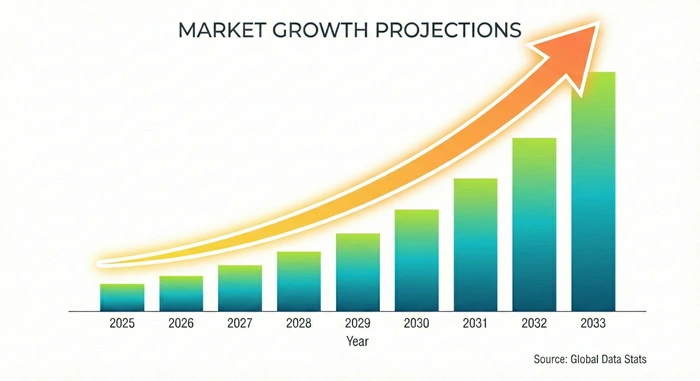
The power quality equipment market outlook through 2033 remains exceptionally positive as global grid modernization initiatives, smart city development projects, and industrial automation expansion drive sustained demand for advanced power quality management solutions. Governments worldwide are investing trillions of dollars in electrical grid infrastructure upgrades replacing aging equipment, integrating smart grid technologies, and enhancing system reliability and efficiency. These modernization programs inherently include substantial power quality equipment deployments as utilities implement voltage regulation systems maintaining consistent power delivery across expanded service territories, harmonic filters cleaning power quality degraded by proliferating power electronic devices, and monitoring systems providing real-time visibility into grid conditions. Smart grid implementations require sophisticated power quality management as bidirectional power flows from distributed generation, dynamic load management systems, and advanced metering infrastructure create complex interactions affecting power quality throughout distribution networks.
Looking toward the forecast period conclusion in 2033, market dynamics will be increasingly influenced by electrification trends including electric vehicle adoption, industrial process electrification, and building heating system conversion from fossil fuels to electric heat pumps that dramatically increase electrical demand while introducing new power quality challenges. Electric vehicle charging infrastructure, particularly DC fast charging stations drawing substantial power intermittently, creates power quality issues including voltage fluctuations and harmonic distortion that require mitigation through power quality equipment installations. Industrial electrification replacing natural gas heating and steam generation with electric alternatives increases facility electrical loads while often requiring higher power quality standards for efficient operation of electric equipment. The power quality equipment market is evolving toward integrated solutions combining multiple protection functions in unified platforms that simplify installation, reduce costs, and provide comprehensive protection replacing traditional approaches deploying separate devices for each power quality issue. Modular and scalable equipment designs enable facilities to start with baseline protection and expand capabilities as needs evolve, reducing initial investment barriers while ensuring long-term flexibility addressing changing power quality requirements.
Expert Speaks
-
Craig Arnold, Chairman and CEO of Eaton Corporation, emphasized that Eaton is positioned as a global intelligent power management company dedicated to improving quality of life and protecting the environment, with the company's strategic focus on leveraging deep expertise in electrical and aerospace segments to capitalize on global electrification trends and energy transition opportunities, positioning Eaton as a leader in providing solutions that make power safer, more efficient, and more sustainable.
-
Peter Herweck, CEO of Schneider Electric, highlighted during the launch of the One Digital Grid Platform that this AI-enabled hybrid cloud solution significantly boosts grid resiliency and efficiency by integrating independent software systems, enabling utilities to modernize operations, reduce outages by up to forty percent, cut distributed energy resource interconnection timelines by twenty-five percent, and accelerate application deployment by sixty percent while offering strong cybersecurity and seamless interoperability.
-
Industry analysts at Deloitte noted in grid modernization research that expanding and modernizing grid infrastructure is driven by converging forces including projected one hundred fifty percent growth in global electricity demand by 2050 and the imperative to integrate renewable energy sources, with a projected USD 14.3 trillion shortfall in global grid investment expected by 2050 creating substantial opportunities for power quality equipment providers supporting infrastructure enhancement.
Key Report Takeaways
-
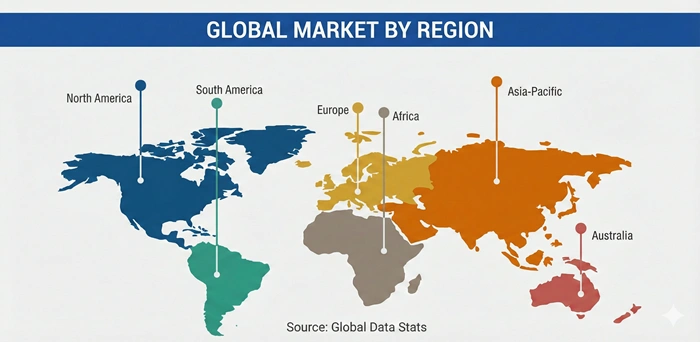
North America dominates the global power quality equipment market with approximately 33% market share driven by extensive data center infrastructure, mature industrial base with high power quality requirements, substantial grid modernization investments, and stringent power quality standards enforced across commercial and industrial facilities ensuring equipment protection and operational reliability.
-
Asia-Pacific emerges as the fastest-growing regional market with projected CAGR exceeding 6.8% through 2033, fueled by massive industrial expansion in China and India, rapid renewable energy integration across the region, extensive smart city development projects, and growing awareness about power quality importance among commercial and industrial facility operators seeking competitive advantages through operational reliability.
-
Uninterruptible power supply systems lead equipment type segmentation accounting for approximately 42.5% of global power quality equipment market revenue as UPS systems provide comprehensive protection against power interruptions, voltage fluctuations, and transients while offering battery backup ensuring critical loads maintain operation during grid outages, making them essential for data centers, healthcare facilities, and industrial process control systems.
-
Industrial end-users dominate market consumption representing around 38.6% of total power quality equipment deployments as manufacturing facilities, processing plants, and industrial automation systems require highest power quality standards to maintain production continuity, protect expensive equipment investments, and ensure product quality meeting stringent specifications demanded by modern manufacturing processes.
-
Three-phase equipment segment captures substantial market share accounting for approximately 75% of revenue as commercial and industrial facilities predominantly utilize three-phase electrical distribution systems requiring specialized power quality equipment designed for higher voltage and power levels compared to single-phase residential applications, with three-phase systems offering superior efficiency for large motor loads and industrial equipment.
-
Harmonic filters segment exhibits highest growth potential expected to expand at CAGR exceeding 7.2% through 2033 as proliferation of variable frequency drives, power electronic converters, LED lighting, and renewable energy inverters generates increasing harmonic distortion requiring active and passive filtration solutions protecting sensitive equipment and ensuring compliance with power quality standards limiting harmonic content on electrical distribution systems.
Market Scope
| Report Coverage Details | |
|---|---|
| Market Size by 2033 | USD 74.96 Billion |
| Market Size by 2025 | USD 40.82 Billion |
| Market Size by 2026 | USD 43.49 Billion |
| Market Growth Rate from 2026 to 2033 | CAGR of 5.75% |
| Dominating Region | North America |
| Fastest Growing Region | Asia-Pacific |
| Base Year | 2025 |
| Forecast Period | 2026 to 2033 |
| Segments Covered | Equipment Type, Phase, End-User, Region |
| Regions Covered | North America, Europe, Asia-Pacific, Latin America, Middle East and Africa |
Market Dynamics
Drivers Impact Analysis
Escalating Data Center Growth and Industrial Automation Demand Drive Equipment Adoption
| Factor | Details |
|---|---|
| ≈ % Impact on CAGR Forecast | +2.1% to +2.6% |
| Geographic Relevance | Global, particularly strong in North America, Europe, Asia-Pacific |
| Impact Timeline | Immediate to Long-term (2026-2033) |
The explosive expansion of data center infrastructure supporting cloud computing, artificial intelligence workloads, cryptocurrency mining, and digital transformation initiatives represents the most powerful driver propelling power quality equipment market growth as these facilities require absolute power reliability and quality. Data centers cannot tolerate any power interruptions or quality issues that might cause server crashes, data corruption, or service outages affecting millions of users and generating substantial financial liabilities through service level agreement penalties and reputation damage. Modern hyperscale data centers consume hundreds of megawatts of electrical power while housing dense server configurations where individual rack power densities exceed twenty kilowatts, creating concentrated loads vulnerable to power quality disturbances. The power quality equipment market benefits enormously from data center operators' willingness to invest heavily in redundant uninterruptible power supply systems, sophisticated voltage regulation equipment, harmonic filtration systems, and comprehensive power monitoring infrastructure ensuring highest power quality standards and availability targets exceeding 99.999 percent uptime.
Industrial automation adoption accelerating across manufacturing, logistics, and process industries creates sustained demand for power quality equipment as automated systems rely on precise electrical power for optimal performance and production continuity. Programmable logic controllers coordinating production line operations, variable frequency drives controlling motor speeds, and robotic systems performing precision assembly tasks all require clean electrical power free from voltage variations, harmonics, and transients that cause control system malfunctions and production disruptions. A single brief voltage sag lasting fractions of a second can trigger industrial equipment shutdowns requiring hours to restart and recalibrate systems, causing production losses worth tens or hundreds of thousands of dollars depending on facility scale and product values. The power quality equipment market expansion is accelerated by documented return-on-investment calculations showing that preventing single power quality events through proper equipment installations often justifies entire capital investments, with many facilities documenting payback periods under two years for comprehensive power quality protection systems based on avoided downtime costs alone. Industry associations and insurance companies increasingly recognize power quality equipment as essential risk mitigation, with some insurers offering premium reductions for facilities demonstrating comprehensive power quality management programs.
Restraints Impact Analysis
High Initial Capital Investment and Complexity of Implementation Limit Adoption Rates
| Factor | Details |
|---|---|
| ≈ % Impact on CAGR Forecast | -0.8% to -1.2% |
| Geographic Relevance | Developing regions, small-medium enterprises globally |
| Impact Timeline | Short to Medium-term (2026-2029) |
The power quality equipment market faces significant adoption barriers related to substantial upfront capital investments required for comprehensive power quality solutions, particularly challenging for small and medium-sized enterprises operating with constrained budgets and competing capital priorities. Complete power quality protection systems for medium-sized facilities can require investments ranging from hundreds of thousands to several million dollars depending on facility size, equipment sensitivity, and desired protection levels, representing major capital commitments that must compete with other business priorities including production equipment, facility expansion, and working capital requirements. High-quality uninterruptible power supply systems alone can cost hundreds of dollars per kilowatt-volt-ampere of protected load, with large facilities requiring systems protecting multi-megawatt loads resulting in million-dollar UPS investments before considering additional power quality equipment including voltage regulators, harmonic filters, and monitoring systems. Many smaller organizations struggle to justify these investments without experiencing costly power quality events that clearly demonstrate equipment value, creating adoption hesitation.
Technical complexity associated with properly specifying, installing, and maintaining power quality equipment creates additional barriers requiring specialized expertise that many facilities lack internally. Effective power quality solutions require comprehensive understanding of electrical distribution system characteristics, equipment load profiles, power quality disturbance types and magnitudes, and appropriate mitigation technologies for each specific application, expertise typically found only among specialized electrical consultants and engineering firms. Improper equipment selection or installation can result in ineffective protection failing to address actual power quality issues while consuming substantial capital, creating negative perceptions about power quality equipment value. The power quality equipment market struggles with limited awareness among many potential users about specific power quality issues affecting their operations and available solutions addressing those problems, with facility managers often unable to quantify costs associated with power quality disturbances or understand that equipment malfunctions, production quality issues, and unexplained downtime may stem from power quality problems rather than equipment defects. Ongoing maintenance requirements for power quality equipment including battery replacements for UPS systems, periodic testing and calibration, and software updates add to total ownership costs while requiring sustained attention from facility maintenance personnel already managing numerous competing priorities.
Opportunities Impact Analysis
Renewable Energy Integration and Electric Vehicle Infrastructure Create Expansion Pathways
| Factor | Details |
|---|---|
| ≈ % Impact on CAGR Forecast | +1.4% to +1.9% |
| Geographic Relevance | Global, particularly Asia-Pacific, Europe, North America |
| Impact Timeline | Medium to Long-term (2027-2033) |
The accelerating global transition toward renewable energy sources creates transformative opportunities for the power quality equipment market as solar photovoltaic installations, wind turbines, and battery energy storage systems introduce power quality challenges requiring sophisticated mitigation solutions. Renewable energy systems utilize power electronic inverters converting DC power to AC grid-compatible electricity, with these inverters potentially generating harmonic distortion, voltage fluctuations, and frequency variations affecting power quality for all grid-connected users. Large-scale renewable energy installations can cause rapid voltage changes as cloud cover affects solar generation or wind speed variations alter turbine output, requiring voltage regulation equipment maintaining stable voltage levels for sensitive loads. The power quality equipment market benefits from regulatory requirements in many jurisdictions mandating power quality standards for renewable energy interconnections, requiring installation of harmonic filters, voltage regulators, and monitoring equipment as conditions for grid connection approvals. Microgrids integrating renewable generation, battery storage, and local loads require sophisticated power quality management coordinating diverse generation sources and maintaining stable power quality during both grid-connected and islanded operation modes.
Electric vehicle adoption accelerating globally creates substantial opportunities as charging infrastructure deployment requires power quality equipment managing impacts of high-power charging loads on electrical distribution systems. DC fast charging stations drawing hundreds of kilowatts intermittently create power quality challenges including voltage fluctuations affecting nearby loads, harmonic currents flowing back into distribution systems, and power factor issues reducing electrical system efficiency. Commercial and industrial facilities installing workplace charging infrastructure require power quality assessments and often upgrade existing electrical systems with voltage regulators, harmonic filters, and monitoring equipment ensuring charging loads do not compromise power quality for other facility operations. The power quality equipment market expansion is accelerated by government incentives supporting electric vehicle infrastructure development, with many programs including funding for electrical system upgrades and power quality equipment installations required to support charging infrastructure. Fleet electrification by logistics companies, transit agencies, and commercial vehicle operators creates particularly large opportunities as depot charging facilities serving dozens or hundreds of vehicles require comprehensive electrical infrastructure including substantial power quality equipment investments managing concentrated charging loads and ensuring reliable operations for mission-critical vehicle fleets.
Segment Analysis
By Equipment Type: Uninterruptible Power Supply Systems Segment
Critical Backup Power and Comprehensive Protection Establish Market Leadership
The uninterruptible power supply systems segment maintains commanding market dominance within the power quality equipment market landscape, capturing approximately 42.5% of global revenue driven by UPS systems' unique ability to provide both power quality conditioning and backup power during utility outages. UPS systems offer comprehensive protection against virtually all power quality disturbances including outages, voltage sags, surges, transients, harmonics, and frequency variations, making them single-device solutions addressing multiple power quality concerns that would otherwise require separate equipment. Modern online double-conversion UPS systems continuously filter incoming utility power through rectifier and inverter stages, isolating protected loads from all utility power quality issues while maintaining battery reserves ensuring uninterrupted operation during extended outages. Data centers represent the largest UPS application segment, with virtually all data center electrical infrastructure incorporating redundant UPS systems providing both power conditioning and backup capabilities essential for maintaining service availability. North America leads UPS adoption with extensive deployments across data centers, healthcare facilities, telecommunications infrastructure, and industrial process control systems where power continuity is mission-critical.
The UPS segment growth trajectory remains robust throughout the forecast period supported by data center expansion, healthcare facility modernization, industrial automation proliferation, and increasing awareness about business continuity requirements across diverse applications. Leading manufacturers serving the power quality equipment market including Eaton, Schneider Electric, Vertiv, ABB, and Mitsubishi Electric continuously advance UPS technologies through higher efficiency designs reducing operating costs, modular architectures enabling scalable capacity expansion, lithium-ion battery options offering longer life and smaller footprint compared to traditional valve-regulated lead-acid batteries, and intelligent management systems providing predictive maintenance capabilities and seamless integration with facility management platforms. The segment benefits from evolving regulatory requirements in many jurisdictions mandating backup power for critical facilities including hospitals, emergency response centers, and telecommunications infrastructure, creating sustained baseline demand independent of broader economic conditions. Market opportunities continue expanding as edge computing deployments distribute data processing closer to end users requiring smaller UPS systems protecting distributed computing infrastructure, cryptocurrency mining operations require substantial UPS capacity protecting valuable mining equipment and preventing blockchain disruptions, and renewable energy microgrids utilize UPS technology as core components managing power quality and providing backup during grid disconnections or generation shortfalls.
By End-User: Industrial Segment
Stringent Production Requirements and Equipment Protection Needs Drive Dominant Market Position
The industrial end-user segment maintains overwhelming market dominance accounting for approximately 38.6% of power quality equipment deployments as manufacturing facilities, processing plants, and industrial automation systems require highest power quality standards maintaining production continuity and protecting substantial equipment investments. Industrial operations utilize sophisticated automation systems, precision manufacturing equipment, and continuous process control systems that are highly sensitive to power quality disturbances, with even brief voltage sags or transients causing production line shutdowns, product quality defects, and equipment damage resulting in substantial financial losses. Semiconductor manufacturing, pharmaceutical production, food processing, automotive assembly, and chemical processing represent particularly demanding industrial applications where power quality issues directly impact product quality, regulatory compliance, and facility safety. Asia-Pacific leads industrial power quality equipment adoption with massive manufacturing capacity in China, India, South Korea, and Southeast Asian nations where factories serving global supply chains invest heavily in power quality infrastructure ensuring production reliability and product quality meeting international standards.
The industrial segment exhibits sustained growth momentum through 2033 driven by ongoing industrial automation expansion, Industry 4.0 digital transformation initiatives, and increasing recognition that power quality equipment investments deliver compelling return-on-investment through reduced downtime and improved production efficiency. Companies operating in the power quality equipment market including ABB, Siemens, Rockwell Automation, Emerson Electric, and specialized power quality solution providers demonstrate industrial segment leadership through comprehensive offerings encompassing power quality assessment services, custom-engineered solutions addressing specific industrial applications, and ongoing support helping facilities optimize power quality management. The segment benefits from documented case studies showing dramatic improvements in production metrics following power quality equipment installations, with facilities reporting downtime reductions of fifty to eighty percent, scrap rate decreases of twenty to forty percent, and equipment reliability improvements extending asset lifespans and reducing maintenance costs. Market dynamics favor larger industrial facilities where substantial production values justify comprehensive power quality investments, though growing availability of modular and scalable equipment solutions is enabling smaller manufacturing operations to implement cost-effective power quality protection tailored to their specific requirements and budgets. Emerging opportunities include industrial electrification projects converting fossil fuel processes to electric alternatives requiring power quality infrastructure, smart manufacturing initiatives integrating extensive automation and connectivity demanding highest power quality standards, and industrial microgrids utilizing renewable generation requiring sophisticated power quality management.
Regional Insights
North America
Advanced Infrastructure and Data Center Concentration Establish Regional Market Leadership
North America maintains commanding leadership in the global power quality equipment market with approximately 33% share, propelled by the region's extensive data center infrastructure, mature industrial base with stringent power quality requirements, substantial ongoing grid modernization investments, and well-established awareness about power quality importance across commercial and industrial sectors. The United States dominates regional consumption with massive data center capacity concentrated in Northern Virginia, Silicon Valley, Texas, and other technology hubs where hyperscale facilities serving cloud services, social media platforms, and enterprise applications require extensive power quality infrastructure. North American industrial facilities including automotive manufacturing, semiconductor fabrication, pharmaceutical production, and food processing operations maintain sophisticated power quality management programs reflecting decades of experience with automation systems and recognition that power quality investments deliver measurable return-on-investment through improved reliability and reduced production losses. The region benefits from mature distribution channels connecting power quality equipment manufacturers with end users through established electrical distributors, specialized power quality consultants, and systems integrators providing comprehensive turnkey solutions.
The regional power quality equipment market exhibits projected CAGR around 5.2% through 2033 as adoption expands from traditional early-adopter segments into mainstream commercial and industrial applications, with growth driven by electric vehicle charging infrastructure deployment, renewable energy integration, and aging electrical infrastructure requiring upgrades. Major companies serving North America including Eaton, Schneider Electric North America, Vertiv, APC by Schneider Electric, and Tripp Lite maintain strong market presence through extensive product portfolios, established service networks, and deep relationships with consulting engineers and contractors specifying power quality equipment for facility projects. The market demonstrates unique characteristics including strong preference for UPS systems offering both power conditioning and backup capabilities, emphasis on total cost of ownership including energy efficiency and maintenance requirements, and growing adoption of software-based power quality monitoring and analytics providing facility-wide visibility into power quality conditions and equipment health. Regional opportunities continue expanding as grid modernization programs incorporate distributed generation and energy storage requiring sophisticated power quality management, 5G telecommunications infrastructure deployment requires power quality equipment protecting sensitive radio equipment, and industrial facilities retrofit older equipment with modern power quality solutions addressing increasingly demanding production requirements and evolving power quality standards.
Asia-Pacific
Manufacturing Expansion and Infrastructure Development Drive Fastest Regional Growth
Asia-Pacific emerges as the fastest-growing regional market for power quality equipment with projected CAGR exceeding 6.8% through 2033, driven by massive industrial expansion, rapid renewable energy integration, extensive smart city development projects, and accelerating awareness about power quality importance among commercial and industrial facility operators. China dominates regional activity as the world's manufacturing hub with extensive electronics production, automotive assembly, semiconductor fabrication, and heavy industry requiring sophisticated power quality infrastructure protecting production equipment and ensuring product quality meeting international export standards. India represents enormous growth potential as the country's manufacturing sector expands under government initiatives promoting domestic production, with new factories incorporating modern automation systems requiring comprehensive power quality protection from initial design phases. The regional power quality equipment market benefits from substantial government infrastructure investments including smart grid deployments, renewable energy projects, and industrial park development incorporating advanced electrical infrastructure including power quality equipment as essential components.
The regional market demonstrates approximately 40% global consumption characterized by rapid adoption growth from relatively modest baselines as facilities upgrade from basic electrical infrastructure to sophisticated power quality management systems. Leading international companies including Schneider Electric, ABB, Siemens, Eaton, and Mitsubishi Electric maintain strong regional presence through local manufacturing facilities, extensive distribution networks, and technical support organizations providing installation and ongoing service. Emerging domestic manufacturers including Chinese and Indian companies are developing competitive power quality equipment offerings serving price-sensitive market segments while gradually improving technical capabilities challenging international suppliers. The market exhibits unique characteristics including strong price sensitivity driving demand for cost-effective solutions, growing preference for integrated power quality platforms combining multiple functions reducing complexity and costs, and increasing adoption of remote monitoring and cloud-based analytics enabling facilities to optimize power quality management without extensive local technical expertise. Regional opportunities continue expanding as countries including Indonesia, Vietnam, Thailand, and Philippines develop manufacturing capabilities attracting foreign investment, massive data center construction supporting digital transformation across the region requires substantial power quality infrastructure, and electric vehicle adoption creates demand for charging infrastructure and associated power quality equipment protecting electrical distribution systems from charging load impacts.
Top Key Players
-
Eaton Corporation (United States)
-
Schneider Electric SE (France)
-
ABB Ltd (Switzerland)
-
Siemens AG (Germany)
-
General Electric (United States)
-
Emerson Electric Co (United States)
-
Mitsubishi Electric Corporation (Japan)
-
Vertiv Group Corporation (United States)
-
Legrand SA (France)
-
Rockwell Automation Inc (United States)
-
Honeywell International Inc (United States)
-
Piller Power Systems (United Kingdom)
-
Leviton Manufacturing Co Inc (United States)
-
Active Power Inc (United States)
-
Tripp Lite (United States)
Recent Developments
-
March 2025: Schneider Electric launched the One Digital Grid Platform, an AI-enabled hybrid cloud solution designed to boost grid resiliency and efficiency by integrating independent software systems, enabling utilities to modernize operations while reducing outages by up to forty percent, cutting distributed energy resource interconnection timelines by twenty-five percent, and accelerating application deployment by sixty percent with strong cybersecurity and seamless interoperability capabilities.
-
October 2024: Eaton unveiled next-generation architecture advancing 800 VDC power infrastructure for AI factories and data centers, with innovative designs leveraging Eaton's expertise in intelligent power management to support growing power density requirements of artificial intelligence workloads while improving energy efficiency and reducing cooling requirements compared to traditional AC power distribution systems.
-
August 2024: Industry analysis identified fourteen leading power quality equipment companies through comprehensive 360-degree quadrant evaluation assessing over one hundred thirty-one companies based on criteria including revenue, geographic presence, growth strategies, investments, and sales approaches, with companies including ABB, Eaton, Schneider Electric, and Siemens recognized as market leaders demonstrating strong capabilities across product innovation, market coverage, and customer relationships.
-
June 2024: Global power quality equipment market analysis confirmed accelerating adoption driven by increasing digitalization and automation across all sectors, with modern facilities filled with microprocessor-based equipment highly vulnerable to power quality issues, and growing renewable energy integration into grids introducing instability requiring power quality correction to maintain grid reliability and protect sensitive electrical loads.
-
March 2024: Multiple industry reports highlighted that power quality equipment market growth is being driven by rising demand for uninterrupted power supply, increasing industrial automation and electrification, growing adoption of renewable energy sources requiring grid stability management, and expanding data center infrastructure supporting cloud computing and digital transformation initiatives across global markets.
Market Trends
Integration of IoT Connectivity and Predictive Analytics Transform Equipment Capabilities
The power quality equipment market is experiencing fundamental transformation as Internet of Things connectivity and advanced analytics capabilities are becoming standard features rather than premium options, enabling facilities to transition from reactive power quality management toward proactive prediction and prevention approaches. Modern power quality equipment increasingly incorporates embedded sensors, wireless connectivity, and cloud-based data analytics platforms that continuously monitor equipment performance, track power quality parameters, identify developing issues before they cause problems, and provide actionable recommendations for optimizing power quality management. Facility operators can access real-time power quality data and equipment status information remotely through web browsers and mobile applications, enabling centralized monitoring of distributed facilities and rapid response to emerging issues without requiring personnel physically present at each location. Integration with building management systems and industrial control platforms enables coordinated operation of power quality equipment with other facility systems, optimizing overall facility performance while ensuring power quality requirements are maintained across varying operational conditions. This connectivity revolution is democratizing access to sophisticated power quality management capabilities, making enterprise-grade monitoring and analytics accessible to smaller facilities previously unable to justify dedicated power quality engineering resources.
Sustainability considerations and energy efficiency requirements are driving power quality equipment market evolution toward solutions that not only protect electrical systems but actively reduce energy consumption and environmental impact. Modern UPS systems achieve efficiency ratings exceeding ninety-eight percent through advanced power conversion technologies, modular designs enabling right-sizing capacity to actual loads, and eco-mode operations that maximize efficiency during normal conditions while maintaining protection capabilities. Power quality monitoring systems increasingly incorporate energy consumption tracking and analysis features helping facilities identify opportunities for reducing electrical demand, improving power factor, and optimizing equipment operation schedules reducing utility costs. Harmonic filters and voltage regulators contribute directly to energy efficiency by ensuring electrical equipment operates under optimal conditions where motors, transformers, and electronic systems deliver maximum performance with minimum energy input. The power quality equipment market is witnessing growing emphasis on equipment lifecycle sustainability including use of recyclable materials, design for disassembly facilitating component reuse, and take-back programs ensuring responsible end-of-life equipment disposal, aligning with broader corporate sustainability commitments and regulatory requirements governing electrical equipment environmental impacts.
Segments Covered in the Report
By Equipment Type:
-
Uninterruptible Power Supply (UPS)
-
Offline/Standby UPS
-
Line-Interactive UPS
-
Online/Double-Conversion UPS
-
-
Surge Protection Devices
-
Transient Voltage Surge Suppressors
-
Metal Oxide Varistors
-
Gas Discharge Tubes
-
-
Voltage Regulators
-
Automatic Voltage Regulators
-
Tap Changers
-
Voltage Stabilizers
-
-
Harmonic Filters
-
Passive Harmonic Filters
-
Active Harmonic Filters
-
Hybrid Filters
-
-
Power Quality Meters
-
Portable Analyzers
-
Fixed Monitoring Systems
-
Data Loggers
-
By Phase:
-
Single Phase
-
Three Phase
By End-User:
-
Industrial
-
Manufacturing
-
Oil and Gas
-
Mining
-
Chemical Processing
-
-
Commercial
-
Data Centers
-
Office Buildings
-
Retail Facilities
-
Hospitality
-
-
Residential
-
Utilities
-
Power Generation
-
Transmission
-
Distribution
-
By Region:
-
North America
-
United States
-
Canada
-
Mexico
-
-
Europe
-
Germany
-
United Kingdom
-
France
-
Italy
-
Spain
-
Rest of Europe
-
-
Asia-Pacific
-
China
-
Japan
-
India
-
South Korea
-
Australia
-
Southeast Asia
-
Rest of Asia-Pacific
-
-
Latin America
-
Brazil
-
Argentina
-
Rest of Latin America
-
-
Middle East and Africa
-
Saudi Arabia
-
UAE
-
South Africa
-
Rest of Middle East and Africa
-
Frequently Asked Questions
Question 1: What is the projected size of the power quality equipment market by 2033?
Answer: The global power quality equipment market is expected to reach approximately USD 74.96 billion by 2033, growing from USD 43.49 billion in 2026. This substantial expansion reflects increasing dependence on sensitive electronic equipment across all sectors, accelerating renewable energy integration creating grid stability challenges, explosive data center growth demanding highest power reliability standards, and growing awareness about costly consequences of power quality issues driving investment in comprehensive protection solutions.
Question 2: Which region currently dominates the power quality equipment market?
Answer: North America leads the global power quality equipment market with approximately 33% market share, driven by extensive data center infrastructure, mature industrial base requiring stringent power quality standards, substantial grid modernization investments, and well-established awareness about power quality importance. The region benefits from advanced electrical infrastructure, strong regulatory frameworks, and decades of experience with power quality management driving continued equipment adoption across commercial and industrial applications.
Question 3: What are the primary drivers of power quality equipment market growth?
Answer: The power quality equipment market growth is primarily driven by explosive digitalization creating dependence on sensitive electronics vulnerable to power disturbances, accelerating renewable energy integration introducing grid instability requiring mitigation, expanding data center infrastructure demanding absolute power reliability, and increasing industrial automation relying on precision control systems. Growing awareness about downtime costs, equipment damage risks, and regulatory compliance requirements further accelerate adoption across diverse applications and geographic markets.
Question 4: Which equipment type holds the largest share in the power quality equipment market?
Answer: Uninterruptible power supply systems represent the dominant equipment segment accounting for approximately 42.5% of the global power quality equipment market. This leadership reflects UPS systems' unique ability to provide comprehensive protection against virtually all power quality disturbances while offering backup power during utility outages, making them essential single-device solutions for data centers, healthcare facilities, telecommunications infrastructure, and industrial process control systems where power continuity is mission-critical.
Question 5: What is the expected CAGR for the power quality equipment market from 2026 to 2033?
Answer: The power quality equipment market is projected to grow at a CAGR of 5.75% from 2026 to 2033. This robust growth rate reflects sustained expansion driven by digital transformation initiatives, renewable energy proliferation, electric vehicle infrastructure deployment, industrial automation advancement, and grid modernization programs worldwide. Improving technology capabilities, declining equipment costs, and growing recognition of power quality equipment as essential infrastructure rather than optional protection support continued market penetration across developed and emerging markets.