
Povidone Iodine Market Overview
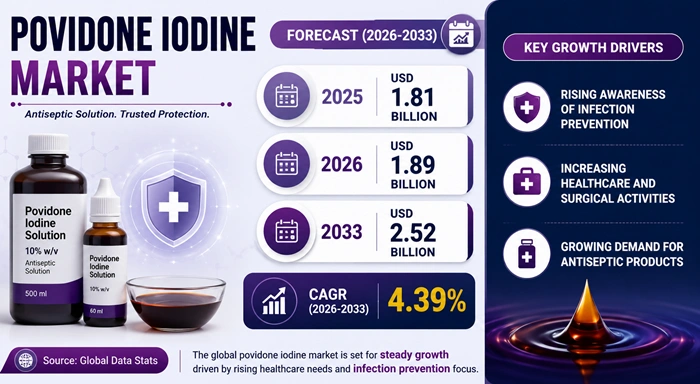
The global povidone iodine market size is valued at USD 1.81 billion in 2025 and is predicted to increase from USD 1.89 billion in 2026 to approximately USD 2.52 billion by 2033, growing at a CAGR of 4.39% from 2026 to 2033.
Povidone iodine — a water-soluble complex of polyvinylpyrrolidone and elemental iodine widely used as a broad-spectrum antiseptic — continues to be one of the most trusted and clinically validated infection-prevention agents in global healthcare. Its effectiveness against bacteria, viruses, fungi, and spores makes it indispensable across surgical preparation, wound care, dermatological treatment, and ophthalmological procedures. Rising global surgical volumes, expanding healthcare infrastructure across emerging economies, a growing focus on hospital-acquired infection (HAI) prevention, and increasing awareness of wound care best practices are collectively driving consistent demand growth across the povidone iodine market.
AI Impact on the Povidone Iodine Industry
Artificial Intelligence Is Reshaping Research, Manufacturing Quality, and Clinical Application of Povidone Iodine by Enabling Data-Driven Formulation Innovation, Predictive Supply Chain Management, and Personalized Wound Care Protocols
Artificial intelligence is beginning to influence the povidone iodine industry in meaningful ways that extend from laboratory research through to clinical application. In pharmaceutical research and development, AI-driven molecular modeling platforms are being used to evaluate how povidone iodine formulations interact with different tissue types, assess bioavailability across varied concentration levels, and predict stability profiles under diverse storage and temperature conditions — enabling formulators to design superior product variants with greater precision and shorter development timelines than traditional empirical trial-and-error approaches allow. Drug manufacturers are also deploying AI-assisted quality control systems on production lines, where computer vision and spectroscopic analysis tools continuously verify iodine concentration consistency, detect color and viscosity deviations, and flag contamination risks in real time — significantly improving batch quality assurance outcomes and reducing costly product recalls.
In clinical and hospital settings, AI is supporting wound care management platforms that help nurses and wound care specialists assess wound severity, select optimal antiseptic agents, and track healing progress through image-based analysis tools embedded in electronic health record systems. These platforms analyze wound photographs using deep learning algorithms trained on thousands of clinical wound images, identifying characteristics such as infection signs, tissue necrosis, and exudate levels that inform antiseptic selection decisions — including whether povidone iodine or alternative agents are most appropriate for a specific wound type. As hospital systems invest in digital health infrastructure and AI-assisted clinical decision support becomes more widely available, the evidence base supporting standardized use of povidone iodine in specific clinical protocols is expected to strengthen — directly supporting continued demand in institutional healthcare settings.
Growth Factors
Rising Global Surgical Volumes, Escalating Hospital-Acquired Infection Rates, and Expanding Healthcare Access in Emerging Economies Are the Primary Forces Sustaining Consistent Povidone Iodine Market Growth
The single most important structural growth driver for the povidone iodine market is the sustained increase in global surgical procedure volumes across all major healthcare settings. Every surgical procedure — from minor outpatient operations to complex inpatient interventions — requires antiseptic skin preparation using validated broad-spectrum products, and povidone iodine remains the reference standard for preoperative skin antisepsis in many clinical guidelines worldwide. As aging global populations generate rising demand for orthopedic, cardiovascular, ophthalmological, and oncological procedures, and as healthcare access improves across developing economies where large backlogs of unaddressed surgical need exist, the cumulative volume of surgical antiseptic applications is expanding consistently year over year. The World Health Organization's sustained emphasis on safe surgery programs in low- and middle-income countries is further amplifying this demand by formalizing antiseptic use protocols in healthcare systems that previously lacked standardized infection prevention frameworks.
Hospital-acquired infections (HAIs) represent a growing global patient safety crisis, with healthcare systems worldwide bearing enormous clinical and financial burdens from surgical site infections, catheter-associated bloodstream infections, and wound infections that prolong hospital stays and increase mortality risk. Regulatory agencies and hospital accreditation bodies are responding with progressively stricter infection control mandates that require healthcare facilities to demonstrate systematic use of evidence-based antiseptic protocols. Povidone iodine's long clinical history, established safety profile, broad antimicrobial spectrum, and proven efficacy in reducing surgical site infection rates make it a preferred solution in many of these mandated protocols — ensuring consistent institutional procurement even in competitive environments. Additionally, the growing home healthcare market — where patients manage wound care, minor injuries, and post-operative care independently — is driving increasing retail demand for over-the-counter povidone iodine formulations, adding a second significant demand channel beyond institutional procurement to support the povidone iodine market's long-term revenue growth.

Market Outlook
The Povidone Iodine Market Is Set for Steady, Sustainable Growth Driven by Surgical Volume Expansion, New Formulation Innovation, and the Growing Priority of Infection Prevention Across Global Healthcare Systems
The povidone iodine market's outlook through 2033 is characterized by steady, structurally supported growth rather than rapid disruption — reflecting the maturity of the product category, the deeply embedded nature of established clinical protocols incorporating povidone iodine, and the stability of demand from the healthcare sector's ongoing needs. While the market does not exhibit the hyper-growth dynamics of novel pharmaceutical categories, its consistent single-digit CAGR reflects the reliable institutional demand that makes it an attractive category for established pharmaceutical manufacturers seeking stable revenue contributions. Innovation in delivery formats — including impregnated wound dressings, slow-release sponges, pre-saturated applicator systems, and dilute ophthalmic preparations — is adding premium product tiers that expand value per unit consumed and strengthen market revenue growth beyond volume-driven metrics.
The post-pandemic period has also elevated the priority of infection prevention across healthcare systems globally, with hospital administration teams, procurement directors, and clinical quality officers all placing greater institutional emphasis on antiseptic protocol compliance and supply chain security for critical infection control agents. This elevated organizational awareness of infection risk is sustaining procurement levels above pre-pandemic baselines in many markets and is supporting multi-year supply agreements between healthcare systems and povidone iodine manufacturers that provide revenue visibility and planning certainty. The ophthalmological application of dilute povidone iodine in endophthalmitis prevention — particularly for intravitreal injection procedures, which are performed in enormous and growing volumes globally for retinal disease treatment — represents an important emerging growth application that is expanding the product's total addressable clinical use base within the povidone iodine market through 2033.
Expert Speaks
-
"Infection prevention remains one of the most cost-effective investments a healthcare system can make, and proven antiseptic agents with decades of clinical validation continue to play a foundational role in surgical safety protocols globally. We see consistent and growing demand for evidence-based antiseptic formulations across both institutional and home care channels as healthcare access expands." — Joaquin Duato, CEO, Johnson & Johnson
-
"The global healthcare system is under increasing pressure to reduce preventable infections and lower the cost of care. Broad-spectrum antiseptic solutions with established clinical track records are essential tools in that mission — and innovation in delivery format and clinical application is extending the value these trusted compounds provide across a wider range of care settings and patient populations." — Albert Bourla, CEO, Pfizer
-
"As surgical volumes continue to grow worldwide and healthcare infrastructure expands in emerging markets, the demand for reliable, affordable, and clinically validated antiseptic products will remain strong. Ensuring consistent quality and supply chain resilience for essential healthcare products like povidone-iodine formulations is a strategic priority for responsible pharmaceutical manufacturers." — Vas Narasimhan, CEO, Novartis
Key Report Takeaways
-
North America leads the povidone iodine market with approximately 36.8% of global 2024 revenues, supported by high per-capita healthcare expenditure, the world's highest surgical procedure volumes per population, robust hospital infection control standards mandated by The Joint Commission and CDC guidelines, and a mature over-the-counter wound care consumer market driving both institutional and retail demand.
-
Asia Pacific is the fastest-growing region, projected to sustain a CAGR above the global average through 2033, driven by rapidly expanding hospital capacity in China, India, and Southeast Asia, government investment in universal healthcare access programs, rising awareness of infection prevention in clinical settings, and a large and growing burden of infectious diseases and surgical need across the region's enormous patient populations.
-
Healthcare institutions are the dominant end-user segment, representing approximately 62.4% of total 2024 market consumption, as hospitals, surgical centers, and outpatient clinics consistently maintain povidone iodine products within standardized formularies for pre-operative skin preparation, wound management, and catheter site care across all specialty areas.
-
Solution-form povidone iodine is the largest product segment, accounting for approximately 54.7% of global 2024 revenues, reflecting its versatility across wound irrigation, skin preparation, surgical scrub, and antiseptic flush applications that span the full spectrum of clinical and home wound care use cases.
-
The wound care application segment is the most widely used, contributing approximately 38.3% of global 2024 revenues, as the management of acute wounds, chronic ulcers, post-operative incisions, burn injuries, and diabetic foot wounds represents the largest and most consistent clinical application domain for topical antiseptic agents.
-
Ophthalmological applications are the fastest-growing future segment, expected to sustain a CAGR of approximately 6.2% through 2033, with approximately 11.8% market share in 2024, as the enormous and expanding global volume of intravitreal injections for age-related macular degeneration, diabetic retinopathy, and retinal vein occlusion consistently requires dilute povidone iodine for procedure site preparation and endophthalmitis prophylaxis.
Market Scope
| Report Coverage | Details |
|---|---|
| Market Size by 2033 | USD 2.52 Billion |
| Market Size by 2025 | USD 1.81 Billion |
| Market Size by 2026 | USD 1.89 Billion |
| Market Growth Rate from 2026 to 2033 | CAGR of 4.39% |
| Dominating Region | North America |
| Fastest Growing Region | Asia Pacific |
| Base Year | 2025 |
| Forecast Period | 2026 – 2033 |
| Segments Covered | By Product Form, By Concentration, By Application, By End-User, By Region |
| Regions Covered | North America, Europe, Asia Pacific, Latin America, Middle East & Africa |
Market Dynamics
Drivers Impact Analysis
Expanding Global Surgical Volumes, Infection Control Mandates, and Growing Consumer Wound Care Awareness Are the Core Demand Forces Powering Consistent Povidone Iodine Market Growth
| Driver | ≈ % Impact on CAGR Forecast | Geographic Relevance | Impact Timeline |
|---|---|---|---|
| Rising global surgical procedure volumes in both institutional and outpatient settings | ~35% | Global; highest in North America, Europe, Asia Pacific | Long Term (≥ 4 years) |
| Escalating hospital-acquired infection prevention mandates and accreditation requirements | ~27% | North America, Europe, Asia Pacific | Medium to Long Term |
| Expanding healthcare infrastructure and access in emerging markets | ~24% | Asia Pacific, LATAM, MEA | Medium to Long Term |
| Growing home wound care market and consumer demand for OTC antiseptic products | ~14% | North America, Europe | Medium Term (2–4 years) |
The escalating global burden of surgical site infections (SSIs) and healthcare-associated infections is creating powerful institutional demand for reliable antiseptic protocols across hospitals of all sizes and specialties. SSIs affect millions of patients annually worldwide — contributing to extended hospital stays, increased antibiotic usage, and preventable mortality — and represent one of the most costly and clinically impactful adverse events that healthcare quality programs target for reduction. Healthcare accreditation standards, including those set by The Joint Commission in the United States and equivalent bodies across Europe and Asia Pacific, require documented adherence to validated preoperative skin antisepsis protocols — ensuring that povidone iodine products maintain a protected position within hospital formularies regardless of competitive pressure from newer antiseptic agents. The financial consequences of SSIs — estimated at tens of thousands of dollars per affected patient in direct treatment costs alone — make the modest cost of antiseptic products an extremely high-value preventive investment that healthcare procurement teams consistently prioritize.
The rapid expansion of ambulatory surgical centers (ASCs), day surgery facilities, and outpatient procedure units across North America, Europe, and Asia Pacific is broadening the distribution channel for povidone iodine beyond traditional inpatient hospital settings into a wider network of care facilities that maintain standardized antiseptic product inventories. This expansion of the institutional care site footprint increases the total number of procurement decision points within the povidone iodine market, diversifying demand sources and reducing dependence on large hospital system purchasing contracts. Simultaneously, the growth of the home healthcare market — where patients and caregivers manage wound care, minor surgical recoveries, and chronic wound conditions independently — is generating growing retail demand for consumer-packaged povidone iodine formulations through pharmacy chains, online health retailers, and hospital discharge care kits. These complementary institutional and retail demand channels create a resilient, multi-pathway revenue structure that supports consistent market growth across economic cycles.
Restraints Impact Analysis
Allergic Reaction Concerns, Competitive Pressure From Alternative Antiseptics, Iodine Supply Chain Vulnerabilities, and Regulatory Compliance Costs Are the Key Headwinds Moderating Market Growth
| Restraint | ≈ % Impact on CAGR Forecast | Geographic Relevance | Impact Timeline |
|---|---|---|---|
| Contraindications in iodine-sensitive patients limiting use in specific populations | ~33% | Global | Short to Medium Term |
| Competitive substitution by chlorhexidine-based antiseptics in some clinical protocols | ~29% | North America, Europe | Medium Term (2–4 years) |
| Iodine raw material supply concentration and price volatility | ~24% | Global; most acute in import-dependent regions | Medium Term |
| Regulatory compliance costs for pharmaceutical-grade product manufacturing and labeling | ~14% | North America, Europe | Short to Medium Term |
Povidone iodine's primary clinical limitation is its contraindication in patients with known iodine sensitivity or thyroid disorders — a restriction that affects a meaningful portion of surgical patient populations and requires clinical staff to screen patients and maintain alternative antiseptic protocols for contraindicated cases. The cumulative effect of iodine sensitivity exclusions across large surgical patient populations creates a structural ceiling on market penetration that prevents universal adoption across all clinical use scenarios. Additionally, several large-scale clinical trials — including studies comparing povidone iodine and chlorhexidine gluconate for preoperative skin antisepsis — have produced mixed results, with some evidence suggesting that chlorhexidine-based preparations may offer superior residual antimicrobial activity in specific surgical specialties. This clinical evidence has led some hospital formulary committees to shift preferred antiseptic designations from povidone iodine to chlorhexidine-alcohol combinations in certain procedure categories — creating competitive displacement risk in the institutional segment of the povidone iodine market.
The global supply of iodine — the active antimicrobial component in povidone iodine — is highly geographically concentrated, with Chile and Japan accounting for the large majority of world production. This concentration creates supply chain vulnerability for pharmaceutical manufacturers who are dependent on consistent iodine availability at stable prices. Disruptions from natural events, export policy changes, or currency fluctuations in key producing countries can create raw material shortages or sudden cost increases that compress manufacturer margins or trigger temporary product supply interruptions. The regulatory landscape for pharmaceutical antiseptic products is also becoming more complex, with FDA, EMA, and equivalent regulatory agencies continuously updating drug master file requirements, labeling standards, and manufacturing site inspection criteria — creating ongoing compliance cost burdens for povidone iodine producers that disproportionately impact smaller manufacturers with limited regulatory affairs resources.
Opportunities Impact Analysis
Emerging Market Healthcare Expansion, Novel Delivery Format Innovation, Ophthalmological Applications, and Veterinary Market Penetration Are the Most Commercially Compelling Opportunities for Povidone Iodine Market Participants
| Opportunity | ≈ % Impact on CAGR Forecast | Geographic Relevance | Impact Timeline |
|---|---|---|---|
| Healthcare infrastructure expansion in Asia Pacific and Africa driving first-time institutional adoption | ~35% | Asia Pacific, Sub-Saharan Africa, LATAM | Medium to Long Term |
| Novel delivery format development (impregnated dressings, ophthalmic preparations, surgical sponges) | ~28% | North America, Europe, Asia Pacific | Medium Term (2–4 years) |
| Veterinary medicine antiseptic demand growth | ~22% | North America, Europe, APAC | Medium Term |
| Antiviral application expansion following pandemic-driven clinical research | ~15% | Global | Short to Medium Term |
The healthcare infrastructure buildout across Asia Pacific, sub-Saharan Africa, and Latin America represents the most significant volume growth opportunity in the povidone iodine market over the forecast period. Countries including India, Indonesia, Nigeria, Bangladesh, Kenya, and Brazil are undertaking large-scale programs to expand their hospital networks, train clinical staff, and formalize infection prevention protocols in facilities that previously operated without standardized antiseptic use guidelines. As these healthcare systems adopt WHO-aligned infection control standards and begin procurement of validated antiseptic products, the addressable patient population for povidone iodine applications grows by hundreds of millions of individuals who are currently underserved by formal healthcare infrastructure. International health organizations and development banks funding healthcare facility construction in low- and middle-income countries are also increasingly specifying infection prevention product standards that favor established, WHO-prequalified antiseptic agents — creating favorable procurement conditions for well-positioned povidone iodine manufacturers in these high-growth geographies.
The antiviral properties of povidone iodine received significant clinical research attention during the COVID-19 pandemic, with multiple studies demonstrating its ability to rapidly inactivate SARS-CoV-2 and other respiratory viruses in nasal and oropharyngeal applications. While the pandemic-era enthusiasm for intranasal povidone iodine use has moderated as COVID-19 disease management has normalized, the underlying clinical research has opened promising avenues for applying povidone iodine in antiviral oral care, nasal decontamination, and respiratory infection prevention protocols that extend its therapeutic use base beyond traditional wound and surgical applications. Several pharmaceutical companies and clinical research organizations are conducting trials evaluating povidone iodine nasal sprays and mouthwash formulations for use in pre-procedure viral load reduction, which — if validated and approved — would create an entirely new application segment that meaningfully expands the product's total addressable market.
Segment Analysis
By Product Form
Solution-Form Povidone Iodine Commands Market Leadership While Impregnated Dressings and Novel Delivery Formats Drive the Highest Per-Unit Value Growth in the Povidone Iodine Market
The solution segment holds the largest share of the povidone iodine market at approximately 54.7% of 2024 revenues, reflecting its universal utility across the broadest range of clinical applications including preoperative skin antisepsis, wound irrigation, surgical scrub, catheter site preparation, and antiseptic wash protocols. Aqueous and dilute alcohol-based povidone iodine solutions are stocked across virtually every hospital, clinic, surgical center, and pharmacy globally — a ubiquity that reflects decades of clinical protocol integration that makes displacement by alternative formats difficult even as newer delivery systems emerge. The segment is growing at a stable low-single-digit CAGR, anchored by consistent institutional procurement and growing consumer market demand across North America and Europe. North America dominates solution segment revenues, with key companies including Avrio Health LP (United States), Professional Disposables International (United States), and Cardinal Health (United States) maintaining strong market positions through established hospital distribution relationships and recognized consumer brand portfolios. The segment's dominant position within the povidone iodine market reflects both its clinical versatility and the institutional inertia embedded in standardized infection control protocols that specify solution-based antiseptic preparations.
The ointment and topical preparation segment accounts for approximately 22.8% of 2024 market revenues and is growing at a steady CAGR supported by the large global consumer market for over-the-counter wound care products. Povidone iodine ointments are widely used for minor wound care, abrasion treatment, skin infection management, and post-procedural wound protection across home, pharmacy, and outpatient settings — addressing a massive and highly fragmented consumer demand base. The segment is growing most dynamically in Asia Pacific, where rising disposable incomes, expanding pharmacy retail networks, and growing consumer health awareness are driving household adoption of topical antiseptic wound care products that were previously inaccessible or unaffordable across large populations in China, India, and Southeast Asia. Key companies active in the ointment segment include Mundipharma International (United Kingdom), BASF SE (Germany), and Ashland Global Holdings (United States) — all of which maintain pharmaceutical-grade povidone iodine raw material and finished product manufacturing capabilities that serve both institutional and consumer channel demands across multiple geographies.
By Application
Wound Care Anchors the Povidone Iodine Market While Surgical Antisepsis and the Fast-Emerging Ophthalmological Segment Are Reshaping the Application Mix Through 2033
The wound care application segment is the largest end-use category in the povidone iodine market, contributing approximately 38.3% of total 2024 revenues, driven by the enormous global volume of acute and chronic wounds requiring antiseptic management. This segment encompasses treatment of surgical wounds, traumatic lacerations, burn injuries, diabetic foot ulcers, pressure injuries, and venous leg ulcers — all clinical presentations where broad-spectrum antimicrobial action is required to prevent or manage wound infection. The segment is growing at a consistent mid-single-digit CAGR globally, with Europe representing the most sophisticated and highest-value wound care market due to its advanced wound management infrastructure, active clinical guideline programs, and high per-capita prevalence of chronic wound conditions associated with aging populations and diabetes. Key companies driving wound care application growth include Smith & Nephew (United Kingdom), Mölnlycke Health Care AB (Sweden), and 3M Company (United States), all of which incorporate povidone iodine as an active agent in wound dressing and antiseptic wound care product lines that generate substantial recurring institutional revenues.
The surgical antisepsis application segment represents approximately 31.6% of 2024 market revenues and is growing at a CAGR above the wound care segment average, driven by the steady expansion of global surgical volumes and the entrenchment of povidone iodine in international surgical site infection prevention guidelines. Preoperative skin preparation using povidone iodine solution or surgical scrub products is a mandated protocol step in the majority of the world's surgical facilities — creating a predictable, volume-driven demand stream that correlates directly with total surgical procedure counts across all specialties. Asia Pacific is the fastest-growing region for surgical antisepsis application demand, as hospital construction programs in China, India, and Southeast Asia are adding surgical capacity and increasing annual procedure volumes at a rapid pace. The povidone iodine surgical antisepsis segment is served by a combination of global pharmaceutical manufacturers including Aplicare Inc. (United States) and regional distributors who supply surgical antiseptic preparation kits directly to hospital operating room procurement departments under GPO contract arrangements.
Regional Insights
North America
North America's World-Leading Surgical Volumes, Stringent Infection Control Standards, and Mature Healthcare Procurement Infrastructure Establish It as the Dominant Revenue Region of the Povidone Iodine Market
High Surgical Procedure Per-Capita Rates, Strong FDA Regulatory Oversight, and Established Consumer Wound Care Markets Create North America's Enduring Competitive Advantage in the Povidone Iodine Market
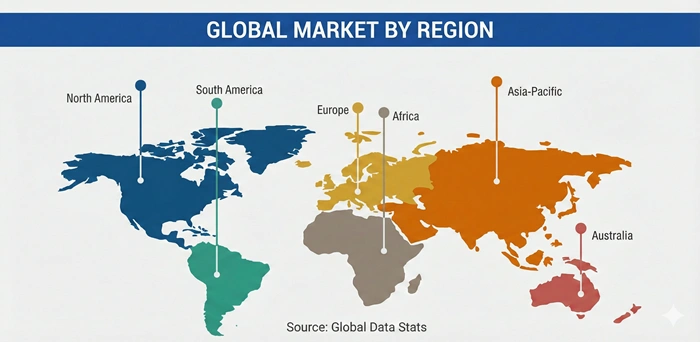
North America leads the povidone iodine market with approximately 36.8% of global 2024 revenues, driven by the United States' combination of high surgical volumes, sophisticated institutional procurement systems, rigorous infection control accreditation standards, and a large and active over-the-counter wound care consumer market. The U.S. healthcare system performs more surgical procedures per capita than any other major market, generating proportionally high consumption of preoperative antiseptic products across tens of thousands of hospitals, ambulatory surgical centers, and outpatient procedure facilities. Key companies anchoring the North American market include Avrio Health LP (United States), PDI Healthcare (United States), Cardinal Health (United States), Aplicare Inc. (United States), and 3M Company (United States) — maintaining strong institutional and retail channel coverage across the full spectrum of povidone iodine product formats. North America is growing at a low-to-mid single-digit CAGR, with growth concentrated in novel delivery formats, ophthalmological applications, and premium wound care product lines that command higher average selling prices than commodity solution formats.
Canada contributes steadily to regional revenues through its government-funded provincial health systems, which maintain strict infection prevention standards and consistent formulary procurement of validated antiseptic products. Canada's growing ambulatory surgery center sector and expanding home healthcare services market are adding incremental demand for both institutional and consumer povidone iodine products. Mexico is the most dynamic growth market within North America, as its healthcare infrastructure is expanding under government universal health coverage initiatives and the growth of medical tourism in Tijuana, Monterrey, and other border cities is generating increasing volumes of elective surgical procedures that require standardized antiseptic supplies. The combination of institutional and consumer demand growth across all three North American markets sustains the region's leadership position and supports consistent revenue generation for povidone iodine manufacturers with established distribution networks in the region.
Asia Pacific
Asia Pacific's Healthcare Infrastructure Boom, Rising Surgical Volumes, and Large Population Base Are Propelling the Region as the Fastest-Growing Povidone Iodine Market Globally
Government Universal Healthcare Investments Across China, India, and Southeast Asia Are Creating Massive New Institutional Demand for Antiseptic Products Including Povidone Iodine Throughout the Region
Asia Pacific is the fastest-growing region in the povidone iodine market, sustaining above-average CAGR growth through 2033 as the world's most populous region simultaneously expands healthcare infrastructure, increases surgical procedure volumes, and elevates infection prevention standards across a rapidly growing network of hospitals and clinics. China is the dominant country market within Asia Pacific, combining a vast network of public and private hospitals with a large and expanding domestic pharmaceutical manufacturing sector that produces significant volumes of povidone iodine products for both domestic consumption and export. India is the fastest-growing individual country market, driven by government Ayushman Bharat health insurance program expansion that is increasing surgical access for hundreds of millions of previously uninsured patients — creating substantial new demand for surgical antiseptic supplies. Key companies active in the Asia Pacific market include Mundipharma International (United Kingdom, strong APAC presence), BASF SE (Germany, raw material supply), Ashland Global Holdings (United States), and multiple regional pharmaceutical manufacturers in China, India, and South Korea that produce domestic-brand povidone iodine products under national regulatory frameworks.
Japan and South Korea represent sophisticated, mature healthcare markets within Asia Pacific where povidone iodine is well-established across institutional and consumer channels, with growth driven primarily by premium formulation innovation and ophthalmological application expansion rather than volume growth. Southeast Asian markets including Indonesia, Thailand, Vietnam, and the Philippines are emerging as high-growth opportunities, with rapidly expanding hospital networks, rising consumer healthcare awareness, and improving pharmaceutical distribution infrastructure collectively expanding the addressable market for povidone iodine products beyond the urban centers where distribution has historically been concentrated. The Asia Pacific region's combination of volume growth in developing markets and value growth in advanced markets creates a balanced and sustained growth trajectory that is expected to progressively narrow the revenue gap with North America's leading market share position over the 2026 to 2033 forecast period.
Report Customization Available for All Regions and Countries
This Report Offers Full Region-Wise and Country-Wise Customization, Delivering Targeted Povidone Iodine Market Intelligence Precisely Aligned to Your Organization's Geographic Business and Investment Strategy
This report is fully available for customization at the regional and country level, providing povidone iodine market sizing, local competitive landscape analysis, regulatory environment assessments, healthcare infrastructure demand drivers, and growth opportunity maps specifically tailored to the geographic market your business is targeting. Whether your team is evaluating manufacturing site locations, assessing distribution partnership opportunities, or planning market entry in a specific country, the customized report delivers the exact intelligence you need.
Customized reports are available for all the following regions and countries, each offering detailed market analysis, trends, and opportunities tailored to the selected geography and povidone iodine market context:
North America
-
Tailored intelligence available for U.S., Canada, and Mexico, covering FDA regulatory requirements, surgical procedure volume trends, hospital GPO procurement dynamics, OTC wound care consumer market data, and country-level competitive positioning for the povidone iodine market.
Europe
-
Customized coverage for U.K., Germany, France, Italy, and Rest of Europe, including EMA regulatory framework impacts, NHS and public health system procurement analysis, wound care protocol standards, and country-specific market size and growth intelligence.
Asia Pacific
-
Detailed insights available for China, India, Japan, South Korea, Australia, and Rest of Asia Pacific, covering healthcare infrastructure expansion programs, domestic manufacturing capabilities, surgical volume growth forecasts, and regional distributor landscape analysis.
Latin America
-
Country-level customization for Brazil, Argentina, and Rest of Latin America, addressing universal healthcare expansion program impacts, pharmaceutical import regulation dynamics, surgical volume growth, and regional distribution channel development for antiseptic products.
Middle East & Africa
-
Targeted market intelligence for UAE, Saudi Arabia, and Rest of MEA, covering Vision 2030 healthcare investment programs, hospital network expansion impacts, government infection control initiatives, and emerging market antiseptic product adoption dynamics.
Top Key Players
-
BASF SE (Germany)
-
Ashland Global Holdings Inc. (United States)
-
Mundipharma International Ltd. (United Kingdom)
-
Avrio Health LP (United States)
-
Cardinal Health Inc. (United States)
-
PDI Healthcare Inc. (United States)
-
Aplicare Inc. (United States)
-
3M Company (United States)
-
Smith & Nephew PLC (United Kingdom)
-
Mölnlycke Health Care AB (Sweden)
-
Thermo Fisher Scientific Inc. (United States)
-
Nippon Shinyaku Co. Ltd. (Japan)
-
IODOTEK S.r.l. (Italy)
-
Adani Pharmachem Private Ltd. (India)
-
Merck KGaA (Germany)
Recent Developments
-
In March 2025, BASF SE announced an expansion of its pharmaceutical excipients and active ingredient production capacity at its Ludwigshafen facility in Germany, specifically increasing output of polyvinylpyrrolidone (PVP) — the polymer backbone of povidone iodine — in response to growing demand from pharmaceutical formulators developing next-generation wound care and antiseptic products across European and Asian markets.
-
In January 2025, Mundipharma International launched a reformulated povidone iodine wound care solution with enhanced tissue tolerability and reduced cytotoxicity profile in key European markets, following completion of a multi-center clinical evaluation program demonstrating superior wound healing outcomes compared to the standard commercial formulation — positioning the product for expanded formulary inclusion across wound care-focused European hospital systems.
-
In November 2024, Cardinal Health expanded its hospital supply chain distribution agreement with a major U.S. group purchasing organization (GPO) to include an expanded range of povidone iodine preoperative antiseptic preparation kits, securing preferred supplier status for povidone iodine products across a network of over 1,200 hospital and ambulatory surgical center members — substantially increasing the company's institutional revenue in the North American antiseptic category.
-
In September 2024, Ashland Global Holdings completed qualification of a new iodine-PVP complex manufacturing process that reduces production cycle time by 18% and improves batch consistency, enabling more competitive cost-of-goods for pharmaceutical customers formulating both institutional and consumer-grade povidone iodine products — a development that strengthens Ashland's competitive position as a raw material supplier to the global antiseptic market.
-
In July 2024, Smith & Nephew received CE marking in the European Union for a new povidone iodine-impregnated wound dressing incorporating a slow-release iodine delivery matrix, designed to maintain effective antimicrobial concentrations at wound sites for up to seven days without dressing changes — reducing nursing time, improving patient comfort, and extending the clinical utility of iodine-based antiseptic wound management into chronic wound care protocols across European hospital and community care settings.
Market Trends
Premiumization of Delivery Formats and Growing Clinical Evidence for Novel Povidone Iodine Applications Are the Two Structural Trends Reshaping the Market's Competitive and Commercial Landscape
The most commercially significant trend reshaping the povidone iodine market is the progressive premiumization of product delivery formats — a shift from commodity solution and ointment formats toward value-added product forms that offer clinical performance improvements, ease of use advantages, and differentiated positioning that supports premium pricing. Impregnated wound dressings with controlled iodine release, pre-saturated surgical site preparation applicator systems, concentrated wound contact layer dressings, and sterile single-use antiseptic kits are all capturing share within institutional procurement as infection control teams seek products that reduce preparation time, minimize application variability, and provide documented performance consistency. This premiumization trend is expanding the average revenue per unit of antiseptic used, supporting market value growth at rates that exceed the underlying volume growth rate — and creating strategic opportunities for manufacturers willing to invest in the clinical validation and regulatory clearance work required to support premium product positioning claims.
The expansion of evidence-based applications for povidone iodine beyond traditional wound care and surgical antisepsis represents a second significant trend that is broadening the product's clinical relevance and market footprint. Ophthalmological use in intravitreal injection antisepsis, antiviral nasal decontamination protocols, dental and oral surgical applications, and gynecological antiseptic procedures are all areas where clinical research is accumulating evidence supporting standardized povidone iodine use. As clinical guidelines in these specialty areas increasingly specify evidence-based antiseptic product preferences, the addressable clinical use base for the market continues to expand incrementally — adding new procurement decision points and clinical champions who sustain institutional demand for povidone iodine products outside the traditional wound care and surgical preparation contexts that have historically defined the market's core application base.
Segments Covered in the Report
-
By Product Form
-
Solution
-
Aqueous Solution
-
Alcohol-Based Solution
-
-
Ointment / Topical Preparation
-
Impregnated Wound Dressings
-
Surgical Scrub
-
Ophthalmic Preparation
-
Others (Aerosol Spray, Mouthwash, Nasal Spray)
-
-
By Concentration
-
0.5% and Below (Ophthalmic / Dilute Applications)
-
1%–5% (Wound Irrigation, Mucous Membrane)
-
7.5%–10% (Surgical Scrub, Skin Preparation)
-
Above 10% (Industrial / Veterinary)
-
-
By Application
-
Wound Care (Acute Wounds, Chronic Ulcers, Burns)
-
Surgical Antisepsis (Preoperative Skin Preparation)
-
Ophthalmological Applications
-
Dermatological Treatment
-
Veterinary Medicine
-
Oral and Dental Antisepsis
-
Others
-
-
By End-User
-
Hospitals and Surgical Centers
-
Outpatient and Ambulatory Care Facilities
-
Home Healthcare / Consumer
-
Veterinary Clinics
-
Others
-
-
By Region
-
North America (U.S., Canada, Mexico)
-
Europe (U.K., Germany, France, Italy, Rest of Europe)
-
Asia Pacific (China, India, Japan, South Korea, Australia, Rest of Asia Pacific)
-
Latin America (Brazil, Argentina, Rest of Latin America)
-
Middle East & Africa (UAE, Saudi Arabia, Rest of MEA)
-
❝ Built for Every Level — From Startups to Industry Giants ❞
Here Is Exactly How This Report Works for You
-
Whether you are a pharmaceutical startup assessing the most commercially attractive entry point in the povidone iodine supply chain, a Tier 1 antiseptic manufacturer benchmarking your market share against global competitors, or a mid-market wound care company evaluating which product formats and geographies offer the highest growth potential, this report provides the granular segment-level CAGR data, regional market size breakdowns, and detailed competitor revenue analysis required to identify where the povidone iodine market is generating the most value — and how the leading companies in this space are positioning their product portfolios and distribution strategies to capture it.
-
For investors, corporate development teams, and procurement executives navigating the intersection of healthcare infrastructure expansion, raw material supply chain concentration, regulatory compliance dynamics, and geopolitical factors affecting iodine raw material supply from key producing countries in Chile and Japan, this report provides a rigorous analytical framework covering all major global regions and countries — enabling evidence-based decisions on manufacturing investment, supply chain diversification, market entry timing, and strategic partnership opportunities that minimize risk and maximize long-term commercial returns.
-
The full purchased version of this report includes complete competitor revenue profiles with detailed product line and geographic revenue source breakdowns, supply-demand dynamics by region and product concentration grade, country-level market sizing for all major healthcare markets, and a multi-scenario forecast framework through 2033 — providing CISO, procurement, and strategy decision-makers with the comprehensive intelligence required to build winning, future-proof business and investment strategies in the expanding global povidone iodine market.
Frequently Asked Questions
Question 1: What is the current size of the povidone iodine market and what is its growth forecast through 2033?
Answer: The global povidone iodine market is valued at USD 1.81 billion in 2025 and is projected to reach USD 2.52 billion by 2033, growing at a CAGR of 4.39% from 2026 to 2033. This steady growth is underpinned by rising global surgical volumes, expanding healthcare infrastructure in emerging markets, and the product's deeply established position in clinical infection prevention protocols worldwide.
Question 2: What are the key applications driving demand in the povidone iodine market?
Answer: The povidone iodine market is primarily driven by wound care management, preoperative surgical site preparation, and increasingly by ophthalmological antisepsis for intravitreal injection procedures. These applications collectively represent the highest volume use cases for both institutional healthcare settings and consumer wound care channels globally.
Question 3: Which region dominates the povidone iodine market?
Answer: North America leads the povidone iodine market with approximately 36.8% of global revenues, supported by the highest per-capita surgical volumes, rigorous Joint Commission infection control standards, and a large consumer wound care market. Asia Pacific is the fastest-growing region, driven by healthcare infrastructure expansion and rising infection prevention awareness across China, India, and Southeast Asia.
Question 4: What are the main challenges facing the povidone iodine market?
Answer: The povidone iodine market faces constraints from its contraindication in iodine-sensitive and thyroid-condition patients, which limits universal adoption across surgical populations. Competition from chlorhexidine-alcohol combination products in some institutional protocols and the geographic concentration of iodine raw material supply in Chile and Japan also present ongoing supply chain and competitive headwinds.
Question 5: How is innovation shaping the future of the povidone iodine market?
Answer: Innovation in the povidone iodine market is focused on developing premium delivery formats including slow-release impregnated wound dressings, pre-saturated surgical preparation kits, ophthalmic formulations, and antiviral nasal spray products that extend the compound's clinical utility into new therapeutic applications. These value-added product innovations are supporting market value growth beyond underlying volume trends and opening new clinical procurement channels in ophthalmology, dental, and home healthcare settings.