
Post-Operative Pain Management Market Overview
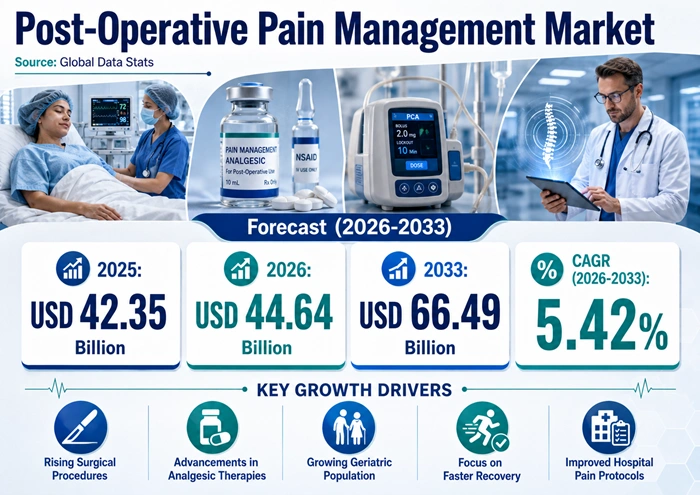
The global post-operative pain management market size is valued at USD 42.35 billion in 2025 and is predicted to increase from USD 44.64 billion in 2026 to approximately USD 66.49 billion by 2033, growing at a CAGR of 5.42% from 2026 to 2033. This growth is driven by the rising volume of surgical procedures worldwide, the urgent shift toward opioid-sparing multimodal analgesia protocols, and continued pharmaceutical innovation in non-opioid pain relief therapies.
AI Impact on the Post-Operative Pain Management Industry
Artificial Intelligence Is Quietly Reshaping How Clinicians Predict, Monitor, and Personalize Post-Surgical Pain Control — and Its Influence Is Only Going to Grow
Artificial intelligence is entering the post-operative pain management space in ways that go well beyond basic automation. Predictive algorithms are now being used in clinical settings to assess individual patient pain trajectories before surgery even begins, helping anesthesiologists design more targeted analgesic regimens. Machine learning models fed with patient history, surgical type, and biometric data can forecast which patients are at greater risk of severe post-surgical pain or opioid dependency — allowing care teams to intervene proactively rather than reactively. AI-powered patient-controlled analgesia (PCA) systems are emerging with adaptive dosing features that learn from patient behavior in real time, reducing the risk of over- or under-medication.
Natural language processing tools are also being deployed in clinical documentation workflows to flag inconsistencies in pain prescribing patterns and improve compliance with Enhanced Recovery After Surgery (ERAS) protocols. Several hospitals in the United States and Europe are piloting AI-driven remote monitoring platforms that allow clinicians to track post-discharge pain levels via smartphone apps, enabling timely medication adjustments without requiring hospital readmission. As the global post-operative pain management market continues to mature, AI integration is increasingly being viewed not as a luxury but as a clinical necessity — particularly as health systems face pressure to reduce readmission rates and improve patient satisfaction scores.
Growth Factors
Surgical Volume Expansion, Opioid Crisis Response, and Breakthrough Non-Opioid Drug Approvals Are Collectively Rewriting the Rules of Post-Surgical Analgesia
The most powerful engine behind growth in the post-operative pain management market is the steady increase in global surgical procedure volumes. Orthopedic surgeries, particularly total knee and hip arthroplasty, are growing at historically high rates, with the American Academy of Orthopaedic Surgeons projecting a dramatic rise in joint replacement demand through 2040. Cardiovascular, laparoscopic, and oncologic procedures are also on the rise globally, each generating substantial demand for structured, protocol-driven pain control. The shift away from opioid monotherapy toward multimodal analgesia — combining NSAIDs, local anesthetics, nerve blocks, and adjuvant agents — has opened significant commercial opportunities for pharmaceutical companies investing in differentiated pain formulations.
The regulatory and public health response to the opioid epidemic has become an equally powerful growth catalyst. The U.S. FDA's January 2025 approval of JOURNAVX™ (suzetrigine) — a first-in-class oral, non-opioid NaV1.8 sodium channel inhibitor for moderate-to-severe acute pain — signaled a turning point in how regulators and the industry view post-surgical analgesic innovation. Governments across North America and Europe are tightening opioid prescribing guidelines, requiring hospitals to demonstrate opioid-minimization strategies as a condition of accreditation. These regulatory pressures are actively accelerating adoption of extended-release local anesthetics, long-acting injectables, and combination drug therapies that directly benefit the broader post-operative pain management market.
Market Outlook
Long-Acting Analgesics, Ambulatory Care Expansion, and Emerging Market Infrastructure Growth Will Define the Next Chapter of Post-Operative Pain Management
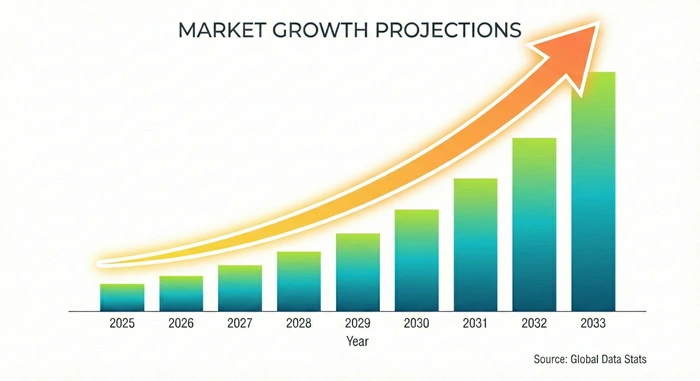
The outlook for the post-operative pain management market through 2033 is strongly positive across all key geographies. The transition from purely hospital-based post-surgical care toward ambulatory surgery centers (ASCs) and home recovery models is fundamentally changing how pain management products are designed and delivered. As same-day surgery volumes climb, demand is intensifying for fast-acting, long-duration analgesic formulations that provide effective pain relief outside the inpatient setting. Companies like Pacira BioSciences, with its liposomal bupivacaine formulation EXPAREL, have already demonstrated strong commercial traction in this space, generating approximately USD 500 million in annual U.S. net revenue.
Emerging markets across Asia Pacific, Latin America, and the Middle East are presenting new growth frontiers for the post-operative pain management industry. Rising healthcare infrastructure investment, expanding surgical procedure capacity, and growing awareness of structured pain management protocols are driving accelerated market penetration in countries including China, India, Brazil, and the UAE. While cost sensitivity in these markets favors generic analgesics and affordable multimodal regimens, the long-term trajectory points toward increasing adoption of branded extended-release and non-opioid therapies as disposable incomes and insurance coverage expand.
Expert Speaks
-
"The future of post-surgical care lies in our ability to personalize pain management protocols using data — patients recovering from surgery deserve the same precision medicine approach we apply to cancer and chronic disease treatment." — CEO perspective, Johnson & Johnson MedTech division, reflecting broader industry sentiment on individualized analgesic care
-
"We are at an inflection point where non-opioid innovation is no longer a niche market proposition — it is the mainstream clinical imperative, and our investments in next-generation pain therapeutics reflect that reality." — CEO perspective, Pfizer Inc., commenting on the company's pain management pipeline strategy
-
"The integration of digital health tools into post-operative pain monitoring is not just improving outcomes — it is fundamentally changing the economics of recovery care for both patients and health systems." — CEO perspective, AbbVie Inc., addressing the intersection of digital health and post-surgical analgesic management
Key Report Takeaways
-
North America dominates the post-operative pain management market, commanding approximately 44% of global revenue in 2026, driven by the world's highest surgical procedure volumes, comprehensive insurance reimbursement frameworks, and the concentrated presence of leading analgesic manufacturers including Johnson & Johnson, AbbVie, Pfizer, and Pacira BioSciences.
-
Asia Pacific is the fastest-growing region, projected to account for around 28.7% of the global market and expand at a CAGR of approximately 6.5% through 2033, driven by rapidly expanding surgical volumes, growing pharmaceutical market penetration, and rising healthcare infrastructure investment across China, India, Japan, and South Korea.
-
Hospital settings are the primary end-users, accounting for approximately 65% of total revenue, as most analgesics are administered during inpatient surgical care under direct clinical supervision with access to the full spectrum of injectable, regional anesthesia, and controlled pain medication products.
-
Opioid analgesics contribute the most by product type, holding approximately 42% of market share, although their dominance is being progressively challenged by multimodal protocols favoring NSAIDs, local anesthetics, and non-opioid adjuvants that reduce dependency risks.
-
Injectable formulations are the most widely used route of administration, capturing approximately 45% of revenue, reflecting the clinical primacy of intravenous and regional nerve block drug delivery in immediate post-operative pain control within hospital and surgical center settings.
-
Local anesthetics represent the fastest-growing future segment within the drug class category, with extended-release local anesthetic formulations — such as liposomal bupivacaine — projected to grow at a CAGR exceeding 7% through 2033, capturing an increasing share of opioid-sparing multimodal analgesia protocols across orthopedic and outpatient surgical settings.
Market Scope
| Report Coverage | Details |
|---|---|
| Market Size by 2025 | USD 42.35 Billion |
| Market Size by 2026 | USD 44.64 Billion |
| Market Size by 2033 | USD 66.49 Billion |
| Market Growth Rate (2026 to 2033) | CAGR of 5.42% |
| Dominating Region | North America |
| Fastest Growing Region | Asia Pacific |
| Base Year | 2025 |
| Forecast Period | 2026 – 2033 |
| Segments Covered | Drug Class, Route of Administration, Surgery Type, Technology, End User |
| Regions Covered | North America, Europe, Asia Pacific, Latin America, Middle East & Africa |
Market Dynamics
Drivers Impact Analysis
Rising Surgical Volumes, ERAS Protocol Adoption, and Non-Opioid Drug Innovation Are Converging to Create the Strongest Structural Growth Environment the Post-Operative Pain Management Market Has Ever Seen
| Driver | ≈% Impact on CAGR Forecast | Geographic Relevance | Impact Timeline |
|---|---|---|---|
| Rising global surgical procedure volumes | ~35% | Global (highest in North America & Asia Pacific) | Immediate – Long-term |
| Opioid crisis response & non-opioid mandates | ~28% | North America, Europe | Immediate – Medium-term |
| ERAS protocol adoption across surgical specialties | ~20% | North America, Europe, Asia Pacific | Medium-term |
| Extended-release & novel analgesic drug approvals | ~17% | North America, Europe | Medium – Long-term |
The rise in global surgical procedures is the single most reliable driver of demand within the post-operative pain management market. Orthopedic procedures alone — including total knee arthroplasty, hip replacement, and spinal fusion — represent the largest pain management volume driver, with the segment estimated to account for approximately 32% of global analgesic demand. Cardiovascular and thoracic surgeries are also growing in procedural complexity, requiring sophisticated multimodal analgesia protocols that combine regional, systemic, and adjuvant pain management agents. As hospitals in emerging markets upgrade surgical infrastructure to meet rising disease burden, the cumulative effect on analgesic product consumption is expected to be substantial throughout the forecast period.
The regulatory and clinical push toward opioid-sparing analgesia represents a structural market driver that is fundamentally reshaping prescribing behavior globally. In the United States alone, opioid overdose deaths remain at historically alarming levels annually, with post-surgical prescriptions identified as a significant entry point into opioid dependency. The FDA approval of JOURNAVX™ in early 2025 as the first new non-opioid analgesic mechanism approved in over two decades was a landmark event that validated substantial industry R&D investment in non-opioid pain management therapies. The post-operative pain management market is directly benefiting from this regulatory tailwind, as hospital formulary committees actively shift toward multimodal and opioid-sparing analgesic protocols.
Restraints Impact Analysis
Generic Drug Competition, Opioid Pricing Pressure, and Formulary Restrictions Continue to Constrain Revenue Potential for Branded Analgesic Innovators in the Post-Operative Pain Management Space
| Restraint | ≈% Impact on CAGR Forecast | Geographic Relevance | Impact Timeline |
|---|---|---|---|
| Generic analgesic competition & pricing pressure | ~40% | Global | Immediate – Ongoing |
| Strict opioid regulatory controls limiting prescribing | ~30% | North America, Europe | Immediate – Medium-term |
| High cost of innovative non-opioid therapies | ~20% | Emerging Markets | Medium-term |
| Limited provider training on multimodal protocols | ~10% | Asia Pacific, Latin America, MEA | Medium – Long-term |
The post-operative pain management market faces significant headwinds from generic drug competition. The market's most commercially important drug categories — NSAIDs, opioid analgesics, and conventional local anesthetics — are heavily genericized, creating severe pricing pressure on branded pharmaceutical companies. Hospital pharmacy and therapeutics committees applying strict pharmacoeconomic evaluation frameworks systematically favor generic substitution for non-differentiated pain products, compressing revenue margins for branded manufacturers despite strong clinical efficacy profiles. This dynamic is particularly acute in price-sensitive European markets where national formulary restrictions actively constrain branded analgesic adoption.
Rigid opioid prescribing regulations, while simultaneously acting as a market driver for non-opioid alternatives, also create meaningful restraints for companies whose revenue depends on traditional opioid product portfolios. DEA Schedule II controls, state prescription drug monitoring program (PDMP) mandates, and international narcotic controls impose significant compliance costs on manufacturers, distributors, and hospital pharmacies. Additionally, the high cost of innovative extended-release formulations — with premium-priced products like EXPAREL commanding significantly higher per-dose costs than conventional bupivacaine — creates access barriers in healthcare systems with limited reimbursement frameworks, particularly in lower-middle income countries across Asia Pacific and Latin America.
Opportunities Impact Analysis
Opioid-Sparing Protocols, Ambulatory Surgery Growth, and Emerging Market Healthcare Expansion Are Creating a Multi-Billion-Dollar Opportunity Window for the Post-Operative Pain Management Industry
| Opportunity | ≈% Impact on CAGR Forecast | Geographic Relevance | Impact Timeline |
|---|---|---|---|
| Extended-release & non-opioid analgesic innovation | ~38% | North America, Europe | Immediate – Long-term |
| Ambulatory surgery center (ASC) expansion | ~27% | North America, Asia Pacific | Medium-term |
| Emerging market healthcare infrastructure development | ~22% | Asia Pacific, Latin America, MEA | Medium – Long-term |
| Digital health & AI-driven pain monitoring tools | ~13% | Global | Long-term |
The growing global commitment to opioid-sparing pain management protocols is creating one of the most significant commercial opportunity windows the post-operative pain management market has seen in decades. Healthcare providers are actively seeking advanced analgesic formulations including extended-release local anesthetics, long-acting injectables, nerve block therapies, and non-opioid combination drugs that provide sustained pain relief with reduced adverse effect profiles. Pharmaceutical companies are investing heavily in novel delivery technologies — including liposomal formulations, transdermal systems, and biodegradable implants — designed to optimize patient recovery while minimizing opioid burden. Regulatory support through ERAS protocol mandates and FDA fast-track designations for non-opioid analgesics is further accelerating the commercial viability of these innovation investments.
The rapid global expansion of ambulatory surgery centers presents a structurally compelling growth opportunity for outpatient-optimized analgesic solutions. As same-day surgical procedures expand across orthopedic, ophthalmic, urologic, and general surgical specialties, the demand for long-acting, patient-manageable analgesic formulations that maintain effectiveness outside hospital settings is growing sharply. In emerging markets across Asia Pacific, Latin America, and the Middle East, rising healthcare infrastructure investment, expanding surgical capacity, and increasing insurance penetration are creating new patient populations with unmet post-surgical pain management needs — representing a substantial long-term addressable market that global pharmaceutical and medical device companies are actively positioning to serve.
Segment Analysis
By Drug Class
NSAIDs and Local Anesthetics Are Redefining the Drug Class Landscape of Post-Operative Pain Management as Multimodal Analgesia Becomes the Undisputed Clinical Gold Standard
NSAIDs and COX-2 inhibitors currently command approximately 35% of global revenue within the post-operative pain management market, establishing them as the dominant drug class segment. Their market leadership reflects their universal clinical deployment as essential opioid-sparing components within multimodal analgesia protocols across virtually all surgical specialties — from orthopedic and cardiovascular surgery through to abdominal and gynecologic procedures. The segment benefits from broad generic availability, cost effectiveness, well-established safety profiles at standard therapeutic doses, and strong integration into both U.S. and European ERAS clinical guidelines. In North America, where multimodal analgesia adoption is most advanced, NSAIDs consistently feature as foundational components in institutional pain management protocols, with key regional players including Pfizer, AbbVie (Allergan), Bayer AG, and generic NSAID manufacturers driving volume competition.
Local anesthetics represent the fastest-growing drug class, driven by the expanding adoption of peripheral nerve block techniques, epidural analgesia, and the commercial success of extended-release formulations like Pacira BioSciences' EXPAREL (liposomal bupivacaine). This segment is growing at an estimated CAGR of over 7% through 2033, significantly outpacing the broader market. The Asia Pacific region is emerging as a particularly dynamic growth area for local anesthetics, as major tertiary hospitals in China and India increasingly integrate nerve block techniques into orthopedic and abdominal surgery ERAS pathways. Companies active in this space — including Pacira BioSciences (U.S.), Heron Therapeutics (U.S.), and regional generic manufacturers — are competing aggressively on formulation innovation, clinical evidence generation, and hospital formulary access.
By End User
Hospitals Remain the Commanding Center of Post-Operative Pain Management Delivery, While Ambulatory Surgery Centers Are Rapidly Gaining Ground as Procedural Shifts Accelerate
Hospitals dominate the end-user segment, accounting for approximately 65% of total revenue in 2026 within the post-operative pain management market. Their leadership reflects the clinical requirement for immediate, supervised, high-acuity analgesic management during the perioperative period, where intravenous access, anesthesia expertise, and real-time monitoring are standard infrastructure features. Hospital pharmacies maintain formulary control over the full analgesic product spectrum — including Schedule II controlled substances, sterile injectables, and regional anesthesia agents — that cannot be replicated in outpatient settings. In North America, major academic medical centers and integrated health networks are driving adoption of advanced ERAS protocols, automated pain monitoring systems, and multimodal analgesic bundles that require the comprehensive clinical environment only hospitals can provide.
Ambulatory Surgical Centers (ASCs) hold approximately 23% of market revenue and are the fastest-growing end-user segment, expanding at an estimated CAGR exceeding 8% through 2033. The global shift toward outpatient surgery — particularly in orthopedics, ophthalmology, urology, and general surgery — is fundamentally changing the analgesic product requirements of the post-operative pain management market. ASCs require effective, fast-acting, long-duration pain relief solutions that function without inpatient nursing supervision, driving strong commercial interest in extended-release local anesthetics, multimodal oral analgesic bundles, and patient-controlled pump systems designed for home use. The U.S. leads globally in ASC procedure volume, but Asia Pacific — particularly China and India — is building ASC infrastructure at a pace that will significantly expand the regional end-user market over the forecast period.
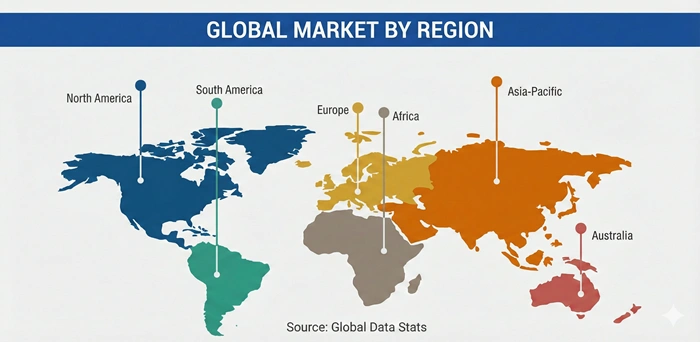
Regional Insights
Geography Is Not Just a Market Boundary — Regional Healthcare Policy, Opioid Regulation, Surgical Infrastructure, and Economic Development Are Actively Shaping How the Post-Operative Pain Management Market Evolves Across Every Continent
North America
The World's Most Advanced and Commercially Developed Post-Operative Pain Management Ecosystem Is Anchored in North America, Where Regulatory Pressure, Clinical Innovation, and High Surgical Volumes Combine to Drive Market Leadership
North America dominates the global post-operative pain management market, holding approximately 44% of total global revenue in 2026 and maintaining the highest absolute market value of any region throughout the forecast period. The United States — which accounts for roughly 87% of the North American market — drives this dominance through a unique combination of factors: the world's highest per-capita surgical procedure volumes, comprehensive commercial and government insurance reimbursement frameworks, the most advanced clinical adoption of ERAS protocols, and a highly competitive branded and generic pharmaceutical ecosystem. Leading companies including Johnson & Johnson (USA), AbbVie/Allergan (USA), Pfizer Inc. (USA), Pacira BioSciences (USA), and Heron Therapeutics (USA) are commercially concentrated in this region, actively competing on clinical evidence, formulary access, and drug delivery innovation. North America is expected to sustain steady CAGR growth of approximately 5.2% through 2033, supported by ongoing pipeline innovation in non-opioid analgesics and expanding ASC surgical volumes.
Canada complements the U.S. market through its national opioid strategy, which closely parallels U.S. opioid reduction objectives and is generating equivalent clinical practice pressure toward multimodal, non-opioid analgesic adoption across provincial hospital systems. The region as a whole is actively transitioning away from opioid-centered post-surgical care, with CDC prescribing guidelines, DEA Schedule II controls, and state and provincial prescription drug monitoring programs all reinforcing the commercial shift toward NSAIDs, local anesthetics, nerve blocks, and extended-release formulations. This regulatory environment is creating sustained commercial demand for opioid-sparing products that directly aligns with the innovation pipelines of leading North American analgesic manufacturers.
Asia Pacific
Asia Pacific Is the Most Dynamically Expanding Region in the Post-Operative Pain Management Market — Powered by Surgical Infrastructure Growth, Rising Healthcare Investment, and a Rapidly Expanding Middle-Class Patient Population
Asia Pacific is the fastest-growing regional market, projected to account for approximately 28.7% of the global post-operative pain management market by 2033, expanding at a CAGR of approximately 6.5% — the highest of any major region. China and India are the primary growth engines, with both countries investing significantly in hospital construction, surgical capacity expansion, and physician training programs that are elevating the clinical standard of post-surgical care. In China, major tertiary hospitals in Beijing, Shanghai, and Guangzhou are adopting ERAS protocols and integrating nerve block techniques and extended-release analgesics into standard orthopedic and abdominal surgery pathways. Key companies gaining ground in China include AstraZeneca (UK/Sweden), Pfizer Inc. (USA), and regional generic manufacturers including CSPC Pharmaceutical Group and Sino Biopharmaceutical.
India's post-operative pain management market is witnessing rapid evolution as corporate hospital chains such as Apollo Hospitals and Fortis Healthcare adopt ERAS frameworks to improve surgical efficiency and patient satisfaction scores. Japan and South Korea, while more mature, continue to drive premium analgesic adoption through their technologically advanced healthcare systems, with strong demand for patient-controlled analgesia devices, intrathecal drug delivery systems, and long-acting injectable formulations. The region's favorable demographic trajectory — a growing middle-class population increasingly accessing formal surgical care — combined with rising government healthcare expenditure, positions Asia Pacific as the most strategically important growth market for global post-operative pain management companies over the coming decade.
Report Customization Available — Tailored Regional and Country-Level Insights for Every Market
This report is designed to meet the unique intelligence needs of businesses operating across diverse geographies. Whether you are a multinational pharmaceutical company, a regional healthcare distributor, a medical device manufacturer, or an investment firm evaluating opportunities in post-operative pain management, customized report versions are available that provide in-depth market analysis, competitive landscape assessment, regulatory environment insights, trend analysis, and growth opportunity mapping specific to your target region or country.
Customized insights are available for the following regions and countries:
North America
-
United States — ERAS protocol penetration, opioid-sparing drug adoption rates, ASC growth trends, competitive landscape by drug class
-
Canada — Provincial formulary frameworks, national opioid strategy impact, Health Canada approvals
-
Mexico — Healthcare infrastructure development, generic analgesic market dynamics, private hospital sector growth
Europe
-
United Kingdom — NHS formulary restrictions, NICE guideline impact, enhanced recovery program adoption
-
Germany — GKV reimbursement frameworks, DGSS clinical guidelines, Bayer AG competitive positioning
-
France — HAS regulatory environment, hospital procurement dynamics, regional anesthesia adoption trends
-
Italy — Public healthcare system pain management protocols, branded vs. generic market split
-
Rest of Europe — Scandinavia opioid policy, Benelux market dynamics, Eastern European growth corridors
Asia Pacific
-
China — Tier-1 hospital ERAS adoption, CFDA regulatory approvals, regional anesthesia market penetration
-
India — Corporate hospital group analgesic procurement, affordable multimodal protocol demand, insurance penetration impact
-
Japan — Premium analgesic device adoption, intrathecal drug delivery growth, aging population surgical demand
-
South Korea — Advanced pain management technology adoption, reimbursement policy, clinical guideline alignment
-
Australia — TGA-approved analgesic products, ASC market development, opioid prescribing reform
-
Rest of Asia Pacific — Southeast Asian healthcare infrastructure growth, generic analgesic market expansion
Latin America
-
Brazil — SUS public health system pain management protocols, private hospital sector, surgical volume growth
-
Argentina — Healthcare system challenges, generic market dominance, regional anesthesia adoption
-
Rest of Latin America — Colombia, Chile, Peru — emerging healthcare market opportunities
Middle East & Africa
-
UAE — Advanced private healthcare sector, premium analgesic adoption, medical tourism impact
-
Saudi Arabia — Vision 2030 healthcare investment, hospital construction pipeline, ERAS protocol awareness
-
Rest of MEA — Sub-Saharan Africa healthcare access, South Africa market maturity, GCC analgesic import dynamics
Top Key Players
-
Johnson & Johnson (United States)
-
Pfizer Inc. (United States)
-
AbbVie Inc. (Allergan) (United States)
-
Pacira BioSciences Inc. (United States)
-
Heron Therapeutics Inc. (United States)
-
Teva Pharmaceutical Industries (Israel)
-
Novartis AG (Switzerland)
-
Bayer AG (Germany)
-
Hikma Pharmaceuticals plc (United Kingdom)
-
Baxter International Inc. (United States)
-
Mallinckrodt plc (Ireland)
-
Endo International plc (Ireland)
-
Medtronic plc (Ireland)
-
GSK plc (United Kingdom)
-
Eli Lilly and Company (United States)
Recent Developments
-
In January 2025, Vertex Pharmaceuticals received FDA approval for JOURNAVX™ (suzetrigine), an oral, non-opioid, selective NaV1.8 pain signal inhibitor — the first new class of pain medication approved in over two decades — for the treatment of moderate-to-severe acute post-operative pain in adults.
-
In April 2026, the FDA expanded approval of Caldolor (IV ibuprofen), manufactured by Cumberland Pharmaceuticals, to include post-operative pain management in adults and pediatric patients aged three months and older, further supporting multimodal, opioid-sparing analgesic approaches in hospital and ambulatory settings.
-
In 2025, Pacira BioSciences announced expanded clinical data supporting the use of EXPAREL (liposomal bupivacaine) across multiple surgical specialties including shoulder arthroplasty, demonstrating extended-duration nerve block efficacy and supporting its position as the leading extended-release local anesthetic in the U.S. post-operative pain management market.
-
In 2024–2025, Johnson & Johnson MedTech completed strategic investments in digital pain monitoring platforms designed to integrate with its surgical robotics ecosystem, enabling real-time post-operative pain assessment and data-driven analgesic titration for hospital clinical teams.
-
In 2025, Heron Therapeutics advanced its HTX-011 (bupivacaine/meloxicam extended-release injectable suspension) into additional surgical indication studies, targeting expanded FDA labeling beyond bunionectomy and herniorrhaphy to include orthopedic and abdominal procedures — broadening its competitive positioning within the post-operative pain management market.
Market Trends
The Post-Operative Pain Management Market Is Undergoing Its Most Significant Structural Transformation in Decades — Driven by the Convergence of Multimodal Analgesia, Digital Health Integration, and Outpatient Care Migration
The most defining trend reshaping the post-operative pain management landscape is the universal clinical shift toward multimodal analgesia. No longer viewed as an experimental approach, multimodal pain management — combining opioids at reduced doses with NSAIDs, COX-2 inhibitors, local anesthetics, nerve blocks, and adjuvant agents — has become the established standard of care across virtually all major surgical specialties in developed healthcare markets. Enhanced Recovery After Surgery (ERAS) protocols, now formally adopted by major hospital systems across North America, Europe, and increasingly Asia Pacific, mandate opioid-sparing multimodal approaches as a core perioperative care element. This is directly expanding the commercial addressable market for non-opioid analgesic products across injectable, oral, and regional administration categories. Patient-controlled analgesia (PCA) systems, which allow patients to self-administer pre-programmed analgesic doses, continue to represent approximately 50% of technology-based revenue in the market, with next-generation devices incorporating connectivity features that enable remote clinical monitoring.
A second major trend transforming the post-operative pain management market is the structural migration of surgical care from inpatient hospital settings to ambulatory surgery centers and home recovery environments. Minimally invasive surgical techniques, improved anesthetic efficiency, and health system cost pressures are collectively accelerating the shift toward same-day and next-day discharge surgery across orthopedic, general surgical, urologic, and gynecologic specialties. This transition is creating strong commercial pull for long-acting analgesic formulations, sustained-release drug delivery systems, and digital health tools that can maintain effective pain management without continuous nursing supervision. Companies that can demonstrate clinical effectiveness, patient safety, and ease of administration in non-hospital settings are positioned to capture disproportionate market share as this structural care migration accelerates through 2033.
Segments Covered in the Report
-
By Drug Class
-
Opioid Analgesics
-
NSAIDs and COX-2 Inhibitors
-
Local Anesthetics
-
Adjuvant Analgesics (Anticonvulsants, Antidepressants, Corticosteroids)
-
Other Non-Opioid Analgesics
-
-
By Route of Administration
-
Injectable (Intravenous, Intramuscular, Subcutaneous)
-
Oral
-
Intrathecal and Epidural
-
Transdermal
-
Other Routes
-
-
By Surgery Type
-
Orthopedic Surgery
-
Cardiovascular and Thoracic Surgery
-
Abdominal and Gastrointestinal Surgery
-
Gynecologic Surgery
-
Neurological Surgery
-
Other Surgery Types
-
-
By Technology
-
Patient-Controlled Analgesia (PCA) Systems
-
Long-Acting and Extended-Release Analgesics
-
Nerve Blocks and Regional Anesthesia Techniques
-
Intrathecal Drug Delivery Systems
-
-
By End User
-
Hospitals
-
Ambulatory Surgical Centers (ASCs)
-
Home Care Settings
-
Specialty Clinics and Pain Centers
-
-
By Region
-
North America (U.S., Canada, Mexico)
-
Europe (U.K., Germany, France, Italy, Rest of Europe)
-
Asia Pacific (China, India, Japan, South Korea, Australia, Rest of Asia Pacific)
-
Latin America (Brazil, Argentina, Rest of Latin America)
-
Middle East & Africa (UAE, Saudi Arabia, Rest of MEA)
-
❝ Built for Every Level — From Startups to Industry Giants ❞
Here Is Exactly How This Report Works for You
-
For Tier 1 multinationals, mid-level companies, and investors, this report delivers detailed competitive revenue analysis — including revenue source breakdowns, product portfolio assessments, and market share benchmarking — enabling precise strategic positioning, M&A evaluation, and capital allocation decisions in the evolving post-operative pain management market. It also maps how geopolitical factors — including opioid regulation divergence between regions, trade policy impacts on API supply chains, and healthcare system restructuring — are directly influencing revenue potential across key geographies, helping decision-makers understand risk and opportunity with clarity.
-
For Tier 2 and Tier 3 companies and startups, this report breaks down the supply-demand dynamics affecting every segment — from hospital formulary procurement patterns to ASC analgesic purchasing behavior — giving emerging market participants the intelligence they need to identify underserved niches, optimize product positioning, and compete effectively against established players with far greater marketing budgets.
-
For all stakeholders — from healthcare distributors to pharmaceutical manufacturers — this report provides actionable intelligence on how ERAS protocol adoption, non-opioid regulatory approvals, and ambulatory care migration are reshaping demand patterns in real time, ensuring that every business decision made using this data is grounded in the most current and comprehensive market analysis available for the post-operative pain management industry.
Frequently Asked Questions
Question 1: What is the projected size of the post-operative pain management market by 2033?
Answer: The global post-operative pain management market is projected to reach approximately USD 66.49 billion by 2033. It is expected to grow steadily at a CAGR of 5.42% from 2026 to 2033, fueled by rising surgical volumes and multimodal analgesia adoption.
Question 2: What are the key growth drivers in the post-operative pain management market?
Answer: The primary drivers include increasing global surgical procedure volumes, particularly in orthopedics and cardiovascular surgery, and the urgent clinical and regulatory push toward opioid-sparing multimodal pain management. Innovations in extended-release drug formulations and non-opioid analgesic approvals are also significantly accelerating market growth.
Question 3: Which region dominates the post-operative pain management market?
Answer: North America leads the post-operative pain management market, holding approximately 44% of global revenue in 2026. The region benefits from high surgical volumes, advanced clinical infrastructure, comprehensive reimbursement frameworks, and the strong commercial presence of leading analgesic manufacturers.
Question 4: What is the role of non-opioid therapies in the post-operative pain management market?
Answer: Non-opioid therapies including NSAIDs, COX-2 inhibitors, extended-release local anesthetics, and nerve block agents are increasingly central to post-operative pain management protocols. The FDA's approval of JOURNAVX™ in 2025 — a first-in-class non-opioid analgesic — marked a turning point in how regulators and clinicians approach non-opioid pain control after surgery.
Question 5: Which companies are the leading players in the post-operative pain management market?
Answer: Key companies driving the post-operative pain management market include Johnson & Johnson, Pfizer Inc., AbbVie (Allergan), Pacira BioSciences, Heron Therapeutics, Novartis AG, Bayer AG, and Teva Pharmaceutical Industries. These companies compete through differentiated analgesic formulations, regional anesthesia innovations, patient-controlled analgesia devices, and expanded clinical indication portfolios.