
Polycystic Ovarian Syndrome Treatment Market Size, Share, and Forecast (2025–2032)
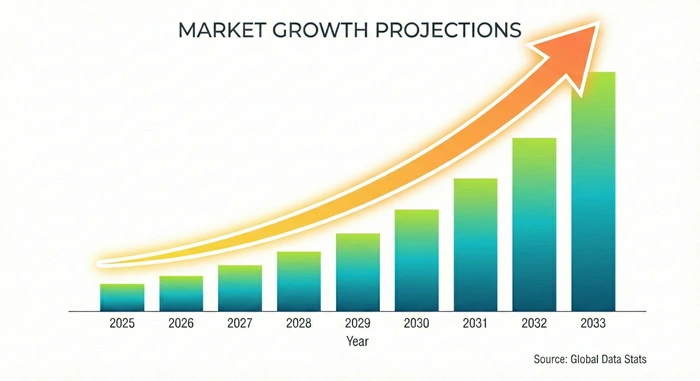
According to Global Data Stats, The global Polycystic Ovarian Syndrome Treatment Market size accounted for USD 4.81 Billion in 2024 and is predicted to increase from USD 5.11 Billion in 2025 to approximately USD 8.03 Billion by 2032, expanding at a CAGR of 4.64% from 2025 to 2032.
The Polycystic Ovarian Syndrome Treatment Market Report offers a comprehensive evaluation of the current market scenario and its future prospects. It discusses in detail the main growth drivers, current trends, challenges, and business opportunities. Additionally, it presents insights on market segmentation, major competitors, and future forecasts, helping businesses prepare actionable growth strategies for the coming years.
Scope of the Report
This study provides a complete analytical view of the Global Polycystic Ovarian Syndrome Treatment Market, prepared using secondary data research, primary discussions with industry experts, and in-house validation. The estimates take into account the social, political, and economic factors shaping the industry, together with dynamic changes within the market environment.
The analysis also features a Porter’s Five Forces framework, which examines the negotiating power of buyers and suppliers, barriers for new entrants, risk of substitutes, and competition intensity to provide clarity on the overall market ecosystem. Furthermore, the report focuses on the role of key stakeholders — system integrators, intermediaries, and end-users — to evaluate how they influence the industry.
Competitive Landscape
The competitive scenario of the Global Polycystic Ovarian Syndrome Treatment Market consists of multiple important players, from large established corporations to emerging startups. To strengthen their position, companies are concentrating on innovation, partnerships, acquisitions, and entry to new markets. This competition fosters technological advancement and forces businesses to enhance their portfolios and strategies.
Report Coverage:
Report Attributes | Report Details |
Forecast year | 2025-2032 |
Base Year | 2024 |
Market Size in 2024 | USD 4.81 Billion |
Market Size in 2032 | USD 8.03 Billion |
Unit | Value (USD Million/Billion) |
Segments Covered | Key Players, Types, Applications, End-Users, and more |
Growth Rate | CAGR of 4.64% from 2025 to 2032 |
Industry Coverage | Total Revenue Forecast, Company Ranking and Market Share, Regional Competitive Landscape, Growth Factors, New Trends, Business Strategies, and more |
Region Analysis | North America, Europe, Asia Pacific, Latin America, Middle East and Africa |
Overview of the Polycystic Ovarian Syndrome Treatment Market
The report presents an in-depth overview of the Polycystic Ovarian Syndrome Treatment Market, highlighting the drivers, restraints, and opportunities influencing growth. It provides accurate revenue data, market forecasts, and share analysis of key firms, giving a clear understanding of how leading companies perform globally. The overview also emphasizes regional demand, customer needs, and future requirements, giving readers a precise perspective of both market supply and demand side.
Report Highlights
The report highlights several core aspects, such as a full analysis of market factors, the present market environment, and reliable future projections. It combines global and regional perspectives, supported by country-level insights. Detailed classification of market participants also ensures businesses can identify key players in every geography, while understanding local demand patterns and wider industry needs.
Key Players:
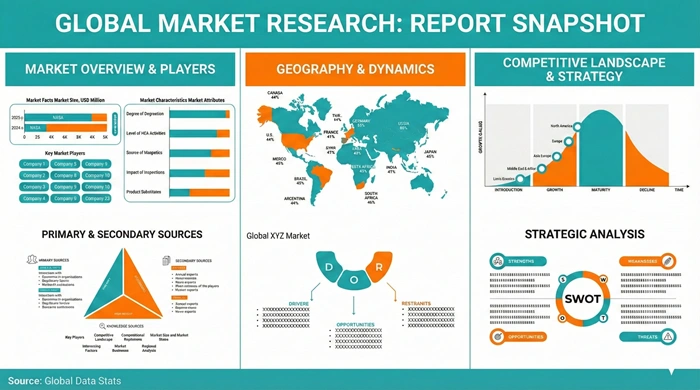
The report lists and analyzes leading companies involved in the Global Polycystic Ovarian Syndrome Treatment Market. These key players are studied in terms of market contribution, strategies, competitive strengths, and business performance. Both top global firms and rising market participants are included, showing how competition takes shape across industries and geographies.
Merck & Co.
Teva Pharmaceuticals
Ferring Pharmaceuticals
Sanofi
Novartis
Bayer AG
Abbott Laboratories
Bristol-Myers Squibb
Eli Lilly and Company
GlaxoSmithKline (GSK)
Sun Pharmaceutical Industries
Pfizer Inc.
Zydus Lifesciences
Lupin Limited
Mylan N.V.
AbbVie Inc.
Cipla Ltd.
Torrent Pharmaceuticals
AstraZeneca
Alkem Laboratories
Market Segmentation
The Global Polycystic Ovarian Syndrome Treatment Market is segmented by product type, application, and end-use industries. Each segment has been examined in detail to underline its contribution to revenue generation, growth enhancement, and challenges faced. Such segmentation helps businesses identify priority markets and investment areas.
Along with segmentation, the study explains performance across North America, Europe, Asia-Pacific, Latin America, and Middle East & Africa. Each region’s consumer preferences, industrial potential, and barriers to entry are considered. Additionally, a PEST analysis (Political, Economic, Social, and Technological factors) is included for major regions, presenting a clear picture of local influences shaping the industry.
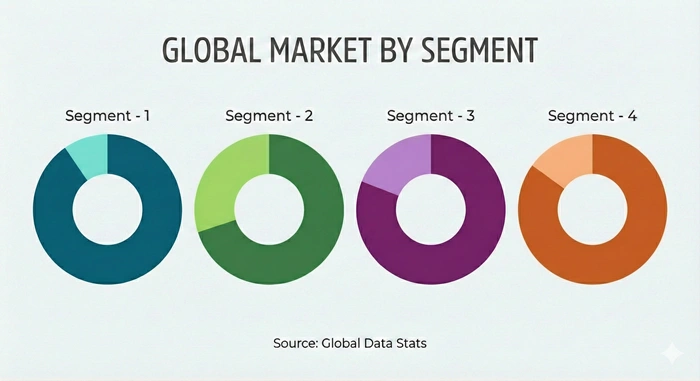
The research provides forecast data from 2025 to 2032, explaining CAGR percentages, USD values, and market variations, supported with reliable insights from analysts and industry professionals.
Segments Covered in the Report
By Drug Class
- Oral Contraceptives
- Estrogen-Progestin Combinations
- Progestin-only Pills
- Anti-Androgens
- Spironolactone
- Flutamide
- Finasteride
- Insulin Sensitizers
- Metformin
- Thiazolidinediones
- Ovulation Inducing Agents
- Clomiphene Citrate
- Letrozole
- Gonadotropins
- Antidepressants & Anti-Anxiety Drugs
- Anti-Obesity Drugs
By Route of Administration
- Oral
- Injectable
- Topical
- Implants / Transdermal
By Treatment Type
- Pharmacological Treatment
- Lifestyle Modification (Diet, Exercise, Weight Loss)
- Surgical Treatment (Ovarian Drilling, Laparoscopy)
By Distribution Channel
- Hospital Pharmacies
- Retail Pharmacies
- Online Pharmacies
By End User
- Hospitals
- Gynecology & Fertility Clinics
- Homecare Settings
- Academic & Research Institutes
By Region
- North America
- Europe
- Asia-Pacific
- Latin America
- Middle East & Africa
Our team of dedicated analysts, research specialists, and skilled forecasters carefully prepare this market report. It clearly presents the market data in terms of USD values and CAGR (compound annual growth rate), along with their expected changes for the given forecast period.
Regional Analysis for Polycystic Ovarian Syndrome Treatment Market
- North America (the United States, Canada, and Mexico)
- Europe (Germany, France, UK, Russia, and Italy)
- Asia-Pacific (China, Japan, Korea, India, and Southeast Asia)
- South America (Brazil, Argentina, Colombia, etc.)
- The Middle East and Africa (Saudi Arabia, UAE, Egypt, Nigeria, and South Africa).
Objectives of the Study
The main objective of this research is to analyze the current market in detail and predict future growth prospects. The study seeks to define and assess the industry structure by identifying sub-segments and their contributions. It also evaluates market value, global share, SWOT analysis of key companies, and overall competition while highlighting opportunities for investment and innovation.
Insights Before Purchase
The report provides detailed participant analysis, allowing businesses to observe the competitive position of players. By offering insights into strategies being used, companies can design policies, re-adjust target markets, and identify growth-focused areas before investing.
Regional Analysis
The report studies five major regions in detail:
North America continues to lead due to its innovation, advanced technological infrastructure, and supportive government policies. Sectors such as healthcare, automotive, and technology, etc., are key demand areas. The United States and Canada remain the largest markets in this region.
Europe is a major contributor, driven by its sustainability goals, environmental policies, and deep industrial base. Countries including Germany, the UK, and France remain ahead by adopting new industry practices and supporting green solutions under strict regulations.
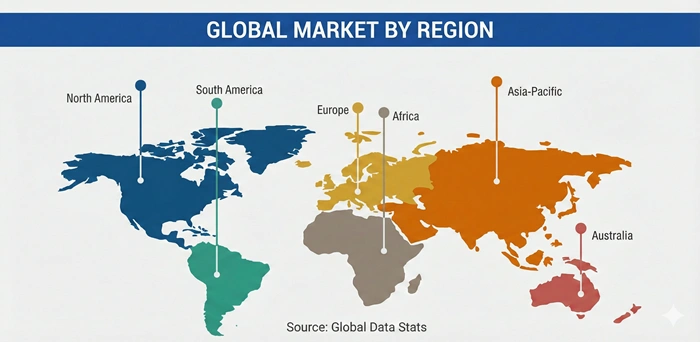
Asia-Pacific is projected to post the highest growth rate during 2025–2032. Rapid urbanization, industrial growth, infrastructure expansion, economic development, and a growing middle class collectively fuel the demand here. Countries like China, India, and Japan are key drivers of demand.
Latin America has strong potential, particularly in Brazil, Mexico, and Argentina, where governments are supporting industrial diversification and technology adoption. This makes the region favorable for future market investment.
Middle East & Africa are emerging as essential markets, helped by infrastructure programs, increased industrialization, and diversification strategies. The UAE, Saudi Arabia, and South Africa account for the largest growth share in this region.
The sample pages for this report are readily available on demand.
Recent Developments
In December 2024, Gytree launched India’s first PCOS protein, a superfood blend created to meet the urgent health needs of women with PCOS.
The product is powered by inositol, a proven ingredient for managing PCOS symptoms.
It contains over 16 superfoods and key nutrients to support hormonal balance, energy levels, and overall well-being.
In August 2023, BioSyent Inc. announced that its subsidiary BioSyent Pharma Inc. began the first shipments of Inofolic to the Canadian market.
Inofolic is a natural health product that combines myo-inositol and folic acid in a soft-gel capsule.
It is designed for women with PCOS to improve insulin sensitivity, support pregnancy, regulate menstrual cycles, and reduce acne and hirsutism.
In May 2023, Bonatra revealed its acquisition of MyAva, a women’s health and wellness company.
This acquisition aims to expand Bonatra’s holistic healthcare programs and position it as a one-stop platform for managing chronic health conditions.
MyAva, a femtech startup, helps women manage conditions such as PCOS, thyroid disorders, and insulin resistance.
Research Methodology
The report relies on a three-tier methodology:
- Primary research included direct interviews via phone, emails, and personal discussions with industry experts and decision-makers worldwide. This ensured unbiased, real-time insights on market trends, growth, and challenges.
- Secondary research was conducted through company financial reports, industry journals, government publications, and recognized databases to verify findings and create strong historical context.
- Data triangulation was applied to cross-check figures from various sources, ensuring consistency and eliminating discrepancies.
For forecasting, advanced statistical models such as regression analysis, time-series evaluation, and econometric methods were used. This helped create highly accurate market predictions until 2032.
Key Questions Addressed
The report provides answers to key questions such as:
- How has the global Polycystic Ovarian Syndrome Treatment Market performed so far, and what is its forecast for the coming years?
- What are the chief drivers and challenges influencing growth?
- How is the market broken down by product type and application?
- Which regions and countries represent leading or fast-growing markets?
- Who are the key competitors, and what strategies do they use?
- What has been the impact of COVID-19 on the market’s growth?
- What stages of growth strategies are visible within the industry?
- What is the degree of competition across different regions?
- How are Polycystic Ovarian Syndrome Treatment Market products manufactured and distributed?
Reasons to Purchase this Report
- Provides a 360-degree view of the market with both qualitative and quantitative insights.
- Explains the influence of economic and non-economic factors on market growth.
- Assesses the impact of major global events such as:
- Political conflicts
- Pandemic and recovery cycles
- Inflation trends
- Interest rate changes
- Governance shifts (e.g., 2nd Trump presidency)
- Offers USD values and volume analysis for every segment and sub-segment.
- Enables creation of regional and country-level strategies.
- Identifies high-growth investment areas and opportunities.
- Provides forecasted data to help businesses stay ahead of competitors.
- Allows performance benchmarking against industry leaders.
- Includes detailed company profiles with:
- SWOT analysis
- Product portfolios
- Benchmarking comparisons
- Market rankings
- Provides insights into M&A activities, partnerships, and business expansions in the last five years.
- Covers both current and future market outlooks, bridging opportunities across emerging and developed markets.
- Features strategic tools including Porter’s Five Forces Analysis, Value Chain assessments, and market dynamics evaluation.
- Comes with six months of post-sales analyst support to offer ongoing expert guidance.
Frequently Asked Questions
- What does this Polycystic Ovarian Syndrome Treatment Market report cover?
This Polycystic Ovarian Syndrome Treatment Market report analyzes the main factors that drive market growth while presenting a clear picture of the competitive landscape. It explains the role of different market segments and applications that may impact future industry performance. Based on current trends and historical data, it includes detailed segmentation, regional insights, and competitive analysis. - Does the Polycystic Ovarian Syndrome Treatment Market report estimate the current market size?
Yes. The Polycystic Ovarian Syndrome Treatment Market report evaluates the current size of the industry and offers reliable forecasts. The Polycystic Ovarian Syndrome Treatment Market was valued at USD 5.11 Billion in 2025 and is predicted to grow at a CAGR of 4.64% between 2025 and 2032. - Does the Polycystic Ovarian Syndrome Treatment Market report provide market size in both value and volume?
Yes. The analysis covers the market not only in terms of Value (USD Million/Billion) but also in Volume (thousand tons, metric tons, cubic meters, etc.). - What are the main segments studied in Polycystic Ovarian Syndrome Treatment Market report?
The Polycystic Ovarian Syndrome Treatment Market is divided into Product Types, Applications, End-users, and Regions. - Which Polycystic Ovarian Syndrome Treatment Market dynamics are covered?
The study covers market size, forecasts, opportunities, drivers, restraints, regulatory frameworks, emerging trends, PESTLE analysis, Porter’s Five Forces, pricing, trade flows, export-import analysis, product approvals, and promotional strategies. It helps businesses in making well-informed investment decisions. - Does Polycystic Ovarian Syndrome Treatment Market report offer customization?
Yes. Global Data Stats offers full customization options, allowing organizations to tailor the report for specific regions, countries, or market segments of interest. This ensures the data aligns with each company’s needs and strategic goals.