
Pingueculum Drugs Market Overview
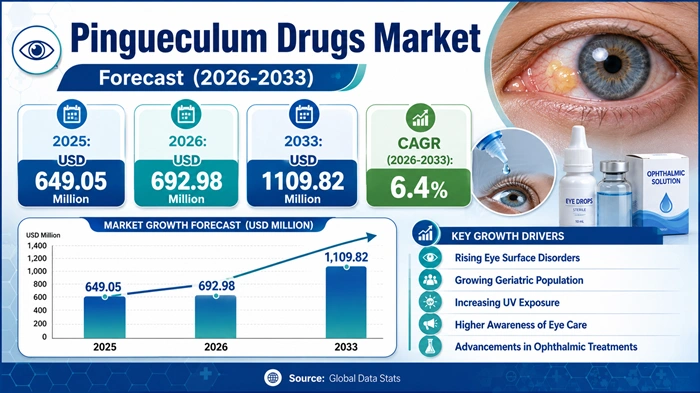
The global Pingueculum Drugs market size is valued at USD 649.05 million in 2025 and is predicted to increase from USD 692.98 million in 2026 to approximately USD 1109.82 million by 2033, growing at a CAGR of 6.4% from 2026 to 2033. Pinguecula is a benign but increasingly prevalent degenerative condition of the conjunctiva — the transparent membrane covering the white part of the eye — characterized by yellowish, raised deposits of protein, fat, and calcium that form primarily due to prolonged UV light exposure, chronic dry eye, dust, and environmental pollutants. Although pinguecula does not threaten vision, it causes persistent symptoms including eye redness, irritation, a gritty foreign-body sensation, dryness, and cosmetic concern that drive significant demand for pharmacological management through lubricating eye drops, anti-inflammatory agents, antihistamines, and vasoconstrictors. Rising global awareness of ocular surface disorders, growing environmental UV and pollution exposure, increasing screen time-related digital eye strain, and expanding aging populations with greater susceptibility to degenerative eye conditions are collectively driving healthy growth in the pingueculum treatment drug market through the forecast period.
AI Impact on the Pingueculum Drugs Industry
Artificial Intelligence Is Reshaping Early Diagnosis, Drug Discovery Acceleration, and Personalized Treatment Planning in the Pingueculum Drugs Market — Creating Smarter, More Targeted, and More Accessible Therapeutic Solutions for an Increasingly Common Ocular Surface Condition
Artificial intelligence is beginning to transform the pingueculum treatment landscape through its applications in early detection, clinical decision support, and pharmaceutical development. AI-powered ocular imaging analysis tools — which use deep learning algorithms trained on large datasets of slit-lamp and fundus photographs — are enabling ophthalmologists and optometrists to detect and grade pinguecula lesions with greater consistency and precision than unaided clinical examination alone. These diagnostic AI tools are particularly valuable in primary care and teleophthalmology settings, where clinician expertise in ocular surface disease grading may be limited — enabling earlier, more accurate diagnosis that drives timely initiation of appropriate pharmacological management and expands the addressable prescribing market for the pingueculum drugs segment. Machine learning models are also being applied to patient phenotyping — identifying which clinical and environmental profiles correlate with more rapid pinguecula progression, enabling targeted therapy recommendations for at-risk patients.
In pharmaceutical research and development, AI-driven compound screening and drug repurposing platforms are accelerating the identification of novel topical agents with superior anti-inflammatory, anti-fibrotic, or disease-modifying activity in pinguecula and related conjunctival degenerative conditions. The ability to model molecular binding interactions, predict in-vivo efficacy and tolerability profiles, and identify optimal formulation characteristics using computational tools is shortening the preclinical development timeline and reducing the cost of bringing new pingueculum treatment options to market. Companies like Cloudbreak Pharma are pioneering the development of targeted pingueculum-specific pharmacological therapies supported by advanced clinical development science — a trend that AI-enhanced drug discovery is expected to further accelerate, potentially bringing the first true disease-modifying topical therapy for pinguecula through the regulatory approval process within the forecast period.
Growth Factors
Rising Global Prevalence of Pinguecula Driven by UV Exposure, Environmental Pollution, and Aging Demographics — Combined with Growing OTC Eye Care Adoption and Expanding Healthcare Access — Are the Primary Growth Engines for the Pingueculum Drugs Market
The increasing global prevalence of pinguecula — driven by a convergence of environmental, lifestyle, and demographic factors — is the most fundamental growth driver for the pingueculum drugs market. Prolonged ultraviolet light exposure is the primary etiological risk factor for conjunctival degeneration, and the growing global outdoor working population, declining ozone protection, increasing leisure UV exposure, and inadequate protective eyewear use across many developing countries are driving rising pinguecula incidence rates across all age groups. The urban environmental crisis — characterized by worsening air pollution, particulate matter exposure, and chemical irritants in industrialized and rapidly urbanizing regions — is a significant secondary driver, as chronic conjunctival irritation from environmental pollutants accelerates degenerative changes. The growing global prevalence of digital eye strain from prolonged screen device use is also contributing to a broader epidemic of ocular surface disorders — including dry eye and conjunctival inflammation — that creates favorable conditions for pinguecula development and progression, expanding the addressable patient population for pingueculum symptom management drugs.
The aging global population is a particularly important structural demand driver for the pingueculum treatment market, as the prevalence of pinguecula increases markedly with age — the condition being observed in a substantial proportion of adults over 40 in high-UV-exposure geographies. The global population aged 60 and above is projected to double to 2.1 billion by 2050 according to the World Health Organization, and the progressive expansion of this demographic in both developed and developing markets is creating a growing base of older adults experiencing pinguecula symptoms and seeking pharmacological relief. The growing consumer preference for non-prescription, over-the-counter ocular comfort products — including lubricating eye drops, artificial tears, and mild vasoconstrictors for eye redness — has created a large and accessible OTC market for pingueculum symptom management that does not require physician prescription, lowering the access barrier and expanding the commercially addressable patient population significantly beyond those who visit ophthalmologists.
Market Outlook
A Growing Pipeline of Novel Disease-Modifying Therapies, Expanding OTC and Digital Health-Supported Eye Care Access, and the Emergence of Asia Pacific as a High-Growth Regional Market Are Building a Positive and Diversified Outlook for the Pingueculum Drugs Market Through 2033
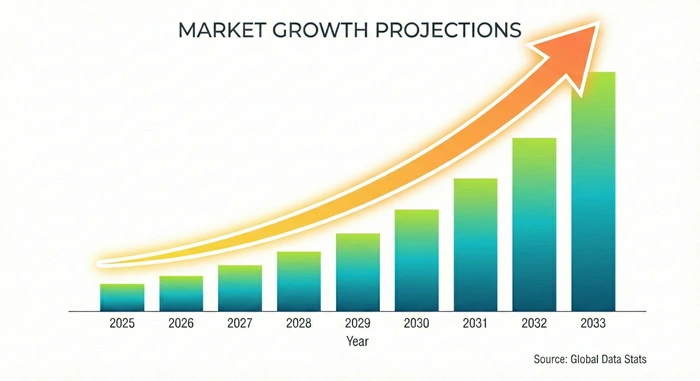
The pingueculum drugs market is well-positioned for steady, sustained growth through 2033, anchored by the large and expanding base of patients requiring ongoing symptom management through established OTC lubricating and anti-inflammatory ophthalmic products, alongside a growing pipeline of novel prescription therapies targeting more specific inflammatory and degenerative mechanisms. The OTC lubricating eye drop segment — dominated by artificial tear products from leading ophthalmic companies including Alcon, Bausch + Lomb, and Johnson & Johnson Vision Care — provides the stable, high-volume commercial foundation of the market, while premium prescription anti-inflammatory and emerging disease-modifying products represent the highest-growth margin opportunity. Growing patient awareness of pinguecula as a diagnosable and treatable condition — driven by ophthalmology public health campaigns, expanded online health information access, and telehealth platforms — is progressively expanding the diagnosis and treatment rate from a historically undertreated baseline.
Looking toward 2033, the most transformative potential development for the pingueculum drugs market is the successful commercialization of the first regulatory-approved pharmacological therapy specifically designed to reduce or eliminate pinguecula lesions through a disease-modifying mechanism — rather than simply managing symptoms. Cloudbreak Pharma's pipeline program CBT-004 — which successfully completed an End-of-Phase 2 FDA meeting — represents the most advanced targeted pingueculum-specific therapeutic in clinical development, and its potential approval within the forecast period would be a landmark commercial event creating a new premium prescription segment within the broader pingueculum treatment market. This development, combined with continued geographic expansion in Asia Pacific and growing healthcare infrastructure investments in the Middle East and Latin America, creates a compelling multi-driver growth outlook that supports the pingueculum drugs market's projected expansion through 2033.
Expert Speaks
-
"The ocular surface disease treatment market — encompassing conditions like pinguecula, dry eye, conjunctivitis, and pterygium — represents one of the most dynamically growing segments in ophthalmology pharmaceutical care, as rising UV exposure, digital screen proliferation, and aging demographics drive an expanding and increasingly treatment-seeking patient population that represents a significant and growing commercial opportunity for innovation in topical ophthalmic therapeutics," — David Endicott, CEO, Alcon Inc., highlighting the broad commercial opportunity that favorable demographic and environmental trends are creating across the ocular surface drug treatment landscape.
-
"We see genuine unmet medical need in conditions like pinguecula, where a large patient population experiencing real ocular discomfort symptoms has historically had access only to general comfort products rather than therapies specifically designed to address the underlying biological mechanism of their condition — and the emergence of targeted pharmacological development programs in this space signals that the pingueculum treatment market is entering an important and commercially significant new phase of therapeutic innovation," — Robert Michael, CEO, Bausch Health Companies Inc., underscoring the significant unmet need and commercial development opportunity that disease-specific pharmacological programs are beginning to address in the pingueculum drugs segment.
-
"The growing integration of AI-assisted ocular imaging, digital health platforms, and telemedicine into eye care delivery is fundamentally changing how quickly and accurately conditions like pinguecula are diagnosed and treated — and this diagnostic democratization is creating a larger, better-identified, and more treatment-motivated patient population that will sustain strong commercial growth in the ophthalmic pharmaceutical market for years to come," — Joaquin Duato, CEO, Johnson & Johnson, emphasizing the transformative commercial impact that digital health and AI-driven diagnostics are having on patient identification and treatment initiation rates across the broader ophthalmic therapeutic market.
Key Report Takeaways
-
North America leads the global pingueculum drugs market with approximately 38% revenue share in 2025, driven by the highest per-capita ophthalmology healthcare expenditure globally, well-established OTC ocular comfort product markets, strong brand awareness for leading lubricating and anti-inflammatory eye drop products, and the presence of pioneering clinical development programs targeting pingueculum-specific pharmacological therapies within the U.S. regulatory framework
-
Asia Pacific is the fastest-growing regional market, projected to expand at a CAGR of approximately 8.2% through 2033, driven by rapidly growing pinguecula prevalence in high-UV-exposure, high-pollution environments across China, India, Southeast Asia, and Australia, combined with expanding healthcare access, rising health awareness, and the region's enormous and growing elderly population that has the highest age-related susceptibility to conjunctival degenerative conditions
-
Anti-inflammatory agents are the leading drug type segment, contributing approximately 36% of total pingueculum drugs market revenue in 2025, driven by the significant role of conjunctival inflammation in pinguecula symptom generation and the broad prescription of topical corticosteroids and non-steroidal anti-inflammatory drugs (NSAIDs) by ophthalmologists for patients with symptomatic pinguecula experiencing redness, irritation, and discomfort beyond what lubricating drops alone can manage
-
Eye drops are the overwhelmingly dominant formulation segment, accounting for approximately 72% of total pingueculum drugs market prescription and OTC sales volume in 2025, reflecting both the direct topical ocular delivery requirement of pingueculum treatment and the broad consumer familiarity and preference for eye drop administration across all OTC and prescription ocular therapeutic categories globally
-
Hospital pharmacies and ophthalmology clinics represent the largest distribution channel, contributing approximately 45% of pingueculum drugs market revenue in 2025, as the specialist-driven diagnosis and initial management recommendation for pinguecula in clinical settings drives pharmacy dispensing activity — though retail pharmacies are growing rapidly as OTC product awareness and self-diagnosis among repeat-symptom patients expands
-
The lubricating eye drop segment targeting dry eye and pingueculum symptom overlap represents the fastest-growing OTC product category, expected to grow at a CAGR of approximately 9.1% through 2033 with a rapidly expanding share driven by the growing recognition that chronic dry eye is both a risk factor for pinguecula development and a concurrent symptom amplifier — driving demand for advanced preservative-free, lipid-layer-supporting artificial tear formulations from patients managing both conditions simultaneously
Market Scope
| Report Coverage | Details |
|---|---|
| Market Size by 2025 | USD 649.05 Million |
| Market Size by 2026 | USD 692.98 Million |
| Market Size by 2033 | USD 1109.82 Million |
| Market Growth Rate from 2026 to 2033 | CAGR of 6.4% |
| Dominating Region | North America |
| Fastest Growing Region | Asia Pacific |
| Base Year | 2025 |
| Forecast Period | 2026 to 2033 |
| Segments Covered | By Drug Type, By Formulation, By Distribution Channel, By End-User, By Region |
| Regions Covered | North America, Europe, Asia Pacific, Latin America, Middle East & Africa |
Market Dynamics
Drivers Impact Analysis
Rising UV and Environmental Pollutant Exposure, Rapidly Aging Global Demographics, and Growing Patient Awareness and OTC Accessibility of Ophthalmic Comfort Products Are the Core Demand Drivers Sustaining the Pingueculum Drugs Market Growth
| Driver | ≈ % Impact on CAGR Forecast | Geographic Relevance | Impact Timeline |
|---|---|---|---|
| Rising UV Exposure and Environmental Pollution Prevalence | ~2.0% | Global, particularly Asia Pacific, MEA | Near to Long Term |
| Growing Aging Population with Higher Pinguecula Susceptibility | ~1.8% | North America, Europe, Asia Pacific | Near to Long Term |
| Expanding OTC Eye Care Product Accessibility and Awareness | ~1.5% | Global | Near to Medium Term |
| Increasing Digital Eye Strain and Dry Eye Comorbidity | ~1.2% | North America, Europe, Asia Pacific | Near to Medium Term |
| Pipeline Development of Disease-Modifying Pingueculum Therapies | ~0.8% | North America | Medium to Long Term |
The convergence of rising UV exposure and escalating environmental pollution is creating a growing and geographically broadening patient base for the pingueculum drugs market. In rapidly industrializing regions of Asia, Africa, and Latin America, worsening air quality — with elevated particulate matter, chemical irritants, and dust exposure — is accelerating conjunctival degeneration in increasingly younger age groups. Simultaneously, outdoor occupational populations — including agricultural workers, construction workers, fishermen, and transportation workers in low- and middle-income countries — face disproportionate cumulative UV exposure with inadequate protective eyewear, creating high-prevalence pinguecula populations in many developing-country settings where healthcare access for eye conditions is improving but still limited. As healthcare infrastructure expands in these regions and population health literacy improves, the transition from untreated symptom tolerance to active pharmacological management is expected to drive meaningful incremental demand for pingueculum treatment products.
The growing aging global population provides the most reliable and demographically predictable demand driver for the pingueculum drugs market. The prevalence of pinguecula in population studies rises steeply with age, with rates in some high-UV-exposure geographies exceeding 50% in adults over 50 years. The rapid expansion of the global elderly population — driven by declining fertility rates and increasing life expectancy across both developed and developing regions — is progressively expanding the absolute number of individuals with active pinguecula lesions and associated symptoms requiring pharmacological management. The growing intersection of pinguecula with other age-related ocular surface conditions — including dry eye syndrome, which affects an estimated 344 million people globally — creates a large population of patients managing multiple overlapping ocular surface symptoms who represent heavy users of OTC lubricating and comfort eye drop products, providing a strong and growing commercial platform for the pingueculum treatment drug market.
Restraints Impact Analysis
The Asymptomatic Nature of Mild Pinguecula, Conservative Treatment Management Approach, Limited Disease-Specific Pharmacological Options, and Low Diagnosis Rates in Developing Markets Are Creating Meaningful Growth Constraints for the Pingueculum Drugs Market
| Restraint | ≈ % Impact on CAGR Forecast | Geographic Relevance | Impact Timeline |
|---|---|---|---|
| Mild or Asymptomatic Presentation Limiting Treatment Seeking | ~-2.0% | Global | Near to Long Term |
| Conservative Management Preference Reducing Prescription Volume | ~-1.5% | Global | Near to Long Term |
| Absence of FDA-Approved Disease-Modifying Pingueculum Drug | ~-1.2% | North America, Europe | Near to Medium Term |
| Low Diagnosis and Awareness Rates in Developing Markets | ~-0.8% | Asia Pacific, MEA, Latin America | Near to Medium Term |
The nature of pinguecula as a predominantly mild and slowly progressive condition is the most fundamental commercial constraint on the pingueculum drugs market. The majority of pinguecula cases are either asymptomatic or cause only mild, intermittent discomfort that many patients tolerate without seeking medical attention or purchasing pharmacological treatment. The conservative clinical management philosophy — which typically reserves prescription anti-inflammatory therapy for acutely symptomatic episodes and recommends lubricating drops for ongoing mild symptom management — limits the total prescription volume generated per diagnosed patient. Many patients self-manage with infrequent OTC product purchases or rely on behavioral adaptations such as sunglasses use and UV avoidance rather than sustained pharmacological therapy, reducing the commercial revenue per patient that could otherwise be captured in a market with more aggressive pharmacological treatment standards.
The absence of any FDA-approved therapy specifically indicated for pinguecula lesion regression or disease modification is a structural commercial limitation that constrains the ability to establish premium prescription pricing, generate physician-driven prescribing protocols, or achieve strong payer coverage for pingueculum-specific drugs. Currently available treatments — topical corticosteroids, NSAIDs, lubricating drops, and vasoconstrictors — are prescribed off-label or in generic formulations based on the symptom category being treated rather than as pinguecula-specific medicines. This lack of dedicated regulatory approval prevents the market from fully capturing the premium product value that a purpose-developed, clinically validated pingueculum therapy could command — making the potential approval of Cloudbreak Pharma's CBT-004 program a potentially transformative commercial milestone for the overall pingueculum drugs market.
Opportunities Impact Analysis
Cloudbreak Pharma's Disease-Modifying Pipeline, Growing Teleophthalmology Diagnostic Access, Emerging Market Healthcare Infrastructure Expansion, and Advanced Preservative-Free OTC Formulations Are Creating High-Value Commercial Growth Opportunities for the Pingueculum Drugs Market
| Opportunity | ≈ % Impact on CAGR Forecast | Geographic Relevance | Impact Timeline |
|---|---|---|---|
| First Approved Disease-Modifying Pingueculum Therapy Launch | ~+3.0% | North America, Europe | Medium to Long Term |
| Teleophthalmology and AI Diagnostic Expansion | ~+2.0% | Global | Near to Long Term |
| Advanced Preservative-Free and Lipid-Layer OTC Formulation Innovation | ~+1.8% | North America, Europe, Asia Pacific | Near to Long Term |
| Emerging Market Healthcare Infrastructure and Awareness Growth | ~+1.5% | Asia Pacific, MEA, Latin America | Medium to Long Term |
The potential regulatory approval of the first disease-modifying pharmacological therapy for pinguecula — specifically Cloudbreak Pharma's CBT-004 program, which demonstrated sufficient clinical signal to secure a successful End-of-Phase 2 FDA meeting — represents the highest-impact potential commercial development in the pingueculum drugs market. An approved therapy that can demonstrably reduce pinguecula lesion size, cosmetic appearance, or symptom burden through a specific biological mechanism would create the first branded, premium-priced prescription pingueculum product in history — establishing a new product category with protected pricing, physician prescribing protocols, and payer reimbursement pathways that could significantly expand the commercial value and revenue ceiling of the overall market. The successful development of CBT-004 or a comparable disease-modifying agent by any competitor within the forecast period would be a transformative market event that materially accelerates pingueculum drugs market growth.
Advanced formulation innovation in the OTC lubricating eye drop category is creating significant near-term commercial value for the pingueculum drugs market through product differentiation that commands premium pricing and drives brand loyalty. Next-generation preservative-free single-dose unit artificial tear formulations, lipid-layer-replenishing eye drops for evaporative dry eye management, and cross-linked hyaluronic acid-based lubricants offering extended contact time and superior symptom relief compared to conventional methylcellulose-based drops are all expanding the commercial value of the OTC pingueculum symptom management category. The growing consumer willingness to pay premium prices for advanced, scientifically validated ocular comfort products — particularly among aging, health-conscious, and digital-device-dependent consumers — is supporting strong growth in the premium OTC ophthalmic product segment where leading companies including Alcon, Bausch + Lomb, and Santen Pharmaceutical are investing in differentiated formulation science.
Segment Analysis
By Drug Type
Anti-Inflammatory Agents Lead Market Revenue While Lubricating Eye Drops Dominate Prescription Volume and Antihistamines Represent a Growing Segment Serving Allergy-Associated Pinguecula Symptom Profiles in the Pingueculum Drugs Market
Anti-inflammatory agents — including topical corticosteroids and non-steroidal anti-inflammatory drugs formulated as eye drops — represent the leading drug type in the pingueculum drugs market with approximately 36% of total market revenue in 2025, generating around USD 233.66 million. These products are prescribed by ophthalmologists for patients with actively inflamed pinguecula — a condition sometimes referred to as pingueculitis — characterized by acute redness, swelling, and significant discomfort that exceeds the relief achievable with lubricating drops alone. North America leads this segment in revenue terms, driven by the high density of ophthalmology specialists prescribing anti-inflammatory therapy for acute pinguecula exacerbations and the strong clinical practice framework established by the American Academy of Ophthalmology. This segment is projected to grow at a CAGR of approximately 6.8% through 2033, with growth driven by growing diagnosis rates, expanding prescription practices in Europe, and the pipeline entry of novel targeted anti-inflammatory agents specifically formulated for conjunctival inflammatory conditions. Key companies in this segment include Alcon Inc. (Switzerland), AbbVie Inc. (United States), and Santen Pharmaceutical Co. Ltd. (Japan).
Lubricating eye drops account for approximately 32% of total pingueculum drugs market prescription and sales volume in 2025 and represent the most widely used and most broadly accessible product category in pingueculum management. These products — which include artificial tears, viscous gel drops, preservative-free unit-dose lubricants, and extended-release lubricating gels — provide symptomatic relief for the dryness, grittiness, and foreign body sensation associated with pinguecula by supplementing the natural tear film and reducing friction between the conjunctiva and eyelid. Asia Pacific is the fastest-growing regional market for lubricating drops targeting pinguecula and dry eye symptoms, driven by high-UV and high-pollution environments, enormous and growing elderly populations, and expanding retail pharmacy and e-commerce distribution channels that are bringing OTC ocular comfort products to previously underserved consumer markets across China, India, and Southeast Asia. The segment is projected to grow at a CAGR of approximately 7.5% through 2033. Bausch + Lomb (United States), Johnson & Johnson Vision Care (United States), and Bayer AG (Germany) are key players in this high-volume product category.
By Distribution Channel
Ophthalmology Clinics and Hospital Pharmacies Lead Professional Channel Revenue While Retail and Online Pharmacies Are Growing Rapidly in the OTC-Dominant Pingueculum Drugs Market
Hospital pharmacies and ophthalmology clinics represent the primary distribution channel for prescription pingueculum drugs, contributing approximately 45% of total pingueculum drugs market revenue in 2025 and generating around USD 292.07 million. This channel reflects the specialist-initiated prescribing pathway for prescription anti-inflammatory and antihistamine eye drops, where an ophthalmologist or optometrist diagnosis and prescription recommendation drives the initial pharmacy dispensing of pingueculum-specific pharmacological therapy. North America and Europe are the dominant regions for the hospital and clinic pharmacy channel, supported by well-developed ophthalmology specialty care networks and health insurance reimbursement frameworks that incentivize clinical visits for eye care. The segment is projected to grow at a CAGR of approximately 5.9% through 2033, with growth supported by increasing ophthalmology visit rates, growing teleophthalmology prescription transmission, and expanding specialist eye care clinic networks in Asia Pacific. Alcon Inc. (Switzerland), Santen Pharmaceutical Co. Ltd. (Japan), and Cloudbreak Pharma Inc. (United States) are key companies whose products flow primarily through this professional distribution channel.
Retail pharmacies account for approximately 35% of pingueculum drugs market revenue in 2025, driven by the large and growing OTC lubricating and comfort eye drop market that does not require prescription and is increasingly purchased based on consumer self-selection guided by brand recognition, marketing, and digital health platform recommendations. The retail pharmacy channel is growing rapidly in Asia Pacific markets including China, India, and Southeast Asia, where expanding modern retail pharmacy chains and growing consumer health awareness are bringing OTC ophthalmic products to a rapidly growing urban and suburban consumer base. Online pharmacies represent the fastest-growing distribution subchannel, expanding at a CAGR of approximately 9.5% driven by e-commerce platform growth, subscription-based eye care product programs, and the convenience appeal of home-delivered OTC ocular comfort products for the growing digital health consumer segment. Latin America is showing particularly strong online pharmacy channel growth for OTC eye care products, supported by expanding internet penetration and e-commerce logistics infrastructure. Key players leveraging omnichannel distribution strategies in this space include Bausch + Lomb (United States), Bayer AG (Germany), and Zydus Group (India).
Regional Insights
North America
North America's Advanced Ophthalmology Healthcare Infrastructure, Strong OTC Eye Care Brand Market, and Leading Clinical Development Programs Position It as the Dominant Revenue Market in the Global Pingueculum Drugs Landscape
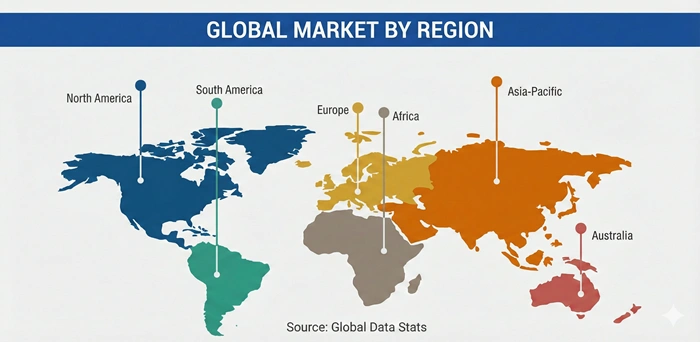
North America commands approximately 38% of global pingueculum drugs market revenue in 2025, generating around USD 246.64 million, and is projected to grow at a CAGR of 5.8% through 2033. The United States is by far the largest single national market within the region, benefiting from the world's highest per-capita ophthalmology healthcare expenditure, a dense network of ophthalmology specialists and optometrists driving diagnosis and treatment recommendations, broad OTC eye care product consumer awareness, and the world's most advanced pharmaceutical regulatory environment that is hosting the most clinically advanced pingueculum-specific drug development programs. Cloudbreak Pharma's CBT-004 development program — the most advanced disease-modifying pingueculum therapy in clinical development globally — is being conducted under the U.S. FDA regulatory framework, making North America the most likely first-launch geography for the first approved targeted pingueculum pharmacological therapy. Key companies with strong North American commercial presence include Alcon Inc., Bausch + Lomb, Johnson & Johnson Vision Care, and AbbVie Inc.
Canada contributes meaningfully to the North American pingueculum drugs market, with Health Canada approved OTC and prescription ophthalmic products widely available through pharmacy chains and ophthalmology clinics, and growing consumer health awareness supporting OTC product demand. The North American pingueculum treatment market is also being shaped by the growing teleophthalmology sector, which is enabling remote diagnosis of pinguecula and digital prescription transmission for topical anti-inflammatory and lubricating therapies — expanding access to ophthalmic care and pingueculum-specific treatment in geographies beyond major metropolitan ophthalmology centers. The strong brand equity of leading OTC lubricating and anti-inflammatory eye drop products — built through decades of consumer marketing and physician recommendation — creates a durable competitive moat for established players and a well-defined market framework within which new pingueculum-specific therapies can be commercially launched.
Asia Pacific
Asia Pacific's High-UV and High-Pollution Exposure Environment, Enormous Aging Population, Expanding Healthcare Access, and Generic Drug Manufacturing Strength Are Driving It to Become the Fastest-Growing Pingueculum Drugs Market Region
Asia Pacific is the fastest-growing regional market for pingueculum drugs, holding approximately 22% market share in 2025 at around USD 142.79 million and projected to grow at a CAGR of approximately 8.2% through 2033 — the highest growth rate of any region globally. The region's epidemiological profile is highly favorable for pingueculum prevalence growth — high solar UV radiation across South and Southeast Asia, combined with severe urban air pollution in Chinese and Indian mega-cities, creates the environmental risk factor profile that drives accelerated conjunctival degeneration across large population groups. China and India together account for approximately 2.8 billion people — a massive patient population with high environmental risk factors for pinguecula and rapidly expanding access to ophthalmology care through both public health system investment and growing private clinic networks. Japan and South Korea represent premium ophthalmology markets within the region, where high healthcare expenditure, sophisticated ophthalmic product markets, and leading companies including Santen Pharmaceutical Co. Ltd. are supporting strong demand for advanced pingueculum treatment products.
Australia is an important Asia Pacific market for pingueculum drug therapy given its extremely high UV exposure environment — Australia has among the world's highest skin and ocular UV-related disease rates — and well-developed retail pharmacy and ophthalmology specialist market supporting OTC and prescription pingueculum treatment product access. The Asia Pacific pingueculum drugs market also benefits from the region's world-leading generic pharmaceutical manufacturing base in India and China, which is enabling increasingly affordable access to lubricating and anti-inflammatory ophthalmic products across the region's diverse national healthcare markets at price points accessible to lower-income patient populations. Zydus Group (India), Santen Pharmaceutical (Japan), and international players including Alcon and Bausch + Lomb are all expanding their Asia Pacific ophthalmic product commercial footprints to capture the region's growing eye care drug market opportunity.
Report Customization: Region-Wise and Country-Wise Insights Available on Request
This Report Is Fully Customizable for All Major Regions and Countries — Delivering Locally Specific Pingueculum Drugs Market Intelligence, Regulatory Landscape Analysis, Physician Prescribing Behavior Insights, Patient Population Sizing, and Competitive Landscape Profiles Precisely Tailored to Your Geographic and Business Strategy Focus
Customized versions of this report are available for all major regions and countries listed below, providing in-depth market analysis, healthcare regulatory environment assessments, OTC and prescription market dynamics, physician and patient awareness landscape, competitive product positioning analysis, and disease prevalence and patient population opportunity data tailored to the pingueculum drugs market in each selected geography.
North America
-
U.S. — FDA regulatory framework for ophthalmic drug approvals, Cloudbreak Pharma CBT-004 pipeline development status, managed care and OTC market dynamics, ophthalmology prescribing patterns, and retail pharmacy and e-commerce distribution channel analysis
-
Canada — Health Canada approval landscape, provincial healthcare coverage for ophthalmic therapies, domestic OTC eye care market analysis, and retail pharmacy channel dynamics
-
Mexico — COFEPRIS regulatory framework, growing private ophthalmology clinic market, OTC eye care consumer market analysis, and generic ophthalmic drug market dynamics
Europe
-
U.K. — NICE evaluation framework for ophthalmic therapies, NHS ophthalmology service landscape, OTC and prescription pingueculum treatment market analysis, and domestic competitive landscape
-
Germany — AMNOG drug assessment framework, German ophthalmology specialist market, domestic ophthalmic product competitive landscape, and prescription versus OTC channel dynamics
-
France — HAS evaluation landscape, French ophthalmology and optometry prescribing patterns, OTC eye care consumer market, and domestic reimbursement framework for topical ophthalmic therapies
-
Italy — AIFA regulatory framework, domestic ophthalmic drug market dynamics, ophthalmology clinic distribution channel analysis, and OTC retail eye care market
-
Rest of Europe — Benelux, Nordic, and Eastern European ophthalmology market analysis, OTC eye care product market development, and regulatory framework landscape for pingueculum treatment therapies
Asia Pacific
-
China — NMPA regulatory landscape, domestic generic ophthalmic manufacturing competitive analysis, urban pollution-driven pingueculum prevalence data, retail pharmacy and e-commerce distribution dynamics, and consumer health awareness trends
-
India — CDSCO regulatory framework, domestic generic pharmaceutical manufacturing strengths, growing ophthalmology clinic network, OTC and prescription eye care market dynamics, and Zydus Group competitive analysis
-
Japan — PMDA approval framework, Santen Pharmaceutical market leadership analysis, NHI reimbursement landscape for ophthalmic therapies, and domestic pingueculum treatment market development
-
South Korea — MFDS regulatory landscape, domestic ophthalmic product market dynamics, healthcare infrastructure and ophthalmology specialist market analysis
-
Australia — TGA regulatory framework, high-UV environment driving pingueculum prevalence, PBS listing analysis for ophthalmic therapies, and retail pharmacy OTC eye care market analysis
-
Rest of Asia Pacific — Southeast Asian ophthalmology market development, generic ophthalmic drug access expansion, and growing pingueculum prevalence in high-UV and high-pollution emerging markets
Latin America
-
Brazil — ANVISA regulatory landscape, domestic ophthalmic drug market dynamics, growing online pharmacy channel for OTC eye care products, and private ophthalmology clinic market analysis
-
Argentina — ANMAT regulatory framework, domestic ophthalmic market analysis, and consumer OTC eye care product access landscape
-
Rest of Latin America — Regional ophthalmology market development, growing e-commerce distribution for OTC eye care, and pingueculum prevalence landscape in high-UV-exposure Central and South American markets
Middle East & Africa
-
UAE — Dubai Health Authority regulatory framework, private ophthalmology market leadership, high-UV desert environment pingueculum prevalence, and premium OTC and prescription ophthalmic product market analysis
-
Saudi Arabia — SFDA regulatory landscape, Saudi Vision 2030 healthcare investment impacts on ophthalmology service expansion, and domestic ophthalmic drug market development
-
Rest of MEA — Sub-Saharan African and North African ophthalmology market development, growing healthcare infrastructure investment, high-UV exposure pingueculum prevalence data, and generic ophthalmic product access expansion
Top Key Players
-
Alcon Inc. (Switzerland)
-
Bausch + Lomb Incorporated (United States)
-
Johnson & Johnson Vision Care Inc. (United States)
-
AbbVie Inc. (United States)
-
Santen Pharmaceutical Co. Ltd. (Japan)
-
Cloudbreak Pharma Inc. (United States)
-
Bayer AG (Germany)
-
Zydus Group (India)
-
Novartis AG (Switzerland)
-
Sun Pharmaceutical Industries Limited (India)
-
Théa Pharmaceuticals (France)
-
Shire Pharmaceuticals (Ireland)
-
Prestige Consumer Healthcare Inc. (United States)
-
OcuSense Inc. (United States)
-
Sentiss Pharma Pvt. Ltd. (India)
Recent Developments
-
In 2025, Cloudbreak Pharma Inc. achieved a successful End-of-Phase 2 meeting with the U.S. FDA for its investigational pingueculum-specific therapeutic CBT-004 — a landmark regulatory milestone marking the most significant clinical development achievement in the history of targeted pingueculum pharmacological therapy and signaling a clear regulatory pathway toward potential NDA submission and commercial launch of the first ever disease-modifying drug specifically indicated for pingueculum lesion management.
-
In 2025, Bausch + Lomb announced the launch of an expanded portfolio of advanced preservative-free lubricating eye drop products across key markets in North America, Europe, and Asia Pacific, specifically targeting the growing dry eye and ocular surface disorder patient population — including pinguecula patients — with next-generation formulations featuring extended contact time, improved lipid-layer support, and enhanced biocompatibility for long-term, high-frequency use.
-
In 2026, Alcon Inc. expanded its eye care consumer portfolio through the acquisition of a specialty ophthalmic startup focused on innovative drop-free ocular delivery technologies for anti-inflammatory agents, strategically positioning the company to develop novel drug delivery systems that could improve patient compliance and therapeutic outcomes in symptomatic pinguecula management and other ocular surface inflammatory conditions.
-
In 2025, a Middle Eastern biotech firm formalized a clinical research partnership with ProRelix Research to advance development of a novel dual-indication topical eye drop specifically formulated to address both pingueculum and pterygium symptoms — representing an innovative clinical development strategy that could generate regulatory approval for a single product addressing both common conjunctival surface conditions simultaneously.
-
In 2026, Santen Pharmaceutical Co. Ltd. strengthened its global ophthalmic drug commercial infrastructure through expanded distribution agreements in Southeast Asian markets including Vietnam, Thailand, and Malaysia, targeting the rapidly growing ophthalmology and eye care consumer market across the region with its established portfolio of topical anti-inflammatory, lubricating, and ocular comfort products relevant to the growing pingueculum treatment drug market.
Market Trends
The Emergence of Disease-Modifying Pingueculum Therapies and the Rapid Growth of Premium Preservative-Free OTC Formulations Are the Two Most Commercially Consequential Trends Shaping the Pingueculum Drugs Market Through 2033
The most transformative long-term trend in the pingueculum drugs market is the transition from purely symptomatic management toward disease-modifying pharmacological therapy for pinguecula. Historically, the treatment paradigm for pinguecula has been purely palliative — managing redness, irritation, and dryness without any expectation of lesion reduction or disease reversal. The emergence of targeted clinical development programs — most notably Cloudbreak Pharma's CBT-004, which targets specific molecular pathways involved in conjunctival degeneration — signals a genuine paradigm shift in how the ophthalmic pharmaceutical community is approaching this condition. If disease-modifying therapy achieves regulatory approval within the forecast period, it would not only create a new premium prescription product category but would also elevate the perceived clinical seriousness of pinguecula — driving higher diagnosis rates, more active treatment seeking, and greater investment in clinical research across the broader pingueculum treatment drug market.
A second commercially important trend is the rapid growth of premium, preservative-free OTC ophthalmic comfort formulations targeting the growing overlap population of patients managing both pinguecula symptoms and dry eye syndrome. The traditional OTC eye drop market was dominated by preserved, low-cost artificial tear products, but the growing clinical recognition that benzalkonium chloride and other common preservatives can themselves cause ocular surface irritation — exacerbating the very symptoms they are intended to relieve in long-term daily users — has driven strong consumer and ophthalmologist preference toward preservative-free single-dose unit formats. The willingness of consumers to pay meaningful premiums for clinically validated, preservative-free, lipid-supplementing ophthalmic formulations is reshaping the competitive dynamics of the OTC eye care category and driving above-average revenue growth in the premium pingueculum comfort product segment.
Segments Covered in the Report
By Drug Type
-
Anti-Inflammatory Agents
-
Topical Corticosteroids
-
Non-Steroidal Anti-Inflammatory Drugs (NSAIDs)
-
-
Lubricating Eye Drops
-
Artificial Tears
-
Viscous Gel Drops
-
Preservative-Free Unit-Dose Lubricants
-
Lipid-Layer Supplementing Drops
-
-
Antihistamines
-
Topical Antihistamine Eye Drops
-
Antihistamine-Mast Cell Stabilizer Combinations
-
-
Vasoconstrictors
-
Surgical / Procedural (Adjunct Drug Therapy)
-
Disease-Modifying Agents (Pipeline / Emerging)
By Formulation
-
Eye Drops
-
Preserved Formulations
-
Preservative-Free Formulations
-
-
Ophthalmic Ointments
-
Ophthalmic Gels
-
Injectables (Procedural Adjunct)
By Distribution Channel
-
Hospital Pharmacies
-
Ophthalmology Clinic Pharmacies
-
Retail / Community Pharmacies
-
Online / E-commerce Pharmacies
By End-User
-
Hospitals
-
Ophthalmology and Eye Care Clinics
-
Optometry Practices
-
Home Care / Self-Management
By Region
-
North America (U.S., Canada, Mexico)
-
Europe (U.K., Germany, France, Italy, Rest of Europe)
-
Asia Pacific (China, India, Japan, South Korea, Australia, Rest of Asia Pacific)
-
Latin America (Brazil, Argentina, Rest of Latin America)
-
Middle East & Africa (UAE, Saudi Arabia, Rest of MEA)
❝ Built for Every Level — From Startups to Industry Giants ❞
Here Is Exactly How This Report Works for You
-
For Tier 1 global ophthalmic pharmaceutical companies, multinational consumer health corporations, and institutional healthcare investors evaluating competitive positioning and portfolio strategy in the ophthalmic surface disorder drug market, this report delivers granular competitor revenue analysis for Alcon, Bausch + Lomb, Johnson & Johnson Vision Care, and Santen alongside a structured assessment of how geopolitical factors — including U.S. pharmaceutical pricing policy for specialty ophthalmic drugs, EU medical device and drug regulatory convergence for combination ophthalmic products, China's NMPA approval dynamics for imported versus domestic ophthalmic therapies, and evolving global OTC reclassification trends — are reshaping the competitive and commercial landscape of the pingueculum drugs market through 2033.
-
For Tier 2 and Tier 3 specialty ophthalmic pharmaceutical companies, regional eye care distributors, and generic ophthalmic drug manufacturers seeking to identify untapped patient population opportunities and distribution channel entry points in the pingueculum treatment market, this report maps detailed product demand dynamics across all drug types, formulations, distribution channels, and geographies — with particular focus on the high-growth Asia Pacific and Middle East markets where expanding healthcare access, high-UV-exposure environments, and generic product affordability are creating compelling market entry opportunities for companies positioned to serve the growing OTC and prescription pingueculum treatment demand.
-
For private equity investors, venture capital funds evaluating ophthalmic pharmaceutical investments, and corporate development teams monitoring the Cloudbreak Pharma CBT-004 pipeline and broader pingueculum disease-modifying drug development landscape, this report provides rigorous market sizing and CAGR forecasting through 2033 by segment and geography, a comprehensive recent development review covering M&A activity, clinical trial milestones, and product launch events for the top five market players, and a forward-looking commercial impact analysis modeling how the potential approval and launch of the first disease-modifying pingueculum therapy would transform the commercial dynamics, addressable market size, and competitive landscape of the pingueculum drugs market.
Frequently Asked Questions
Question 1: What is the current global market size of the pingueculum drugs market and what will it reach by 2033?
Answer: The global pingueculum drugs market is valued at USD 649.05 million in 2025 and is projected to grow to approximately USD 1109.82 million by 2033. The market is expanding at a CAGR of 6.4% from 2026 to 2033, supported by growing pinguecula prevalence, expanding OTC eye care access, and a promising clinical pipeline targeting disease-modifying therapeutic approaches.
Question 2: What drugs are commonly used to treat pinguecula symptoms and how does the pingueculum drugs market serve patients?
Answer: The pingueculum drugs market primarily serves patients through lubricating eye drops that relieve dryness and grittiness, topical anti-inflammatory agents including corticosteroids and NSAIDs for inflamed pinguecula episodes, and antihistamine drops for allergy-related symptom amplification. Vasoconstrictors are also used for acute redness management, and the emerging pipeline of disease-modifying agents — led by Cloudbreak Pharma's CBT-004 — is moving toward the first therapy specifically designed to reduce actual pinguecula lesion size rather than purely managing symptoms.
Question 3: Which region dominates the pingueculum drugs market and why?
Answer: North America leads the pingueculum drugs market with approximately 38% revenue share in 2025, driven by the United States' world-leading ophthalmology healthcare infrastructure, highest per-capita ophthalmic drug expenditure, strong OTC eye care brand market, and the presence of the most advanced disease-modifying pingueculum clinical development programs. The U.S. FDA regulatory framework hosting Cloudbreak Pharma's CBT-004 program further reinforces North America's market leadership in the evolving pingueculum treatment landscape.
Question 4: What is the fastest-growing region in the pingueculum drugs market and what is driving its growth?
Answer: Asia Pacific is the fastest-growing region in the pingueculum drugs market, projected to expand at approximately 8.2% CAGR through 2033, driven by high UV and environmental pollution exposure levels across China, India, and Southeast Asia, rapidly expanding healthcare access, and enormous aging populations with high susceptibility to conjunctival degenerative conditions. The region's world-leading generic pharmaceutical manufacturing base in India and China is also making OTC and prescription pingueculum treatment products increasingly affordable and accessible to growing populations of at-risk patients.
Question 5: How is the pingueculum drugs market evolving with the development of disease-modifying therapies?
Answer: The pingueculum drugs market is transitioning from a purely symptom management model — relying on OTC lubricants and prescription anti-inflammatory agents used off-label — toward a potential disease-modifying treatment paradigm with the advancement of Cloudbreak Pharma's CBT-004 through Phase 2 clinical development. The successful regulatory approval of a first targeted pingueculum-specific therapy would create a new premium prescription product category, elevate diagnosis and treatment-seeking rates, and significantly expand the commercial value and growth trajectory of the overall pingueculum treatment market.