
Pigment Dispersion Market Overview
Coatings Innovation and Sustainable Formulations Transform Color Solutions Across Automotive, Construction, and Packaging Industries
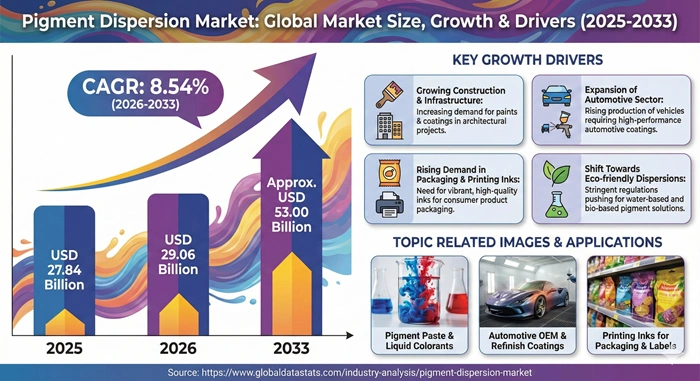
The global pigment dispersion market size is valued at USD 27.84 billion in 2025 and is predicted to increase from USD 29.06 billion in 2026 to approximately USD 53.00 billion by 2033, growing at a CAGR of 8.54% from 2026 to 2033. This specialized colorant industry encompasses production, distribution, and application of pre-dispersed pigment formulations where dry pigments are dispersed in liquid carriers—water, solvents, or resins—creating stabilized color concentrates demonstrating superior tinctorial strength, consistent color quality, and enhanced processing efficiency. Pigment dispersions deliver critical performance benefits including reduced manufacturing time, improved color consistency, lower dust hazards, and enhanced handling convenience supporting diverse applications across paints, coatings, inks, plastics, and textile printing operations requiring reliable coloration solutions.
The pigment dispersion market addresses escalating demand for high-performance colorants where architectural coating growth, automotive production expansion, packaging innovation, and digital printing adoption drive consumption across developed and emerging markets. These pre-dispersed formulations eliminate time-consuming in-house dispersion processes, minimize equipment wear, and ensure batch-to-batch consistency that traditional pigment powders cannot match. Major industries including construction materials, automotive manufacturing, flexible packaging, publication printing, and textile production consume substantial pigment dispersion volumes as companies pursue operational efficiency, environmental compliance, and product differentiation throughout manufacturing processes requiring proven color technology and technical support capabilities.
AI Impact on the Pigment Dispersion Industry
Color Matching Automation and Process Optimization Revolutionize Manufacturing Precision and Customer Service
Artificial intelligence transforms the pigment dispersion market through advanced color matching systems utilizing spectrophotometry data, machine learning algorithms, and database analytics identifying optimal pigment combinations achieving target colors while minimizing formulation costs and raw material consumption. AI-powered color matching platforms analyze thousands of historical formulations, performance data, and application requirements predicting accurate recipes within seconds compared to hours required for traditional trial-and-error approaches. These intelligent systems enable instant color approval, reduce sample iterations, and accelerate product development cycles particularly critical for automotive coatings, architectural paints, and brand-sensitive packaging applications demanding precise color reproduction. Computer vision technologies incorporating smartphone cameras and portable spectrophotometers democratize color specification enabling field personnel, contractors, and customers to capture colors accurately transmitting digital specifications to manufacturing facilities ensuring perfect matches.
Advanced AI applications extend beyond color matching to revolutionize production optimization and quality assurance within the pigment dispersion market landscape. Neural networks analyze viscosity measurements, particle size distributions, and stability testing data predicting optimal dispersion parameters including milling times, dispersant dosages, and processing temperatures achieving target specifications while minimizing energy consumption and equipment wear. Predictive maintenance algorithms monitoring mill operation, pump performance, and filtration efficiency identify potential failures before breakdowns occur preventing costly production interruptions and product contamination. Automated quality control systems incorporating inline spectrophotometers, viscosity sensors, and particle analyzers provide real-time process monitoring enabling immediate corrective actions maintaining consistent product quality throughout production runs. These AI-driven capabilities position manufacturers to achieve superior operational efficiency while reducing production costs by 20-30% and improving customer satisfaction throughout forecast period.
Growth Factors
Construction Boom and Automotive Production Drive Unprecedented Pigment Dispersion Demand
The pigment dispersion market experiences robust growth propelled by construction industry expansion where urbanization, infrastructure development, and architectural innovation drive paints and coatings consumption requiring reliable color solutions across residential, commercial, and industrial projects. Global construction spending projected to exceed 15 trillion dollars annually by 2030 creates substantial pigment dispersion demand supporting architectural coatings, protective coatings, and decorative finishes. Emerging economies particularly China, India, and Southeast Asian nations experiencing rapid urbanization and middle-class expansion demonstrate exceptional construction growth. Green building initiatives pursuing LEED certification, energy efficiency, and sustainable materials drive low-VOC water-based coatings requiring specialized pigment dispersions meeting environmental regulations. Architectural trends emphasizing bold colors, metallic effects, and textured finishes create opportunities for premium pigment dispersion formulations. These construction applications demonstrate sustained baseline demand supporting market growth throughout forecast period.
Automotive production growth accelerates pigment dispersion market expansion as global vehicle manufacturing, color customization trends, and premium finish requirements drive specialized automotive coating consumption. Global automotive production exceeding 90 million vehicles annually with growing electric vehicle segment creates substantial pigment dispersion demand. Automotive OEM coatings particularly basecoats and clearcoats require exceptional weather resistance, color stability, and metallic effects achieved through high-performance pigment dispersions. Automotive refinish coatings supporting collision repair and customization applications consume specialized color-matched dispersions enabling precise repairs. Electric vehicle production emphasizing distinctive colors, premium finishes, and brand differentiation drives innovation in automotive pigment dispersions. Autonomous vehicle development incorporating advanced sensors, cameras, and radar systems requires specialized infrared-reflective pigments maintaining sensor functionality. These automotive applications demonstrate exceptional growth supporting sustained consumption throughout forecast period.
Market Outlook
Sustainable Formulations and Digital Technologies Position Industry for Sustained Long-Term Expansion
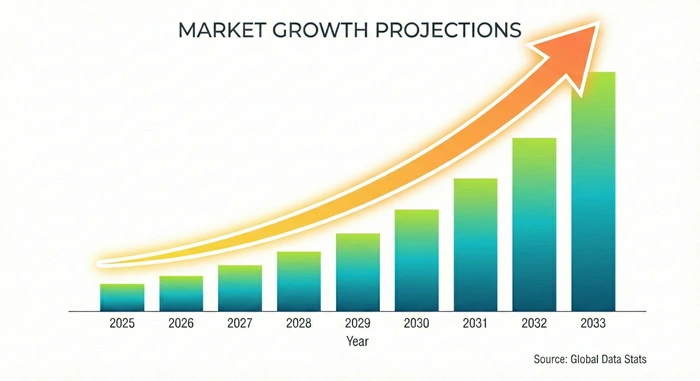
The pigment dispersion market outlook remains exceptionally positive as manufacturers invest substantially in sustainable formulations including bio-based dispersants, renewable solvents, and low-VOC systems addressing environmental regulations and customer sustainability commitments. Next-generation water-based pigment dispersions incorporating advanced resin technologies, innovative dispersant chemistries, and nano-pigment formulations deliver performance matching or exceeding solvent-based systems while eliminating hazardous air pollutants. Bio-based dispersants derived from renewable resources including plant oils, natural polymers, and sustainable feedstocks reduce petroleum dependency and lower carbon footprints. Circular economy initiatives incorporating recycled pigments, recovered solvents, and waste valorization create sustainable manufacturing approaches. These sustainability innovations create competitive advantages as architectural specifiers, automotive OEMs, and brand owners increasingly prioritize suppliers demonstrating environmental stewardship and regulatory compliance throughout forecast period.
Investment trends within the pigment dispersion market reflect growing confidence in long-term demand fundamentals as chemical companies, coating manufacturers, and specialty colorant producers expand capacity and upgrade infrastructure. Leading manufacturers including BASF, Clariant, DIC Corporation, and regional producers maintain capital expenditure programs modernizing dispersion equipment, enhancing quality control systems, and developing application-specific product portfolios. Acquisition activity intensifies as multinational chemical companies pursue market consolidation through strategic acquisitions of specialty pigment producers, regional dispersion manufacturers, and color service providers accessing established customer relationships and technical capabilities. Vertical integration strategies connecting pigment production with dispersion manufacturing and coating formulation create streamlined value chains reducing costs and ensuring supply reliability. Research collaborations between dispersion manufacturers, pigment suppliers, and end-users advance application development particularly automotive coatings, digital textile printing, and sustainable packaging supporting market diversification through 2033.
Expert Speaks
-
Anup Kothari, BASF Executive Board Member for Coatings Division, emphasized strategic transformation: "This transaction exemplifies how we are proceeding at speed to create value through active portfolio management as part of BASF's Winning Ways strategy. We are convinced that the decorative paints business will continue to thrive under the ownership of Sherwin-Williams, demonstrating our commitment to strategic portfolio optimization and shareholder value creation".
-
Sherwin-Williams Leadership, highlighted strategic acquisition: "Sherwin-Williams expects to end 2025 with a net-debt to EBITDA ratio within its targeted range of 2.0 to 2.5 times following the completion of BASF's Brazilian decorative paints business acquisition. This strategic transaction strengthens our position in key Latin American markets while maintaining financial discipline and supporting long-term growth objectives".
-
BASF Strategy Leadership, articulated portfolio rationalization: "In Q2 2025, BASF approached the market to explore strategic options for the automotive OEM coatings, automotive refinish coatings and surface treatment businesses, which generated sales of €3.8 billion in 2024. A decision is expected in Q4 2025 as we continue implementing our Winning Ways strategy focused on operational excellence and value creation".
Key Report Takeaways
-
Asia Pacific dominates the pigment dispersion market with commanding share exceeding 42%, driven by concentrated manufacturing activity, construction boom, and automotive production across China, India, and Southeast Asia where rapid industrialization, urbanization, and export-oriented manufacturing consume substantial colorant volumes supporting regional economic development.
-
North America emerges as fastest-growing regional market with projected CAGR approaching 9.2% through 2033, propelled by architectural coating innovation, automotive technology advancement, and sustainable formulation adoption where United States maintains advanced manufacturing capabilities, stringent environmental standards, and premium market positioning.
-
Coatings applications represent the dominant end-use segment accounting for approximately 48% market share due to architectural paints, industrial coatings, and automotive finishes demonstrating sustained consumption across residential construction, commercial building, infrastructure projects, and vehicle manufacturing requiring reliable pigment dispersion solutions.
-
Water-based dispersions exhibit exceptional growth potential with anticipated CAGR exceeding 10.5% through 2033, attributed to environmental regulations restricting VOC emissions, sustainable building initiatives, and low-odor formulation preferences where architectural coatings, packaging inks, and textile printing demonstrate rapid adoption.
-
Organic pigment dispersions maintain substantial market share representing approximately 55% of product segment driven by brightness, color strength, and transparency characteristics where automotive coatings, publication inks, and packaging applications demand vibrant colors and excellent lightfastness properties.
-
Digital printing applications demonstrate fastest segment growth with projected CAGR of 12.8% through 2033, driven by textile printing innovation, packaging customization, and on-demand production where advanced dispersion formulations enable high-resolution graphics, excellent color gamut, and superior wash fastness.
Market Scope
| Report Coverage Details | |
|---|---|
| Market Size by 2033 | USD 53.00 Billion |
| Market Size by 2025 | USD 27.84 Billion |
| Market Size by 2026 | USD 29.06 Billion |
| Market Growth Rate from 2026 to 2033 | CAGR of 8.54% |
| Dominating Region | Asia Pacific |
| Fastest Growing Region | North America |
| Base Year | 2025 |
| Forecast Period | 2026 to 2033 |
| Segments Covered | Product Type, Application, End-Use Industry, Region |
| Regions Covered | North America, Europe, Asia Pacific, Latin America, Middle East & Africa |
Market Dynamics
Drivers Impact Analysis
Infrastructure Development and Packaging Innovation Accelerate Pigment Dispersion Adoption
| Impact Factor | (≈) % Impact on CAGR Forecast | Geographic Relevance | Impact Timeline |
|---|---|---|---|
| Construction Industry Growth | +3.2% | Emerging Markets | 2026-2033 |
| Automotive Production Expansion | +2.6% | Asia Pacific | 2026-2033 |
| Packaging Sector Innovation | +2.2% | Global Markets | 2026-2033 |
| Digital Printing Adoption | +1.8% | Textile Industry | 2027-2033 |
The pigment dispersion market benefits substantially from construction industry expansion where global infrastructure investment, urban development, and residential building activity drive architectural coating consumption requiring consistent color quality and processing efficiency. Developing nations particularly India planning 100 smart cities initiative, China pursuing urban renewal programs, and Southeast Asian countries implementing infrastructure master plans create concentrated pigment dispersion demand. Green building certifications including LEED, BREEAM, and regional standards promote low-VOC water-based coatings requiring specialized pigment dispersions meeting environmental criteria. Architectural trends emphasizing accent walls, bold colors, and decorative finishes drive premium pigment consumption. Weather-resistant exterior coatings protecting building facades from UV degradation, moisture damage, and pollution exposure require high-performance pigment dispersions delivering exceptional lightfastness and color retention. These construction applications create sustained baseline demand supporting market growth throughout forecast period.
Packaging sector innovation accelerates pigment dispersion market adoption as flexible packaging, brand differentiation, and sustainability initiatives drive advanced printing ink consumption. Global packaging market exceeding 1 trillion dollars annually with growing e-commerce sector creates substantial printing ink demand utilizing pigment dispersions. Flexible packaging particularly food pouches, snack bags, and beverage packaging requires FDA-compliant pigment dispersions meeting food contact regulations. Brand protection initiatives incorporating complex graphics, metallic effects, and security features utilize specialized pigment dispersions creating visual appeal and counterfeit deterrence. Sustainable packaging trends promoting recyclable materials, compostable substrates, and reduced plastic usage drive innovation in pigment dispersions compatible with biodegradable polymers and fiber-based packaging. Digital printing adoption enabling variable data, personalization, and short-run production requires optimized pigment dispersions delivering consistent jetting performance and excellent substrate adhesion. These packaging applications demonstrate exceptional growth supporting sustained consumption throughout forecast period.
Restraints Impact Analysis
Raw Material Price Volatility and Regulatory Complexity Challenge Market Penetration Across Cost-Sensitive Segments
| Restraint Factor | (≈) % Impact on CAGR Forecast | Geographic Relevance | Impact Timeline |
|---|---|---|---|
| Pigment Cost Fluctuations | -1.8% | Global Manufacturing | 2026-2033 |
| Environmental Regulations | -1.4% | Developed Markets | 2026-2031 |
| Supply Chain Disruptions | -1.2% | Import-Dependent Regions | 2026-2030 |
| Alternative Technology Competition | -0.9% | Digital Applications | 2027-2033 |
The pigment dispersion market faces growth constraints from raw material cost volatility where titanium dioxide prices, specialty pigment availability, and dispersant costs fluctuate significantly impacting production economics and competitive pricing particularly commodity dispersion applications. Titanium dioxide representing largest pigment volume experiences periodic supply shortages and price spikes affecting white and tinted dispersion formulations. Organic pigments particularly high-performance automotive grades require complex synthesis, specialized intermediates, and stringent quality control creating elevated costs. Dispersant raw materials including surfactants, polymeric stabilizers, and rheology modifiers subject to petrochemical feedstock price fluctuations add cost uncertainty. Transportation expenses particularly ocean freight and regional logistics contribute substantially to delivered costs affecting price competitiveness. These cost dynamics create profitability challenges particularly commodity dispersion producers competing primarily on price rather than differentiation throughout forecast period.
Environmental regulations constrain pigment dispersion market development where VOC emissions limits, hazardous air pollutant restrictions, and sustainability requirements impose reformulation costs and compliance investments affecting market dynamics. European Union REACH regulations requiring chemical registration, safety data, and exposure assessments create compliance barriers particularly specialty pigment dispersions. United States EPA regulations restricting VOC content in architectural coatings, industrial finishes, and printing inks mandate water-based formulations requiring advanced dispersant technologies. California SCAQM implementing strictest VOC limits drives innovation but increases formulation complexity and raw material costs. Waste disposal regulations governing spent dispersion equipment cleaning solvents, off-specification products, and manufacturing waste streams require treatment infrastructure and compliance documentation. These regulatory requirements favor established manufacturers with proven compliance capabilities while constraining market entry for smaller producers particularly developing regions throughout forecast period.
Opportunities Impact Analysis
Sustainable Solutions and Advanced Materials Create Substantial Growth Avenues Beyond Traditional Applications
| Opportunity Factor | (≈) % Impact on CAGR Forecast | Geographic Relevance | Impact Timeline |
|---|---|---|---|
| Bio-Based Formulations | +2.2% | Sustainability Markets | 2027-2033 |
| Nano-Pigment Technology | +1.6% | Premium Applications | 2027-2033 |
| Emerging Market Expansion | +1.4% | Africa, Southeast Asia | 2026-2033 |
| Smart Coating Integration | +1.0% | Automotive, Construction | 2028-2033 |
The pigment dispersion market stands to capture substantial value from bio-based formulation development where renewable dispersants, plant-based solvents, and sustainable pigments address environmental commitments and regulatory pressures. Bio-based dispersants derived from vegetable oils, natural polymers, and renewable feedstocks deliver comparable performance to petroleum-derived alternatives while reducing carbon footprints. Renewable solvents including bio-alcohols, ester blends, and terpene derivatives enable sustainable solvent-based dispersions meeting performance requirements. Natural pigments extracted from plants, minerals, and biological sources create opportunities for eco-labeled products particularly food packaging, cosmetics, and children's products demanding non-toxic colorants. Life cycle assessment quantifying environmental impacts, carbon footprints, and sustainability metrics supports marketing claims and customer preferences. These sustainable innovations position pigment dispersions as environmentally responsible solutions supporting continued market relevance as industries pursue decarbonization objectives throughout forecast period.
Nano-pigment technology presents exceptional growth opportunities as submicron particle sizes deliver enhanced color strength, transparency, and performance characteristics enabling novel applications across automotive coatings, electronic displays, and functional materials. Nano-pigment dispersions achieving particle sizes below 100 nanometers demonstrate superior tinctorial strength requiring lower pigment loading while achieving equivalent color depth reducing formulation costs. Enhanced transparency maintaining color purity without haziness enables specialty applications including automotive effect coatings, high-gloss finishes, and transparent colored systems. Improved stability preventing pigment agglomeration, settling, and syneresis ensures extended shelf life and consistent application performance. Functional pigment dispersions incorporating conductive, magnetic, or catalytic nanoparticles enable smart coating applications including self-healing surfaces, antimicrobial finishes, and energy-harvesting materials. These advanced applications command premium pricing and demonstrate exceptional growth supporting market diversification throughout forecast period.
Segment Analysis
By Application: Coatings
Architectural and Automotive Segments Sustain Coatings Application Market Leadership
Coatings applications command the largest share within the pigment dispersion market, accounting for approximately 48% of global revenue with continued expansion projected at robust CAGR of 8.8% through 2033. This application category encompasses architectural paints, industrial coatings, automotive finishes, and protective coatings utilizing pigment dispersions delivering color, opacity, and protective properties across diverse substrates. The pigment dispersion market benefits from coatings advantages including operational efficiency eliminating in-house pigment milling, consistent color quality ensuring batch-to-batch reproducibility, and reduced dust exposure improving workplace safety compared to powder pigments. Construction industry growth particularly residential building, commercial development, and infrastructure projects drives architectural coating consumption. Automotive manufacturing requiring premium finishes, color consistency, and weather resistance consumes substantial automotive coating volumes incorporating specialized pigment dispersions.
Asia Pacific and North America lead coatings pigment dispersion consumption within the market, driven by concentrated construction activity, automotive production, and industrial manufacturing. Chinese construction boom producing over 20 million housing units annually creates massive architectural coating demand consuming substantial water-based pigment dispersions. Indian infrastructure development including highways, metros, and smart cities initiatives drives protective coating consumption. United States architectural coating market exceeding 30 billion dollars annually supports substantial pigment dispersion volumes serving residential repaint, new construction, and commercial projects. Leading coating manufacturers including Sherwin-Williams, PPG Industries, AkzoNobel, and Asian Paints maintain extensive production operations consuming pigment dispersions across product portfolios. Automotive coating facilities particularly in Germany, United States, Japan, and South Korea require specialized effect pigment dispersions delivering metallic finishes, pearl effects, and color-shifting properties. Sustainability initiatives promoting low-VOC water-based coatings, bio-based formulations, and recycled content drive innovation supporting continued segment leadership throughout forecast period.
By Product Type: Water-Based Dispersions
Environmental Compliance and Sustainability Initiatives Position Water-Based Segment for Exceptional Growth
Water-based dispersions represent fastest-growing segment within the pigment dispersion market, anticipated to expand at exceptional CAGR of 10.5% through 2033 driven by environmental regulations, sustainability initiatives, and performance improvements delivering solvent-based equivalent properties. This product category encompasses aqueous pigment dispersions utilizing water as primary carrier incorporating advanced dispersants, rheology modifiers, and stabilizers maintaining pigment stability and application performance. The pigment dispersion market benefits from water-based advantages including VOC compliance meeting architectural coating regulations, reduced fire hazards improving workplace safety, easy cleanup minimizing solvent waste, and environmental acceptability supporting green building certifications. Architectural coating sector particularly North America and Europe demonstrates rapid water-based adoption driven by regulatory mandates and customer preferences. Digital textile printing requiring high-resolution graphics, excellent wash fastness, and substrate compatibility drives water-based dispersion innovation.
Europe and North America lead water-based pigment dispersion adoption within the market, driven by stringent environmental regulations, green building initiatives, and sustainability commitments. European Union VOC directives limiting solvent content in architectural coatings, industrial finishes, and printing inks mandate water-based formulations. Germany implementing ambitious environmental protection standards demonstrates leading water-based penetration. United States particularly California and Northeast states enforcing strict VOC limits drives architectural coating reformulation toward water-based systems. Leading dispersion manufacturers including BASF, Clariant, Heubach, and Cabot Corporation develop advanced water-based technologies incorporating nano-pigments, polymeric dispersants, and specialty additives achieving solvent-based performance. Textile printing sector particularly digital printing applications utilizing water-based pigment inks demonstrates exceptional growth supporting sustainability objectives. Packaging printing adopting water-based flexographic inks meeting food contact regulations creates growing opportunities. These favorable dynamics position water-based dispersions for continued growth leadership throughout forecast period.
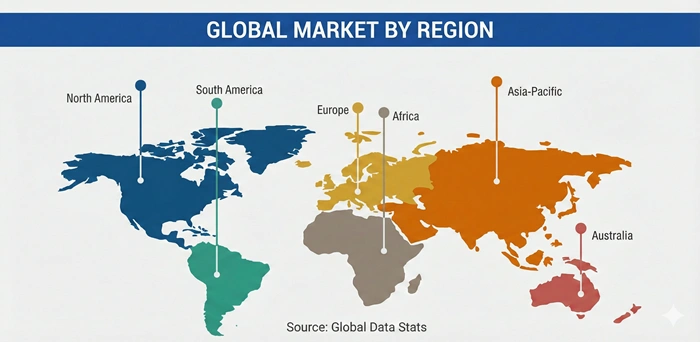
Regional Insights
Asia Pacific
Manufacturing Concentration and Construction Boom Establish Regional Dominance in Pigment Dispersion Consumption
Asia Pacific commands the pigment dispersion market with dominant share exceeding 42%, driven by concentrated manufacturing activity, construction expansion, and automotive production across China, India, and Southeast Asia where rapid industrialization and urbanization consume substantial colorant volumes. China alone accounts for approximately 50% of Asia Pacific market share with coatings industry producing over 25 million metric tons annually supporting construction, automotive, and industrial applications. Massive infrastructure investment including Belt and Road Initiative, urban renewal programs, and transportation networks creates sustained architectural coating demand. Indian construction sector growing at double-digit rates driven by urbanization, affordable housing initiatives, and infrastructure modernization consumes growing pigment dispersion volumes. Southeast Asian nations particularly Vietnam, Indonesia, and Thailand demonstrate exceptional manufacturing growth supporting coatings, plastics, and textile printing applications.
Regional industrial policies strengthen Asia Pacific's market position through manufacturing incentives, infrastructure investment, and export promotion supporting chemical industry development. Chinese industrial policy emphasizing advanced manufacturing, environmental protection, and technology leadership maintains substantial coatings production capacity. Indian government programs including Make in India initiative and Production Linked Incentive schemes promote domestic manufacturing competitiveness. ASEAN economic integration reducing trade barriers and harmonizing standards supports regional supply chains. Leading regional players including DIC Corporation, Toyo Ink, Sakata INX, and Chinese producers operate extensive manufacturing facilities serving domestic and export markets. Automotive industry particularly Chinese electric vehicle production and Japanese precision manufacturing creates specialized dispersion demand. Textile printing sector concentrated in China, India, and Bangladesh demonstrates growing digital printing adoption utilizing advanced water-based pigment dispersions. The region's market dominance continues through 2033 as construction growth, manufacturing expansion, and consumption increases create sustained demand supporting continued leadership throughout forecast period.
North America
Innovation Leadership and Sustainability Focus Drive Fastest Regional Market Growth
North America emerges as fastest-growing regional pigment dispersion market with projected CAGR of 9.2% through 2033, propelled by architectural coating innovation, automotive technology advancement, sustainable formulation adoption, and premium market positioning. United States dominates regional market accounting for approximately 80% of North American consumption with coatings industry generating over 80 billion dollars annually supporting residential construction, automotive manufacturing, and industrial applications. Leading coating manufacturers including Sherwin-Williams completing BASF Brazilian acquisition, PPG Industries, and Axalta Coating Systems maintain extensive North American operations consuming substantial pigment dispersion volumes. Architectural coating sector particularly residential repaint market exceeding 10 billion dollars annually demonstrates consistent consumption supporting major retailers, independent dealers, and contractor networks.
Regional market characteristics emphasize innovation focus, environmental compliance, and quality standards supporting premium segments and advanced applications. United States Environmental Protection Agency implementing VOC regulations, hazardous air pollutant standards, and sustainability initiatives drives water-based coating adoption requiring advanced pigment dispersions. Green building certifications including LEED promoting low-emission materials create market opportunities for sustainable dispersions. Automotive industry particularly Detroit automotive cluster and Southern manufacturing facilities require specialized effect pigments, IR-reflective formulations, and sensor-compatible coatings supporting autonomous vehicle development. Leading dispersion suppliers including BASF, Clariant, Heubach, and Sun Chemical maintain North American technical centers, application laboratories, and customer service capabilities supporting coating manufacturers. Digital printing adoption particularly packaging customization, textile printing, and industrial graphics creates growing opportunities for specialized pigment dispersions. Research institutions including universities, national laboratories, and corporate R&D centers advance dispersion technology, application development, and sustainability innovations. The region's exceptional growth continues through 2033 as architectural innovation, automotive advancement, and sustainability priorities create favorable dynamics supporting sustained market expansion throughout forecast period.
Top Key Players
-
BASF SE (Germany)
-
Clariant AG (Switzerland)
-
DIC Corporation (Japan)
-
Cabot Corporation (United States)
-
Heubach GmbH (Germany)
-
Sun Chemical Corporation (United States)
-
Sudarshan Chemical Industries Limited (India)
-
Pidilite Industries Limited (India)
-
Toyo Ink SC Holdings Co. Ltd. (Japan)
-
Sakata INX Corporation (Japan)
-
Penn Color Inc. (United States)
-
Chromaflo Technologies Corporation (United States)
-
Lanxess AG (Germany)
-
DyStar Group (Germany)
-
American Colors Inc. (United States)
Recent Developments
-
BASF (2025): Completed sale of Brazilian decorative paints business to Sherwin-Williams for purchase price of $1.15 billion on cash and debt-free basis effective October 1 2025, exemplifying active portfolio management under Winning Ways strategy while exploring strategic options for automotive OEM coatings, automotive refinish coatings, and surface treatment businesses generating €3.8 billion sales demonstrating commitment to value creation and operational focus.
-
Sherwin-Williams (2025): Completed acquisition of BASF's Brazilian decorative paints business strengthening position in key Latin American markets while maintaining financial discipline with net-debt to EBITDA ratio within targeted range of 2.0 to 2.5 times, demonstrating strategic growth through selective acquisitions and market expansion supporting long-term shareholder value creation.
-
Clariant (2024): Launched sustainable pigment dispersion product line incorporating bio-based dispersants and renewable solvents addressing architectural coating sustainability requirements, industrial environmental commitments, and packaging recyclability initiatives demonstrating innovation leadership while meeting customer demands for environmentally responsible colorant solutions across diverse applications worldwide.
-
DIC Corporation (2024): Expanded pigment dispersion production capacity at Asian manufacturing facilities increasing output by 25% addressing growing demand from packaging printing, textile printing, and industrial coating applications while implementing advanced quality control systems and sustainability measures supporting customer growth and regional market development.
-
Sun Chemical (2024): Introduced nano-pigment dispersion technology portfolio targeting automotive coatings, packaging inks, and digital printing applications delivering enhanced color strength, superior transparency, and improved performance characteristics demonstrating technological innovation supporting premium market positioning and customer differentiation objectives across global markets.
Market Trends
Sustainable Formulations and Digital Integration Reshape Industry Competitive Dynamics
The pigment dispersion market experiences transformative trends centered on sustainable formulations as environmental regulations, corporate sustainability commitments, and circular economy principles drive innovation across product development and manufacturing operations. Manufacturers implement bio-based dispersants derived from renewable resources including plant oils, natural polymers, and sustainable feedstocks reducing petroleum dependency and lowering carbon footprints. Water-based dispersion technologies incorporating advanced rheology modifiers, polymeric stabilizers, and nano-pigment formulations achieve solvent-based performance while eliminating VOC emissions meeting architectural coating regulations. Renewable solvent systems utilizing bio-alcohols, ester blends, and terpene derivatives enable sustainable solvent-based dispersions supporting industrial coating and automotive applications requiring specific performance characteristics. Recycled pigment integration incorporating post-industrial waste, recovered materials, and circular economy feedstocks creates sustainable raw material sources. These sustainability initiatives create competitive advantages as coating manufacturers, packaging converters, and textile printers increasingly prioritize suppliers demonstrating environmental stewardship, regulatory compliance, and supply chain transparency throughout forecast period.
Digital technology integration trends reshape the pigment dispersion market as manufacturers adopt Industry 4.0 principles including automation, data analytics, and connectivity optimizing production processes and customer service capabilities. Smart manufacturing systems incorporating IoT sensors, automated quality control, and predictive maintenance improve operational efficiency, reduce waste generation, and enhance product consistency. Cloud-based color management platforms connecting customers, formulators, and production facilities enable seamless color specification, digital approval workflows, and automated production scheduling reducing development cycles. Mobile applications providing color matching, technical support, and inventory management improve customer experience and strengthen relationships. Blockchain-based traceability systems documenting raw material sourcing, manufacturing processes, and quality testing provide transparency supporting sustainability claims and regulatory compliance. These digital innovations expand beyond operational benefits to enable personalized service, rapid response, and data-driven decision-making supporting competitive differentiation throughout forecast period.
Segments Covered in the Report
By Product Type
-
Water-Based Dispersions (Aqueous Systems, Emulsion-Based)
-
Solvent-Based Dispersions (Organic Solvents, Hybrid Systems)
-
Resin-Based Dispersions (Polymer Systems, Pre-Dispersed Pigments)
By Pigment Type
-
Organic Pigments (Azo, Phthalocyanine, Quinacridone)
-
Inorganic Pigments (Titanium Dioxide, Iron Oxide, Chrome Pigments)
-
Specialty Pigments (Effect Pigments, Fluorescent, Pearlescent)
By Application
-
Coatings (Architectural, Industrial, Automotive, Protective)
-
Inks (Publication, Packaging, Commercial Printing)
-
Plastics (Masterbatch, Compounding, Molding)
-
Textiles (Digital Printing, Screen Printing, Dyeing)
-
Others (Construction Materials, Paper, Cosmetics)
By End-Use Industry
-
Construction and Building Materials
-
Automotive Manufacturing
-
Packaging and Printing
-
Plastics and Polymers
-
Textile and Fashion
-
Others
By Region
-
North America (United States, Canada, Mexico)
-
Europe (Germany, France, United Kingdom, Italy, Spain, Rest of Europe)
-
Asia Pacific (China, India, Japan, South Korea, Southeast Asia, Rest of Asia Pacific)
-
Latin America (Brazil, Argentina, Rest of Latin America)
-
Middle East & Africa (UAE, Saudi Arabia, South Africa, Rest of MEA)
Frequently Asked Questions
Question 1: What is the projected size of the pigment dispersion market by 2033?
Answer: The global pigment dispersion market is expected to reach approximately USD 53.00 billion by 2033, growing from USD 29.06 billion in 2026. This substantial expansion reflects construction industry growth, automotive production expansion, packaging sector innovation, and digital printing adoption across diverse end-use industries worldwide.
Question 2: Which region dominates the pigment dispersion market currently?
Answer: Asia Pacific leads the pigment dispersion market with over 42% share, driven by concentrated manufacturing activity, construction boom, and automotive production across China, India, and Southeast Asia. Leading producers including DIC Corporation, Toyo Ink, Sakata INX, and regional manufacturers maintain dominant positions serving domestic and export markets.
Question 3: What are the primary drivers of pigment dispersion market growth?
Answer: Key growth drivers include construction industry expansion requiring architectural coatings, automotive production growth demanding specialized finishes, packaging sector innovation utilizing advanced printing inks, and digital printing adoption particularly textile applications. Environmental regulations promoting water-based formulations and sustainability initiatives create additional growth opportunities throughout forecast period.
Question 4: Which application segment holds the largest pigment dispersion market share?
Answer: Coatings applications dominate the pigment dispersion market with approximately 48% share due to architectural paints, industrial coatings, automotive finishes, and protective coatings demonstrating sustained consumption. Construction activity, automotive manufacturing, and infrastructure development drive consistent demand supporting market leadership position.
Question 5: How do sustainability trends impact the pigment dispersion market?
Answer: Sustainability trends drive bio-based dispersant development, water-based formulation adoption, and renewable solvent utilization addressing environmental regulations and corporate commitments. Coating manufacturers and packaging converters increasingly prioritize suppliers demonstrating environmental stewardship, VOC compliance, and sustainable production methods. These initiatives create competitive advantages while meeting customer sustainability requirements supporting market transformation throughout forecast period.