
Petrochemical Market Overview
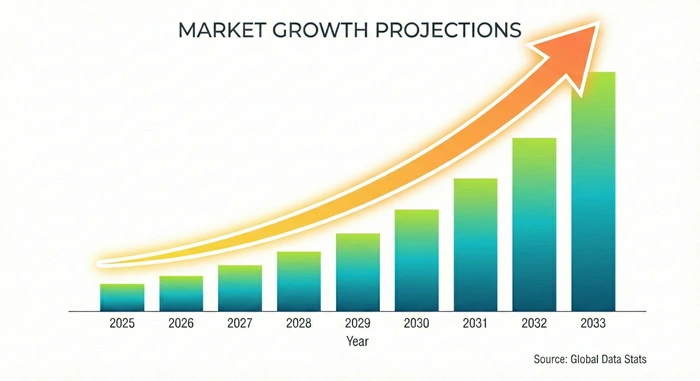
The global petrochemical market size is valued at USD 670.23 billion in 2025 and is predicted to increase from USD 707.50 billion in 2026 to approximately USD 1113.56 billion by 2033, growing at a CAGR of 5.56% from 2026 to 2033.
The industry supplies essential raw materials for countless products that people use daily. These chemicals serve as building blocks for plastics, synthetic fibers, rubber, detergents, and countless other goods. Manufacturing facilities around the world process crude oil and natural gas into valuable chemical compounds that fuel modern life.
The sector has become critical infrastructure supporting global economic growth. Rising populations and improving living standards drive steady demand for petrochemical-derived products. Countries invest heavily in production capacity to meet these growing needs and capture economic value from their natural resources.

AI Impact on the Petrochemical Industry
Transforming Operations Through Advanced Technology
Artificial intelligence has started revolutionizing how plants operate and make strategic decisions. Modern AI systems analyze massive amounts of process data in real-time to optimize production efficiency and reduce waste. These technologies help operators predict equipment failures before they happen, preventing costly shutdowns and safety incidents. Machine learning algorithms can adjust process parameters automatically to maintain optimal conditions even as feedstock quality varies throughout the day.
Predictive maintenance powered by AI has become a game-changer for large integrated facilities. Sensors throughout plants collect data on temperature, pressure, vibration, and chemical composition constantly. AI models analyze these patterns to spot subtle changes that indicate developing problems with pumps, compressors, heat exchangers, and other critical equipment. This capability allows maintenance teams to schedule repairs during planned downtime rather than dealing with emergency failures that disrupt production and endanger workers.
Growth Factors
Demographic Trends and Industrial Expansion Driving Demand
The growing global population creates fundamental demand for the petrochemical market as more people need packaging, textiles, building materials, and consumer goods. Urban populations in developing countries are expanding rapidly, creating enormous demand for construction materials made from petrochemical products. Rising middle-class incomes in Asia allow hundreds of millions of people to purchase more packaged foods, personal care items, electronics, and vehicles that all depend on petrochemicals.
Industrial development in emerging markets continues pushing production capacity higher across multiple regions. Governments view petrochemical manufacturing as strategic infrastructure that supports broader economic development goals. New crackers, reformers, and downstream polymer plants keep coming online in the Middle East, Asia, and North America where feedstock advantages create competitive positions. These investments reflect confidence in long-term demand growth despite short-term market cycles.
Market Outlook
Regional Dynamics and Future Growth Projections
Asia Pacific maintains its position as the dominant regional market, driven by massive manufacturing sectors and growing consumer markets. The region benefits from both abundant local feedstock resources and strategic investments in production capacity. Chemical companies continue expanding operations in China, India, and Southeast Asia where demand growth rates exceed global averages and logistics networks support efficient distribution.
North America has emerged as a highly competitive production region thanks to abundant shale gas resources providing low-cost feedstock. The shale revolution transformed the competitive landscape by giving American producers significant cost advantages over regions dependent on naphtha-based production. This feedstock shift has attracted billions in new investment to expand ethylene capacity and downstream derivatives along the Gulf Coast.
Expert Speaks
-
Darren Woods, Chairman and CEO of ExxonMobil – "Our petrochemical business continues delivering strong results through technology leadership and advantaged feedstock positions. We're investing billions in new capacity to meet growing global demand while advancing circular economy solutions and lower-emission production processes."
-
Peter Vanacker, CEO of LyondellBasell – "The industry is navigating a period of significant change as we balance capacity growth with sustainability commitments. Our focus remains on operational excellence, strategic portfolio optimization, and developing circular products that meet customer needs for performance and environmental responsibility."
-
Martin Brudermüller, CEO of BASF – "Petrochemicals remain fundamental to modern life, supplying materials for countless applications from packaging to automotive lightweighting. We're accelerating our transformation toward climate-neutral production while maintaining the reliability and innovation our customers depend on."
Key Report Takeaways
-
Asia Pacific dominates the global petrochemical market with approximately 53% market share, powered by massive manufacturing bases, growing consumer demand, and strategic government support for chemical industry development across China, India, and Southeast Asian nations
-
Middle East represents the fastest-growing region with projected CAGR exceeding 6.5% through 2033, driven by abundant low-cost feedstock resources, ambitious capacity expansion programs, and strategic positioning to serve Asian markets through efficient logistics networks
-
Plastics and polymers dominate end-use applications capturing roughly 60% market share as packaging, construction, automotive, and consumer goods sectors consume growing volumes of polyethylene, polypropylene, polystyrene, and engineering thermoplastics globally
-
Ethylene leads product segments accounting for approximately 35% of production volumes due to its role as the fundamental building block for polyethylene, ethylene oxide, ethylene glycol, and numerous other high-value downstream derivatives
-
Packaging represents the largest end-use sector holding nearly 40% market share thanks to e-commerce growth, food preservation needs, and consumer preference for convenient, lightweight packaging solutions across developed and emerging markets
-
Synthetic fibers show the strongest growth potential among application segments with highest projected CAGR as textile demand expands in developing countries and technical fiber applications grow in automotive, aerospace, and industrial markets worldwide
Market Scope
| Report Coverage | Details |
|---|---|
| Market Size by 2033 | USD 1113.56 Billion |
| Market Size by 2025 | USD 670.23 Billion |
| Market Size by 2026 | USD 707.50 Billion |
| Market Growth Rate from 2026 to 2033 | CAGR of 5.56% |
| Dominating Region | Asia Pacific |
| Fastest Growing Region | Middle East & Africa |
| Base Year | 2025 |
| Forecast Period | 2026 to 2033 |
| Segments Covered | Product Type, Application, End-Use Industry, Region |
| Regions Covered | North America, Europe, Asia Pacific, Latin America, Middle East & Africa |
Market Dynamics
Drivers Impact Analysis
Accelerating Forces Behind Industry Expansion
| Driver | Impact on CAGR Forecast | Geographic Relevance | Impact Timeline |
|---|---|---|---|
| Rising packaging demand from e-commerce growth | ≈ 1.8% positive impact | Global, strongest in Asia Pacific and North America | Immediate and long-term |
| Automotive lightweighting trends increasing polymer use | ≈ 1.2% positive impact | Global, particularly North America and Europe | Medium to long-term |
| Infrastructure development in emerging markets | ≈ 1.5% positive impact | Asia Pacific, Middle East, Latin America | Immediate and long-term |
| Growing consumer goods sector demand | ≈ 1.1% positive impact | Global | Immediate |
The explosive growth of e-commerce has created unprecedented demand for the petrochemical market as online retail requires significantly more packaging per transaction than traditional shopping. Flexible packaging films, protective cushioning materials, shipping containers, and consumer packaging all depend heavily on polyethylene, polypropylene, and other polymer products. This structural shift in retail patterns ensures sustained growth in packaging-grade polymers regardless of broader economic cycles affecting other end markets.
Automotive manufacturers increasingly specify engineering polymers and composites to reduce vehicle weight and improve fuel efficiency under tightening emissions regulations. Modern vehicles contain hundreds of pounds of plastics in bumpers, dashboards, door panels, under-hood components, and structural elements. Electric vehicles accelerate this trend as battery weight creates even stronger incentives to lighten other vehicle systems using advanced polymer materials that match metal performance at fraction of the weight.
Restraints Impact Analysis
Challenges Limiting Market Growth Potential
| Restraint | Impact on CAGR Forecast | Geographic Relevance | Impact Timeline |
|---|---|---|---|
| Volatile crude oil and natural gas prices | ≈ 0.9% negative impact | Global | Immediate |
| Environmental regulations on plastic products | ≈ 1.1% negative impact | Europe, North America | Medium to long-term |
| Overcapacity in some product segments | ≈ 0.7% negative impact | Global, particularly China | Short to medium-term |
| Sustainability concerns and circular economy pressure | ≈ 0.8% negative impact | Global, strongest in developed markets | Immediate and long-term |
Feedstock price volatility creates significant uncertainty for the petrochemical market as crude oil and natural gas prices fluctuate based on geopolitical events, supply disruptions, and economic cycles. Producers struggle to maintain stable margins when feedstock costs spike unexpectedly while product prices lag due to contract structures and market competition. This volatility complicates investment decisions and can delay capacity expansion projects when price outlooks become uncertain.
Growing environmental regulations targeting single-use plastics and packaging waste create headwinds in key markets as governments implement bans, taxes, and extended producer responsibility schemes. Europe leads this regulatory trend with aggressive targets for recycled content, reuse systems, and plastic waste reduction. These policies force the industry to invest heavily in mechanical and chemical recycling infrastructure while potentially reducing virgin polymer demand in developed markets over time.
Opportunities Impact Analysis
Emerging Avenues for Market Expansion
| Opportunity | Impact on CAGR Forecast | Geographic Relevance | Impact Timeline |
|---|---|---|---|
| Chemical recycling technology development | ≈ 1.4% positive impact | Global, led by Europe and North America | Medium to long-term |
| Bio-based feedstock integration | ≈ 0.9% positive impact | Global | Medium to long-term |
| Specialty and engineering polymer growth | ≈ 1.3% positive impact | Global, strongest in developed markets | Immediate and long-term |
| Emerging market urbanization and consumption growth | ≈ 1.7% positive impact | Asia Pacific, Africa, Latin America | Immediate and long-term |
Advanced chemical recycling technologies present major opportunities for the petrochemical market to address sustainability concerns while maintaining product quality standards. Pyrolysis, gasification, and other technologies can convert mixed plastic waste back into hydrocarbon feedstocks suitable for producing virgin-quality polymers. This circular approach allows companies to meet recycled content mandates without compromising material performance or safety for food contact and medical applications.
Rapid urbanization across developing regions creates enormous infrastructure needs that consume massive quantities of pipes, cables, insulation, coatings, and construction materials derived from petrochemicals. Cities in India, Southeast Asia, and Africa need housing, water systems, electrical grids, and transportation networks to support growing urban populations. These infrastructure buildouts generate sustained demand for PVC, polyurethane, epoxy resins, and other specialty chemicals over multi-decade timelines.
Segment Analysis
Ethylene
Foundation Chemical Driving Market Growth
Ethylene dominates the petrochemical market with approximately 35% of global production volumes in 2025, expanding at 5.8% CAGR through the forecast period. This light olefin serves as the fundamental building block for polyethylene plastics, ethylene oxide, ethylene glycol, vinyl chloride, and countless other derivatives consumed across packaging, automotive, construction, and textile industries. Asia Pacific represents the largest and fastest-growing regional market for ethylene as massive cracker complexes in China, India, and Southeast Asia supply expanding downstream polymer capacity serving local manufacturing and consumer sectors.
Major producers including ExxonMobil, SABIC, Dow, and Sinopec dominate global ethylene production through large-scale integrated facilities that achieve economies of scale and feedstock flexibility. These companies continue investing billions in new steam crackers and on-purpose dehydrogenation units to capture growing demand while positioning assets in advantaged feedstock regions. The shift toward ethane-based production in North America and Middle East creates competitive advantages over naphtha-based European and Asian crackers, reshaping global trade flows and investment patterns.
Plastics & Polymers
Largest Application Segment Across Industries
Plastics and polymers represent the dominant application category capturing approximately 60% market share in 2025, growing at 5.9% CAGR as packaging, automotive, construction, and consumer goods sectors consume increasing volumes. Polyethylene grades alone account for over 100 million tons annually while polypropylene, polystyrene, PVC, and engineering thermoplastics add substantial additional volume across diverse end markets. Asia Pacific leads both production and consumption as the region's massive manufacturing base converts polymers into finished goods for domestic use and global export markets.
Leading polymer producers including LyondellBasell, SABIC, Dow, and INEOS operate globally integrated businesses that span multiple polymer families and serve customers across all major end-use sectors. These companies differentiate through technology leadership, application development expertise, and reliable supply chain performance that helps customers optimize product designs and manufacturing processes. The industry continues innovating with enhanced recyclability features, bio-based content integration, and specialty grades targeting high-performance applications in automotive lightweighting, medical devices, and electronics packaging.
Regional Insights
Asia Pacific
Market Leadership Through Manufacturing Dominance
Asia Pacific controls approximately 53% of the global petrochemical market share, valued at over USD 355 billion in 2025 and growing at 5.9% CAGR through 2033. The region benefits from massive manufacturing sectors, rapidly growing consumer markets, and strategic government policies supporting chemical industry development as foundation for broader economic growth. China alone accounts for over 40% of global polymer consumption while India and Southeast Asian nations show the fastest demand growth rates as urbanization and rising incomes drive consumption of packaged goods, vehicles, electronics, and housing.
Major regional producers including Sinopec, CNPC, Reliance Industries, Formosa Plastics, and PTT dominate through large integrated complexes that achieve cost advantages from scale and feedstock integration. These companies continue expanding capacity aggressively to serve growing local demand while also building export capabilities to supply global markets. The region's competitive position benefits from lower production costs, proximity to key growth markets, and improving technology capabilities that narrow historical gaps with Western producers.
Middle East & Africa
Fastest Growth Through Feedstock Advantages
Middle East & Africa represents the fastest-growing regional market expanding at approximately 6.5% CAGR as abundant natural gas and oil resources enable competitive production costs attracting major capacity investments. The region's strategic position between Asian demand centers and African growth markets provides logistics advantages for exports while local economies diversify beyond pure hydrocarbon extraction into higher-value chemical processing. Saudi Arabia, UAE, Qatar, and Iran lead capacity expansion with massive integrated complexes converting gas into ethylene, propylene, and downstream derivatives.
Leading producers including SABIC, ADNOC, Qatar Petroleum, and Saudi Aramco leverage feedstock access and government support to build world-scale facilities targeting export markets in Asia Pacific and Africa. These state-backed champions continue investing billions in new crackers, polyethylene plants, and specialty chemical capacity to capture growing global demand while creating local employment and economic diversification. The region's competitive advantages in production costs and strategic positioning ensure continued strong growth despite environmental pressures and sustainability trends affecting global markets.
Top Key Players
-
ExxonMobil Chemical (United States)
-
SABIC (Saudi Arabia)
-
Dow Inc. (United States)
-
LyondellBasell Industries (United States)
-
BASF SE (Germany)
-
Sinopec (China)
-
INEOS (United Kingdom)
-
Chevron Phillips Chemical (United States)
-
Formosa Plastics Corporation (Taiwan)
-
Shell Chemicals (Netherlands)
-
TotalEnergies (France)
-
Reliance Industries (India)
-
CNPC (China)
-
Mitsubishi Chemical (Japan)
Recent Developments
-
ExxonMobil (2024) – Announced USD 2 billion investment in new polyethylene production capacity along Texas Gulf Coast, leveraging advantaged ethane feedstock to serve growing North American and export markets with advanced performance polymers
-
SABIC (2025) – Completed acquisition of specialty polymer business strengthening position in high-value engineering thermoplastics for automotive and electronics applications, expanding beyond commodity chemicals into margin-rich segments
-
Dow Inc. (2024) – Commissioned world's first commercial-scale ethylene cracker partially powered by renewable energy in Alberta, demonstrating commitment to reducing carbon footprint while maintaining competitive production economics
-
LyondellBasell (2025) – Formed joint venture with waste management company to develop advanced recycling facility converting mixed plastic waste into circular feedstock for virgin-quality polymer production
-
BASF (2024) – Opened new research center focused on carbon capture utilization technologies converting industrial emissions into chemical feedstocks, advancing toward climate-neutral production targets
Market Trends
Evolving Industry Patterns and Strategic Shifts
The petrochemical market experiences fundamental shifts toward circular economy models as producers invest heavily in mechanical and chemical recycling technologies to address environmental concerns while maintaining product quality. Major companies announce ambitious targets for recycled content in their product portfolios, driving development of pyrolysis units, solvolysis processes, and other advanced recycling methods. These investments reflect both regulatory pressure in key markets and growing customer demand for sustainable materials that maintain performance standards required for food packaging, medical applications, and engineered products.
Feedstock diversification accelerates as companies explore bio-based alternatives, carbon capture utilization, and hydrogen integration to reduce dependence on fossil hydrocarbons and lower carbon intensity. Demonstration plants converting agricultural waste, algae, municipal solid waste, and captured carbon into chemical building blocks progress toward commercial scale. While fossil feedstocks will dominate for decades, these alternative pathways offer strategic hedges against long-term regulatory risks and potential premium positioning in sustainability-focused market segments demanding lower-carbon solutions.
Segments Covered in the Report
By Product Type
-
Ethylene
-
Propylene
-
Benzene
-
Butadiene
-
Xylene
-
Toluene
By Application
-
Plastics & Polymers
-
Synthetic Fibers
-
Synthetic Rubber
-
Detergents
-
Solvents
By End-Use Industry
-
Packaging
-
Automotive
-
Construction
-
Electronics
-
Textile
-
Agriculture
By Region
-
North America
-
Europe
-
Asia Pacific
-
Latin America
-
Middle East & Africa
Frequently Asked Questions
What drives growth in the petrochemical market globally?
The petrochemical market experiences robust growth from rising packaging demand driven by e-commerce expansion and growing consumer goods consumption in emerging markets. Infrastructure development and automotive lightweighting trends also contribute significantly to increasing polymer demand worldwide.
Which region leads the petrochemical market currently?
Asia Pacific dominates the petrochemical market with approximately 53% share backed by massive manufacturing sectors and rapidly growing consumer markets. The region benefits from strategic investments in production capacity and proximity to key demand centers.
How do environmental regulations affect the petrochemical market?
Environmental regulations targeting plastic waste create both challenges and opportunities for the petrochemical market. Companies invest heavily in recycling technologies and sustainable production methods to address regulatory requirements while maintaining market positions.
What role does feedstock play in petrochemical market competitiveness?
Feedstock availability significantly impacts the petrochemical market as regions with abundant low-cost natural gas or ethane enjoy competitive advantages. North America and Middle East producers benefit from advantaged feedstock positions versus naphtha-based operations.
Which applications consume the most petrochemical market production?
Plastics and polymers dominate the petrochemical market representing approximately 60% of total consumption across packaging, automotive, construction, and consumer goods. Synthetic fibers and synthetic rubber represent other major application segments.