
Perovskite Solar Cell Market Overview
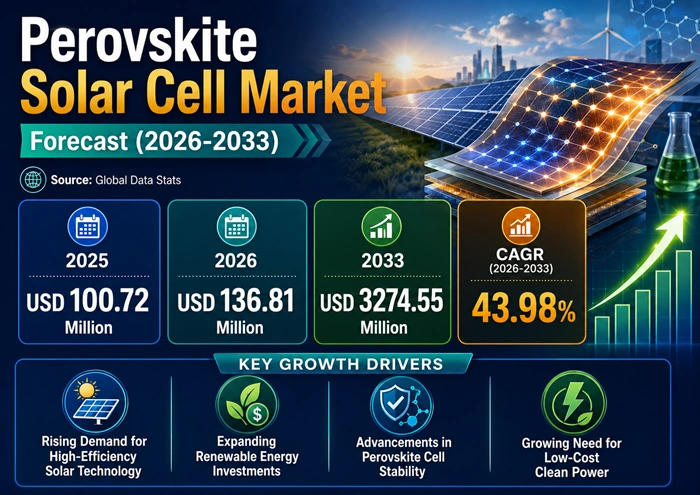
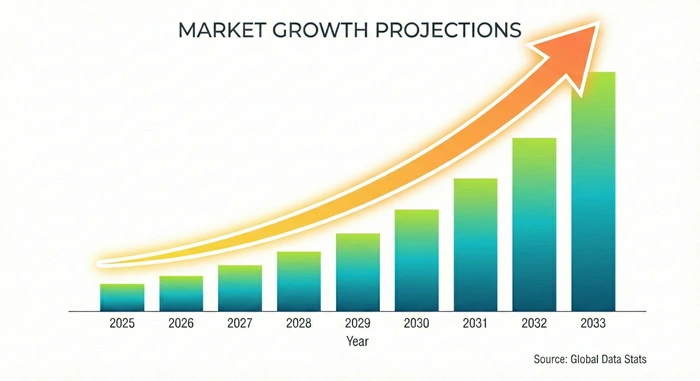
The global perovskite solar cell market size is valued at USD 100.72 million in 2025 and is predicted to increase from USD 136.81 million in 2026 to approximately USD 3274.55 million by 2033, growing at a CAGR of 43.98% from 2026 to 2033.
Perovskite solar cells represent next-generation photovoltaic technology utilizing perovskite-structured compounds as light-absorbing materials. These innovative cells feature hybrid organic-inorganic lead or tin halide-based compositions exhibiting exceptional power conversion capabilities. The technology delivers remarkable advantages over conventional silicon-based solar panels through superior light absorption properties, lower manufacturing costs, and simplified production processes that enable rapid scaling for commercial applications.
AI Impact On The Perovskite Solar Cell Industry
Accelerating Material Discovery And Manufacturing Process Optimization Through Machine Learning
Artificial intelligence transforms perovskite solar cell development by dramatically accelerating material discovery processes that traditionally required years of laboratory experimentation. Machine learning algorithms analyze thousands of potential perovskite compositions simultaneously, predicting stability characteristics, efficiency levels, and degradation patterns before physical synthesis occurs. Researchers leverage AI-powered simulations to identify optimal material formulations addressing long-standing challenges related to moisture sensitivity and thermal stability. These computational approaches reduce development timelines from months to weeks while minimizing expensive trial-and-error experimentation that previously consumed substantial research budgets.
Manufacturing precision improves significantly through AI integration into production lines where computer vision systems monitor thin-film deposition processes in real-time. Neural networks detect microscopic defects during crystallization stages that human operators cannot identify, enabling immediate process adjustments maintaining consistent product quality. The perovskite solar cell market benefits from AI-driven predictive maintenance systems monitoring equipment performance across fabrication facilities, preventing costly production interruptions while optimizing material utilization rates. Automated quality control powered by deep learning algorithms ensures every manufactured cell meets efficiency specifications, accelerating the transition from laboratory prototypes toward commercially viable products capable of competing with established silicon technologies in global photovoltaic markets.
Growth Factors
Superior Efficiency Potential And Cost Advantages Driving Technology Adoption
Performance breakthroughs position perovskite solar cells as compelling alternatives to traditional photovoltaic technologies dominating current markets. Laboratory testing consistently demonstrates power conversion efficiencies exceeding 25% for single-junction cells, with tandem configurations combining perovskite and silicon layers achieving certified efficiencies approaching 33.7%. These performance levels surpass theoretical efficiency limits constraining conventional silicon-only designs, creating pathways toward generating more electricity from identical surface areas. The perovskite solar cell market expands as manufacturers recognize opportunities to reduce installation costs through higher power density requiring fewer panels delivering equivalent energy output compared to standard systems.
Manufacturing economics favor perovskite technology through low-temperature solution processing methods requiring less energy-intensive production compared to silicon crystallization. Raw material costs remain substantially lower as perovskite formulations utilize abundant elements rather than expensive purified silicon. Simplified fabrication techniques including inkjet printing and roll-to-roll coating enable rapid scaling with reduced capital investment compared to conventional photovoltaic manufacturing infrastructure. The perovskite solar cell market benefits from these cost advantages making solar energy accessible across developing regions where expensive silicon panels create adoption barriers. Lightweight and flexible characteristics open application possibilities beyond traditional rigid rooftop installations, including building-integrated photovoltaics, portable electronics, and transportation sectors previously unable to leverage solar power generation effectively.
Market Outlook
Accelerating Commercialization Efforts And Strategic Investments Shaping Industry Future
Industry momentum builds rapidly as leading solar technology companies transition perovskite research from laboratory environments into pilot production facilities demonstrating commercial viability. Manufacturing capacity expansions proceed across multiple continents with companies establishing dedicated production lines targeting initial market segments including specialty applications and premium efficiency products. Investment capital flows into the sector reach unprecedented levels as venture funds, corporate investors, and government agencies recognize transformative potential disrupting established photovoltaic markets. The perovskite solar cell market witnesses growing partnerships between materials suppliers, equipment manufacturers, and solar developers creating comprehensive supply chains supporting scaled commercialization.
Regulatory frameworks evolve supporting next-generation solar technologies as governments worldwide establish standards addressing safety, performance, and environmental considerations specific to perovskite compositions. Certification processes adapt accommodating new testing protocols evaluating long-term stability and reliability characteristics distinct from silicon technology. International collaboration accelerates as research institutions share findings addressing remaining technical challenges including encapsulation methods, lead content concerns, and outdoor durability requirements. The perovskite solar cell market stands positioned for explosive growth as initial commercial products enter markets demonstrating real-world performance capabilities, triggering broader adoption across utility-scale installations, residential applications, and emerging building-integrated segments where architectural flexibility and aesthetic considerations drive specification decisions favoring advanced photovoltaic solutions.
Expert Speaks
-
Futoshi Kamiwaki, Director and Senior Managing Executive Officer at Sekisui Chemical, highlighted during presentations in January 2025 that perovskite solar cell commercialization represents critical pathway toward achieving renewable energy expansion targets, emphasizing how lightweight and flexible characteristics enable integration into diverse applications previously unsuitable for conventional photovoltaic technologies, thereby expanding addressable markets for solar power generation substantially.
-
Mark Widmar, CEO at First Solar, emphasized expectations that high-efficiency tandem photovoltaic modules will define the future of solar technology, noting acquisitions strengthening perovskite expertise complement existing research streams and accelerate development efforts toward tandem configurations continuing commitments to ultra-low carbon and responsibly produced solar energy solutions meeting stringent environmental standards.
-
Tom Werner, former longtime CEO at SunPower and investor in Tandem PV, demonstrated confidence in perovskite commercialization potential through backing Series A funding rounds supporting construction of commercial-scale manufacturing lines, signaling that experienced solar industry veterans recognize transformative opportunities as companies achieve module efficiencies approaching 30% with clear roadmaps toward further performance improvements.
Key Report Takeaways
-
Asia Pacific dominates the perovskite solar cell market capturing approximately 48% regional share valued around USD 48.55 million in 2025, driven by extensive manufacturing capabilities, substantial government investments in renewable energy research, rapid solar installation growth, and presence of leading technology companies advancing commercialization efforts across China, Japan, and emerging markets.
-
North America emerges as the fastest-growing region with projected CAGR exceeding 45.8% through 2033, fueled by robust venture capital investments, government funding programs supporting perovskite research and development, strong collaboration between universities and industry players, and accelerating pilot production initiatives targeting specialized applications and premium efficiency segments.
-
Rigid perovskite solar cells represent the largest type segment accounting for approximately 74% market share due to superior power conversion efficiencies exceeding 25% in controlled environments, proven performance in conventional rooftop installations and solar farms, and established manufacturing processes delivering consistent product quality meeting certification standards.
-
BIPV applications contribute the most significant demand representing roughly 44% of total market as building-integrated photovoltaic solutions gain traction through architectural flexibility, dual functionality serving as building materials while generating electricity, and growing sustainability requirements driving green building certifications favoring renewable energy integration.
-
Mesoporous structure maintains dominant position commanding nearly 52% market share owing to widespread application in product manufacturing, proven power conversion efficiency exceeding 20%, and established research foundations supporting commercial production transitions across leading manufacturers.
-
Flexible perovskite solar cell segment exhibits fastest future growth projected to expand at 47.2% CAGR through 2033 with market share reaching approximately 35%, driven by versatility enabling integration into curved surfaces, wearable electronics, transportation applications, and portable devices creating entirely new market segments previously inaccessible to rigid photovoltaic technologies.
Market Scope
| Report Coverage | Details |
|---|---|
| Market Size by 2033 | USD 3274.55 Million |
| Market Size by 2025 | USD 100.72 Million |
| Market Size by 2026 | USD 136.81 Million |
| Market Growth Rate from 2026 to 2033 | CAGR of 43.98% |
| Dominating Region | Asia Pacific |
| Fastest Growing Region | North America |
| Base Year | 2025 |
| Forecast Period | 2026 to 2033 |
| Segments Covered | Structure, Type, Application, End-Use, Region |
| Regions Covered | North America, Europe, Asia-Pacific, Latin America, Middle East and Africa |
Market Dynamics
Drivers Impact Analysis
Tandem Technology Advancements And Efficiency Breakthroughs Accelerating Market Growth
| Factor | (≈) % Impact on CAGR Forecast | Geographic Relevance | Impact Timeline |
|---|---|---|---|
| Tandem cell efficiency gains | 22-28% | Global (strongest in developed markets) | 2026-2033 |
| Manufacturing cost reductions | 18-24% | Asia Pacific, North America, Europe | 2026-2033 |
| BIPV integration opportunities | 15-20% | Europe, North America, urban Asia | 2027-2033 |
Silicon-perovskite tandem solar cell technology delivers transformative efficiency improvements surpassing theoretical limits constraining single-junction designs. Recent certifications document power conversion efficiencies reaching 33.7% in laboratory conditions, substantially exceeding the 33% Shockley-Queisser limit applicable to conventional silicon cells. These performance gains translate directly into reduced land requirements and lower installation costs for utility-scale projects generating equivalent power output. The perovskite solar cell market expands rapidly as manufacturers recognize commercial viability of tandem configurations offering 20% to 30% more energy generation compared to standard panels occupying identical surface areas.
Manufacturing process innovations reduce production costs through low-temperature solution processing techniques eliminating energy-intensive crystallization steps required for silicon wafer fabrication. Material expenses remain substantially lower as perovskite formulations utilize earth-abundant elements avoiding expensive purified silicon and rare materials. Simplified fabrication methods including inkjet printing, slot-die coating, and roll-to-roll processing enable rapid production scaling with reduced capital investment compared to conventional photovoltaic manufacturing infrastructure. The perovskite solar cell market benefits from improving cost structures making advanced efficiency products accessible across broader market segments including residential installations, commercial rooftops, and developing regions where affordability constraints previously limited solar adoption despite abundant sunlight resources creating ideal conditions for photovoltaic deployment.
Restraints Impact Analysis
Stability Challenges And Lead Content Concerns Limiting Immediate Widespread Adoption
| Factor | (≈) % Impact on CAGR Forecast | Geographic Relevance | Impact Timeline |
|---|---|---|---|
| Long-term durability concerns | -12 to -18% | Global markets | 2026-2029 |
| Lead toxicity regulations | -9 to -14% | Europe, North America | 2026-2033 |
| Manufacturing standardization gaps | -7 to -11% | Emerging production regions | 2026-2028 |
Long-term operational stability remains the primary technical challenge preventing immediate mass-market adoption of perovskite solar cell products. Moisture sensitivity causes performance degradation when water vapor penetrates encapsulation layers, gradually reducing power conversion efficiency over months of outdoor exposure. Temperature cycling during daily operation creates thermal stress affecting perovskite crystal structures, potentially leading to phase transitions compromising electrical properties. The perovskite solar cell market faces skepticism from conservative utility buyers and residential customers accustomed to 25-year performance warranties standard across silicon photovoltaic industries but difficult to guarantee with current perovskite formulations lacking decades of field deployment data.
Environmental and health regulations scrutinize lead content present in highest-performing perovskite compositions, creating regulatory barriers across jurisdictions implementing strict hazardous material restrictions. Concerns about potential lead leaching following accidental panel breakage or improper disposal at end-of-life drive regulatory hesitation despite relatively small quantities contained within sealed modules. Lead-free alternative formulations utilizing tin or other elements demonstrate lower efficiencies and accelerated degradation, presenting trade-offs between environmental safety and commercial performance. The perovskite solar cell market navigates complex regulatory landscapes as manufacturers develop comprehensive recycling programs, enhanced encapsulation techniques, and alternative material systems addressing concerns while maintaining efficiency advantages driving commercial interest across photovoltaic applications.
Opportunities Impact Analysis
Flexible Form Factors And Building Integration Creating New Application Markets
| Factor | (≈) % Impact on CAGR Forecast | Geographic Relevance | Impact Timeline |
|---|---|---|---|
| Flexible substrate applications | +16 to +22% | Consumer electronics markets globally | 2027-2033 |
| Urban BIPV retrofit markets | +14 to +19% | Dense urban regions worldwide | 2026-2033 |
| Transportation sector integration | +11 to +16% | Electric vehicle markets | 2028-2033 |
Flexible perovskite solar cells enable entirely new application categories impossible with rigid silicon panels constrained by brittle wafer substrates. Lightweight thin-film configurations integrate seamlessly into curved architectural surfaces, vehicle bodies, portable electronics, and wearable devices creating distributed power generation capabilities. Building-integrated photovoltaic systems incorporating perovskite technology serve dual functions as construction materials and electricity generators, reducing overall project costs while improving aesthetic appeal compared to bulky rooftop panel installations. The perovskite solar cell market captures substantial opportunities across urban retrofit projects where existing buildings incorporate photovoltaic facades, windows, and roofing materials generating renewable energy without requiring dedicated ground space or structural reinforcements supporting heavy conventional arrays.
Transportation electrification drives demand for auxiliary solar generation extending electric vehicle range and reducing charging frequency. Perovskite cells conforming to vehicle contours generate supplemental power for climate control, battery conditioning, and accessory systems without compromising aerodynamic design. Marine applications benefit from lightweight panels suitable for sailboats, yachts, and commercial vessels where weight constraints limit traditional photovoltaic deployment. The perovskite solar cell market expands into consumer electronics as manufacturers integrate photovoltaic charging capabilities into smartphones, tablets, wearables, and IoT devices operating in sunlight-exposed environments. Disaster relief and military applications value portable, deployable solar solutions providing off-grid power generation capabilities where infrastructure damage or remote locations preclude conventional electricity access.
Segment Analysis
By Type: Rigid Perovskite Solar Cells
Superior Efficiency And Proven Performance Establishing Segment Leadership
Rigid perovskite solar cells dominate the market capturing approximately 74% share valued near USD 74.77 million in 2025 due to exceptional power conversion efficiencies consistently exceeding 25% under standardized testing conditions. Rigid substrate configurations utilizing glass or metal backing provide structural stability supporting uniform thin-film deposition critical for achieving consistent electrical performance across large panel areas. Manufacturing processes for rigid cells benefit from established equipment platforms adapted from silicon photovoltaic production, reducing technical barriers and capital requirements for companies transitioning into perovskite technology. The perovskite solar cell market sees rigid formats preferred across utility-scale installations, commercial rooftops, and residential applications where performance maximization and proven durability outweigh weight considerations.
Asia Pacific leads rigid perovskite solar cell adoption with Chinese manufacturers developing pilot production lines targeting initial commercialization through utility-scale demonstration projects. Companies including Oxford Photovoltaics achieve industry milestones shipping first commercial tandem panels to customers in North America and Europe, validating technical readiness for market entry. The perovskite solar cell market witnesses this segment maintaining strong CAGR near 42.5% through 2033 as production volumes increase, manufacturing costs decline through economies of scale, and field performance data accumulates demonstrating long-term reliability meeting investor and customer requirements for 20-plus year operational lifespans matching conventional photovoltaic warranty expectations.
By Application: BIPV
Architectural Integration And Sustainability Mandates Driving Segment Growth
Building-integrated photovoltaics represent the dominant application segment in the perovskite solar cell market capturing approximately 44% share valued around USD 44.32 million in 2025 as green building standards mandate renewable energy integration. Perovskite technology delivers unique advantages for BIPV applications through customizable aesthetics, semi-transparent configurations enabling solar windows, and lightweight characteristics reducing structural load requirements. Architectural firms specify perovskite facades, roofing materials, and shading systems providing dual functionality as building envelope components and electricity generators, improving project economics compared to separate photovoltaic installations requiring dedicated mounting systems.
European markets lead BIPV adoption driven by stringent energy efficiency regulations, carbon reduction targets, and mature green building certification programs incentivizing renewable integration. North American commercial construction increasingly specifies building-integrated solutions as corporate tenants demand sustainable facilities meeting environmental, social, and governance criteria. The perovskite solar cell market sees this segment expanding at robust 45.3% CAGR through 2033 as manufacturers develop standardized products compatible with conventional construction practices, building codes evolve accommodating photovoltaic building materials, and cost parity with traditional envelope systems makes renewable integration economically attractive without requiring sustainability premium pricing that historically limited broader market penetration across cost-sensitive commercial and residential construction projects.
Regional Insights
Asia Pacific
Manufacturing Dominance And Government Support Cementing Regional Market Leadership
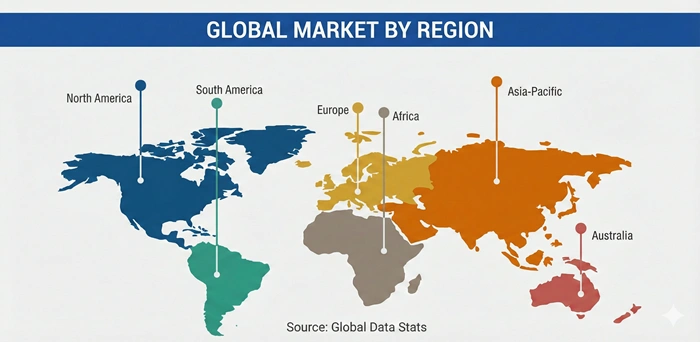
Asia Pacific dominates the perovskite solar cell market commanding approximately 48% global share valued at USD 48.55 million in 2025, projected to reach USD 1576.13 million by 2033 growing at 44.1% CAGR. China establishes overwhelming regional leadership through extensive manufacturing capabilities producing over 96% of Asia Pacific output, leveraging established photovoltaic infrastructure and materials supply chains supporting rapid perovskite production scaling. Government initiatives including substantial research funding, pilot project support, and renewable energy mandates accelerate technology development and commercialization timelines. The perovskite solar cell market benefits from China's 757 gigawatts of existing solar installations with additional 750 gigawatts under construction creating immediate demand for efficiency-enhancing tandem configurations.
National research programs across Japan, South Korea, and India pursue perovskite innovations addressing stability challenges and manufacturing scalability. Japan's Tokyo Metropolitan Government sponsors demonstration projects showcasing perovskite technology at water reclamation facilities and public buildings, supporting de-carbonization objectives targeting 50% renewable electricity by 2030. The perovskite solar cell market witnesses regional advantages including proximity to materials suppliers, skilled manufacturing workforce, and supportive policy environments accelerating commercial production transitions. Leading companies including Microquanta Semiconductor, FrontMaterials, and emerging startups operate across the region developing proprietary formulations, equipment, and applications positioning Asia Pacific as the primary growth engine for global perovskite solar cell expansion throughout the forecast period.
North America
Innovation Leadership And Investment Capital Fueling Fastest Regional Growth
North America emerges as the fastest-growing region in the perovskite solar cell market with CAGR exceeding 45.8% from 2026 to 2033, with market value expanding from approximately USD 26.21 million in 2025 toward USD 868.54 million by 2033. United States leads regional growth through concentrated venture capital investment, government funding programs, and strong university-industry collaboration advancing technology commercialization. Department of Energy allocates over USD 40 million supporting 22 initiatives focused on perovskite photovoltaic development, targeting stability improvements, efficiency gains, and manufacturing scalability essential for commercial viability. The perovskite solar cell market captures momentum from over 40 pilot-scale production lines operating across the region refining fabrication processes and demonstrating manufacturing readiness.
Strategic investments from solar industry veterans including Tom Werner backing Tandem PV and First Solar's acquisition of perovskite technology companies signal mainstream recognition of commercial potential. Corporate commitments toward renewable energy procurement create demand for premium efficiency products offering space-constrained installations higher power density compared to conventional panels. The perovskite solar cell market benefits from North America's established solar installation infrastructure, skilled workforce, and supportive regulatory frameworks in states implementing aggressive renewable energy targets. Leading regional players include Tandem PV, Swift Solar, Hunt Perovskite Technologies, and university spin-outs commercializing research breakthroughs, positioning North America as innovation leader driving next-generation photovoltaic technology transitions globally.
Top Key Players
-
Oxford Photovoltaics (United Kingdom)
-
Saule Technologies (Poland)
-
Greatcell Energy (Australia)
-
Swift Solar (United States)
-
Tandem PV Inc. (United States)
-
Sekisui Chemical (Japan)
-
Panasonic Corporation (Japan)
-
Toshiba Corporation (Japan)
-
Microquanta Semiconductor (China)
-
FrontMaterials Co. Ltd. (Taiwan)
-
G24 Power Ltd. (United Kingdom)
-
Solaronix SA (Switzerland)
-
Solliance Solar Research (Netherlands)
-
Energy Materials Corporation (United States)
-
WonderSolar (United States)
Recent Developments
-
Oxford Photovoltaics (September 2024): Achieved commercialization milestone with first shipment of tandem solar panels to United States-based customer, delivering 72-cell modules incorporating perovskite-on-silicon technology capable of producing 20% more energy than standard silicon panels, demonstrating commercial readiness and passing all key IEC reliability testing standards.
-
Tandem PV (March 2025): Closed Series A funding round raising USD 50 million backed by solar manufacturing veteran Tom Werner and institutional investors, with capital directed toward building commercial-scale manufacturing line while achieving module efficiency of 28% with roadmap targeting 30% efficiency by year-end 2025.
-
Swift Solar (June 2024): Completed USD 27 million Series A funding round bringing total capital raised to USD 44 million, enabling company to accelerate commercialization of advanced tandem products based on perovskite materials with focus on efficient and stable technology suitable for rapid factory construction and scaled production.
-
Sekisui Chemical (January 2025): Announced strategic initiatives advancing perovskite solar cell business toward commercialization under Vision 2030 framework, with presentations by senior leadership highlighting technology features, target markets, and manufacturing roadmap positioning company for commercial production supporting Japan's renewable energy expansion objectives.
-
JinkoSolar (May 2024): Celebrated breakthrough achievement in N-type TOPCon-based perovskite tandem solar cell development, demonstrating continued innovation by global solar module manufacturer integrating next-generation technology into existing product portfolios serving utility-scale and commercial installation markets worldwide.
Market Trends
Tandem Configuration Adoption And Encapsulation Innovation Reshaping Technology Development
Silicon-perovskite tandem architectures dominate research and commercialization efforts as manufacturers pursue efficiency advantages surpassing single-junction performance limits. Stacking perovskite top cells above silicon bottom cells captures broader solar spectrum wavelengths, converting more incident sunlight into electricity compared to either technology operating independently. The perovskite solar cell market witnesses accelerating tandem adoption as certified efficiencies approach 34% with clear pathways toward 40% through continued material optimization and interface engineering. Major photovoltaic manufacturers including established silicon producers evaluate tandem integration strategies enabling product differentiation through premium efficiency offerings commanding higher prices while maintaining compatibility with existing manufacturing infrastructure and supply chains.
Encapsulation technology advances address moisture sensitivity and environmental stability concerns constraining outdoor deployment. Manufacturers develop multi-layer barrier films, edge sealing techniques, and hermetic packaging systems preventing water vapor ingress that degrades perovskite crystal structures. The perovskite solar cell market benefits from innovations including 2D/3D hybrid perovskite structures exhibiting enhanced moisture resistance, mixed-cation formulations improving thermal stability, and passivation treatments reducing surface defects accelerating degradation. Research institutions achieve stability benchmarks exceeding 5000 hours under accelerated testing protocols, demonstrating progress toward commercial-grade reliability requirements. Industry collaboration accelerates as equipment suppliers, materials developers, and module manufacturers coordinate standards development establishing certification procedures and performance specifications supporting widespread market acceptance across conservative utility procurement processes and residential installation channels.
Segments Covered In The Report
By Structure
-
Planar Perovskite Solar Cells
-
Mesoporous Perovskite Solar Cells
By Type
-
Rigid Perovskite Solar Cells
-
Flexible Perovskite Solar Cells
By Application
-
BIPV (Building-Integrated Photovoltaics)
-
Power Stations
-
Transportation and Mobility
-
Consumer Electronics
-
Others
By End-Use
-
Manufacturing
-
Energy
-
Aerospace
-
Industrial Automation
-
Consumer Electronics
-
Others
By Region
-
North America (United States, Canada, Mexico)
-
Europe (Germany, United Kingdom, France, Spain, Italy, Rest of Europe)
-
Asia-Pacific (China, Japan, India, South Korea, Australia, Southeast Asia, Rest of Asia-Pacific)
-
Latin America (Brazil, Argentina, Rest of Latin America)
-
Middle East and Africa (Saudi Arabia, UAE, South Africa, Rest of MEA)
Frequently Asked Questions
Question 1: What is the expected size of the perovskite solar cell market by 2033?
Answer: The global perovskite solar cell market is projected to reach approximately USD 3274.55 million by 2033, expanding from USD 136.81 million in 2026. This substantial growth reflects accelerating commercialization efforts, efficiency breakthroughs, and expanding application opportunities across building integration, utilities, and specialty segments.
Question 2: Which region dominates the perovskite solar cell market currently?
Answer: Asia Pacific dominates the perovskite solar cell market with approximately 48% market share due to extensive manufacturing capabilities concentrated in China and supportive government policies. The region benefits from established photovoltaic infrastructure, materials supply chains, and substantial research investments driving technology development and commercial production scaling.
Question 3: What CAGR will the perovskite solar cell market experience from 2026 to 2033?
Answer: The perovskite solar cell market will grow at a compound annual growth rate of 43.98% from 2026 to 2033. This exceptional expansion reflects technology maturation, manufacturing cost reductions, tandem efficiency advantages, and emerging applications creating new market segments previously inaccessible to conventional photovoltaic technologies.
Question 4: Which type segment holds the largest share in the perovskite solar cell market?
Answer: Rigid perovskite solar cells command the largest market share at approximately 74% due to superior power conversion efficiencies exceeding 25% and proven performance in conventional installations. This segment benefits from established manufacturing processes, structural stability, and suitability for utility-scale and rooftop applications demanding maximum energy generation.
Question 5: What are the primary growth drivers for the perovskite solar cell market?
Answer: Primary drivers include tandem cell efficiency gains enabling power conversion exceeding 33%, manufacturing cost reductions through simplified low-temperature processing, and BIPV integration opportunities leveraging architectural flexibility. The perovskite solar cell market also benefits from substantial research investments, government funding programs, and corporate commitments supporting next-generation photovoltaic technology commercialization.