
Peer to Peer (P2P) Lending Market Overview
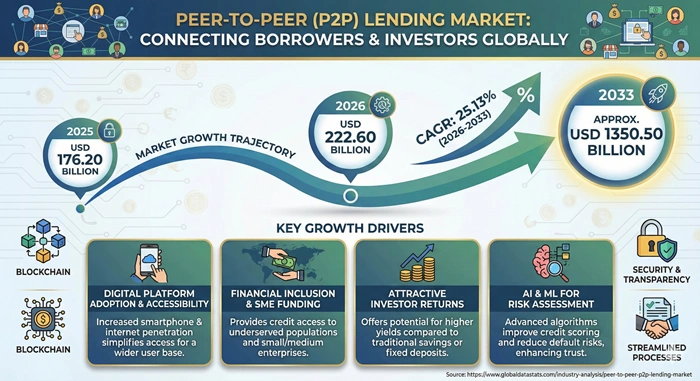
The global peer to peer (P2P) lending market size is valued at USD 176.20 billion in 2025 and is predicted to increase from USD 222.60 billion in 2026 to approximately USD 1350.50 billion by 2033, growing at a CAGR of 25.13% from 2026 to 2033. This revolutionary financial model connects individual borrowers directly with lenders through online platforms, eliminating traditional banking intermediaries and creating a more accessible lending environment. The P2P lending approach offers numerous advantages including faster loan approval processes, reduced operational costs, competitive interest rates, and enhanced financial inclusion for underserved populations who often face barriers in conventional banking systems.
The peer to peer lending market continues to reshape the global financial services landscape by providing alternative financing solutions that cater to diverse borrower needs ranging from personal loans and debt consolidation to small business funding and real estate investments. Digital transformation initiatives across the banking sector have accelerated the adoption of P2P platforms, with advanced technologies like artificial intelligence, machine learning, and blockchain improving credit risk assessment accuracy while maintaining transparency throughout the lending process. The market benefits from growing consumer preference for personalized financial solutions, increasing smartphone penetration, and supportive regulatory frameworks in key markets that encourage innovation while protecting investor and borrower interests.
AI Impact on the Peer to Peer Lending Industry
Transforming Credit Assessment and Risk Management Through Advanced Analytics
Artificial intelligence has fundamentally transformed how the peer to peer lending market operates by revolutionizing credit risk assessment methodologies and enabling more accurate borrower-lender matching processes. AI-driven algorithms analyze massive volumes of structured and unstructured data including alternative credit indicators such as transaction histories, digital footprints, social media behavior patterns, and payment records to generate comprehensive credit scores for borrowers who may lack traditional credit histories. This technological advancement significantly expands access to loans for underserved populations while simultaneously reducing default risks for lenders through more precise risk evaluation. Machine learning models continuously improve their predictive accuracy by learning from historical loan performance data, identifying patterns that human analysts might overlook, and adapting to changing economic conditions in real time.
Furthermore, AI-powered chatbots and automated customer service tools streamline borrower support functions, reducing operational overhead costs while improving overall user experience throughout the loan application and servicing journey. Advanced fraud detection systems leverage AI capabilities to identify anomalies and suspicious activities in real time, helping platforms maintain regulatory compliance and minimize financial losses from fraudulent applications. Voice chat AI technologies enable peer to peer lending companies to manage phone communications more efficiently, attracting and engaging customers at scale while providing personalized assistance. The integration of AI strengthens the reliability and scalability of P2P platforms, making them increasingly attractive to both retail and institutional investors seeking alternative investment opportunities with enhanced risk-adjusted returns.
Growth Factors
Lower Operational Costs and Enhanced Accessibility Drive Market Expansion
The peer to peer lending market experiences robust growth driven by significantly lower operational costs compared to traditional banking institutions that maintain extensive physical infrastructure, large workforces, and legacy systems. P2P lending platforms operate primarily through online interfaces accessible via laptops and smartphones, eliminating the need for expensive branch networks and reducing overhead expenses that would otherwise be passed on to borrowers through higher interest rates. This cost efficiency enables P2P platforms to offer more competitive rates to borrowers while simultaneously providing attractive returns to investors, creating a compelling value proposition for both sides of the marketplace. The streamlined digital processes facilitate faster credit checks and loan approvals, often completing transactions within hours or days rather than weeks required by conventional lenders, which particularly appeals to borrowers facing urgent financial needs or time-sensitive opportunities.
Financial inclusion represents another critical growth driver as P2P lending platforms provide access to credit for individuals and small businesses that cannot secure loans from traditional lenders due to limited credit history, non-standard income sources, or other factors not adequately reflected in conventional credit scoring models. The increasing requirement for education loans and healthcare financing further accelerates market expansion, as borrowers seek flexible financing options for major life expenses. Digitization trends across the banking industry enhance transparency compared to traditional banking systems, with P2P platforms utilizing technology to grade and assign interest rates to loan applicants quickly and objectively. The worldwide increase in internet users and smartphone adoption has significantly boosted the online lending process in recent years, particularly among younger demographics comfortable with digital financial services and skeptical of traditional banking institutions following financial crises.
Market Outlook
Strong Growth Trajectory Supported by Regulatory Maturity and Technological Innovation
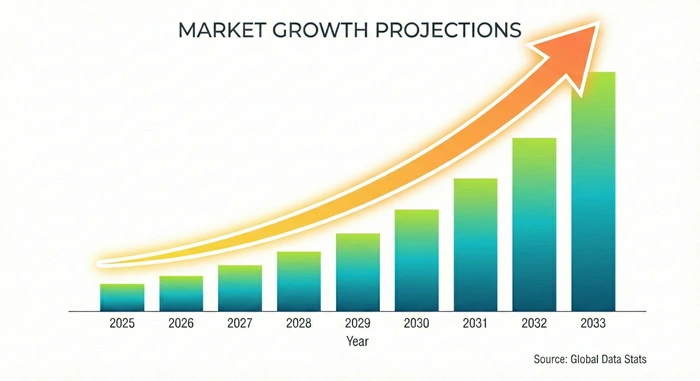
The peer to peer lending market demonstrates a strong growth trajectory with expanding opportunities across multiple geographic regions and customer segments through the forecast period. Favorable economic policies, high GDP growth in emerging markets, and early adoption of innovative financial alternatives in developed economies position the market for sustained expansion. The regulatory environment continues to mature, with governments worldwide implementing frameworks that balance innovation encouragement with investor protection and financial stability considerations. These evolving regulations provide greater clarity for platform operations, build consumer confidence, and facilitate cross-border expansion opportunities for established players. The market benefits from partnerships between P2P platforms and traditional financial institutions that combine the technological agility and customer-centric approaches of fintech companies with the established trust, regulatory expertise, and capital resources of conventional banks.
Investment in the peer to peer lending market spans venture capital firms, strategic corporate investors, and institutional funding sources that recognize the sector's potential to capture market share from traditional lending channels. The startup ecosystem continues to innovate with specialized platforms targeting niche segments such as green energy projects, medical procedures, or specific demographic groups with tailored lending solutions. Global expansion efforts focus particularly on emerging markets in Asia Pacific, Latin America, and Africa where large unbanked and underbanked populations present massive growth potential. Technology advancements including blockchain-based smart contracts that provide transparent and tamper-proof transaction records, along with improved mobile payment systems integration, strengthen the infrastructure supporting market growth while reducing operational risks and enhancing user confidence.
Expert Speaks
-
Bhavin Patel, CEO of LenDenClub, stated that "RBI curbs hit origination and profitability in financial year 2024, but LenDenClub has since revamped its platform and now processes nearly 95% of India's P2P lending volume. We are in preparation mode for IPO and may target it in the next 18 to 36 months timeframe".
-
Scott Sanborn, CEO of LendingClub, emphasized that "With partners like Opportunity Fund and Funding Circle, we're creating an ecosystem where LendingClub's members can take advantage of additional services from trusted providers that can help them generate more savings. This enables us to both deliver greater value to our applicants and capture a new revenue stream for LendingClub".
-
Bernardo Martinez, US Managing Director of Funding Circle, noted that "This collaboration solidifies our strategy of growing Funding Circle's presence in the United States by working with partners who share our commitment to helping small businesses thrive. We're proud to have helped more than 12,000 US small businesses access more than 2 billion dollars in financing to date".
Key Report Takeaways
-
North America leads the peer to peer lending market with the largest regional share of approximately 37% in 2024, driven by conducive regulatory environments, well-established credit infrastructure, and high consumer awareness of alternative financing options across the United States and Canada
-
Asia Pacific emerges as the fastest-growing region with a projected CAGR of 25.52% during the forecast period, fueled by massive unbanked populations, increasing smartphone penetration, supportive government policies promoting cashless technologies in China and India, and rapid expansion of small and medium-sized enterprises seeking working capital
-
Consumer lending dominates the loan type segment with the highest market share in 2024 at 50%, as borrowers increasingly seek P2P platforms for personal loans, debt consolidation, home renovation, medical expenses, and other individual financing needs due to faster approval processes and competitive rates
-
Business lending represents the fastest-growing loan type segment with strong projected CAGR as small and medium-sized enterprises turn to P2P platforms for working capital, equipment financing, and expansion funding after facing stringent credit requirements from traditional banks
-
Marketplace lending model is projected to experience the highest growth rate during the forecast period from 2026 to 2033, driven by sophisticated risk modeling, automation capabilities, AI-powered underwriting techniques, and increasing institutional investor participation seeking portfolio diversification
-
Individual borrowers represent 70% market share in the end-user segment as of 2024, encompassing prime, near-prime, and subprime borrowers who leverage P2P platforms for accessible financing solutions with transparent terms and competitive interest rates compared to traditional lending channels
Market Scope
| Report Coverage | Details |
|---|---|
| Market Size by 2033 | USD 1350.50 Billion |
| Market Size by 2025 | USD 176.20 Billion |
| Market Size by 2026 | USD 222.60 Billion |
| Market Growth Rate from 2026 to 2033 | CAGR of 25.13% |
| Dominating Region | North America |
| Fastest Growing Region | Asia Pacific |
| Base Year | 2025 |
| Forecast Period | 2026 to 2033 |
| Segments Covered | Business Model, Loan Type, End User, Repayment Term, Region |
| Regions Covered | North America, Europe, Asia Pacific, Latin America, Middle East & Africa |
Market Dynamics
Drivers Impact Analysis
Digital Transformation and Enhanced Financial Inclusion Accelerate Platform Adoption
The increasing digitization across the financial services industry serves as a primary driver propelling the peer to peer lending market forward through enhanced core processing capabilities and superior customer service delivery. P2P lending platforms possess significant innovation advantages over traditional banking systems by offering greater transparency throughout the entire lending process, from initial application through final repayment. Technology enables these platforms to efficiently grade loan applicants and assign appropriate interest rates quickly and objectively, facilitating data-driven decision-making that represents a critical driver in market expansion. The rapid increase in global internet users combined with widespread smartphone adoption has dramatically boosted online lending processes in recent years, making financial services accessible to previously underserved populations regardless of geographic location or traditional banking infrastructure availability.
Financial inclusion represents another powerful growth driver as P2P lending platforms provide vital access to credit for individuals and businesses that cannot obtain loans from conventional lenders due to insufficient credit history, non-traditional income sources, or past financial difficulties. This democratization of lending enables millions of borrowers worldwide to access capital for education, healthcare, home improvements, small business ventures, and other critical needs that would otherwise remain unfulfilled. The platforms connect lenders and borrowers efficiently through digital interfaces that simplify information sharing, accelerate processing timelines, and accommodate large numbers of participants simultaneously. P2P lenders frequently offer lower interest rates than traditional financial institutions because they avoid expenses associated with physical branches, extensive personnel costs, and legacy technology systems, creating attractive value propositions for cost-conscious borrowers seeking competitive financing terms.
| Driver | ≈ Impact on CAGR Forecast | Geographic Relevance | Impact Timeline |
|---|---|---|---|
| Digital Transformation and Technology Integration | High (+3-4%) | Global, particularly North America and Asia Pacific | Immediate to Long-term (2026-2033) |
| Enhanced Financial Inclusion | High (+2-3%) | Global, particularly Asia Pacific, Latin America, Africa | Immediate to Long-term (2026-2033) |
Restraints Impact Analysis
Regulatory Challenges and Credit Risk Concerns Limit Market Expansion
Regulatory uncertainties and evolving compliance requirements present significant restraints affecting the peer to peer lending market growth trajectory across multiple jurisdictions worldwide. Governments continue to develop and refine regulatory frameworks governing P2P lending operations, often implementing stricter sourcing norms, banning assured returns to investors, and requiring enhanced disclosure and risk management practices. These regulatory changes can disrupt established business models, increase compliance costs substantially, and create barriers to entry for new platforms seeking to launch operations. The relative newness of the P2P lending industry compared to centuries-old traditional banking systems means that regulatory approaches remain inconsistent across different countries and regions, complicating cross-border expansion efforts and creating legal uncertainties for platforms attempting to scale internationally.
Credit risk concentration and potential for loan defaults represent critical concerns that restrain market adoption, particularly among risk-averse investors and conservative borrowers unfamiliar with P2P lending mechanics. The emphasis on anonymity in online lending environments increases fraud risks, with platforms facing challenges in verifying borrower identities and detecting fraudulent applications despite advanced AI-powered screening tools. Approximately 80% of potential users express concerns about unorganized lending systems, while roughly 2.1% of customers prefer unregulated investment and lending options, highlighting ongoing trust issues that limit mainstream adoption. Poor public awareness of P2P lending advantages and mechanics further restrains market expansion, as many potential borrowers and investors remain unfamiliar with how these platforms operate, what protections exist, and how returns and risks compare to traditional financial products. The risk of monetary losses during economic downturns when default rates typically increase creates hesitation among potential lenders considering P2P platforms for the first time.
| Restraint | ≈ Impact on CAGR Forecast | Geographic Relevance | Impact Timeline |
|---|---|---|---|
| Regulatory Compliance and Evolving Frameworks | Medium (-2-3%) | Global, particularly Europe and Asia | Immediate to Medium-term (2026-2030) |
| Credit Risk and Default Concerns | Medium (-1-2%) | Global, particularly emerging markets | Immediate to Long-term (2026-2033) |
Opportunities Impact Analysis
Institutional Funding and Emerging Market Penetration Create Growth Avenues
The growing participation of institutional investors in the peer to peer lending market represents a transformative opportunity that enhances platform credibility, increases available capital, and drives market professionalization. Institutional funding sources including pension funds, insurance companies, hedge funds, and asset managers increasingly allocate portions of their portfolios to P2P lending assets, attracted by higher yields compared to traditional fixed-income investments and portfolio diversification benefits. This institutional involvement brings sophisticated risk management practices, substantial capital resources, and long-term investment horizons that stabilize platform operations and enable lending at greater scale. The combination of retail investor participation and institutional funding creates deeper liquidity pools, allowing platforms to serve larger borrowers and more complex financing needs while maintaining competitive rates.
Emerging markets in Asia Pacific, Latin America, Africa, and the Middle East present enormous growth opportunities for P2P lending platforms due to massive unbanked and underbanked populations with limited access to traditional financial services. Chinese people understand the strategic value of making capital available for productive investment in their economy, with internet finance providing efficient channels for capital allocation. Given China's enormous population of over 1.4 billion people, expanding traditional bank branch networks to reach all potential borrowers proves impractical, making digital P2P platforms ideal solutions for meeting vast financing needs. The rise of small and medium-sized enterprises worldwide creates continuous demand for working capital, equipment financing, and expansion funding that FinTech companies increasingly satisfy through online P2P lending services tailored to business needs. Social impact investing opportunities also emerge as platforms develop specialized offerings focused on lending to underserved communities, sustainable energy projects, women entrepreneurs, immigrant business owners, and other borrowers supporting positive social change aligned with investor values.
| Opportunity | ≈ Impact on CAGR Forecast | Geographic Relevance | Impact Timeline |
|---|---|---|---|
| Institutional Investor Participation | High (+3-4%) | Global, particularly North America and Europe | Medium to Long-term (2027-2033) |
| Emerging Market Expansion | High (+3-5%) | Asia Pacific, Latin America, Middle East & Africa | Immediate to Long-term (2026-2033) |
Segment Analysis
Business Model Analysis
Traditional Lending Maintains Dominance While Marketplace Lending Shows Fastest Growth
The traditional lending segment held the largest market share in 2024 within the peer to peer lending market, accounting for approximately 65% of total lending volume across major platforms worldwide. This business model operates where platforms simply connect lenders and borrowers directly without holding loans on their own balance sheets or participating directly in the lending process beyond facilitating introductions and processing payments. Traditional lenders benefit from strong brand recognition built through extensive marketing efforts and established reputations that attract borrowers seeking reliable financing sources and investors looking for trustworthy investment opportunities. These platforms typically have access to larger pools of capital including retail investor deposits and some institutional funding, enabling them to offer wider ranges of loan products with more competitive interest rates compared to newer marketplace lending platforms that rely primarily on individual investor contributions. The transparency and simplicity of the direct lender-to-borrower model appeals to users who prefer straightforward peer-driven ecosystems that reduce reliance on complex financial intermediaries.
The marketplace lending segment demonstrates the fastest projected growth rate from 2026 to 2033, driven by sophisticated risk modeling capabilities, advanced automation technologies, and AI-powered underwriting techniques that improve credit assessment accuracy. Marketplace platforms often employ more complex operational structures where they may co-lend alongside investors, actively manage loan portfolios, or provide additional services beyond basic matching functions. The increased adoption of artificial intelligence and big data analytics to assess borrower creditworthiness and manage risk more efficiently drives rapid expansion of this model, attracting institutional investors seeking professionally managed P2P lending exposure. North America leads marketplace lending adoption, with platforms like LendingClub and Prosper pioneering advanced marketplace models that combine retail and institutional funding sources. Europe follows closely with platforms such as Funding Circle, Zopa, and Bondora expanding cross-border operations under harmonized European Union regulatory frameworks. The hybrid lending model involving institutional investors represents a particularly fast-growing subsegment as traditional financial institutions partner with P2P platforms to access alternative lending opportunities while leveraging fintech innovation.
Loan Type Analysis
Consumer Loans Lead Market While Business Lending Exhibits Rapid Expansion
The consumer loans segment holds the largest share at 50% in the 2024 global peer to peer lending market, driven by widespread demand for personal financing covering debt consolidation, home renovation, medical expenses, family needs, and other individual purposes. Consumer credit loans are generally perceived as less risky compared to small business loans or entrepreneurial financing, with more predictable repayment schedules and lower historical default rates that attract lender participation. The segment benefits from advancements in technology and data analytics that enable platforms to assess individual borrowers' creditworthiness more accurately through alternative data sources including transaction patterns, utility payment histories, and digital behavior indicators. Consumer loans cater to wide ranges of borrowers from those with excellent credit scores seeking competitive rates to subprime borrowers who face rejection from traditional banks, offering lucrative opportunities for lenders willing to accept higher risk in exchange for premium interest returns. North America dominates consumer lending volume, particularly in the United States where platforms have successfully marketed P2P personal loans as alternatives to credit cards and payday lending options.
The small business loans segment exhibits the fastest growth rate with projected CAGR of 29% during the forecast period, as small and medium-sized enterprises increasingly turn to P2P lending platforms after encountering stringent credit requirements and lengthy approval processes at traditional banks. Business lending through P2P channels provides working capital for operational expenses, equipment financing for machinery and technology purchases, and expansion loans for opening new locations or entering new markets. The segment benefits from rising numbers of FinTech companies offering specialized online lending services tailored to business needs, combined with government legislation implementation aimed at increasing lender transparency and protecting small business borrowers. Asia Pacific leads business lending growth, particularly in China and India where millions of SMEs require financing to support rapid economic development and where traditional banking infrastructure struggles to serve dispersed rural and semi-urban business populations. Platforms offering consulting services before loan origination and providing flexible business lending options create attractive value propositions that drive continued segment expansion throughout the forecast period.
Regional Insights
North America
Regulatory Clarity and Advanced Infrastructure Support Regional Leadership
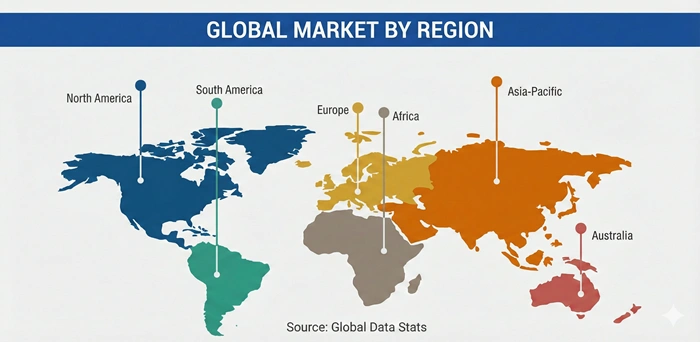
North America maintains its dominant position in the global peer to peer lending market with approximately 37% market share in 2024, supported by conducive regulatory environments that provide clarity for platform operations while protecting consumer interests. The region benefits from well-established credit infrastructure including comprehensive credit bureaus and sophisticated scoring systems that facilitate accurate assessment of borrower creditworthiness, reducing investment risks for lenders participating in P2P platforms. The United States leads North American market activity, valued at USD 41.60 billion in 2025 with projections to reach USD 319.30 billion by 2034 at a CAGR of 25.44%. The country's high GDP, favorable economic policies, and early adoption of innovative financial alternatives create ideal conditions for P2P lending expansion across consumer, business, student, and real estate loan segments. Canada contributes significantly to regional growth with increasing awareness of alternative financing options and growing comfort with digital financial services among both borrowers and investors.
The North American peer to peer lending market thrives due to end-to-end digitization of credit journeys that create uniquely tailored and user-friendly lending experiences optimized for mobile and desktop access. The region benefits from factors including declining interest in traditional banking activities following financial crises that damaged consumer trust in conventional institutions, along with successful marketing efforts by platforms positioning P2P lending as transparent and borrower-friendly alternatives. The rise in personal loan demand, small and medium enterprise financing needs, and student lending all contribute substantially to market expansion across the region. Key players including LendingClub, Prosper Funding, Kabbage, and SoFi maintain headquarters and primary operations in the United States, driving continuous innovation in platform features, risk assessment methodologies, and customer experience optimization. Strategic partnerships between P2P platforms and traditional financial institutions increasingly characterize the North American market as established banks seek to modernize lending offerings through fintech collaborations.
Asia Pacific
Massive Unbanked Population and Government Support Drive Fastest Regional Growth
Asia Pacific emerges as the fastest-growing region for the peer to peer lending market with projected CAGR of 25.52% during the forecast period from 2026 to 2033, driven by massive underbanked populations, rapid smartphone adoption, and supportive government policies promoting digital financial services. China dominates the regional market as the largest P2P lending market in Asia Pacific, leveraging its enormous population of over 1.4 billion people and extensive internet penetration to connect millions of borrowers with lenders through digital platforms. The Chinese government actively promotes cashless technologies and digital finance as strategic priorities for economic modernization, creating favorable regulatory environments for P2P platform development despite periodic regulatory tightening to address fraud and systemic risk concerns. India represents another major growth engine, with government initiatives promoting financial inclusion for hundreds of millions of unbanked citizens through digital lending platforms that utilize alternative data and mobile-first interfaces.
The Asia Pacific peer to peer lending market benefits from the region's rapidly expanding middle class with increasing disposable incomes and credit needs for education, healthcare, consumer goods, and housing. High digital penetration rates, particularly among younger demographics comfortable with mobile banking and online transactions, facilitate rapid platform adoption and user growth. The proliferation of small and medium-sized enterprises throughout the region creates sustained demand for business financing that traditional banks struggle to serve efficiently, opening opportunities for P2P platforms specializing in SME lending with streamlined application processes and flexible terms. Countries including Japan, South Korea, Malaysia, and the Philippines contribute to regional market expansion through growing investor interest in alternative investment opportunities and borrower demand for accessible credit options. Key regional players such as AI Materia in Japan and emerging platforms across Southeast Asia drive innovation in mobile lending interfaces, AI-powered credit assessment, and blockchain integration for enhanced security and transparency.
Top Key Players
-
LendingClub Corporation (United States)
-
Prosper Funding LLC (United States)
-
Funding Circle (United Kingdom)
-
Zopa Bank Limited (United Kingdom)
-
Social Finance Inc. (United States)
-
Avant LLC (United States)
-
Kabbage Inc. (United States)
-
OnDeck (United States)
-
LendingTree LLC (United States)
-
RateSetter (United Kingdom)
-
Bondora (Estonia)
-
Upstart Network Inc. (United States)
-
Peerform Inc. (United States)
-
Mintos (Latvia)
-
LenDenClub (India)
Recent Developments
-
July 2025: Funding Circle, the UK-based P2P lending pioneer, staged a notable comeback by extending substantially more credit in the first half of 2025 compared to the prior year, translating into a return to profitability after strategic restructuring and exiting the U.S. market, with the company reversing a sizable loss into modest profit under new leadership and projecting boosted pre-tax profits and revenues by 2026
-
June 2025: The Carlyle Group partnered with Citigroup to launch asset-backed financing specially targeted at fintech lenders, combining Carlyle's infrastructure financing expertise and Citi's extensive private credit capabilities to meet escalating demand for scalable funding solutions within the P2P and fintech lending sectors, signaling strong institutional confidence in the industry's growth trajectory
-
January 2025: LenDenClub, a prominent P2P lending platform in India, announced the launch of a new daily earning loan product that allows lenders to earn daily interest with principal repayments, offering investors loan choices starting from nine-month tenures and providing greater flexibility in investment options
-
December 2024: Defender Global announced the launch of its P2P lending platform while securing 235,000 dollars for real-world projects, positioning itself to meet rising demand for asset-backed and accessible investment opportunities in the growing alternative lending marketplace
-
October 2024: IndiaP2P launched a new version of its services called the Monthly Income Plan-Plus that adheres to the Reserve Bank of India's updated and faster settlement guidelines for P2P lending, enabling lenders to earn up to 18% per annum interest with monthly payouts under the enhanced offering
Market Trends
Mobile-First Platforms and Blockchain Integration Shape Industry Evolution
The peer to peer lending market demonstrates clear trends toward mobile-first platform development and enhanced blockchain technology integration throughout the forecast period. Smartphone penetration continues to increase globally, with P2P platforms optimizing user interfaces specifically for mobile devices to capture growing segments of users who primarily or exclusively access financial services through phones and tablets. Mobile applications enable borrowers to complete entire loan application processes including document uploads, identity verification, and fund disbursement within minutes using just their smartphones, dramatically improving convenience compared to desktop-based processes. Lenders similarly manage their investment portfolios, review borrower profiles, and track returns through intuitive mobile interfaces that provide real-time updates and notifications. The mobile-first approach proves particularly effective in emerging markets where smartphone ownership far exceeds personal computer ownership, enabling platforms to reach vast underserved populations through devices they already possess.
Blockchain technology integration represents another significant trend transforming the peer to peer lending market infrastructure and operations. Smart contracts built on blockchain platforms provide transparent, tamper-proof, and automatically executing agreements between borrowers and lenders that reduce administrative overhead while increasing trust and security. Blockchain-based systems maintain immutable records of all transactions, payment histories, and loan performance data that regulators, auditors, and participants can verify independently without relying on centralized platform databases. The technology enables cross-border lending by facilitating international payments and currency conversions more efficiently than traditional banking channels, opening opportunities for global investor diversification and borrower access to international funding sources. Platforms increasingly leverage blockchain for identity verification processes using distributed ledger systems that prevent identity fraud while protecting user privacy through encrypted personal data storage accessible only with proper authorization.
Segments Covered in the Report
By Business Model
-
Traditional Lending
-
Direct Lender-to-Borrower
-
Alternate Marketplace Lending
-
Platform-Facilitated Lending
-
Hybrid Lending (involving institutional investors)
By Loan Type
-
Consumer Loans (Debt Consolidation, Home Renovation, Medical Expenses, Family Expenses, Other Personal Needs)
-
Small Business Loans (Working Capital, Equipment Financing, Expansion Loans)
-
Real Estate Loans (Commercial, Residential)
-
Student Loans
By End User
-
Individuals (Prime Borrowers, Near-Prime Borrowers, Subprime Borrowers)
-
Businesses (Small and Medium Enterprises, Startups)
By Repayment Term
-
Short-term Loans (up to 12 months)
-
Medium-term Loans (1-5 years)
-
Long-term Loans (above 5 years)
By Region
-
North America (United States, Canada, Mexico)
-
Europe (United Kingdom, Germany, France, Spain, Italy, Netherlands, Nordic Countries)
-
Asia Pacific (China, India, Japan, South Korea, Malaysia, Philippines, Australia)
-
Latin America (Brazil, Mexico, Argentina, Chile, Colombia)
-
Middle East & Africa (UAE, Saudi Arabia, South Africa, GCC Countries)
Frequently Asked Questions
Question 1: What is the peer to peer lending market size and projected growth?
Answer: The global peer to peer lending market is valued at USD 176.20 billion in 2025 and is predicted to reach USD 1350.50 billion by 2033, growing at a CAGR of 25.13% from 2026 to 2033. This growth reflects increasing adoption of digital lending platforms and expanding financial inclusion worldwide.
Question 2: Which region dominates the peer to peer lending market currently?
Answer: North America leads the peer to peer lending market with approximately 37% market share in 2024, supported by regulatory clarity and advanced credit infrastructure. Asia Pacific demonstrates the fastest growth rate with projected CAGR of 25.52% driven by massive unbanked populations and government support for digital finance.
Question 3: What loan types drive the peer to peer lending market expansion?
Answer: Consumer loans hold the largest market share at 50% in 2024 for debt consolidation and personal needs, while small business loans exhibit the fastest growth rate as SMEs seek alternative financing. Real estate loans and student loans also contribute significantly to overall market development.
Question 4: How does the peer to peer lending market benefit borrowers and investors?
Answer: The peer to peer lending market offers borrowers faster approvals, lower interest rates, and better accessibility compared to traditional banks, while providing investors higher returns than conventional fixed-income investments. The model eliminates banking intermediaries, reducing costs for both parties through efficient digital platforms.
Question 5: What challenges affect peer to peer lending market growth rates?
Answer: The peer to peer lending market faces challenges including evolving regulatory frameworks, credit risk concentration, and fraud concerns in online lending environments. Poor public awareness and trust issues also limit adoption, though improving technology and regulatory maturity gradually address these concerns.