
Pain Management Devices Market Overview
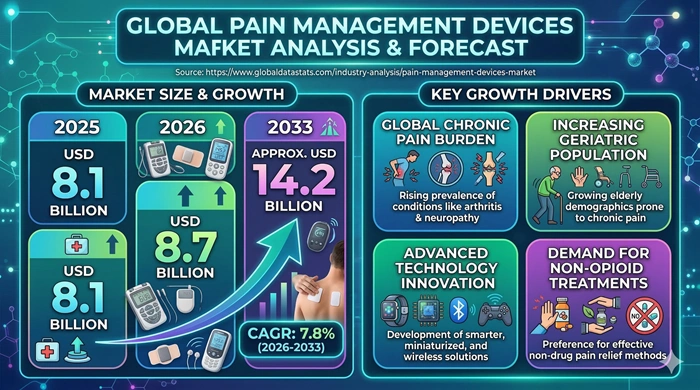
The global pain management devices market size is valued at USD 8.1 billion in 2025 and is predicted to increase from USD 8.7 billion in 2026 to approximately USD 14.2 billion by 2033, growing at a CAGR of 7.8% from 2026 to 2033.
The rising global burden of chronic pain conditions, including neuropathic pain, arthritis, and cancer-related pain, is a core reason this market is expanding steadily. With an aging global population and growing awareness around non-pharmacological pain relief, demand for advanced pain management devices continues to climb across both developed and emerging economies.
AI Impact on the Pain Management Devices Industry
Artificial Intelligence Is Transforming How Clinicians Diagnose, Monitor, and Treat Chronic Pain — Opening a New Chapter for Device Innovation and Personalized Therapy
Artificial intelligence is quietly but powerfully changing the pain management devices landscape. AI-enabled diagnostic tools can now analyze patient-reported pain patterns, biometric data, and neural signals to recommend more targeted treatment protocols. Device manufacturers are embedding machine learning algorithms into neuromodulation systems, enabling real-time adjustments to stimulation parameters based on patient responses. This level of precision was not possible even five years ago, and it is already reducing trial-and-error treatment cycles for patients with chronic pain.
Beyond diagnostics, AI is improving the post-market performance of pain relief devices. Predictive maintenance algorithms alert healthcare providers before device failures occur, while remote patient monitoring platforms use AI to flag abnormal pain trajectories early. This integration of AI is also helping insurers and hospital systems justify reimbursement for advanced pain management technologies, as outcomes data becomes easier to collect and interpret at scale.
Growth Factors
A Confluence of Demographic Shifts, Technological Breakthroughs, and Policy Support Is Powering Long-Term Growth Across the Global Pain Management Devices Market
The primary driver behind the expanding pain management devices market is the staggering rise in chronic pain conditions worldwide. According to clinical estimates, over 1.5 billion people globally suffer from some form of chronic pain, and a large share of them are moving away from opioid-based therapy due to addiction concerns. This shift is creating enormous demand for device-based, non-pharmacological pain solutions such as spinal cord stimulators, radiofrequency ablation devices, and transcutaneous electrical nerve stimulation (TENS) systems.
Technological advancements are also playing a significant role. Miniaturization of implantable devices, wireless connectivity, and rechargeable battery technology have made pain relief devices more comfortable, durable, and patient-friendly. Simultaneously, favorable regulatory pathways in the U.S. and Europe for novel pain devices, coupled with rising healthcare expenditure globally, are giving device manufacturers the confidence to invest heavily in research and product development.
Market Outlook
The Pain Management Devices Market Is Poised for Consistent Expansion Through 2033, Driven by Innovation, Unmet Clinical Needs, and Expanding Access in Emerging Regions
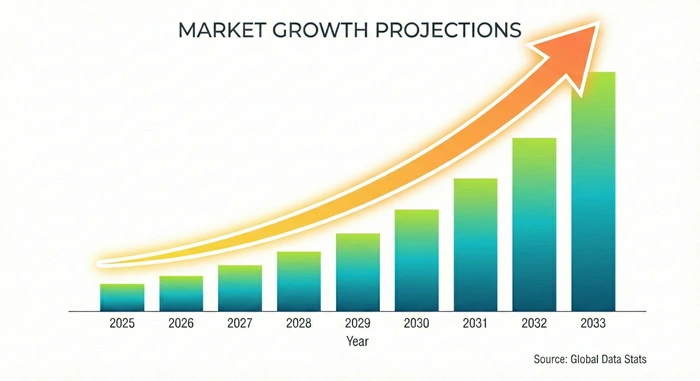
The outlook for the global pain management devices market remains highly positive through the forecast period. Demand is expected to sustain momentum as healthcare systems worldwide grapple with the dual challenge of managing aging populations and reducing dependence on opioid pain medications. Minimally invasive and implantable devices are gaining traction among both patients and surgeons, as they offer long-term relief without the systemic side effects of pharmacological approaches.
Emerging markets in Asia Pacific and Latin America are expected to contribute meaningfully to market growth by 2033. Infrastructure improvements, rising disposable incomes, and increasing medical tourism are making advanced pain management solutions more accessible outside North America and Europe. Meanwhile, established players are actively pursuing strategic partnerships, acquisitions, and product launches to strengthen their position in this competitive but high-potential space.
Expert Speaks
-
Abbott Laboratories CEO Robert Ford noted that the company remains deeply committed to expanding its neuromodulation portfolio, stating that chronic pain is one of the most underserved areas in medicine and that device-based therapy represents the most sustainable long-term solution for millions of patients.
-
Medtronic CEO Geoff Martha emphasized that the convergence of artificial intelligence and implantable neuromodulation is redefining what is possible in pain care, and that Medtronic is investing heavily to bring closed-loop systems to market that respond dynamically to individual patient needs.
-
Boston Scientific CEO Michael Mahoney highlighted the strong clinical momentum behind their spinal cord stimulation franchise, explaining that the growing body of real-world evidence is accelerating physician adoption and helping patients gain faster insurance approvals for pain relief device therapies.
Key Report Takeaways
-
North America dominates the pain management devices market, accounting for the largest revenue share, driven by advanced healthcare infrastructure, high chronic pain prevalence, and strong reimbursement policies in the U.S.
-
Asia Pacific is the fastest-growing region, propelled by rising healthcare investments, a large aging population in China and Japan, and increasing awareness about non-opioid pain treatment options.
-
Hospitals and clinics are the leading end users, as they handle the highest volume of complex pain cases requiring specialized device-based interventions and trained clinical staff.
-
Neuromodulation devices hold the largest product segment share, representing approximately 38% of total market revenue, owing to their clinical effectiveness in treating both neuropathic and musculoskeletal pain.
-
Spinal cord stimulation (SCS) is the most widely adopted neuromodulation technology, recognized for its proven long-term outcomes in patients who have failed conventional pain therapies.
-
Transcutaneous Electrical Nerve Stimulation (TENS) devices are the fastest-growing non-implantable segment, expected to register a notable CAGR through 2033 due to affordability, portability, and growing home care adoption.
-
Neuropathic pain is the top application, contributing the highest market share at roughly 34%, with cancer pain and musculoskeletal pain also representing significant and growing application areas.
-
Home care settings are the fastest-growing end-user segment, capturing an increasing share as patients prefer managing chronic pain at home using wearable and portable device solutions — this segment is expected to grow at a CAGR above the market average through 2033.
Market Scope
| Report Coverage | Details |
|---|---|
| Market Size by 2033 | USD 14.2 Billion |
| Market Size by 2025 | USD 8.1 Billion |
| Market Size by 2026 | USD 8.7 Billion |
| Market Growth Rate (2026–2033) | CAGR of 7.8% |
| Dominating Region | North America |
| Fastest Growing Region | Asia Pacific |
| Base Year | 2025 |
| Forecast Period | 2026 to 2033 |
| Segments Covered | Product Type, Application, End User |
| Regions Covered | North America, Europe, Asia Pacific, Latin America, Middle East & Africa |
Market Dynamics
Drivers Impact Analysis
Rising Chronic Pain Burden, Technological Innovation, and the Shift Away From Opioid Therapies Are the Primary Engines Fueling Sustained Market Expansion
| Driver | ≈ % Impact on CAGR Forecast | Geographic Relevance | Impact Timeline |
|---|---|---|---|
| Rising prevalence of chronic pain conditions | ~30% | Global | Near to Long-term |
| Shift from opioid to device-based therapy | ~25% | North America, Europe | Near to Mid-term |
| Technological advancements in neuromodulation | ~22% | North America, Asia Pacific | Mid to Long-term |
| Favorable reimbursement policies | ~13% | North America, Europe | Near-term |
| Growing aging population | ~10% | Europe, Asia Pacific | Long-term |
The escalating global prevalence of chronic pain disorders is the single most powerful driver of the pain management devices market. Conditions such as diabetic neuropathy, post-surgical pain, and degenerative spine disease are increasingly common, especially among the elderly. Simultaneously, governments and healthcare payers in North America and Europe are actively discouraging opioid prescriptions and incentivizing the adoption of non-addictive, device-based pain therapies through expanded reimbursement coverage.
Technological momentum is adding another layer of strength to market growth. Manufacturers are launching next-generation spinal cord stimulators with burst stimulation, closed-loop feedback, and wireless programming capabilities. These innovations significantly improve patient outcomes and quality of life while reducing the need for device revisions, making them attractive to both healthcare providers and patients seeking long-term chronic pain relief.
Restraints Impact Analysis
High Device Costs, Complex Reimbursement Landscapes, and Postoperative Complication Risks Continue to Limit Broader Adoption of Advanced Pain Relief Devices
| Restraint | ≈ % Impact on CAGR Forecast | Geographic Relevance | Impact Timeline |
|---|---|---|---|
| High cost of implantable devices | ~35% | Emerging Markets | Near to Mid-term |
| Complex and inconsistent reimbursement policies | ~28% | Global | Near-term |
| Risk of device-related complications | ~22% | Global | Ongoing |
| Limited awareness in low-income regions | ~15% | Africa, South Asia | Long-term |
One of the most persistent barriers in the pain management devices market is the significant upfront cost associated with implantable systems such as spinal cord stimulators and intrathecal drug delivery pumps. These devices, along with associated surgical procedures, can cost tens of thousands of dollars, making them inaccessible in lower-income markets and even challenging for patients in developed regions with limited insurance coverage. This cost barrier slows adoption despite strong clinical evidence supporting their effectiveness.
Reimbursement inconsistency is another significant restraint. While the U.S. and major European markets have established coverage pathways, many countries in Asia Pacific, Latin America, and the Middle East still lack standardized reimbursement for advanced pain devices. This forces patients to bear out-of-pocket expenses, which directly limits market penetration. Addressing this gap through health technology assessment frameworks and public-private partnerships is critical for the market's long-term global growth.
Opportunities Impact Analysis
Wearable Technology, Emerging Market Expansion, and Miniaturized Implantables Present Compelling Growth Opportunities for Pain Management Device Manufacturers
| Opportunity | ≈ % Impact on CAGR Forecast | Geographic Relevance | Impact Timeline |
|---|---|---|---|
| Wearable and portable pain devices | ~32% | Global, especially APAC | Mid to Long-term |
| Expansion in emerging markets | ~28% | Asia Pacific, Latin America | Mid to Long-term |
| Integration of AI and digital health | ~25% | North America, Europe | Mid-term |
| Miniaturized implantable devices | ~15% | Global | Long-term |
The rapid rise of home-based and wearable pain management solutions is creating one of the most exciting opportunities in the pain management devices market. Portable TENS devices, wearable neurostimulators, and app-connected pain monitors are gaining significant traction among patients who prefer managing pain in a non-clinical environment. This trend is being accelerated by the broader shift toward home healthcare and patient-centric care models globally.
Emerging markets also represent a major untapped opportunity. Countries such as India, Brazil, China, and Indonesia are investing in healthcare infrastructure upgrades and expanding health insurance coverage. As awareness of advanced, non-opioid pain therapies grows in these regions, demand for both affordable and premium pain management devices is expected to surge, providing manufacturers with high-volume, high-growth market entry opportunities over the next several years.
Segment Analysis
By Product Type
Neuromodulation Devices Continue to Drive the Largest Revenue Share Across Clinical and Surgical Settings Worldwide, While TENS Devices Gain Rapid Traction in Home Care and Outpatient Settings
Neuromodulation devices account for approximately 38% of the total pain management devices market share and remain the dominant product segment throughout the forecast period. This segment includes spinal cord stimulators, deep brain stimulators, and peripheral nerve stimulators — all of which have demonstrated strong clinical efficacy for difficult-to-treat chronic pain conditions. The segment is expected to grow at a CAGR of approximately 8.1% through 2033, supported by rising surgical volumes and expanding clinical indications. North America leads neuromodulation adoption due to the high concentration of pain specialists and favorable reimbursement frameworks. Companies such as Medtronic, Abbott, and Boston Scientific dominate this segment, continuously introducing next-generation devices with AI-enabled stimulation adjustments and rechargeable battery platforms that significantly extend device longevity and patient satisfaction.
The Asia Pacific region is emerging as a high-growth geography for neuromodulation within the broader pain management devices space, driven by expanding private healthcare infrastructure and growing physician training programs in interventional pain management. Countries such as China, Japan, and South Korea are witnessing increased adoption of spinal cord stimulation for post-laminectomy pain and diabetic neuropathy. Regional players as well as global multinationals are investing in local partnerships and distribution networks to capitalize on this demand. The Asia Pacific neuromodulation segment is expected to register a CAGR above the global average, making it a critical focus area for market participants planning their 2026–2033 growth strategies.
By End User
Growing Patient Preference for Home-Based Pain Management and Rising Chronic Disease Burden Are Reshaping End-User Demand Dynamics Across Both Developed and Emerging Markets
Hospitals and clinics currently represent the largest end-user segment in the pain management devices market, contributing approximately 42% of total market revenue. These facilities manage the most complex chronic pain cases, including post-surgical pain, cancer pain, and severe neuropathic disorders, and are equipped with the trained staff and surgical infrastructure needed for implantable device procedures. This segment continues to grow at a steady CAGR, supported by rising hospital admissions for chronic pain management and increasing investments in pain care departments. Leading companies including Stryker, Nevro Corp, and Baxter International maintain a strong presence in hospital procurement programs across North America and Europe.
Home care settings, by contrast, represent the fastest-growing end-user segment, registering a CAGR that outpaces the overall market average. The shift toward decentralized, patient-centric care is fundamentally changing how chronic pain is managed, with more patients choosing wearable and portable devices for daily pain relief. TENS units, wireless neurostimulators, and handheld analgesic infusion devices are driving this segment's growth. North America leads in home care device adoption, but Asia Pacific is rapidly closing the gap as consumers in China and India embrace at-home healthcare solutions, supported by expanding e-commerce platforms and telehealth consultations.
Regional Insights
North America
The U.S. Remains the Single Largest Country Market, With High Chronic Pain Prevalence, Robust Reimbursement Policies, and a Strong Pipeline of Device Innovations Supporting Long-Term Regional Dominance
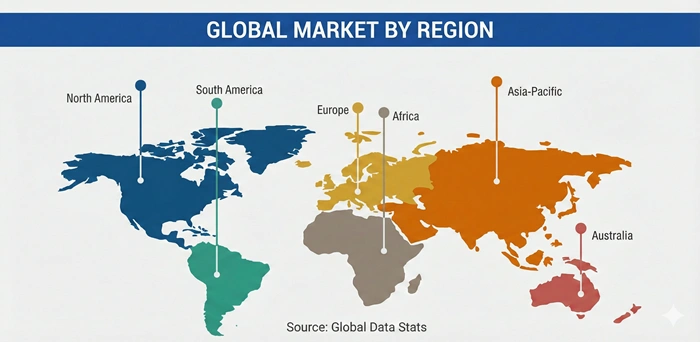
North America holds approximately 40% of the global pain management devices market share and is expected to maintain its leading position through 2033, growing at a CAGR of approximately 7.4%. The United States is the backbone of this regional dominance, where an estimated 50 million adults suffer from chronic pain, creating constant and strong demand for device-based therapeutic options. The shift away from opioid prescriptions following regulatory clampdowns has directly accelerated physician and patient adoption of neuromodulation and ablation-based devices. Key players operating in this region include Medtronic (U.S.), Abbott Laboratories (U.S.), Boston Scientific (U.S.), and Nevro Corp (U.S.), all of which maintain significant R&D and manufacturing footprints domestically.
Canada and Mexico are also contributing meaningfully to North America's overall market performance, with both countries expanding their healthcare reimbursement frameworks to include advanced pain management technologies. Canada's publicly funded healthcare system is gradually incorporating spinal cord stimulation into approved treatment pathways for refractory chronic pain, while Mexico's growing private hospital sector is driving increased demand for premium pain relief devices. The strong presence of leading U.S.-based manufacturers and their well-established regional distribution networks ensures that North America will continue to set the clinical and commercial benchmark for the global pain management devices industry through 2033.
Asia Pacific
China, Japan, and India Are Emerging as High-Priority Markets for Global Pain Management Device Manufacturers, With Aging Populations and Healthcare Modernization Driving Accelerated Regional Growth
Asia Pacific is the fastest-growing region in the global pain management devices market, expected to register a CAGR of approximately 9.2% through 2033. The region benefits from one of the world's fastest-aging populations, particularly in Japan and China, where age-related chronic pain conditions are placing enormous pressure on healthcare systems. Rising government investment in healthcare modernization, growing urban middle-class populations with improved insurance access, and expanding medical device regulatory frameworks are collectively accelerating market growth. Regional and global companies including Omron Healthcare (Japan), Nihon Kohden (Japan), and multinational players such as Medtronic and Abbott are actively strengthening their Asia Pacific distribution networks and localizing products to meet regional clinical needs and affordability requirements.
India represents one of the most promising emerging opportunities within the Asia Pacific pain management devices landscape, with a rapidly expanding private hospital sector and a large underserved chronic pain patient population. The Indian government's push toward universal health coverage and increasing medical device manufacturing under the Production Linked Incentive scheme is further supporting market growth. South Korea and Australia are also notable contributors, with high healthcare spending per capita and strong physician adoption of advanced neuromodulation therapies. Collectively, the Asia Pacific region is expected to add substantial incremental revenue to the global market through 2033, making it the most strategically important growth frontier for device manufacturers worldwide.
Top Key Players
-
Medtronic plc (Ireland)
-
Abbott Laboratories (United States)
-
Boston Scientific Corporation (United States)
-
Nevro Corp (United States)
-
Stryker Corporation (United States)
-
Baxter International Inc. (United States)
-
Nalu Medical Inc. (United States)
-
Omron Healthcare Co. Ltd. (Japan)
-
Nihon Kohden Corporation (Japan)
-
Becton, Dickinson and Company (United States)
-
Zimmer Biomet Holdings Inc. (United States)
-
DJO Global (Enovis Corporation) (United States)
Recent Developments
-
Medtronic (2024–2025): Medtronic received expanded FDA clearance for its Inceptiv closed-loop spinal cord stimulator, which automatically adjusts stimulation in real time based on neural feedback, marking a significant milestone in intelligent pain relief device development.
-
Abbott Laboratories (2024): Abbott launched the next-generation Eterna rechargeable spinal cord stimulation system featuring full-body MRI compatibility and an extended battery life platform, enhancing both clinical utility and patient convenience significantly.
-
Boston Scientific (2025): Boston Scientific completed the acquisition of Axonics Inc., strengthening its neuromodulation portfolio and expanding its presence in bladder and pelvic pain management — a rapidly growing pain device application area.
-
Nevro Corp (2024): Nevro Corp entered into a strategic partnership with a leading digital health company to develop AI-powered remote monitoring tools for patients using its HFX spinal cord stimulation therapy, improving outcomes tracking and patient engagement.
-
Nalu Medical (2025): Nalu Medical secured additional Series D funding to accelerate commercialization of its micro-implantable neurostimulator platform, which is among the world's smallest rechargeable neuromodulation devices designed for a wide range of chronic pain indications.
Market Trends
Miniaturization, Remote Monitoring, Closed-Loop Stimulation, and the Rise of Wearable Pain Devices Are Defining the Next Phase of Innovation in the Pain Management Devices Market
The pain management devices market is undergoing a clear technological transformation toward miniaturized, wireless, and patient-programmable systems. Traditional bulky implantable devices are steadily being replaced by sleek, rechargeable micro-stimulators that can be programmed via smartphone apps. Wearable TENS devices designed for daily, continuous use are gaining mainstream acceptance, especially among younger chronic pain sufferers who prefer non-invasive management options. This trend is reinforcing a broader shift toward personalized, self-managed pain care that complements clinical oversight rather than replacing it, and manufacturers who invest in user-friendly, connected device platforms are gaining a clear competitive edge in this evolving landscape.
Simultaneously, the integration of remote monitoring and telehealth into chronic pain management is fundamentally changing how care is delivered across both hospital and home settings. Physicians can now track stimulation usage, adjust device parameters, and review patient-reported pain scores remotely, reducing unnecessary clinic visits and improving therapy adherence. Real-world data collected through connected pain devices is also feeding into AI models that predict flare-ups and optimize stimulation protocols, creating a virtuous cycle of continuous improvement in treatment effectiveness. As healthcare systems worldwide prioritize cost efficiency and patient convenience, these smart, data-driven pain management solutions are expected to become the standard of care, driving sustained momentum across the global market through 2033.
Segments Covered in the Report
By Product Type
-
Neuromodulation Devices
-
Spinal Cord Stimulators
-
Deep Brain Stimulators
-
Peripheral Nerve Stimulators
-
Transcranial Magnetic Stimulators
-
Ablation Devices
-
Radiofrequency Ablation Devices
-
Cryoablation Devices
-
Analgesic Infusion Pumps
-
Intrathecal Drug Delivery Systems
-
External Infusion Pumps
-
Transcutaneous Electrical Nerve Stimulation (TENS) Devices
-
Others
By Application
-
Neuropathic Pain
-
Cancer Pain
-
Musculoskeletal Pain
-
Facial & Migraine Pain
-
Others
By End User
-
Hospitals & Clinics
-
Home Care Settings
-
Ambulatory Surgical Centers
-
Rehabilitation Centers
-
Others
By Region
-
North America (U.S., Canada, Mexico)
-
Europe (Germany, UK, France, Italy, Spain, Rest of Europe)
-
Asia Pacific (China, Japan, India, South Korea, Australia, Rest of Asia Pacific)
-
Latin America (Brazil, Argentina, Rest of Latin America)
-
Middle East & Africa (GCC Countries, South Africa, Rest of MEA)
Frequently Asked Questions
Question 1: What is the current size of the global pain management devices market and what growth is expected by 2033?
Answer: The global pain management devices market is valued at USD 8.1 billion in 2025 and is projected to reach USD 14.2 billion by 2033. It is expected to grow at a CAGR of 7.8% from 2026 to 2033.
Question 2: What are the key factors driving growth in the pain management devices market?
Answer: The primary growth drivers include the rising global prevalence of chronic pain and the increasing shift away from opioid-based therapies toward device-based solutions. Technological innovation in neuromodulation and favorable reimbursement policies are also accelerating market adoption.
Question 3: Which region dominates the pain management devices market and which is growing fastest?
Answer: North America currently dominates the pain management devices market with approximately 40% of global revenue share. Asia Pacific is the fastest-growing region, driven by aging populations, healthcare infrastructure expansion, and rising chronic pain awareness.
Question 4: Which product segment holds the largest share in the pain management devices market?
Answer: Neuromodulation devices hold the largest product segment share at approximately 38% of total market revenue. This segment continues to grow rapidly due to expanding clinical indications and next-generation device innovations from leading companies.
Question 5: How is AI influencing the future of pain management devices market development?
Answer: AI is enabling closed-loop stimulation systems that automatically adjust treatment parameters based on real-time patient data, significantly improving therapy precision. It is also enhancing remote monitoring capabilities, helping clinicians deliver better outcomes while reducing in-clinic visits for chronic pain patients.