
Organic Baby Food Market Overview
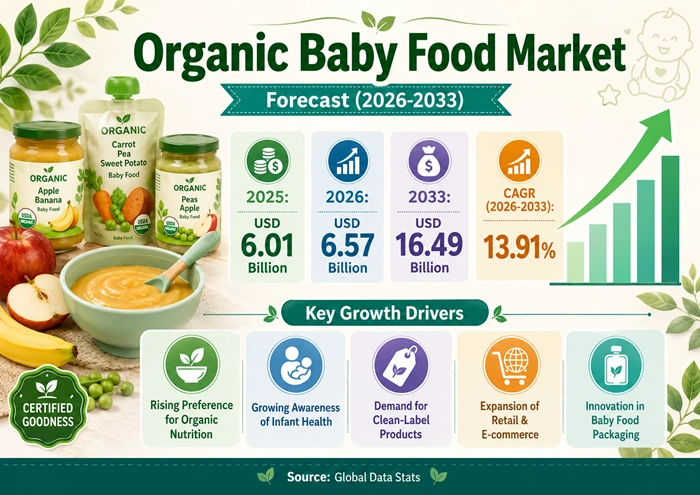
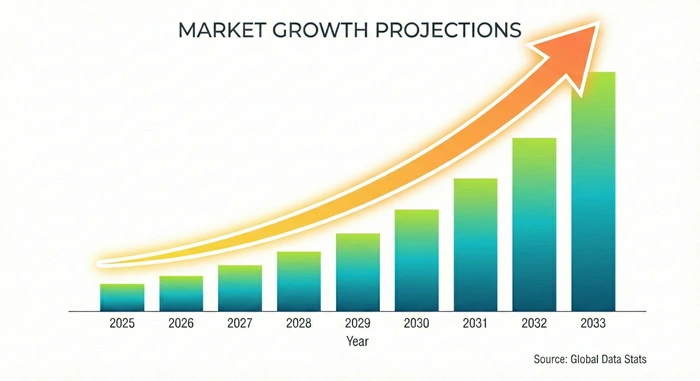
The global organic baby food market size is valued at USD 6.01 billion in 2025 and is predicted to increase from USD 6.57 billion in 2026 to approximately USD 16.49 billion by 2033, growing at a CAGR of 13.91% from 2026 to 2033.
Rising parental awareness about infant nutrition and chemical-free feeding drives unprecedented demand for certified organic baby food products delivering pesticide-free ingredients, natural nutrition, and safety assurance. Organic baby food including purees, cereals, snacks, and formula appeals to health-conscious parents seeking premium nutrition without synthetic additives, GMOs, or harmful pesticides supporting optimal infant development and long-term wellness.
AI Impact on the Organic Baby Food Industry
Artificial Intelligence Revolutionizing Product Safety and Personalized Nutrition
Artificial intelligence is fundamentally transforming the organic baby food market by enabling advanced quality control, predictive allergen detection, personalized nutrition recommendations, supply chain transparency, and targeted parental engagement that enhance product safety while ensuring nutritional adequacy and building consumer trust. Machine learning algorithms analyze production data including ingredient sourcing, processing conditions, contamination risks, nutritional composition, and quality metrics predicting potential safety issues before products reach market, detecting trace pesticide residues contradicting organic claims, identifying bacterial contamination risks, and ensuring consistent nutritional profiles reducing recalls from quality failures that damage brand reputation and consumer confidence critical for premium organic positioning. AI-powered sensors monitor manufacturing environments tracking temperature fluctuations, humidity levels, equipment cleanliness, and cross-contamination risks in real-time automatically adjusting processing parameters ensuring organic integrity and safety standards throughout production preventing costly batch rejections and protecting vulnerable infant populations.
Computer vision systems inspect ingredient quality, detect foreign material contamination, verify organic certification authenticity, and validate label accuracy ensuring only premium ingredients meeting strict organic standards enter production while blockchain integration enables complete supply chain traceability from certified organic farms through processing and distribution providing parents with transparent verification of organic claims combating fraud prevalent in premium baby food segments. Natural language processing technologies monitor parenting forums, pediatrician discussions, baby food reviews, and health communities identifying parent concerns about ingredient safety, nutritional adequacy, allergen risks, and feeding challenges informing product development, quality improvements, and educational content addressing common fears and misconceptions. The organic baby food market benefits from AI-driven personalized nutrition platforms analyzing infant age, growth patterns, dietary restrictions, family allergy histories, and developmental milestones recommending customized organic baby food selections, optimal introduction timing for solid foods, and portion suggestions maximizing nutritional benefits while minimizing allergen exposure risks building brand loyalty through tailored guidance supporting anxious first-time parents. Predictive analytics forecast demand patterns across purees, cereals, and snacks by analyzing birth rates, seasonal consumption trends, pediatric feeding guideline updates, and organic food movement growth enabling manufacturers to optimize production planning, ingredient sourcing from limited organic suppliers, and distribution strategies avoiding stockouts during peak infant feeding stages or costly overproduction of short-shelf-life products.
Growth Factors
Health Consciousness and Clean-Label Demands Drive Market Expansion
The organic baby food market is experiencing robust growth driven by escalating parental health consciousness about infant nutrition, rising concerns about pesticide exposure and chemical additives, increasing awareness about organic certification benefits, expanding disposable incomes enabling premium purchases, and growing clean-label preferences for transparent ingredient lists. Health consciousness revolution among millennial and Gen Z parents positions infant nutrition as top priority with consumers increasingly recognizing connections between early childhood diet and lifelong health outcomes including immune system development, gut microbiome establishment, cognitive function, allergy prevention, and chronic disease risk reduction creating willingness to invest premium prices in organic baby food perceived as safest healthiest option despite higher costs compared to conventional alternatives. Pesticide concern escalates with parents aware that conventional agriculture uses synthetic pesticides leaving residues on produce, babies' developing bodies are more vulnerable to chemical exposure, Environmental Working Group's Dirty Dozen list highlighting contamination in common baby food ingredients like strawberries and spinach, and research linking pesticide exposure to developmental delays creating fear-driven demand for certified organic products guaranteeing pesticide-free nutrition.
Medical and nutritionist endorsement grows with pediatricians recommending organic baby food for families concerned about chemical exposure, registered dietitians advocating clean-label nutrition during critical developmental windows, and parenting experts promoting organic feeding supporting natural development creating professional advocacy reinforcing parent preferences. The organic baby food market benefits from ingredient transparency demands with millennial parents scrutinizing labels avoiding unfamiliar additives, seeking simple recognizable ingredients, demanding GMO-free certification, and preferring single-ingredient purees over blended products containing multiple components enabling informed feeding decisions and control over infant dietary exposure. Disposable income growth particularly in emerging markets enables middle-class families to afford premium organic products previously restricted to wealthy households, urbanization concentrates populations accessing modern retail carrying organic options, and dual-income households prioritize convenience and quality over price sensitivity supporting sustained premium segment expansion. Social media influence from parenting influencers sharing organic feeding journeys and product recommendations, mom bloggers reviewing organic baby food brands, pediatric nutritionists explaining organic benefits, and peer communities normalizing organic feeding reaches millions of engaged parents creating aspirational associations positioning organic baby food as essential component of responsible modern parenting rather than luxury indulgence for wealthy families.
Market Outlook
Innovation and Convenience Formats Define Future Industry Evolution
The organic baby food market is positioned for sustained expansion through 2033 as manufacturers invest heavily in convenient packaging innovations, develop allergen-free formulations, expand plant-based alternatives, leverage subscription delivery services, and address affordability through value-sized offerings making organic nutrition accessible to broader populations. Convenience packaging innovations including organic pouches enabling one-handed feeding during busy days, single-serve portions reducing waste and ensuring freshness, resealable containers supporting multiple feeding sessions, shelf-stable formats eliminating refrigeration requirements, and on-the-go snack packaging creating portable nutrition support modern parenting demands balancing nutrition priorities with time constraints and lifestyle mobility. Allergen-free organic formulations excluding common triggers like dairy, soy, eggs, nuts, and gluten create inclusive products accommodating food allergies affecting 8% of children, enabling cautious introduction during critical allergy prevention windows, and providing safe options for families with allergy histories commanding premium pricing reflecting specialized ingredient sourcing and dedicated processing facilities.
Plant-based organic baby food incorporating organic lentils, quinoa, chickpeas, and diverse vegetables creates nutritionally-complete alternatives introducing plant proteins early, supporting vegetarian and vegan family values, and providing environmental sustainability benefits appealing to eco-conscious millennial parents prioritizing climate-friendly nutrition choices. The organic baby food market witnesses subscription service growth with direct-to-consumer brands offering customized monthly deliveries based on infant age and development stages, eliminating shopping trips and ensuring consistent organic feeding, providing discovery experiences introducing diverse flavors and ingredients, and building recurring revenue with convenient auto-replenishment supporting habit formation. E-commerce expansion transforms distribution with online platforms enabling specialty organic brands reaching national audiences beyond limited retail presence, detailed product information and reviews supporting informed purchasing particularly important for first-time anxious parents, competitive pricing through direct sourcing, and convenient home delivery particularly valuable when managing infants eliminating difficult shopping trips. Affordability initiatives through value-sized organic products reducing per-serving costs, private-label organic options from retailers like Whole Foods and Target, bulk purchasing options, and strategic pricing making organic accessible to price-conscious families expand addressable market beyond affluent early adopters toward mainstream middle-class populations seeking balance between nutrition priorities and household budget constraints.
Expert Speaks
-
Mark Schneider, Chief Executive Officer of Nestlé S.A., emphasized that organic baby nutrition represents strategic priority with consumer demand for clean-label pesticide-free infant food driving innovation in organic formulations, sustainable sourcing, and transparency initiatives, with Nestlé's Gerber Organic brand investing substantially in certified organic ingredient partnerships, rigorous safety testing, and parental education supporting category leadership addressing millennial parent expectations for premium infant nutrition.
-
Ramon Laguarta, Chairman and Chief Executive Officer of PepsiCo, highlighted that organic baby food through Quaker and strategic partnerships demonstrates sustained growth reflecting fundamental parental shift toward natural nutrition prioritizing infant health and safety, with portfolio expansion through innovation, organic certification, and distribution excellence positioning company to capture growing demand for convenient organic baby feeding solutions supporting busy modern families.
-
Dirk Van de Put, Chairman and Chief Executive Officer of Mondelēz International, stated that organic baby snacks represent emerging opportunity with parents seeking healthier alternatives to conventional teething biscuits and snacks, with successful brands requiring authentic organic certification, allergen-conscious formulations, and age-appropriate textures building trust among protective parents making critical infant nutrition decisions affecting lifelong health outcomes.
Key Report Takeaways
-
North America leads the organic baby food market with approximately 36% market share in 2025, driven by established organic food culture, health-conscious millennial parents, stringent food safety regulations supporting organic standards, widespread retail distribution including specialty stores and mainstream supermarkets, high disposable incomes enabling premium purchases, and strong awareness about pesticide risks.
-
Asia Pacific is growing the fastest with a projected CAGR of 16.20% from 2026 to 2033, fueled by rapid urbanization creating busy lifestyles, rising middle-class incomes enabling premium baby product purchases, growing awareness about organic benefits through social media, expanding organized retail infrastructure, increasing birth rates, and western parenting trend adoption.
-
Prepared baby food dominates with approximately 44% market share as purees and ready-to-eat meals provide convenient first solid food options, offer controlled textures for different developmental stages, ensure consistent nutrition, support on-the-go feeding, and accommodate diverse flavor preferences through extensive variety.
-
The online retail distribution channel contributes significantly to overall market revenue growth with approximately 24% share in 2025, reflecting e-commerce adoption acceleration among tech-savvy millennial parents, subscription service convenience, detailed product information supporting informed decisions, competitive pricing, and convenient home delivery eliminating shopping with infants.
-
The 6-12 months age group segment dominates with approximately 48% market share as period represents solid food introduction window, highest organic baby food consumption phase, diverse product needs spanning purees to finger foods, parental anxiety about nutrition and safety peaks, and developmental milestones require varied textures.
-
The prepared baby food segment will grow quickly with an estimated CAGR of 14.60% as convenience demands increase, working mothers seek time-saving solutions, product innovations emerge including organic pouches, flavor variety expands, and busy modern parenting lifestyles prioritize ready-to-feed options.
Market Scope
| Report Coverage | Details |
|---|---|
| Market Size by 2033 | USD 16.49 Billion |
| Market Size by 2025 | USD 6.01 Billion |
| Market Size by 2026 | USD 6.57 Billion |
| Market Growth Rate from 2026 to 2033 | CAGR of 13.91% |
| Dominating Region | North America |
| Fastest Growing Region | Asia Pacific |
| Base Year | 2025 |
| Forecast Period | 2026 to 2033 |
| Segments Covered | Product Type, Distribution Channel, Age Group, Region |
| Regions Covered | North America, Europe, Asia Pacific, Latin America, Middle East and Africa |
Market Dynamics
Driver Impact Analysis
Rising Parental Health Consciousness and Pesticide Concerns Propel Market Growth
The escalating parental health consciousness combined with growing pesticide exposure concerns represents the most powerful driver propelling the organic baby food market toward sustained expansion across all geographic regions and demographic segments. Health consciousness transformation among millennial and Gen Z parents positions infant nutrition as absolute top priority with consumers increasingly recognizing connections between early childhood diet quality and lifelong health outcomes including robust immune system development protecting against infections and chronic diseases, healthy gut microbiome establishment affecting digestion and mental health through gut-brain axis, optimal cognitive development supporting learning and behavioral outcomes, allergy prevention through appropriate food introduction timing, and metabolic programming influencing obesity and diabetes risks creating willingness to invest substantial premium in organic baby food perceived as safest healthiest option available despite costing 50-100% more than conventional alternatives. Pesticide concern reaches mainstream awareness with parents understanding conventional agriculture relies heavily on synthetic pesticides leaving residues on produce especially problematic for babies whose developing nervous systems and organs are more vulnerable to chemical exposure than adults, Environmental Working Group's annual Dirty Dozen list highlighting pesticide contamination in strawberries, spinach, and apples commonly used in baby food creating specific ingredient avoidance, and research studies demonstrating associations between pesticide exposure and developmental delays, behavioral problems, and reduced cognitive function driving fear-based demand for certified organic products legally required to avoid synthetic pesticides.
Medical community endorsement grows with pediatricians recommending organic baby food for families particularly concerned about chemical exposure especially those with family histories of allergies or sensitivities, registered dietitian nutritionists advocating clean-label nutrition during critical first 1000 days of life establishing lifelong health foundations, and parenting experts promoting organic feeding as best practice for optimal infant development creating professional validation reinforcing anxious parent preferences seeking expert guidance. The organic baby food market benefits from ingredient transparency demands with millennial parents representing most educated generation scrutinizing ingredient labels avoiding unfamiliar additives like artificial colors, synthetic preservatives, and modified starches, seeking simple recognizable ingredients preferring "organic apples" over complex chemical names, demanding Non-GMO Project verification addressing genetic modification concerns, and preferring single-ingredient organic purees enabling controlled systematic food introduction reducing allergen exposure confusion and supporting parental sense of control over infant dietary experiences. Disposable income growth particularly in emerging Asian markets including China and India enables expanding middle-class populations to afford premium organic baby products previously accessible only to wealthy urban elites, rapid urbanization concentrates populations in cities with modern retail infrastructure carrying organic specialty products, and dual-income millennial households demonstrate lower price sensitivity prioritizing infant health and convenience over cost savings supporting sustained premium organic segment expansion.
| Driver | ≈ % Impact on CAGR Forecast | Geographic Relevance | Impact Timeline |
|---|---|---|---|
| Parental Health Consciousness and Safety Concerns | +4.50% | Global, strongest in developed markets | 2026-2033 |
| Pesticide Exposure Fears and Chemical Avoidance | +3.80% | Health-conscious parents, urban populations | 2026-2033 |
| Medical Endorsement and Professional Recommendations | +2.60% | Evidence-driven consumers, first-time parents | 2026-2033 |
| Disposable Income Growth and Premium Affordability | +2.40% | Emerging markets, middle-class expansion | 2027-2033 |
Restraints Impact Analysis
Premium Pricing and Limited Availability Limit Market Penetration
The organic baby food market confronts significant barriers related to premium pricing significantly exceeding conventional alternatives, limited retail availability particularly in rural and developing regions, short shelf life requiring frequent purchasing, taste and texture differences from conventional products, and skepticism about organic certification authenticity that constrain adoption among price-sensitive segments and limit geographic expansion. Premium pricing represents fundamental challenge with organic baby food costing 50-150% more than conventional equivalents, single organic pouch priced at USD 2-3 versus USD 1-1.50 for conventional, monthly organic feeding expenses reaching USD 150-250 versus USD 75-100 for conventional creating affordability barriers particularly in price-sensitive markets and economic downturns limiting adoption among lower and middle-income families viewing organic as luxury rather than necessity despite health benefits especially in developing markets where basic nutrition remains priority over organic certification.
Limited availability challenges access with organic baby food requiring specialized retail presence often concentrated in affluent urban areas, smaller communities lacking natural food stores carrying comprehensive organic selections, developing markets having minimal organic product distribution beyond expensive imported options in luxury stores, and conventional supermarkets dedicating limited shelf space to organic varieties reducing variety and increasing stockout risks frustrating parents attempting organic feeding. The organic baby food market suffers from shelf life limitations with organic products avoiding synthetic preservatives resulting in shorter viable periods typically 12-18 months versus 24-36 months for conventional, refrigerated organic products requiring cold chain infrastructure and quick consumption after opening creating waste concerns, and fresher organic formulations limiting inventory flexibility for retailers and requiring frequent restocking increasing distribution costs passed to consumers. Taste concerns persist with some organic baby foods exhibiting different flavor profiles from conventional versions due to ingredient differences, certain vegetables like organic spinach having stronger tastes babies initially reject, texture variations from processing differences, and parental perception that organic products may be less palatable creating hesitation about infant acceptance particularly among picky eaters requiring multiple exposure attempts before acceptance. Certification skepticism among some consumer segments questions whether organic labels guarantee meaningfully superior nutrition beyond pesticide avoidance, concerns about organic certification fraud particularly with imported products from regions with less stringent oversight, confusion about various organic standards across countries, and doubts about cost-benefit value proposition create resistance requiring extensive education about verified organic advantages.
| Restraint | ≈ % Impact on CAGR Forecast | Geographic Relevance | Impact Timeline |
|---|---|---|---|
| Premium Pricing and Affordability Barriers | -2.80% | Price-sensitive segments, developing economies | 2026-2033 |
| Limited Retail Availability and Distribution Gaps | -2.40% | Rural areas, developing markets, small cities | 2026-2033 |
| Short Shelf Life and Storage Requirements | -1.80% | Retailers, inventory management, distribution | 2026-2033 |
| Taste Differences and Infant Acceptance | -1.50% | Picky eaters, flavor-conservative families | 2026-2033 |
Opportunities Impact Analysis
Emerging Market Expansion and Product Innovation Create Growth Avenues
The development of affordable organic baby food options combined with emerging market penetration presents enormous opportunities for the organic baby food market by addressing price sensitivity, expanding geographic reach, creating innovative formats, and capturing growing middle-class populations increasingly able to afford premium infant nutrition. Affordable organic initiatives through value-sized packaging reducing per-serving costs making organic accessible to budget-conscious families, private-label organic options from retailers like Target and Walmart offering 20-30% discounts versus branded equivalents, simplified organic formulations using fewer ingredients reducing production costs, and strategic sourcing from domestic organic farms minimizing import premiums expand addressable market beyond affluent early adopters toward mainstream middle-class populations seeking balance between infant health priorities and household budget constraints particularly important in emerging markets.
Emerging market penetration across China, India, Southeast Asia, and Latin America where current organic baby food consumption remains fraction of developed markets presents massive untapped populations with rapidly growing birth rates exceeding 100 million annually across Asia alone, improving middle-class incomes enabling premium baby product purchases, escalating health consciousness driven by air pollution and food safety scandals creating demand for premium certified products, expanding organized retail infrastructure including international hypermarkets, and increasing smartphone penetration enabling e-commerce access facilitating organic baby food discovery and purchasing. The organic baby food market benefits from product innovation including organic pouches revolutionizing portable feeding through convenient squeeze formats eliminating spoons and bowls, organic puffed snacks providing self-feeding development for older infants, organic teething biscuits addressing gum discomfort naturally, frozen organic baby food maintaining nutrition while extending shelf life, and organic toddler meals bridging transition to family foods expanding product lifecycle beyond infant-only focus. Subscription delivery services offering customized age-appropriate organic baby food selections automatically delivered monthly based on infant developmental stage eliminating shopping trips, introducing flavor variety systematically, providing cost savings through bulk ordering, and building recurring revenue with high customer lifetime value supporting direct-to-consumer brands bypassing retail distribution. Allergen-free organic formulations excluding top eight allergens creating inclusive products for families with food allergies, organic products designed for babies with sensitive digestion, dairy-free organic options for lactose intolerant infants, and hypoallergenic organic formulas command substantial premiums reflecting specialized ingredient sourcing and dedicated allergen-free production facilities addressing unmet needs in growing allergy-affected population.
| Opportunity | ≈ % Impact on CAGR Forecast | Geographic Relevance | Impact Timeline |
|---|---|---|---|
| Emerging Market Expansion and Middle-Class Growth | +3.80% | Asia Pacific, Latin America, urban populations | 2027-2033 |
| Affordable Organic Options and Value Products | +3.40% | Price-sensitive markets, mainstream consumers | 2026-2033 |
| Product Innovation and Convenient Formats | +3.00% | Working parents, busy families, on-the-go feeding | 2026-2033 |
| Subscription Services and Direct-to-Consumer Models | +2.80% | Digital-savvy millennials, convenience-seekers | 2027-2033 |
Segment Analysis
Prepared Baby Food
Dominant Segment Driven by Convenience and First Solid Food Introduction
The prepared baby food segment dominates the organic baby food market with approximately 44% share in 2025 and robust CAGR of 14.60% from 2026 to 2033, driven by the segment's fundamental role as primary first solid food option for infants, convenient ready-to-feed formats supporting busy modern parenting, controlled smooth textures appropriate for developing swallowing abilities, consistent nutritional composition ensuring adequate intake, and extensive flavor variety enabling taste exposure and preference development. Prepared organic baby food including stage-appropriate purees for 4-6 month introduction, blended combinations for 6-9 months, chunkier textures for 9-12 months, and organic meals for toddlers support progressive feeding journey from liquid-only diet to family foods providing parents with convenient nutritionally-complete options requiring no preparation beyond opening and serving. Product innovation creates variety spanning single-ingredient organic purees like sweet potato or pear enabling systematic allergen introduction, organic fruit-vegetable blends introducing taste combinations, organic protein blends incorporating chicken or lentils, organic grain mixtures with quinoa and oats, and organic complete meals with vegetables, proteins, and grains providing balanced nutrition.
North America shows particularly strong prepared organic baby food consumption with approximately 42% regional market share and CAGR of 13.80%, driven by established convenience culture among working parents, widespread retail availability across supermarkets and specialty stores, strong organic awareness and pesticide concerns, disposable incomes supporting premium purchases, and millennial parent preferences for ready-to-feed solutions balancing nutrition and time constraints. Leading companies serving the organic baby food market including Gerber (Nestlé), Beech-Nut Nutrition, Plum Organics, Happy Family Organics, Earth's Best, Ella's Kitchen, Sprout Organic Foods, and Once Upon a Farm compete through organic certification authenticity, ingredient quality and sourcing transparency, flavor innovation, packaging convenience including popular pouch formats, and strategic retail placement. The segment continues evolving through organic cold-pressed products maintaining maximum nutrition through minimal processing, organic vegetable-forward formulations reducing sugar content addressing health concerns, organic protein-enriched purees supporting growth needs, and transparent sourcing initiatives including farm partnerships and ingredient traceability building consumer trust critical for premium organic positioning. Subscription services including Yumi and Little Spoon deliver fresh organic baby food customized to infant age eliminating shopping and preparation supporting working parents while commanding premium pricing reflecting convenience and personalization value.
Online Retail Distribution Channel
Fastest Growing Segment Capitalizing on Millennial Digital Preferences and Subscription Models
The online retail distribution channel represents the fastest-growing segment in the organic baby food market with a projected CAGR of 16.80% from 2026 to 2033, driven by millennial parent digital shopping preferences, subscription service convenience eliminating repeat purchasing decisions, detailed product information and reviews supporting anxious first-time parents, competitive pricing through direct sourcing, specialty brand access unavailable locally, and convenient home delivery particularly valuable when managing infants eliminating difficult shopping trips. Online platforms including Amazon, specialty organic retailers like Thrive Market, brand direct websites, and subscription services like Yumi and Little Spoon offer unlimited organic baby food selection including 100-150 varieties versus typical store's 20-30 options, detailed nutritional breakdowns and ingredient lists, customer reviews providing authentic quality feedback from other parents, comparative shopping tools, educational content explaining organic benefits and feeding guidelines, and convenient delivery ensuring consistent organic feeding without stockouts or shopping trips.
North America shows particularly explosive online organic baby food sales growth with CAGR exceeding 18.50%, driven by established e-commerce infrastructure, pandemic-accelerated digital grocery adoption normalizing online food purchasing including baby products, consumer comfort with refrigerated food delivery, subscription box popularity particularly strong among millennial parents, and direct-to-consumer organic brands like Once Upon a Farm and Serenity Kids leveraging social media marketing reaching target audiences efficiently through Instagram parenting influencers. Key players serving the organic baby food market including established brands launching direct channels, subscription services offering fresh organic baby food customized to developmental stages, marketplace platforms expanding organic baby categories, and personalized nutrition companies providing assessment-based feeding plans invest heavily in digital advertising, influencer partnerships with parenting bloggers, search engine optimization, cold chain logistics, and educational content. The segment benefits from subscription models offering automatic deliveries based on infant age and consumption patterns providing convenience ensuring consistent organic feeding supporting developmental needs, introducing systematic flavor variety exposing infants to diverse tastes, collecting recurring revenue improving business predictability, and gathering valuable data including feeding preferences, product ratings, and consumption patterns informing product development. Personalization technologies enable customized organic baby food recommendations based on infant age, developmental milestones, identified food sensitivities, family dietary preferences like vegetarian, and feeding stage creating tailored experiences increasing parent confidence and satisfaction while building loyalty through relevant suggestions reducing overwhelming product choices facing anxious first-time parents navigating solid food introduction.
Regional Insights
North America
Market Leadership Through Health Consciousness and Organic Culture
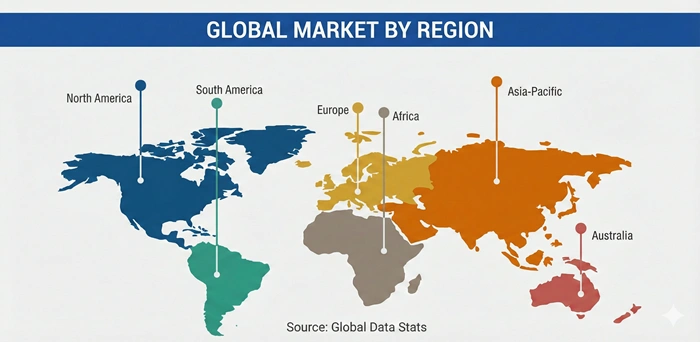
North America maintains its position as the dominant region in the organic baby food market, commanding approximately 36% of global market share in 2025 with an estimated value of USD 2.16 billion, projected to reach USD 5.48 billion by 2033 growing at a CAGR of 12.33%. The region's leadership stems from deeply established organic food culture spanning decades, health-conscious millennial parents representing largest parenting demographic prioritizing infant nutrition and safety, stringent food safety regulations and organic certification standards building consumer confidence, widespread retail distribution from Whole Foods to mainstream supermarkets ensuring product accessibility, high disposable incomes enabling premium organic purchases despite 50-100% price premiums, and strong awareness about pesticide risks driven by advocacy groups like Environmental Working Group publishing baby food contamination reports. United States dominates regional demand with approximately 84% share driven by estimated 3.7 million annual births, established organic market infrastructure, influential parenting culture emphasizing nutrition, aggressive marketing from organic baby food brands, and extensive availability across 50000 retail locations plus thriving e-commerce channels.
Leading companies serving the North American organic baby food market include Gerber Organic (Nestlé), Beech-Nut Nutrition, Happy Family Organics (Danone), Plum Organics, Earth's Best Organic (Hain Celestial), Ella's Kitchen, Sprout Organic Foods, Once Upon a Farm, and numerous regional brands competing through organic certification authenticity. The region benefits from strong clean-label trends driving transparent ingredient lists with recognizable components, non-GMO verification becoming standard expectation, allergen-free organic formulations addressing food allergy concerns, and convenient pouch formats dominating prepared baby food sales providing portable feeding. Canada contributes approximately 12% of North American revenue through similar consumption patterns, bilingual product labeling, strong organic awareness exceeding United States proportionally particularly regarding sustainable agriculture, growing multicultural populations maintaining diverse feeding traditions, and universal healthcare system emphasizing preventive nutrition supporting sustained market growth. The region witnesses subscription service proliferation with fresh organic baby food delivery brands like Yumi and Little Spoon gaining traction among urban millennials, direct-to-consumer organic brands bypassing traditional retail, and innovative products including organic cold-pressed baby food and refrigerated fresh options commanding premium positioning differentiating from shelf-stable conventional alternatives supporting category premiumization throughout forecast period.
Asia Pacific
Fastest Regional Growth Through Urbanization and Middle-Class Expansion
Asia Pacific represents the fastest-growing region in the organic baby food market with a projected CAGR of 16.20% from 2026 to 2033, with market value expected to increase from USD 2.04 billion in 2025 to USD 5.94 billion by 2033, capturing rapidly expanding global revenue share. The region's exceptional growth trajectory stems from explosive urbanization concentrating populations in cities where modern retail infrastructure carries organic products, rapidly rising middle-class incomes enabling premium baby product purchases previously unaffordable, escalating health consciousness driven by food safety scandals creating demand for trusted certified products, growing awareness about organic benefits through social media parenting communities, expanding birth rates particularly in India and Southeast Asia, and western parenting trend adoption including emphasis on organic nutrition and early childhood development. China and India dominate regional growth with combined approximately 58% Asia Pacific share driven by enormous populations exceeding 2.8 billion including hundreds of millions of young parents, improving disposable incomes creating ability to afford premium baby products, rapid e-commerce expansion enabling organic product access beyond major cities, growing environmental consciousness, and government initiatives promoting food safety and quality standards.
Leading companies serving the Asia Pacific organic baby food market include Nestlé expanding Gerber Organic presence, Danone leveraging distribution networks, Bellamy's Organic (Bubs Australia), Healthy Times, emerging Chinese brands like Yeehoo, Indian companies like Slurrp Farm and Timios, and international brands entering markets through partnerships and local manufacturing. Japan demonstrates sophisticated consumption with extremely high quality standards, minimal tolerance for contaminants, organic certification respect, premium willingness-to-pay reflecting quality-conscious consumers, and declining birth rates concentrating spending on fewer children supporting per-child premium product investment. India shows explosive potential with massive young population and 25 million annual births creating enormous addressable market, rapidly growing middle class estimated at 600 million by 2030, increasing nuclear families replacing joint family structures changing feeding practices, smartphone penetration enabling organic awareness and e-commerce access, and growing retail infrastructure expanding beyond metros into tier-2 and tier-3 cities. The region witnesses explosive e-commerce growth particularly in China where platforms like Alibaba, JD.com, and Pinduoduo dominate baby product sales enabling international organic brands reaching Chinese parents, cross-border e-commerce facilitating premium imported organic baby food purchases, social commerce through WeChat enabling recommendations, and livestream shopping introducing products supporting sustained rapid expansion throughout forecast period with favorable demographics and economic conditions.
Top Key Players
-
Nestlé S.A. (Switzerland)
-
Danone S.A. (France)
-
The Hain Celestial Group Inc. (United States)
-
Beech-Nut Nutrition Company (United States)
-
Bellamy's Organic (Australia)
-
HiPP GmbH & Co. Vertrieb KG (Germany)
-
Ella's Kitchen (United Kingdom)
-
Plum Organics (United States)
-
Sprout Organic Foods Inc. (United States)
-
Hero Group (Switzerland)
-
Once Upon a Farm (United States)
-
Yumi (United States)
-
Little Spoon (United States)
-
Holle Baby Food AG (Switzerland)
-
Serenity Kids (United States)
Recent Developments
-
Nestlé (2025): Launched Gerber Organic cold-pressed baby food line in March 2025 using high-pressure processing maintaining maximum nutrition without heat treatment, introducing innovative refrigerated format differentiating from shelf-stable competitors, expanding organic portfolio addressing millennial parent preferences for minimally-processed foods, and commanding 30% premium pricing reflecting superior quality positioning supporting organic category premiumization and brand leadership.
-
Danone (2024): Acquired organic baby food subscription service in November 2024 for USD 180 million expanding Happy Family Organics into direct-to-consumer channel, gaining customized age-based feeding platform, accessing millennial parent subscription model preferences, and complementing retail presence with recurring revenue stream supporting multi-channel distribution strategy and customer relationship building.
-
Beech-Nut Nutrition (2025): Introduced transparent sourcing initiative in June 2025 providing detailed farm information and ingredient traceability through QR codes on packaging enabling parents to verify organic claims, see farmer profiles, and understand production journey rebuilding trust after historical concerns, differentiating through radical transparency, and addressing certification skepticism supporting premium organic positioning.
-
Once Upon a Farm (2024): Expanded retail distribution in September 2024 entering 8000 Target and Walmart locations nationwide transitioning from specialty natural food stores to mass market, making organic cold-pressed baby food accessible to mainstream consumers, partnering with conventional retailers transforming organic from niche to mainstream, and maintaining refrigerated format and organic integrity despite volume scaling.
-
HiPP (2025): Launched organic baby food e-commerce platform in January 2025 for Asian markets enabling direct consumer access to European organic baby food trusted by quality-conscious parents, offering subscription services with customized selections, providing educational content about European organic standards, and bypassing traditional import distribution reducing prices making premium organic more accessible in rapidly growing markets.
Market Trends
Clean-Label Transparency and Convenient Formats Reshape Product Development
The organic baby food market is experiencing transformative shifts driven by radical ingredient transparency demands, convenient pouch format dominance, allergen-free formulations, plant-based organic options, and sustainability initiatives responding to environmental pressures reshaping packaging and sourcing practices. Clean-label transparency movements demand organic baby food with simple recognizable ingredients listing "organic sweet potatoes" rather than complex processing terms, single-ingredient purees enabling controlled systematic food introduction, third-party certification verification including USDA Organic and Non-GMO Project, detailed sourcing information including farm locations and growing practices, and QR code integration enabling parents to trace products from farm to jar building trust critical for premium organic positioning and addressing certification skepticism. Heavy metals reduction becomes priority following reports of lead, arsenic, cadmium, and mercury in baby food with organic brands implementing rigorous testing protocols, sourcing ingredients from low-contamination regions, utilizing advanced filtration technologies, and publicly disclosing test results differentiating through safety leadership addressing parental fears about infant toxin exposure.
Pouch format revolution transforms organic baby food category with squeezable pouches representing 60% of prepared baby food sales offering ultimate convenience for on-the-go feeding, eliminating spoons and bowls, enabling one-handed feeding, providing portion control, and appealing to toddlers who can self-feed creating category growth driver despite environmental concerns about plastic waste and recyclability challenges. The organic baby food market witnesses allergen-free proliferation with organic products excluding top eight allergens creating inclusive options for food allergy families, organic formulas designed for sensitive digestion avoiding dairy and soy, and hypoallergenic organic varieties supporting cautious allergen introduction during critical prevention windows commanding premium pricing reflecting specialized ingredient sourcing. Plant-based organic baby food incorporating organic lentils, quinoa, chickpeas, and diverse vegetables creates nutritionally-complete protein alternatives introducing plant proteins early, supporting vegetarian family values, and providing environmental sustainability benefits appealing to eco-conscious millennial parents prioritizing climate-friendly nutrition choices. Sustainability practices including recyclable and compostable packaging replacing traditional plastics, organic ingredient sourcing supporting regenerative agriculture, carbon-neutral production facilities, transparent supply chains ensuring ethical labor practices, and upcycled ingredients reducing food waste address environmental concerns particularly important to millennial and Gen Z parents representing 85% of new parents prioritizing climate action and circular economy principles supporting premium positioning differentiation through values alignment beyond product quality.
Segments Covered in the Report
By Product Type
-
Prepared Baby Food
-
Purees
-
Ready-to-Eat Meals
-
Blended Food
-
-
Dried Baby Food
-
Cereals
-
Biscuits
-
Rusks
-
-
Infant Formula
-
Standard Formula
-
Follow-on Formula
-
Specialty Formula
-
-
Snacks
-
Puffs
-
Teething Biscuits
-
Yogurt Melts
-
By Distribution Channel
-
Supermarkets and Hypermarkets
-
Specialty Stores
-
Online Retail
-
Pharmacies
-
Others
By Age Group
-
0-6 Months
-
6-12 Months
-
Above 12 Months
By Packaging
-
Jars
-
Pouches
-
Boxes
-
Others
By Region
-
North America
-
United States
-
Canada
-
Mexico
-
-
Europe
-
United Kingdom
-
Germany
-
France
-
Italy
-
Spain
-
Rest of Europe
-
-
Asia Pacific
-
China
-
India
-
Japan
-
Australia
-
South Korea
-
Rest of Asia Pacific
-
-
Latin America
-
Brazil
-
Argentina
-
Rest of Latin America
-
-
Middle East and Africa
-
Saudi Arabia
-
United Arab Emirates
-
South Africa
-
Rest of Middle East and Africa
-
Frequently Asked Questions
Question 1: What is the projected organic baby food market size by 2033?
Answer: The organic baby food market is projected to reach USD 16.49 billion by 2033, growing from USD 6.57 billion in 2026. This represents robust expansion driven by rising parental health consciousness, pesticide exposure concerns, disposable income growth, clean-label preferences, and emerging market middle-class expansion particularly in Asia Pacific.
Question 2: Which region dominates the global organic baby food market share?
Answer: North America dominates the global organic baby food market with approximately 36% market share in 2025, valued at USD 2.16 billion. This leadership position reflects established organic food culture, health-conscious millennial parents, stringent food safety regulations, widespread retail distribution, high disposable incomes, and strong pesticide awareness.
Question 3: What factors are driving the organic baby food market growth?
Answer: Key factors driving organic baby food market growth include escalating parental health consciousness about infant nutrition, rising pesticide exposure concerns, increasing awareness about organic certification benefits, disposable income growth enabling premium purchases, clean-label transparency demands, and medical professional endorsements. Social media influence also contributes significantly.
Question 4: Which product type segment holds the largest share in the organic baby food market?
Answer: The prepared baby food segment holds the largest share in the organic baby food market with approximately 44% in 2025. This dominance reflects fundamental role as first solid food option, convenient ready-to-feed formats, controlled textures for development stages, consistent nutrition, and extensive flavor variety.
Question 5: What are the emerging trends in the organic baby food market?
Answer: Emerging trends in the organic baby food market include radical ingredient transparency with simple recognizable components, convenient pouch format dominance, allergen-free formulations, plant-based organic options, heavy metals testing and reduction, subscription delivery services, and sustainability initiatives including recyclable packaging. Cold-pressed refrigerated organic baby food also gains significant traction.