
Oral Obesity Therapies Market Overview
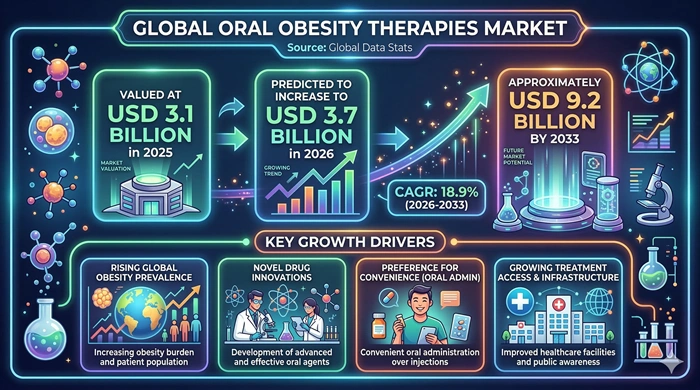
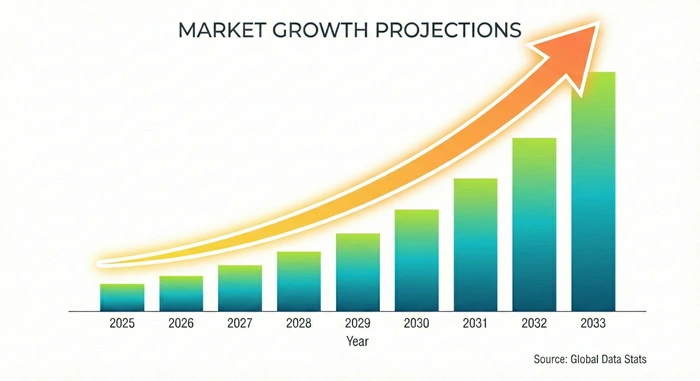
The global oral obesity therapies market size is valued at USD 3.1 billion in 2025 and is predicted to increase from USD 3.7 billion in 2026 to approximately USD 9.2 billion by 2033, growing at a CAGR of 18.9% from 2026 to 2033.
Rising obesity rates worldwide are pushing demand for accessible, non-injectable treatment options. The shift from injectable biologics to convenient daily oral pills is reshaping how patients and physicians approach long-term weight management. Government health initiatives, growing awareness, and the entry of major pharmaceutical companies into this space are contributing to rapid expansion of the market.
AI Impact on the Oral Obesity Therapies Industry
Artificial Intelligence Is Redefining Drug Discovery, Patient Monitoring, and Treatment Personalization in the Obesity Therapeutics Landscape
Artificial intelligence is becoming a transformative force in how oral obesity therapies are developed, prescribed, and monitored. AI-driven platforms are helping pharmaceutical companies analyze massive datasets of patient responses, metabolic markers, and genetic profiles to identify new oral drug candidates with higher precision. This is dramatically reducing time-to-market for next-generation obesity medications and improving clinical trial success rates.
Beyond drug discovery, AI is also enhancing real-world application through digital health tools. Smart apps and wearable integrations now help clinicians track patient adherence to oral regimens, predict side-effect risks, and personalize dosage recommendations. These developments are making oral obesity treatment more data-driven and outcome-focused, which builds trust among patients and healthcare providers alike.
Growth Factors
A Confluence of Rising Disease Burden, Pharma Innovation, and Patient Preference for Oral Formats Is Fueling Consistent Market Expansion
The most powerful driver behind this market's growth is the staggering global prevalence of obesity. More than one billion people globally are classified as obese, and the number continues to climb. This creates a massive addressable patient population that needs long-term pharmacological management. The clinical success of GLP-1-based oral compounds, particularly oral semaglutide, has given the market a strong scientific foundation to grow from.
Patient preference is another critical growth engine. Many patients are reluctant to self-administer injectable medications, making oral alternatives significantly more attractive for long-term adherence. Pharmaceutical companies are responding to this preference with intensified R&D pipelines. The approval of new oral molecules and the expansion of insurance coverage for anti-obesity medications across several countries are also unlocking new demand channels, making this one of the most dynamic segments in global healthcare.
Market Outlook
With Multiple Oral Drug Candidates in Late-Stage Trials and Regulatory Momentum Building, the Market Is Positioned for Sustained Double-Digit Growth Through 2033
The outlook for the oral obesity therapies market over the next several years is strongly positive. Several late-stage clinical programs are expected to yield approvals between 2026 and 2029, which will significantly diversify the treatment landscape. Companies like Novo Nordisk, Eli Lilly, and Pfizer are all investing heavily in oral formulations, which will intensify competition and potentially reduce pricing barriers over time.
From a regional perspective, North America will continue to dominate, but Asia Pacific is emerging as the fastest-growing region due to rising obesity prevalence in urban populations and growing healthcare infrastructure investment. As reimbursement policies evolve and more physicians gain confidence prescribing oral agents, the global patient base for these therapies is expected to widen considerably, sustaining robust market momentum well into the next decade.
Expert Speaks
-
Emma Walmsley, CEO, GSK — "The pipeline for oral cardiometabolic therapies, including obesity, is more exciting than it has been in two decades. We are committed to advancing next-generation oral molecules that can serve patients who are underserved by current injectable options."
-
Albert Bourla, CEO, Pfizer — "Oral obesity therapies represent one of the most significant commercial opportunities in pharma today. Our danuglipron program reflects our belief that patient convenience will ultimately define which treatments achieve long-term market success."
-
Lars Fruergaard Jørgensen, CEO, Novo Nordisk — "We've seen exceptional real-world data supporting oral semaglutide, and the demand signal from both physicians and patients is extraordinary. Our focus is on ensuring access while continuing to innovate in the oral weight management space."
Key Report Takeaways
-
North America dominates the oral obesity therapies market with the largest revenue share of approximately 42% in 2026, driven by high obesity prevalence, robust insurance coverage, and strong FDA-approved drug availability
-
Asia Pacific is the fastest-growing region, projected to expand at a CAGR of over 22% through 2033, fueled by urbanization, rising disposable incomes, and a rapidly growing obese population in China and India
-
Hospital pharmacies contribute the highest share among distribution channels, accounting for roughly 38% of revenue, as most patients initiate oral obesity therapy under supervised clinical settings
-
GLP-1 receptor agonists represent the dominant drug class segment, holding over 45% market share in 2026, owing to strong clinical evidence, physician familiarity, and the commercial success of oral semaglutide
-
Hospitals and clinics are the leading end-user category, as specialized obesity clinics and endocrinology departments drive most prescriptions for oral anti-obesity medications
-
Online pharmacies are the fastest-growing distribution sub-segment, with an estimated CAGR of 24% through 2033, reflecting the shift toward digital healthcare access and telehealth-based prescription refills
Market Scope
| Report Coverage | Details |
|---|---|
| Market Size by 2033 | USD 9.2 Billion |
| Market Size by 2025 | USD 3.1 Billion |
| Market Size by 2026 | USD 3.7 Billion |
| Market Growth Rate (2026–2033) | CAGR of 18.9% |
| Dominating Region | North America |
| Fastest Growing Region | Asia Pacific |
| Base Year | 2025 |
| Forecast Period | 2026 – 2033 |
| Segments Covered | Drug Class, Mechanism of Action, Distribution Channel, End User |
| Regions Covered | North America, Europe, Asia Pacific, Latin America, Middle East & Africa |
Market Dynamics
Drivers Impact Analysis
Surging Obesity Prevalence, Favorable Regulatory Pathways, and Breakthrough GLP-1 Oral Formulations Are Acting as Primary Catalysts for Market Growth
| Driver | ≈ % Impact on CAGR Forecast | Geographic Relevance | Impact Timeline |
|---|---|---|---|
| Rising global obesity burden | ~35% | Global, especially North America & Asia Pacific | Near to Long Term |
| Approvals of oral GLP-1 molecules | ~30% | North America, Europe | Near to Mid Term |
| Patient preference for non-injectable formats | ~20% | Global | Mid to Long Term |
| Expanding insurance/reimbursement coverage | ~15% | North America, Western Europe | Mid Term |
The oral obesity therapies market is primarily driven by the escalating global obesity epidemic. More than 650 million adults worldwide meet the clinical threshold for obesity, and associated conditions like type 2 diabetes, hypertension, and cardiovascular disease amplify the urgency for effective management tools. As injectable GLP-1 therapies demonstrated strong efficacy, pharmaceutical companies began developing oral versions to capture the large group of patients who prefer pill-based regimens. The approval of oral semaglutide in several markets has validated this approach clinically and commercially, encouraging further investment.
Regulatory agencies in the U.S. and Europe have also shown increasing openness to accelerating obesity drug reviews under expedited pathways. This reduces development risk for manufacturers and shortens the time patients wait for new options. Combined with greater physician awareness and a cultural shift toward treating obesity as a chronic medical condition rather than a lifestyle issue, these drivers are collectively sustaining high growth momentum in the market throughout the forecast period.
Restraints Impact Analysis
High Drug Costs, Side Effect Concerns, and Limited Insurance Coverage in Emerging Economies Remain Significant Barriers to Market Penetration
| Restraint | ≈ % Impact on CAGR Forecast | Geographic Relevance | Impact Timeline |
|---|---|---|---|
| High therapy costs and affordability gaps | ~30% | Emerging markets, uninsured segments | Near to Long Term |
| Gastrointestinal side effects and tolerability issues | ~25% | Global | Near Term |
| Limited reimbursement in low-income countries | ~25% | Asia Pacific, Latin America, MEA | Mid to Long Term |
| Regulatory hurdles for novel mechanisms | ~20% | Global | Mid Term |
Despite strong growth signals, the oral obesity therapies market faces meaningful headwinds. The cost of branded oral obesity drugs remains high, placing them out of reach for a significant portion of the global population. In emerging economies where obesity is rising rapidly, healthcare systems often lack the budget to subsidize these therapies, limiting market penetration to the premium segment.
Tolerability is another concern that healthcare providers frequently raise. GLP-1-based oral drugs are associated with nausea, vomiting, and gastrointestinal discomfort in some patients, which can lead to early treatment discontinuation. Long-term safety data for newer molecules is still accumulating, and some physicians remain cautious about prescribing drugs with limited post-marketing surveillance. These restraints do not halt growth but they do slow it in key demographics.
Opportunities Impact Analysis
Pipeline Expansion, Emerging Market Entry, and Combination Therapy Development Open Significant New Revenue Channels for Market Participants
| Opportunity | ≈ % Impact on CAGR Forecast | Geographic Relevance | Impact Timeline |
|---|---|---|---|
| New oral drug class approvals (amyclin, GIP, etc.) | ~35% | Global | Mid to Long Term |
| Telehealth and digital prescription platforms | ~25% | North America, Europe, Asia Pacific | Near to Mid Term |
| Penetration in underserved emerging markets | ~25% | Asia Pacific, Latin America | Mid to Long Term |
| Combination oral therapies for comorbidities | ~15% | Global | Long Term |
The pipeline for oral anti-obesity agents beyond GLP-1 is robust and growing. Novel mechanisms such as amylin analogs, GIP receptor agonists, and oral PCSK9 inhibitors with metabolic benefits are currently in clinical trials, which will diversify the market significantly over the next five to seven years. This broadening of the drug class landscape creates multiple new growth pockets within the oral obesity therapies market.
The rise of telehealth and digital health platforms also creates a major distribution opportunity. Patients can now receive obesity diagnoses, prescriptions, and follow-up consultations entirely online, which removes geographical access barriers. Companies that pair their oral drug offerings with digital adherence support tools are likely to capture a competitive advantage. Simultaneously, as generic oral obesity drugs enter markets in India, China, and Brazil, affordability will improve dramatically and volumes will surge.
Segment Analysis
By Drug Class
GLP-1 Receptor Agonists Lead the Drug Class Segment, Supported by Strong Clinical Outcomes and First-Mover Advantage in the Oral Format
The GLP-1 receptor agonist sub-segment holds the dominant position within the oral obesity therapies market, accounting for approximately 45% of total market revenue in 2026. This class is growing at a CAGR of around 20.4% through 2033, driven by the clinical success and widespread adoption of oral semaglutide. North America leads this sub-segment, where Novo Nordisk's Rybelsus has created a well-established prescribing culture among endocrinologists and primary care physicians. The presence of strong payer contracts and broad formulary inclusion in the U.S. has made GLP-1 oral drugs the default choice for weight management pharmacotherapy. Top companies such as Novo Nordisk, Eli Lilly, and Boehringer Ingelheim are heavily invested in expanding this sub-segment.
Lipase inhibitors, led by orlistat, retain a steady share of approximately 18% in 2026 due to their established safety profiles and over-the-counter availability in several markets. However, their growth rate is modest at around 5.2% CAGR compared to GLP-1 agents, as newer mechanisms show superior efficacy. Asia Pacific is emerging as a high-volume market for lipase inhibitors due to their lower cost and OTC accessibility in countries like India and South Korea. Pharmaceutical companies in this region, including Sun Pharma and Hanmi Pharmaceutical, are capitalizing on growing consumer health awareness to push volume sales of affordable oral weight loss agents.
By Distribution Channel
Hospital Pharmacies Dominate Distribution, While Online Pharmacies Emerge as the Fastest-Growing Channel Driven by Digital Health Adoption
Hospital pharmacies currently lead the distribution channel segment with a share of approximately 38% in 2026, as most patients initiating oral obesity therapies do so through physician-guided programs in clinical settings. This channel benefits from direct prescriber relationships and tight integration with insurance billing systems. The U.S. and Germany are the top contributors to hospital pharmacy revenues in this segment, with players like CVS Health, Walgreens Boots Alliance, and major integrated hospital systems playing central roles. Growth in this channel is expected at a steady CAGR of 14.5% through 2033, supported by growing obesity clinic networks and hospital-based weight management programs.
Online pharmacies are the fastest-growing distribution channel in the oral obesity therapies market, projected at a CAGR of approximately 24% through 2033. The expansion of telehealth platforms enabling remote prescriptions and home delivery has been a key catalyst. Countries like the U.S., UK, and Australia have seen significant uptake of online dispensing for chronic condition medications. Companies such as Amazon Pharmacy, Hims & Hers, and Noom Med are actively entering this space and reshaping how oral weight loss drugs reach end consumers. Regulatory support for digital prescribing in obesity management is also making this channel increasingly viable across Europe and Asia Pacific.
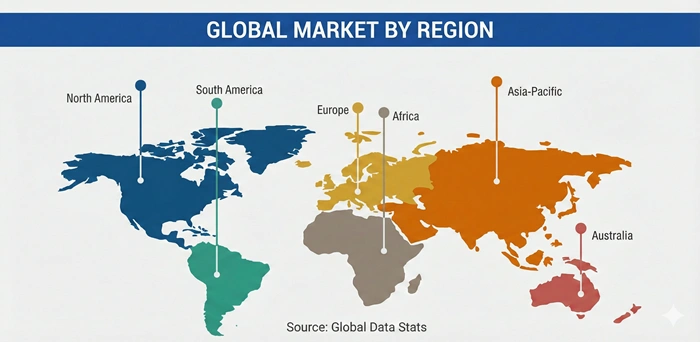
Regional Insights
North America
North America Holds the Commanding Lead in the Oral Obesity Therapies Market, Backed by High Obesity Rates, Strong Drug Pipelines, and Advanced Healthcare Infrastructure
North America holds approximately 42% of the global oral obesity therapies market share in 2026 and is expected to maintain its dominant position throughout the forecast period, growing at a CAGR of around 17.8%. The United States is the single largest national market, supported by a high burden of obesity-related diseases, well-developed insurance frameworks, and a robust FDA approval pipeline. Key companies driving this region include Novo Nordisk (U.S. operations), Eli Lilly, Pfizer, and Arena Pharmaceuticals. The strong presence of these global pharmaceutical leaders gives North America both the supply capability and the marketing reach to maintain its lead.
Government initiatives such as the Treat and Reduce Obesity Act and expanding Medicaid coverage for anti-obesity medications are expected to further broaden patient access over the coming years. Canada is also seeing increased policy support for obesity as a chronic disease, creating additional demand within the region. The combination of high per-capita healthcare spending, a culture of early adoption of new therapies, and large investment in obesity research makes North America the clear leader in this space.
Asia Pacific
Asia Pacific Is the Fastest-Growing Region for Oral Obesity Treatments, Driven by Rapid Urbanization, Changing Diets, and Expanding Healthcare Access
Asia Pacific is the fastest-growing regional market, projected to expand at a CAGR of approximately 22.3% through 2033, outpacing all other regions. The region holds an estimated 21% of global market share in 2026, which is expected to rise significantly as markets like China, India, and South Korea mature. The rapid increase in urban obesity driven by sedentary lifestyles and calorie-dense diets is creating enormous demand for accessible oral treatments. Companies such as Hanmi Pharmaceutical (South Korea), Sun Pharma (India), and Zhejiang Hisun Pharmaceuticals (China) are key regional players expanding their oral obesity drug portfolios.
Rising healthcare expenditure, improving access to primary care, and growing awareness of obesity as a medical condition rather than a cosmetic concern are accelerating adoption across Asia Pacific. Regulatory agencies in Japan and South Korea have been proactive in approving GLP-1-based oral therapies, which is helping build physician familiarity and patient confidence. Government-led non-communicable disease prevention programs in several Asia Pacific countries are also creating favorable policy environments that support market growth for oral obesity therapies.
Top Key Players
-
Novo Nordisk (Denmark)
-
Eli Lilly and Company (United States)
-
Pfizer Inc. (United States)
-
AstraZeneca (United Kingdom)
-
Boehringer Ingelheim (Germany)
-
Roche Holding AG (Switzerland)
-
Hanmi Pharmaceutical Co., Ltd. (South Korea)
-
Sun Pharmaceutical Industries Ltd. (India)
-
Arena Pharmaceuticals (United States)
-
Currax Pharmaceuticals (United States)
-
Rhythm Pharmaceuticals (United States)
-
Zhejiang Hisun Pharmaceuticals (China)
Recent Developments
-
Novo Nordisk (2024–2025): Expanded FDA-approved indications for oral semaglutide to include cardiovascular risk reduction alongside weight management, significantly broadening the eligible patient population and accelerating prescription volumes across the U.S. and European markets.
-
Eli Lilly (2025): Announced positive Phase 2 results for its oral GLP-1/GIP dual agonist candidate, orforglipron, demonstrating significant body weight reduction and favorable tolerability in a large clinical cohort, positioning it as a potential blockbuster oral obesity drug.
-
Pfizer (2024): Restarted the clinical development of danuglipron with a revised once-daily formulation after earlier tolerability challenges, signaling continued commitment to capturing a share of the rapidly growing oral weight loss drug market.
-
AstraZeneca (2025): Entered into a strategic licensing agreement with a Chinese biotech firm to co-develop and commercialize next-generation oral amylin analog compounds targeting obesity and type 2 diabetes across Asia Pacific markets.
-
Boehringer Ingelheim (2024): Advanced its oral obesity compound BI 456906 into Phase 3 trials, with early data indicating superior weight loss outcomes compared to existing oral agents, drawing significant investor and clinical community attention.
Market Trends
The Convergence of Precision Medicine, Oral Drug Innovation, and Digital Health Platforms Is Defining the Next Phase of Growth for This Market
One of the most notable trends shaping the oral obesity therapies market is the movement toward combination therapy. Researchers are exploring pills that simultaneously target GLP-1, GIP, and glucagon receptors, which could offer compounding weight loss benefits. This multi-receptor approach mirrors the success seen with injectable tirzepatide and is now being translated into oral formulations. Such developments are expected to significantly raise the efficacy bar for oral treatments and attract patients who have had limited success with single-mechanism drugs.
Digital therapeutics and prescription app-based programs are increasingly being bundled with oral obesity medications to improve outcomes and adherence. Companies are partnering with telehealth platforms to offer integrated care pathways where the patient receives the drug, nutritional guidance, and behavioral coaching in a single service. This trend is particularly prominent in the U.S. and UK, where direct-to-consumer health brands are building subscription-based obesity management programs. As payers start recognizing the cost benefits of such holistic approaches, reimbursement for these bundles is expected to grow, further supporting market expansion.
Segments Covered in the Report
By Drug Class
-
GLP-1 Receptor Agonists
-
Lipase Inhibitors
-
Appetite Suppressants (Sympathomimetics)
-
Combination Therapies
By Mechanism of Action
-
Central Acting
-
Peripheral Acting
By Distribution Channel
-
Hospital Pharmacies
-
Retail Pharmacies
-
Online Pharmacies
By End User
-
Hospitals & Clinics
-
Ambulatory Surgical Centers
-
Home Care Settings
By Region
-
North America
-
U.S.
-
Canada
-
-
Europe
-
Germany
-
UK
-
France
-
Italy
-
Rest of Europe
-
-
Asia Pacific
-
China
-
Japan
-
India
-
South Korea
-
Rest of Asia Pacific
-
-
Latin America
-
Brazil
-
Mexico
-
Rest of Latin America
-
-
Middle East & Africa
-
GCC
-
South Africa
-
Rest of MEA
-
Frequently Asked Questions
Question 1: What is the current size of the oral obesity therapies market and how fast is it growing?
Answer: The oral obesity therapies market was valued at USD 3.1 billion in 2025 and is projected to grow at a CAGR of 18.9% from 2026 to 2033. This strong growth is driven by rising obesity prevalence and increasing adoption of oral GLP-1-based medications.
Question 2: Which drug class dominates the oral obesity therapies market today?
Answer: GLP-1 receptor agonists currently hold the dominant share in the oral obesity therapies market, accounting for approximately 45% of revenue in 2026. Their strong clinical efficacy and patient convenience have made them the preferred pharmacological choice among physicians.
Question 3: Which region leads the oral obesity therapies market and which is growing the fastest?
Answer: North America currently leads the oral obesity therapies market with around 42% of global share, while Asia Pacific is the fastest-growing region at a CAGR of approximately 22.3%. Rising urban obesity rates and improving healthcare access are key factors in Asia Pacific's rapid expansion.
Question 4: What are the major challenges facing the oral obesity therapies market?
Answer: High therapy costs and limited insurance coverage in emerging economies are among the biggest barriers in the oral obesity therapies market. Gastrointestinal side effects associated with some oral agents also contribute to patient dropout and slower market penetration in price-sensitive regions.
Question 5: Who are the key companies competing in the oral obesity therapies market?
Answer: Leading companies in the oral obesity therapies market include Novo Nordisk, Eli Lilly, Pfizer, AstraZeneca, and Boehringer Ingelheim, among others. These firms are actively investing in clinical pipelines and digital health partnerships to strengthen their positions in this rapidly growing segment.